Author: GoodFind

  • 3 Crazy New Credit Scams, Don’t Be A Victim!

    3 Crazy New Credit Scams, Don’t Be A Victim!

    Let’s face facts – if you don’t take credit fraud seriously, scammers will, and at your expense, search for credit fraud alerts. At a time when more and more people are turning their backs on cash in favor of credit and debit cards, the risk of credit fraud is higher than ever. Yet Americans don’t seem to be doing enough to protect themselves against credit scams.

    In this new generation, you might have had to be convinced by your kids or grandkids at some point that using your credit card online is safe. “It doesn’t feel safe,” you may say, but they tell you that’s the way everyone shops all the time, and their credit card information is totally safe.

    But they’re wrong. Credit card numbers do get stolen, and credit fraud does happen, both online and offline. In fact, security experts say virtually everyone has been the victim of at least one data breach at this point.

    New survey data from AARP show that Americans are unnecessarily putting themselves at greater risk by failing to adopt smart digital safety practices. In fact, 47% of U.S. adults have reported being victimized by a fraudulent purchase using their credit or debit card.

    Here is a look at 4 of the most convincing scams that you will want to be on the lookout for:

    1. The Jury Duty Credit Card Scam

    In this scam, the con artist calls the victim claiming to be a representative from the local court in their area. They tell the victim that because they failed to show up for a scheduled jury duty an arrest warrant has been issued in their name. The victim replies by saying that they never received a jury duty notice.

    The scammer then says that, in order to clear up the matter, they need to verify some information. The scammer will go on to ask for personal information including the victim’s address, social security number, birth date, and credit card numbers. The unknowing victim, who is frazzled and worried about the arrest warrant, complies and gives the caller the information, becoming subject to identity theft and credit card fraud.

    2. “Skimming” Your Card

    Skimming machines, known as “skimmers” have become high-tech these days. Recently, skimmers have been found in gas pumps and ATMs across the country. With these skimmers, credit card data is collected and transferred via Bluetooth to the scammers who can then replicate the cards and go on a shopping spree. Other traditional, less technological skimming tricks include restaurant waitstaff and retail employees skimming your credit card and then using it to make small purchases that are very often missed by the victim.

    The bottom line is that you should always look your bill over carefully each month and report discrepancies immediately to your credit card company. If reported in time, you will never be liable for fraudulent purchases.

    3. Scam Phone Call Claiming to Reduce Your Credit Card Debt

    In this marketing scam, the victim receives a phone call from someone who claims that he is a representative of their credit card company and can get them significantly reduced interest rates and debt payments. The catch? The victim needs to provide their credit card information to confirm their identity.

    Recently, these types of marketing cons came under the scrutiny of the FTC, and it is now illegal to demand upfront fees for debt settlement services. In addition, debt reduction companies are now required to maintain a dedicated account, entirely owned by the client, for use in paying creditors. However, not everyone knows this and therefore is still a potential victim to this sneaky scheme.

    Make sure to monitor your credit card statements, bank statements, and credit reports on a regular basis. The earlier you catch a potentially fraudulent transaction, the better the chances that you’ll be able to prevent further trouble!


  • Top Rated Robot Vacuums That Do The Dirty Work For You

    Top Rated Robot Vacuums That Do The Dirty Work For You

    When it comes to house cleaning, vacuuming is rarely a chore any of us truly enjoy. We often find ourselves dealing with bulky machines that may or may not do the best job of removing debris. They not only tend to stir up dust, but some models also get clogged often as well. Instead of wrestling a big, old push vacuum out of the closet, what if you could have a robot do the vacuuming for you? Could it make your life easier?

    Smart Vacuums

    Instead of wrestling a big, old push vacuum out of the closet, what if you could just press a button? With a robot vacuums, that’s often all you need to do.

    These little machines are essentially the future brought right into your home. They use special navigation technology and sensors to determine where to clean. Plus, they require very little effort on your part.

    They do, however, vary widely from one model to the next. The prices range anywhere from $150 to $1,000+, and some have special features that warrant higher price tags.

    Controlling a Robot Vacuum

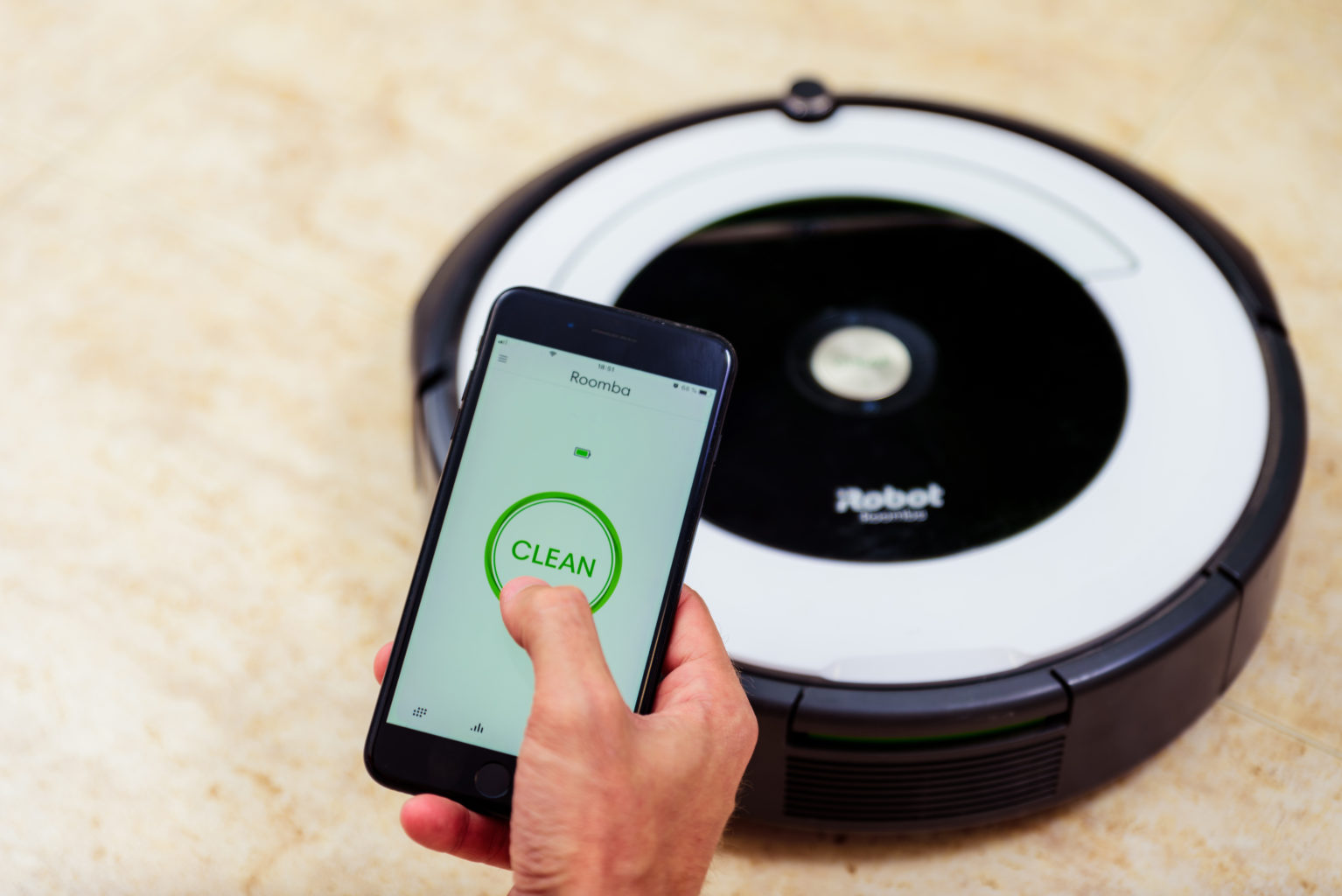
    There are several different ways to control robot vacuums. Some use smartphone apps, others have remote controls. Many popular iRobot Roomba models also connect to wi-fi and allow for voice control using a home smart speaker.

    Luckily, in no instance are you forced to push it around yourself. And don’t worry, you don’t have to block off stairs either. Most of these vacuums have sensors to prevent them from traveling where they can’t go – like downstairs. (That is one minor drawback if you have stairs you need to vacuum.)

    Special Features

    Some robot vacuums do more than vacuum, too. There are models from ILIFE, iRobot, and others that can also sweep or mop hardwood, tile, and laminate floors. Many have special corner brushes, and some are also designed specially to tackle pet hair as well.

    Plus, most robot vacuums are exceptionally quiet and can easily transition from a one-floor type to another, too. You’ll honestly be surprised how far these things have evolved since the first models hit the market.

    A lot of models will also automatically return to a docking station where they’ll recharge themselves without any human intervention. Some of the really expensive ones can even empty themselves. However, that’s often a cost-prohibitive feature, especially when it’s not too difficult to empty them manually.

    Do you have a robot vacuum? Are you singing its praises, or do you prefer the old fashioned approach? Let us know in the comments below!


  • Google’s New Pixel 4: Should You Upgrade?

    Google’s New Pixel 4: Should You Upgrade?

    With the Pixel 4 bringing so much newness to the table, why in the world should you keep your Pixel 3? It shouldn’t come as any surprise that the Pixel 4 is loaded with upgrades compared to the Pixel 3. For some, the changes Google’s made might be enough to encourage them to upgrade, here’s why:

    While the Pixel 3 isn’t nearly as flashy as its newer sibling, it’s still plenty capable these days and should get you through another year of use just fine. There’s no denying that Google created a killer smartphone with the Pixel 4.

    With a camera that captures detail that the competition can’t, a futuristic way to use your phone without even touching it, your own personal Google Assistant, and a fast and responsive display, Pixel 4 packs new technology into a must-have new design.

    Get the perfect photo

    Pixel 4 brings Google’s biggest camera upgrade yet. The Pixel 4 comes two cameras on the back of the phone and includes a new telephoto lens. When you combine this new hardware feature with Google’s Super Res Zoom software, it gives you exceptional image quality, even planets away.

    Night Sight already takes beautiful photos in full darkness, and now you can use Night Sight for shots of the night sky, the stars, and even the Milky Way (when you find a clear night). Pixel 3 and 3a will also get a version of this capability with the latest camera app update!

    Your new Google Assistant

    Thanks to a deeper integration into Pixel 4, the Google Assistant is now a faster way to get more things done, think of it like your own personal assistant. Google redesigned the Assistant so it doesn’t take up too much room on your screen, letting you better multitask across other apps. It can quickly open apps, search your phone, share what’s on your screen, and more.

    It also considers the context of your query to do a better job answering. For example, you can ask the Assistant to “show my photos from Miami” and then say, “the ones in South Beach.” Then, you can share a picture by saying “send it to Brad.”

    A phone that senses what you want it to do

    Pixel 4’s Motion Sense feature uses a miniature radar sensor to detect movement around your phone. It can sense when you’re reaching for the phone and will initiate face unlock, or turn off your screen when you’re not around. New Quick Gestures let you skip songs when you don’t want to pick up your phone. Just wave your hand to snooze alarms, dismiss timers, or silence your phone.

    Built for performance and security

    With 6GB RAM, a 90hz display, and Pixel Neural Core, Pixel 4 is fast and powerful. Pixel Neural Core is the engine for on-device processing, always-on computing, and machine learning, meaning more tasks are done on the device for performance and privacy.

    Pixel 4 also includes Google’s custom-built Titan M security chip to protect your most sensitive data and ensure the integrity of the operating system. Combined with the latest version of Android 10, monthly security updates for 3 years, and access to Google’s advanced security services, Pixel 4 is designed to keep your data secure.

    Pricing

    Beginning today, October 15, you can pre-order a Pixel 4 for $799 and Pixel 4 XL for $899, and phones will ship on October 24, globally. Pixel 4 comes in three colors, including white, black and a limited-edition orange!


  • She NEVER Repeats Outfits, Here’s Her Secret:

    She NEVER Repeats Outfits, Here’s Her Secret:

    Stuck in a fashion rut? Or maybe you just don’t have time to shop? It’s tiresome, it’s time-consuming, and sometimes, you just can’t find what you want. Try out one of these clothing subscription services—you’ll get trendy and stylish clothing and accessories delivered right to your door at least once a month.

    Not sure if clothing subscriptions are your style? Prepare to be surprised—this list features plans to fit a wide range of styles and budgets. It’s our mission to change the way people find clothes they love by combining technology with the personal touch of seasoned style experts. The clothing subscription box experience is not merely curated—it’s truly personalized to you. We’re here to help you save time, look great and evolve your personal style over time.

    Here to save you from the exhausting practice of shopping both online and in stores, is a new method of acquiring new clothes that brings the whole enchilada to your doorstep. Rather than scrolling through an endless selection of shirts, pants, dresses, and everything in between, or rifling through racks and bins for that one size you need, you can just get a box of clothing sent straight to your front door. And that, my friends, is the magic of clothing subscription boxes.

    While there are plenty of clothing subscription box companies that offer this or a similar model, there are a few that stand a cut above the rest:

    1. StitchFix

    Cost: $20 styling fee (applies to any items you decide to keep.)

    Why You’ll Love It: The best part of this styling service is that it’s customized just for you. When you sign up for StitchFix, you’ll take an in-depth survey of your sizes, your style, and your pricing preferences. After choosing when you’d like to receive your delivery, your stylist will hand-pick 5 clothing and accessory items just for you. Keep what you love, return what you don’t.

    2. Fabletics

    Cost: $49.95 a month.

    Coupon: New VIP members can get 2 pairs of Fabletics leggings for $24.

    Why You’ll Love It: Fabletics curates high-quality, on-trend athletic clothing to fit your size, style, and needs, with new options available each month. You’ll love the flexibility to skip any month, or add additional items. Think stylish and sporty leggings, tops, shorts, and outerwear for yoga, running, and all kinds of other workouts. You’ll see chic and casual athleisure gear, too.

    3. Nordstrom’s Trunk Club

    Cost: $25 styling fee (applies towards items you choose to keep.)

    Why You’ll Love It: Trunk Club is Nordstrom’s personal styling service for sizes XS to 3X. Start with a style survey or chat online with a stylist to start curating a perfect assortment of pieces to try. Preview what your stylist has picked for you before it ships and make adjustments to your liking. Then simply try on your looks, keep what you love, and return what you don’t! Trunk Club price matches exclusively to Nordstrom within 14 days of purchase. Also, the $25 styling fee is waived if you use a Nordstrom credit or debit card!


  • Medicare Now Covers At-Home DNA Cancer Testing!

    Medicare Now Covers At-Home DNA Cancer Testing!

    Cancer sucks. Your chances of surviving cancer are much better when you find it early. Well, we’ve got great news: Medicare will now cover genetic evaluation of cancer by FDA-approved tests. It’s just saliva. No blood. No needles. All from home. Cancer screening increases the chances of detecting certain cancers early and might be easier to treat!

    No Doctors Appointment Needed

    Let’s be honest, genetic testing can be time consuming and expensive. Some tests cost more than others, and the final bill can be thousands of dollars. Yikes! Well, we’ve got great news for you: Medicare now pays for certain preventive health care services and some of the screening tests used to help find cancer with home-based saliva collection kits. No need to leave the comfort of your own home!

    Better Safe Than Sorry

    Sooner is almost always better when it comes to spotting cancer. It’s easier to treat if you catch it before it spreads. In today’s day and age, it is nearly impossible to find someone that has not been affected by cancer in one way or another. Whether its their mom, sister, aunt, grandma, neighbor, friend, or teacher, we all know someone who has suffered from cancer. Knowing your unique risks can help your doctor lower your odds of getting cancer. These at-home cancer DNA tests give you the power to take control of your health and help reduce your cancer risk.

    Easy as 1-2-3

    Just like those at-home ancestry tests you keep hearing about, Medicare now covers at-home cancer detection tests. With three simple steps, you’re one step closer to a healthier you. All you need to do is order your cancer DNA test and wait for it to come in the mail. Then you simply send your DNA, or a tube with your saliva, to the lab. The last step is to wait for your results to be mailed back to you and review the results. They have made the process as simple as possible!

    Do I Qualify?

    One of the best things you can do to lower your odds of getting cancer is to know your risks. With Medicare just implementing this new national policy, here is the following criteria that must be met to qualify for coverage of genetic testing.

    The patient has:
    • recurrent, relapsed, refractory, metastatic, or advanced stage III or IV cancer; and,
    • not previously tested using the same genetic test for the same cancer diagnosis (repeat testing using the same genetic test is covered only when a new primary cancer diagnosis is made); and,
    • decided to seek further cancer treatment (e.g., chemotherapy).

    The laboratory/genetic test must have:
    • Food & Drug Administration (FDA) approval or clearance as a companion diagnostic; and,
    • an FDA-approved or -cleared drug/treatment for use in the patient’s cancer; and,
    • results provided to the physician for management of the patient’s cancer using a report that specifies treatment options


  • Roof Damage? 3 Easy Tricks to Get Insurance to Pay for Your Roof Replacement

    Roof Damage? 3 Easy Tricks to Get Insurance to Pay for Your Roof Replacement

    1 broken shingle = 1 new roof! Here’s how: When one or just a few tiles or shingles are damaged, file an insurance claim. Depending on where you live, most state laws mandate that your insurer must replace the materials in the surrounding areas, however if it is not possible to fix the damage to match the undamaged area, you get a new roof. Win-win!

    Understand the damage

    Do you live in an area that has its fair share of weather? If you think you may be eligible for a free roof replacement, take a moment and evaluate the damage. It doesn’t have to be anything major, just look for things like missing shingles in gutters.

    If your roof is over 10 years old and showing some signs of damage you should take notes and pictures of what you discover. A better idea would be to get some estimates from a consultation with a roofing professional. This will get you a more accurate idea of what you’re facing, and it is usually free!

    Understand your insurance policy

    To understand the appropriate steps you need to take to get your insurance to pay for your roof replacement, contact your agent or look over your homeowner’s insurance policy. If you have major damage that needs to be replaced immediately, contact them right away and submit a claim.

    If there is some damage, but nothing urgent, go ahead and call a roofing professional to give you an estimate and help you with your insurance claim. You’d be surprised by the tips and tricks they know to get your insurance to pay for your roof replacement. The know all the insider information.

    Choose a roofing professional that has experience in insurance roof repair

    It is always a good idea to shop around and explore your options. Always look for a roofer that is licensed and insured. While completing your due diligence on finding a great roofing contractor, make sure that they have the experience it takes to get your insurance to pay for you roof.

    This is something you’ll want to seriously consider, as not all contractors will have the experience or offer guidance when it comes to dealing with your insurance claim. You’ll want to choose a contractor who will be there to help you through every single step along the way. Keep in mind that some may even have insurance adjusters on staff to help streamline the process!


  • World’s BEST Travel Reward Card Luxury Perks

    World’s BEST Travel Reward Card Luxury Perks

    It’s October, a time for frights and things that go bump in the night. But there’s nothing scarier than missing out on great travel rewards because you don’t have the right travel credit card. We’ll review all the details, including bonus offers and travel perks, to bring you a list of the very best travel cards.

    While there are lots of great credit cards for travel out there, the reality is that the best one for you is the one that suits your specific travel needs.

    The Platinum Card® from American Express: Best total value

    The Platinum Card from American Express has some of the best membership benefits of any card, including:
    • Up to $200 in statement credits annually on incidental fees charged by one airline you select
    • Uber VIP status and up to $200 Uber credit split into monthly $15 credits for US rides plus a bonus $20 in December
    • $100 fee credit for Global Entry every five years or an $85 fee credit for TSA PreCheck every four years
    • $100 Saks credit split into two $50 statement credits for the two halves of the year
    • Access to the American Express Global Lounge Collection, which includes Centurion Lounges, Priority Pass, Airspace and Escapes lounges, along with Delta Sky Clubs when flying Delta Air Lines
    • Complimentary Gold status at the Hilton Honors and Marriott Bonvoy loyalty programs
    • Complimentary memberships in Hertz Gold Plus Rewards, Avis Preferred and National Car Rental Emerald Club Executive

    • Access to Amex Fine Hotels & Resorts

    Annual fee: $550

    With a hefty $550 annual fee, most people assume that that the Amex Platinum can only benefit first-class flyers, but that isn’t necessarily the case. In fact, the standard welcome bonus offer for the Amex Platinum is 60,000 points after you spend $5,000 in the first three months. Amex Membership Rewards points are worth 2 cents each, which makes this 60,000-point bonus worth $1,200. That is more than twice the $550 annual fee!

    Yes, the card offers quite a few luxury benefits, but those perks can also make the travel experience easier for families, backpackers and budget travelers. Families can easily take advantage of the $200 airline-fee credit to cover the cost of additional luggage and inflight food, and entertainment to keep kids happy while in the air. Lounge access with hot food and a clean shower can make all the difference after a backpacking trip.

    Chase Sapphire Preferred Card: Best for beginner travelers

    • Earn 2 points per dollar on travel
    • Earn 2 points per dollar on dining
    • Transfer points to 12 travel partners
    • Redeem points for 1.25 cents apiece through the Chase Ultimate Rewards travel portal
    • No foreign transaction fees

    Annual fee: $95

    The Chase Sapphire Preferred is designed to work for those who travel a lot, and for those who don’t travel as often. Win-win! It can benefit both the points and miles expert and the one just starting out. With a $95 annual fee, it’s not an expensive card, which makes it a good choice for a beginner. But since the card earns Ultimate Rewards points, you’ll also find this card goes a long way if you’re an experienced loyalty program whiz looking to get maximum value.

    If you want flexibility in earning and redeeming rewards, this is the best travel credit card around! You will pay no foreign transaction fees when you use your card for purchases made outside the United States. For example, if you spend $5,000 internationally, you would avoid $150 in foreign transaction fees.

    Chase Sapphire Reserve: Best for travel purchases and perks

    • Earn 3 points per dollar on travel (excluding $300 travel credit) and dining at restaurants and 1 point per dollar on everything else
    • Redeem points directly through the Ultimate Rewards travel portal at a rate of 1.5 cents apiece
    • $300 annual travel credit
    • Priority Pass Select lounge access (valued by TPG at $99 annually)
    • Up to $100 Global Entry/TSA PreCheck application fee credit
    • No foreign transaction fees
    • Trip cancellation coverage
    • Primary car rental insurance

    Annual fee: $450

    Many people will balk at the Reserve’s $450 annual fee, and while that’s a valid concern, the $300 annual travel credit drops your real out-of-pocket cost to $150 a year. With the card, you’ll earn 3x points on all travel (excluding the $300 travel credit) and dining purchases worldwide and 1x points on everything else. What’s often not known is just how extensive the bonus categories are — ride-sharing services, food delivery, etc.

    The Sapphire Reserve also includes access to more than 1,200 airport lounges across the world. In addition, you can pay $75 to add each authorized user to your Reserve account, they’ll be able to take advantage of one of the card’s nicest perks!


  • Is Medicare Supplement Plan F Being Discontinued?

    Is Medicare Supplement Plan F Being Discontinued?

    Plan F covers more costs than any other Medigap policy and is the most comprehensive of the standardized Medicare Supplement plans available in most states. But these plans might not be sold after 2020…

    Medicare Supplement Plan F is a specific type of Medicare Supplement (also called Medigap) plan. This type of insurance can help pay for out-of-pocket costs of Medicare Part A and Part B. These costs might be coinsurance, copayments, or deductibles.

    Plan F covers more Medicare expenses than any other supplement plan. Medicare Part A and Part B make up the federal government’s Original Medicare program. Medicare Supplement plans are also named with letters, such as Plan F, but they are not the same thing.

    Plan F: Who is it for?

    – People on a fixed income: When your deductibles and most cost-sharing expenses are covered, your out-of-pocket costs may be more predictable.
    – International travelers: Plan F may cover most of your health care costs while traveling abroad.
    – People expecting high health care costs: Plan F’s higher premiums may be worth it for those with a lot of medical expenses to cover.

    Here’s what Medicare Supplement Plan F may cover:

    – Inpatient hospital costs and coinsurance under Medicare Part A for an additional 365 days after Medicare coverage runs out
    – Coinsurance for skilled nursing care facilities
    – Medicare Part B coinsurance/copayments
    – Part A deductible
    – Part B deductible
    – Limited emergency medical care overseas (80% up to plan limits)
    – Hospice care coinsurance/copayments under Part A
    – First three pints of blood
    – Part B excess charges (the amount a doctor is legally allowed to charge beyond the Medicare-approved amount for a medical service)

    Is Medicare Supplement Plan F being discontinued?

    Apparently so, for some people. According to congress.gov, starting in 2020, Medicare Supplement plans that pay the Medicare Part B deductible will no longer be sold to those newly eligible.

    – If you already have Medicare Supplement Plan F (or Plan C, which also covers the Part B deductible), you can generally keep it.
    – If you were eligible for Medicare before January 1, 2020, you may be able to buy Medicare Supplement Plan F or Plan C.
    – If you qualify for Medicare on January 1, 2020 or later, you may not be able to buy Medicare Supplement Plan F or Plan C.

    Is there another Medicare Supplement plan that may be comparable?

    Plan F offers the most comprehensive Medigap coverage available, so it’s not a surprise that it’s the most popular plan nationwide. Lately, however, Plan G has been giving F a run for its money—especially since Plan F will soon be phased out. The only thing F covers that G doesn’t is the Part B deductible ($185 in 2019), but Plan G’s lower premiums may make up the difference.

    If you become eligible for Medicare in 2020 or later, although you may not be able to buy Medicare Supplement Plan F or Plan C, you may be able to buy a very similar plan. Medicare Supplement Plan G generally has the same basic benefits as Plan F, except for the Part B deductible. So, you might want to look into Plan G.


  • Freshbooks vs. Quickbooks: Which is Best for Your Business?

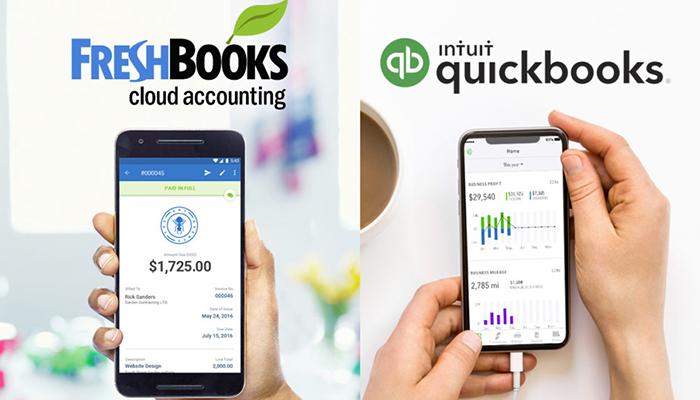
    Freshbooks vs. Quickbooks: Which is Best for Your Business?

    As a business owner, it’s important to find tools that can save you time and make your job easier. Finding the right accounting software for your business can be a tough decision. Software that works for one company, might not work for the other. This way having a good accounting solution in place from the start is a seriously good idea, so that you can ensure you can keep on top of tracking money!

    Luckily, there are some very easy to use and well-developed software applications available, which can not only make it easy to manage your accounts, but also make everything clearer for your accountant at the end of the year, saving administration costs there.

    Some accounting packages are downloadable software, but these days it’s more common for applications to run in the cloud, which means you can access them through a web browser or app on almost any device, including on your phone while on the go.

    Here then are the best in accounting software currently available:

    Freshbooks

    The streamlined, seamless and easy-to-use Freshbooks software is one of the top picks for accounting software. Whether you’re running a large business or a small one, Freshbooks as an accounting suite is a strong choice. You can easily set up recurring invoices to pay out to various contractors, record your expenses easily and import to other software in a flash. The dashboard makes it easy to find what you’re looking for, while the easy-to-navigate menus and options make it impossible to get lost. Accounting can be quite difficult, but Freshbooks takes a lot of the difficulty out of the equation! Pricing for this software starts at $15 per month.

    QuickBooks

    Intuit QuickBooks may have been around since the days of DOS, but the latest version is right up to date. It is an easy-to-use cloud-based suite for just about all your business needs. Even the Essentials plan for $20 per month has plenty of features: invoicing, expense tracking, as well as time tracking, manage bills, and works for up to three users. There’s also the option to add either self-service payroll or full-service payroll for an additional fee.

    Conclusion

    Overall, QuickBooks wins the race for the best small business accounting solution. The program has more features, the features it offers are more robust, and its pricing options are affordable (even if they are slightly more expensive than FreshBooks plans).

    If your business is small, starting with QuickBooks now could help you avoid headaches down the road. When your business grows, you may eventually need access to some of the more advanced features available through QuickBooks. Learning QuickBooks on the front end can help your business avoid the growing pains of learning a new accounting system down the road.

    However, there are still several instances where FreshBooks might be the better choice. If you’re a freelancer, solopreneur, or you need to track hours worked by your employees or contractors, FreshBooks may do a better job of meeting your needs at a slightly more affordable price.

    It is not a “one size fits all” concept. Research your options, test what works for you, and you will find the right fit for your company. Evaluate what features you need and what features you do not need. Line up those needs with one of the programs above, and you will find the right one for you. However, most importantly, don’t forget to take advantage of all the free trials and demos out there!


  • Whoa, New iPhone 12 Starts at ONLY $481! What’s the Catch?

    Whoa, New iPhone 12 Starts at ONLY $481! What’s the Catch?

    In typical Apple fashion, the company played up improvements to the battery life, camera system and hardware under the hood of the new phones. But, what would it take for you to dish out another $1,000 for a new smartphone? What if we told you that you could get your hands on the brand-new iPhone 12 for only $481? Here’s how:

    They’re sporting even more sophisticated cameras and a handful of other premium features. All three new iPhone versions still look just like their predecessors, but Apple has upgraded their camera to allow for wide-angle photos while making improvements under the hood that result in longer battery life and faster performance than before.

    Price

    At $799, the iPhone 12 is $100 more than its predecessor, the iPhone XR. The new iPhone 12 Pro and iPhone 12 Pro Max pick up where last year’s iPhone XS and iPhone XS Max left off, starting at $999 and $1,099. Here’s the secret: you can get the new iPhone 12 for as little as $481 when you trade in your current iPhone!

    Camera

    There’s a big focus on the camera this year, and that’s because it’s a dual-lens sensor (12MP) with a f2.4 ultrawide camera paired with a f1.6 wide camera . Both rear cameras utilize Apple’s propriety night mode and night mode time lapse. They believe the iPhone 12 is three times faster in low-light scenarios too.

    Video

    Video modes include 4K video recording at 24, 30 or 60 frames per second. Not only that, the new iphone12 features HDR video with dolby vision up to 30 FPS. Apple says it has improved image stabilization on the new phone too. Apple has even included HDR Dolby Vision video recording on the front-facing selfie camera. Overall, Apple claims to have the “highest quality video recording in a smartphone.”

    Water Resistance

    It’s also water-resistant, coming with an IP68 rating. That should mean you’re able to submerge it in the bath or take it in the shower, as it can survive in up to two meters of water.

    What’s new in the iPhone 12


    A14 Bionic chip
    Faster Face ID unlocking
    Super Retina XDR display
    Dual lens sensor (12MP) with a f2.4 ultrawide camera paired with a f1.6 wide camera
    Both rear cameras utilize apples propriety night mode and night mode time lapse
    2x-5x optical zoom
    Lidar
    12-megapixel front-facing camera
    4K HDR Dolby Video for both front and rear cameras
    New Night Time photo and time-lapse mode

    New iPhone 12 Pro and Pro Max

    Two screen sizes: 6.1- and 6.7-inch OLED
    Super Retina XDR display supports HDR 10 with Dolby Vision and Dolby Atmos
    Three rear cameras with 4x optical zoom: Wide, ultra-wide, telephoto lenses
    Upcoming camera feature called Deep Fusion compiles 9 images to reduce noise and amp up details
    Faster Face ID unlocking
    4K video for both front and rear cameras, with slow-motion video for the selfie camera
    New night-time mode
    Lidar sensor
    Mag safe technology