Blog

  • Coolest Trailers from Comic-Con 2018

    Coolest Trailers from Comic-Con 2018

    Marvel’s Cinematic Universe sat out this year’s Comic-Con. Many fans were disappointed to hear it, given all the excitement around Captain Marvel and the next Avengers film. However, DC and a few other big names were ready to fill the MCU-shaped hole in the proceedings. Comic-Con 2018 was replete with awesome trailers and has us pumped for the next year of movies and TV shows. Let’s talk about which were the best!

    Godzilla: King of the Monsters

    A sequel to 2014’s Godzilla, this new entry stars Millie Bobbie Brown of Stranger Things fame. The trailer teases some pretty big names from past Godzilla films. Among the monsters revealed are Mothra, Rodan and King Ghidora. Godzilla faithful recognized these iconic monsters right away, and fans are freaking out online. After the excellent reception of the 2014 film, many are confident this will be another exceptional entry in the franchise. Judging from the trailer and the promise of a giant monster battle royale, we’re inclined to believe the hype. Get ready to throw down when Godzilla comes out in 2019!

    Aquaman

    While Justice League was a disappointing film, Aquaman’s trailer seems to indicate the character is moving in a good direction. While many of the DCEU films have been overly heavy and gloomy, and Justice League had hammy jokes crammed in, Aquaman seems poised to run down the middle. In the trailer, we see Arthur’s background as a child of two worlds: the surface and the sea. In the film, he’ll do battle with King Orm, his half-brother, and Black Manta, his comics nemesis. While fans remain cautiously optimistic, the trailer seems promising. We’ll reserve our judgment until we see the film in action. After Justice League and Batman v Superman, we’re still wary on DC films.

    Glass

    After the surprise hit Split in 2016, this film acts as a bridge between Split and Unbreakable. Bruce Willis reprises his role as David Dunn, and Samuel L. Jackson returns as Elijah Price, now going by Mr. Glass. Additionally, James McAvoy reprises his role as Kevin Wendell Crumb, AKA the Horde. As a ground-level, gritty superhero film, Glass looks like something unique in comparison to the MCU and DCEU. Fans are understandably excited for the crossover, as Unbreakable is a cult classic. We’re looking forward to this one!

    Coolest Comic-Con 2018 Trailer: Shazam

    The surprise hit trailer from Comic-Con 2018 was easily Shazam. The film will follow Billy Batson, a teenage foster kid who is granted powers by the wizard Shazam. His powers let him become a fully-grown, super-powered man in a red suit with a lightning bolt on his chest. DC wisely leaned into the goofiness of this premise, and the trailer shows a light-hearted, fun take on the superhero genre. In fact, a common criticism of the DCEU’s Superman is heard in the trailer: “Heroes fly.” This references the little screen-time Superman’s most well-known power got in the previous DCEU films. Hopefully it’s also a statement of purpose, that this will be the opposite of Man of Steel in tone.

  • Shaken, not Stirred: Coolest James Bond Gadgets

    Shaken, not Stirred: Coolest James Bond Gadgets

    If there’s anything people remember about Bond, it’s the gadgets. While the titular hero of the James Bond series is suave and charismatic, it’s his awesome gadgets that set him apart. If you’ve ever wished you had an oil-slick in your car, this list is for you. Today, we’re talking about the coolest James Bond gadgets! It’s time to save the world!

    Mini Scuba Tank

    Photo Credit: Duke Limited

    First appearing in 1965’s Thunderball, this tiny device is quintessential Bond. The small scuba tank often enters the conversation of coolest James Bond gadgets. Small enough to fit in his suit pocket, Bond uses this gadget to slip aboard many aquatic vessels in the film series. Given its early appearance, it’s easy to see why this gadget is so strongly associated with the character. It’s essentially just two small tanks of compressed air, and while it looks awesome, real-world examples of this tech would likely just use filters instead of compressed air.

    Grenade-Launching Pen

    Photo Credit: BondMovies.com

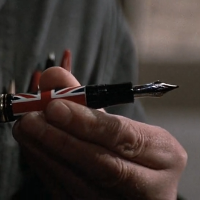
    Seen in Never Say Never Again, this gadget is firmly in the “what the heck” school of Bond gadgets. The pen has an explosive tip and launches it with a pneumatic hiss. The film’s femme fatale Fatima is ultimately defeated by Bond thanks to this gadget. After all her awesome action sequences, it’s almost a shame to see her laid low by a ballpoint pen. At least it was a ridiculously cool explosive pen, but still.

    Rocket Cigarette

    Photo Credit: Time

    Proving that the film was made in 1967, You Only Live Twice features a scene where Bond gets out of a dire situation by asking to smoke a cigarette. Blofeld, the film’s antagonist and one of Bond’s nemeses, has captured Bond and plans to kill him. Before his execution, Bond asks if he can smoke one last cigarette. Blofeld’s men acquiesce and are shocked to find Bond has a rocket-launching cigarette. Q seems to have a taste for making explosive-launching gadgets out of mundane objects.

    Flamethrower Bagpipe

    Photo Credit: Daily Record

    1999’s The World is Not Enough featured this absurd gadget. Bond is presented with a bagpipe that not only houses a flamethrower, but also has a machine gun functionality. Proving that the Brosnan Era had some of the most over-the-top gadgets, this one didn’t see any actual combat in the film. It did, however, elicit an awful joke from Bond. “I suppose we’ve all got to pay the piper sometime, right Q?”

    X-Ray Shades

    Photo Credit: YouTube

    Also seen in The World is Not Enough, these X-Ray Shades are actually pretty cool. As CGI had caught up to the Bond films, more advanced gadgets like this were easier to portray on-screen. Brosnan’s Bond is able to keep tabs on the guns being toted by henchmen thanks to these stylish, high-tech glasses.

    Detonite Toothpaste

    Photo Credit: James Bond Wiki

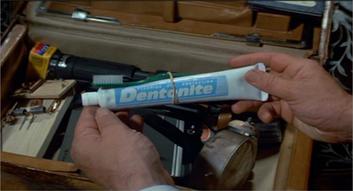
    License to Kill, released in 1989, features some downright cheesy gadgets, but they’re all still awesome. One such gadget is the Detonite-brand explosive toothpaste used by Timothy Dalton’s Bond. While the name is hardly subtle, and the gag is a bit silly, it’s still a cool idea. It makes sense that a plastic explosive could be stored in this form, and it makes for a good laugh. It’s hard to ask for more than that from a Bond gadget!

    Laser Camera

    Photo Credit: Pinterest

    Speaking of goofy gadgets from License to Kill, here’s the laser-firing Polaroid that nearly kills Bond on accident. In this scene, Pam Bouvier grabs what she thinks is a normal camera to snap a picture of Bond and Q. Thankfully Q identifies the deadly gadget in time and warns bond, and they avoid a painful death. You know, you’d think they’d know better than to just leave dangerous tech like this just laying around!

    Fingerprint-Reading Walther P99

    Photo Credit: BAMF Style

    Daniel Craig’s Bond has relatively few gadgets, as his films are grittier and more realistic. One of the few gadgets he does carry makes the list because of its col implementation. In the film, Bond is equipped with a Walther P99 that reads his palm and fingerprints. It remains locked in safety mode until it reads Bond’s hand, thus making it impossible for baddies to use his signature gun against him. This one is subtle, but it nods to Bond’s gadget-heavy past.

    Tazer Phone

    Photo Credit: Moviefone

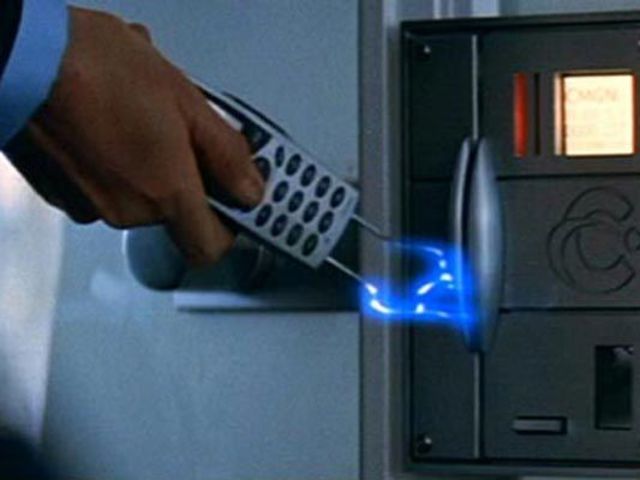
    When Tomorrow Never Dies was released in 1997, smartphones were still a decade from becoming a reality. However, the high-tech gadget seen in this bond film nearly fits the bill. In the movie, its main function is as an electricity-slinging tazer. However, Bond uses it to summon his BMW, pick locks and it even reads his fingerprint. Some of the functionality the phone sports has even become a reality now!

    Which is our Favorite of the Coolest James Bond Gadgets? The Briefcase

    Photo Credit: Pinterest

    The trick briefcase seen in 1963’s From Russia With Love is easily our favorite of all Bond’s gadgets. It’s a spy’s best friend, loaded to the gills with neat tricks. Sporting everything from guns to knives to tear gas, the briefcase was indispensable to Bond. And to think he nearly dismissed it before Q urged him to bring it along! This gadget was one of the first to solidify Bond’s reliance on tech given to him by Q. It’s a good thing too, as that would go on to become one of his most memorable traits!

  • Flop Ten: Ten Worst Games of All Time

    Flop Ten: Ten Worst Games of All Time

    No one wants to get home with a brand-new game and find out that it’s actually terrible. With that in mind, we’re looking at the ten worst games of all time. This list is limited to games that received physical releases and were licensed to be released on their console. This is to avoid discussing unfinished or bootlegged games, or mobile shovel-ware. This list instead focuses on games that were intended to be well-received and earnestly tried to be competent video games. Well, sort of.

    Aliens: Colonial Marines

    Photo Credit: TechSpot

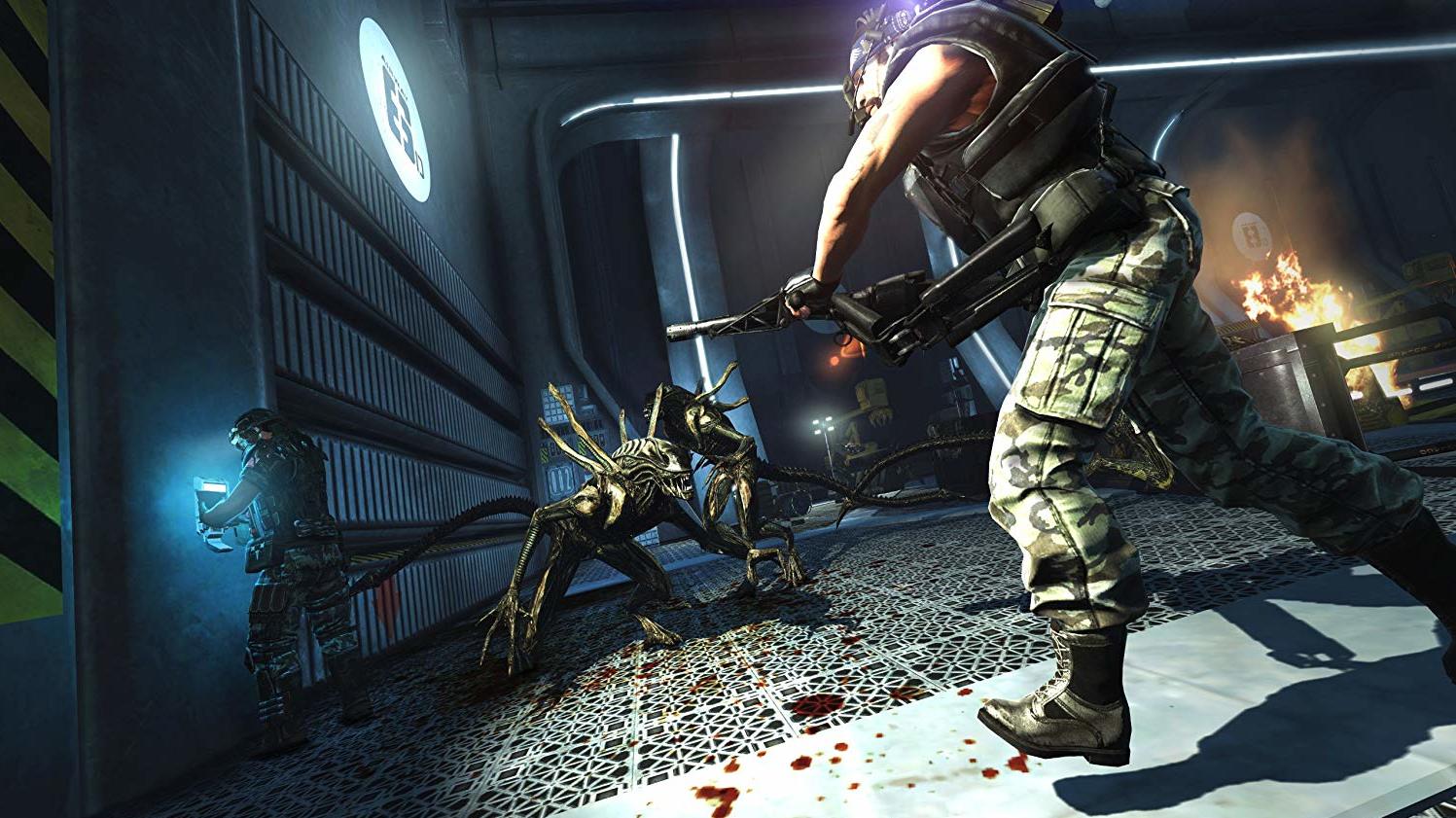
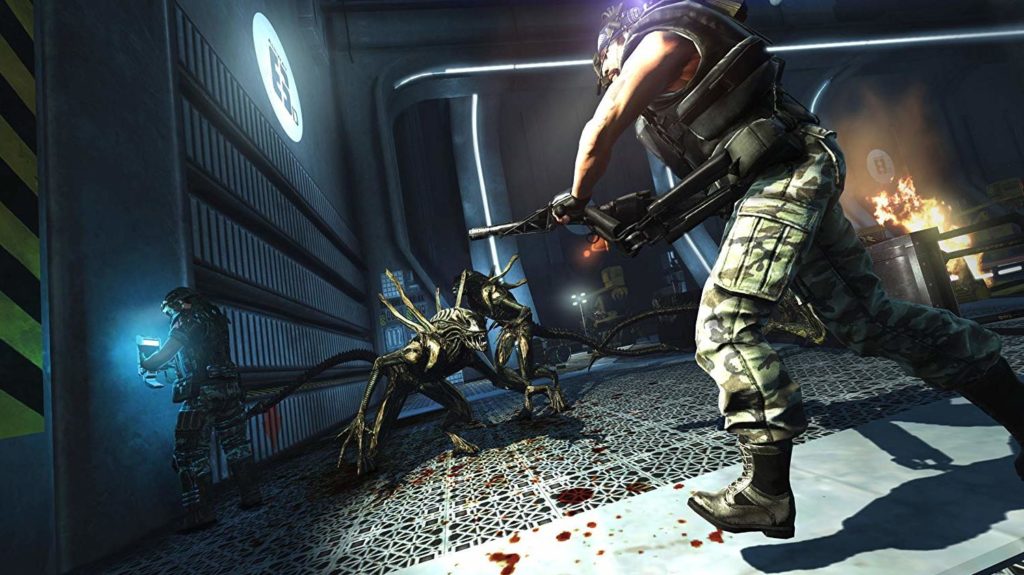
    The most recent game on our list also rates the tenth slot. Aliens: Colonial Marines has the unfortunate distinction of being laid low by a typo. Recent developments have shown that this games notoriously terrible (read: nonexistent) enemy AI was not the result of a lack of effort by developer Gearbox. Alien fans modded the game to fix the issues with the game’s AI and found that a typo had rendered the xenomorph enemies useless in a fight. By correcting that one-character typo, the game became not only playable, but excellent. The enemies attack from unconventional angles, fight viciously and are genuinely terrifying. All that because someone made the wrong keystroke.

    Superman 64

    Photo Credit: Jokes Battle Wikia

    Before he went on to star in awful films in the DCEU, Superman was the star of an awful video game for the N64. Superman, more commonly called Superman 64, was an attempt to cash in on the then-popular Superman Animated Series. Sadly, this game is a mess. There is little in the way of polish or care given to any aspect of the game. The protagonist controls poorly, and the bulk of the game involves flying through rings. What little combat the game has is stiff and unfun. Sadly, of Superman’s laundry list of superpowers, starring in good video games is not one of them.

    Aquaman: Battle for Atlantis

    Photo Credit: Xbox Addict

    Speaking of DC characters who simply can’t do anything right, Aquaman’s notorious entry into video gaming is terrible. Similar to Superman’s N64 game, this game is bland and uninspired. You swim from place to place, bumping into invisible walls and trying to fight henchmen (and boredom). However, the combat is unbelievably stiff and slow. This might be forgivable if you ever did anything besides fight boring enemies in boring underwater fist-fights. One wonders if Aquaman has ever been compelling.

    Bubsy 3D

    Photo Credit: IMDb

    The transition to 3D was quite rough on many major franchises. Nintendo made this transition quite well, thanks to their excellent Mario and Zelda games on the N64. However, Bubsy wasn’t so lucky. The 2D-platforming mascot’s first and only 3D entry is questionable at best. Between sluggish controls, awful one-liners and a dizzying camera, this game is nearly-unplayable. The worst part is that you can tell the developers really wanted Bubsy to be a competitor with Mario. If only they’d designed a game to live up to that ambition.

    Steel Battalion: Heavy Armor

    Photo Credit: YouTube

    The shining example of why Kinect didn’t work, Steel Battalion: Heavy Armor took a decent concept and flushed it down the drain. The Steel Battalion franchise is a unique take on the giant mech genre, wherein the mechs are presented as realistic military technology. They’re generally incredibly deep, engaging simulation-style games. Sadly, this one tried to use Kinect and the Xbox controller in concert and ended up doing both poorly. It’s nearly impossible for the Kinect to read your movements while you’re sitting, and you’re supposed to be seated in the cockpit of your mech. If only the game hadn’t been too ambitious for its own good, it might have been a good entry to the franchise for more casual players.

    Link: The Faces of Evil

    Photo Credit: IGN

    Somehow, Phillips got the rights to make a couple of Zelda games. If you think that sounds like a good idea, you probably bought Superman 64. This game has some of the most cringe-inducing cutscenes and voice “acting” ever seen in a video game. The gameplay is stiff, the backgrounds look awful and exploration is nonexistent. These games are good for one thing: a ton of hilarious memes that popped up using the awful art and animations.

    Ride to Hell: Retribution 1%

    Photo Credit: Amazon

    This game is almost transcendently bad. It’s the video game equivalent of The Room, so absurdly awful that it can’t have occurred on accident. Every moment of gameplay is so absurd and terrible that it makes one wonder if the developers truly thought this would be compelling. Each female character is meant to be bedded, and each biker is a killing machine. Nearly every fight is filled with quick-time events, and each death is just silly in its gore and violence. Of all the games on this list, Ride to Hell is the one that actually merits a playthrough.

    Big Rigs: Over the Road Racing

    Photo Credit: Know Your Meme

    Produced for about $6 by Stellar Stone, Big Rigs was released in a pre-alpha state. That’s not a statement of quality but a matter of fact. The game features nearly no mechanics and very few textures. Nominally the game is meant to be a racing game, but the enemy doesn’t try to race you. Or move at all. And the game has no collision detection, so you just slide through everything. And when you cross the finish line you see a screen that says, “You’re Winner.” See, this is why you don’t contract a Russian company with three employees to make a game for $6.

    Pac-Man: Atari 2600

    Photo Credit: YouTube

    About as awful as ports get, this version of Pac-Man attempted to capitalize on the popularity of the original arcade cabinet. Atari, in their rush to produce the game and cash in on it, forgot that their system couldn’t handle how complex Pac-Mac was. Go ahead and have a good laugh at that sentence you just read, because the rest of this is more sad than funny. As you can see from the screenshot, the 2600 version looks unlike the original, as the 2600 had so little memory. Ergo, the graphics are little more than different floating squares. Further, the 2600 couldn’t render more than one ghost per frame. This meant that the ghosts flickered as each one was rendered in a separate frame.

    Atari was so confident that this port would excel that they produced more copies of it than there were 2600 systems sold at the time. Needless to say, the game bombed. This game and the number one entry on this list contributed to the Great Video Game Crash, and Atari is almost solely to blame.

    The Worst of the Worst Games of All Time: E.T. The Extra-Terrestrial

    Photo Credit: Super Adventures in Gaming

    In the early 80’s Spielberg’s movie E.T. was a big deal. Everyone had seen it and Atari was in a rush to cash in. Atari’s meteoric rise had surprised even them, so they wanted to strike while the iron was hot. They had this tie-in video game rush-ordered, demanding that it be done in 5 weeks. A game of any size can’t be completed in 5 weeks, so as you can imagine, the finished product was absolutely terrible. In fact, referring to it as a “finished” product is misleading, as it is unfinished.

    Just like Pac-Man, Atari overproduced the game by millions of units, and ended up dumping ninety percent of them in a landfill in the desert. Between E.T. and Pac-Man, Atari almost killed gaming in its earliest days by overproducing terrible quality games. Atari would go on to sink themselves by the 90’s. Atari is poised to make a comeback to the world of gaming with a new system, the VCS. Here’s hoping they’ve learned their lessons.

  • Three More Cities Getting 5G: AT&T

    Three More Cities Getting 5G: AT&T

    5G network connectivity is seen as foundational technology for the future of high-tech solutions. Self-driving cars, streaming virtual reality and more hinges upon 5G networks. In much the way that 4G LTE was a huge step up from 3G, 5G is slated to revolutionize network speeds. As such, each city slated for the early rollout of the technology is excited to see what it brings. T-Mobile recently remarked that it felt as though New York was more important than Waco in the rollout of the new network. AT&T begs to differ, though.

    AT&T and 5G

    A recent statement by AT&T, regarding the T-Mobile comments, had this to say. “We politely disagree — all Americans should have access to next-gen connectivity to avoid a new digital divide.” Putting their money where their mouths are, AT&T also promised three more cities receiving the 5G rollout. Charlotte and Raleigh, NC, as well as Oklahoma City will be receiving the trials of the new tech. That’s a big deal: those are interesting markets to target. North Carolina is hardly “backwoods” area and focusing on it will allow AT&T to gather important network data.

    Timetable

    Major cell service providers are rushing to have 5G live by early 2019. That’s about the time we expect to see the first 5G-compatible handsets. Handsets made before then won’t be able to make use of the new network standard, sadly. However, the earliest we’ll see nationwide 5G coverage is likely early 2020. That’s even assuming that the networks work that quickly. LTE took a number of years to go from small-scale tests to nationwide-rollout.

    Even then, each network is different. Sprint users are all-too-familiar with being in LTE deadzones and relying on 3G, or worse, 1x services. The more stable providers like AT&T and Verizon will likely have wider network coverage faster, if history repeats itself. That said, this technology is foundational, and will likely change the nature of wireless technology in the years to come.

  • Asus ZenBook S: Surprisingly Good

    Asus ZenBook S: Surprisingly Good

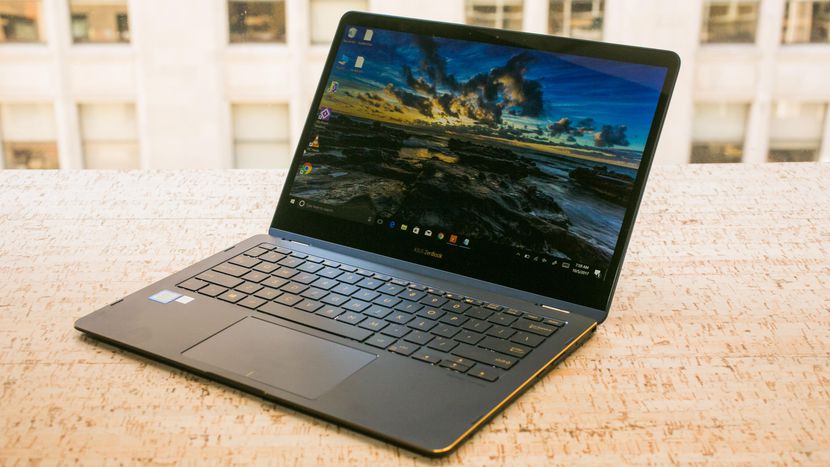
    Apple is the undisputed champ when it comes to extra-thin, stylish laptops. The MacBook line is ostensibly awesome for a number of reasons. That said, PC fans aren’t without hope in the “thin, stylish laptop” race. Case in point: the Asus ZenBook S, a surprisingly good extra-thin entry from Asus. As a sleeper hit, many wouldn’t have expected Asus to deliver something this good. Expectations were low but thoroughly blown out of the water, and we’re not complaining. So, what makes it so good? Let’s discuss the finer points.

    Design and Feel

    You’d be forgiven for thinking this was a 2-in-1 at a glance. It’s little, it’s sleek and it has in interesting silver design. The signature Asus swirl is present in the brushed-metal lid. The chamfered edges are a soft gold, and the laptop comes with either red or blue accents. Little touches of understated elegance give this laptop a premium feel all its own.

    Specs and Performance

    There are two configurations for this laptop, and both are quite good. The more expensive configuration packs an i7 processor, 16GB of RAM and a 4K display. All of that comes with 512 BB of storage on a solid-state drive. You get this all for $1,500, which is pretty nuts when you think about it. While its not going to be powering through any modern gaming rigs, it’s great at video and photo editing and drawing. If you’re a content creator looking for a great workstation, this one has what you need. This laptop is incredible for professionals and students alike.

    Asus ZenBook S Bottom Line

    Unless you’re really adamant about gaming on a laptop, this is a great pick for you. If you’re looking to edit photos, videos or create slideshows for work, this laptop will handle it. If you like making a stylish statement with your laptop, the ZenBook has you covered. If you need something to do homework on while zipping between YouTube, Facebook and a word processor, this is your computer. Really, its hard to overstate how impressed we are with this exceedingly thin and stylish laptop. It’s well worth the money and an ample competitor with the MacBook line.

    Feature Image Credit: CNET

  • Stop Scrolling – Everything You Need To Know About Portable Oxygen Concentrators

    Stop Scrolling – Everything You Need To Know About Portable Oxygen Concentrators

    Light weight, long-lasting portable oxygen concentrators are vital for people with COPD and other respiratory conditions. Portable oxygen concentrators provide stable and reliable airflow for long periods of time, and they can also be taken on the road to help people maintain their independence.

    If your doctor has recommended home oxygen therapy, then choosing the right oxygen concentrator can be difficult. Oxygen output, battery life, size and weight are all important factors.

    How Does a Portable Oxygen Concentrator Work?

    A portable oxygen concentrator receives air, purifies it, and then distributes the newly formed air. Before it goes into the concentrator, air is made up of 80 percent nitrogen and 20 percent oxygen. After the air goes through the oxygen concentrator, it comes out as 90 to 95 percent pure oxygen and 5 to 10 percent nitrogen. The nitrogen is separated to give the patient the highest dose of oxygen possible, as it is difficult to get that percentage of oxygen without the help of a medical device.

    What Makes Up a Portable Oxygen Concentrator?

    There are many parts that make up a portable oxygen concentrator. A compressor and sieve bed filter are a couple of the main parts.

    The compressor compresses air that is filtered into the concentrator, then delivers the air in a continuous stream. The compressed air moves to the sieve bed filters. The sieve bed filter plays an important role, as it is the device that removes the nitrogen from the air. A material called Zeolite, which is a six-sided microscopic cube with holes on each side, is in the sieve bed and this is what removes the nitrogen from the air.

    Two sieve beds are located in the concentrator. After air is first compressed in the concentrator, it is forced into the first sieve bed. Oxygen is sent into the product tank. The first sieve bed then gets filled up with nitrogen. Next, the gas flow is switched and the compressed air is moved to the second sieve bed. The first sieve bed’s compressor is sent to the outside room and the air from the product tank goes back into the first sieve bed.

    The drop in pressure from the first sieve bed and the weakening of oxygen makes the Zeolite release nitrogen. The Oxygen and Nitrogen come back together and are released in the room as regular air. The air is then compressed and sent to the second sieve where Oxygen is moved through it to the Product Tank. The whole cycle starts over again with the first sieve after a few seconds.

    Other important parts are the cooling system that keeps the portable oxygen concentrator from overheating, and the nasal cannula that delivers the purified oxygen after the oxygen has been passed through all the sieve bed filters. The cannula helps improve oxygen absorption.

    Advantages of Oxygen Concentrators

    Both portable and home oxygen concentrators have numerous advantages for those patients needing oxygen therapy. Oxygen concentrators are much less dangerous than traditional oxygen cylinders, which can, if ruptured or leaking, cause or increase the combustion rate of a fire. Oxygen concentrators, on the other hand, pose no such danger. Home and portable oxygen concentrators that can “make” their own oxygen have become more popular and widely used than old-fashioned oxygen tanks. The other main benefit of oxygen concentrators is the ease and increased ability to be mobile with oxygen. Portable oxygen concentrators provide the necessary oxygen anywhere the user goes, even on airplanes. The FAA (Federal Aviation Administration) has ruled that all passengers who require oxygen must be allowed to bring FAA-approved portable oxygen concentrators on all U.S. aircraft with more than 19 seats. Foreign airlines must also allow portable oxygen concentrators on all flights to and from U.S soil.

    We’ve evaluated several of the leading models to bring you our top three — we like the SeQual eQuinox, the GCE Zen-O and the Respironics SimplyGo. Search our top picks for the best portable oxygen concentrators on the market today. Get outside and breathe easy.

    The SeQual eQuinox is a powerful, continuous-flowing, oxygen concentrator that’s roughly the size of a small piece of luggage. The eQuinox features a voice-control interface that’s compatible with eight different languages, and it has automated alerts for low batteries, flow rate changes, oxygen purity warnings and various possible system malfunctions. It features an easily replacable front-loading battery that can last up to six hours. The eQuinox features a high oxygen output with nine different continuous flow settings with a maximum rate of 3.0 LPM. Weighing just 14 pounds, the eQuinox is one of the lightest portable oxygen concentrators on the market. It’s user-friendly and protected by a three-year warranty, making this a great model for anyone in need of a home portable oxygen concentrator. The SeQual eQuinox is on sale at the Oxygen Concentrator Store right now. 1st Class Medical offers 30-day risk free trials and up to 70% off on used air concentrator equipment, while LPT Medical also offers 70% off sales. Lots of online retailers can offer these concentrators with amazing deals!

    Next is the GCE Zen-O, another small unit with a variety of features. It weighs just 10 pounds when equipped with just one battery, and when adding a second battery (weighing just 2 pounds) the total battery life reaches up to eight hours at the lowest pulse setting and six hours of continuous flow. This model features a custom carrying case that makes getting around easier, and the intuitive user interfaces features large buttons and a clear screen. With a three-year warranty and a reputation for durability — not to mention the ability to operate all day, every day — the Zen-O is a great choice for people who are mobile while still requiring several hours of daily oxygen therapy. The GCE Zen-O Portable Oxygen Concentrator is on sale from Sleep Direct for $2,495 for the single-battery model and $2,695 for the dual-battery model. Other online retailers, such as CPAP Direct, are also offering discounts on this concentrator.

    If you want the most lightweight model available, then check out the Respironics SimplyGo. This portable oxygen concentrator also weighs just 10 pounds and still provides up to 2.9 hours of continuous oxygen at lower air flow rates. The SimplyGo is one of the best options on the market for people who lead active lifestyles or frequently travel. It offers up to six pulse delivery settings along with continuous flow rates up to 2.0 LPM. Battery life isn’t as lengthy as other models, but adding a second battery via the unit’s external connector effectively doubles the unit’s 3.4 hours of maximum battery life. The SimplyGo is also compatible with CPAP and BiPAP machines, and it’s equipped to automatically shift from pulse mode to continuous flow mode if it detects a stoppage of breathing. It’s durable, easy to operate and great for portable use. Most retailers sell this for nearly $3,000, but right now you can get it on sale from MBR Medicals or Help Medical Supplies for less than $2,000.


  • Stop Scrolling – Everything You Need To Know About Portable Oxygen Concentrators

    Stop Scrolling – Everything You Need To Know About Portable Oxygen Concentrators

    Light weight, long-lasting portable oxygen concentrators are vital for people with COPD and other respiratory conditions. Portable oxygen concentrators provide stable and reliable airflow for long periods of time, and they can also be taken on the road to help people maintain their independence.

    If your doctor has recommended home oxygen therapy, then choosing the right oxygen concentrator can be difficult. Oxygen output, battery life, size and weight are all important factors.

    How Does a Portable Oxygen Concentrator Work?

    A portable oxygen concentrator receives air, purifies it, and then distributes the newly formed air. Before it goes into the concentrator, air is made up of 80 percent nitrogen and 20 percent oxygen. After the air goes through the oxygen concentrator, it comes out as 90 to 95 percent pure oxygen and 5 to 10 percent nitrogen. The nitrogen is separated to give the patient the highest dose of oxygen possible, as it is difficult to get that percentage of oxygen without the help of a medical device.

    What Makes Up a Portable Oxygen Concentrator?

    There are many parts that make up a portable oxygen concentrator. A compressor and sieve bed filter are a couple of the main parts.

    The compressor compresses air that is filtered into the concentrator, then delivers the air in a continuous stream. The compressed air moves to the sieve bed filters. The sieve bed filter plays an important role, as it is the device that removes the nitrogen from the air. A material called Zeolite, which is a six-sided microscopic cube with holes on each side, is in the sieve bed and this is what removes the nitrogen from the air.

    Two sieve beds are located in the concentrator. After air is first compressed in the concentrator, it is forced into the first sieve bed. Oxygen is sent into the product tank. The first sieve bed then gets filled up with nitrogen. Next, the gas flow is switched and the compressed air is moved to the second sieve bed. The first sieve bed’s compressor is sent to the outside room and the air from the product tank goes back into the first sieve bed.

    The drop in pressure from the first sieve bed and the weakening of oxygen makes the Zeolite release nitrogen. The Oxygen and Nitrogen come back together and are released in the room as regular air. The air is then compressed and sent to the second sieve where Oxygen is moved through it to the Product Tank. The whole cycle starts over again with the first sieve after a few seconds.

    Other important parts are the cooling system that keeps the portable oxygen concentrator from overheating, and the nasal cannula that delivers the purified oxygen after the oxygen has been passed through all the sieve bed filters. The cannula helps improve oxygen absorption.

    Advantages of Oxygen Concentrators

    Both portable and home oxygen concentrators have numerous advantages for those patients needing oxygen therapy. Oxygen concentrators are much less dangerous than traditional oxygen cylinders, which can, if ruptured or leaking, cause or increase the combustion rate of a fire. Oxygen concentrators, on the other hand, pose no such danger. Home and portable oxygen concentrators that can “make” their own oxygen have become more popular and widely used than old-fashioned oxygen tanks. The other main benefit of oxygen concentrators is the ease and increased ability to be mobile with oxygen. Portable oxygen concentrators provide the necessary oxygen anywhere the user goes, even on airplanes. The FAA (Federal Aviation Administration) has ruled that all passengers who require oxygen must be allowed to bring FAA-approved portable oxygen concentrators on all U.S. aircraft with more than 19 seats. Foreign airlines must also allow portable oxygen concentrators on all flights to and from U.S soil.

    We’ve evaluated several of the leading models to bring you our top three — we like the SeQual eQuinox, the GCE Zen-O and the Respironics SimplyGo. Search our top picks for the best portable oxygen concentrators on the market today. Get outside and breathe easy.

    The SeQual eQuinox is a powerful, continuous-flowing, oxygen concentrator that’s roughly the size of a small piece of luggage. The eQuinox features a voice-control interface that’s compatible with eight different languages, and it has automated alerts for low batteries, flow rate changes, oxygen purity warnings and various possible system malfunctions. It features an easily replacable front-loading battery that can last up to six hours. The eQuinox features a high oxygen output with nine different continuous flow settings with a maximum rate of 3.0 LPM. Weighing just 14 pounds, the eQuinox is one of the lightest portable oxygen concentrators on the market. It’s user-friendly and protected by a three-year warranty, making this a great model for anyone in need of a home portable oxygen concentrator. The SeQual eQuinox is on sale at the Oxygen Concentrator Store right now. 1st Class Medical offers 30-day risk free trials and up to 70% off on used air concentrator equipment, while LPT Medical also offers 70% off sales. Lots of online retailers can offer these concentrators with amazing deals!

    Next is the GCE Zen-O, another small unit with a variety of features. It weighs just 10 pounds when equipped with just one battery, and when adding a second battery (weighing just 2 pounds) the total battery life reaches up to eight hours at the lowest pulse setting and six hours of continuous flow. This model features a custom carrying case that makes getting around easier, and the intuitive user interfaces features large buttons and a clear screen. With a three-year warranty and a reputation for durability — not to mention the ability to operate all day, every day — the Zen-O is a great choice for people who are mobile while still requiring several hours of daily oxygen therapy. The GCE Zen-O Portable Oxygen Concentrator is on sale from Sleep Direct for $2,495 for the single-battery model and $2,695 for the dual-battery model. Other online retailers, such as CPAP Direct, are also offering discounts on this concentrator.

    If you want the most lightweight model available, then check out the Respironics SimplyGo. This portable oxygen concentrator also weighs just 10 pounds and still provides up to 2.9 hours of continuous oxygen at lower air flow rates. The SimplyGo is one of the best options on the market for people who lead active lifestyles or frequently travel. It offers up to six pulse delivery settings along with continuous flow rates up to 2.0 LPM. Battery life isn’t as lengthy as other models, but adding a second battery via the unit’s external connector effectively doubles the unit’s 3.4 hours of maximum battery life. The SimplyGo is also compatible with CPAP and BiPAP machines, and it’s equipped to automatically shift from pulse mode to continuous flow mode if it detects a stoppage of breathing. It’s durable, easy to operate and great for portable use. Most retailers sell this for nearly $3,000, but right now you can get it on sale from MBR Medicals or Help Medical Supplies for less than $2,000.


  • TOP 3 RUNNING SHOE RETAILERS

    TOP 3 RUNNING SHOE RETAILERS

    Running relieves stress, strengthens your immune system and keeps you in shape! In the U.S. alone, more than 64 million people went jogging or running in 2016. Even with all the great benefits and growing popularity running can also cause a lot of extra stress on your feet, legs, and back. This is especially true if you are not wearing quality running shoes. 

    Trying to find good running shoes isn’t always easy, but these three running shoe retailers will help you find the best possible shoes to keep you running for as long as possible.

    TOP 3 RUNNING SHOE RETAILERS

    These top 3 retailers provide not only get great running shoes but also help you save by having better prices than most other retailers. The top three running shoe retailers are Finish Line, Running Warehouse, and Road Runner Sports. All three of these retailers offer the latest running shoes from well known brands like Nike and Adidas. They also offer lesser known brands if you are interested in trying new brands or prefer a particular fit or style. For those experienced runners  who know a certain brand and shoe is perfect, you can find those shoes at a much lower price at these top retailers.

    Do these retailers only sell shoes?

    No, you can find many running and athletic accessories as well as athletic clothing in all three places. Their deals include items like socks, insoles, headbands, hats, shorts, and other apparel that makes running more comfortable and keeps you stylish.

    What kind of shipping cost can be expected?

    Running Warehouse offers free two-day shipping and free returns. You can opt to have a package of one to four pounds shipped overnight for $9.99. Road Runner Sports also offers free shipping. Finish Line’s shipping is a bit more complicated. If your package contains only new, non-sale items and the subtotal comes to over thirty dollars, they offer free shipping. If the order includes any discounted items, either sale or discontinued, there is a flat rate shipping charge of seven dollars. Some of their premium shoes are not included in either deal.

    What about returns?

    Finish Line offers returns up to 45 days. You only need to go online and pick the item you wish to return from your purchase history. You then receive a return label to print out and return your item free. Running Warehouse offers a full 90-day money back guarantee and will give you a return label to use for free shipping. Road Runner will refund any returns on new items within sixty days. For exchanges, VIP members can exchange new or used footwear within ninety days. For those who are not members, the exchange on new or used footwear is within forty days.

    What is the Road Runner VIP program?

    Road Runner offers a program that normally costs $28.99 a year, although they often run specials that allow new members to get their first year as low as $1.99. VIP members get access to deals not available to the general public. They also get a guarantee that they will get the best price anywhere in the country on a certain pair of shoes, a ten percent discount on all items at all times, a full ninety days to try shoes, socks, and insoles and a guaranteed return if they aren’t what you want.

    How to find the right shoe for you

    WHAT IS PRONATION, AND WHY DOES IT MATTER?

    Picking the right shoe for your running style is as important as the retailer. That is why you should understand pronation and how it impacts your shoe selection.  Pronation is part of the natural movement of the human body and refers to the way your foot rolls inward for impact distribution upon landing. Understanding your pronation type can help you find a comfortable running shoe.

    Underpronators (supinators) need a lot of cushioning to avoid impact injuries
    Neutral pronators can wear a wide variety of shoes
    Overpronators should look for support or structured cushioning shoes
    Push Off: pressure on smaller toes on outside of foot
    Injuries: plantar fasciitis, shin splints, ankle strain
    Foot type: high arches


    CHECK WEAR PATTERNS ON YOUR SHOE

    For Underpronators/Supinators:

    The outside of your running shoes show the most wear. If you put your running shoes on a flat surface, you may notice a slight outward tilt.

    For Neutral Runners:

    The soles of your running shoes show wear in an S-shaped pattern, from the outer (lateral) heel to the big toe. If you put your shoes on a flat surface, you may not notice any tilt

    For Overpronators:

    Extra wear on the inside of the heel and under the ball of the foot, especially the big toe. If you put your shoes on a flat surface, you may notice an inward tilt.


  • TOP 3 RUNNING SHOE RETAILERS

    TOP 3 RUNNING SHOE RETAILERS

    Running relieves stress, strengthens your immune system and keeps you in shape! In the U.S. alone, more than 64 million people went jogging or running in 2016. Even with all the great benefits and growing popularity running can also cause a lot of extra stress on your feet, legs, and back. This is especially true if you are not wearing quality running shoes. 

    Trying to find good running shoes isn’t always easy, but these three running shoe retailers will help you find the best possible shoes to keep you running for as long as possible.

    TOP 3 RUNNING SHOE RETAILERS

    These top 3 retailers provide not only get great running shoes but also help you save by having better prices than most other retailers. The top three running shoe retailers are Finish Line, Running Warehouse, and Road Runner Sports. All three of these retailers offer the latest running shoes from well known brands like Nike and Adidas. They also offer lesser known brands if you are interested in trying new brands or prefer a particular fit or style. For those experienced runners  who know a certain brand and shoe is perfect, you can find those shoes at a much lower price at these top retailers.

    Do these retailers only sell shoes?

    No, you can find many running and athletic accessories as well as athletic clothing in all three places. Their deals include items like socks, insoles, headbands, hats, shorts, and other apparel that makes running more comfortable and keeps you stylish.

    What kind of shipping cost can be expected?

    Running Warehouse offers free two-day shipping and free returns. You can opt to have a package of one to four pounds shipped overnight for $9.99. Road Runner Sports also offers free shipping. Finish Line’s shipping is a bit more complicated. If your package contains only new, non-sale items and the subtotal comes to over thirty dollars, they offer free shipping. If the order includes any discounted items, either sale or discontinued, there is a flat rate shipping charge of seven dollars. Some of their premium shoes are not included in either deal.

    What about returns?

    Finish Line offers returns up to 45 days. You only need to go online and pick the item you wish to return from your purchase history. You then receive a return label to print out and return your item free. Running Warehouse offers a full 90-day money back guarantee and will give you a return label to use for free shipping. Road Runner will refund any returns on new items within sixty days. For exchanges, VIP members can exchange new or used footwear within ninety days. For those who are not members, the exchange on new or used footwear is within forty days.

    What is the Road Runner VIP program?

    Road Runner offers a program that normally costs $28.99 a year, although they often run specials that allow new members to get their first year as low as $1.99. VIP members get access to deals not available to the general public. They also get a guarantee that they will get the best price anywhere in the country on a certain pair of shoes, a ten percent discount on all items at all times, a full ninety days to try shoes, socks, and insoles and a guaranteed return if they aren’t what you want.

    How to find the right shoe for you

    WHAT IS PRONATION, AND WHY DOES IT MATTER?

    Picking the right shoe for your running style is as important as the retailer. That is why you should understand pronation and how it impacts your shoe selection.  Pronation is part of the natural movement of the human body and refers to the way your foot rolls inward for impact distribution upon landing. Understanding your pronation type can help you find a comfortable running shoe.

    Underpronators (supinators) need a lot of cushioning to avoid impact injuries
    Neutral pronators can wear a wide variety of shoes
    Overpronators should look for support or structured cushioning shoes
    Push Off: pressure on smaller toes on outside of foot
    Injuries: plantar fasciitis, shin splints, ankle strain
    Foot type: high arches


    CHECK WEAR PATTERNS ON YOUR SHOE

    For Underpronators/Supinators:

    The outside of your running shoes show the most wear. If you put your running shoes on a flat surface, you may notice a slight outward tilt.

    For Neutral Runners:

    The soles of your running shoes show wear in an S-shaped pattern, from the outer (lateral) heel to the big toe. If you put your shoes on a flat surface, you may not notice any tilt

    For Overpronators:

    Extra wear on the inside of the heel and under the ball of the foot, especially the big toe. If you put your shoes on a flat surface, you may notice an inward tilt.


  • Ten Coolest Iron Man Suits

    Ten Coolest Iron Man Suits

    Tony Stark has been making his Iron Man suits for decades in the comics, since his debut in 1963. In the time following his introduction, he’s been depicted in dozens of armor suits, each one more awesome than the last. After the release of his first solo movie in 2008, Tony Stark has become a household name. The excellent on-screen portrayal by Robert Downey Jr. has revitalized interest in the once-underappreciated character. Today, we’re looking at the absolute coolest armor suits Tony has ever made. Some of them he wore himself, others he made for his friends. They have one thing in common though: they’re the coolest Iron Man suits out there.

    Mark 1 Armor

    Photo Credit: CBR

    The armor that started it all! When Tony is kidnapped by extremists in a warzone, they force him to make them powerful weapons. Tony acquiesces, but only long enough to distract them from what he’s really making: a suit of badass mechanical armor! The Mk. 1 suit is hardly the coolest looking armor Tony’s made, but that’s not why it makes the list. It makes the list because Tony made it in a cave with very limited resources and under a ton of pressure. This was also before he had built any other Iron Man suits, so he was just assuming the suit would work! Tony would go on to greatly iterate on the armor, of course, but the bones of the design are all present in this prototype.

    Hulkbuster Armor
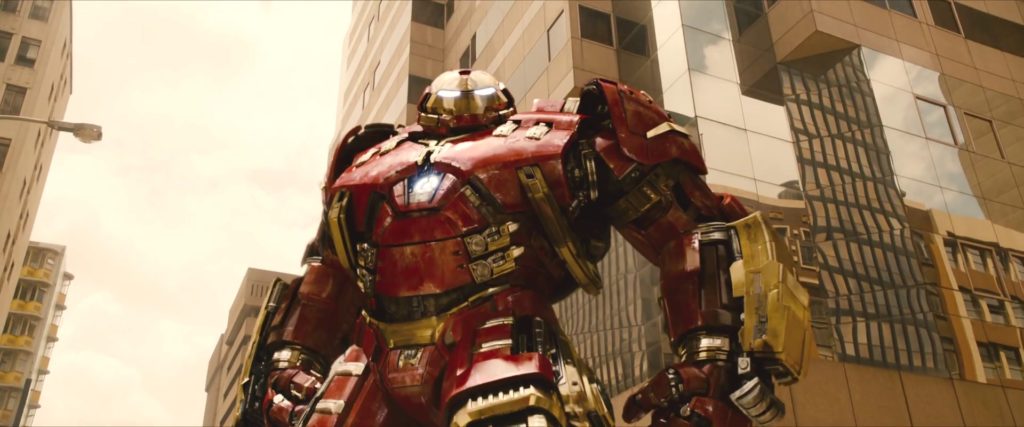
    Photo Credit: MCU Wiki

    Filmgoers were first introduced to this awesome suit of armor in Age of Ultron, but it’s been around in the comics since 1994. As the name implies, Tony made this armor to go toe-to-toe with the Hulk when he gets out of control. As such, the armor is notorious for being unbelievably strong and tough. It uses rocket-powered boosters to back up its thunderous punches. What’s even cooler, the armor goes over Tony’s other suit, making it a suit for a suit. Who doesn’t love giant robots fighting giant green monsters?

    Iron Spider Armor

    Photo Credit: MCU Wiki

    While movie fans first encountered the Iron Spider armor in Spider-Man: Homecoming, the suit debuted in the Civil War event in 2006 in the comics. While Tony himself doesn’t wear the suit, it’s still made from the same tech as his other armors. In both the films and comics, Tony gives the armor to his friend Peter Parker. Peter’s normal suit is mostly just to conceal his identity and doesn’t generally house much technology. The Iron Spider, however, brings Peter up to Tony’s level, tech-wise. An onboard AI, thermal imaging and more give Peter a ton of flexibility in the field. Not to mention, it’s just plain awesome.

    Deep-Space Armor

    Photo Credit: Marvel Database

    In 2013, Iron Man joined the Guardians of the Galaxy. In order to operate in deep space with the team, he created this suit of armor. The Deep-Space armor, which is the Mark 45 suit, is incredibly advanced. It uses repulsor technology to power it in the vacuum of space. It also houses an AI called PEPPER and can communicate with Tony’s suits back on earth. That allows Iron Man to be in many places at once, even when he’s light years from Earth. That’s pretty high-tech!

    Phoenix Buster Armor

    Photo Credit: Iron Man Wiki

    If you thought the Hulk Buster armor was huge and crazy, wait until you see Model 39. Dubbed the Phoenix Buster, Iron Man deployed this suit when the dangerous mutant Phoenix threatened to destroy Earth. In order to stop the Phoenix from wiping out humanity, Tony used this suit to split the flaming bird into five distinct mutants that could be contained more easily. Model 39 is a huge robot, on the scale of something like a Gundam or some other anime mecha. Tony tends to keep his suits to personal-size, so this one is a really interesting outlier.

    War Machine Armor
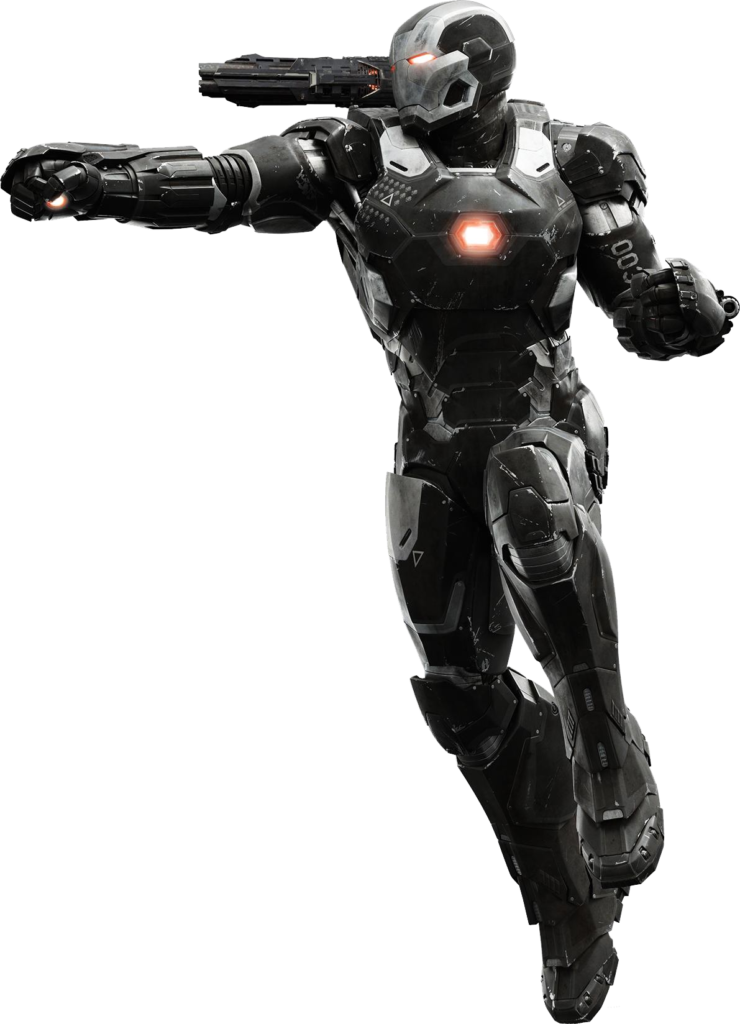
    Photo Credit: MCU Wiki

    The second armor on this list that Tony doesn’t pilot, the War Machine armor has a deep history. Piloted by Tony’s best friend James “Rhodey” Rhodes, he acts as a superhero in his own right with the War Machine suit. This armor shares many design and tech similarities with Tony’s own. The biggest difference between War Machine and Iron Man armors is guns: Rhodey’s suit is lousy with guns. As a military man, it makes sense that Rhodey’s suit would have enough guns to make a tank jealous. It’s also downright awesome, and easily one of our favorite suits.

    Extremis Armor

    Photo Credit: Marvel Database

    In order to combat extreme wounds suffered while serving as Iron Man, Tony injected himself with the Extremis virus. This allowed him to connect to wireless technology and satellites with his very mind. What’s more, the Extremis armor was stored partly in the hollows of Tony’s bones, and he controlled it with his thoughts. Where previous suits had complex interfaces under the armor, the Extremis suit was modified for Tony’s now-unique biology. This made the armor more of a superpower than a gadget and allowed Tony to push the limits of what his Iron Man tech could do.

    Bleeding Edge Armor

    Photo Credit: Iron Man Wiki

    The Bleeding Edge suit, officially designated as Model 37, was seen as a natural extension of Tony’s Extremis armor. While Extremis still had to be stored like a normal armor suit, Bleeding Edge was literally stored within Tony’s body. At his mental command, the armor would manifest through his pores and solidify, thanks to nanotech. That same nanotech makes the armor nearly invincible and its shape can be changed at will. It can appear like normal clothes, other creatures or armors, or anything, really. This suit incorporated every upgrade from Extremis and then some, making it nearly unbeatable.

    Endo-Sym Armor

    Photo Credit: Marvel Database

    If you thought it couldn’t get much more high-tech than the Bleeding Edge armor, well, you’re right. It couldn’t. That’s why the Endo-Sym armor is literally alive. It’s a biological suit made from the same symbiote as Venom and Carnage. The suit, as such, is a blend of technology and living matter that goes above and beyond what the Bleeding Edge armor is capable of. The suit has a psionic link to Tony, and as such he can summon it without any need for technology. The liquid-metal construction of this armor can bind to Tony at will and hardens when it touches skin. It’s fantastically cool, and Tony was pretty much evil while he was using it.

    The Coolest of All Iron Man Suits: Model-Prime Armor

    Photo Credit: Marvel Database

    No suit quite matches up to the style and feel of the Model-Prime armor. While Extremis, Bleeding Edge and Endo-Sym all pushed the boundaries of what Iron Man’s armor could be, Model 51 brought things back to basics. Using the nano-tech from Bleeding Edge but scrapping the somewhat gross internal housing, the Model-Prime is a synthesis of all that came before. The suit has a hexagonal, interlocking look that is unique. It has a look reminiscent of modern cars and fighter jets. Some have even described the suit as “anime-esque,” citing the eyes and sleek look.

    The strongest aspects of the Model-Prime are its flexibility and power. While previous suits were singular in purpose, the Model-Prime is a Swiss Army Knife. If Tony needs a Hulk Buster, the Model-Prime can shift into that. Stealth mode is no longer a separate suit, but a dedicated function of this model. In all, this is the most complete and useful suit Tony has ever made.