Category: News

  • Red Hydrogen One Smartphone Promises to be “Holographic”

    Red Hydrogen One Smartphone Promises to be “Holographic”

    Holograms are a mainstay of sci-fi film and fiction. When you hear “hologram,” I’m sure you’re thinking of Darth Sidious appearing as a ghostly image to threaten Darth Vader. Or maybe you think of hardlight constructions like Halo’s Cortana. Well, the Red Hydrogen One smartphone promises to be holographic, but not like that.  

    Holohraphic Means Depth, This Time 

    According to early reports of the phone, it’s not so much holographic as it is three-dimensional. Looking into the display, things have a depth to them that is impressive for naked-eye viewing. This sounds like a refinement of the technology that powered the Nintendo 3DS. The technology is referred to as “4V holographic,” and is still in its early stages. However, Red seems confident that filmmakers and game makers will be excited for the platform.  

    Red Hydrogen One Specs 

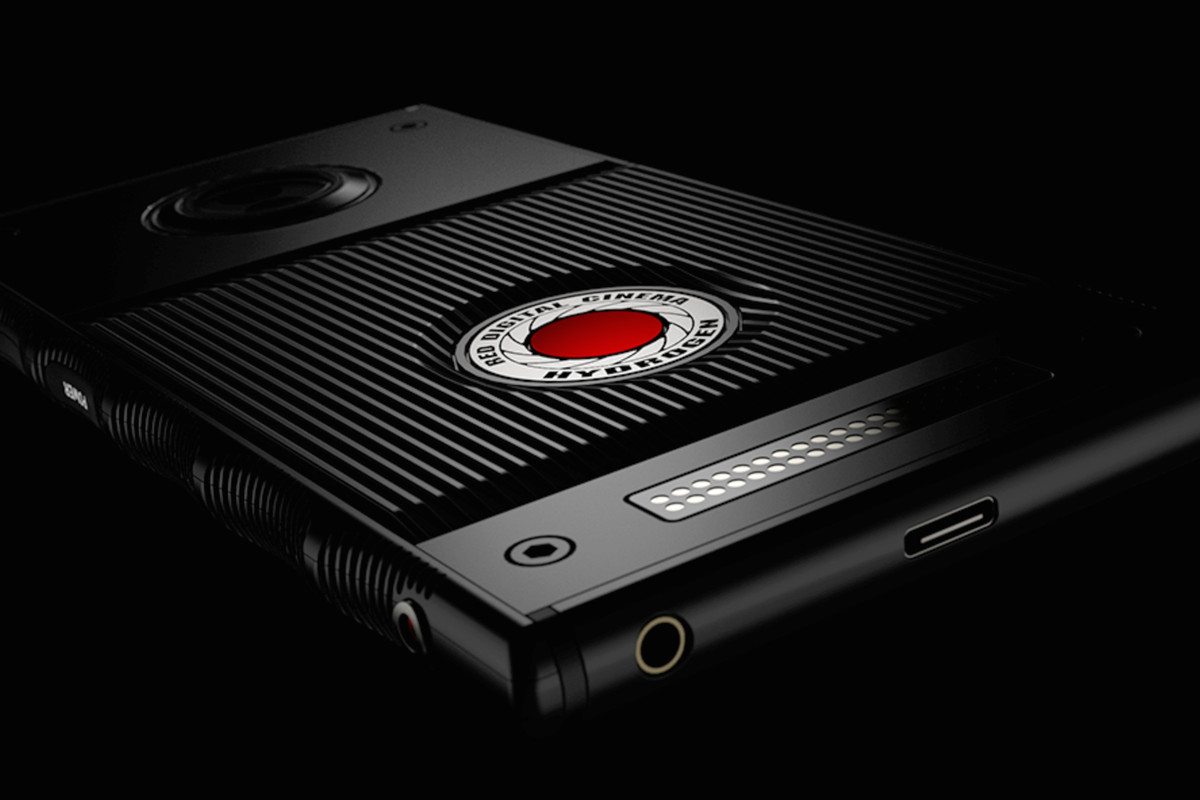
    The Red Hydrogen One will be available on Verizon and AT&T plans. The phone boasts some impressive specifications, like its Qualcomm Snapdragon 835 processor and A3D Spatial Surround sound. It comes in two configurations, one that’s aluminum and one that’s titanium. The phone has an industrial, hard-edge look to it and reports say that it feels heavy and sturdy. Red, well-known for their high-end cameras used in Hollywood films, seems poised to compete with Apple and Samsung in the premium smart phone space.  

    Release Details 

    The phone is slated to ship sometime later this summer. Preliminary reports say that the two constructions will be priced differently. The aluminum-bodied version will go for $1,295, while the titanium one will be $1,595. Wait a minute, sixteen hundred dollars for a smart phone? Red must be incredibly satisfied with the way their holographic screen looks. Since they’ve priced their phone as even more expensive than the iPhone X, Red must be confident. Later this summer, when the experimental holographic smartphone arrives, we’ll find out whether it’s worth the investment.  
  • Computex 2018: What is Asus Up To?

    Computex 2018: What is Asus Up To?

    Asus, known for typically playing second fiddle to Apple, wowed crowds at Computex 2018 on Monday. Asus showed off some absolutely crazy pieces of new tech! These will certainly get you excited for the future of technology. Since we’re so hyped, we rounded up Asus’ three big reveals from the conference.

    ZenBook Pro 

    A very sleek, technologically advanced new laptop, the ZenBook Pro is the more traditional option for those wary of Project Precog. What’s Project Precog? We’ll talk about it in a minute. The ZenBook Pro, though, is this year’s Asus innovation, featuring a trackpad that doubles as a display. You read that right, the new laptop has a tiny 5.5-inch display as a trackpad. Asus is calling this innovation the ScreenPad. The display seems geared at productivity, including functions with Microsoft Office suite of apps. Apple’s TouchBar plays in a similar space, but the ScreenPad is much beefier. This looks pretty awesome, but time will tell just how useful it is. 

    VivoWatch BP 

    This smart watch is promised to carry the world’s first medical-grade blood pressure sensor in a smart watch. Tech like this is a huge step in the right direction. The future of wearables is likely a fusion of medical and consumer technology. While the VivoWatch isn’t the flashiest wearable we’ve ever seen, it still shows that Asus is putting some serious thought into their offerings this year. Not to mention, they’re pioneering a field that will likely define the way we think of wearables, and that alone is worth praise. 

    Asus Highlight from Computex 2018: Project Precog 

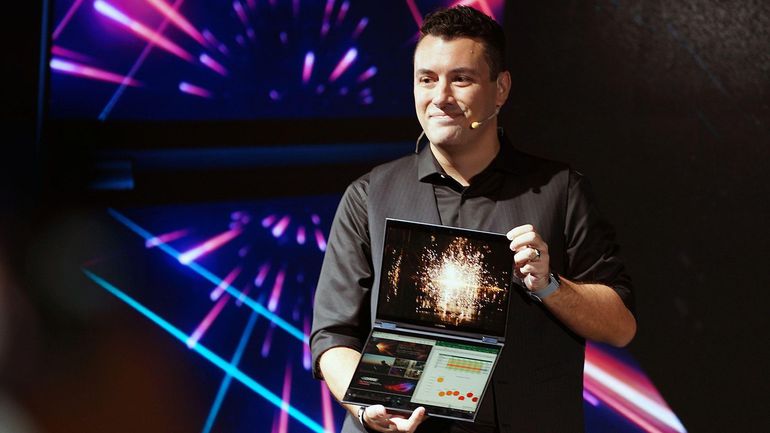
    This dual-screen, AI-enabled laptop was a show-stealer. Featuring two massive touch screens and no physical keyboard, Project Precog promises to be the laptop of tomorrow. The laptop is set to ship with AI functionality to make your life easier. Suggested uses of the AI at the show were things like battery life conservation, helping you make Excel spreadsheets and recognizing users by face. If none of that sounded cool enough, it’ll also read where your hands are in relation to the display and generate a virtual keyboard under your hands when you want to type. How cool is that? Project Precog is set to launch in 2019. 

  • Xbox Systems to Support Voice Assistants Like Alexa

    Xbox Systems to Support Voice Assistants Like Alexa

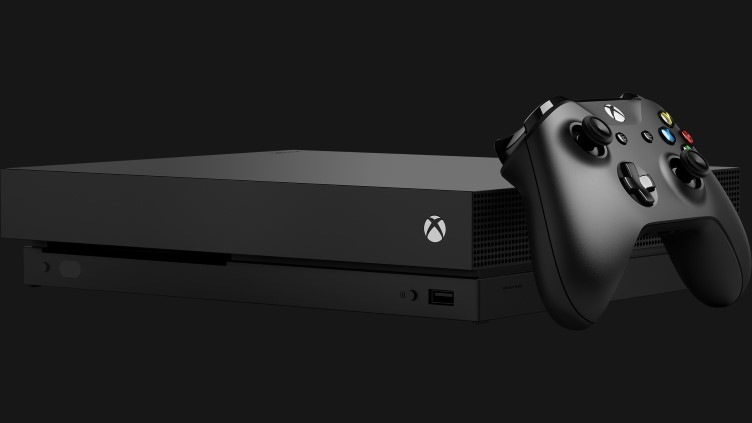
    A new report from Windows Central has shown a screenshot of options for voice assistants in Xbox One. While the system already has support through the (now shuttered) Kinect service via Cortana, the Windows Central report goes beyond Microsoft’s proprietary AI. The report indicates Google Assistant and Alexa would both be supported in addition to Microsoft’s own assistant. 

    Smart Speaker Integration 

    Smart speakers are sort of taking over the world right now, so it makes sense that Microsoft would focus on this technology. The Xbox One has always been marketed as a home entertainment system first, with TV and music being huge for the system. Having the system connect to your Smart Home network is a no-brainer for Microsoft.  

    Xbox Voice Gaming Potential 

    Additional inputs aren’t a bad thing, and Xbox is known for unconventional inputs. The aforementioned Kinect service serves as evidence of this. Voice and gesture commands were once a hallmark of the Xbox family of games but fell out of favor as the company refocused on core games. However, the surge in popularity of voice assistants could signal another push by Microsoft to reenter the Kinect space. “Alexa, start Halo on my Xbox,” is one thing. But “Alexa, help me find nearby save points,” could bring a new layer of depth to certain games.  

    Heck, Microsoft could even be cute and play favorites with Cortana funcitonality in Halo. As fans know, Cortana is actually an AI character in the famed sci-fi series. Talking to her directly in game via a smart speaker could bring another layer of immersion to the experience. “Cortana, where are the enemies?” “Cortana, show me the way out of here,” you can imagine the possibilities.  

    Considerations for Xbox Owners 

    There is nothing more frustrating than buying a cool new piece of tech only to find out it isn’t compatible with your set-up. If you’re an Xbox owner thinking about getting a smart speaker, it may be wise to hold off until Microsoft announces more. We aren’t sure as of yet which services and speakers will be compatible. For the moment, hold tight and see what unfolds. 

  • What Did Apple Show at WWDC 2018?

    What Did Apple Show at WWDC 2018?

    Apple’s big yearly developer conference, the WWDC, was on June 4th, and Apple showcased a ton of new software changes. We’ve rounded up some of the biggest notes from the event here, and we’ll be diving deeper into iOS 12 in a future article. For the most part, Apple focused on security and user protections. This is comforting, as we live in an increasingly-paranoid era where data breaches are all too common. 

    USB Restricted Mode 

    Grayshift, an iPhone hacking tool, uses a USB bypass to brute-force passwords into a locked iPhone. The new iOS has a variation of a previously-discussed mode that will disable these kinds of USB tools. The mode works by locking out USB devices accessing a phone that has been locked for more than an hour. That is, unless the password is put in. This move would keep both criminals and law enforcement from hacking into someone’s iPhone. This move would reignite the ongoing argument between Apple and law enforcement agencies about Apple’s responsibility for helping law enforcement access user data. 

    End-to-End Encryption 

    FaceTime, Apple’s popular video chatting service, now allows end-to-end encryption for up to 32 users. This is great for ensuring that your video calls remain safe from prying eyes, and also shows Apple’s dedication to user privacy. Just how they managed to pull off such encryption with such a large number of simultaneous users is unknown, though certainly impressive.  

    WWDC: Apple Committing to Security 

    Further advancements in iOS security were unveiled. Functions to keep websites and malware from spying on users were shown. Those functions would keep malicious programs from accessing the camera or microphone. Additionally, Apple is integrating software that allows your device to generate a strong password and then store it in iCloud. The password will then be automatically pulled when you need it, keeping your experience hassle-free and well-encrypted. This mimics apps that are already available, but, again, this shows Apple’s commitment to keeping all of their users’ data safe. 

    Upgrades to Siri 

    WWDC was also a chance for Apple to show off the new changes coming to Siri. The virtual assistant will be receiving a new functionality referred to as “Siri Shortcuts,” allowing users to create their own prompts for specific apps. This well help Siri to feel more useful, and hopefully encourage people to actually, uh, use her. Apple also promised that Siri would become more responsive and generally useful. This is critical if Apple wants to compete in the smart home sphere against Google and Amazon. Apple’s HomePod has been struggling, between it’s silly price tag ($350) and under-utilized virtual assistant. 

    While WWDC didn’t show off a ton of new gadgets, the improvements shown are all positive. The company is moving ahead in smart ways, showing a mature, responsible take on security. 

  • Atari VCS, First New Atari in Decades, Raises $2 Million in one Day

    Atari VCS, First New Atari in Decades, Raises $2 Million in one Day

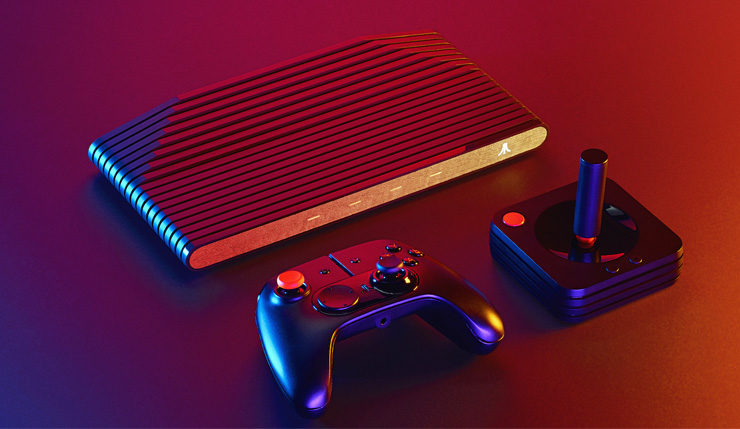
    Atari’s love letter to retro gaming, the Atari VCS, was up on Indiegogo for a day before it nearly crashed the site. The retro-inspired console pulled in over $2 million in pledged funding. The Atari VCS is a system unlike most we’ve seen in the past, in that it’s a hybrid of the micro-consoles Nintendo has been releasing, and a more traditional console like the PS4. It is slated to come pre-loaded with over 100 Atari games, making it sort of like the SNES Classic. It is also going to offer more modern gaming experiences, more comparable to a full console. 

    Crowdfunding? 

    The console was sure to release with or without the crowdfunding campaign, but the Indiegogo success indicates something else. Developers can rest easy knowing that there is ample excitement for Atari’s first console since the 90’s. Additionally, this helps Atari gauge interest and produce enough units to meet demand. This allows them to avoid a Nintendo-like situation where their console proves more popular than anticipated and supply runs out too quickly. 

    Worlds Collide 

    The VCS is going to have a price tag of $299. That puts it in the same league as the Switch, the PS4 and the Xbox One. This is a very bold move for a video game maker who hasn’t been in the mix for 25 years. The last time Atari made a console was the Jaguar, released in November of 1993. The VCS, however, is looking to be a modern device with streaming and online play in mind. Atari is marketing the console’s open Linux OS, making it highly customizable and open to user software. As mentioned earlier, the console will also come with a wide library of older Atari games.  

    The main draw, however, will certainly be the newer games living in harmony with their older cousins. Atari promises favorites from PC and indie games will be on the console. The VCS sports a modern looking controller, in addition to a classic-looking input. 

    When Can I Get My Own Atari VCS? 

    If the promise of a modern console with classic sensibilities sounds your speed, then you’ll be pleased to know the Atari VCS hits store in June of 2019. You’ve still got time to head over to their Indiegogo page and pledge and check out Atari’s videos and descriptions of the console. What do you think, could this be the return of Atari? Or is this idea too weird, and doomed to fail? 

  • More From The WWDC 2018

    More From The WWDC 2018

    I told you id try to keep you updated as much as possible in the ground shattering developments at Apples World Wide Developer Conference. Well here is some more info about the happs at Apple’s WWDC 2018.


    Shortcuts To Developers

    Apple announced at the WWDC 2018 it is now allowing developers much deeper integration with iOS 12 and MacOS Mojave. Third-party apps can now build “shortcuts” that allow Siri to execute popular quick actions. They used a real time demo of this with the Tile app. With the short cut they were able to activate tile just by using Hey Siri, find my keys. The programmable short cut is a big shot of B!2 in the arm for Siri. No longer will I wrestle with her over mundane task, I can program her to read my voice for specific commands.

    To sum up Shortcuts easily its a new app coming with iOS 12 that lets you create custom phrases to trigger a specific action using Siri. If she uses this data correctly that should help here understand my voice and commands a little more clearly. Making Siri compete with the Alexa and Google Voice seems to be a big area of focus for apple this WWDC. The WWDC demo also included smart home Shortcuts like “Turn on fan” or “Set thermostat to 70 degrees” — both HomeKit automatons from the Home app.


    Mojave and HomeKIt

    Mojave is the next MacOS version. With the update, Apple will add support for the Home app on Macs. Previously, the Home app was Apple’s iOS-only smart-home app where you add, monitor and control you HomeKit-enabled smart-home devices. This is neat and needed, I want my computer to be the brain of my home, If I left it to the phone my home would be left with out a central control system when Im out… 2018 folks, fascinating times, I always thought I would eventually type those words but its still shocking we are here and so causally.

    WWDC 2018 and the Apple TV

    Next at The WWDC, We will also see Apple TV getting some more responsibilities when they add home security and automation companies, Control4, Crestron and Savant. The Apple TV  works with some smart home apps, such as Canary and Nest, for remote monitoring of security camera live feeds. That has always been about it until now. WE will also get the ability to sync HomePods and AppleTV to play music together, Soundbar win!

    Check back tomorrow for more on teh WWDC 2018. Same Time, Same Channel.

  • Snapdragon 850, Its Not What You Are Expecting

    Snapdragon 850, Its Not What You Are Expecting

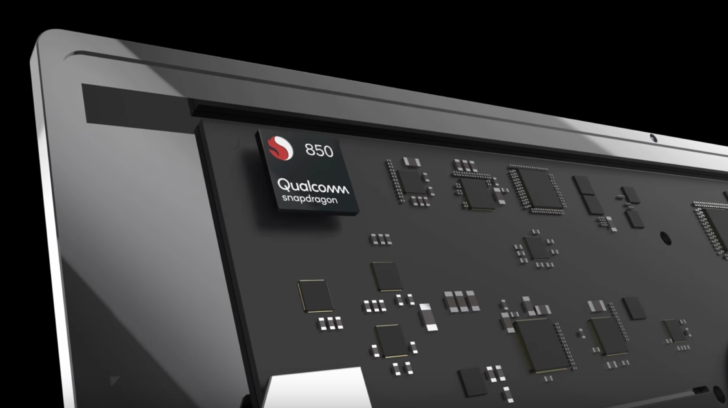
    Hey Guess what, Qualcomm announced a new top tier Snapdragon chipset this week, the Snapdragon 850. Well I never saw that coming, but a new Snapdragon chip is hitting the market. Is this going to be the new hot chip setting the android world on fire? Will it be in the Samsung Note 9? Hold up everyone, the answer to your questions is no. A big fat no. We are still a year away before we take the next power up on the mobile side. I mean apple hasn’t even laid out the tech jump yet. Ahem …7nm processor..

    Whats with the Snapdragon 850 Then

    As Qualcomm explains it, the Snapdragon 850 was “designed to support many sought-after smartphone features in the PC,” which means connectivity at all times through LTE or WiFi. This chipset should help in the battery department too, by being extra efficient. Which means it’s not a mobile chip, it’s a Snapdragon chip that was designed for Windows and to make your laptop work a lot like a smartphone in terms of being mobile, power reducing and faster.

    Looking at these two side by side spec wise and compare them to the Snapdragon 845, it actually looks like it is very similar, only formatted to work with PCs that run Windows. You’ve got the same Kryo 385 CPU cores, 84-bit architecture, same RAM support, 10nm (2nd gen) process, same Adreno 630 GPU, same video codec and capture support, etc. Qualcomm did up the CPU speed to 2.96GHz,so we got that going for us.

    The Final Thought

    Don’t be too upset, Qualcomm’s first-generation Snapdragon PC processor struggled with performance issues while providing incredible all-day battery life. Qualcomm has addressed these problems with the new Snapdragon 850, adding 30 percent more performance while extending its already incredible battery life another 20 percent to what it now calls “multi-day” longevity. This will be a good thing, think better 2 in 1s.

  • GitHub Acquired by Microsoft

    GitHub Acquired by Microsoft

    GitHub, the world’s largest repository of code, is set to be acquired by Microsoft. The deal is to the tune of 7.5 billion dollars in Microsoft stock. That number is pretty astonishing, conisdering GitHub is just a storage service. What does this acquisition mean for code developers and designers? Will things be changing behind the scenes for the site? 

    Reservations by GitHub Developers 

    Microsoft is known as being a very corporate and profit-minded company. They didn’t grow to be one of the largest forces in tech by accident. With their reputation, developers have been somewhat nervous regarding this acquisition. GitLab, a major competitor of the code-hosting site, has seen a surge of users following the breaking of this news. Microsoft has attempted to reassure developers, however, stating that their intent is to keep the service just the way it is now.  

    Satya Nadella, CEO of Microsoft, had a few words wit regards to the move. “Microsoft is a developer-first company, and by joining forces with GitHub we strengthen our commitment to developer freedom, openness and innovation… We recognize the community responsibility we take on with this agreement and will do our best work to empower every developer to build, innovate and solve the world’s most pressing challenges.” 

    What This Means for GitHub 

    On the corporate side, however, GitHub and Microsoft will both see some personnel changes. Nat Friedman, Microsoft’s current Corporate Vice President, will be installed at CEO of GitHub. GitHub’s current CEO, Chris Wantstrath, will become a “technical fellow” at Microsoft.  

    Regarding the acquisition, Wanstrath had this to say. “I’m extremely proud of what GitHub and our community have accomplished over the past decade, and I can’t wait to see what lies ahead. The future of software development is bright, and I’m thrilled to be joining forces with Microsoft to help make it a reality… Their focus on developers lines up perfectly with our own, and their scale, tools and global cloud will play a huge role in making GitHub even more valuable for developers everywhere.” 

    When Does this Happen? 

    The acquisition isn’t final yet, so these changes won’t take place immediately. A regulatory board will review the acquisition, but experts see little reason to block the move. Once it’s complete, developers can expect to see few changes on the user-end. However, Microsoft will likely turn the code repository into an Azure service, hosted on their cloud platform. Aside from that superficial change, though, Microsoft seems unlikely to change much else for fear of scaring off developers.
     

  • Asus to Enter Gaming Phone Space with ROG Phone

    Asus to Enter Gaming Phone Space with ROG Phone

    Early reports from various outlets have begun to describe Asus’ entry into the phone market. The ROG Phone, which shares a name with Asus’ gaming computer line, is set to boast powerful gaming performance. Razer entered the mobile market last year with their aptly-named Razer phone. However, Razer hasn’t quite managed to capture the attention of gamers. Most who prefer gaming on the go have stuck to their gaming laptop or Nintendo Switch. They instead opt for using their phone as, well, a phone. But Asus seeks to change that, and it looks like they might do just that. 

    Air Buttons 

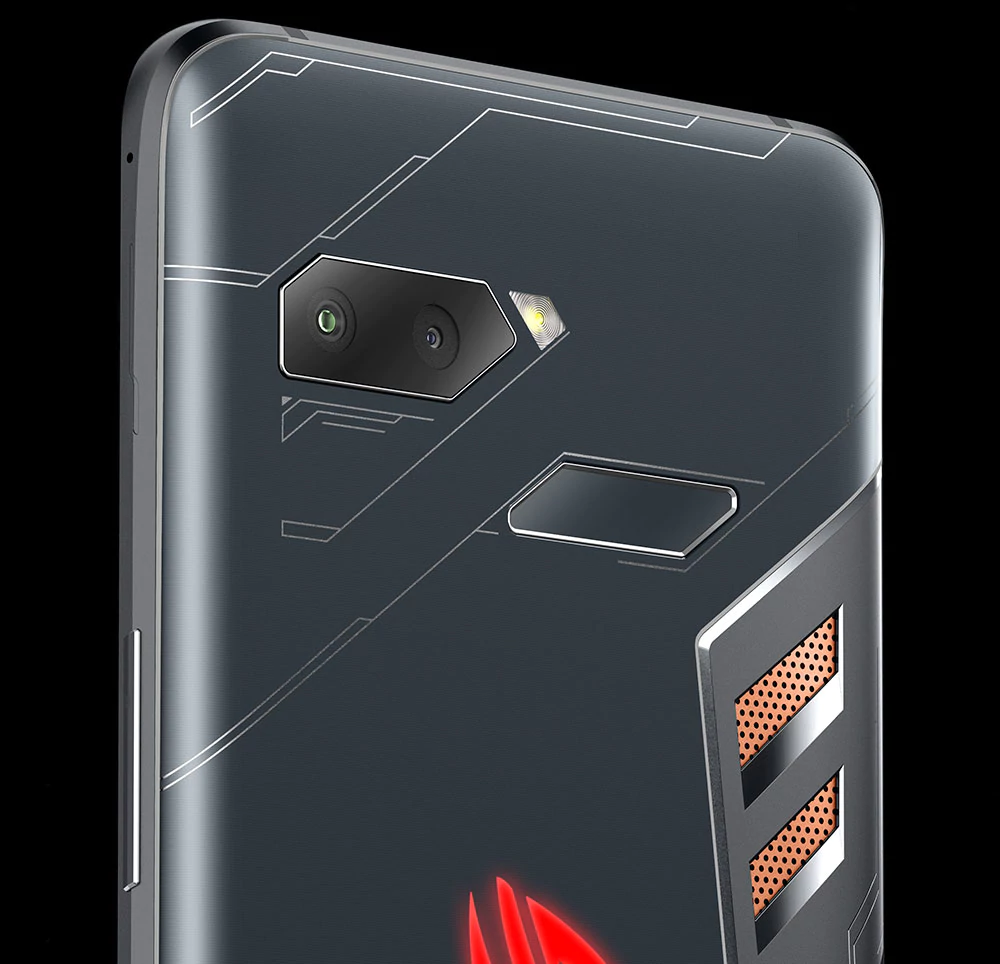
    The first innovation worth noting on the ROG phone is the Air Button technology. While the phone sports a normal large touchscreen display and has no physical buttons, it does have Air Button sensors. Those sensors can tell when a finger falls as though it were mashing a button, giving haptic feedback and sending the input. The Air Buttons are programmable, allowing gamers to program key actions, like pulling a trigger, to the handy input. 

    TwinView Dock 

    Another fascinating addition that Asus is bringing to the smartphone market are gaming-related peripherals. The TwinView dock is one of them, turning the phone into something of a Nintendo DS-like gaming apparatus by adding a second screen. The dock also sports two physical shoulder buttons in lieu of the Air Buttons, which makes the phone feel more like a dedicated gaming device.  

    AeroActive Cooler 

    A peripheral set to be included with every ROG phone, the AeroActive cooler seeks to combat a common criticism of long gaming sessions on phones. Mobile devices don’t have any room for a cooling system, meaning that long sessions of Fortnite or Pokemon Go will cause the phone to heat up and have worse performance. To remedy this, the ROG Phone will come standard with this cooling device to help maintain a stable temperature. The option to keep the phone cooler for longer will make it a more attractive phone for serious gamers. 

    ROG Phone: A True Gaming Smartphone? 

    The ROG Phone has all the design choices that could make a phone desirable as a gaming platform. It even sports a side-mounted charger, in addition to the bottom-mounted one, to allow for gaming while charging. Asus has also promised a dock to allow your phone to be displayed on a monitor or computer screen, sort of a reverse game-streaming.  

    If gaming smartphones are ever going to be a viable market, the ROG Phone is set to be the phone to make them so. If this one underperforms, it likely won’t be the fault of the phone, but instead the hard-to-predict whims of gamers. For now we’ll have to await further details, as Asus hasn’t even floated a release date yet. 

  • Facebook Remains Popular, but Not Among Teenagers

    Facebook Remains Popular, but Not Among Teenagers

    A Pew Research Center study has collected some interesting data regarding teenagers’ online usage. Surprisingly, teens are using Facebook much less in recent years. What did the study find they were using more? And what other sites have less teens engaged with them than they used to? 

    What Sites Are Teenagers Visiting?  

    The poll shows that the sites receiving the most teen visitors are YouTube, Instagram and Snapchat. 32 percent of teens stated they used YouTube most of the time, while Snapchat snagged 35 percent of teens and Instagram got 15 percent. Facebook, by comparison, was only 10 percent of teens’ most visited sites.  

    Which Other Sites are Receiving Less Teen Visitors? 

    Other sites once regarded as teenage destinations online are also seeing less traffic from that age group. Tumblr, a popular blogging site, barely showed up in the poll. The same goes for Twitter, which is quite surprising, and Reddit. It seems that teens are mostly drawn to visual apps, finding their entertainment in pictures, videos and music, not text-based apps that are more static. 

    Other Findings 

    Other interesting findings in the study include smartphone ownership. A positively massive 95 percent of teenagers polled stated they had a smartphone. With regards to internet usage, 45 percent of the teens thought that it had neither a positive nor a negative impact on their lives. This relative disinterest in the medium with which many of them spend all their time is concerning.  

    What Does this Mean?

    What do you make of these findings? Were you surprised at the apps they’re using more often, and how little they’re using Facebook now? Is it a good thing that teens are connecting with one another with these platforms? And how do you feel about the overwhelming number of smartphone-equipped teens with internet addictions who think nothing of it? 

    We all have our own answers to these questions, of course. For my part, I understand the desire to stay connected. I do, however, worry that these kids are spending so much time wishing they were somewhere- or someone- else, that they forget to be happy with who they are. Studies have linked social media with more feelings of alienation and loneliness. I just hope these trends reverse in the coming years and kids learn to be okay just being where they are.