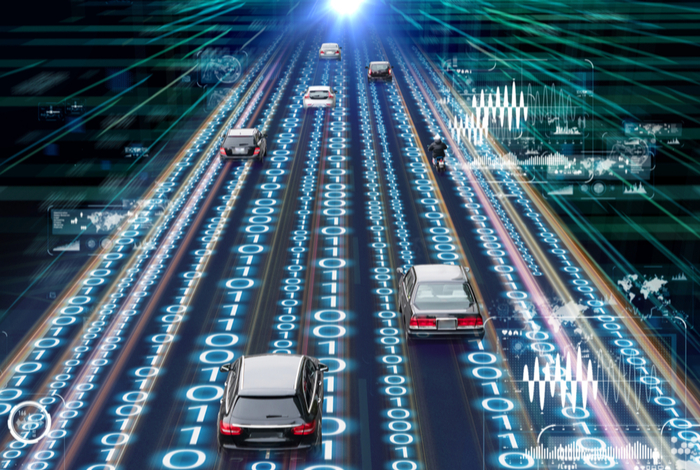
When you think of self-driving cars, you’re likely thinking of hopping in a normal car and telling it where you want to go. The car would then take off, using lidar to navigate to where you want to be. And this is certainly an eventuality that will come to pass. However, it is not the only thing self-driving tech will enable. In fact, it’s not even the most exciting change that the technology will bring about. The technology will be redefining taxis, busses and even deliveries in the very near future.
Self-Driving Cars Making Deliveries
Many companies, like Nuro, have been looking into automated delivery vehicles. Nuro’s particular automated car is a comparatively small when looking at it next to a car. It has room only for cargo, not intended to transport humans. This type of delivery vehicles could revolutionize delivery. Without need for paying a human driver, or paying for the insurance on a human, delivery fees could plummet.
Nuro themselves speculate that their technology could make delivery fees for things like groceries as low as a dollar. This could lead to a dramatic reduction of the number of cars on the road, as people wouldn’t have to drive around town to shop. Shopping could be handled predominately from smart phone interfaces. This would work to make roads safer, and deliveries more convenient.
Is it a Taxi? A Bus? Is it Both?
Companies like Uber and Lyft have been operating a quasi-taxi-bus hybrid by way of their Pool and Line services, respectively. Waymo is developing a taxi-like service that will be driverless, looking like a conventional ride-hailing app but with no human operator. Drive.ai is developing a driverless service that would look like Uber Pool. Users would be able to hail a driverless shuttle and share it with other users with the same destination.
These advances could lead to much-reduced fare prices, making taxi and bus services much more affordable for the average person. This could also lead to even safer, and less congested, roads. Driverless cars could coordinate their maneuvers to reduce traffic slowdown, and pooled services would lead to an overall reduction of cars on the road. Scenes of clogged intersates, like those found in Los Angeles, could well become a thing of the past.
Ramifactions
A transportation revolution of this scale is certainly some time off. For the time being, taxi drivers, pizza delivery drivers and truckers are all safe to keep their jobs. However, in the next few years, there will likely be less demand for human drivers in those fields. Instead, the job market for software developers who update and maintain the driverless scrips would boom. Technicians skilled in repairing and maintaining such vehicles would be in more demand, as well.
While the loss of jobs from automation is certainly a cause for concern, it won’t stop progress. Horseshoe makers and carriage drivers didn’t stop the advent of the automobile. Will driverless technology be as big a revolution as the automobile itself? We’ll find out very soon.
Nintendo and the Pokemon Company have finally unveiled some details for their new Pokemon games. Pokemon Let’s Go! Pikachu and Pokemon Let’s Go! Eevee are slated for release on Nintendo Switch on November 16th, 2018. What are the details? What can we expect to see? And does it live up to the hype?
A New Look for an Old Adventure
For a certain generation, the first few Pokemon games mean a lot. If you’re like me, you have fond memories of Pikachu and the gang running around on your GameBoy screen. Gamers in that camp will be delighted to hear that this new game is a reimagining of Yellow Version, the enhanced GameBoy Color port of the original Red and Blue.
Yellow version is fondly remembered for introducing elements from the anime, such as the starter being Pikachu. The new games are set to feature the original 151 Pokemon and the original setting, the Kanto region.
Let’s Go!
The new games take a cue from the mega-popular Pokemon Go app. Let’s Go! seems to adapt the capture mechanic from the smartphone entry. It seems the new Switch games are set to appeal to the more casual crowd pulled in by the surprise success of Go.
Additionally, it seems random encounters in the wild will not be featured in this game. Instead, encounters will be visible in the overworld. Battling wild monsters also seems to be skipping this entry, much like the smartphone-friendly Go. However, the game does feature trainer battles! Though at this time it’s unclear how big a role training and battling will play.
Pokeball Plus
Nintendo also announced a new controller for the Switch called the Pokeball Plus. The ball-shaped controller is adorable, and also offers new functionality for Let’s Go! The Pokeball Plus allows you to store a Pokemon from the console game and take it for a stroll with you. This functionality echoes the Pokewalker from HeartGold and SoulSilver.
What’s more, Let’s Go! promises connectivity with Pokemon Go, allowing you to transfer monsters from your phone to your Switch. Nintendo seems to be viewing these games as onboarding for smartphone-only players. Those who were introduced to the series via Go will have the chance to transfer their faovrite Pokes to their consoles. This could entice them to check out next year’s core entry. What’s that? Oh yeah, there’s more.
More Pokemon to Come
The best news of all? This isn’t the only Pokemon coming to Switch. While Let’s Go! is aiming to appeal to the more casual crowd, Nintendo promises a new “core” entry in the series in 2019. In the meantime, those craving a fun adventure with their favorite Pocket Monsters have a treat in store for them!
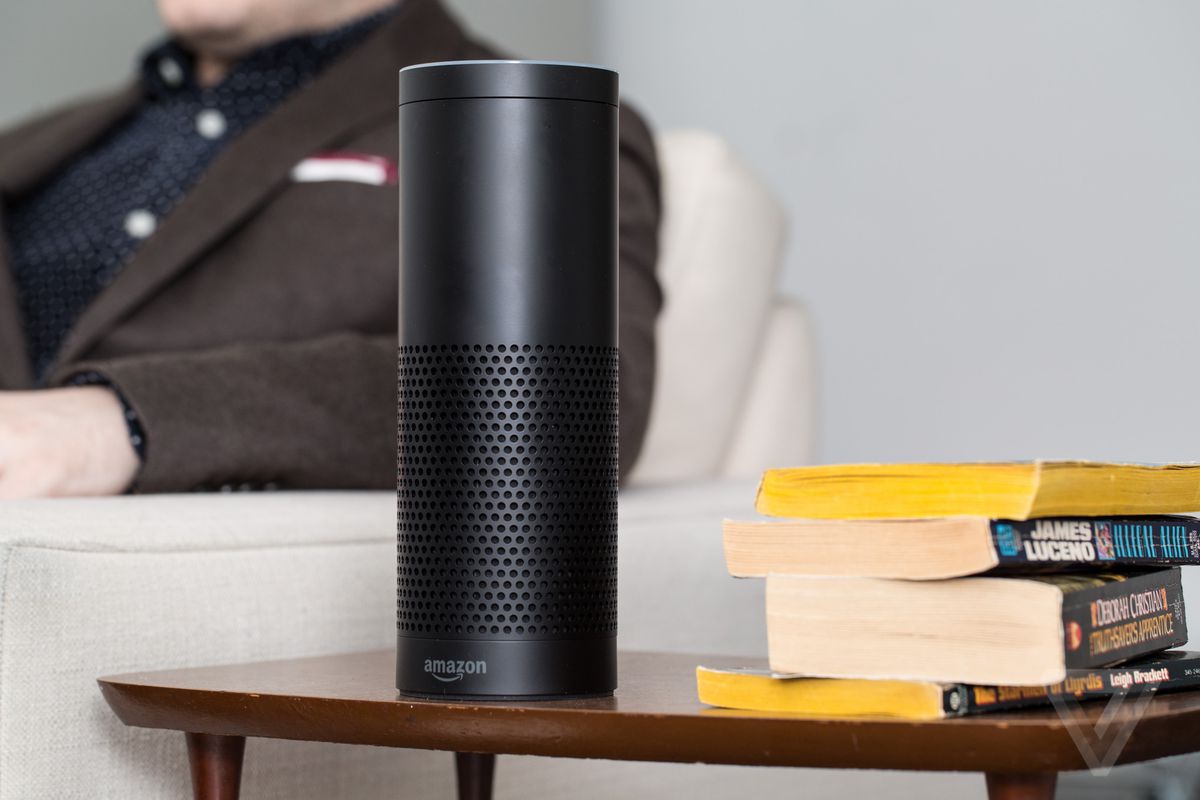
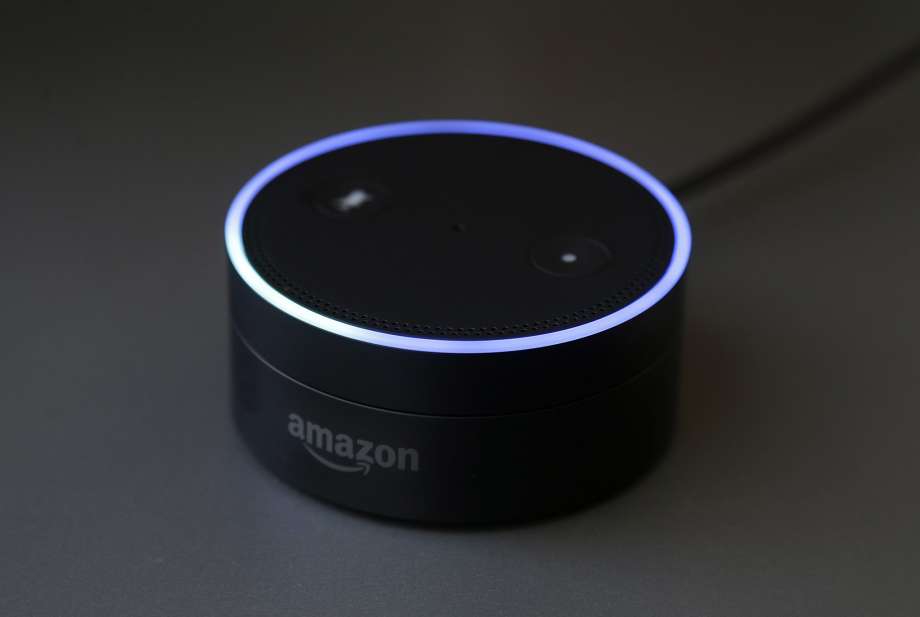
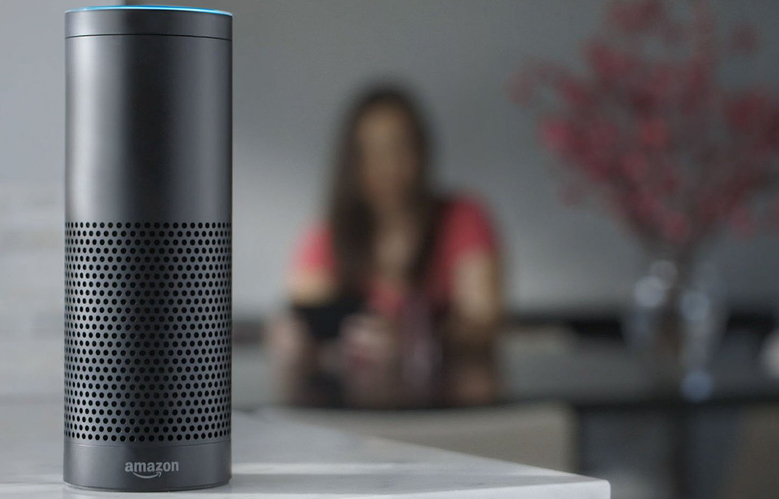
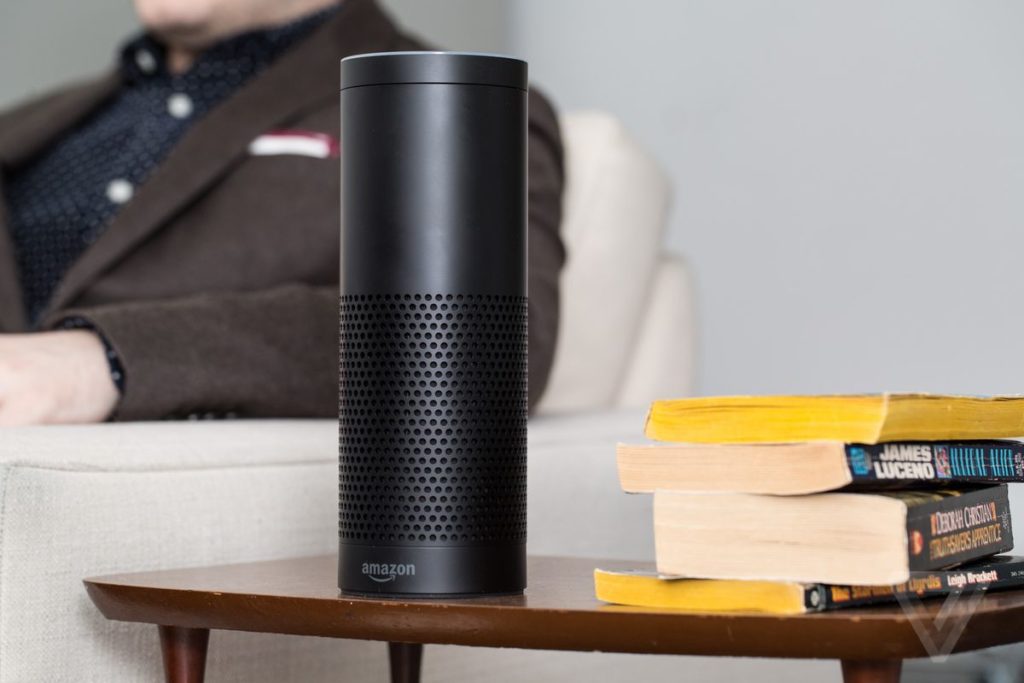
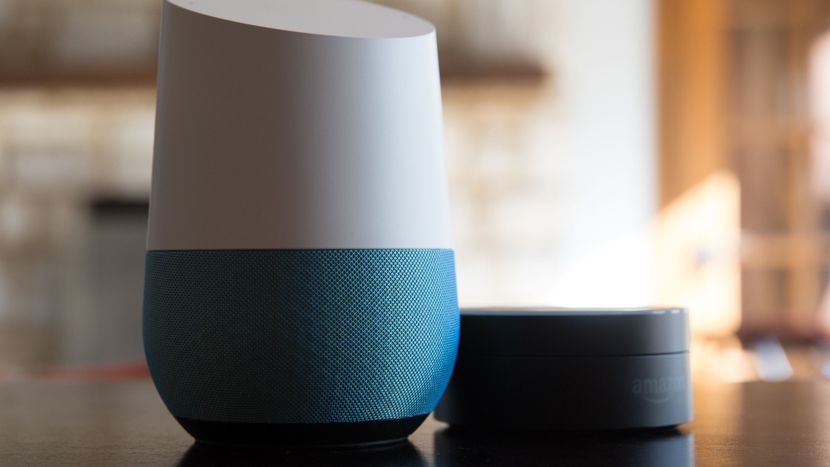
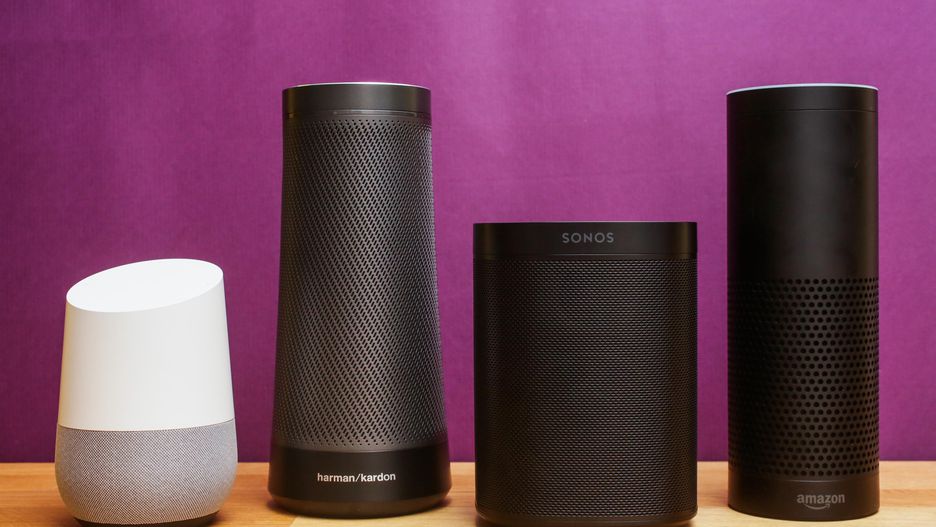
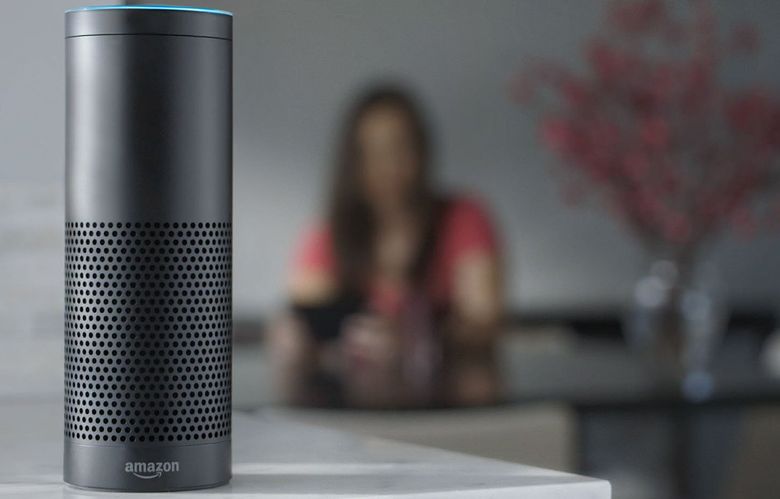
Your smart speaker is an incredibly handy piece of technology. It helps organize your life, streamline your household activities and even helps you shop online. But what are the security risks posed by having an always-on mic in your living room? Who’s listening to your recorded audio? According to a recent report from Seattle news station KIRO 7, these concerns are not mere conjecture.
A Portland woman identified as ‘Danielle’ told the Seattle news station that her Amazon Echo sent a recording of a private conversation to a contact. The conversation was utterly harmless, apparently a discussion between Danielle and her husband regarding hardwood floors. However, the contact who was sent the audio files immediately contacted Danielle and told her to disable her Alexa-enabled device immediately. The contact feared that Danielle had been hacked and was in danger of having her information stolen.
Danielle immediately contacted Amazon to ask for answers. How did this happen? Were they aware the Echo was doing this? The representative that Danielle reached found the relevant logs, confirming what had happened. He apologized profusely, according to Danielle, as the situation was unbelievably unlikely. Apparently, the Echo device overheard the conversation happening in the other room. Some words in the conversation made the device think it was being asked to send a message. After mistaking background noise for a confirmation, it sent the overheard conversation to the contact.
Wired Magazine described the ordeal as an “Echo butt-dial,” a complete fluke. Amazon claimed that they will use the data from this incident to tighten Alexa’s recognition protocols and make this scenario more unlikely. However, this individual scenario isn’t the only smart speaker security concern: if they’re always listening, how can they be secure? What are some of the other concerns with these devices?
The first issue, and most pressing in regard to Danielle’s case, is that of background sounds. Smart Speakers have to be listening for their trigger phrases all the time. If they don’t, they literally don’t work. This represents a serious security concern, though, as Danielle found out. What if the speaker mishears you and sends private conversations to people who aren’t supposed to hear them? What if a malicious hacker accesses your device and listens in to find out when you’re home? Would Amazon bear responsibility for such a breach?
The answers are currently unclear. While such situations are mostly hypothetical, Danielle’s case shows that they are potentially possible.
If your smart device is always listening, who can hear what it records? Google is well-known for creating complicated advertising profiles for users. Smart speakers are surely a part of this. Listening for conversations about buying new hardwood floors, for instance, could lead to targeted ads on your favorite websites for floor installation. This alone seems predatory; who would invite a large ad agency into their life to gather valuable data about their spending habits?
This is even before mentioning the hacker issue again. If a malicious hacker were to access Google or Amazon’s user profiles obtained via Smart Speaker, they would have unprecedented data about potential identity theft targets.
If Google or Amazon are listening in, what kind of risk are users at for law enforcement listening in? The NSA’s wiretapping is well-known and, surprisingly, well-documented. Suspected criminals with smart speakers may have their homes bugged voluntarily. Would law enforcement need a warrant to collect audio from these devices? Would they need a court order to obtain user profile information from Google?
If law enforcement begins pursuing smart speaker information as a common means of information-gathering, the private lives of users could be at risk. Everyone had to read 1984 in school right? Yeah, this would be the first step to something like that. No thanks.
Speaking of access to your personal info, there’s also the issue of just how long Google and Amazon store this information. Thankfully, you can delete your audio request history from your user profile. However, you can’t do anything about the data stored on Google and Amazon’s servers about you.
In fact, even Apple’s Siri stores data you obtain through it and give it. Apple has confirmed that raw audio collected through Siri is stored for 18 months! That’s kind of ridiculous! The issues of law enforcement accessing this info, lawfully or otherwise, are further exacerbated by this data’s inaccessibility to the user who created it.
Finally, there’s the issue of someone else using your speaker. The main use for Alexa, as far as Amazon is concerned, is as a storefront. Ordering through Alexa is purposefully easy and painless. You just tell her to order you things and she does it, no questions asked. So, imagine, if you will, that your home is broken into and your Echo is stolen. The criminal then orders a ton of stuff with your credit card. Are you on the hook for that money?
While that scenario is a bit extreme, there are more conventional ways that Alexa’s shopping functions can be used against you. For one, if you have children, they could access your Alexa and order themselves a new tablet or gaming console, spending a ton of your money without telling you. Your friends could try to play a prank on you by ordering embarrassing items with your money. Not that that’s happened to this writer…
All this doom and gloom begs the question, then: How do you protect yourself from these potential data breaches? Well, one easy way, of course, is to simply not have a smart speaker. Or, if you do have one, sell it to someone else and use the money to buy a VPN subscription. No? Alright, alright, real advice, then.
Keep your smart speaker in a room where it’ll overhear as little as possible. If you can, keep it in a room with a closed door. The less it overhears, the better. Aside from that, just be careful what you say around it. Try to keep conversations around the device light, don’t talk about sensitive information. Another good security measure would be to not pair any of your debit or credit cards to the speaker. While it may be less convenient, it’s much more secure.
Hopefully these concerns will be addressed with future updates to the technology. Smart speakers are very handy, convenient devices. Many users have come to depend on the features they offer. It seems as though the companies that make them are at least nominally dedicated to making them secure. While only time will tell what the future hold for the contentious smart speaker technology, stories like Danielle’s serve as reminders: trust no soulless machine with your personal information. Even better: trust no soulless corporation.
The European Union provision known as General Data Protection Regulation went into effect on May 25th, 2018. While it may seem as though this would only impact Europe, it actually will have some ramifications for American companies, too. Any companies with European customers will have to be compliant with the GDPR from May 25th on. This means even companies like Facebook will have to comply with the plan.
What Does GDPR Ask of Businesses?
The GDPR asks a few things. The first is that European customers can ask to see what data a business has collected from them at any time, and that information must be provided. The second is that said data can be expunged at a customer’s request at any time. These protections are completely reasonable on the behalf of a customer, but many businesses may be resistant to such wide-reaching protections.
What Penalties Do Businesses Face by Not Complying?
This is the kicker: a business that fails to comply with GDPR is subject to forfeiting four percent of their annual revenue to the EU. While that might not sound like a lot, a company like Facebook or Amazon rakes in millions and millions of dollars every year. Even four percent of that is a small fortune. What’s more, it seems unlike the US Government would do anything to protect businesses found in violation of these rules. It seems only fair, of course, that a business with European customers follow European guidelines.
What This Means for Americans
Since these companies will have to implement this functionality if they wish to remain compliant, this will likely result in increased data protections for American customers, too. Americans currently have no such protections on the books, which is unfortunate, given the state of cyber security. Breaches like Cambridge Analytica and the Target hack have soured many Americans on large companies’ security protocols.
Hopefully legislation like this is on its way in America, too. Increased protections for the data of users is hardly a bad thing for anyone. Companies would be wise to self-regulate in this regard in the meantime. However, since no guarantees of such altruism are forthcoming, legislation is the next logical step. With luck, we’ll see such legislation follow suit in the US.
The long-running and high-profile court case between Samsung and Apple has finally wound down. The verdict? Samsung is to pay $539 million to Apple for infringed patents. That’s a lot of money, but not quite the billion dollars Apple claimed it was owed. The final number is, however, markedly higher than Samsung’s conservative estimate of $28 million in damages owed to Apple. What will this decision mean in the long run with regards to smartphone design?
Apple: Design First
Apple fought tooth and nail in this suit. The company has always maintained that they are a design-first firm. To that end, they were adamant in their assertion that Samsung’s infringement of their design patents constituted significant damages. The nitty-gritty of the case got pretty obscure, but here’s the broad strokes. Apple had patents for a rectangular-face, round-cornered smart phone (with and without bezels.) They also had a patent of a colorful grid of apps.
Samsung’s phones sold between 2010 and 2011, Apple argued, infringed on these patents. The courts found in Apple’s favor, but things didn’t end there. The issue came down to the difference between the individual phone components versus the phone as a whole. Apple claimed that Samsung owed damaged based on the sales of each entire phone they sold. Samsung, however, claimed that they only owed damages on the components Apple had patents for.
Samsung’s Point of View
Samsung argued that Apple only had patents on certain aspects of the phone designs they had sold in the timeframe of 2010-2011. They felt as though the damages they would need to pay should reflect this, as well as deducting the cost of business for marketing and designing said phones. While their points were well-made in some respects the jury found them unconvincing.
The jury found that the display screen couldn’t be considered a separate entity from the phone. How could it? The bulk of the smart phone is its screen, and the screen hardly works without the phone components. If one were to disassemble a smart phone, they would have nothing of real practical use. Samsung’s argument would work better in a case with bigger, more distinct components. The screen, however, was found to be an integral part of the phone.
What This Means for Smartphone Design
The huge fine slapped on Samsung will certainly give manufacturers pause with regards to smartphone design. Apple’s patents are somewhat broad, though in some ways they can be seen as fair. Apple did kick off the modern smartphone, after all, so isn’t it only fair they hold these patents? The other side of that coin, of course, is a concern for monopolization. If Apple can defend a patent this broad in court, smaller competitors may well be swallowed whole by them.
Samsung will feel the sting of this ruling, but they won’t be going away anytime soon. The Korean tech giant is worth billions, and they can afford to go toe-to-toe with Apple in court. Smaller underdogs wouldn’t stand a chance, though. This case has left an odd taste in the mouths of onlookers. Many are happy to see creative design defended by a federal court. Many of those same people are also wary of a giant like Apple tightening its chokehold on the smartphone market.
Papua New Guinea’s Communications Minister Sam Basil has stated that Facebook is to be shut down in the country for a month. This time, Basil said, will be used to investigate the propagation of fake news and pornography on the site.
Facebook In Hot Water… Again
This news comes on the heels of Zuckerburg’s European apology tour related to the numerous scandals the site has been involved in recently. Firstly, the company was the center of the Cambridge Analytica data breach. Secondly, the investigation of the Donald Trump campaign found that Russian organizations used the social media platform to influence the election. While the news out of Papua New Guinea isn’t directly tied to these incidents, they help add some context for the decision.
Recent advertisements by Facebook attempt to make light of this, promising to make the site “fun” again. Facebook’s content algorithm continues to generate countless debates. The amount of comments, reactions and buzz around controversial posts makes them rise in the news feed. This leads to a feedback loop and causes the platform to be rife with arguments and fake news.
Papua New Guinea
Basil’s statements echo these fears. The Communications Minister even went so far as to suggest the country should develop its own social media platform. While Facebook is down in the country, the government will investigate its use and userbase. Fake profiles used to disseminate fake news are of particular note to the investigation.
A Facebook representative has stated “We have reached out to the Papua New Guinea government to understand their concerns.” It seems as though this contact hasn’t stopped Papua New Guinea’s government from going ahead with the shutdown, though. In the meantime, Facebook’s has cemented its place in the ongoing debate over fake news. It will likely remain there for the foreseeable future, as well.
While virtual reality headsets remain less than popular, augmented reality is booming. Snapchat filters and augmented reality games are popular with millions of users. On a more practical level, augmented reality may be used for car repairs in the future. Enter Porsche’s Tech Live Look.
Porsche’s Tech Live Look
Porsche, known for their tech-mindedness and forward thinking, has developed a really interesting new augmented reality headset. It’s first application is as a quick-reference for Porsche mechanics. The headset allows them access to all the manuals and diagrams they could ever need. This type of cloud technology uplink is very sci-fi: imagine a mechanics who can see a swath of reference materials in his view as he repairs an engine.
Tech Live Look also allows Porsche technicians to assist mechanics in live time. Technicians will be able to see what mechanics see, walking them through repairs step-by-step. Drawing on the video feed, producing manuals in the peripheral and more will be possible with this technology. This, Porsche states, will lead to a 40 percent increase in productivity in their repair centers.
According to Porsche America CEO Klaus Zellmer, “It’s good for customers, because they get their car back sooner, and it’s good for dealers because they get that stall clear.” According the Zellmer, the cost of the headsets is offset a few days after they are implemented, thanks to the great turnaround they provide for repair centers.
When is this Coming?
Many Porsche dealerships have already signed up for this revolutionary tech. While Porsche has stated that only their mechanics and technicians will have use of it, this is great news for Porsche owners and augmented reality enthusiasts. The headset is reminiscent of Google Glass, but with some key differences.
Where Google Glass was more for notifications, sporting small displays in the peripheral, Porsche’s headset is a full display. Tech Live Look is a real-time connection with a technician, not an AI or automated program. While the tech is staying in Porsche dealerships for now, it suggests some interesting things to come.
The Future of Augmented Reality
Live linking to an experienced instructor has some obvious applications other than just car repair. The first thought one has when contemplating this technology is surgery. An expert in a certain surgical field may be unable to be physically present for a procedure but could use an AR headset to help direct a less experienced surgeon.
Similarly, a pilot experiencing unusual threats in the air might be aided by a more experienced expert who could use similar technology to direct them in real time. All these scenarios and more could be further aided when AI technology sees further advances. A live technician is great, but in situations where there is no Internet connection, an AI could suffice. In fact, AI may even be more well-equipped to respond rapidly and instruct a user calmly and with focus.
4K TVs are limited in what they can display, size-wise, by their very nature. If you’ve been shopping around for an affordable 4K TV, you’ve probably noticed this. Panels can only get so big. What if you want a 4K image on an 85-inch display? What if you want the 4K quality without the same energy draw? Surely a 4K projector would be the right way to go. Enter Sony’s Ultra Short Throw Projector LSPX-A1.
Is It a Coffee Table?
No, it’s not just a piece of furniture, though it may look like one. The coffee-table sized projector housing is very slick, fitting right in with modern décor. It sports an incredible array of speakers in its stylish housing: the legs conceal tweeters, the body houses a subwoofer and three mid-level speakers are hidden in the front panel. The Ultra Short Throw LSPX-A1 is a tremendously stylish piece of technology.
Is it a Good 4K Projector, Though?
Impressions from attendees at CES 2018 point to this being one of the most impressive projectors they had ever seen. When flush with a surface, the Ultra Short Throw produces an 85-inch image. If you pull it back a bit, it can scale all the way up to a 125-inch image, which is downright massive. This dwarfs any conventional panel TV and takes up far less space than said panels. While traditional TVs are often seen as a status symbol, there’s a lot to be said for the clean simplicity of a room without one.
The only downside to this incredibly impressive projector? It’s impressive price tag. If you want to outfit your living room with this gorgeous projector, you’ll have to shell out $30,000. No joke, it actually costs that much. Maybe that Samsung 4K TV doesn’t look so pricey after all…
Bottom Line
Jokes aside, this is a gorgeous centerpiece for a room. If you’re in the market for a luxury 4K display, this is the item for you. Maybe someday stylish furniture pieces like this will be the norm! In the meantime, if you have one of these, expect to be the envy of your social circle.
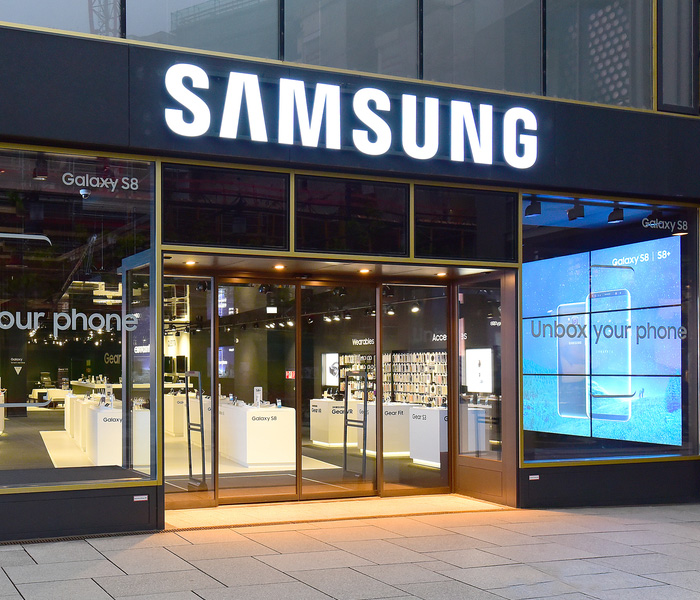
Samsung is a huge name in the world of Android phones. And that’s no mistake: the Galaxy series of course phones has been, with some exceptions, phenomenal. Whats next for the storied brand? The Galaxy Note 9. So, let’s break it down: what’s in store for the next Samsung phablet? The rumor mill is here to help fill us in.
In Screen Fingerprint Scanner?
This rumor has gone back and forth a ton. Whether it’s true or not, it would make sense. Phone makers the world over are trying to maximize screen space without making the handset too massive. This is what led to the infamous iPhone X notch.
That said, a purported in-screen fingerprint scanner would be an interesting solution. Just how such a thing might work is anyone’s guess.
Note 9: Better Speakers than the Note 8?
The Note 8 was a great phone… except it’s speakers. It would be fantastic if the rumors of the Note 9’s speakers came true. Huge, front-facing speakers would be great. Considering how massive the Note line is, it’s underwhelming to think of them as having small sound.
Battery Life
The rumors that the phone will have an in-screen fingerprint scanner also claimed the phone will have an enormous battery. The battery rumored would be a 3,850mAh battery. In plain terms, that’s freaking huge compared to the battery in the Note 8.
With such a huge screen and the purported sound quality, a huge battery is a must. Why even have such a massive phone if it’s going to just die soon after it’s pulled from the charger?
Pricing
Samsung would be wise to keep the price around the same place that the Note 8 launched. Even though the Note 9 is likely to be one of the most high-tech phones of the year, it still has to compete with the iPhone X. A price point around $950 seems to be a sweet spot.
Cord cutters: it’s working. Comcast, everyone’s least favorite telecom company, is now worth less than streaming giant Netflix. This is a monumental moment, signaling the pendulum shift from traditional cable to streaming services. For many users, this is hardly a bad thing.
Netflix Ruling the Roost?
Netflix is a giant in the streaming field. Between their streaming of syndicated shows and big-budget movies and their original programming, Netflix has established itself as a major force in entertainment. Comcast, on the other hand, is a very different beast. Comcast operates a broadband network and owns Dreamworks Studios. They even own NBC! But that hasn’t stopped Netflix from overtaking them in total worth.
What’s Changed?
How did a website that once mailed DVDs to people end up overtaking a telecom titan? Comcast has been losing subscribers pretty steadily for the last few years, as Netflix has offered an attractive alternative to traditional cable. Cable packages are comprised of a lot of filler channels (and still bombard the viewer with ads), are terribly expensive, and are typically tied to their provider’s broadband internet. Netflix, on the other hand, is significantly less expensive and doesn’t run ads in the middle of its shows.
It’s not hard to see why users grew fed up with Comcast, and similar telecom companies like Charter Spectrum and Comporium. Additionally, pressure from companies like AT&T and Verizon has whittled away at Comcast’s broadband subscriber base.
What’s Next?
What does this mean for the future? Nothing is set in stone, yet, of course. But it does seem like traditional cable is working on limited time now. Without major initiatives to win back wary consumers, it seems likely the precipitous drop in subscribers will continue its freefall. Inversely, Netflix just keeps adding more subscribers and producing ever more quality content.
While Comcast is in no danger of going out of business, their current business model is in mortal peril. They’ve begun investing in Netflix competitor Hulu, and this seems like a much more long-term investment than their cable service. In the meantime, it seems quite possible that today will be remembered as the beginning of the end for traditional cable services.







/cdn.vox-cdn.com/uploads/chorus_image/image/59845079/amazon-echo-verge-9711.0.0.jpg)