Category: News

  • Snapchat Spectacles V2 May Be the Wearable Tech You’ve Been Looking For

    Snapchat Spectacles V2 May Be the Wearable Tech You’ve Been Looking For

    On Friday, Snapchat debuted their new (and improved) Spectacles, a pair of sunglasses with built-in recording equipment. The glasses are a huge improvement over the first generation of Spectacles, which ended up being disappointing both to consumers and the social media company. But can Snapchat finally break the Google Glass curse with Spectacles V2?

    Improved Features

    The most immediately noticeable improvement over the V1 model is the design. Larger but lighter, the new Spectacles come in black, ruby, or blue frames with a variety of lens options, including prescription lenses with partner Lensabl. The new model also ditches the goofy-looking yellow circle around the camera, replacing it with a more subtle ring that lights up when you start recording.

    Spectacles record video and take photos in HD, and it’s much easier now to upload them to your phone. Using a Bluetooth connection, the syncing process is roughly 4 times faster than the first generation of Spectacles. Based on feedback from customers, Snapchat has also upgraded the new model to record underwater—although users probably shouldn’t try snorkeling with them. Save that for your GoPro.

    Streamlined Sales

    Snapchat claims that one of the reasons sales weren’t as robust as predicted for the V1 model was because they were available through too many retailers. This time, instead of elaborate vending machines, Snapchat is only selling Spectacles through their app. The company had to take a massive loss due to unsold units of the V1; although more than 200,000 people bought a pair of the glasses, Snapchat seriously overestimated the demand.

    Better Content

    Snapchat hopes to hold on to its user base and lure in new customers with Spectacles. The struggling company has lost ground to Instagram and other social media platforms. With the launch of the updated glasses, Snapchat is wisely reaching out to popular users and professional photographers to generate top-quality content. Most customers who purchased the V1 model ended up no longer using the glasses after about a month, so Snapchat needs to prove that these are more than just a novelty.

    Privacy Concerns

    One possible downside to the updated design of Spectacles V2 is that they look more like regular sunglasses. People like to know that they’re being photographed or recorded, and with a stealthy HD camera poised to capture images anytime, anywhere, you may not realize that the Spectacles are recording. We’ll see how—or if—Snapchat addresses these concerns in the future.


  • Experience the Magic of Harry Potter on Your Phone

    Experience the Magic of Harry Potter on Your Phone

    Twenty years after the first book was published, the world of Harry Potter continues to grow and thrive. (And yes, I felt old typing that sentence.) This week, developer Jam City released the latest chapter in the saga, the mobile game Harry Potter: Hogwarts Mystery.

    Same School, New Story

    The game, available on both Android and iOS, does not actually feature everyone’s favorite boy wizard. The story is set about ten years before the events of the books, so while we see some familiar faces such as Dumbledore and Snape, the main cast of characters is entirely new. However, much of the dialogue is lifted directly from the books and films, so there’s a comforting sense of familiarity despite the new faces.

    You play a brand-new Hogwarts student whose brother was expelled from the school several years earlier. Through a series of quests and conversations with NPCs (non-player characters), you must try to unravel the mystery of why he was kicked out and what happened to him after he subsequently disappeared.

    Custom Characters

    The character creation screen is impressive for a mobile game. Similar to The Sims, you’re given a range of skin tones, features, and hairstyles to choose from. “It was super important to us, that all Harry Potter fans feel like they can create a character that looks like them, and know that they belong in Hogwarts,” Matt London of Jam City explained. “So everything from lip shape, to eyebrow shape, nose shape, all these things are adjustable.”

    Additional customizations and outfits are unlocked as you play or available for in-game currency. Like many free-to-play games, you can either purchase this currency for real money or accrue it through quest rewards.

    Simple Mechanics

    Despite the massive amount of work that went into designing the game—including a script of over 200,000 words and two years of intensive development and programming—the actual gameplay is very basic. You are guided through the world of wizardry by quest givers who want you to tap on highlighted objects or trace simple paths on your screen to cast “spells.”

    If you’re looking for a challenging game, Harry Potter: Hogwarts Mystery is not it. Kids can easily play and follow the story, but grown-up fans of the franchise may want to wait for the forthcoming augmented reality game from the makers of Pokémon GO.

  • Smart Paper May Soon Be Coming to a Store Near You

    Smart Paper May Soon Be Coming to a Store Near You

    Science fiction stories promised us a lot of things that have failed to materialize—flying cars, space vacations, and hoverboards that don’t spontaneously burst into flames. But researchers at Carnegie Mellon University may have found a way to make cheap, mass-produced “smart” paper a reality.

    From Analog to Digital

    There have been a few attempts already at translating printed or written materials to the digital world. Smart notebooks that can capture your pen strokes and apps that can save your doodles and handwritten notes are already available, but the Future Interfaces research team at Carnegie Mellon recently took things one step further. Their touch-sensitive paper can track pressure from a fingertip, pen or stylus, making it possible to easily digitize handwriting, drawings, and more.

    Just Like Real Paper, Only better

    “For paper to still be paper, our method had to be low cost,” the team spokesperson announced in a video released earlier this week.

    The research team wanted to use real, everyday paper as the basis for their product. Through trial and error, they crossed several methods and materials off their list, but finally they found two ways to make the smart paper function. Both use a carbon-based coating—one in the form of a pre-fabricated sheet that can be adhered to any surface, and the other a paint or spray that can be applied to rolls of paper during production.

    This makes it possible to create the paper in bulk—something the team wanted to ensure in order to make the product financially viable. With the current method, each sheet would cost around $.30, but the team hopes to find ways to lower the price.

    Limitless Applications

    Right now, individual sheets of paper with the special coating on the back can be attached to a sensor that converts pressure to real-time digital input. They hope that the technology can be used to create smart notebooks as well. Some other possibilities include interactive worksheets for students, board games, smart Post-It notes, and even interactive newspapers that allow you to share articles on social media.

    While it’s not quite ready for consumers, the researchers are confident that this is the first step toward making cheap, disposable smart paper a reality, stating, “We believe this illuminates one possible approach for achieving low-cost, interactive, paper-based experiences in the future.”

  • Amazon Wants to Get into Your Car

    Amazon Wants to Get into Your Car

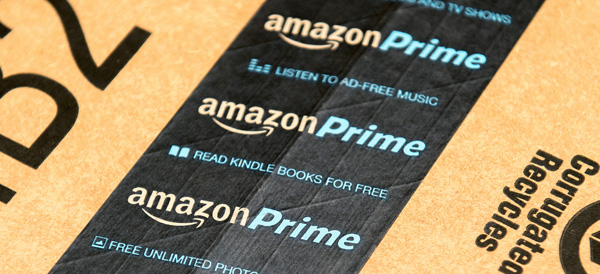
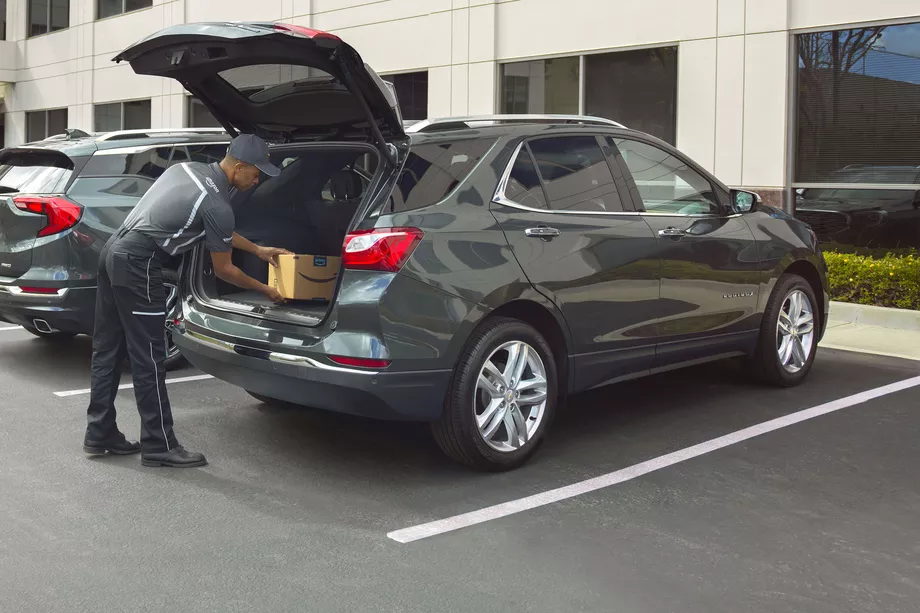
    What if you could have your Amazon order delivered to your car?

    Last year, Amazon asked for permission to unlock your front door so it could leave packages inside your home and a certain number of extremely trusting Amazon Prime subscribers said okay. Now, the tech giant wants to do the same thing with your car.

    The Amazon Key In-Car service is designed to deliver packages quickly and more securely than traditional services. Instead of driving home to get your package in the middle of the day or hoping that it won’t be stolen from your doorstep or mailbox, you can have your order dropped off in the trunk of your car. Sound good? Well, there’s a catch (or two).

    How It Works

    First, your car must be parked in a publicly accessible spot so that the driver can reach it. Your trunk will be unlocked using an app on the driver’s phone, so the delivery driver never actually gets a key or access code to your car. (One wonders why it’s called Key In-Car, since no keys are involved, but that’s a question for another day.) Finally, you’ll get a notification on your phone when your package has been delivered.

    Safety Concerns

    Amazon’s newest innovation is an expansion of their controversial Amazon Key delivery service, which allows delivery drivers to access your home using a specially installed keypad and security camera. Some customers—particularly women—were understandably nervous about allowing strangers into their homes.

    You can use the app to block access to your car at any time, for any length of time. As an alternative to in-home deliveries, the Key In-Car service is potentially less intrusive and holds fewer safety concerns.

    [adPlaceHolder]

    Ready to Get on Board?

    In order to take advantage of Amazon car-based deliveries, you’ll need to meet several criteria. The pilot program is only available to Prime subscribers in 37 cities in the US.

    For now, the service is limited to customers with GM vehicles (Chevrolets, Buicks, GMCs, and Cadillacs) or Volvos produced after 2015. Amazon Key In-Car delivery also requires your vehicle to have an internet-based support function, like OnStar or Volvo On Call, in order to let the drivers remotely unlock your trunk. With these limitations, it’s only for a select few. There’s no word yet on how Amazon may expand the program in the future.

    Final Thoughts

    Some people will automatically be turned off by this service, especially after reading that security researchers discovered that Amazon’s cloud-connected camera for in-home deliveries can be disabled and frozen from a program run from any computer within Wi-Fi range. While Amazon’s cloud-connected camera provided a layer of security for those who would want to monitor their in-home deliveries through Amazon Key, the in-car deliveries offer no similar video feed. Amazon says that multiple notifications, plus the option to block access at any time, ensures the customer remains in control of the process.

    If anything, potential customers may find the in-car deliveries more attractive from a cost perspective. To sign up, you aren’t required to spend $250 on a smart lock and camera like with in-home deliveries, and there’s no installation required. All you need is the right car and the willingness to let Amazon’s delivery employees unlock your vehicle. Frankly, we’re still holding out for drone delivery.

  • The Razor Phone 2 Rumors and Gossip

    The Razor Phone 2 Rumors and Gossip

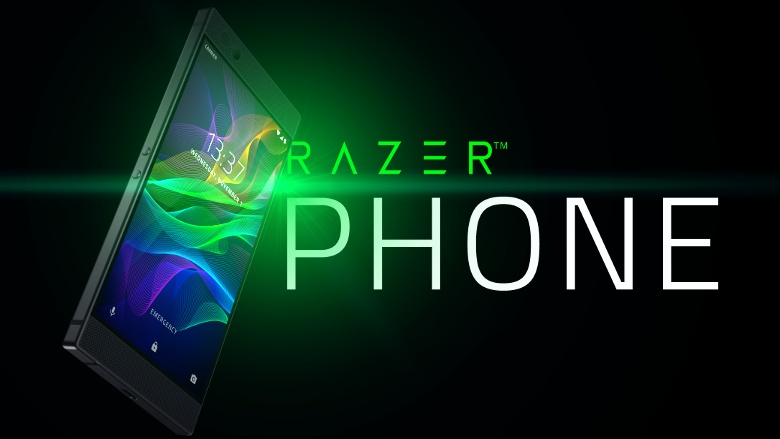
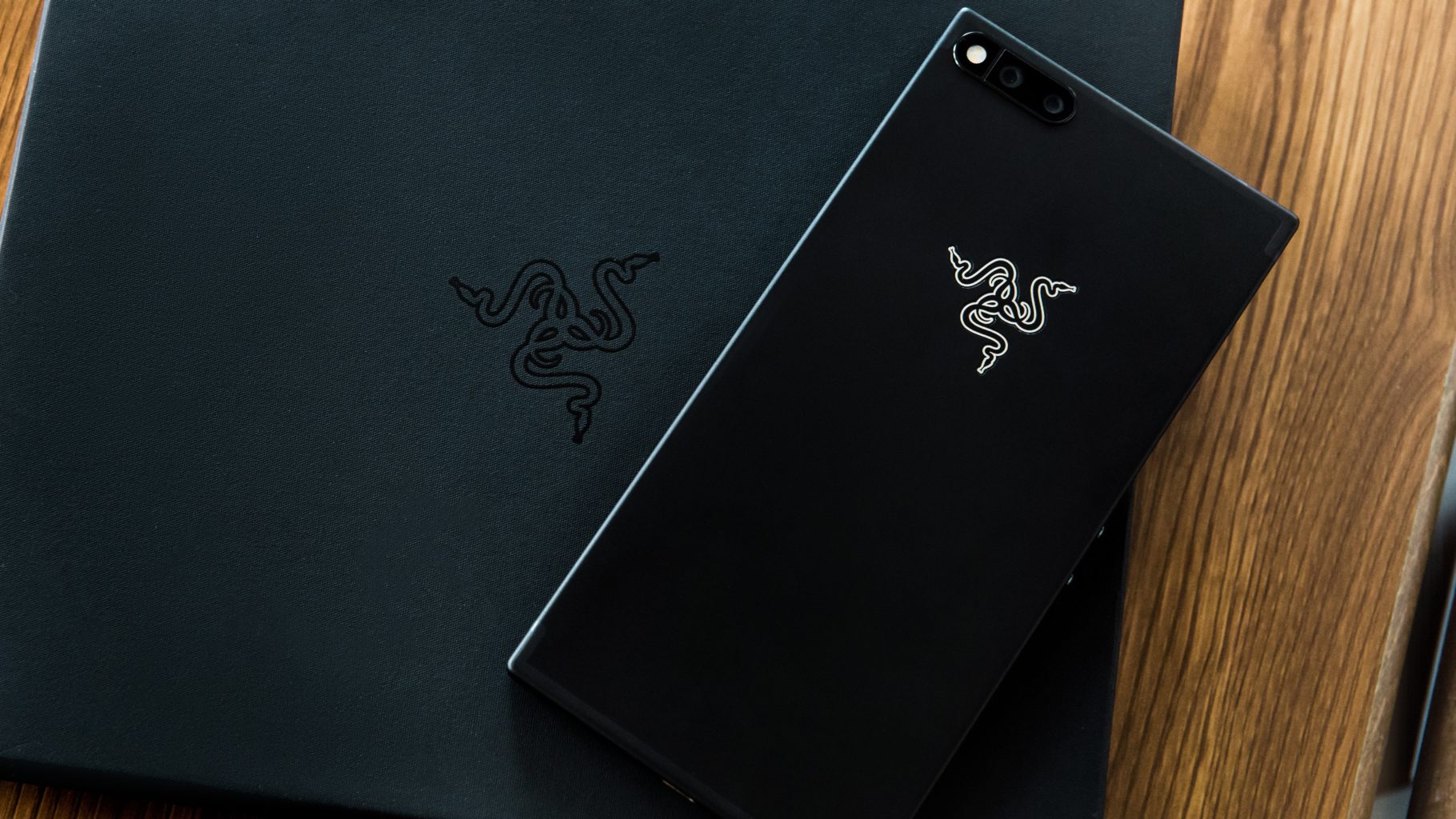
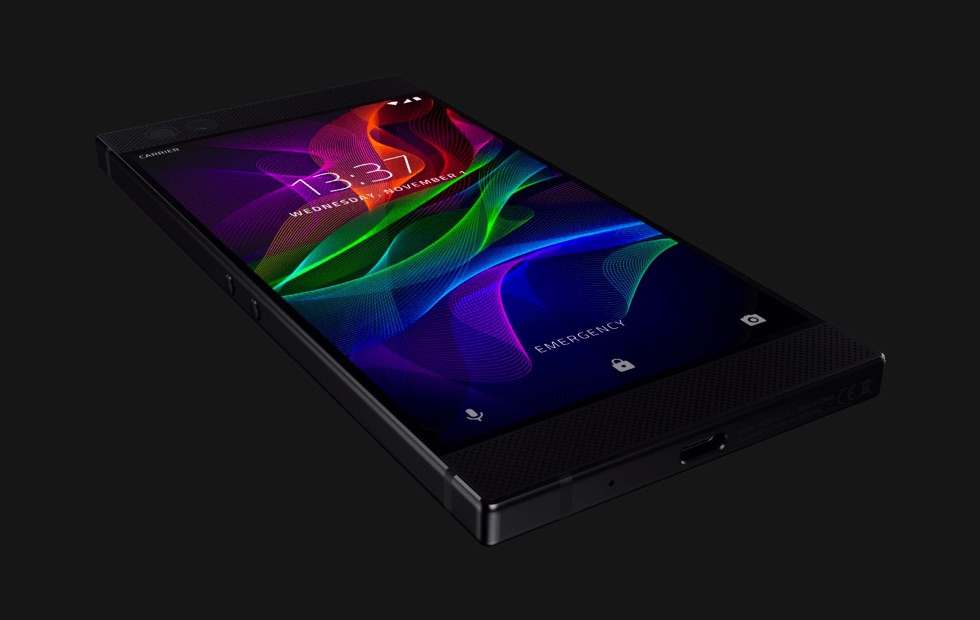
    No no not the Motorola Razr phone you are thinking of, The Razor Phone.  Razor phone set the standard in mobile gaming with the Razer Phone: the world’s first 120Hz screen on a mobile phone. It is the first android enabled phone Ive considered swapping my iPhone for. Like technology does though the new cutting edge phone is ready for an upgrade. We are seeing chatter of the Razor 2, so we are sorting out the rumors, leaks and details to bring you the scoop on the Razor Phone 2


    While Razor has already increased the capabilities of the Razer Phone – the last major software update added HDR support for Netflix as well as Dolby Digital 5.1 sound for apps that support the immersive audio standard. Everyone is now expecting updates for all the various cornucopia of the gaming focused smartphone to arrive at the same time.While the company is not going to confirm or deny any future plan there have been  discussions that the Razer Phone 2  will arrive later in 2018. That would be less than a year from the launch of the first Razer Phone, but getting the handset not only in sync with the smartphone market cycle but also available in-store with better timings ahead of the festive period makes a lot of commercial sense.


    The Consensus is the phone will be announced at the  Berlin’s IFA in early September. We are also hearing with some substance behind it that  Razer might also turn Project Linda into a real product. This is a laptop that you slot the Razer Phone into, using the phone to power it and become a touchpad. It was demoed at CES 2018, and it would make sense for Razer to launch it alongside a new handset.


    What We Are Looking For

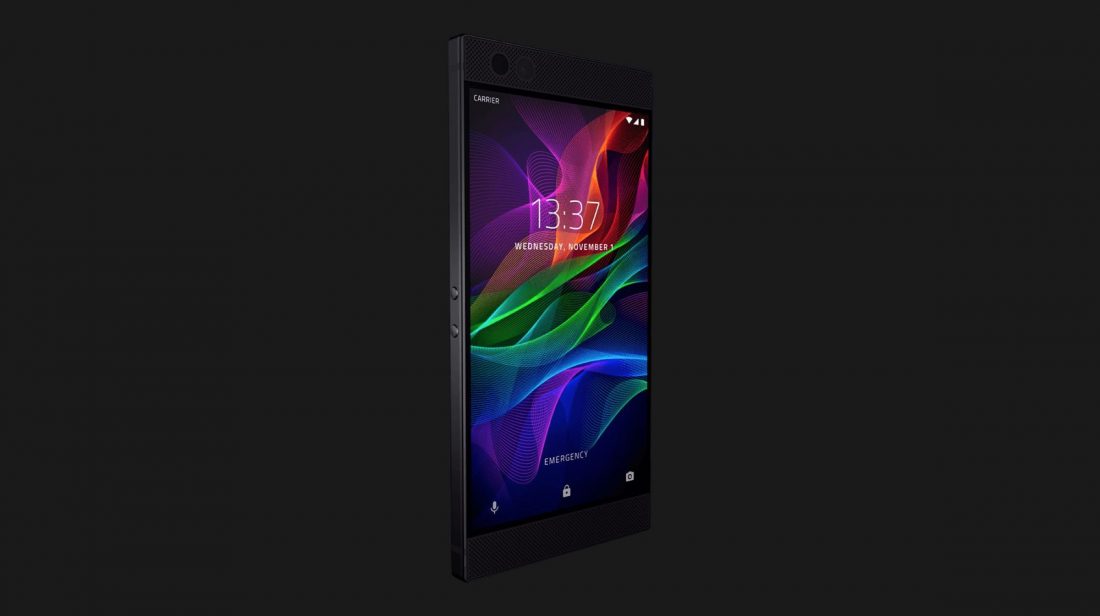
    There are a few key elements that will need to be improved for the Razor 2 to be the commercial success it should be. First off the desgin, The Razor is far to blocky and plain. Its current desgin is boring and uninspired. Razor knows how to design a curve, we have seen it in other products.  So most of us are looking to Razer’s next phone to shake things up and curve it out.

    Headphone port? We need it. Looking at the Razer Phone, there’s ample room for it, so its omission is perhaps more inexcusable than other phones that lopped off the feature. If your phone is not waterproof it should have a headphone jack

    We are going to need HD quality stereo speakers in this model. Again there is plenty of room and battery power to facilitate this, it is just lazy that the Razor doesnt have this now.Dual front-facing speakers can really make an impact in the day-to-day use of a phone.

    Wireless charging is the last very common function the Razor 2 should have. The Razer Phone doesn’t support wireless charging and there is no reason the new one should not. The company’s next phone is made with glass, that would be perhaps the easiest way to make that happen. But looking at its Hyperflux wireless charging technology currently employed with PC peripherals like the Razer Mamba Hyperflux, it seems like this feature is destined to make an appearance on its upcoming phone.

    One Other Thing

    Razor 2 will reportedly be working with google to release more timely updates. The Razor was released with Nougut when Oreo had already been available. The Razor 2 is set to be released with Android P and will receive the latest updates in much quicker fashion then its predecessor, reportedly.  A phone that adopts new software quickly is likely to become a fan-favorite, but Razer’s time with Nougat certainly didn’t spoil the experience. That’s partially due to its Nova Launcher software. It’s likely to keep with that going forward, only upgrading when its launcher is compatible with Google’s software.


    The Final Thought

    While I shudder to consider a life with out the iPhone, Razor is doing cutting edge stuff and should be considered the premium android brand. Considering the demographic of the android enthusiast this should be the desired and most anticipated android device on the market.


  • Verizon Smart Family Knows Where Your Kids Are

    Verizon Smart Family Knows Where Your Kids Are

    Verizon announced an upgrade to its FamilyBase program, now called Verizon Smart Family, that includes tracking, blocking, and monitoring options. Parents and guardians can sign up for either the basic or premium service for a monthly fee, but is the cost worth it?

    Parenting in a Digital World

    Kids today have access to a vast universe information and entertainment with a single tap of a smartphone. For many parents, that’s worrisome. Excessive screen time, viewing inappropriate content, or risky texting behavior are concerns for parents in the digital age.

    “Being a parent in today’s digital world can be daunting, but it doesn’t have to be,” said Verizon Senior Product Manager Susie Fernandes.

    It’s becoming increasingly rare for a teen or tween—or even younger children—not to have their own smartphone. Most service providers offer some form of parental controls, but Verizon has taken it to the next level with their Smart Family service.

    New App Features

    Verizon Smart Family gives parents and guardians an unprecedented amount of control over their children’s phones. It improves on the FamilyBase service with a redesigned interface and more intuitive controls.

    Smart Family also offers a finer degree of customization than the previous service. Parents can choose to limit or block phone and internet functions during specific days or even hours, ensuring for uninterrupted study time or more effective grounding. Specific sites and apps can also be blocked or limited, and parents have the option to monitor social media activity, call logs, and text messages.

    Basic or Premium?

    The basic version of Verizon Smart Family costs $5 a month. The premium version includes real-time location tracking using GPS data, which costs $10 a month. Parents may find that it’s worth the extra 5 bucks to know where their children are at any given time, and to receive alerts if the kids move out of a pre-set area such as home or school. Smart Family can also send notifications when, for example, your kids arrive home after school.

    Ultimately, families will need to decide the appropriate level of monitoring and control that works for both the parents and their kids, but Verizon Smart Family has given them a lot more options to consider.

  • Could This Be the Beginning of the End for MoviePass?

    Could This Be the Beginning of the End for MoviePass?

    Sometimes, a deal sounds too good to be true. That’s how many consumers reacted when MoviePass announced that for just ten bucks a month, you could see one movie a day in the theater. The company reimburses the theater for a full-price ticket every time one of their cardholders sees a movie, and many people wondered how such a business could be profitable.

    Well, it turns out that it might not be.

    Massive Losses and Mistrust

    Despite promises that MoviePass would start turning a profit by 2019, the company has been consistently losing money. In fact, they recently reported a loss of over $150 million—a number that has analysts and investors questioning how much longer the startup can continue.

    The company, which seeks to disrupt the movie theater industry much the same way that Netflix changed the way we consume television, has suggested that they will earn revenue from partnerships with major theater chains and movie distributors.

    However, there has been concern that despite their assurances, MoviePass is also selling information about its subscribers. In March of 2018, CEO Mitch Lowe made an offhand remark about tracking users on their way to and from the theater using GPS data. He later clarified that the app doesn’t actively track your phone, but that it can suggest restaurants located near the theater where you checked in for your movie.

    A Turbulent History and Uncertain Future

    When it originally hit the market in 2011, MoviePass charged nearly $50 for a monthly subscription. They tinkered with the pricing model several times, but it seemed that when they dropped the fee to $9.99, they’d finally found the winning number. The company reported an influx of over 2 million subscribers after debuting the cheaper monthly price in 2017.

    Now, however, it seems as though MoviePass may be considering another dramatic change. While current cardholders are still able to see a movie a day, the only subscription currently offered to new subscribers caps the number tickets at 4 per month. New subscribers also receive a 3-month trial subscription to iHeartRadio’s streaming radio service, but that hardly makes up for the limits imposed by the new model. There’s no word yet whether MoviePass will eventually cap all subscribers.

  • Nest Celebrates Earth Day with Free Thermostats

    Nest Celebrates Earth Day with Free Thermostats

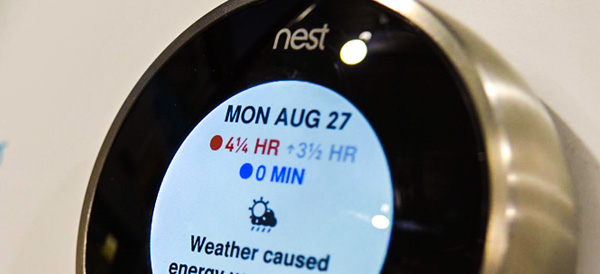
    We’re all trying to be a little more environmentally conscious, right? But for low-income families, it’s not easy being green. That’s why Nest has promised to install a million smart thermostats in low-income homes over the next five years.

    Power to the People

    The initiative is part of Nest’s Power Project, which is focused on reducing energy waste and raising awareness about how homes can become more efficient.

    According to the Power Project, 1 in 5 families spend 20% of their income on energy—far more than the national average. The company hopes to reduce the financial burden of energy waste with this program. It officially launches on Earth Day 2018, the last Sunday in April.

    We’re All in This Together

    Through partnerships with local energy and utility companies, housing organizations such as Fannie Mae, and non-profits, Nest will be able to provide money-saving smart thermostats to households with low to moderate incomes. The Nest E Thermostats will be free or very low cost for these families.

    According to Nest’s head of energy partnerships, Jeff Hamel, the company created the program because “[e]very family deserves to have heat in the cold and light in the dark.”

    Helping Hands

    Nest is committed to giving back and addressing inequality. Through the end of April, Nest will be donating 10 percent of its thermostat proceeds to charity. Nest has also pledged to install a smart thermostat in every house built by Habitat for Humanity during 2018.

    If you’d like to help out with the initiative—or see if you qualify for a free or reduced-cost thermostat—visit Nest’s website. They also provide links to local organizations that can help with energy costs for struggling families.

  • 16-Bit Nostalgia with the Sega Genesis Mini

    16-Bit Nostalgia with the Sega Genesis Mini

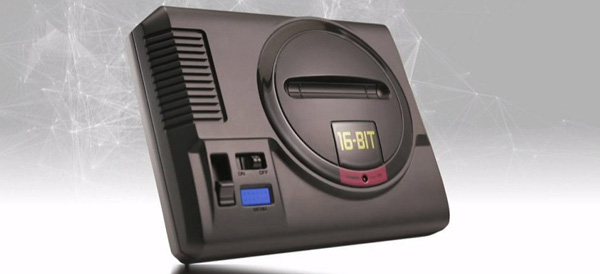
    If you grew up in the 90s, chances were good you had either a Sega or a Nintendo gaming console. Even though technology has moved on, many old-school gamers have fond memories of 16-bit, side-scrolling adventures of their youths. Hot on the heels of Nintendo’s own miniaturized retro consoles, the Sega Genesis (known as the Mega Drive to non-US markets) will be hitting shelves sometime in 2018.

    Call It a Comeback

    In essence, the mini versions of the classic consoles are emulators packaged inside novelty-sized replicas of the originals. After the success of the Nintendo minis, it’s no surprise that Sega is jumping on the bandwagon. But with videogames moving into 3D and VR, not to mention the vast array of mobile gaming apps, these consoles aren’t good for much more than pixilated nostalgia.

    Announced at Sega Fes 2018, the palm-sized device will be able to run familiar titles from the company’s catalog of games through your TV. No word yet on exactly which games will be available, but Sonic the Hedgehog will almost certainly make an appearance.

    Better Than the Flashback?

    This isn’t the first time Sega has tried to cash in on nostalgia. The company partnered with AtGames in 2017 to release the Sega Genesis Flashback, and it turned out to be a disappointment with underwhelming reviews across the board. Despite the lukewarm response to their first attempt, Sega hopes that the new Genesis Mini will prove competitive against their longtime rival Nintendo.

    The Genesis Mini’s release date isn’t yet confirmed, but the company is aiming to coincide with the 30thanniversary of the original console’s debut in October. Expect the price to be comparable to the $80 Super NES re-release.

  • Intel’s Hades Canyon NUC Packs a Powerful Punch

    Intel’s Hades Canyon NUC Packs a Powerful Punch

    Intel promised to deliver the “next unit of computing” with their NUC small form-factor desktop personal computers. Eight generations out, the Hades Canyon NUC is a big step forward in mini-desktop computing.

    Meet the Next Generation

    Although it’s small, the Hades Canyon NUC is mighty. With the iconic skull logo displayed on the top of the box, the machine is a sleek, matte black powerhouse. Similar in price to other mini-desktops, the $999 price tag may be a turnoff to more casual consumers. Tech-heads and tinkerers, however, will love the flexibility, portability, and power of this little machine.

    Under the Hood

    Like other small form-factor, the Hades Canyon NUC is a bare-bones machine, so consumers will need to provide their own RAM, storage, and OS. Because of the easy-access design of the box, it’s relatively simple to access the internal ports. With the Core i7 processor and AMD’s RX Vega M GPU, it has more than enough graphics power to run the latest games or a VR headset with no evident lag. The closed-loop liquid cooling system keeps things running smoothly and reduces fan noise—an improvement over previous generations.

    Ports and Portability

    Considering its size, the Hades Canyon NUC offers a huge number of ports, including an SD card slot, six USB 3.0 ports, two HDMI ports, and two headphone jacks. The machine is VR-friendly, with the Oculus Rift’s headset and sensors easily connecting with plenty of room to spare.

    Although Intel claims this is the smallest VR-capable machine on the market, the box is double the size of the previous generation. The size of the power supply is also an issue; nearly the same size and weight as the box itself, the bulky power supply limits the portability of the device.

    Ideal for use as a gaming computer or home entertainment system, Intel’s latest machine proves that good things come in small packages.