Category: News

  • Amazon Cancels its Planned New York Headquarters

    Amazon Cancels its Planned New York Headquarters

    Amazon has announced that it is canceling the construction of a New York headquarters. The project was slated to be an “HQ2” and involved a $3 billion incentive package from New York City.

    Protestors decried the incentive package and largely resisted the idea of Amazon further straining New York’s infrastructure. Another issue protestors brought against Amazon is their largely non-union workforce.

    Amazon HQ2 Canceled

    Amazon’s Statement

    Amazon’s statement says that they had to back down from the project due to pressure from local politicians. Notably, Andrew Cuomo, the governor of New York, and Bill de Blasio, the mayor, had strong support for the Amazon HQ project.

    “After much thought and deliberation, we’ve decided not to move forward with our plans to build a headquarters for Amazon in Long Island City, Queens. For Amazon, the commitment to build a new headquarters requires positive, collaborative relationships with state and local elected officials who will be supportive over the long-term.”

    Mark Hamrick, an online bank analyst, had harsh words for those who opposed the Amazon HQ project. “For those who didn’t want Amazon to bring the promised 25,000 new jobs and added economic vitality to the area: Be careful what you wish for.”

    Mounting Pressure

    The HQ2 project was abandoned following intense pushback by New Yorkers. Local union supporters and the city council both decried the project as being another example of corporate welfare. The generous incentive package of $3 billion was considered unseemly, given that Amazon CEO Jeff Bezos is the wealthiest man on Earth.

    City Councilman Jimmy Van Bramer had words of encouragement for the opposition to the Amazon headquarters. “Defeating an unprecedented act of corporate welfare is a triumph that should change the way we do economic development deals in our city and state forever,” Van Bramer stated.

    A statement given on Thursday by Chelsea Connor, head of the Retail, Wholesale and Department Store Union, was quite an indictment of Amazon. “Rather than addressing the legitimate concerns that have been raised by many New Yorkers, Amazon says you do it our way or not at all, we will not even consider the concerns of New Yorkers – that’s not what a responsible business would do.”

  • Google Hardware News for 2019: Expect More Pixel Devices

    Google Hardware News for 2019: Expect More Pixel Devices

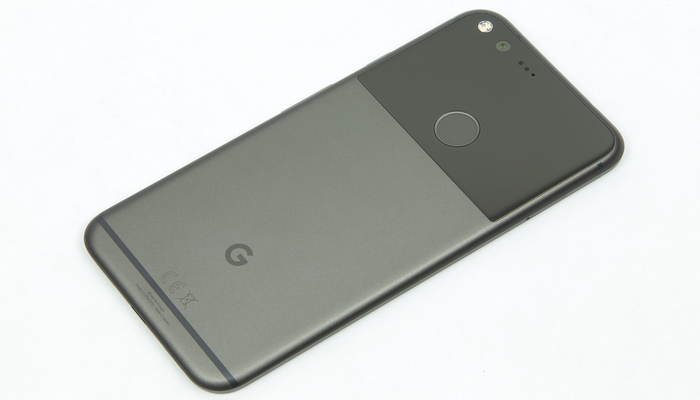
    Early reports of the “Made by Google” lineup for 2019 are here, thanks to Japanese newspaper Nikkei. The biggest news is mostly unsurprising, though it’s nice to have solid locks on the pieces of tech we’ve been speculating about. Namely, a budget Google Pixel, a Google Pixel 4, a Google watch, a new Nest cam and a new Google Home.

    Google Hardware News

    Google Pixel Lite

    The Google Pixel isn’t exactly known for its affordable price, but Google wants to change that. In their quest to go toe-to-toe with Apple’s iPhone, Google is launching a Google Pixel 3 Lite later this year. Reports hold that the new phone will actually undercut the iPhone XR in price, allowing Google to come out as the more affordable of the two luxury smartphone makers.

    Google Pixel 4

    The next step for the Pixel line of phones, of course, is the Pixel 4. Not much is known about the successor to last year’s Pixel 3 at the time of writing, aside from the fact that it’s slated for a late 2019 release. The Pixel 4 will likely be the first Pixel phone with 5G capabilities, and we’re likely to see even more emphasis on biometric security like face scanning technology or in-screen fingerprint readers.

    Google Pixel Watch

    The ongoing quest to be like Apple also means that Google’s expected to launch their own wearable tech, much like the Apple Watch. The expected Pixel Watch will likely feature fitness tracking, vital monitoring and music playback capabilities, much like the Apple Watch. We can expect to see the Pixel Watch by the end of 2019, according to reports.

    Next Generation Google Home?

    A new Google Home, as well as Nest Cam, are also slated to be unveiled soon. It’s unclear whether the new Google Home devices coming in 2019 will be a second generation of the existing smarthome speakers or a completely new line of technology.

    However, the good news is that we can expect to see all of this from Google before the end of the year. It’s going to be a big year for the tech giant!

  • Eero Wi-Fi Routers Acquired by Amazon

    Eero Wi-Fi Routers Acquired by Amazon

    Amazon announced yesterday that it has acquired mesh-router manufacturer Eero. Eero is a huge name in the world of mesh-network routers, and this move positions Amazon in a strong place for its Echo hardware. Eero is based in the Bay Area, where it has been operating since 2015. While neither company stated how much money the acquisition cost, Eero has previously secured $90 million in venture capital funding.

    Eero Acquired by Amazon

    Amazon’s Statement

    Amazon is certainly positioning this new technology to bolster their smart-home business. Amazon’s Senior Vice President of Devices and Services, Dave Limp, issued a public statement regarding the acquisition.

    “We are incredibly impressed with the Eero team and how quickly they invented a WiFi solution that makes connected devices just work. We have a shared vision that the smart home experience can get even easier, and we’re committed to continue innovating on behalf of customers.”

    If there was any doubt that this move was to shore up Amazon’s smart home devices, Limp’s statement should dispel it. This mesh router tech will allow for tighter communication between Echo devices and more robust connectivity.

    Eero’s Statement

    Nick Weaver, the chief of Eero, issued a statement following the acquisition’s news breaking.

    “From the beginning, Eero’s mission has been to make the technology in homes just work. We started with WiFi because it’s the foundation of the modern home. Every customer deserves reliable and secure WiFi in every room. By joining the Amazon family, we’re excited to learn from and work closely with a team that is defining the future of the home, accelerate our mission, and bring Eero systems to more customers around the globe.”

    This acquisition’s news comes amid a tumultuous time for Amazon CEO Jeff Bezos. At time of writing, Bezos is embroiled in a battle with the National Enquirer and its parent company over alleged blackmail.

  • The Future Unfolds: Samsung Could Unveil New Folding Phone

    The Future Unfolds: Samsung Could Unveil New Folding Phone

    Samsung’s official Twitter account had an interesting teaser on Monday. The short video shows unfolding Korean text and promises that “the future unfolds.” While this may seem cryptic, it’s likely this is a sly nod to the upcoming Samsung Galaxy F, the new folding phone the company has been teasing recently. Could it launch alongside the Galaxy S10?

    The Future Unfolds

    Samsung Folding Phone

    A prototype of the Samsung folding phone was spotted in November 2018, though it was hardly a pretty sight. The prototype was almost more proof-of-concept than an advertisement for an upcoming product. However, it did show us what to expect from Samsung’s folding smartphone.

    The outer, wrap-around screen appears to be made of an unusual material. The design is not dissimilar from a bifold wallet, though the practical usefulness of such a device remains to be seen. At time of writing, little is known about the specifics of a potential Samsung Galaxy F. It’s uncertain whether the device would even be a mass-market consumer device or an experimental prototype.

    Galaxy S10

    Samsung has many other big products on the horizon. Later this week they are set to properly unveil their newest line of Galaxy flagship phones, the Samsung Galaxy S10. The S10 will be the stock-standard version, while the S10+ will be the larger model with a longer battery life and higher price. A budget-friendly model, the S10e, is set to debut at a lower price and with less bells and whistles.

    Strange designs seem to be the current rule at Samsung: the S10 looks to forego the ever-popular phone notch for a phone pinhole instead. This punch-out screen has met with mixed responses from tech news sites, with many stating it looks unsightly. However, the phone notch received similar criticisms when it was featured on the iPhone X, though it has gone on to be regarded as elegant.

  • Apex Legends Tops 10 Million Players

    Apex Legends Tops 10 Million Players

    EA has had a surprise bit of good fortune with the release of Apex Legends, the newest game in the Titanfall series. Despite being free-to-play, battle royale, rife with microtransactions and bereft of giant mechs or wall-running, this “Titanfall” game has now seen 10 million players since its release last week. Color us impressed!

    Apex Legends Tops 10 Million Players

    The Formula for Failure

    We’re going to be honest on this one: we had written Apex Legends off the moment we heard about it last week. To be fair, who could be blamed for thinking this unusual game would succeed? After no press run-up and little buzz, EA simply dropped a Battle Royale game to go toe-to-toe with the big gods, Fortnite and PUBG.

    An EA-published free-to-play shooter with microtransactions sounds like the perfect storm of things gamers don’t usually like. To top that off, the game is marketed as being in the Titanfall universe, but none of the series’ titular mechs make an appearance. Even more egregiously, the signature parkour free-running of prior games isn’t on display either. Yet, the game seems to be rather popular.

    The Formula for Success

    It turns out, tight gunplay, excellent visuals and fun cosmetics are all you need to make a free-to-play shooter fun. Even EA’s dismal reputation couldn’t sully the hard work of developer Respawn, and the genuine passion they have for their IP.

    The lack of press leading up to the game’s launch may have been better PR than having any info come out. As it stands, naysayers can simply play the game now and see that it’s great, rather than prophesizing doom and bemoaning EA’s business practices. All of this is quite surprising, but a welcome surprise, to be sure.

    Later this month, EA’s next heavy-hitter, Anthem, will hit store shelves. If Apex Legends is anything to go by, Anthem may just blow us all away. Here’s hoping that EA-published shooters with this level of polish and detail become the new norm. We’ll take all the great games we can get!

  • We Could Use Genetic Modification to Wipe Out Malaria: Should We?

    We Could Use Genetic Modification to Wipe Out Malaria: Should We?

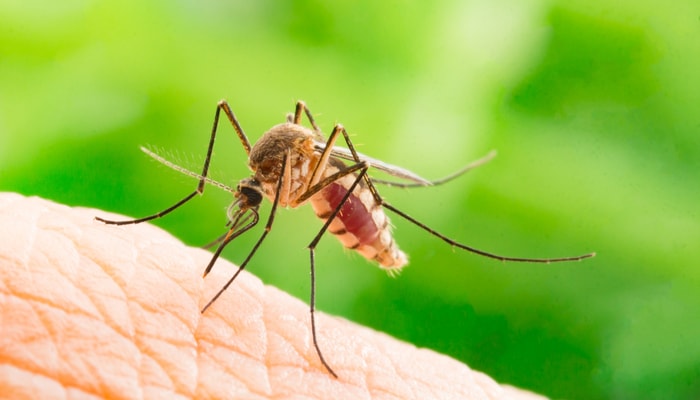
    Researches based in London have used new technology to determine a way to wipe out the mosquitoes that carry malaria. The female Anopheles mosquito, in particular, is the carrier of Plasmodium, a single-celled parasite that causes malaria. We now have access to a “gene drive” that could wipe out malaria carrying mosquitoes. The question is: should we?

    Should we Destroy Mosquitoes to Wipe out Malaria?

    CRISPR and Gene Editing

    CRISPR technology, first discovered in 2012, was touted as a revolution in genetic studies. The technology is so advanced, in fact, that we’re still learning about it seven years after its creation. Essentially, the CRISPR is like a pair of genetic scissors that allow scientists to unzip genes, rewrite them, and then zip them back together.

    Editing genes like this has been tremendously helpful in modifying food sources and crop yields. This is the real-world equivalent of cracking open the source code of a video game. We’re now capable of altering life at its most basic level, rearranging living organisms from their very DNA.

    Gene Drive

    The Gene Drive is a type of selfish gene that tricks replicators in cells to make it appear much more often than in 50% of offspring. Gene Drives can rapidly propagate through a species, and lab studies have shown that some engineered Gene Drives can cause 100% exposure in a population in as little as seven generations.

    For species like mosquitoes, who have very short reproductive cycles, those seven generations can occur very quickly. As for stopping the spread of malaria, that’s where things get a little sinister. One of the genetic modifications scientists have discovered in Anopheles mosquitoes allows a “switch” to be flipped that causes the female of the species to become unable to reproduce or suck blood.

    Ethics

    In short, we’ve developed a self-propagating mosquito kill-switch. In theory, this could visit a Biblical plague on a plague carrier. The question remains: should we? Who are we to decide that a species of insects deserves to die so that we don’t? Certainly, the lives of children who die from malaria are worth more than that of a mosquito. But it’s still an odd thought: wiping out an entire species at the flip of a switch.

    There are other concerns with this technology, as well. If it isn’t perfected, it could cause unforeseen damage to the local ecology. Scientists see a need to tread carefully here. Once the cat is out of the bag, it’ll be impossible to get back in. Extinction is a one-way street.

  • Tesla Model 3 Receives a Price Cut, Not Yet at $35,000

    Tesla Model 3 Receives a Price Cut, Not Yet at $35,000

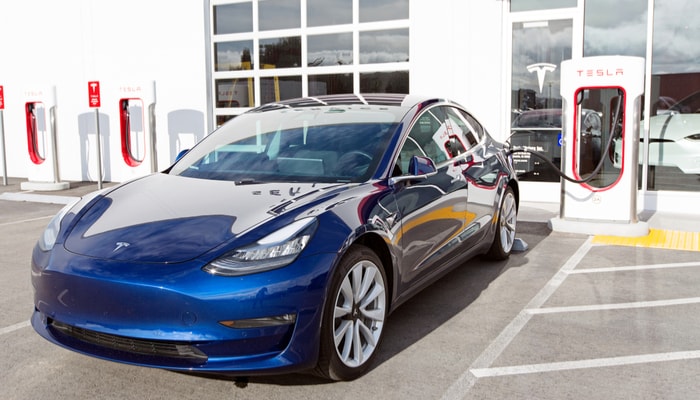
    The promise of the Tesla Model 3 is that it will one day be sold for $35,000, making it an “affordable” way to own an electric vehicle. However, as of yet, that price is not a reality. The Model 3 has just received a starting price cut down to $42,900 before incentives, making it $1,100 cheaper to start than it was. So, what’s new with the Model 3?

    Tesla Model 3 Price Cut

    Referral Program

    In regards to this relatively minor individual price cut, Tesla has stated that the ending of the referral program is responsible. Their referral program allowed Tesla buyers to get a credit toward their vehicle if they recommended a friend, a move that was meant to generate word-of-mouth marketing. Judging by the brand’s high profile and long waiting lists, however, it seems they need no further advertisement.

    Target Price

    Tesla has repeatedly stated that $35,000 is their target price for the Model 3. They wish to hit that number before tax incentives and without factoring in savings of not buying gasoline. Tesla’s website works in around $4,000 of savings on gasoline into the price of a Tesla when calculating “savings,” but that’s no help for those without the money up-front to pay for a luxury vehicle.

    At present, the least expensive Tesla on the market would run a consumer $39,150 after applying the federal tax credit for electric vehicles. This credit is set to be reduced by half by July, making Tesla vehicles that much more expensive.

    When to Buy

    For those wishing to own their own Model 3, it can seem like there’s no good time to purchase the vehicle. The waiting lists remain long, the price remains high and tax incentives are getting slashed each year. It can be difficult to determine when the right time to buy a Tesla is for the average consumer.

    Elon Musk has stated that the process of getting the Model 3 to the target price has been “a grind,” and that the economy of scale on the project remains an issue. In the meantime, the average consumer is left with no time-table on when the right time to think about buying a Tesla is.

  • Apple’s HomePod Struggles to Break into Crowded Smart Home Market

    Apple’s HomePod Struggles to Break into Crowded Smart Home Market

    Apple’s been uncharacteristically playing catch-up in the past year-and-a-half. The Cupertino-based tech giant has been facing sluggish sales of iPhones, Apple Watches and now the HomePod is even struggling to find its footing. A report from the Consumer Intelligence Research Partners has stated that only six percent of the smart home speakers in the US are Apple’s HomePod brand.

    Apple’s HomePod Struggles to Make its Mark

    The Competition

    Apple’s HomePod faces intense competition in the American smart speaker market. Amazon’s Echo line of devices makes up a staggering 70 percent of field, while Google Home speakers represent the remaining 24 percent of the smart speakers. Apple, by contrast, has yet to even break into double-digits with its market share.

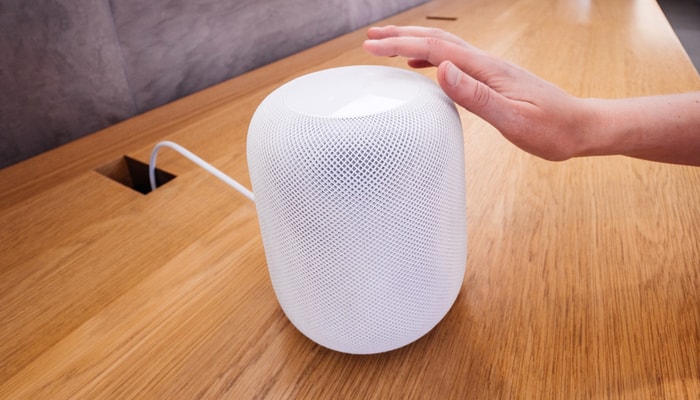
    This is likely an issue of both price and functionality. The HomePod comes in one configuration: a $349 behemoth that sounds amazing and looks like a futuristic device from space. That’s a hefty price tag when Amazon offers a $20 Echo Dot and Google even has a $30 Home Mini. While these tiny speakers have nothing on the HomePod, they’re affordable. So, they sell.

    Locked in the “Ecosystem”

    Apple’s HomePod also has very limited functionality compared to Google and Amazon’s offerings. For instance, Siri only allows music to play from Apple’s own streaming service, and isn’t keen to play Spotify. This is another example of Apple’s tightly-controlled ecosystem coming back to haunt them.

    For the Apple faithful, it can be great to keep everything in the sterile, white walls of Apple’s “ecosystem.” Mac-toting, Apple Watch-wearing iPhone users likely love their HomePods. Most people, however, have no such brand loyalty and use tons of different companies’ electronics. That’s why Microsoft’s Windows operating system made them one of the world’s largest companies.

    A Solution?

    Apple is even beginning to offer Apple Music through Alexa, marking a rare instance of them breaking from their usual exclusivity. Apple’s seeing slowing sales for much of their hardware: are they thinking it’s time to make their subscription service a cornerstone of their brand?

    Another solution, of course, would be for them to open up their ecosystem more. Make a $30 HomePod Mini. Allow Spotify to play through the HomePod easily. Allow easy communication with Alexa-enabled smart home tech. After all, if you can’t beat them, join them!

    Will we be seeing a new era of cooperative Apple features? Well, probably not. Not as long as Apple’s still posting profits with their current business model, at least. If the sales slow down enough, though, and Apple finds itself in the red… who knows. Maybe cooperation would suit them if it stood to make them some money!

  • Xbox Live Coming to Nintendo Switch

    Xbox Live Coming to Nintendo Switch

    No, you didn’t read that headline wrong. Microsoft’s Xbox Live is coming to the Nintendo Switch, per a recent listing from the upcoming Game Developer’s Conference. The news comes courtesy of a description for Microsoft’s presentation during the show. Is this the start of a new era of cooperation between Microsoft and Nintendo?

    Xbox Live Coming to Nintendo Switch

    The News

    This news, as stated previously, comes from a description from the upcoming Game Developer’s Conference. That description reads “Get a first look at the SDK to enable game developers to connect players between iOS, Android, and Switch in addition to Xbox and any game in the Microsoft Store on Windows PCs.”

    The description mentions that this “will break down barriers for developers that want their communities to mingle more freely across platforms.” Well, that sounds like good news for gaming in general, if you ask us!

    What This Means

    Does this mean we can expect to play Halo 5 on our Nintendo Switch? Maybe, but that’s not necessarily set in stone. What it definitely means, for now, is that we can expect to see cross-platform play remain a huge aspect of Microsoft’s initiatives.

    The company has been making huge pushes to keep gaming as integrated as possible following the rough launch of the Xbox One. Huge pushes for initiatives like the Adaptive Controller and cross-platform play with Nintendo has won massive respect for the company that was lost with the DRM fiascos when the Xbox One launched.

    We could expect to see support for Xbox Live achievements, friends lists, messaging and indie titles appearing on Switch and mobile devices. This would allow devices that aren’t typically known for their communications-based multiplayer to branch out into more “core” gaming experiences.

    A Modern Nintendo Online?

    Nintendo’s own online service is required to play any competitive online multiplayer and runs for about $20 per year. The service also grants access to emulations of some classic NES games. However, the service lacks achievements, messaging and voice communications that are considered hallmarks of modern online gaming.

    Could Microsoft’s Xbox Live service be the solution to this issue? While many players simply own both a Switch and an Xbox or PS4, it’s still strange that Nintendo hasn’t made online multiplayer a bigger part of their brand. Microsoft’s announcement could mean that the days of bare-bones online features on Nintendo systems is coming to an end!

  • Apple’s Highly Publicized FaceTime Bug Fixed

    Apple’s Highly Publicized FaceTime Bug Fixed

    The highly-publicized FaceTime Bug that allowed users to eavesdrop on other Apple device owners has finally been fixed, according to Apple. The bug in question allowed people initiating a Group FaceTime to hear any audio input from the other members of the call. Apple disabled the functionality, which had launched in October, and set about work patching the bug immediately.

    FaceTime Bug Patched

    The Bug

    How the bug came to be is still unclear. However, after being discovered in late January, it was brought to Apple’s attention by numerous users. The functionality had just been added to iOS devices and Macs in October and allowed up to 32 people to be on the same FaceTime call. This highly-anticipated feature ground to a halt last month when it was discovered it could be used as a way to eavesdrop on people.

    The bug essentially allowed users to listen in on the conversations of anyone they dialed on a Group FaceTime call who didn’t answer. Even though the users would decline the call, the callers on the other end would still be able to hear them. When Apple was made aware of the severity of this easily-replicated bug they disabled the Group FaceTime feature temporarily.

    Apple’s Response

    “We take the security of our products extremely seriously and we are committed to continuing to earn the trust Apple customers place in us,” the company stated in a release on Friday. In the Friday release Apple assured users that the patch would be released sometime this week and would result in the bug being squashed.

    In the statement, the company specifically thanked the Thompson family for helping to discover the bug and make them aware of it. Michele Thompson’s teenaged son discovered the bug while trying to get his friends in a Group FaceTime for a session of Fortnite. Thompson noted she had difficulty getting acknowledgment of the bug from Apple, despite trying to contact them.

    This incident is a bit of an embarrassment for Apple, a company that prides itself on its extremely strict privacy controls. This uncharacteristic privacy leak is more in line with companies like Facebook than privacy stalwarts like Apple.