Tag: comcast

  • The Avengers and the X-Men Crossover is Saved! Disney to Buy Fox

    The Avengers and the X-Men Crossover is Saved! Disney to Buy Fox

    That’s right, we may still be able to see Iron Man and Cyclops onscreen together! In response to Comcast’s bid to buy Fox for $65 billion in cash, Disney upped their bid. What does it take to own a massive entertainment conglomerate? Well, a bid of $71 billion in cash and stocks seems to be the magic ticket. That eye-watering sum is even more impressive when you consider that Fox will have to spin off its news branch and maybe even its sports networks. Why’s that, you ask? Regulatory approval processes are quite complicated. 

    Fox Wary of Regulatory Approval 

    One reason Fox seems to be seriously considering Disney’s bid is regulatory boards. While AT&T recently won a case to acquire Time Warner, that doesn’t guarantee the same would happen for Comcast. Disney, on the other hand, is an entertainment company, not a telecom. Fox is likely weighing that in their consideration of being bought by the House of Mouse. Additionally, they could realize that there is simply more money to be made by partnering with the massive maker of Marvel and Star Wars. Getting the budget of Disney behind their films would help Fox reach even more audiences and make even more money. 

    Shareholders Signing Off on Disney Deal 

    The deal won’t actually be complete until the shareholders okay it. Which is ironic, as the Comcast deal was going to have to wait until a July 10th shareholder meeting to be approved. Disney’s bid beat that approval to the punch. Still, Fox and Disney shareholders could still oppose the bid. However, such opposition seems highly unlikely at this stage and is really more of a formality.  

    That being said, the deal will also still have to pass regulatory approval. Fox’s assets would be considered and could have to be spun off into new companies if a board deems it necessary for the merger. Avoiding a lack of meaningful competition is an important facet of such boards, so moves like this can be risky for large companies. Disney, for their part, seems convinced that it won’t be an issue. Interestingly, the sale would include Fox’s 30 percent stake in Hulu. Both Disney and Comcast also hold a 30 percent stake in the online media platform. The final ten percent is owned by Time Warner, for the curious.  

    The Future 

    Hopefully the future holds a huge crossover film of the X-Men and the Marvel Cinematic Universe. Is it too much to ask for a good movie version of Avengers vs. X-Men? We don’t think so. Make it happen, Disney! 
     

  • Data Caps Blatant Money Grab? Comcast’s Latest Announcement Makes It Seem that Way

    Data Caps Blatant Money Grab? Comcast’s Latest Announcement Makes It Seem that Way

    Comcast implemented a data throttling program in 2008 that was aimed primarily at slowing BitTorrent users. However, the system hasn’t been used much in the past few years, and now, a decade later, it has been disabled altogether. In an announcement on June 11th, Comcast had this to say: 

    “As reflected in a June 11, 2018 update to our Xfinity Internet Broadband Disclosures, the congestion management system that was initially deployed in 2008 has been deactivated. As our network technologies and usage of the network continue to evolve, we reserve the right to implement a new congestion-management system if necessary in the performance of reasonable network management and in order to maintain a good broadband Internet access service experience for our customers and will provide updates here as well as other locations if a new system is implemented.” 

    What This Means for Data Caps 

    While common sense has held for years that companies charging for data overages are just squeezing consumers, this announcement is proof. Straight from the horse’s mouth, as it were, we now have Comcast saying they are perfectly capable of meeting demand. They claim that their data caps are in place in order to promote “fairness,” but that makes little sense. Data isn’t a finite resource, so someone using more isn’t leaving less to the people around them.  

    What’s even worse than Comcast’s insistence on data caps is their implementation of them. Users are limited to 1TB of data per month and must pay an extra $10 for every 50GB over that. Otherwise, users can opt to pay an extra $50 per month to have no data cap. However, consumers have no way to verify that the metrics Comcast uses to determine how much data they have used are accurate. In fact, reports of users being charged overages for data they didn’t use aren’t unheard of.  

    Worst of all, Comcast maintains that the overages help to pay for system upgrades, not day-to-day traffic. But they already have heavy-traffic users pay more. Higher speeds, which are required for downloading large amounts of content or competitive gaming, are much more expensive than lower bit-rates. This means that those who pay for faster internet will chew through their allotted data faster, meaning they’re getting hit by these higher costs twice when they go over the cap. 

    Comcast Could Prove a Dangerous Example Post-Net Neutrality 

    Comcast now has little incentive to act ethically, as the regulations that reigned them in are gone. Instead, data throttling and de-prioritization will likely become key aspects of their business model. Why shouldn’t the company charge more for the service they could provide for less? What’s stopping them from unfairly throttling content they don’t approve of? Articles like this one could be flagged and be unable to render on the screen of someone using Comcast for internet.  

    This dystopian prediction might sound like hyperbole, but it would be well within Comcast’s power to do so. It would also fit with their previous practices. Then, other ISPs would be likely to follow in their example. Since ISPs are largely monopolies in their areas, consumers would have no recourse. While only time will tell, one thing is clear. Comcast, and other telecom companies, implemented data caps for one reason: to shake down consumers for more money. They’re clearly completely capable of meeting current data demands without the need for such harsh caps. But the caps are good for their bottom lines, so they’re not going anywhere. 

  • Seismic Shifts: Netflix Now Worth More than Comcast

    Seismic Shifts: Netflix Now Worth More than Comcast

    Cord cutters: it’s working. Comcast, everyone’s least favorite telecom company, is now worth less than streaming giant Netflix. This is a monumental moment, signaling the pendulum shift from traditional cable to streaming services. For many users, this is hardly a bad thing.  

    Netflix Ruling the Roost? 

    Netflix is a giant in the streaming field. Between their streaming of syndicated shows and big-budget movies and their original programming, Netflix has established itself as a major force in entertainment. Comcast, on the other hand, is a very different beast. Comcast operates a broadband network and owns Dreamworks Studios. They even own NBC! But that hasn’t stopped Netflix from overtaking them in total worth.  

    What’s Changed? 

    How did a website that once mailed DVDs to people end up overtaking a telecom titan? Comcast has been losing subscribers pretty steadily for the last few years, as Netflix has offered an attractive alternative to traditional cable. Cable packages are comprised of a lot of filler channels (and still bombard the viewer with ads), are terribly expensive, and are typically tied to their provider’s broadband internet. Netflix, on the other hand, is significantly less expensive and doesn’t run ads in the middle of its shows.  

    It’s not hard to see why users grew fed up with Comcast, and similar telecom companies like Charter Spectrum and Comporium. Additionally, pressure from companies like AT&T and Verizon has whittled away at Comcast’s broadband subscriber base. 

    What’s Next? 

    What does this mean for the future? Nothing is set in stone, yet, of course. But it does seem like traditional cable is working on limited time now. Without major initiatives to win back wary consumers, it seems likely the precipitous drop in subscribers will continue its freefall. Inversely, Netflix just keeps adding more subscribers and producing ever more quality content.  

    While Comcast is in no danger of going out of business, their current business model is in mortal peril. They’ve begun investing in Netflix competitor Hulu, and this seems like a much more long-term investment than their cable service. In the meantime, it seems quite possible that today will be remembered as the beginning of the end for traditional cable services. 

  • Top Five Cable Tv Providers

    Top Five Cable Tv Providers

    As hard as we try to cut the cord, go to a entertainment on demand premise we still need that live cable goodness. Streaming CNN or ESPN makes you fell like your behind the actual breaking updates. Not to mention the constant and consistent back round noise that cable TV can provide. I just want to watch something I can ignore. The final and one of the biggest necessities of cables is it give you the option to watch something when you don’t know what you want to watch.  I know, I know even as I am writing this I just keep thinking ooooh shut up with your first world problems, and since these are my concerns my only conclusion is its a wonderful time to be alive in America.  Lets take a look at the Top Cable options, some of these are location based and you may not be lucky enough to be in their footprint… uhg again with the first world problems. These are the best for cable TV options.

    1.At&t Uverse

    While this can be one of the more pricer options and only available to a limited footprint in limited areas, if you are lucky enough to fall in the Uverse green zone you have the best option available. With four TV packages to choose from with a selection of 200–550 channels. It uses a fiber optic network, which makes the service more reliable than satellite or cable TV. U-verse’s pricing is more competitive if you bundle it with Internet and/or phone service, but on its own, it’s priced higher than competing packages. Big benefits of Uverse is the standard whole home DVR, advanced interface, and no degradation on bandwidth. At&t has since decided it has more lucrative options for its Fiber network so it has begun aggressively switching all its uverse users to Directv.


    2.Spectrum

    This one was quite a surprise to jump to number 2 and take the silver. With the Charter/Time Warner merger the T-1000 of internet cable providers have Spectrum offering an affordable 100 Mbps internet options, with quality cable for a reasonable price. They offer all the latest features like whole home DVR and VOIP telephone options with on screen caller ID. While its great they do not make you sign a long term contract, there are installation fees and the price does jump from time to time.


    3.Verizon Fios

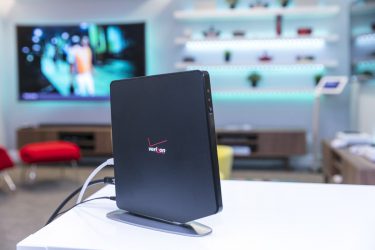
    This is a great service that has dropped to bronze due to Verizon cutting off expansion plans for Fios and their fiber game.Verizon’s Fios internet service is one of the best money can buy. It’s lightning fast, and thanks to its fiber infrastructure, it’s also reliable. Add in customer service that exceeds the expectations you have a top tier cable option, if you are lucky to be in the footprint. The company has established areas,  but it’s mostly major cities with no further plans to expand.  They have an array of customizable  plans to fit your needs and budgets. They have the speed, channel lineup, on-demand and features and functions that you could want. Did I mention they offer Gbps? a gigabit!!!


    4.Optimum

    This was another surprise from a traditional cable provider. One of the smaller guys offers the best bang for you buck. Optimum has the 100Mbps, full channel lineups, great interface all the basics are there. Where they stand out is there whole home DVR allows you to record 15 shows at once. This is nice for the prime-time Sunday nights. They are even offering up to 400Mbps in some areas and at a great price.


    5. DriecTV

    You cant count Directv out, and being the focus of At&t’s cable service they are adding more and more features and functions you see in the Uverse system constantly. The Sunday NFL package is legendary and a necessity for all die hard football fans. The downsides are still the contract, the hardware and the outages when it rains, additionally you still have to bring your own internet connection.


    The Worst: Comcast Xfinity

    Billing its self as a premium provider but sorely missing on features function and execution Comcast Xfinity is by leaps and bound the worst dollar spent in the cable business. With constant freezes, reboots, outages and interface lock downs it is a frustrating mess. Just this morning I was forced to watch the Talented Mr Ripply when the menu on Infinity froze forbidding me to change the channel until it has performed its 5 min interface reboot sequence. Nope, just nope.