With Amazon’s Alexa and Google Assistant becoming more lifelike and responsive with each update, it’s growing more and more likely that we will soon see fully-fledged artificial intelligence that rivals that of humans. While the future is looking brighter for AI in the real world, pop culture has taught us that most AI constructs will inevitably run amok and try to kill all humans! With that in mind, let’s run down our list of our top ten favorite films about artificial intelligence!
Tron
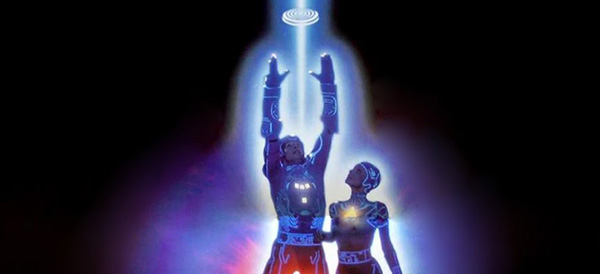
Photo Credit: Moviefone
The 80’s classic was mind-blowing when it released. Casual moviegoers, unfamiliar with abstractions such as cyberspace and digitization, were treated to a visually stunning and downright puzzling film when they first saw Tron. Now regarded as a cult classic, and having garnered a sequel and animated series, Tron makes for a fantastic look back at an early visualization of a digital space.
Starring Jeff Bridges as Flynn, a hacker and programmer, the nerd-tastic tale has him being pulled into the world of the arcade game he has created to do battle with the evil, rampaging Master Control Program. The story is quaint and cheesy today, but audiences at the time generally found the plot “incoherent” and hard to follow. Oh, how times have changed!
I, Robot
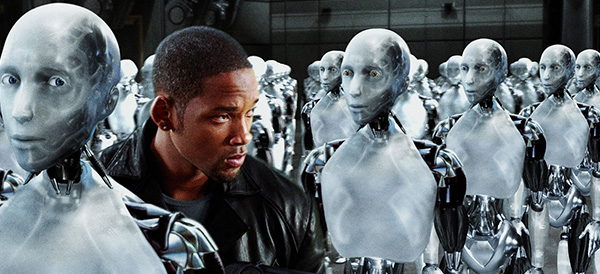
Photo Credit: 20th Century Fox
Released in 2004, this gritty, noir-style action film is loosely based on the Asimov compilation of the same name. Will Smith stars as Del Spooner, a detective investigating a murder he blames on a robot, despite such an act being strictly forbidden by all robots’ programming.
A fantastic meditation on what it means to be human, and what makes something alive, I, Robot is the rare action movie that makes the viewer actually think in between bombastic shootouts. Will Smith’s Spooner is equal parts engaging and frustrating, as his anti-robot bias is affirmed and challenged in equal measure by the film’s plot.
Avengers: Age of Ultron
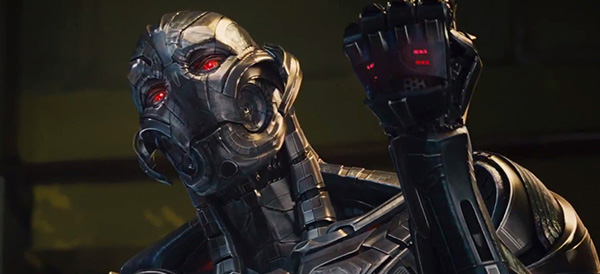
Photo Credit: YouTube
While the plot may be somewhat derivative and the action a bit too fast-paced for deep meditations on the dangers of unchecked AI development, the second Avengers film does an excellent job of entertaining. Iron Man, Hulk, Thor, Captain America and the rest of the Avengers crew have to throw down with Ultron, an AI construct that Tony Stark and Bruce Banner accidentally create while experimenting with the mystical Mind Stone.
Ultron decides to protect humanity from itself and creates its own vibranium body and an army of drones that do his bidding. The film ultimately pits the Avengers and their new artificial life form friend Vision against Ultron and his robo-soldiers in a spectacular final battle.
Ex Machina
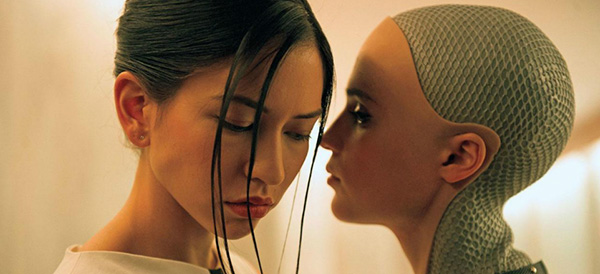
Photo Credit: Nerdist
The classic tale of scientist creating a synthetic companion modeled after a human female is a pretty well-established trope. Metropolis and Weird Science, to name a few, explore this narrative. In Ex Machina, protagonist Caleb is brought in by his friend Nathan to administer a Turing test to Nathan’s AI Ava. Ava is a humanoid robot with highly advanced programming, and Caleb soon finds himself caught in a power struggle between Nathan and Ava.
The uneasy chemistry between human and machine is the focus here and is all too familiar to viewers who commonly interact with rudimentary artificial intelligence. Ava’s intentions are mysterious, her origins and dubious and her methods are worrisome: she represents all of humanity’s anxieties about artificial intelligence.
A.I. Artificial Intelligence
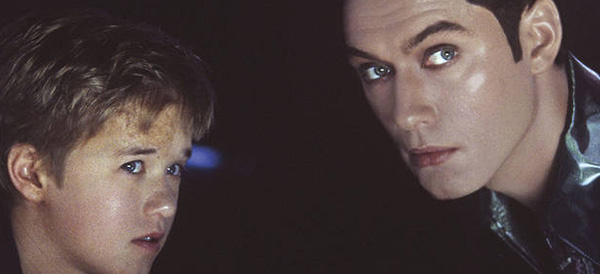
Photo Credit: Time Out
A sci-fi take on Pinocchio, Spielberg’s sprawling technological opus is a treat for the eyes, if a little long in the runtime. With superb performances by Jude Law and Haley Joel Osment, A.I. juggles its myriad of ideas regarding morality and mortality with respectable deft. The film tells a touching story of a robotic child programmed to love unconditionally, and his journey to find a place he can call home.
The film has a surprising amount of pathos for a story that almost exclusively follows artificial life forms. A unique take on an artificial intelligence-centered tale, the robots aren’t depicted as the antagonists, but instead, time and circumstance keep our characters from their goals.
Terminator
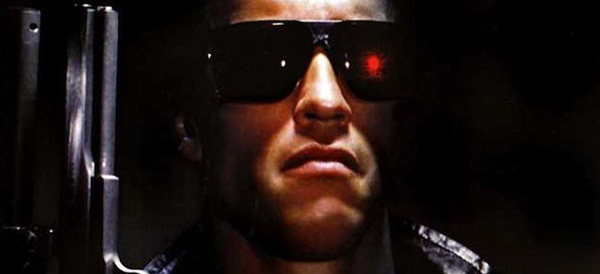
Photo Credit: Mental Floss
What if the artificial intelligence only wants to terminate you? I’d be surprised if you haven’t heard of this one. At the very least, you’ve probably heard someone doing a poor Arnold impersonation of one of his iconic lines. Terminator is the rare absurd sci-fi action movie that crosses over into the mainstream. Between the mechanical sheen and menace of the titular antagonist and the over-the-top, cheesy action sequences, Terminator oozes “80’s action flick,” wearing that badge proudly for all to see.
The plot revolves around some pretty absurd sci-fi tropes: in the future, machines, led by a system called SkyNet, have taken over the world. The only hope for humanity is John Connor, a resistance fighter who leads the scattered human enclave. In order to secure victory, SkyNet sends an advanced robotic assassin back in time to kill Connor before he becomes the savior of humanity. A ton of ridiculous action set-pieces in then-modern America ensue.
The Matrix
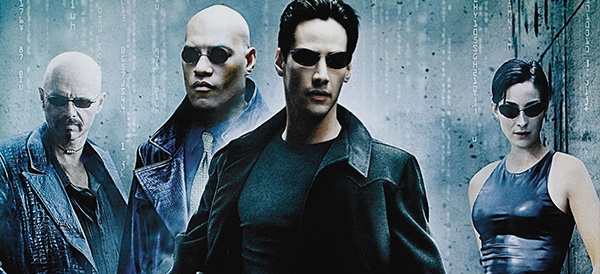
Photo Credit: Letterboxd
Another very well-known action film with AI at its center, the Matrix is an interesting tale of perception, reality and questioning the status quo. When Thomas Anderson, also known under his alias Neo, discovers that his reality is actually a simulation, he joins a resistance against the machines who rule over his world. As another take on the “evil A.I. overlords” story, the Matrix uses surprisingly deep philosophical ideas to power its action and shootouts.
Highly influential upon release for its use of slow-motion special effects and “bullet time” whirling camera techniques, as well as its intriguing premise. The Matrix is largely considered to be a turning point for Hollywood blockbusters.
Her

Photo Credit: Roger Ebert
Featuring excellent voice work from Scarlett Johansson, Heris a surprisingly sweet romance film about an AI and her human operator who fall in love. The quasi-Romeo and Juliet tale is effective at bringing about genuine emotional depth by imbuing the titular AI, Samantha, with very human desires and behavior.
The film paints a fascinating picture of human emotional complexity conflicting with computerized algorithms. Protagonist Theodore, who is a sensitive and soft man, finds himself unable to cope when he discovers Samantha’s functions are also dating thousands of other operators and AI constructs. The near-limitless potential of Samantha’s intelligence allows her to grow exponentially, and experience far more than Theodore could ever imagine.
Star Trek: The Motion Picture
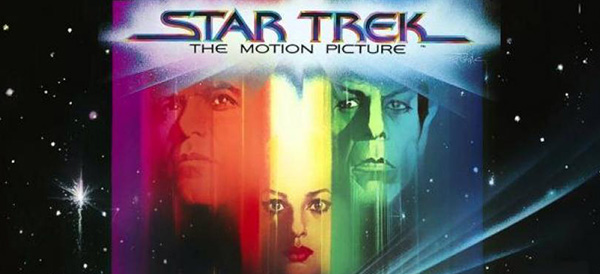
Photo Credit: Den of Geek
The first time the crew of the Starship Enterprisewere seen on the silver screen, they did battle with a mysterious gas cloud known as V’Ger. While the film is somewhat divisive among fans, it makes this list for its fascinating antagonist. V’Ger, who turns out to be a sentient ship, is on a mission to obtain all the information in the universe and is tearing through reality to do so. When Commander Spock finally manages to mind meld with the A.I., he learns that it was originally the Voyager 6 probe, upgraded and given new purpose by a race of sentient machines.
Blade Runner
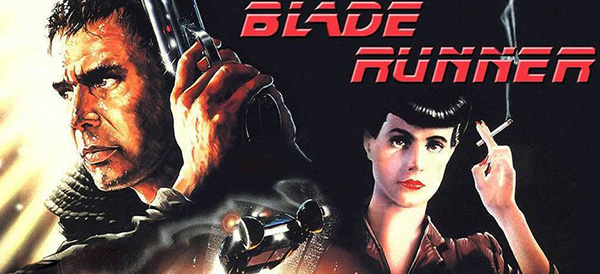
Photo Credit: Mashable
The cream of the crop when it comes to entertaining films about artificial intelligence, Blade Runner is a weighty, cerebral noir film. Main character Rick Deckard, played by Harrison Ford, works to untangle a deep conspiracy involving the shadowy Tyrell Corporation and its lifelike robots. These robots, called Replicants, are able to near-perfectly mimic human emotions and responses. Deckard, as a “blade runner,” is specialized in hunting and “decommissioning” rogue replicants.
Sporting unique pacing and unconventional story structure, Blade Runneris one of the very best cyberpunk films ever made. If you haven’t seen it, you really should! It also received a sequel in the form of Blade Runner 2049, a worthy successor to the original and a bit more accessible to modern audiences.
 The Original
 Basic Operation
 The Final Thought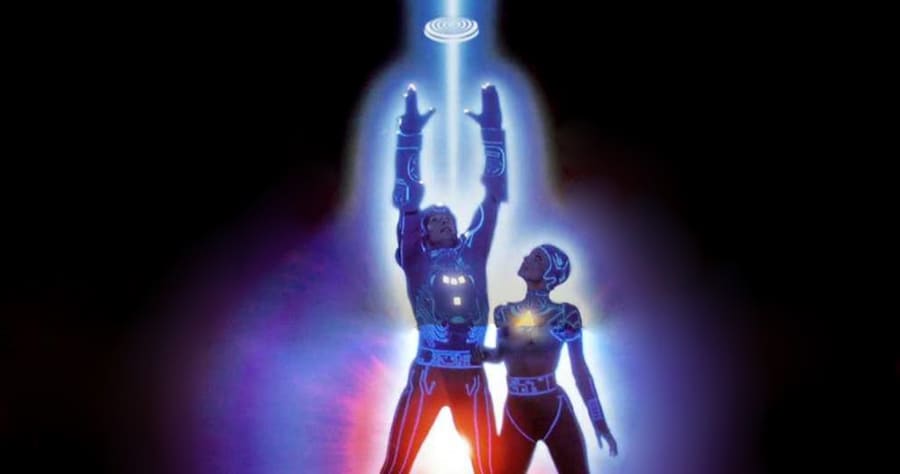




/https%3A%2F%2Fblueprint-api-production.s3.amazonaws.com%2Fuploads%2Fcard%2Fimage%2F606458%2F56aefc29-a9c0-403a-80ee-e2c729884555.jpeg)