Tag: gadgets

  • Ten Coolest Pieces of Star Trek Tech

    Ten Coolest Pieces of Star Trek Tech

    When the original Star Trek first hit airwaves in the late 60’s, it was concerned ahead of its time. While it boasted social understanding and politics that were ahead of its time, it also showcased awesome technology. Some experts even claim that the show may have helped inspire technological advances in the real world! Today, we’re counting down the ten coolest pieces of Star Trek tech we wish we could use. While some of these have come to exist in the real world in some capacity, others are still science fiction. Let’s get into it at Warp 9! 

    Hypospray 

    Photo Credit: PCMech 

    A unique intravenous delivery method for medicine was introduced in the original series, called hypospray. Hypospray is a liquid that is shot at a very rapid speed through the skin of the patient, thus forgoing the need for a hypodermic needle. In the real world, technology like this actually exists now! It’s very sanitary and safe, since foreign objects don’t need to enter the body. It’s also great for people with phobias of needles, and children! The real-world hypospray is shot into the body at Mach 0.7 in order to safely penetrate the skin. A great example of sci-fi predicting real-world technology! 

    Universal Translators

    Photo Credit: Memory Alpha 

    In the Star Trek universe, universal translator technology is essentially a way for the writers to hand-wave why all the aliens speak English. It’s much easier for the audience to pick up on tone and meaning when actors just speak normally. It’s also a pain to create a unique-sounding language for every alien race on the show. As such, the universal translator is more of a cool piece of trivia than a critical plot point in most episodes. However, such technology would be pretty awesome in the real world.  

    While there are, of course, translator apps and technology, they’re all pre-programmed with languages and meanings. The Star Trek version is capable of learning and translating languages at lightning-speed. Typically, by the time the viewer has realized the speaker is an alien, the translator has already done its thing. While this is highly improbable, it’s still super cool. With the advent of artificial intelligence in our world, maybe such learning translators will be a reality someday! 

    Phasers

     

    Photo Credit: geek.com 

    Phasers are truly iconic Star Trek tech. “Set phasers to stun” is synonymous with “let’s kick some butt” in nerd circles. Likewise, “set phasers to kill” is shorthand for “things just got real.” However, in the real world, phased array projectiles are still a long way from being a reality. The portable, hand-toted phasers in Star Trek would simply draw too much power to be practical in our world. While some very large burst-array laser weapons exist in prototype form, it seems unlikely we’ll see true phaser weaponry anytime soon. Until then, boring old ballistics remain the weapon of choice.  

    Tablets

    Photo Credit: Memory Alpha 

    Savvy watchers may have noticed that Star Trek predicted the iPad. In the Next Generation series, personal access data devices, or PADDs, are owned by pretty much every crew member. These devices have essentially all the same functions as modern-day smartphones and tablets. While the PADDs are a minor detail on the show, they show just how inventive and forward-thinking the writers were. One wonders if maybe the fictional PADDs served as inspiration for Apple when designing the iPhone and iPad! 

    Tractor Beams

    Photo Credit: Big Think 

    A common plot device in Star Trek is the presence of an enemy ship using their tractor beam to anchor the Enterprise on the spot. The crew then has to stand and fight against a better-equipped foe. Or, an away vessel gets caught in a tough spot, so the Enterprise uses her tractor beam to pull them out. Tractor beams, which are hypothetical attenuated linear graviton beams, are theoretically quite possible! While the technology to use them on the scale seen in Star Trek doesn’t exist, smaller versions do. Lab testing has shown the ability to catch small objects in place and manipulate them with acoustic tractor beams! Such technology has a promising future helping with surgical procedures. Non-invasive beam-based surgery sure sounds like a Star Trek tech future! 

    Food Replicators 

    Photo Credit: Memory Alpha 

    If you’re like me, you hate cooking. Personally, I hate the cleanup that follows cooking more. Even if you love cooking, you’d have to admit that having a replicator would be awesome. Hungry for some sushi? Tell the replicator! Want an ice cream sundae? Computer, sundae! More than just convenience, replicator technology could help alleviate world hunger.  

    In the real world, the analogous technology is 3D-printable food. There have been great strides in that field recently, with 3D printers capable of creating actual edible food! There’s also been a great deal of progress in the realm of neuroscience regarding flavor, like programmable glasses. A programmable glass can make tap water taste like any cocktail imaginable by messing with your taste buds. How cool is that? 

    Voice-Activated Computers

    Photo Credit: Mashable 

    Characters calling up commands by shouting at the computer is a quintessential Star Trek move. Having voice-controlled computer functions sidestepped the issue of having characters explain what they’re doing with a computer. You’ve certainly seen other shows where a character at a keyboard has to explain to another character what it is they’re doing. Sometimes this is fine, other times it feels weird and forced. Star Trek just used high-tech voice commands to communicate effectively and move scenes along. 

    In our world, of course, voice-activated assistants are commonplace and used every day. In fact, Amazon recently updated Alexa to answer to “Computer,” letting fans feel like Kirk or Picard in their own home. This is one piece of Star Trek tech that has become reality with no caveats! It exists in our world precisely as it does in theirs. 

    Artificial Intelligence

    Photo Credit: StarTrek.com 

    Advanced artificial intelligences like Data and his brother Lore are a central plot point in The Next Generation. Villains like the Borg also embody a darker side of artificial intelligence. In our world, we’re pursuing true artificial intelligence that can grow and learn like Data. While we’re still a few years from self-aware computer programs, learning systems are a reality right now. Systems that learn habits and can be trained are advancing by leaps and bounds every day. The big breakthrough that leads to true intelligence in a computer program is just around the corner. One has to think that fictional artificial life like Data in some ways gave life to the desire to pursue such technology. 

    Warp Speed

    Photo Credit: ScreenPrism 

    In order to follow individual characters, and not their lineages, as they explore space, we have to have a faster-than-light drive. Warp speed is the technology used in the Star Trek world to propel ships faster than the speed of light. It’s the technology that makes the shows deep-space exploration possible. Pretty much any sci-fi story that deals with interstellar travel has some variation on an FTL drive to propel the ships as well as the plot. However, according to our current understanding of physics, such drives are impossible.  

    That said, NASA has been working on a theoretical technology called the EmDrive that may be a real-world counterpart to Impulse Drives. The technology is confusing and works by effectively defying physics. The no-fuel, hollow drive has been much criticized but recent findings show that it inexplicably works. If the EmDrive proves to be reliable at starship scale, maybe it’s humanity’s ticket to space exlporation. 

    The Coolest Star Trek Tech: Teleportation

    Photo Credit: Maxim 

    Star Trek’s most well-known fictional technology, point-to-point teleporters are often used to save the characters from sticky situations planetside. Access to teleporters in the real world would be absolutely amazing. For one thing, you could get to work in the blink of an eye; so long, traffic! For another, the cost of shipping would become zero on pretty much every object ever. Amazon Prime’s two-day shipping would become two-second shipping.  

    While real-world teleportation is likely a sci-fi dream, it could eventually become a reality. Quantum mechanics could prove a window into understanding ways to teleport things across vast distances. Entanglement and wormholes are two avenues of research that could yield promising results. Until then, we’ll have to be content watching Jim get beamed up! 

  • Coolest Electric Skateboard Roundup

    Coolest Electric Skateboard Roundup

    Yeah, you read that right. There are some really awesome electric skateboards out there! And, given that it’s the height of summer, what cooler way to ride around? While you’ve likely never considered shopping for an electric skateboard (that’s just fun to type!) we’ve got a few that are worth your time. If you’re looking to cruise around and enjoy the warm weather, try these awesome skateboards! 

    Acton Blink QU4TRO 

    The $1,700 Acton Blink QU4TRO has a ton of power and can really move. If you’re looking to strap on a helmet and really go for a ride, try this one out. It has a hub motor for each wheel and can go over 20 MPH. One of the most powerful electric skateboards on the market, it can travel over twenty miles on a single charge! The downside to all that power, of course, is that the board is heavy. It weighs somewhere around 25 pounds, so it’s not quite as zippy or light as other boards. The suspension compensates for that when in use, but it’s definitely a lot to lug around. If you’re looking for a powerful electric skateboard, though, this is the one for you! 

    ZBoard 2 Blue 

    This board is unique in that it doesn’t use a remote controller to power the motor. Instead, you lean on the foot pedals to accelerate or slow down, which is super-intuitive. It’s also very wide and somewhat heavy, coming in at 17 pounds. It moves pretty fast, around 20 MPH, and sports a pretty good battery. If you’re looking for a good board for commuting to class or work, try the ZBoard 2 Blue. It’ll set you back about $1,300, but it’s well worth it for the fun and convenience!  

    The Coolest Electric Skateboard, Inboard M1 

    The slick 14-pound Inboard M1 is a skateboard first and electric second. This one is perfect for those who want to enjoy the skatepark but use the motor to cruise home after. Featuring two hub motors and a good bit of power, the Inboard is great for skaters of any skill level, in any environment. The board is quite high-tech, featuring Bluetooth connectivity for controlling the motor and “regenerative breaking.” That unique feature helps put juice back in the battery when breaking, helping extend your rides!  

    The Inboard also has a swappable battery, allowing you to carry an extra to swap on the fly. This lets you ride for longer without worrying about charging up! This one is the best electric skateboard overall, easily worth its $1,400 price tag. 

  • Total Control: Our Favorite Universal Remote

    Total Control: Our Favorite Universal Remote

    If your entertainment center has caused you to collect far too many remote controllers, it’s time for a universal remote. Logitech makes the best in the biz, but Sony has a pretty good entry worth considering too. If you’re looking to streamline your entertainment, look no further: we’ve got our favorites right here for you to check out.  

    Sony RMVLZ620 

    Sony’s universal remote has a catchy, memorable name and a slick design. One of those things is true. Jokes aside, if you want a straight-forward, bare-essentials universal remote, Sony’s is a great choice. At $25 it won’t set you back too much to streamline your living room. You can pair up to eight devices using pre-programmed codes. The one-touch macro buttons are a plus, and the backlit buttons are great for when you’re watching in the dark. If you want a simple, easy-to-use remote, this one is for you. 

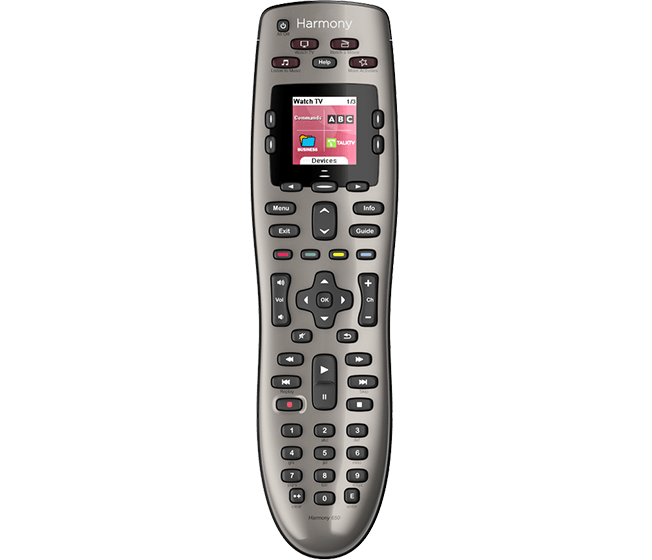
    Logitech Harmony 650 

    The Harmony 650 is the best remote for your buck if you don’t need a crazy suite of features. For those who want full smart-home integration and app uses, check out the Harmony Elite or Companion. For general use, though, the 650 will get everything you need done. The best part about this solid remote is the price tag. It only runs $35, and it’s fairly easy to set up. You just have to set it up through your computer, but once it’s online it can control your whole system with a button press. This remote is fantastically powerful for its price. 

    Our Favorite Universal Remote: Logitech Harmony Companion 

    The Harmony Companion is a fantastic choice if you intend to sync it with your smart home technology. It can control everything from your TV to your Philips Hue lights. The best part of this one is the Alexa integration. While Logitech sells a more-robust Logitech Harmony Elite, that one costs $250. The Companion, however, only costs $135 and offers similar features. If you have Alexa and smart home technology already, the Companion is a great choice at a great price. It even features a smartphone app that can also be used as a remote for the devices that are paired. You can’t go wrong with this winner from Logitech. 

  • Top Ten Father’s Day Gifts Under $100

    Top Ten Father’s Day Gifts Under $100

    Father’s Day is this Sunday! Have you picked out a gift for Dad yet? If not, don’t worry, we’ve got a list of our favorite gifts for Father’s Day under $100! Giver your Dad something awesome! 

    Cord Taco 

    Photo Credit: Amazon 

    Dad probably has a ton of cords and cables loose in a drawer somewhere. Why not help him organize with these handy tools? They’re stylish and functional and Dad will love them! 

    Amazon Echo Dot 

    Photo Credit: Venture Beat 

    Commanding a virtual assistant with your voice is pretty cool. Alexa helps you schedule your day, reads your messages to you, tells you the news and so much more. The best part is, an Echo Dot is only $40 from Amazon! Talk about a cool gift at a great price! 

    Philips Hue 

    Photo Credit: Amazon 

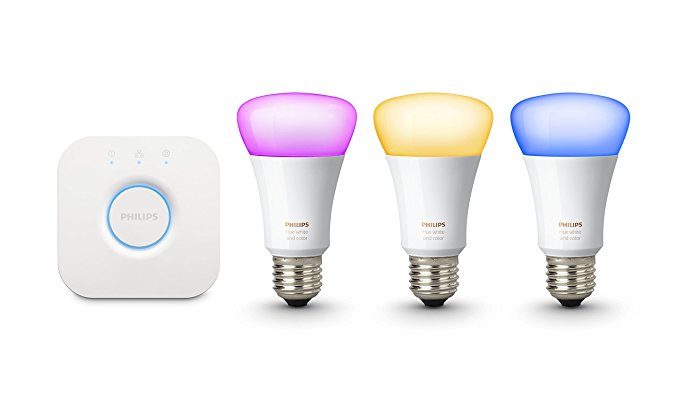
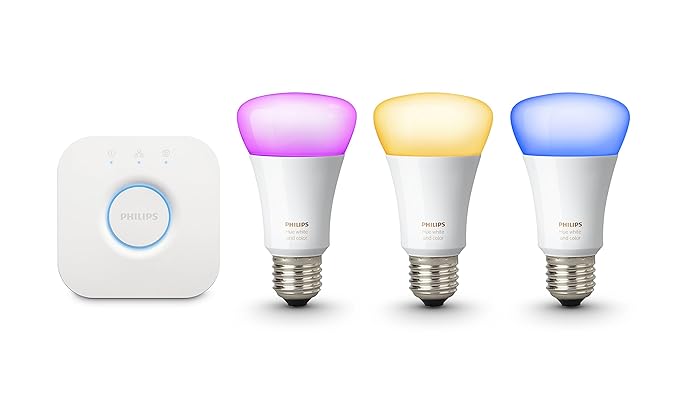
    If your dad already has an Alexa device, you could get him these awesome smart bulbs from Philips. The Philips Hue bulbs can be controlled via Alexa, and they are seriously bright! You can even change the color of light they produce. You can even control the lights with an app, so if Dad forgets to cut the lights off before he leaves, no sweat! It’s just a tap away! 

    Looftlighter 

    Photo Credit: Williams Sonoma 

    If your dad is like mine, he loves to put on a bonfire in the back yard. An awesome gift for a grillmaster dad is a Looftlighter! This handy wand sets fire to wood or kindling without need for lighter fluid. As we all know, lighter fluid is bad for the environment, so finding sustainable alternatives is awesome! You can pick one of these awesome flame wands up for $80. 

    Hoveric Levitating Speaker 

    Photo Credit: MoMA Design Store 

    Every dad loves goofy magic tricks, so give your dad the gift of a cool floating speaker! When music is played through this futuristic speaker, it is lifted from I’s pedestal by the sound waves. How awesome is that? Dad will certainly love this one! It’s only $99, too, which is awesome! 

    Misfit Ray 

    Photo Credit: PC Mag 

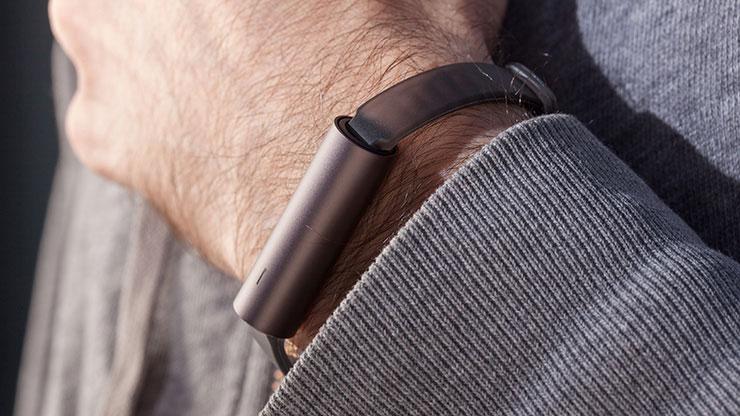
    Dad probably doesn’t want some big flashy screen like an Apple Watch, but he’d probably love a fitness tracker. For the dad who’s trying to stay in shape, check out the Misfit Ray. It’s slick and doesn’t call attention to itself, and it sports a long battery life. You don’t need to charge it for four months after a full charge! It pairs to a smartphone app to show you your statistics. It’s a great price, too, at $40. 

    Kindle E-Reader 

    Photo Credit: Amazon 

    Your dad might just love an e-reader. There are so many awesome books out there, but it can be difficult to find enough shelf space for all of them! And they’re hard to bring with you on a long trip, or to the beach. To remedy that, get your dad a Kindle! Their simple interface and non-reflective screen make them excellent for reading by the pool or at the beach! You can snag one from Amazon for $60. 

    Roku Streaming Stick 

    Photo Credit: Roku 

    Dad’s probably complained about the cable bill. Loudly. And often. If your dad hates the price of cable but loves TV, consider getting him a Roku Streaming Stick. Roku lets him watch Netflix or Hulu through his account, and it even supports Sling streaming TV. All that for just $54! Not too shabby! 

    Tile Sport 

    Photo Credit: Amazon 

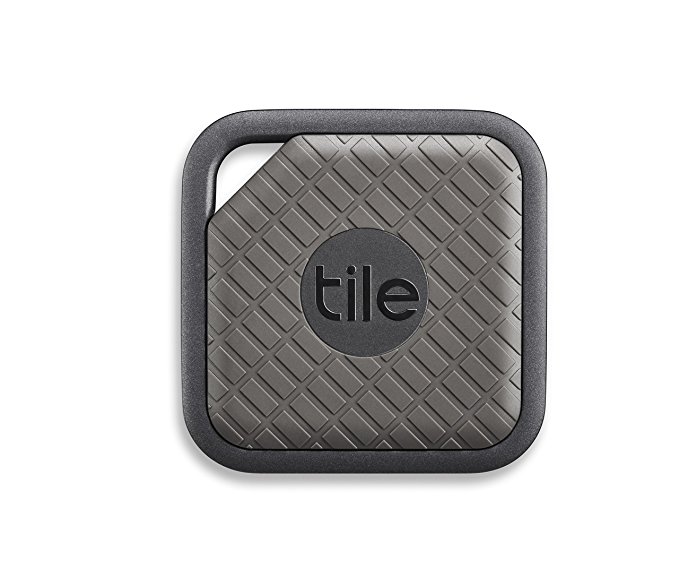
    If your dad’s constantly misplacing stuff, you should get him a Tile. Tile will help him find nearly anything he loses. All he has to do is attach the tracker to his valuables and install the Tile app. Ta-da, never lose that particular thing again! Well, not permanently, at least. 

    Our Favorite Gift for Father’s Day: UE Wonderboom 

    Photo Credit: Allround PC 

    Our favorite Father’s Day gift? The portable, loud and waterproof UE Wonderboom Bluetooth speaker. Sporting a great amount of battery life and durability, it’s perfect for any situation. Whether by the pool, at a party or at the beach, the Wonderboom provides excellent sound. The Wonderboom is a great value, too, costing only $70. You can usually find it on sale for less, too! 

  • Round-Up: Cool Tech Not for Sale Yet

    Round-Up: Cool Tech Not for Sale Yet

    Every day, new technology goes up on crowdfunding sites to get funding to go live. Tons of awesome inventions are funded this way, and we love perusing the coolest ones. There’s so many to check out, though! To help you find the coolest ones, here’s a quick round-up of some of our favorite new pieces of cool tech being crowdfunded now.  

    Forward X Ovis 

    This neat new piece of tech is perfect for those who spend a lot of time in airports. Since it’s complete with obstacle avoidance and facial recognition, this handy little guy will follow you all over the terminal. It also comes with a bracelet for tracking that tells you if it falls out of range and helps you find it if it gets lost. So, if you’re the kind of person who loves their Rumba, this self-driving luggage is perfect! It’s on Indiegogo now for $400, so if it interests you, go check it out there! 

    Zen Float Tank 

    Sensory deprivation tanks, great for meditation and inner reflection, are notoriously expensive. However, the Zen Float tank seeks to remedy this by offering inflatable deprivation tents for home use. Up on Kickstarter now, the Zen Float Tank is an interesting solution to the prohibitive price of float tanks. By being both inflatable and sized for a home, it is able to discreetly hang out in the back of a room. It’s low maintenance, too, requiring little upkeep. These things all make the Zen Float Tank very cool tech for those looking to experience sensory deprivation and meditation. 

    Earth- Interactive AR Globe 

    This high-detail globe model of Earth is impressive on its surface. It’s colorful and informative, giving excellent topographic views of Earth’s surface. However, real magic kicks in when you use the paired augmented reality app, though. The app allows you to turn the globe and learn about the different countries, climates and creatures in our big, beautiful world. If you love learning, or have a little one who does, this is perfect. Many kids would love to learn geography with a hands-on tool like this! Heck, I’m an adult, and I still want to play with this thing! It’s up on Kickstarter now. 

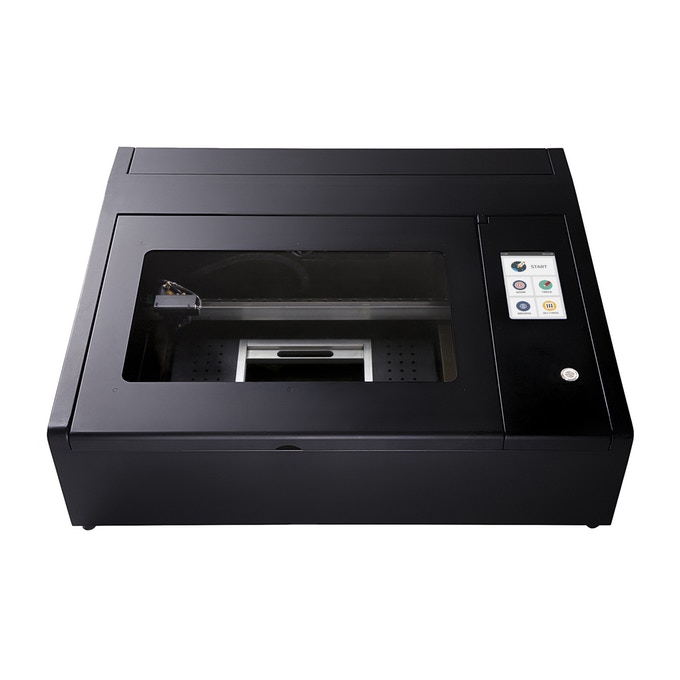
    Our Favorite Upcoming Cool Tech: Beambox Laser Cutter 

    Top of the list of things that make you go “oh, cool,” is the Beambox laser cutter. If you;ve ever wanted a cutter to do engravings on all kinds of materials, check this one out. It’s awesome. Usually you would need a lot of knowledge on how to set a laser cutter, how to calibrate it and use it effectively. Beambox, however, was designed to be easy to use! It has presets for different materials and it hooks right up to your computer. You can put in any design you want, and the Beambox will engrave it! It’s so cool! 

  • Wearable Tech: Which Tech Items are Must-Haves?

    Wearable Tech: Which Tech Items are Must-Haves?

    The hot new trend of wearable tech has gotten a ton of traction lately. Apple Watch, FitBit and countless others have made wearables hot-ticket items. They’re stylish, functional and cool all at once. Which ones are our favorites? Which ones are must-haves? Check out our roundup of the coolest wearable tech out right now! 

    Rocket Skates 

    Oh yes, these are real. Sort of like a combination of Heelies and an electric scooter, these sci-fi action-hero shoes can propel you at up to 12 mph. That’s super impressive for being shoes with wheels. These cool shoes also come with a phone app to track your route, mileage and battery.  

    These aren’t easy to use, to be sure, but if you’re looking to turn heads and jet around on freaking rocket skates, these are awesome. Just be careful not to crash into any walls or anything. 

    Lenovo Vibe Band 

    At least one smart watch had to make the list! The Lenovo Vibe Band is a stylish little device. Sporting a unique e-ink display, the Vibe looks great in direct sunlight and has a discreet display. It functions as a fitness and sleep tracker and does it all with 7 days of battery life.  

    Even better, the Vibe Band is priced under $100, giving you a ton of features without having to pay Apple Watch or Android Wear prices.  

    Bio Sport Smart Ear Buds 

    These ear buds double as biometric sensors and fitness trackers. Pretty neat, huh? They have great sound quality thrown in, too, which is always a plus for working out! These neat little ear buds can be tossed in a bag and stored easily, and they appear very discreet when in-ear. If you want a fitness tracker but don’t like wrist-mounted devices that get in the way or draw attention to themselves, then the Bio Sport Smarts are for you! 

    The Coolest Wearble Tech Device: Nixie 

    This incredibly cool little drone wraps around your wrist like a watch when not in use. When you command it, however, it unfolds and takes off. It can then snap pictures, usually selfies, before swooping back down to your wrist. It looks like something Tony Stark would have and it is amazing.  

    While it might not be the most useful wearable in the world, it tops this list for just being so cool. It’s just incredibly impressive to see it unfold, take off, and do its thing before landing back where it started. This one is still in development, so it won’t be available just yet. Hopefully it’ll get a full release soon! 

  • These Tech Startups Are So Dumb You May Never Unroll Your Eyes

    These Tech Startups Are So Dumb You May Never Unroll Your Eyes

    The wide world of technology is rife with start-ups and venture capitals. Companies are all vying to be the next Apple, always pushing the envelope and redefining themselves. Or, at least, they’re trying to do these things. Sometimes they’re hit with the rough wake-up call that their ideas are just freaking weird, man. Sometimes that might be a good thing, and other times it’s… well, you’ll see. Check out the ten weird tech developments we could find. You won’t be disappointed, but the investors might! 
     
    [adPH1]  

    10. Rapt.fm 

    Photo Credit: Forbes 

    This one is odd yet endearing. Rapt.fm is a social platform dedicated to teaching people how to rap. And it has 50,000 users. Color me impressed! Now, this isn’t the odd part, rap is tremendously popular, and it makes sense that people would want to learn. The odd part is the venue the startup got their footing in.  

    The CEO, Erik Torenberg (catchy rap stage name), got the initial money for the platform in an unusual way. Originally, he and his team taught employees at businesses like Fathead, Chalkfly and Quicken Loans. What? Yeah, they were marketed as “team-building” exercises. Corporate America is weird, guys. Look no further than white-collar worker-turned-rapper Little Dicky to see more evidence of this. Textbook weird tech. 
     
    [adTextOnly]

  • Top Ten Coolest Raspberry Pi DIY Projects

    Top Ten Coolest Raspberry Pi DIY Projects

    Anyone who has ever built their own computer and watched it whir to life for the first time can tell you the sheer joy of creating a complicated piece of technology with their own two hands. Operating in that same space is the Raspberry Pi family of DIY-friendly microcomputers. The new Raspberry Pi 3 B+ and the Raspberry Pi Zero W (which sports built-in wi-fi!) are flexible, all-purpose boards capable of tons of awesome applications! Everything from miniature Macintosh computers to retro console emulators can be built from these slick little circuit boards, and here we round up our top ten favorite Raspberry pie DIYs!

    A Disposable GIF Camera

    Photo Credit: TrustedReviews.com

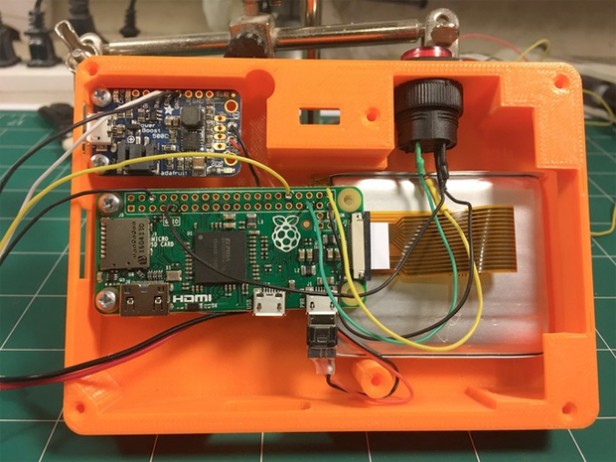
    A neat little piece of throwback-style tech, the Pix-E, pet project of Nick Brewer, takes advantage of the Pi Camera Module and GifCam, PiCamera and GraphicsMagic to create easily-sharable GIFs. With 3-D printable cases and paper print-outs that emulate a 90’s aesthetic, the Pix-E is a stylish and functional piece of DIY tech. It does require a bit of engineering skill: some bread-boarding and a bit of soldering are required to get this sucker moving. The Pix-E would make a neat little addition to a vacation or hike, making GIFs on the fly as you move from place to place!

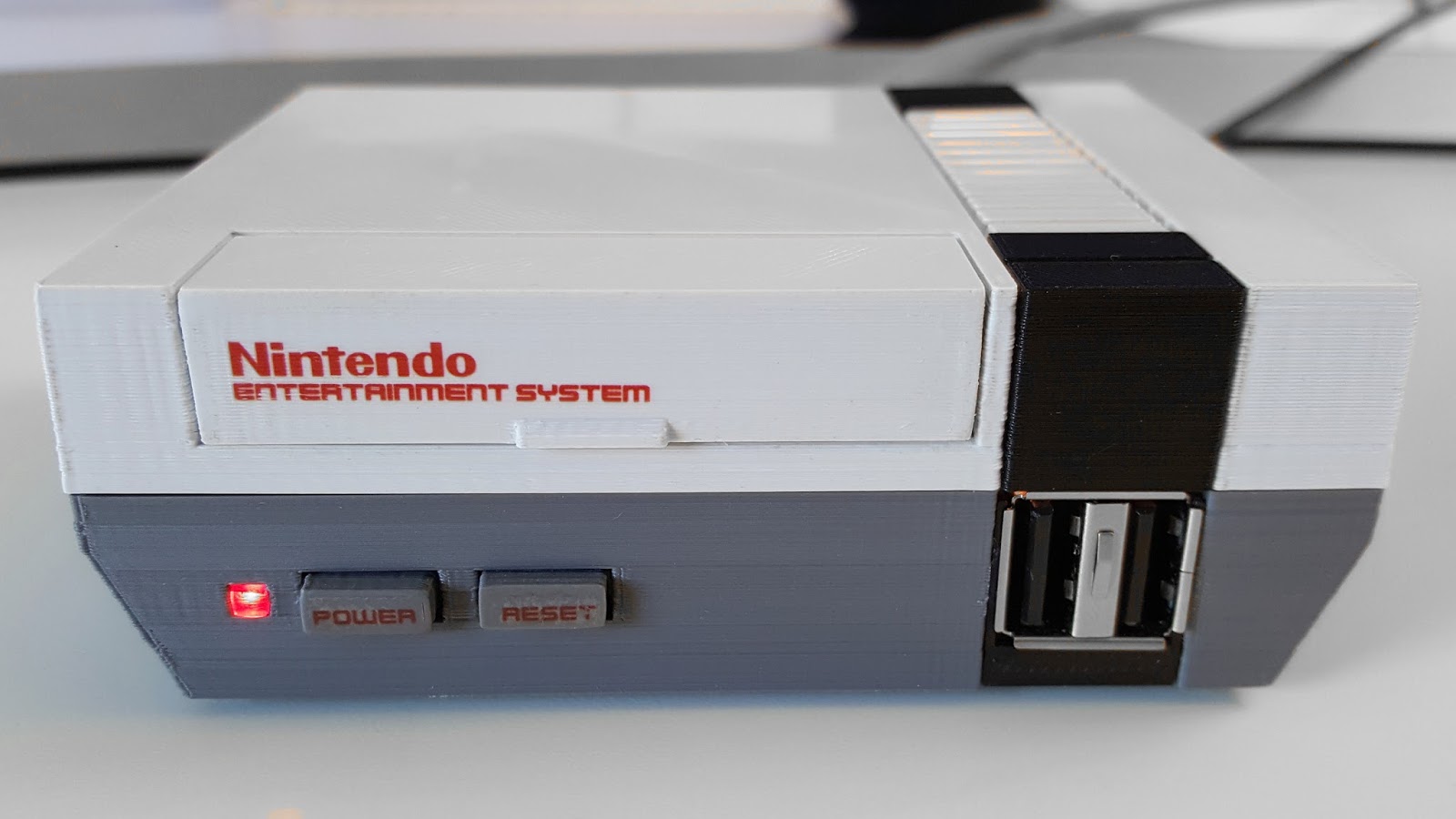
    DIY NES Classic Mini

    Photo Credit: RetroPie

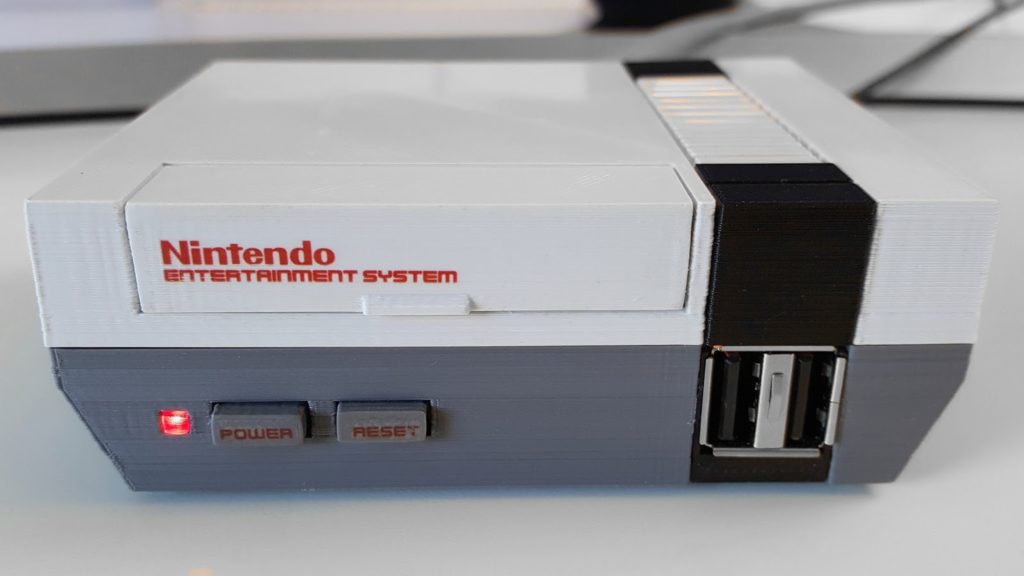
    The NES Classic was a much bigger hit than Nintendo anticipated (turns out people love retro games! Go figure!) and sold out everywhere in a matter of weeks. eBay scalpers sell the mini console for many times more than MSRP, and even if you are lucky enough to lay hands on one, it is only outfitted with 30 games. In order to add more, you would need to do some serious hacking to your expensive collector’s item.

    Thankfully, a bit of tech know-how allows you to build your own using Raspberry Pi boards! Using the Pi Zero board and RetroPie software, you can create near-perfect emulation for a fraction of the price of an NES Classic on eBay. You can even get an NES-like case to house the console (or 3-D print one!), completing the look and feel of a retro console!

    Stylish Word Clock

    Photo Credit: HardTech.tv

    Where clocks were once commonplace pieces of simple technology found in everyone’s house, smart devices and interconnected smart watches have all but rendered the traditional clock obsolete. This word clock, by comparison, is a very cool piece of tech to have on a shelf: eye-catching and easily understood, this simple project can lend a hip and stylish vibe to any room! A simple program, some LEDs and a bit of soldering, and boom! A fashionable way to make sure you’re not running late!

    A Functional Desktop Computer

    Photo Credit: Michael Davis

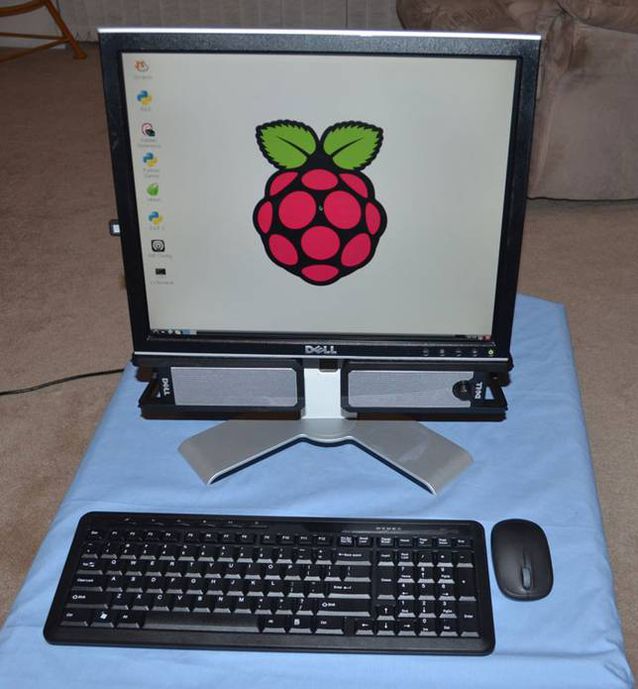
    As adorable as it is functional, the Raspberry Pi can even be used as the brains of a desktop computer. While it certainly won’t be running any modern games or pulling duty as your full-time home computer, it’s a cute project and would work great as a computer for a young child or a student who simply needed access to email, word processors and a simple web browser for research. The desktop even has a very stylish upside: it’s CPU is a tiny circuit board, so it’s easy to mount behind the monitor to save space in an office or bedroom!

    A One-Touch Audiobook Player

    Photo Credit: Michael Clemens

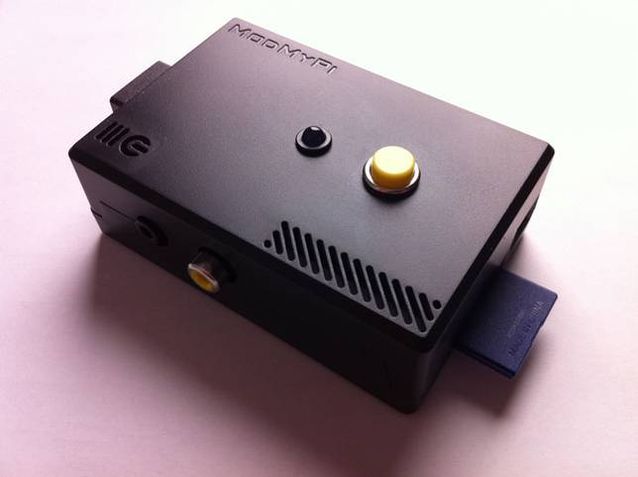
    The schematics for this minimalist design were drawn up as a prototype to help older users with disabilities easily access audiobooks. The playback device reads the data from a USB port, and then plays the media with a push of the top button. In addition to being very useful for those with disabilities, the player is very minimal and light, and those who wish to keep their smartphone memory from being filled by audiobooks may wish to use this device instead, carrying USB thumb drives loaded with books instead!

    A Kodi Media Center

    Photo Credit: TrustedReviews.tv

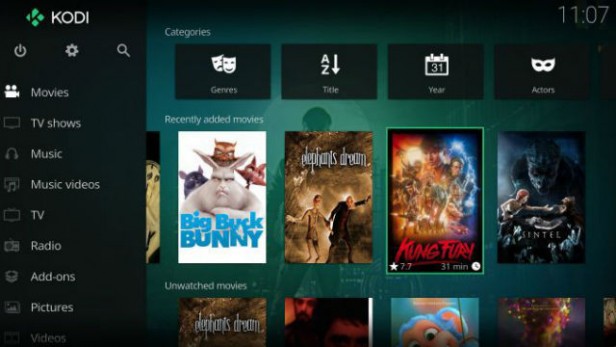
    While Roku devices, Amazon’s FireStick and SmartTV devices are popular for using official streaming services like Netflix and Hulu, those wishing to customize and personalize their media experience are often drawn to the Kodi platform. Raspberry Pi-based media centers make natural pairs for Kodi, as the two of them are both user-friendly DIY-style products. Using a Wi-Fi USB converter, or a Raspberry Pi Zero W, connecting to wi-fi with a Pi based streaming box is simple and easy. Saving money and getting to watch TV is a win-win in our book!

    MintyPi2.0 Retro Console

    Photo Credit: YouTube.com

    The tiny, endearing and portable MintyPi retro console fits inside an empty Altoids can. Using Zero W boards allows for built in wi-fi to update and games. With a form-factor reminiscent of the GameBoy Advance SP model, the MintyPi is a delightful little device and controls beautifully. While creating one of these devices requires a good deal of 3-D printing, soldering and technical know-how, the finished product is an enviable, minty little piece of tech! Full guides for how to build these are available online!

    Mini Lego Macintosh

    Photo Credit: Mactrast

    Using a very small e-paper display, sporting a lego housing and powered by a Raspberry Pi board, Jannis Hermanns created this tiny, adorable Mac. The device technically functions but is so tiny and simple that it’s mostly a labor of love and adorable conversation piece. While Hermanns has posted guides for how to create these online, creating your own Mini Mac would require quite a bit of soldering and careful work with tiny parts. However, Mac and Lego enthusiasts would likely find such a project very rewarding!

    Arcade Table

    Photo Credit: grahamgelding

    Echoing the table-top arcade design of pizza parlors and bowling alleys, this cool blend of furniture and technology is powered by a Raspberry Pi board. Capable of playing classics like Space Invaders, Galaga, Asteroids and Pac-Man, as well as browsing the internet and displaying cool images, this table would make a welcome addition in any game room or den. While a good bit larger and more involved than many other projects on this list, this gaming table would make a striking impression on friends who came to game!

    Electric Skateboard

    Photo Credit: YouTube.com

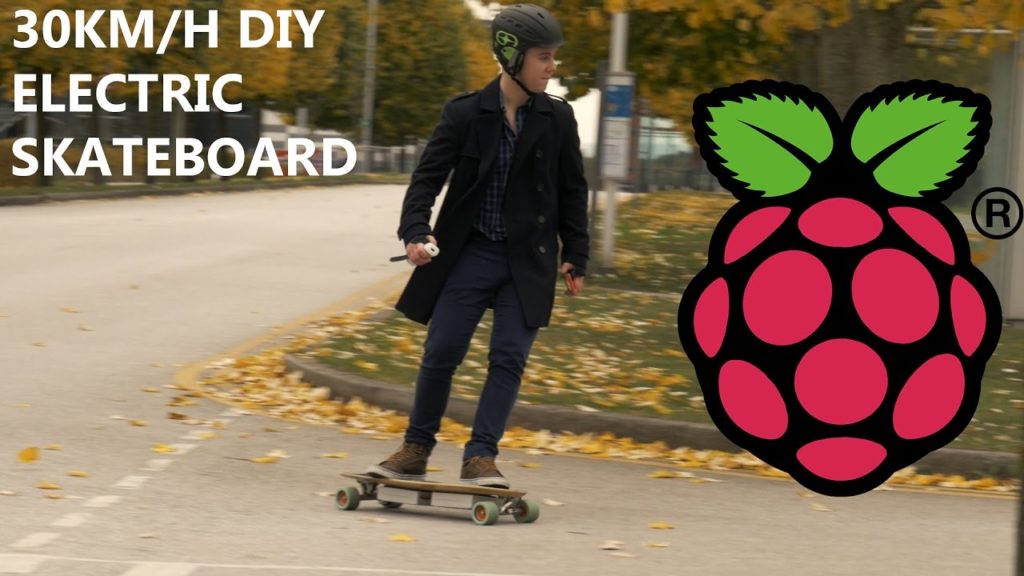
    Our favorite DIY project yet has got to be this stellar electric skateboard project made by YouTuber “the Raspberry Pi Guy,” who is known for his DIY work on his channel. Powered by a Raspberry Pi board and controlled from a Wii Remote (yes, that Wii. I know, right?) this electric skateboard is an awesome intersection of extreme sports, video game peripherals and circuit boards. Really, a nerdy kid’s dream tech. The assembly and code for this project are all quite simple compared to how awesome the finished project is, and as such makes a great DIY for a user looking for a first “big” project!

    Anxious to get started? Be sure to check out our top recommended Raspberry Pi Starter Kits!

  • The Best Raspberry Pi Starter Kits

    The Best Raspberry Pi Starter Kits

    The tiny, easily customizable computer Raspberry Pi is a very popular choice for aspiring tinkerers and DIY enthusiasts. The flexible, affordable Raspberry Pi technology is somewhat daunting for new users, so to help you make an informed decision, we’ve rounded up our favorite Raspberry Pi starter kits! Whether you’re looking to make a retro game console or a DIY desktop computer, we’ve found the kit for you!

    Vilros Raspberry Pi 3 RetroPie Arcade Gaming Kit

    For gaming enthusiasts who may have missed the chance to own an NES or SNES Classic during their limited release windows, Vilros has this excellent starter kit for $84. Unlike the official Nintendo mini consoles, the RetroPie is not limited to certain specific games or even systems. The RetroPie software included with the kit can emulate a wide variety of retro systems, including the Game Boy, Dreamcast, Neo Geo and others.

    This kit comes with a power supply cable, heat sinks, an HDMI cable, a 32gb microSD card, and, importantly, two SNES-style USB controllers. The highlight of this kit is the adorable and sturdy NES-style case that can house your tiny computer, completing the retro aesthetic of any emulation project.

    Raspberry Pi 3 Desktop Starter Kit

    The Desktop Starter kit is a great, affordable option for those who have an HDMI cable already on hand and simply want to get started tinkering. For $60, this officially licensed starter is a great value, and comes with a case for the computer, a power supply, a 16gb microSD card, and comes pre-loaded with NOOBS and Raspbian software.

    This starter kit is great for those who simply wish to start on projects right away, or who have projects that don’t require HDMI cables and want to save money over more involved starter kits, like the aforementioned Vilros Retro Kit. It is worth noting, however, that this kit also doesn’t have any heat sinks, which means you’ll need to provide those yourself if you don’t want to risk damaging your computer. However, for those who are already savvy builders with tech know-how, this kit is a great way to introduce yourself to the Raspberry Pi platform.

    Sunfounder Picar-S Raspberry Pi 3 Robot Car Kit

    The most expensive starter kit on this list, but also the most involved, the Robot Car Kit is $160 and tons of fun. This kit comes with everything you need to build your own remote-controlled car, and comes equipped with sensors to detect light sources, follow preprogrammed paths and even navigate around obstacles!

    The car can even be controlled via an app from a phone or a computer, making it an excellent project for a young robotics enthusiast or an aspiring builder! As a first foray into more “active” Raspberry Pi builds, this car kit is a fun way to learn about the Raspberry Pi platform, and mechanics in general.

    CanaKit Raspberry Pi 3 Complete Starter Kit

    Canakit’s starter is a fantastic all-around choice for enthusiasts to begin their projects. For $70 you get a Raspberry Pi 3, a glossy black case, a 2.5-amp power supply cable, heat sinks, an HDMI cable, and an all-important 32gb microSD memory card. This kit comes pre-loaded with NOOBS software to get you started, and CanaKit also offers a $50 version of the kit with a clear case for those who wish to show off the circuit board that makes their computer tick.

    This kit is by far the best selling Raspberry Pi starter, and for good reason: everything you need to start your own projects is right here. Made with newcomers to computer-building in mind, this kit has all the basics you need to get started with your own inventions. Highly recommended to those with little to no experience building computers or working with hardware!

    Want More Raspberry Pi?

    If you liked this article, make sure to check out our Top 10 Raspberry Pi DIY Projects! Maybe you’ll find inspiration for your next project!