Tag: Google Pixel 4

  • Google’s New Pixel 4: Should You Upgrade?

    Google’s New Pixel 4: Should You Upgrade?

    With the Pixel 4 bringing so much newness to the table, why in the world should you keep your Pixel 3? It shouldn’t come as any surprise that the Pixel 4 is loaded with upgrades compared to the Pixel 3. For some, the changes Google’s made might be enough to encourage them to upgrade, here’s why:

    While the Pixel 3 isn’t nearly as flashy as its newer sibling, it’s still plenty capable these days and should get you through another year of use just fine. There’s no denying that Google created a killer smartphone with the Pixel 4.

    With a camera that captures detail that the competition can’t, a futuristic way to use your phone without even touching it, your own personal Google Assistant, and a fast and responsive display, Pixel 4 packs new technology into a must-have new design.

    Get the perfect photo

    Pixel 4 brings Google’s biggest camera upgrade yet. The Pixel 4 comes two cameras on the back of the phone and includes a new telephoto lens. When you combine this new hardware feature with Google’s Super Res Zoom software, it gives you exceptional image quality, even planets away.

    Night Sight already takes beautiful photos in full darkness, and now you can use Night Sight for shots of the night sky, the stars, and even the Milky Way (when you find a clear night). Pixel 3 and 3a will also get a version of this capability with the latest camera app update!

    Your new Google Assistant

    Thanks to a deeper integration into Pixel 4, the Google Assistant is now a faster way to get more things done, think of it like your own personal assistant. Google redesigned the Assistant so it doesn’t take up too much room on your screen, letting you better multitask across other apps. It can quickly open apps, search your phone, share what’s on your screen, and more.

    It also considers the context of your query to do a better job answering. For example, you can ask the Assistant to “show my photos from Miami” and then say, “the ones in South Beach.” Then, you can share a picture by saying “send it to Brad.”

    A phone that senses what you want it to do

    Pixel 4’s Motion Sense feature uses a miniature radar sensor to detect movement around your phone. It can sense when you’re reaching for the phone and will initiate face unlock, or turn off your screen when you’re not around. New Quick Gestures let you skip songs when you don’t want to pick up your phone. Just wave your hand to snooze alarms, dismiss timers, or silence your phone.

    Built for performance and security

    With 6GB RAM, a 90hz display, and Pixel Neural Core, Pixel 4 is fast and powerful. Pixel Neural Core is the engine for on-device processing, always-on computing, and machine learning, meaning more tasks are done on the device for performance and privacy.

    Pixel 4 also includes Google’s custom-built Titan M security chip to protect your most sensitive data and ensure the integrity of the operating system. Combined with the latest version of Android 10, monthly security updates for 3 years, and access to Google’s advanced security services, Pixel 4 is designed to keep your data secure.

    Pricing

    Beginning today, October 15, you can pre-order a Pixel 4 for $799 and Pixel 4 XL for $899, and phones will ship on October 24, globally. Pixel 4 comes in three colors, including white, black and a limited-edition orange!

  • Google Takes Aim at iPhone with Pixel 4 Features

    Google Takes Aim at iPhone with Pixel 4 Features

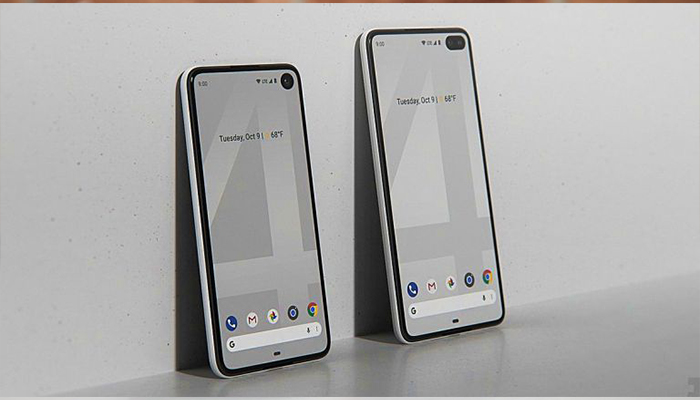
    Back in June, Google “leaked” their own official image of the Pixel 4. Then, they unveiled a YouTube video that showcases the Pixel’s motion sensing technology, and, most impressively, face unlocking technology. Clearly, Google’s got its eyes set on taking a piece of Apple’s pie. Let’s talk about some of the features confirmed to be coming to Google’s newest flagship phone.

    Pixel 4 Features

    Rear Cameras

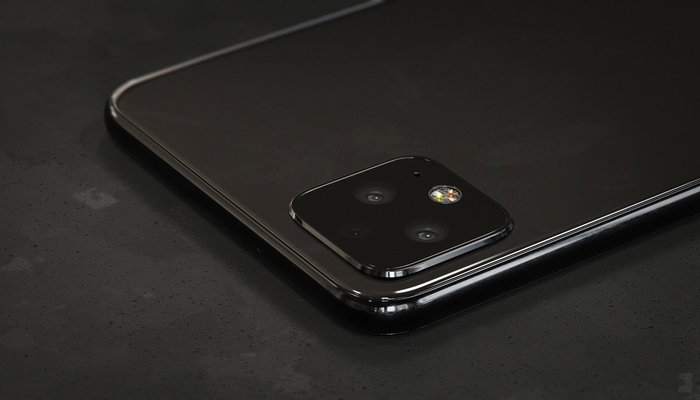
    One of the confirmed features coming to the Pixel 4 is a multi-camera array on the rear of the phone. The Pixel phones have all sported rather impressive cameras over their lifespan, rivalling even Samsung and Apple for their camera fidelity. While the confirmation that the Pixel 4 is a powerhouse in terms of cameras is far from surprising, it’s still comforting.

    That multi-camera array is housed in a square-shaped setup on the back of the phone, in the top corner. This square isn’t dissimilar from leaked photos we’ve seen of iPhone 11s, which are also set to release with a multi-camera array in a square housing. As Google continues to make moves to position themselves as “Apple, but open source” its not surprising that they’re emulating the Cupertino design ethos.

    Face Unlock

    The recently-unveiled YouTube video from Google’s official account goes into more detail about the upcoming phone’s features. Notable among them is the face unlock functionality, which Google promises to be robust and responsive. The company has a bit of an uphill battle when it comes to making this technology competitive with Apple’s offering, though.

    Apple’s Face ID technology is downright astonishing. Men using the phone can shave their beards and still be identified. Women under heavy amounts of makeup can still unlock their phones. Essentially, the Face ID technology blows fingerprint scanners out of the water in terms of both security and convenience. Google’s likely trying to emulate this intersection of secure and useful with their own iteration of the face unlock feature.

    Motion Detection

    A very unique aspect of the Pixel 4 is the motion-detecting software shown off by Google in the promotional material. This “touchless” input form isn’t unlike the LG G8 ThinQ, which also allows for various inputs in the form of gestures made with the handset. Google promises functions like skipping songs, pausing videos, silencing calls and snoozing alarms will all be capable through the use of the motion technology.

    Both the motion detection and face unlock seem to be based in the Soli radar chip. This is likely why the phone has only one front-facing camera in spite of offering face unlock. The radar chip can detect distance and motion in ways that other phone chips simply can’t. Apple’s Face ID, for instance, requires two cameras to take a 3D scan of your face in order to secure unlock your device.

    Pixel 4 in Context

    It’s no secret that Google is less than pleased about the sales performance of the Pixel 3 line. There are a number of hurdles that the handset simply couldn’t overcome in order to break through for Samsung-like success in the crowded Android market. For instance, it’s only available through Google’s site or in Verizon stores, though it can operate on any network. Another thing holding the phone back is stiff competition from Samsung, OnePlus, LG and Huawei.

    The Pixel 4 will need to be exceptional to catch the eyes of Android users. By positioning themselves as the “Android iPhone,” Google’s doubling down on the boutique-style, “all in house” feel that Apple offers with their tight focus on iOS through their own devices. Hopefully, for Google, they have more in their bag of tricks this time around to make the Pixel 4 a popular choice for Android users.