Tag: Hearing Aid

  • Don’t Let Hearing Loss Hold You Back! Explore These All New Options

    Don’t Let Hearing Loss Hold You Back! Explore These All New Options

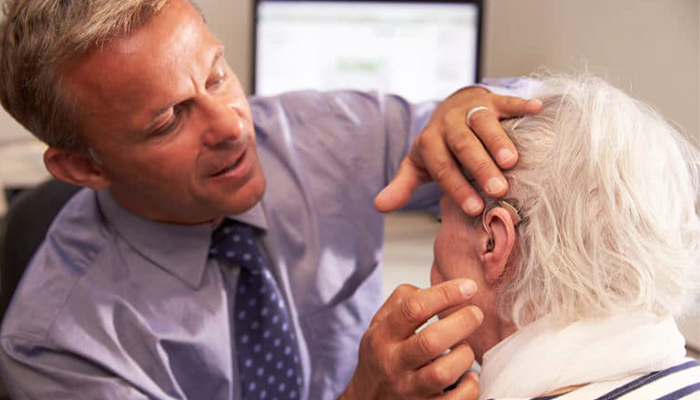
    Baby boomers can be particularly hesitant to take steps to address hearing loss. Many do not think about it as a requirement like regular doctor or dentist visits. It can be seen as a definitive sign of aging and many just don’t like being branded with a brown plastic thing behind their ear. All of this on top of the fact that traditional hearing aids can cost upwards of $3,000 per ear.

    How to Save Right Away

    You know the reading glasses you find at the drugstore? There’s a hearing aid equivalent. While personal sound amplification products – or PSAPs – aren’t for everyone, they can perhaps help some. Unfortunately, they’re only good if you have mild hearing loss, and you do get what you pay for with them. Most of the ones that do a good job of canceling out background noise are around $200 to $300. They aren’t cheap, but they’re far less expensive than your traditional option.

    Even though these devices will be able to help your hearing they will not be able to be marketed as hearing aids or as a product to “improve” hearing loss.

    Curb Costs by Unbundling

    Avoid going to an audiologist that bundles the cost of exams with the cost of hearing aids. Instead, try to pay for services as you go and buy your hearing aids separately. You may have to pay for each follow-up visit, but you’ll avoid spending money on services you don’t need.

    Natural Look

    If you’re hesitant to move forward with a hearing aid for cosmetic purposes, there are options for you. There’s a new class of hearing aid that’s completely invisible. It’s small enough to fit in your ear canal by your eardrum. Don’t worry you won’t be placing it in there all on your own. In order to receive this type of hearing aid, you’ll need to take a trip to the audiologist. They carefully place the hearing aid in order to avoid any possible injury to your sensitive canals.

    These types of hearing aids also provide you with a more natural sound profile. Because they are so deep in your canal, the sound interacts with your ear in the same way it naturally would. Surprisingly, that ability is also a strong factor in how you’re able to detect where a sound is coming from.

    With all the great things about these types of hearing aids, there are also setbacks. They are not good for people with severe hearing loss. Also, because of their small size, their life can be shorter than that of larger hearing aids.

    Medicare is an essential resource for many Americans. It provides a base for coverage for private insurance is not an option.

    Don’t Upgrade, Recalibrate

    First of all, you should never buy the top-of-the-line anything, since you’re paying a premium for that luxury. Try things until you find one that is suitable. Once you’ve found hearing aids that work, instead of upgrading them to the latest and greatest, have them recalibrated instead.

    The odds that a new pair will be all that much better are slim. Most people only notice minor improvements when opting for a newer pair. That’s why upgrading every year or two is often a waste of money.

  • Hearing Loss and Loss of Cognitive Function: Why Hearing Aids Matter

    Hearing Loss and Loss of Cognitive Function: Why Hearing Aids Matter

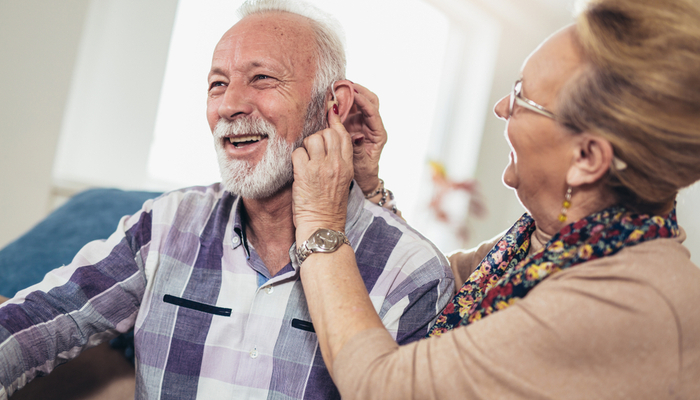
    There are a number of people who find that they don’t want to use hearing aids, even if they have significant hearing loss. They may associate hearing aids with aging and “looking old,” or perhaps they just don’t want to mess with the technology. However, this is a mistake: if you have hearing loss, you should absolutely be using hearing aids.

    There are a number of reasons why it’s important to use hearing aids if your hearing isn’t optimal. Today we’re going to get in to the various benefits using hearings aids confers, and what detriments you incur by not using them when you need to.

    Mental Acuity

    Numerous studies have shown that choosing not to use hearing aids even when you have suboptimal hearing is a huge way to invite cognitive issues. Things like memory loss, dementia and Alzheimer’s have all been shown to be more directly impactful on people with loss of hearing. Of course, the flip side of this is that if you use hearing aids, the effects of such cognitive degeneration are slowed dramatically.

    This is likely due to a combination of factors. Namely, brain function as we age alters due to the dulling of the senses. Much like muscles, if you don’t use your brain’s functions then they’ll get weaker. We, as humans, need mental stimulation to keep ourselves sharp. The same can be said for visual stimuli, as well as touch and smell and taste. As long as you’re receiving stimulation to various parts of your brain, you’re staving off cognitive degradation.

    Social Awareness

    It’s very difficult to carry on a conversation with someone who can’t hear every other word you’re saying. Imagine how frustrating it must be for your friends or family to have to yell to be understood by you. It’s also uncomfortable for anyone if you mishear them and react as though they said something they didn’t say. Taking the time to correct your mistake, walking back the conversation and trying to be understood is a huge social embarrassment and hassle.

    An easy way to alleviate all this social stress and conversational awkwardness is to simply wear your hearing aids. They allow you to easily hear your friends and family when carrying on a conversation. You won’t miss important information, and you’ll be able to hear conversations without people having to shout at you.

    Safety

    It’s very dangerous to walk around a busy, crowded street without being able to hear the world around you. Things like rushing emergency vehicles, people shouting about potential hazards and even the sounds of fights or gunshots might go unnoticed if you’re not using hearing aids. By going out into the world without them, you’re inviting disaster. What if there’s a fire and you don’t hear the alarm going off and get stuck in the building?

    Another safety consideration regarding hearing is driving. If you go out driving but don’t wear your hearing aids, it’s much more likely that you don’t hear things like emergency vehicle sirens and the sounds of car horns blaring. By wearing your hearing aids, you’re more likely to be aware of your surroundings and react to traffic patterns around you.

    Enjoyment

    Simply hearing the sounds of birds chirping, babies crying, and wind rustling the leaves in the trees can be meditative and enjoyable. Who doesn’t love the sound of a running creek or the tides coming in and out? If you’re hard of hearing and don’t have, or don’t wear, your hearing aids, consider all the ways you’re missing out. Look out for your safety, your cognitive function and your friends and family by using hearing aids.