Tag: Light

  • Try This Surprising Cure to Help Alleviate Seasonal Depression

    Try This Surprising Cure to Help Alleviate Seasonal Depression

    Winter months can be difficult for many people. Those who suffer from seasonal affective disorder experience symptoms of depression that typically occur during fall and winter. However, there are ways you can help ease these symptoms.

    What’s a LightBox

    One helpful tool for alleviating symptoms of SAD are lightboxes. It’s important to talk to a medical professional to determine if using a lightbox would be helpful in eliminating your symptoms. Often times they’ll recommend combining a lightbox with other modalities of therapy.

    SAD is reported most frequently by people living far north or south of the equator. Researchers believe the change in total daylight effects causes a change in brain chemistry to spark the depression. Lightboxes help by mimicking the effects of outdoor light.

    In order for the light to be effective it must meet some basic requirements. It must be of at least 10,000 lux. Any light that doesn’t meet that minimum standard hasn’t been proven to be medically effective. It must also only emit a small amount of UV light. Lights emitting large amounts of UV light could be more dangerous for the long term health of your eyes than the symptoms that they are trying to remedy.

    Get The Right Lightbox

    · Use within the first hour of waking up in the morning
    · For about 20 to 30 minutes
    · At a distance of about 16 to 24 inches (41 to 61 centimeters) from the face
    · With eyes open, but not looking directly at the light

    What to consider

    Make sure that the light is specifically for SAD. Some lightboxes are designed for skin disorders. Lightboxes used for skin disorders primarily emit ultraviolet (UV) light and could damage your eyes.

    Like many things in life, the dose does matter. The brighter the lightbox, the less time you’ll need to achieve the minimum effective dose. The minimum effective dose for a SAD lightbox is 10,000 lux.

    Is it the style you want? SAD lights have evolved since they first came on the market. In addition to providing relief, they can also now double as an alarm clock. They can be programmed to slowly get brighter and mimic the rising of the sun. This has been shown to ease getting up in the morning in addition to providing you with your daily dose of light.

    Make sure that your lightbox won’t cause eye damage. While most lightboxes provide a diffuse light that is harmless to the eyes, people with eye problems such as glaucoma, cataracts or other eye damage should further consult an optometrist.

    Lightboxes are considered a form of durable medical equipment by the government. That means they’re covered under Medicare part B.

    Where Does it Come From?

    People with SAD may overproduce the hormone melatonin. Melatonin is normally a helpful neurochemical that regulates our natural sleep cycle. When winter days become shorter it increases the amount of melatonin the body produces- this leaves people feeling sleepier and more lethargic.

    People suffering from SAD may also produce less vitamin D. Vitamin D has been shown to play a significant role in serotonin activity. Because of this, having a vitamin D deficiency has been linked to an increased chance of depression symptoms.
  • Light L16, The New Camera Idea

    Light L16, The New Camera Idea

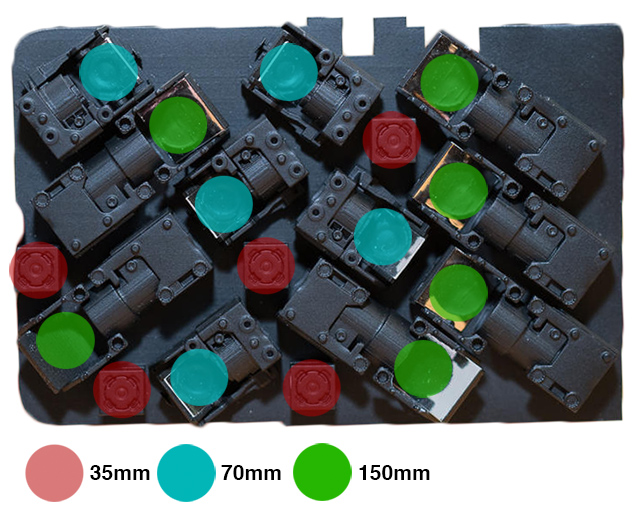
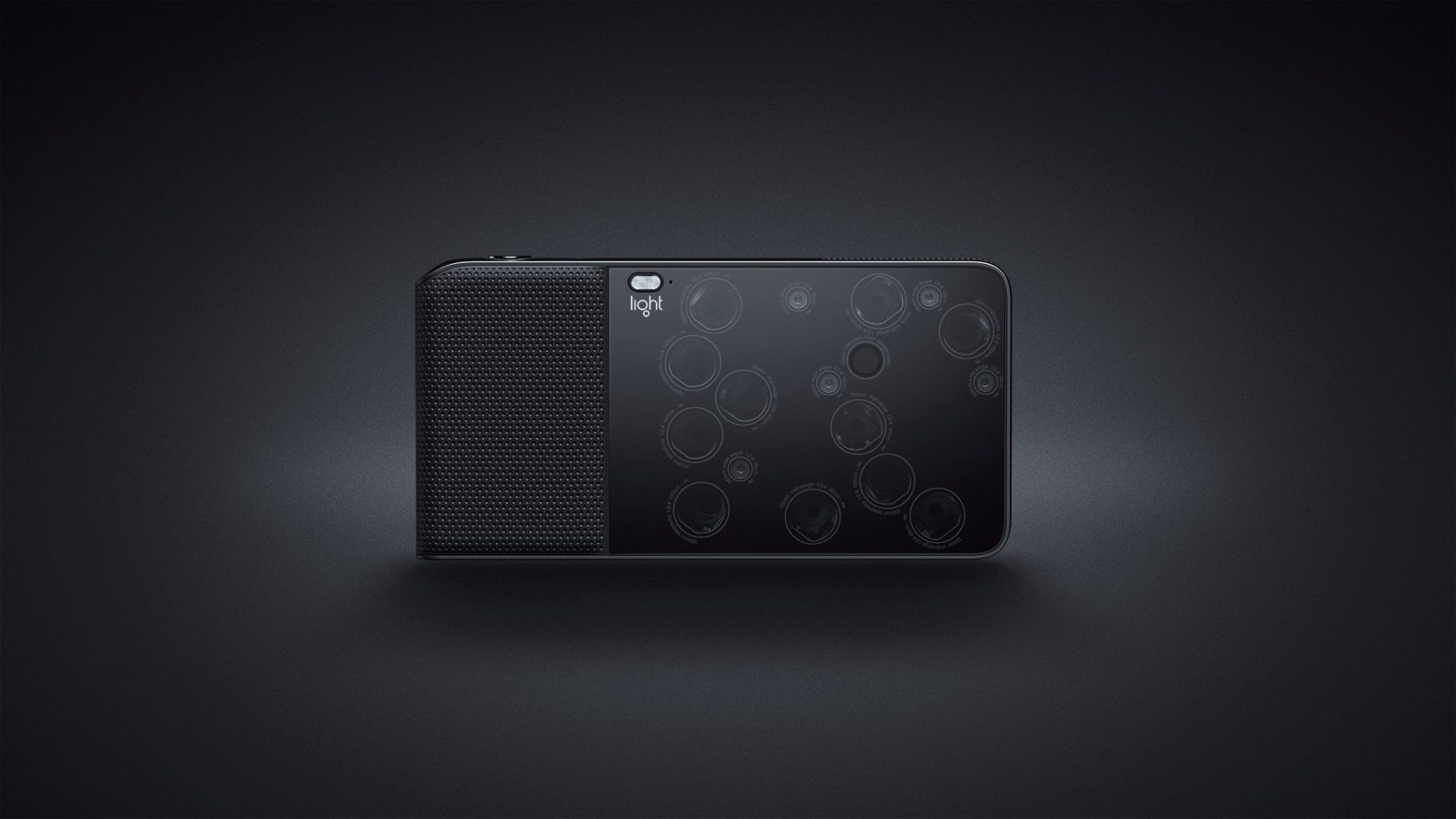
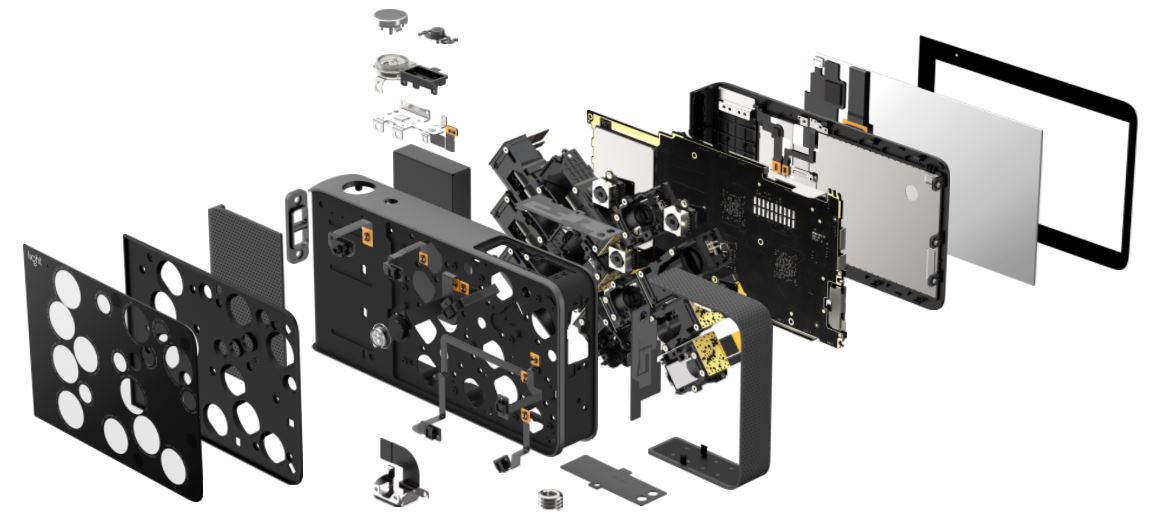
    The L16 combines breakthrough optics design with never-before-seen imaging technology to bring you the camera of the future. With more than 16 camera modules packed into its slim frame, the L16 captures the details of your scene at multiple focal lengths, then uses sophisticated algorithms to combine multiple exposures into a single high-resolution photo. The L16 replaces the bulk and weight of a traditional single-lens camera with many small lenses and sensors that lie at 45-degree angles across a flat plane. When the L16 is fired, light enters 10 or more apertures. Using folded optics, the L16 bounces this light off periscopic mirrors, through horizontal lens barrels and onto individual optical sensors. The result is one exquisite 52MP photo, formed from 10+ slightly different perspectives.

    The Great

    • Computational photography
    • New Approach
    • High Quality Pictures
    • One Camera Solution

    The Not

    • The Price
    • The Look
    • The Underwhelming Pictures


    The  Conclusion

    To get to the basics of it, the L16 makes use of 16 camera modules with varying focal lengths. “Computational photography” is used to fuse the individual photos with depth data that could produce results like a DSLR. Light’s approach towards the functioning is truly game-changing. The incredible zoom range is awe inspiring as it ranges from 28-150mm.

    Tell Me About This Thing

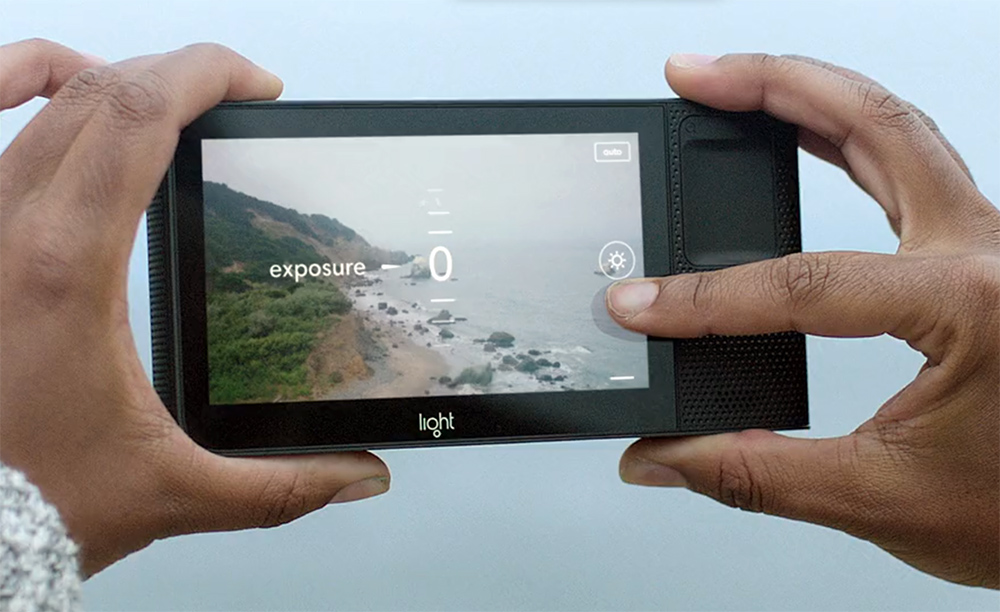
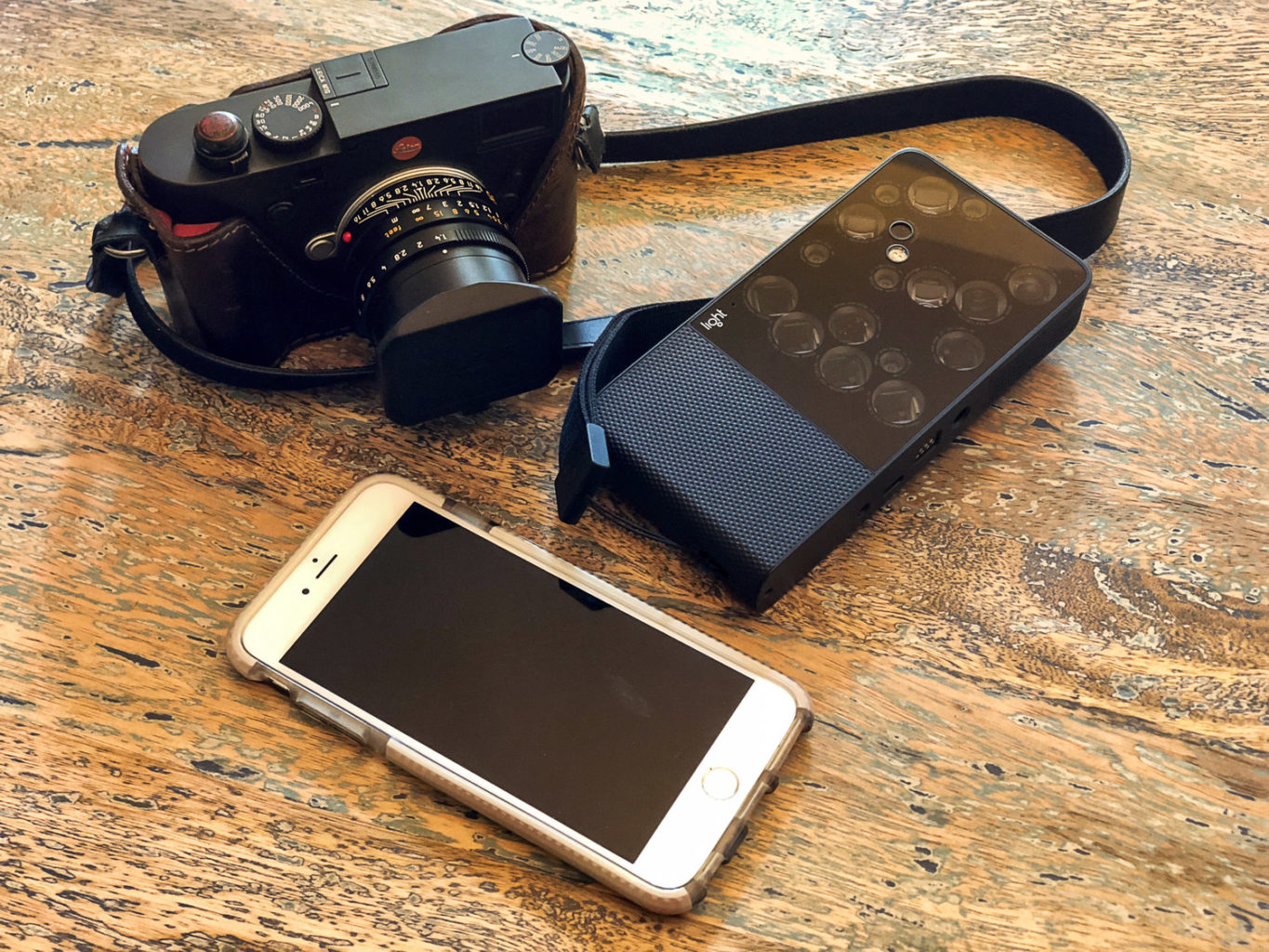
    The Light L16 camera is an engineering marvel. It takes 16 different smartphone-sized imaging modules, each carefully aligned behind a piece of glass, and uses them in concert with each other to create images that are bigger and better-looking than the results the individual cameras are capable of. It does all this in a form factor that’s two or three times thicker than, but not quite as wide as, an iPad mini, something that actually fits in a few pockets and is easy enough to stow in a bag. That’s Light’s selling point for this $2,000 camera: the L16 is ostensibly a full bag of camera gear in one body.


    If you’re having trouble grasping how the L16’s dizzying camera array works, think of it this way: you know how dual-lens phones like the iPhone or Note let you zoom from wide angle to telephoto in the camera app? This is that, stretched to the extreme. The 16-camera modules each have their own image sensor and lens, and they cover different focal lengths. There are five 28mm wide-angle modules, five midrange 70mm, and six 150mm telephoto ones.
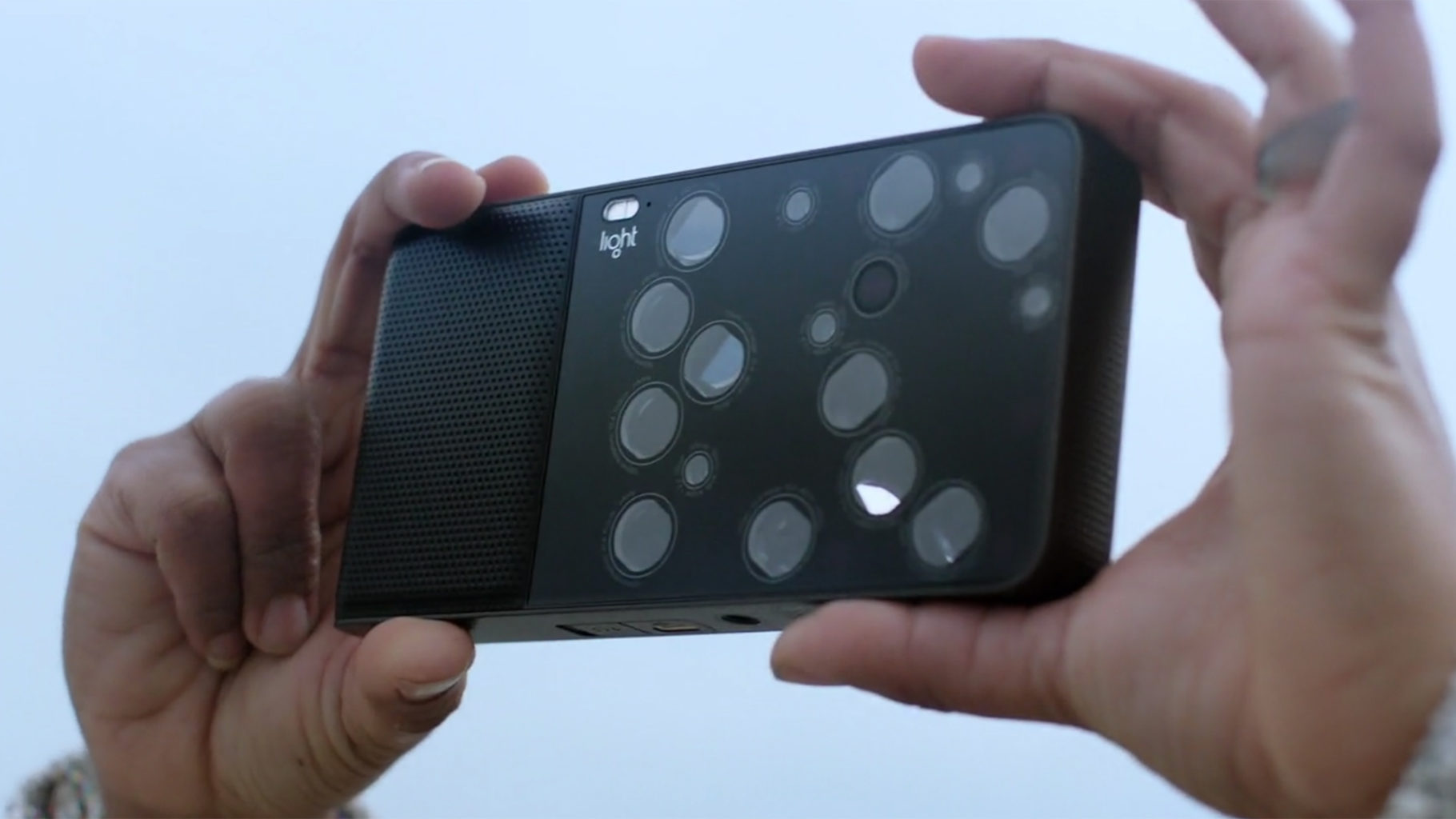
    The big difference between this camera and those phones is that the L16 simulates all the focal lengths in between 28mm, 70mm, and 150mm by combining data from multiple camera modules. So instead of digitally zooming in on the 28mm image to make it look like it was shot at 40mm, it’s replicating that focal length by stitching images together on the fly. This is also why the quality of the L16’s images can be a notch better than that of a single smartphone camera. The L16’s results are slightly greater than the sum of its physical parts, all thanks to some really clever software.

    What Do I think?

    To be honest, I’m not really sure what to think of the Light L16 camera. It’s a bit of a head-scratcher. On paper it’s a very clever idea: a multi-camera device that computationally creates high-quality, high-resolution photos from up to 16 small, low-resolution sensors, and yet is more pocketable than a big DSLR. The L16’s execution of this, however, at least at this point in time, leaves a lot to be desired. The design of the L16 is awkward, the shooting experience and performance are underwhelming, and the image quality is very inconsistent and often quite disappointing.

    This architecture gives Light a real flexibiilty for future products. Want a pocket-sized 400-600mm camera? Use different camera modules. Want a smaller 35-50mm camera? Drop some of the modules from the L16. It’s not quite that simple, but you get the point.

    Quick Spec Look

    • Full model name: Light L16
    • Resolution: 51.10 Megapixels
    • Sensor size: 1/3.2 inch
    • (4.5mm x 3.4mm)
    • Lens: 5.40x zoom
    • (28-150mm eq.)
    • Viewfinder: No / LCD
    • Native ISO: 100 – 3200
    • Extended ISO: 100 – 3200
    • Shutter: 1/8000 – 15 seconds
    • Max Aperture: 2.0
    • Dimensions: 6.5 x 3.3 x 0.9 in.
    • (165 x 85 x 24 mm)
    • Weight: 15.3 oz (435 g)
    • includes batteries
    • MSRP: $1,950
    • Availability: 10/2017
    • Manufacturer: Light

    The Final Thought

    This camera may not be something that the majority of people want or need, as smartphones are “good enough” and pretty close to the capabilities of the L16. I personally enjoy the semi-concerned glances of total strangers, clearly worried that the thing you just yanked from your bag is not a camera but a futuristic Men in Black sort of weapon.

  • The light switch of the future…

    The light switch of the future…

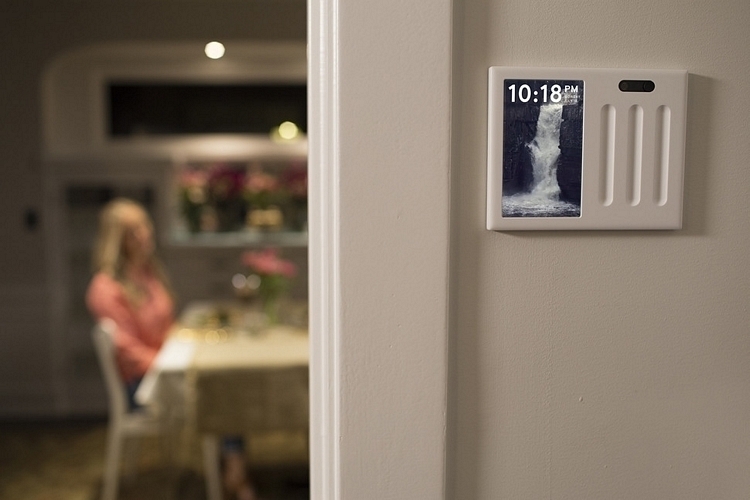
    The “start up” smart tech company, Brilliant, has emerged out of nowhere and is revolutionizing the home light switch as we know it.


    The game changer

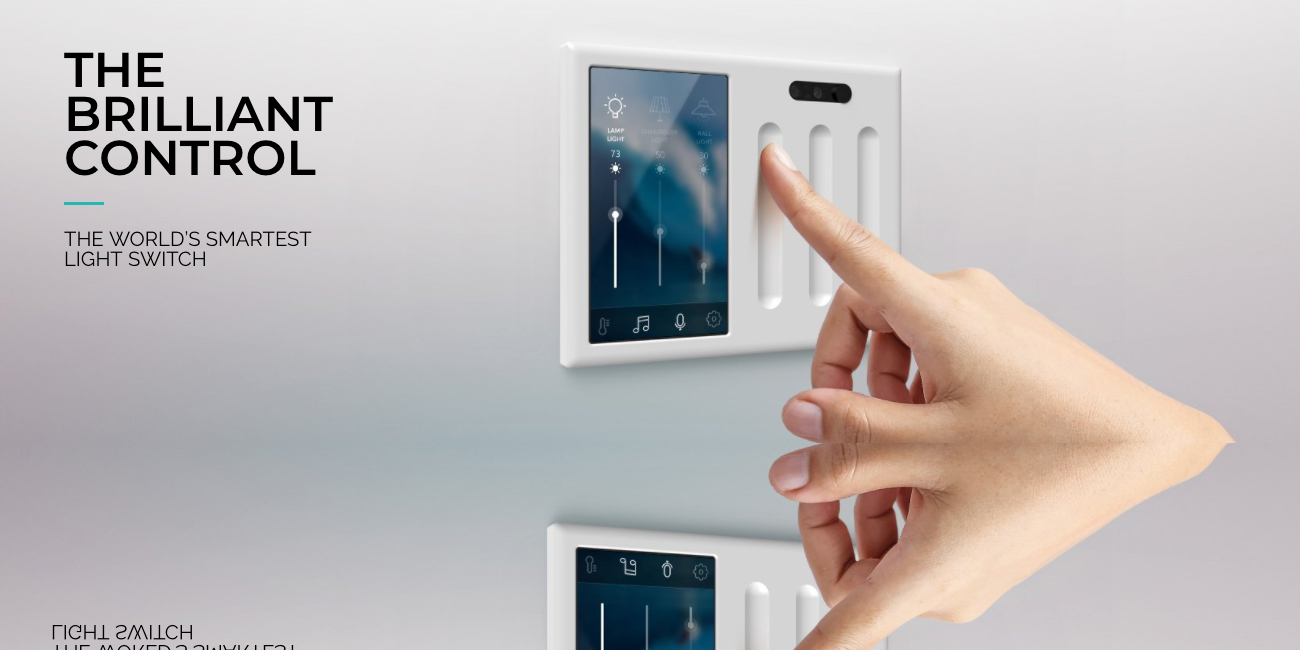
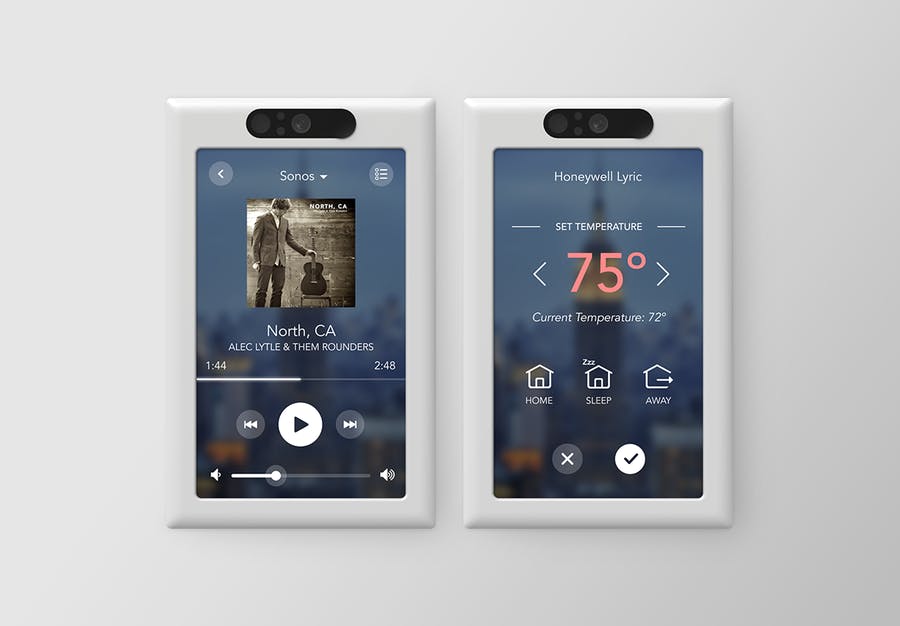
    In 2017, Brilliant brought their prototype “smart control panel” into production and into our homes. This new revolutionary control panel was quickly recognized as an innovative way to fully integrate all of your home tech. In a sense giving your home a brain. By using the digital touch screen or simple verbal commands, this switch can control your homes lights, air conditioning, intercom system, video surveillance, music and much more.

    Image result for brilliant light switch

    Brilliant’s Bright Future

    Image result for brilliant light switch

    Brilliant’s new smart switch made a lot of buzz at the 2018 tech convention CES in Las Vegas. Right from the get go, you see Brilliant has an eye for what the consumer and home owner wants. By adding the ability to access Alexa, Sonos speaker, Nest thermostat, and even take photos, this control panel immediately stands out amongst it’s competitors. Wink and Belkin did beat Brilliant to the home control panels market, but Brilliant has quickly jumped ahead of the with its many features such as a built in camera and even the ability to make video calls. But these additional features do come at a cost. The Wink Relay control panel can be purchased off amazon for $90 per panel, while Brilliant is selling their basic for $200. Their four switch panel is priced at $399.99. Brilliant has offered a $50 discount for pre-ordering their panels directly from their website, by they are expected to be the full $200 once it hits store shelves later in February 2018.


    Related image

    The good

    • Fully integrates all of your home’s smart technology into one sleek panel.
    • Its many features gives you the ability personalize each room with separate lighting, entertainment, and ambiance.
    • With full control of all utilities so handy, you can expect monthly electric bills to be lower when used properly.

    The not so good

    • With all new technology, there is an expected period of trial and error. It will take some time for Brilliant to work all the kinks out.
    • For your entire home to be connected you will need a panel in every room. At up to $400.00 per panel, this can get costly. Granted, once everything in connected, it’s pretty amazing.

    My thoughts

    Brilliant is clearly onto something big here. It may have initial hiccups like any new production, but once they oil this machine they created, I see it in every single home.