Tag: science

  • Event Horizon Telescope Photographs Supermassive Black Hole

    Event Horizon Telescope Photographs Supermassive Black Hole

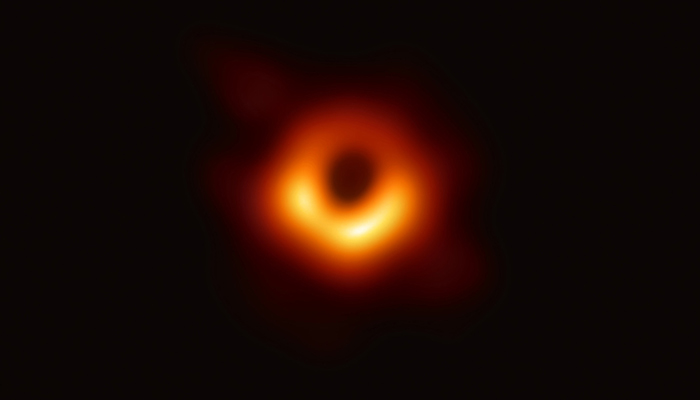
    Is there anything in the cosmos more mystifying and terrifying than a black hole? The Event Horizon Telescope array has managed to do the impossible and photograph a distant black hole in the M87 galaxy. Well, the array photographed the hole in space where the black hole should be. It devours all the light that passes the event horizon, of course.

    Event Horizon Telescope Photograph

    Supermassive

    The black hole in question is incredibly huge. It is so big, in fact, that it could envelop the entirety of our solar system. The object is estimated to be 3.5 million times the size of our planet. In order to image the supermassive black hole at the center of the M87 galaxy, the Event Horizon Telescope team used an array of eight telescopes.

    Imaging

    The team used radio imaging and very precise array movements to gather petabytes of radio signals. Yes, petabytes. The tremendous amount of data gathered by the team was, in fact, too great to be sent over the internet. Instead, each dish in the array had an on-site hard drive recording information.

    When the team had enough data across their eight dishes, they brought all eight hard drives to a supercomputer. In order to image the black hole properly, the supercomputer collated the eight data points and gave us our clearest view yet of the oddest objects we’ve ever observed.

    Einstein’s Theories

    According to the Event Horizon team, the images gathered support Einstein’s theories, proving the famous scientist right yet again. The image itself shows superheated gas being sucked into the black hole, resembling some demonic force consuming all that surrounds it.

    This image largely shows what physicists expected: black holes have their own set of rules. Einstein theorized that sufficiently massive object bend reality around them, altering gravity and light in the area. According to Einstein, as you approach the event horizon and get nearer to the singularity within, the very laws of physics begin to break down.

    What This Means

    Black holes fascinate us because they are so unlike any other objects in the cosmos. Their massive, light-obliterating profiles cast an odd shadow on our understanding of physics and reality. How can an object be so massive and so dense that it alters the nature of reality around itself?

    Surely, our thirst for knowledge as a species can never be quenched. What is truly impressive is the lengths to which we will go to learn more about the world around us.

  • 10 Chilling Solutions to the Fermi Paradox

    10 Chilling Solutions to the Fermi Paradox

    The Fermi Paradox refers to an understanding of the observable universe that appears inherently paradoxical. Put forth by Enrico Fermi, a physicist, the paradox holds that the evidence of extraterrestrial life is incongruous with the likelihood of its existence. In simpler terms, the universe is very big and very old, and there are tons of planets that could support life as we know it. However, there is absolutely no observable evidence of any intelligent life in the universe outside of our own. This paradox, then, begs the question: where is everyone? If we’re alone in the universe, why? And if we’re not, why can’t we find anyone? Today, we’re looking at ten chilling possible answers to these questions.

    Virtual Reality is Better Than Real Reality

    Humans are just now beginning to develop virtual reality that proves entertaining over a long period. However, imagine a sufficiently advanced alien race that has created virtual reality that is indistinguishable from actual reality. Such a species might find it is much more interested in exploring virtual realms than the real world. Much like the plot of the movie The Matrix, a sufficiently detailed virtual world would be indistinguishable from the real one. As such, it might be the case that advanced life forms are out there, they’re just floating in sensory deprivation tanks and living in a virtual utopia.

    The Universe Is a Simulation

    Along a similar line of thinking is the theory that our universe itself is a simulation. While scientists and philosophers debate the point, it makes sense: a brain floating in a jar couldn’t tell this world from a dream. Indeed, our world may very well be entirely simulated, and we could be programs in that system. Thus, the lack of life in the universe would be by design: the simulation is only interested in humans. Why this would be the case, however, is unclear. Our universe is unfathomably massive, and we will never explore even one percent of it.

    Intelligent Life is Very Rare

    The Fermi Paradox is constructed under the assumption that intelligent life would arise if conditions like those on Earth were present on another planet for long enough. Maybe, however, that assumption is wrong. Maybe so many more things must fall in place before intelligent life can evolve and prosper that it’s a mathematical impossibility. Humans may be truly, utterly unique in the universe. The entire vast, cold reaches of space are quiet and uninhabited, making us the sole species that comprehends the cosmos.

    No One Else Has Made It This Far

    Maybe we aren’t alone at all, but we’re by far the most advanced species to arise in the galaxy. Perhaps we are unique in our ability to leave our own atmosphere, and other intelligent species haven’t pieced that together. Or, perhaps, they simply don’t care to. This solution holds that humans are the only intelligent life that wants to rocket away from the safety of home and explore the dark, quiet cosmos. Why would any other species want to do the same, when they would have no evidence of our existence, either?

    The “Sustainability” Solution

    Perhaps expanding throughout the stars isn’t all that easy to do. We’ve assumed, up to this point, that colonizing planets would be like colonizing countries on Earth. However, what if it’s too difficult to amass the resources to travel between stars? Perhaps other species have tried to expand, only to collapse under the pressure. Keeping food stores and fuel reserves high could very well be the bottleneck to space exploration.

    Aliens are Commonplace but Unseen

    Maybe aliens are everywhere. Not on Earth, of course, we’re not suggesting your neighbor is from Mars. No, maybe aliens are common in the galaxy, but we just don’t know what to look for. We tend to use radio signals to communicate, and we’ve assumed aliens would, too. However, it’s possible that aliens are just too far away for us to intercept their signals. Out of a range of a few hundred light years, radio signals become gibberish. Or, even more likely, advanced alien life doesn’t use radio waves at all. It’s possible that we simply haven’t thought of the kinds of communication they use. As such, messages could bounce past Earth every day and we would have no clue.

    The “Zoo” Hypothesis

    On the same track as the previous solution, the Zoo Solution holds that aliens see us. We just don’t see them. This solution posits that maybe aliens are observing us, unwilling to make contact. They’ve perceived our species as primitive, and as such want to simply watch us develop. Or, perhaps something more sinister is going on. Perhaps an advanced race is acting as zookeeper for all intelligent life, monitoring advancements. This zookeeper could be stymying attempts to explore the galaxy in order to protect its own interests. This could explain why we see no evidence of intelligent life in the galaxy.

    The Vast Time Frame of the Cosmos

    The galaxy is old, and the universe is even older. Both will be around for countless epochs to come: we simply can’t fathom the cosmic scope of time. It’s possible that we’re not separated from alien civilizations by distance, but instead by time. Perhaps great empires have risen in the galaxy, only to collapse in eons past. We haven’t seen any evidence of their great empires because they’re already crumbled to dust. Perhaps, a million years from now a fledging Solar empire will find odd artifacts of our civilization and wonder who we were.

    Aliens are Too Violent to Progress

    There are a host of theories referred to as “great filters,” loosely defined as things that stop life from achieving interstellar travel. One such filter would be war. Humans are warlike in some ways, and rational in others. Our odd evolutionary niche as something between predator and prey gives us an odd relationship with violence. However, complex life is generally carnivorous, or at least omnivorous. As such, we could presume that intelligent life would generally be at least somewhat aggressive. What if that same spirit that drives living things to advance is the one that drives them to destroy each other? It’s quite possible that intelligent life has simply bombed itself out of existence before taking to the stars. It’s not unreasonable: humanity still has a chance to do so with nuclear war. Only time will tell if we manage to colonize other planets and visit distant stars before we destroy ourselves.

    The Fermi Paradox isn’t Really a Paradox

    The most unsettling answer to the Fermi Paradox is that it isn’t a paradox at all. What if we’ve simply been looking for the wrong things? Alien life may just be too truly alien to detect. Perhaps alien species don’t communicate in ways we would even perceive as communication. Perhaps life can develop in ways we don’t understand, and that life values things we don’t understand. It could be that attempts at contact have been made but have gone unnoticed. Maybe if we just knew what to look for, we might find out that alien life is closer than we could have expected.

  • Ten Sci-Fi Innovations that Became Real

    Ten Sci-Fi Innovations that Became Real

    The world of science fiction is dominated by high-tech advancements that make life easier (or more dangerous) for the characters. For more than a century, real-world scientists have been inspired by sci-fi innovations to create new technology. From Star Trek to Star Wars, today we’re talking about life imitating art!

    Virtual Reality
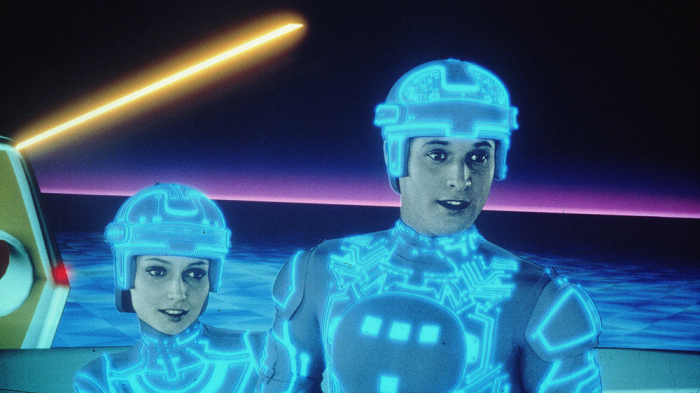
    Photo Credit: Trustnodes

    Many people enjoy VR headsets every day to explore virtual worlds. The future dreamt of in tales such as Tron and Blade Runner look a bit more believable when viewed through this lens. While we might not have fully-immersive, full-body recreations of reality, we do have a close visual and auditory approximation. For whatever reason, we are fascinated with being someone else, and VR is our window to that fantasy. While VR has had a rough history (Virtual Boy, anyone?) it’s stronger than ever and commands a good bit of public attention. Oculus Rift and Microsoft’s own VR are two big names to watch in the VR field.

    Wireless Earbuds

    Photo Credit: Apple

    In Ray Bradbury’s classic novel, Fahrenheit 451, a number of citizens are described as having “seashells” attached to their ears. The seashells play calming ocean sounds, music and talk shows. In the context of Bradbury’s novel, they are indicative of a dystopia of disinterested, unintelligent and cruel people. In our own world, the existence of truly wireless in-ear headphones wouldn’t be a reality until the last decade or so. Apple’s AirPod technology is a notable example. Bradbury would be pleased to see that we’re not burning books to withhold their contents, in spite of our technological advancements.

    Robotic Prosthetics
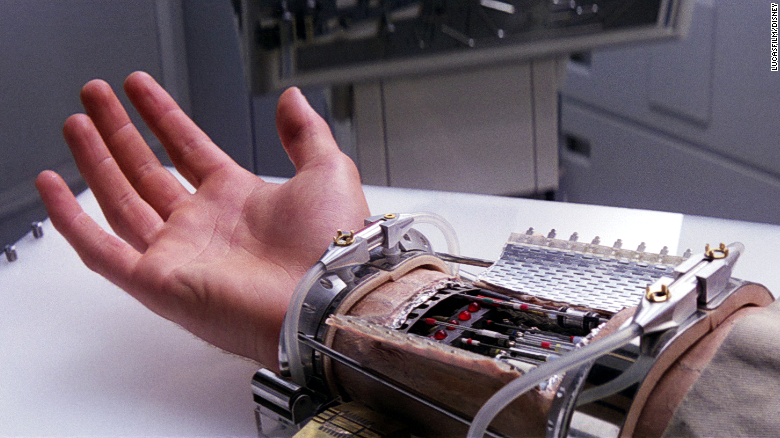
    Photo Credit: CNN.com

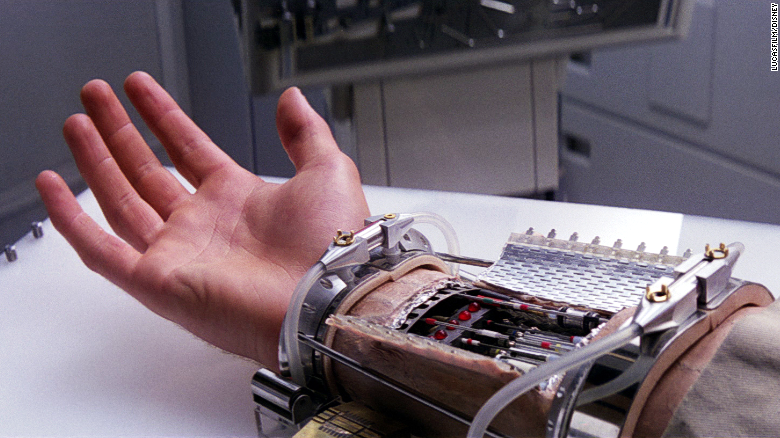
    In Star Wars, the iconic scene of Luke getting his new, prosthetic hand calibrated has two large impacts on the audience. First, it reminds us that Luke could become just like his cyborg father, Darth Vader. Second, it reminds us how freaking awesome robot hands are. Just like Luke, there are people in the real world who have benefitted from recent advancements in prosthetic technology. The technology uses receivers that can receive electric signals from the brain and translate them into fine motor control. This tech may have been inspired by fiction, but it’s helping to improve real lives!

    Video Calling

    Photo Credit: iOS Gadget Hacks

    In our world, video calls are commonplace and happen every day. However, in the 1920’s, when silent film The Metropolis was released, they were an impossible fantasy. Since that film’s antagonist used video communication on the silver screen for the first time, numerous sci-fi tales have used the technology. Star Trek is notable for its many tense negotiations between ship captains via video transmissions. In our world, thankfully, we’re not dodging photon torpedoes shot by hostile aliens, we’re just calling grandma to make sure she’s doing okay.

    Space Travel
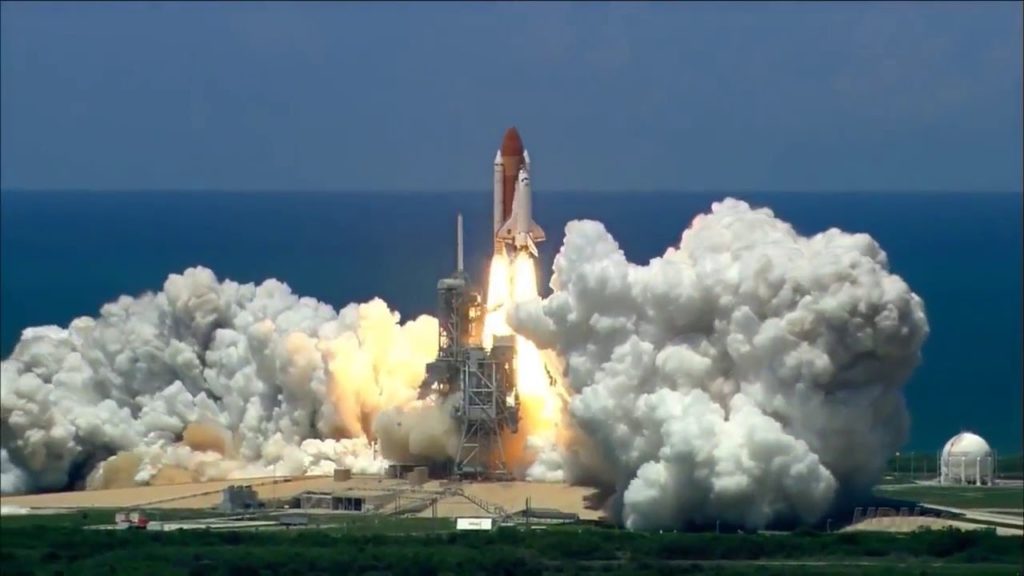
    Photo Credit: YouTube

    Nearly every sci-fi tale ever told features space travel in some capacity. Indeed, our cultural subconscious holds that man’s future lies with the stars. While our lofty ambitions are still generations from being realized, they’re much closer than any other time in human history. The International Space Station is evidence of this, as are the many deep-space probes we send to the deepest reaches of our star system. While living on alien planets and traveling between stars remain firmly in the realm of fiction, exploring space is still a reality for our species.

    Cell Phones

    Photo Credit: The Atlantic

    In the original Star Trek series, the main characters use a rather wild invention called a tricorder to communicate over vast distances. While we’re being a bit tongue-in-cheek, of course, the idea of a handheld communication device is nothing new in sci-fi. However, the unprecedented computing power of modern handsets certainly reminds one of the types of technology dreamed up by writers from the middle of the last century. Indeed, you carry more computing power with you than what went to the moon in the 60’s. That actually is wild!

    Tractor Beams
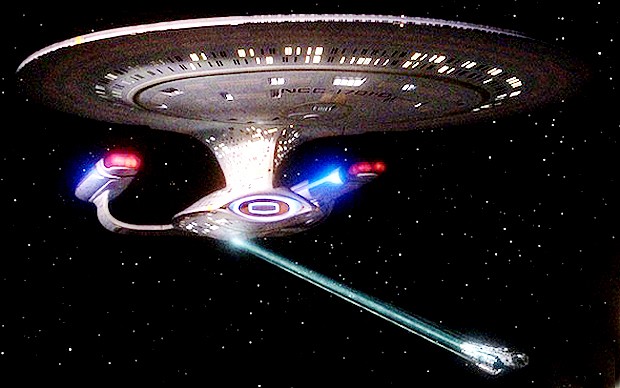
    Photo Credit: The Telegraph

    British scientists actually invented this iconic piece of Star Trek tech! A sci-fi innovation long thought to be little more than science fantasy is now reality. While the real-world iteration of this tech is on a much smaller scale than the Star Trek version, it’s the same principal. By manipulating particles within the body, the scientists hope that the technology will revolutionize surgery. Thanks to the tractor beam technology, surgical some surgical procedures that were previously invasive may become much safer, non-invasive endeavors!

    3D Printing

    Photo Credit: Mythcreants

    There’s no technology more optimistic and encouraging that Star Trek’s replicator. The technology behind it is likely also responsible for the teleportation technology employed in the show. However, replicator tech is much more feasible in our world, but under a different name: 3D printing. We don’t make much of it now, but 3D printing is a huge step towards sci-fi innovations becoming reality. Where the replicators were concerned primarily with food, our 3D printers are versatile and perform tons of tasks. And yes, 3D printing food is one of them!

    Nuclear Weaponry

    Photo Credit: Business Insider

    Sci-fi innovations aren’t always optimistic, and nowhere is that more evident than in HG Wells prediction of the atom bomb. In his novel “The World Set Free,” Wells describes “atomic bombs” that “detonate indefinitely,” after reading theories put forth by scientist Ernest Rutherford. Wells’ versions of the bombs were hand-thrown and burned for as long as seventeen days, a far cry from the bombs of our own world. However, the idea of a “nuclear bomb” may have even gone on to influence the research and discovery of true atomic weapons, as life attempted to imitate art.

    Coolest Sci-Fi Innovation Becoming Real: Cybernetic Soldier Suits

    Photo Credit: Marvel

    Tony Stark sports visually-arresting, butt-kicking super-armor in the Marvel Cinematic Universe. It originally debuted in 1968, but it looked a bit clunkier and less awesome back then. That said, the original Iron Man comics would go on to inspire countless robot-piloting works of fiction. Notably, in our world, tech like Stark’s is close to being reality: the Tactical Assault Light Operator Suit, or TALOS, is in development by the US Military. Yes, that name sounds like something Hydra would send after Tony in a comic book, but it’s a real piece of military technology. It incorporates technology that looks like Tony’s Bleeding Edge armor seen in Avengers: Infinity War, using liquid armor that solidifies at the operator’s command. Talk about sci-fi coming to life!

  • 10 Science Questions Every American Should Know the Answers To. Do You?

    10 Science Questions Every American Should Know the Answers To. Do You?

    The National Science Foundation is an organization that keeps up with American’s scientific aptitude. To that end, every two years the NSF releases a series of ten basic science questions. These questions are meant to test the average American’s knowledge of science. Every American should know the answers to these questions, but do you? Let’s find out! 

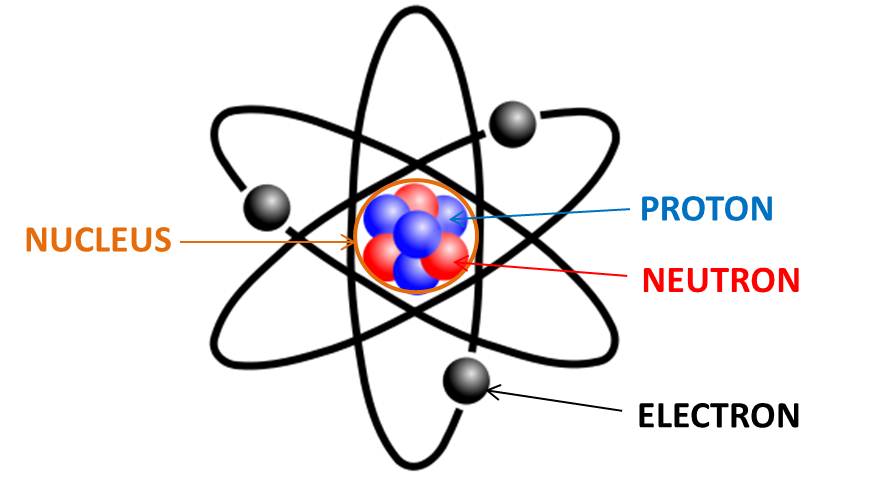
    Are Electrons Smaller or Larger than Atoms? 

    Photo Credit: Inventions and Inventors 

    Yes! Electrons are one of the smaller parts of an atom. Electrons, together with protons and neutrons, make up each and every atom. Those atoms, in turn, make up all matter in the observable universe. Cool, huh? 

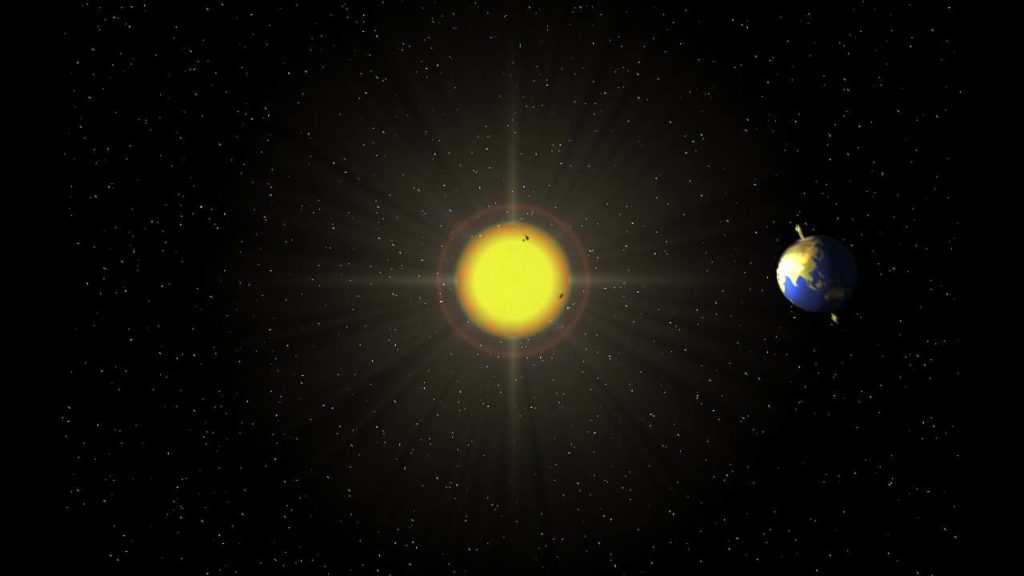
    Does the Earth Go Around the Sun, or Does the Sun Go Around the Earth? 

    Photo Credit: YouTube 

    Much to the surprise of flat-Earth conspiracy theorists, the Earth actually orbits the sun. This was a major scientific breakthrough during the Enlightenment. Astronomer Galileo Galilee is largely credited with popularizing the “heliocentric,” or sun-centered, model of the cosmos. 

    Is All Radioactivity Man-Made? 

    Photo Credit: Wikipedia 

    No, it isn’t! The vast majority of natural radioactivity is in the depths of outer space. However, everything from soil to flowers to certain minerals on Earth contains certain amounts of radioactivity.  

    True or False: The Continents Have Been Moving for Millions of Years, and Will Keep Moving 

    Photo Credit: Encyclopedia Britannica 

    This one’s true! Yeah, believe it or not, the continents are on the move. They’re just really slow about it! A few million years ago, a map of the Earth would have looked like some alien planet to us. In a few million years, the continents as we know them will be a thing of the past. Mind-blowing, right? 

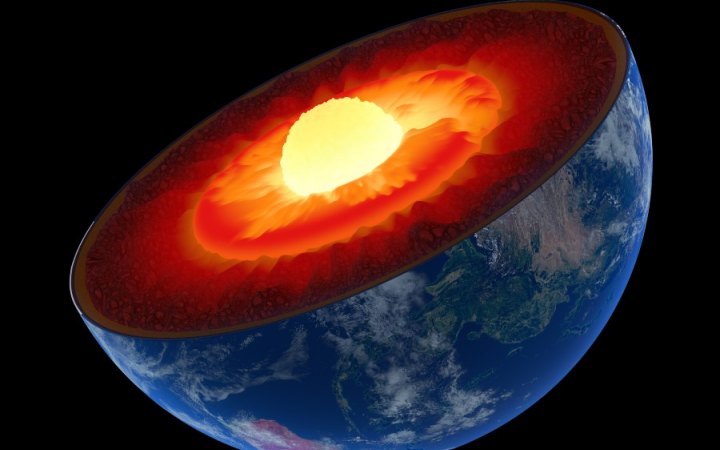
    True or False: The Center of the Earth is Very Hot 

    Photo Credit: Wonderopolis 

    True! Earth’s core is comprised of molten metal. The immense pressure of the planet’s mass keeps the core as hot as the surface of the Sun! 

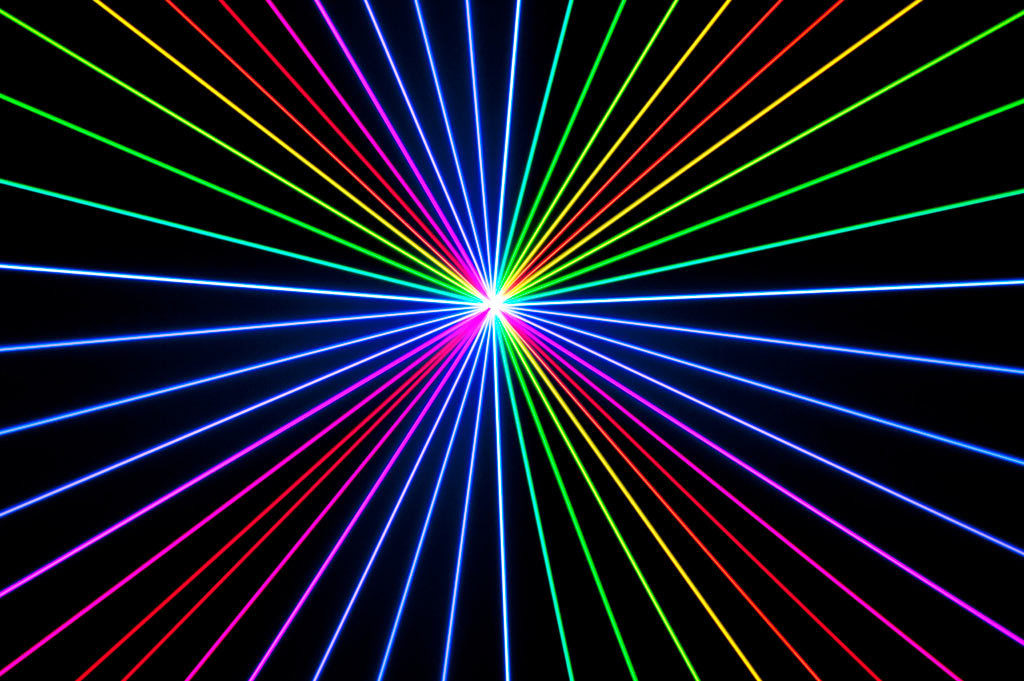
    True or False: Lasers Work by Focusing Soundwaves 

    Photo Credit:  Laser World 

    False! Lasers work, instead, by focusing light energy. That focussed light can then be applied in all kinds of neat ways, from cutting diamonds to detecting intruders and more! 

    True or False: Humans Developed from Earlier Animal Species 

    Photo Credit: How Stuff Works 

    This one is a bit controversial to some, but it’s true! Scientists agree that humans are evolved from earlier animals and share a common ancestor with the great ape family of animals.  

    Do Antibiotics Kill Viruses as well as Bacteria? 

    Photo Credit: News Medical 

    No, they don’t! The clue is in the name: antibiotics are only effective against living things. Oddly enough, viruses are technically not alive. They’re incredibly good at replicating themselves and taking over cells, but they don’t possess the right qualities to be considered living beings. 

    True or False: It’s the Father’s Genetics that Decide Whether a Child is Male or Female 

    Photo Credit: Quora 

    True! Weird, right? Since only a male can pass down their Y chromosome, it’s actually on the dad’s genetics to determine the sex of their child. This one trips a lot of folks up, but it’s easy to remember since women can only pass down their X chromosomes, and it takes an XY combination to create a biological male.  

    The Last of Our Science Questions: True or False: The Universe Began with a Big Explosion 

    Photo Credit: Sputnik International 

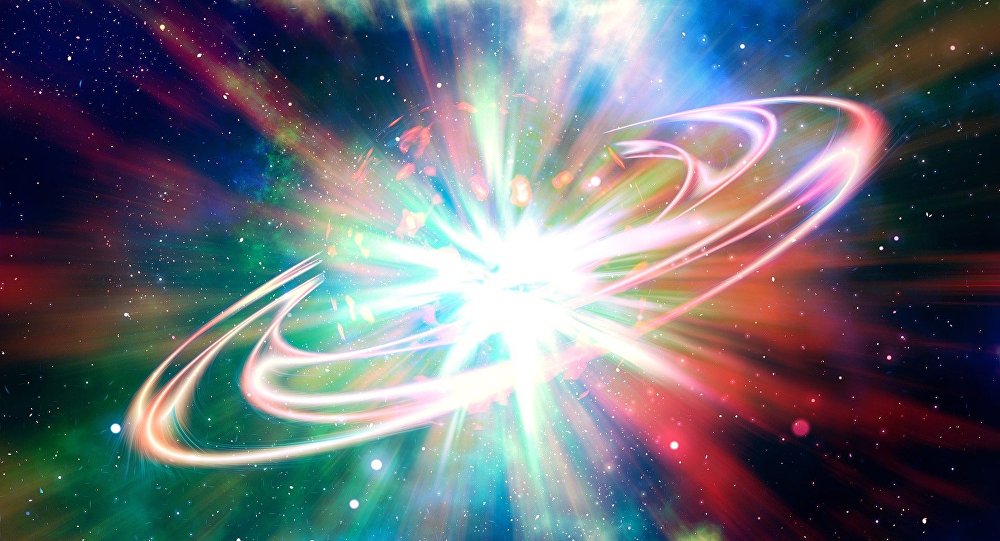
    True! Scientists largely agree that the universe (as we know it) began after a fantastic expansion we refer to as the Big Bang. Now, the term ‘explosion’ might be a bit inaccurate, as that would imply preexisting space into which things were being scattered. The Big Bang, instead, was more of a sudden expansion of an infinitely dense and infinitely small point in space.