When the original Star Trek first hit airwaves in the late 60’s, it was concerned ahead of its time. While it boasted social understanding and politics that were ahead of its time, it also showcased awesome technology. Some experts even claim that the show may have helped inspire technological advances in the real world! Today, we’re counting down the ten coolest pieces of Star Trek tech we wish we could use. While some of these have come to exist in the real world in some capacity, others are still science fiction. Let’s get into it at Warp 9!
Hypospray

Photo Credit: PCMech
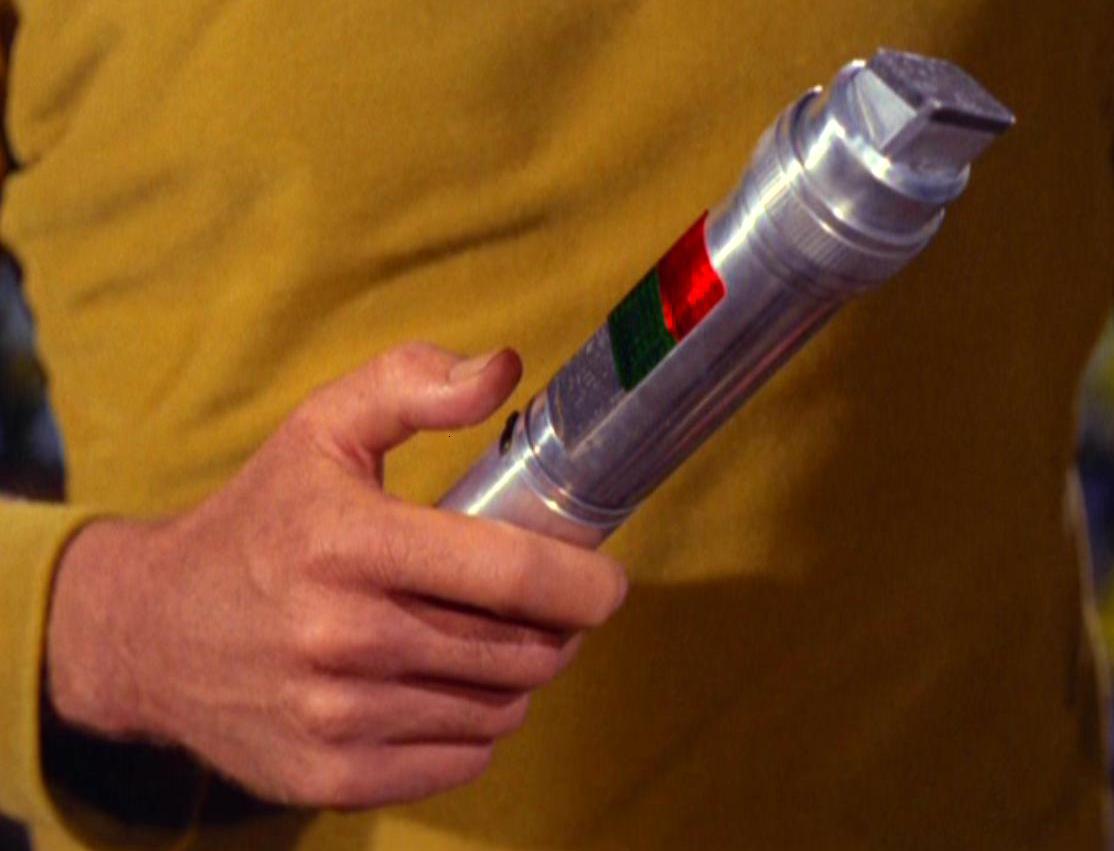
A unique intravenous delivery method for medicine was introduced in the original series, called hypospray. Hypospray is a liquid that is shot at a very rapid speed through the skin of the patient, thus forgoing the need for a hypodermic needle. In the real world, technology like this actually exists now! It’s very sanitary and safe, since foreign objects don’t need to enter the body. It’s also great for people with phobias of needles, and children! The real-world hypospray is shot into the body at Mach 0.7 in order to safely penetrate the skin. A great example of sci-fi predicting real-world technology!
Universal Translators
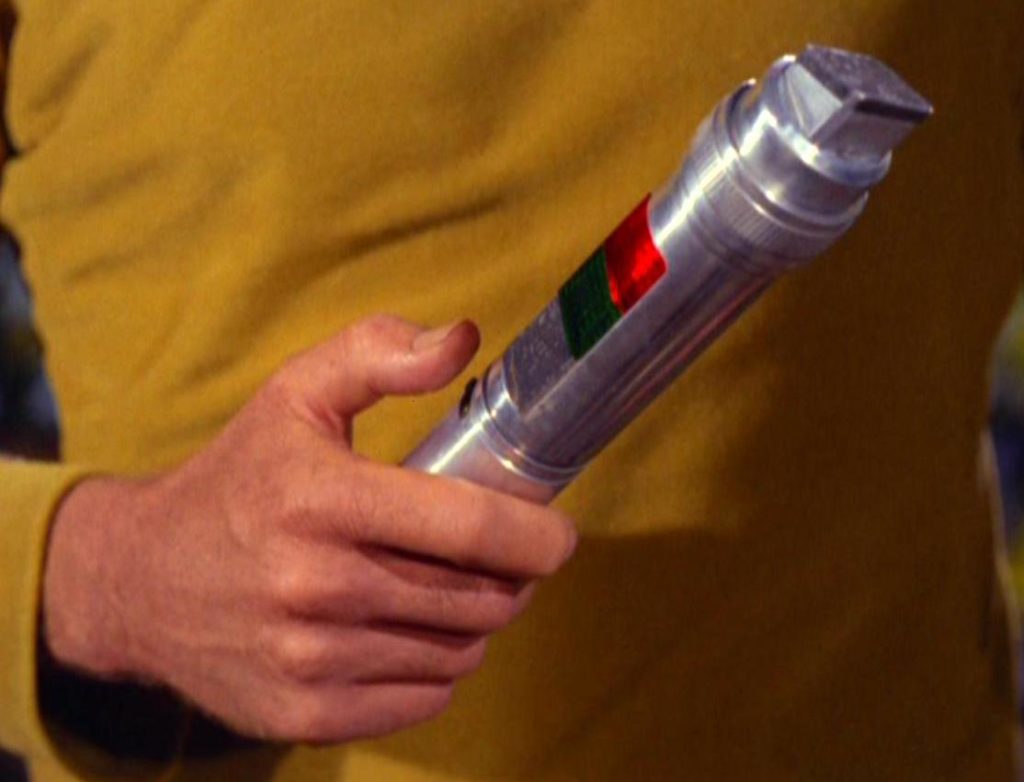
Photo Credit: Memory Alpha
In the Star Trek universe, universal translator technology is essentially a way for the writers to hand-wave why all the aliens speak English. It’s much easier for the audience to pick up on tone and meaning when actors just speak normally. It’s also a pain to create a unique-sounding language for every alien race on the show. As such, the universal translator is more of a cool piece of trivia than a critical plot point in most episodes. However, such technology would be pretty awesome in the real world.
While there are, of course, translator apps and technology, they’re all pre-programmed with languages and meanings. The Star Trek version is capable of learning and translating languages at lightning-speed. Typically, by the time the viewer has realized the speaker is an alien, the translator has already done its thing. While this is highly improbable, it’s still super cool. With the advent of artificial intelligence in our world, maybe such learning translators will be a reality someday!
Phasers

Photo Credit: geek.com
Phasers are truly iconic Star Trek tech. “Set phasers to stun” is synonymous with “let’s kick some butt” in nerd circles. Likewise, “set phasers to kill” is shorthand for “things just got real.” However, in the real world, phased array projectiles are still a long way from being a reality. The portable, hand-toted phasers in Star Trek would simply draw too much power to be practical in our world. While some very large burst-array laser weapons exist in prototype form, it seems unlikely we’ll see true phaser weaponry anytime soon. Until then, boring old ballistics remain the weapon of choice.
Tablets
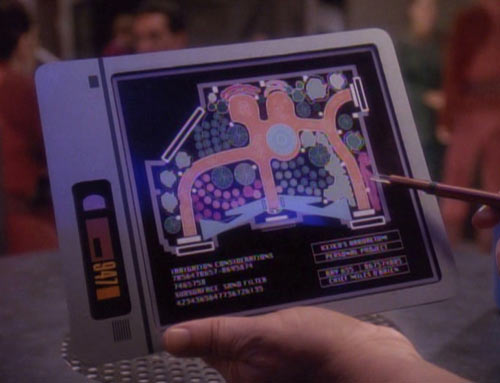
Photo Credit: Memory Alpha
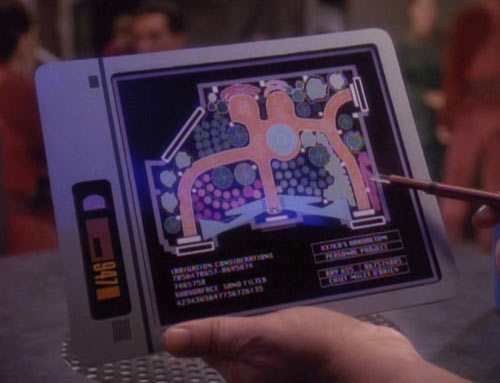
Savvy watchers may have noticed that Star Trek predicted the iPad. In the Next Generation series, personal access data devices, or PADDs, are owned by pretty much every crew member. These devices have essentially all the same functions as modern-day smartphones and tablets. While the PADDs are a minor detail on the show, they show just how inventive and forward-thinking the writers were. One wonders if maybe the fictional PADDs served as inspiration for Apple when designing the iPhone and iPad!
Tractor Beams
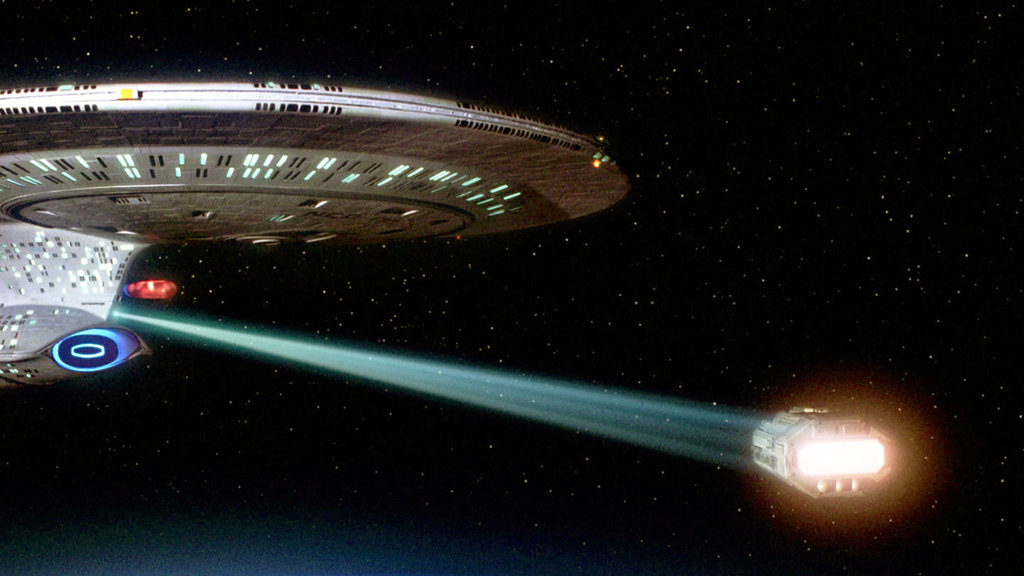
Photo Credit: Big Think
A common plot device in Star Trek is the presence of an enemy ship using their tractor beam to anchor the Enterprise on the spot. The crew then has to stand and fight against a better-equipped foe. Or, an away vessel gets caught in a tough spot, so the Enterprise uses her tractor beam to pull them out. Tractor beams, which are hypothetical attenuated linear graviton beams, are theoretically quite possible! While the technology to use them on the scale seen in Star Trek doesn’t exist, smaller versions do. Lab testing has shown the ability to catch small objects in place and manipulate them with acoustic tractor beams! Such technology has a promising future helping with surgical procedures. Non-invasive beam-based surgery sure sounds like a Star Trek tech future!
Food Replicators
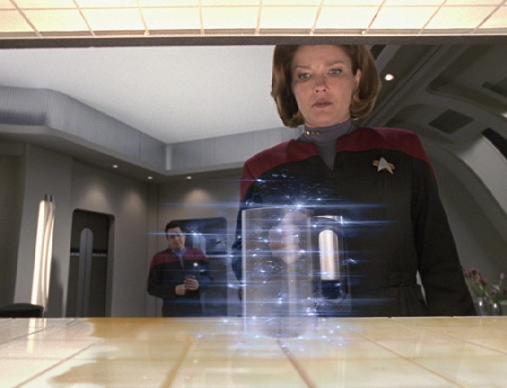
Photo Credit: Memory Alpha
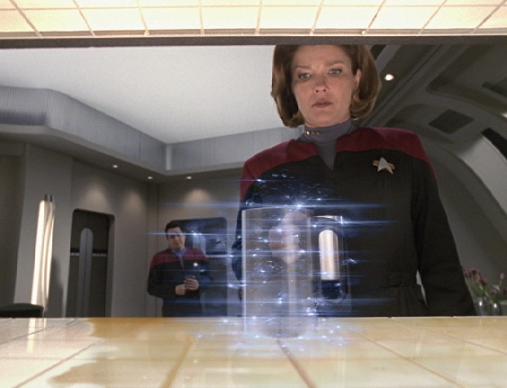
If you’re like me, you hate cooking. Personally, I hate the cleanup that follows cooking more. Even if you love cooking, you’d have to admit that having a replicator would be awesome. Hungry for some sushi? Tell the replicator! Want an ice cream sundae? Computer, sundae! More than just convenience, replicator technology could help alleviate world hunger.
In the real world, the analogous technology is 3D-printable food. There have been great strides in that field recently, with 3D printers capable of creating actual edible food! There’s also been a great deal of progress in the realm of neuroscience regarding flavor, like programmable glasses. A programmable glass can make tap water taste like any cocktail imaginable by messing with your taste buds. How cool is that?
Voice-Activated Computers
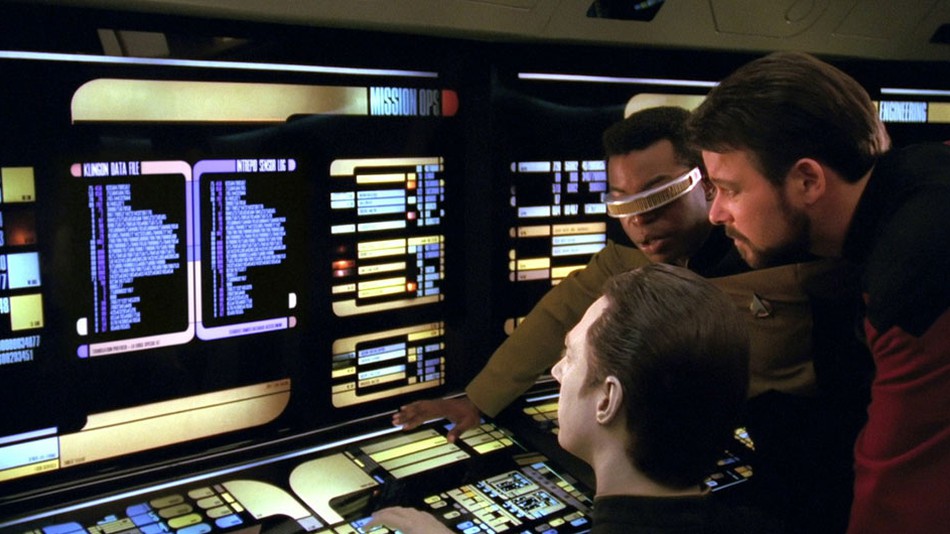
Photo Credit: Mashable
Characters calling up commands by shouting at the computer is a quintessential Star Trek move. Having voice-controlled computer functions sidestepped the issue of having characters explain what they’re doing with a computer. You’ve certainly seen other shows where a character at a keyboard has to explain to another character what it is they’re doing. Sometimes this is fine, other times it feels weird and forced. Star Trek just used high-tech voice commands to communicate effectively and move scenes along.
In our world, of course, voice-activated assistants are commonplace and used every day. In fact, Amazon recently updated Alexa to answer to “Computer,” letting fans feel like Kirk or Picard in their own home. This is one piece of Star Trek tech that has become reality with no caveats! It exists in our world precisely as it does in theirs.
Artificial Intelligence
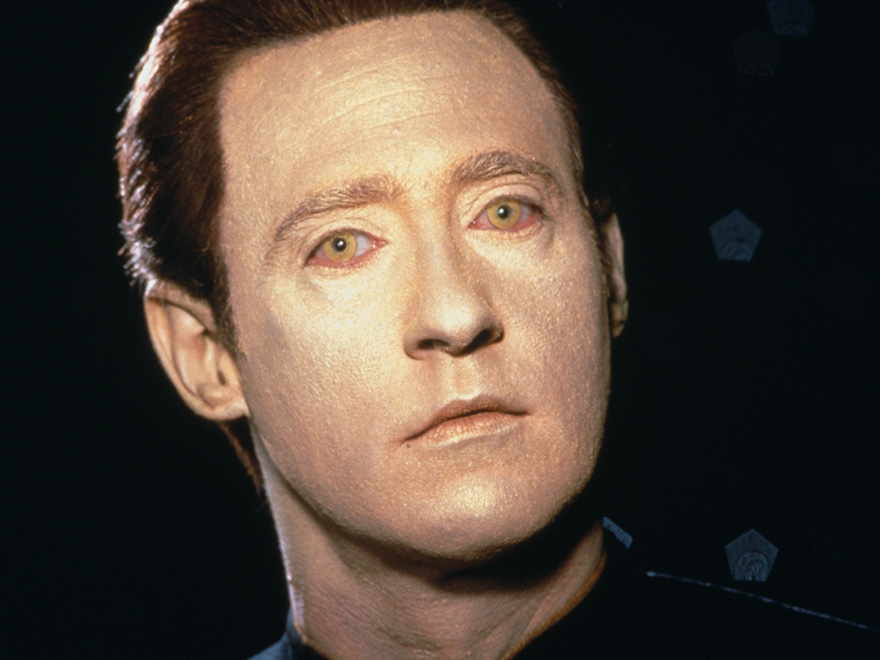
Photo Credit: StarTrek.com
Advanced artificial intelligences like Data and his brother Lore are a central plot point in The Next Generation. Villains like the Borg also embody a darker side of artificial intelligence. In our world, we’re pursuing true artificial intelligence that can grow and learn like Data. While we’re still a few years from self-aware computer programs, learning systems are a reality right now. Systems that learn habits and can be trained are advancing by leaps and bounds every day. The big breakthrough that leads to true intelligence in a computer program is just around the corner. One has to think that fictional artificial life like Data in some ways gave life to the desire to pursue such technology.
Warp Speed

Photo Credit: ScreenPrism
In order to follow individual characters, and not their lineages, as they explore space, we have to have a faster-than-light drive. Warp speed is the technology used in the Star Trek world to propel ships faster than the speed of light. It’s the technology that makes the shows deep-space exploration possible. Pretty much any sci-fi story that deals with interstellar travel has some variation on an FTL drive to propel the ships as well as the plot. However, according to our current understanding of physics, such drives are impossible.
That said, NASA has been working on a theoretical technology called the EmDrive that may be a real-world counterpart to Impulse Drives. The technology is confusing and works by effectively defying physics. The no-fuel, hollow drive has been much criticized but recent findings show that it inexplicably works. If the EmDrive proves to be reliable at starship scale, maybe it’s humanity’s ticket to space exlporation.
The Coolest Star Trek Tech: Teleportation
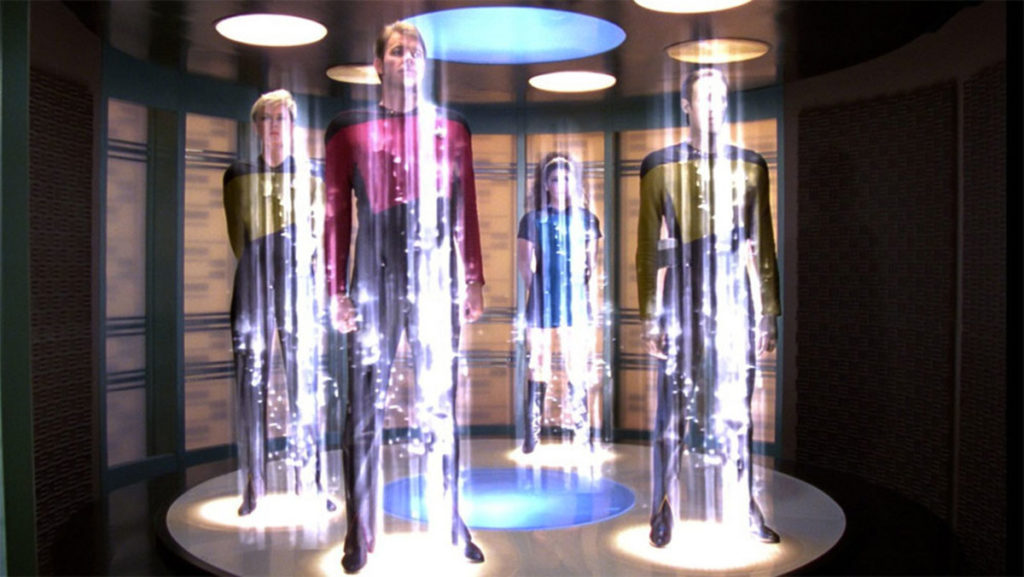
Photo Credit: Maxim
Star Trek’s most well-known fictional technology, point-to-point teleporters are often used to save the characters from sticky situations planetside. Access to teleporters in the real world would be absolutely amazing. For one thing, you could get to work in the blink of an eye; so long, traffic! For another, the cost of shipping would become zero on pretty much every object ever. Amazon Prime’s two-day shipping would become two-second shipping.
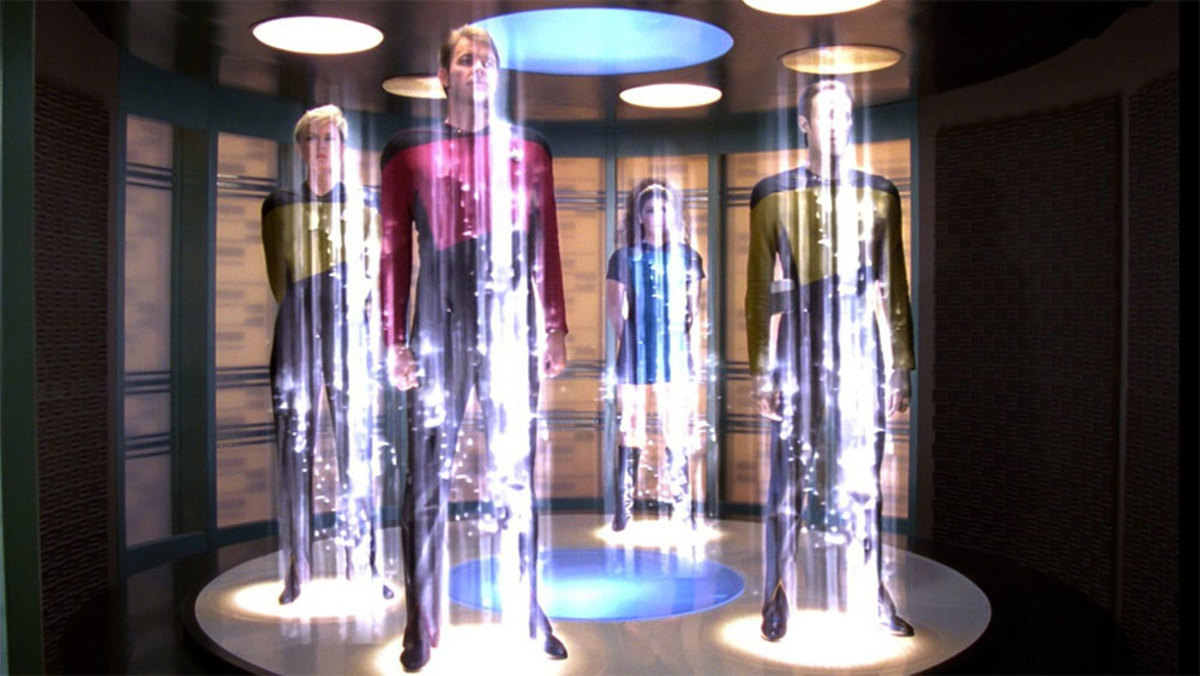
While real-world teleportation is likely a sci-fi dream, it could eventually become a reality. Quantum mechanics could prove a window into understanding ways to teleport things across vast distances. Entanglement and wormholes are two avenues of research that could yield promising results. Until then, we’ll have to be content watching Jim get beamed up!




/https%3A%2F%2Fblueprint-api-production.s3.amazonaws.com%2Fuploads%2Fcard%2Fimage%2F201736%2Fsiritrk.jpg)