It might feel like it wasn’t all that long ago that the iPhone 8 and iPhone X released. However, the rumor mill is in full swing as we approach the release of the 2018 iPhones. While Apple has been quiet with any hard details regarding the new phones, rumors abound. Today, we’re looking at the most likely rumors regarding 2018’s iPhone line up.
iPhone X Plus
A very likely model for this year would be a plus version of the iPhone X. Apple has often prioritized versions of their phones with huge screens for those who prefer a bigger handset. This purported phone would be similar to the current iPhone X in that it would sport an OLED display and be priced similarly. While no specifications have been given by Apple, these rumors seem likely given the company’s history.
iPhone X2? Or iPhone 11?
The new mainline iPhone hasn’t been named yet, but speculation abounds. Last year’s phone is phonetically referred to as the iPhone Ten, but some call it the iPhone “Ecks,” like the letter. However, some speculate that the next phone might be called the X2, or the “Ecks Two.” XS is another possible name, reverting to the S line of iPhones that follow big releases. iPhone 11 seems to be a likely candidate, as well.
Rumors also maintain that the next mainline iPhone could have three rear-facing cameras. Such a setup could include a better zoom function and improved portrait mode. Such a set-up would benefit AR mapping greatly, which has been a big push for Apple lately.
This entry would also sport an OLED screen, the gorgeous, bright display that the current iPhone X possesses.
2018 iPhones Could Include LCD-Display Budget Option
Apple has had no problem selling iPhones since the launch of the X. However, they could always sell more by appealing to lower budgets. To that end, the company may be pursuing a more affordable phone with an iPhone X design but an LCD screen. Such a phone would likely be more affordable and attract a wider audience. The iPhone X’s face-unlocking technology and lack of a home button are both unique hallmarks and would likely appeal to many if more affordable.
However, none of these reports have been substantiated by Apple themselves. While we can expect to hear some news from them soon, the new phones will likely be out in September. That leaves barely a month and a half for news to come from Apple about the new phones. In either event, we’ll know more soon, whether through a press event or a high-profile leak.
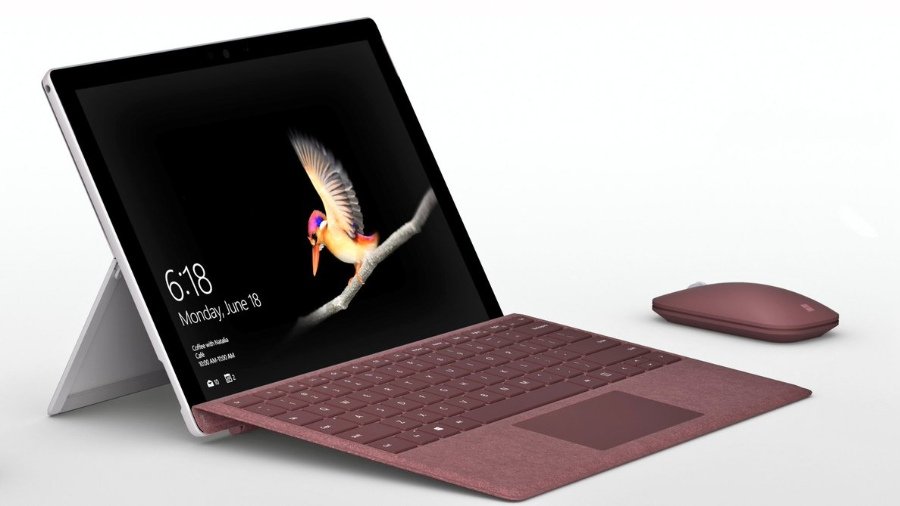
With the Microsoft Surface Go taking on the iPad, many are wondering which tablet wins in a head-to-head. While neither is the most powerful in its respective hardware family, the two are both priced aggressively. The iPad is $329, while the Surface Go is $399, putting them in pretty direct competition. We’ll get into the pros and cons of each and see which the better buy is for your money!
Apple’s Trusty iPad
The iPad hasn’t changed too much since it was first introduced. While it now supports Apple Pencil and sports a retina display, the tablet is largely the same device it was when it launched the tablet craze. The 2018 model is slightly smaller and less expensive than the Surface Go, but they have similar power under the hood. That said, the iPad’s A10 Fusion chip is a bit more powerful than the Pentium Gold processor in the Surface Go. Similarly, the screen on the iPad is ever-so-slightly crisper and clearer than Microsoft’s 2-in-1.
The iPad runs on iOS, the same as you’d find in an iPhone. That means you have access to the suite of apps from the App Store, but nothing resembling a full desktop ecosystem. iPad is compatible with both keyboards and the Apple Pencil, so you can use it as a pseudo-2-in-one.
Microsoft’s New Hotness
The Surface Go is definitely the new hotness on the tablet block. It has a few things on the iPad: firstly, it has more memory out of the gate. It sports 64GB of memory to the iPad’s 32GB, which is sizable. That means you can have more apps, photos, songs, whatever you please. Similarly, the Surface Go has double the RAM of the iPad, but that’s just a step up from 2GB to 4GB. How much difference that makes in day-to-day activities is hard to say, as neither is going to be running full AAA video games any time soon.
The Surface Go is also capable of running Windows 10 in full desktop mode. It ships in 10 S, which is the tablet-style operating system that is an Apple competitor. If you want to upgrade it, you can do so for free, but its irreversible. However, many everyday users would likely prefer the full Windows 10 suite so that they can use more than just apps from Microsoft’s store.
Which Tablet Wins?
As all “this versus that” discussions between Apple and Microsoft, its hard to say which one wins. On the one hand, the iPad has the superior display and is much more stylish. The Surface Go, however, offers the full Windows 10 experience on a tablet, which is a big deal. They allow you to do similar things, but in different-looking ecosystems. It almost comes down to a “feel,” which is to say there is no right answer. Both are fantastic, but neither has a distinct edge. If one appeals to you aesthetically, or from a design perspective, go with it. They’re otherwise evenly matched!
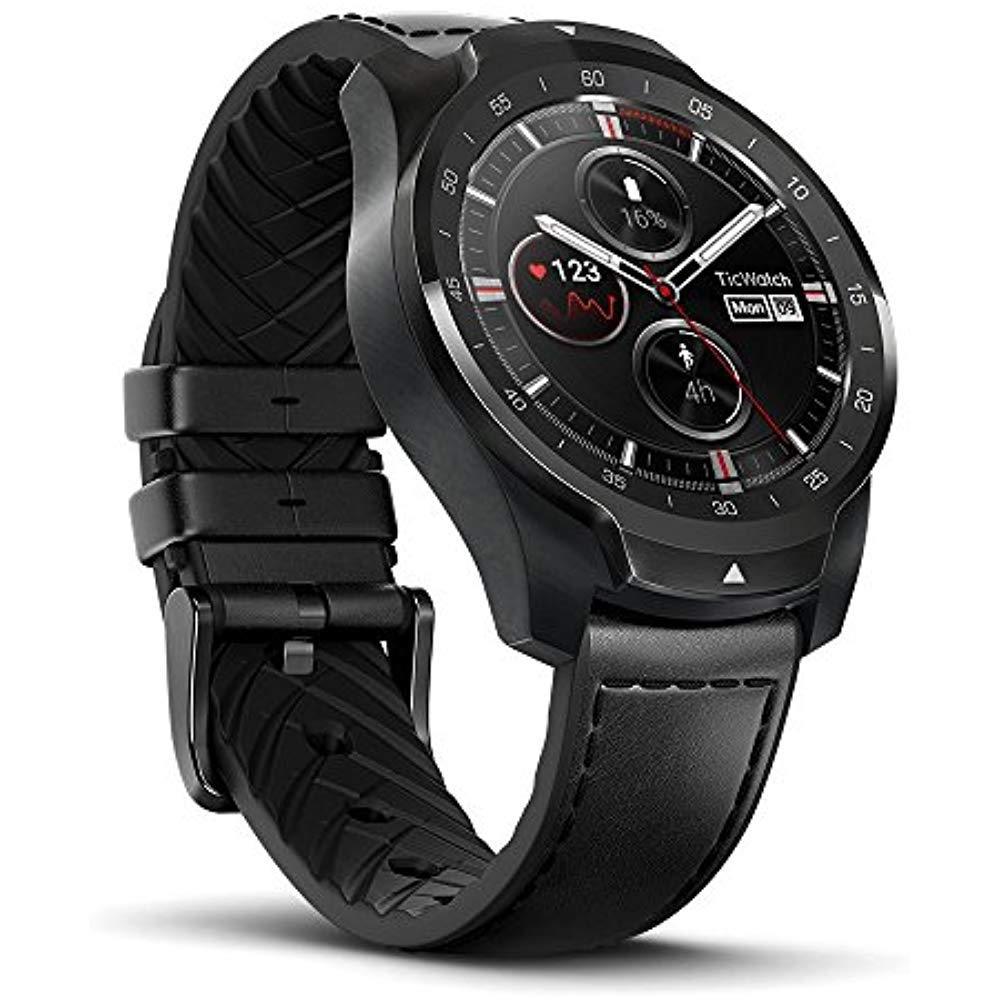
The smartwatch field has been somewhat crowded for the last few years, but there has been little in the way of true innovation. Companies like Samsung, Fitbit and Apple have all iterated on roughly the same designs they’ve been using for years. Mobvoi has brought real innovation, however, with its newest smartwatch, the Ticwatch Pro. That innovation comes via the dual-screen technology that powers its two modes. More on that in a bit, though!
Design
While the watch’s internal mechanisms are quite impressive, the external design is also quite striking. The face is slightly recessed, and the bezels are contoured and rounded off ever-so-slightly towards it. Thankfully, the watch is water-resistant, rated IP68, meaning it’s fine for working out in or showering in. Mobvoi doesn’t recommend swimming with this device, though, even though the IP rating would suggest you probably could. While we won’t counter the recommendation of the manufacturer, it seems unlikely you would have any issues if your watch fell in the pool.
The band, uniquely, is leather on the outside and silicone on the inside, making it the best of both worlds. If you intend to wear it to work or the gym, the band pulls double duty! Not having to swap bands to work out is certainly quite convenient.
Ticwatch Pro: Dual-Screen Innovation
That convenience and everyday usefulness extends to those dual-screens I was talking about earlier. You see, the Ticwatch has an LCD screen on top, and underneath it is an OLED screen. The OLED screen is the one you expect from a smartwatch: bold, vibrant and gorgeous. It’s easily on par with any other high-end watch on the market. The translucent LCD screen on top is key to the watch’s “Essential Mode,” by contrast.
“Essential Mode” is a low-power mode that reduces the display to a few critical pieces of information. The time, your biometrics and other vital information is conveyed on the screen, which can last for weeks on a single charge. While you can engage Essential Mode yourself, it also activates when the watch’s battery gets too low. This is really quite useful, and sets the watch apart.
Pricing
The Ticwatch Pro is the most high-end smartwatch from Mobvoi, but it’s still rather inexpensive. As the company’s other smartwatches have been budget entries, this one is roughly middle-of-the-road. That refers to price, primarily, though, as the watch’s make is quite premium. It costs $250 through Amazon, but you need to have Amazon Prime to get one. That’s sort of a bummer if you’re not big on Amazon, but the company plans to explore other distribution methods soon.
Released on December 15th, 2017, Star Wars Episode VIII: The Last Jedi was a fascinating spin on the decades-old series. While it seems to have caught a great deal of flak from disaffected fans on the internet, the film received rave reviews and raked in millions. It also happened to be one of the finest pieces of sci-fi cinema released in decades. With that in mind, let’s break it down and take you back to the galaxy far, far away. Today, we’re talking about the ten best scenes in The Last Jedi. Warning: major spoilers lie ahead!
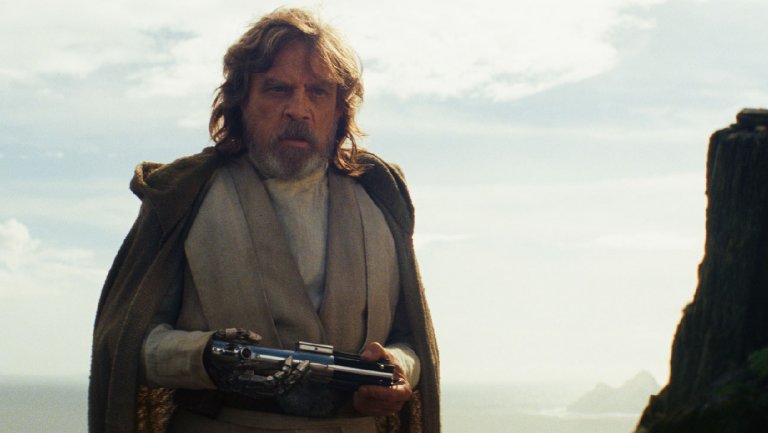
In a turn that shocked fans and ruffled feathers the world offer, TLJ rejoins Rey just as she encounters Luke. The Hero of the Rebellion then callously tosses his old lightsaber away wordlessly. We soon learn that he’s now a disillusioned old man, disgraced by his past failures. Luke’s descent into darkness came after his own inability to save Ben Solo, his nephew, from the dark path. This sets the stage for Luke’s eventual redemption.
While many found this out of character for Luke, others have defended the characterization. After defeating the Empire, Luke and his family watch darkness rise again, heedless of their prior victories. It makes sense that this would weigh heavily on him and make him resign himself to exile.
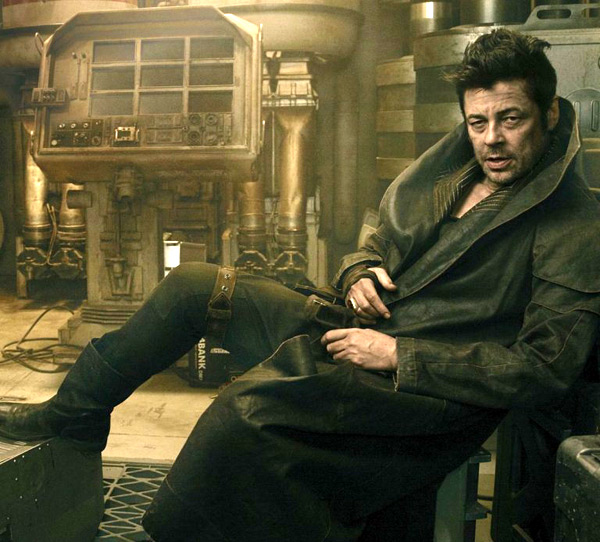
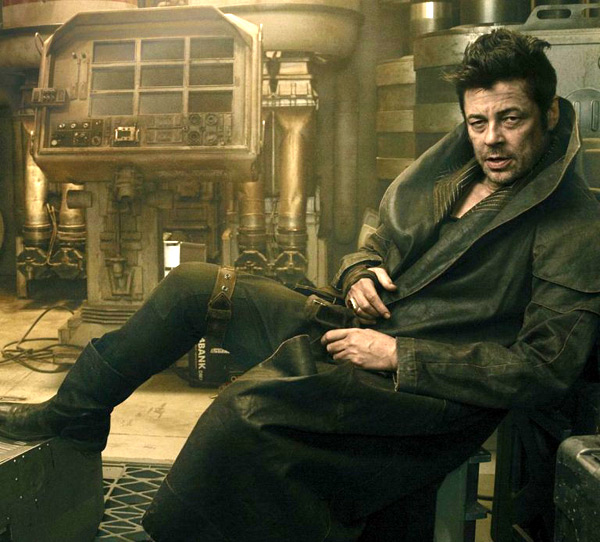
Benicio del Toro plays this newcomer, a drifter and hacker who is quick to turn the rebels over to the First Order. Earlier in the film, he tells Finn that there’s only one way to live: “Live Free, Don’t Join.” This motto certainly filters into every aspect of DJ’s character, including his name. He tells Finn that the ongoing battle between light and dark is ultimately meaningless, as it is endless. All it does is make weapons manufacturers filthy rich. In this way, DJ acts as a foil to Finn, who had flirted with the idea of deserting the Rebels earlier in the film. Finn learns through his disgust with DJ that he isn’t a deserter at all, and the Rebellion is worth fighting for.
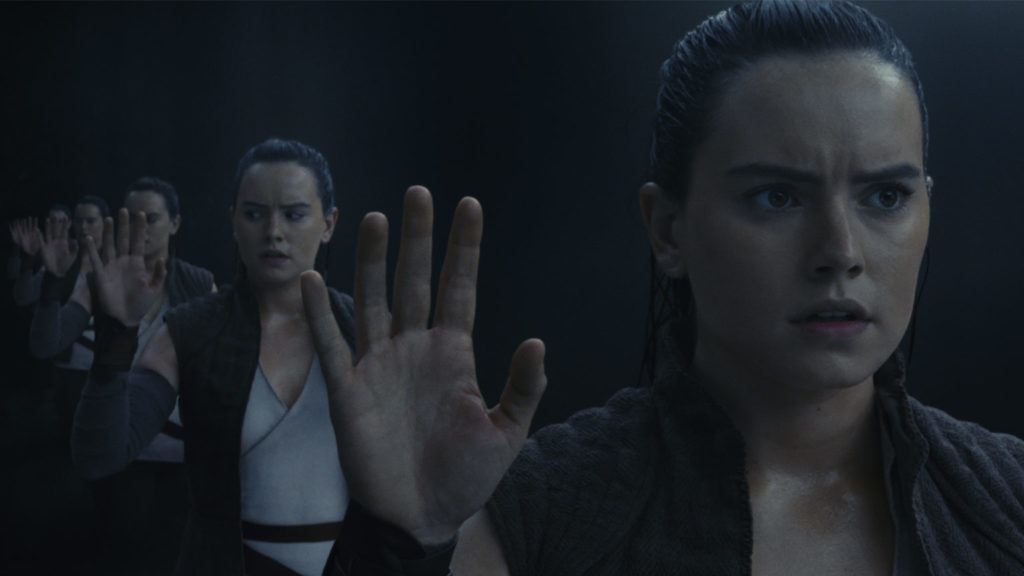
After training in the ways of the Force with Luke, Rey seeks the darkness that lies under the Jedi Temple. As Luke has just told her, there must always be a powerful dark to contrast powerful light, and this is the film’s key theme. What she finds is the Mirror Cave, a place of introspection and death. She seeks to know who her parents are, to help her define who she is. She instead is shown an infinite reflection of herself. No one can define her but herself, much to her initial dismay but eventual acceptance. This is echoed in her later conversations with Kylo Ren.
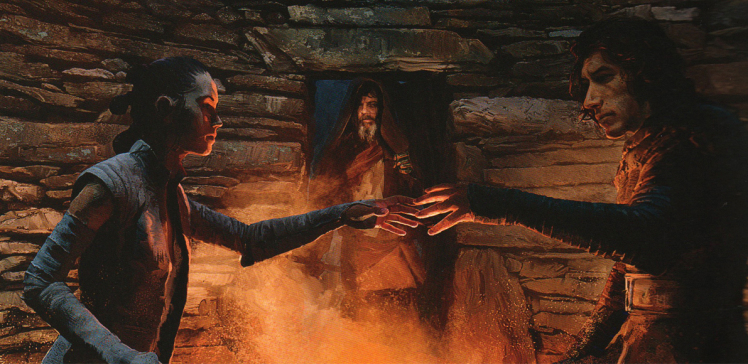
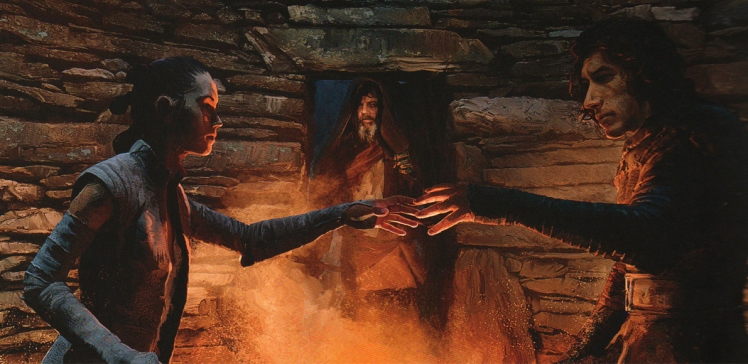
Speaking of Rey’s conversations with Kylo, they provide another excellent series of scenes. Where previous films had the pull of the Dark Side as something nebulous and intangible, here they are felt in full force. The obvious attraction between the two mirrors Rey’s own self-doubt regarding who she is. In an attempt to define herself, she tries to help bring Kylo back into the light. Their tense conversations and attempts to sway one another form the narrative heart of the film.
Yoda’s unexpected return as a Force Ghost in this film helps ground the proceedings in the stories that came before. Yoda’s much-needed wisdom give Luke guidance and help steel his resolve. Most importantly, he tells his former student that it is the fate of masters to be surpassed. Luke must pass the tale of his failure on to his student so that she can grow beyond him. The cyclical nature of the battle between good and evil is symbolically broken by Yoda destroying the Library of the Jedi.
In a climactic scene, Rey has a showdown with the teacher of her nemesis, Snoke. Snoke is every bit the image of the Emperor from previous films. He is robed, surrounded by Praetorian Guard, and unmatched in his mastery of the Force. Truly, he is awe-inspiring and irredeemably evil. It is his own hubris that leads to his downfall, however, as he could never believe that his student could trick him. When Kylo turns Luke’s lightsaber and ignites it, killing Snoke. This fulfills Kylo’s earlier mantra: “Let the past die. Kill it, if you have to.” Suddenly, the film’s Big Bad is little more than a smoking corpse, and Kylo’s true ambition shines.
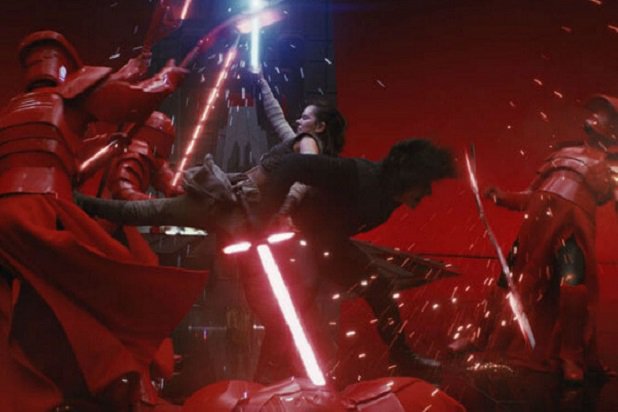
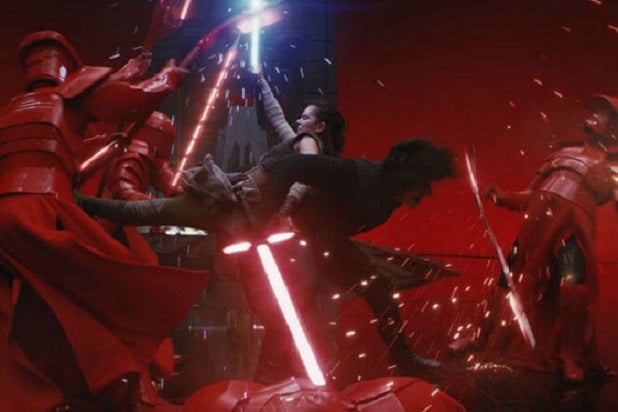
Following this sudden change of heart is an intense lightsaber battle with Snoke’s elite guard. Rey and Kylo put their skills to the test against warriors who were trained to fight lightsaber-wielders specifically. In the end, neither alone would be a match for these elites, but together they prevail. The film’s themes of light and dark converging and becoming something greater are hinted at here. However, following the battle, Rey and Kylo are at an impasse. Rey wishes to preserve the Rebellion, while Kylo wants to rule with Rey. Neither is willing to back down, and the two destroy Luke’s lightsaber in a force tug-of-war.
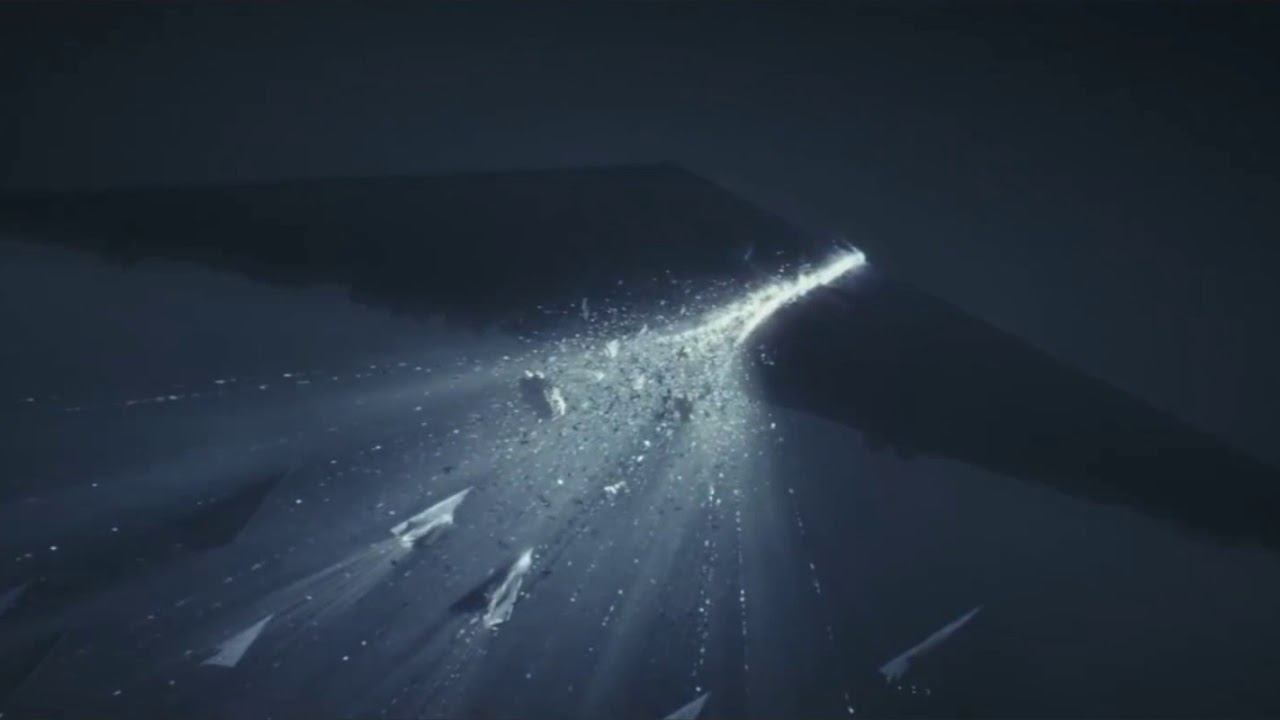
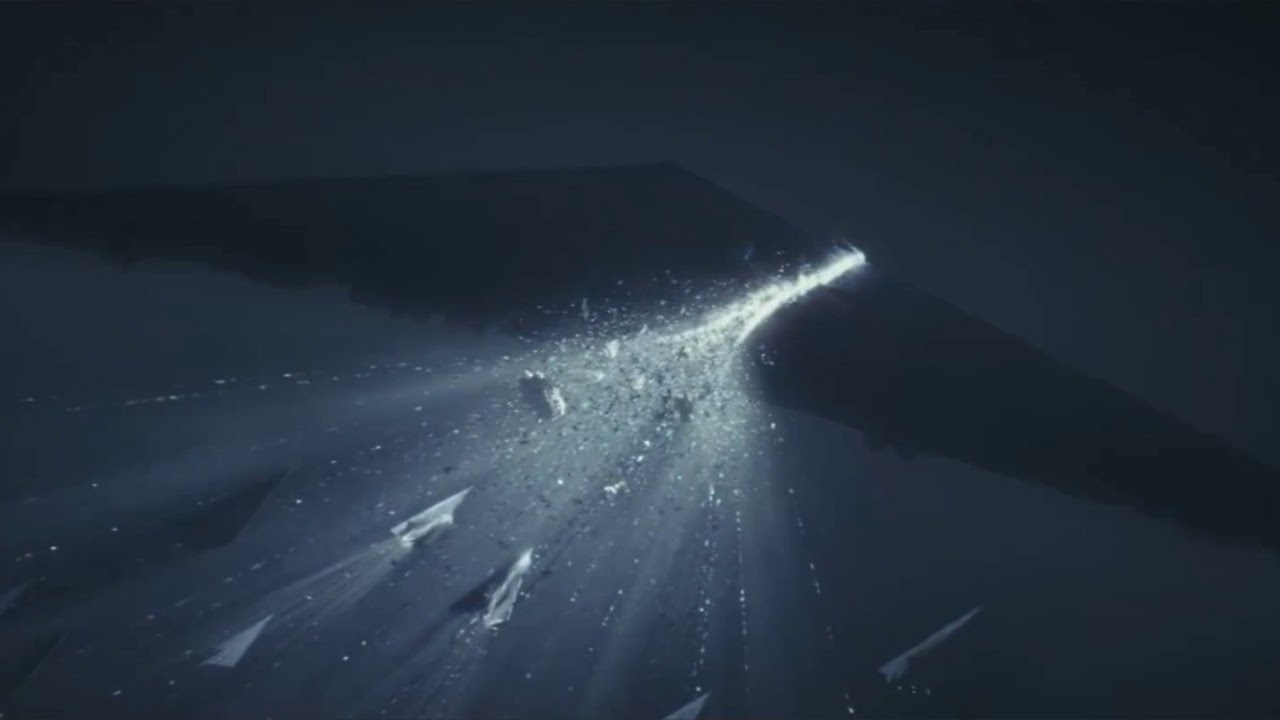
After spending the movie frustrating Poe and stymying the protagonists, Holdo reveals her true colors. Rather than being a spineless traitor, she’s a noble and self-sacrificing rebel. She turns her ship to face Snoke’s monstrously-big cruiser and engages the hyperdrive. She impacts the First Order ship at the speed of light, and the resulting scene is breath-taking. The soundless freeze-frame is anime-like in execution, really underscoring the power of what has happened. This move simultaneously sets Holdo up as a martyr and allows time for the heroes to escape their captors.
The solidifying moment in Finn’s acceptance of who he is as a Rebel comes in the fight against Phasma. The commanding officer who kept him down his whole life, Phasma represents everything Finn hates about the First Order. Their final showdown is cathartic, showing freedom and goodness triumph over oppression and evil. Finn’s self-defining line that he isn’t just scum, but “Rebel Scum,” is met with cheers.
The Best Scene in the Last Jedi: The Bloodless Showdown
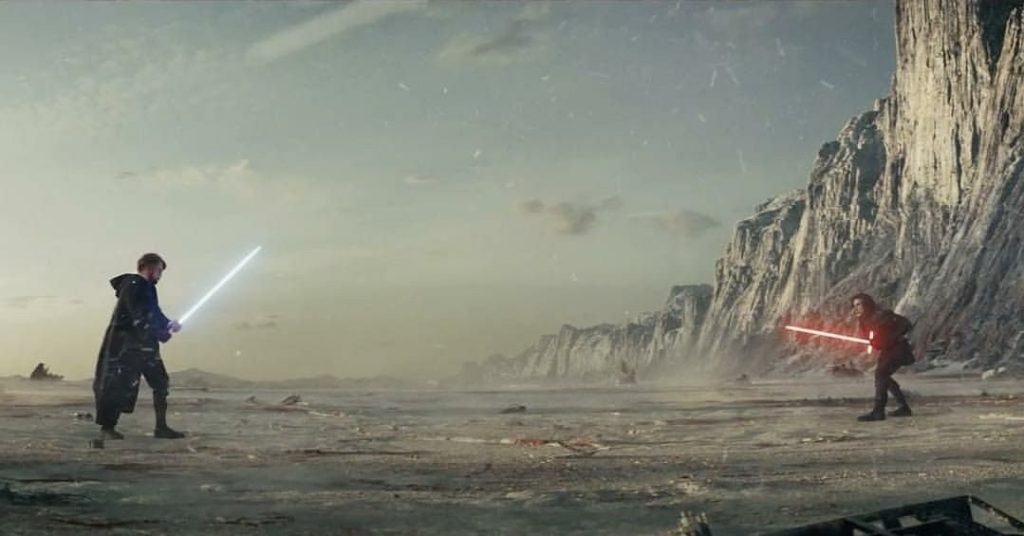
The final climactic scene sees Luke reignite the legend of the Jedi by singlehandedly buying the Rebellion time to escape. While he isn’t physically present during this fight, Kylo doesn’t know that. It’s Luke’s appearance and words that goad Kylo into overplaying his hand, resulting in the Rebellion’s escape. The scene is a redemption of all the doubts Luke showed earlier in the film. While he once felt the Jedi were a blight on the galaxy, he now fights to preserve them. It is the ultimate battle of rage versus patience, of aggression versus non-aggression. In the end, it is the Jedi who emerge victorious. Fittingly, Luke’s final moments see him remembering the dual suns of his childhood home, remembering the epic journey that led him here. He then passes into the Force in peace. His ultimate sacrifice allows Rey and his sister the time they need to escape and regroup, setting the stage for their ultimate victory in the next film.
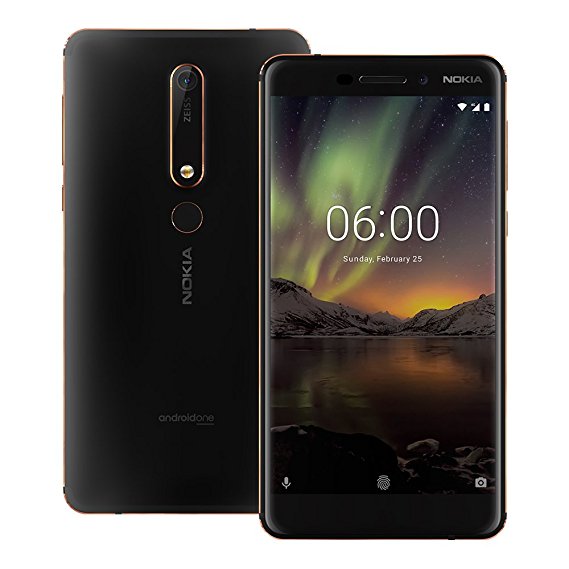
While Apple’s iOS phone operating system is only available on their proprietary phones, Android is an open-source platform. As such, the Android OS is rife with competition. Some of the fiercest competition this year is coming for the Galaxy line of smartphones from Samsung. On the one hand, Google’s own Pixel smartphones are gunning for the throne. Even Motorola, once a maker of budget-friendly phones, is aiming to be the greatest high-end Android these days. One phone, however, is aiming to bring great power at a great value. And that phone is the Nokia 6.1, coming in at an impressive $269.
The Specs
The Nokia 6.1 is a technically impressive smartphone considering its cost. It’s powered by a Snapdragon 630 and sports a 5.5-inch 1080p display. It’s working with 3GB of RAM, and it rocks 32GB of internal storage. The rear camera has 16 megapixels, and the phone even sports a 3.5mm headphone jack. Like most modern smartphones, it charges with a USB-C port, which is nice.
Design
All of that is housed in a solid-feeling metal casing, giving the phone heft and making it feel durable. The flash is somewhat far from the rear camera, and the phone has a good bit of character. The design feels premium, if somewhat minimal. One would expect a phone in this price range to be bland and faceless, but the 6.1 is no such thing. It simply feels like a modernization of Nokia’s older design principals. That said, the design isn’t perfect: the rear fingerprint scanner is somewhat small. However, that’s a small gripe, as the phone otherwise carries that legendary Nokia durability.
Nokia 6.1 Bottom Line
If you’re looking for a good, clean Android phone with a lot of design purity, this is it. No frills, no gimmicks and no heavily-rebranded Android OS cloud this phone. The experience is minimal, the presentation is tasteful, and the price is right. If this phone is any indication of the types of things we’ll see from the new Nokia, then we can’t wait to see what they make next.
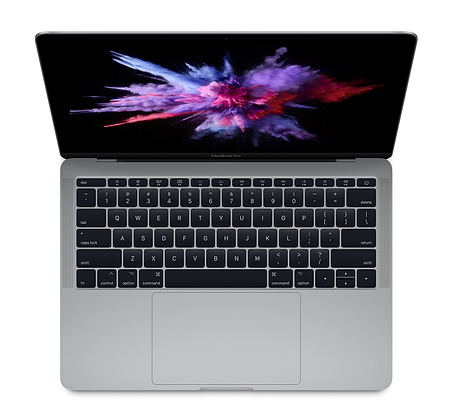
The MacBook Pro line has been in serious need of some love. They’ve been struggling to make a name for themselves in the increasingly-crowded mobile device space. Between the Surface line from Microsoft, smartphone competition and increasingly affordable Windows laptops, MacBook has been in trouble. Thankfully, the 2018 MacBook Pro is the update the line sorely needed.
2018 MacBook Pro: What’s New?
There are a few new things going on with this year’s MacBook. The first, and most notable, of course, is the updated keyboard. The previous butterfly keyboard, with its “chiclet” style, had few fans. It got stuck often, was noisy and generally hard to type on. This redesigned keyboard, by contrast, is quiet, responsive and much more durable. You’ll likely find it a market improvement over the previous keyboard.
The computer has received an under-the-hood overhaul, too. The 13-inch laptop comes with either an i5 or i7 processor, both of which are quad-core. The 15-inch option has either an i7 or i9 processor running the show, both with six cores. The 13-inch version has 2 TB of internal storage, while the 15-inch has 4 TB. That’s all pretty encouraging, to be sure!
The 15-inch sports impressive graphics thanks to the AMD Radeon Pro GPU, while the 13-inch has integrated Iris Plus 655 graphics. While the 13-inch will put out a decent image, those with serious design tasks on their plates should opt for the 15-inch.
A few other minor touches: the new laptops have the iPhone X’s True Tone technology. That means the screens will adapt to ambient light and match the lighting around you. The Touchbar (now standard on both 13- and 15-inch models) has True Tone as well. Neat!
Oh, and the laptops now support “Hey, Siri!” Alright, that’s pretty cool, if a bit frivolous.
Pricing and Release
The pricing on these laptops remains unchanged from last year, which is stellar. The 13-inch model is still $1,300 and the 15-inch runs $2,400. Now, those numbers aren’t low, but the MacBook Pro isn’t a budget machine. Both models are out now.
While the paint has barely dried on Windows 10, rumor has it that Microsoft has something up its sleeve. Synaptics, a company involved with AMD, has released a statement regarding their work on state-of-the-art biometric security measures. According to Synaptics’ press release, the system will be for use in “enterprise/commercial and consumer notebook PCs based on next-generation AMD Ryzen Mobile platform and Microsoft’s next-generation operating system.” Well, that’s pretty on-the-nose, huh?
New Operating System
Synaptics’ press release even mentions Windows Hello by name, calling the new OS a “forthcoming biometric security OS including Windows Hello”. This lends some credence to the idea that the upcoming system might be for use in handheld or tablet devices. Since personal home computers aren’t generally as unsecure as handheld devices, it would make sense if this new biometric-focused OS was for products like the Surface tablet.
This is all guesswork, of course, as there are no hard details from Microsoft. However, there are a few conclusions that can be rather definitively drawn. For one, Windows 10 hasn’t been out for very long, so it seems unlikely this new OS would be replacing it. Further, Microsoft has been fighting tooth and nail to break into the mobile market. Windows phones, the Surface line of tablets and the newest initiative, “Always-Connected PCs” are all evidence of that. It seems likely that this new OS would be aimed primarily at this market.
While Apple has perfected face-scanning biometric unlocking with the iPhone X, other companies are a bit behind schedule on that technology. Fingerprint scanners remain common, and for most cases, the most secure. However, some new smartphones have tried to experiment with face-unlocking, to hilariously mixed results. Notably, some Android phones have been unlocked by print-outs of their owners faces. Not exactly model security functions.
In fact, Microsoft’s own face-unlocking software, Windows Hello, was fooled by this exact same technique recently. As such, it makes sense that they’re working with Synaptics and AMD to shore up their security efforts.
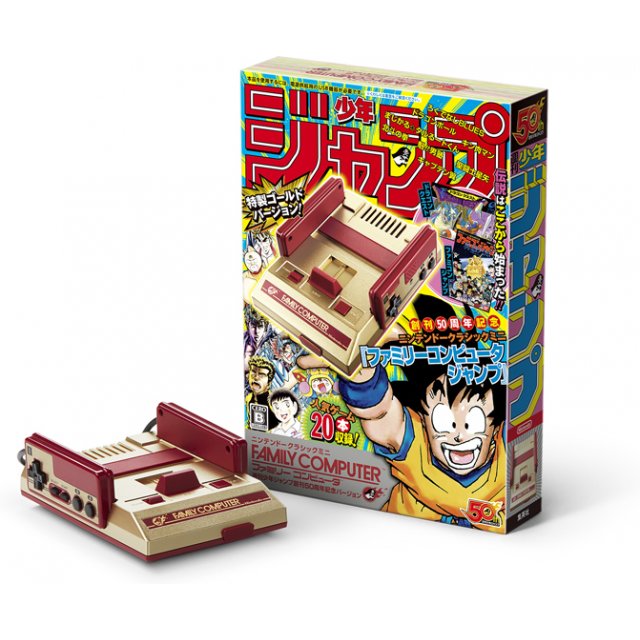
Nintendo accidentally struck gold with their miniature Classic Edition consoles in 2016. The first, the NES Classic Mini, sold out everywhere so fast that it was being sold at insane markups online. The follow-up console, the SNES Classic Mini, had slightly less distribution issues, but still sold out within a week. Just a few weeks ago, the company restocked both mini consoles, but that wave has also been sold out in most places. All of that is nothing compared to the fervor around one Japanese version of the system, though. The Famicon Classic Mini Shonen Jump Edition is exclusive to Japan, and it sold out in hours.
What’s in the Box?
The Shonen Jump edition of the Famicom Classic Mini is largely a different beast than either the NES or Famicom mini consoles While the original versions shipped with hits like Super Mario Bros, Legend of Zelda and Metroid, this one has some oddball choices. Namely, the games in this collection are almost all based on Shonen Jump properties. The manga magazine is mega-popular in Japan, and in the 80’s there were a number of successful licensed tie-ins.
As such, the games packed into this mini console aren’t the draw for most American collectors. For the most part, they’re all pretty niche. Interestingly, Dragon Quest does make an appearance on this system, as Shonen Jump mainstay Akira Toriyama did the art for that game. However, the system is otherwise loaded with licensed games that are all entirely in Japanese.
A Famicom Classic Mini with a Shonen Spin
The Shonen touches filter down to the design of the console itself. It has red and gold trim, making it very flashy and eye-catching. This may be the most alluring aspect to American collectors, as the box looks awesome on a shelf. Hilariously, the controllers are incredibly small on this re-release, as they slot into the tiny Famicom just like the original. This extends to the cords, unfortunately, as they’re comically barely more than a foot long.
However, most Americans wouldn’t be playing this one too much if they snagged one: all the games are in Japanese. Unless you can read Japanese and have a particular love for 80’s-era Shonen licensed games, you’ll likely find little to do with the library. However, if you do read Japanese, another crack at the first Dragon Quest game would always be welcome!
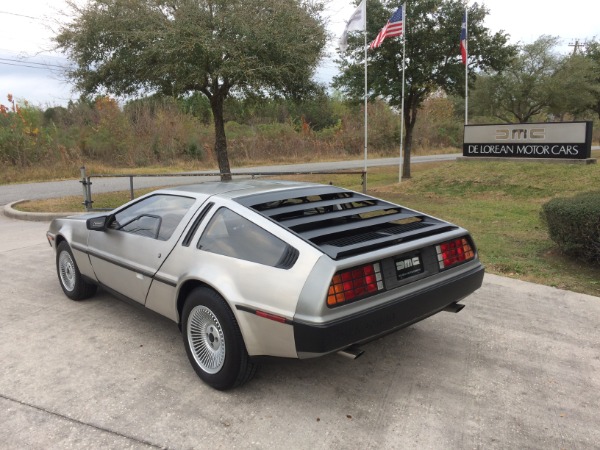
Full disclosure: I love everything about Back to the Future. It’s heartwarming, hilarious and just altogether wonderful. That doesn’t excuse the DeLorean from its many faults, though. The DeLorean is stylish, to be sure. But it has some glaring design flaws that make it a mess to use as a normal vehicle. On the small-scale, it has a windshield-mounted antenna, so good luck picking up radio signals. More glaring, however, was the car’s weight-to-engine ratio. The DeLorean was heavy, partly as a result of its spotty build thanks to the inexperienced workers making it. Further, to cut costs, the engine was underpowered. This resulted in a very sluggish, unresponsive drive and a generally disappointing experience. Marty hitting 88 MPH in a DeLorean is honestly more unlikely than Doc Brown making a time machine.
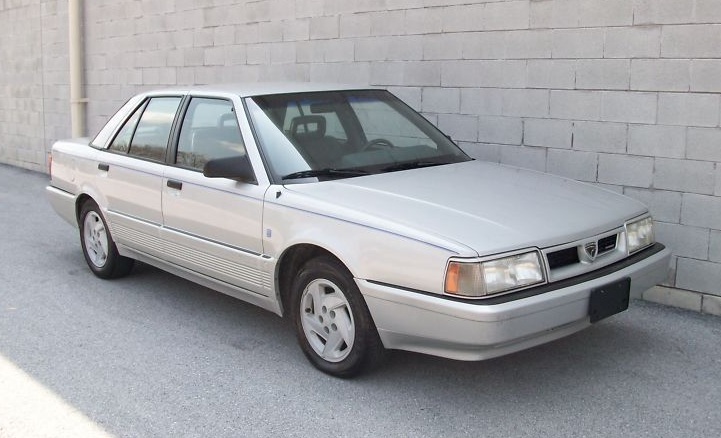
After being bought by Chrysler in the late 80’s, the Eagle brand suffered a pretty serious identity crisis. Chrysler had to swap out the original, somewhat fuel-efficient AMC engine for contractual reasons. In its place, the company put a PRV 3.0 Liter V6. This engine is incredibly thirsty, guzzling gas in a way that makes no sense for a car this small. Further, the car suffers from sloppy braking, has a dash-mounted gear-shifter and is generally just bland and boring. While some cars on this list have a few fans, the Eagle Premier is not one of them.
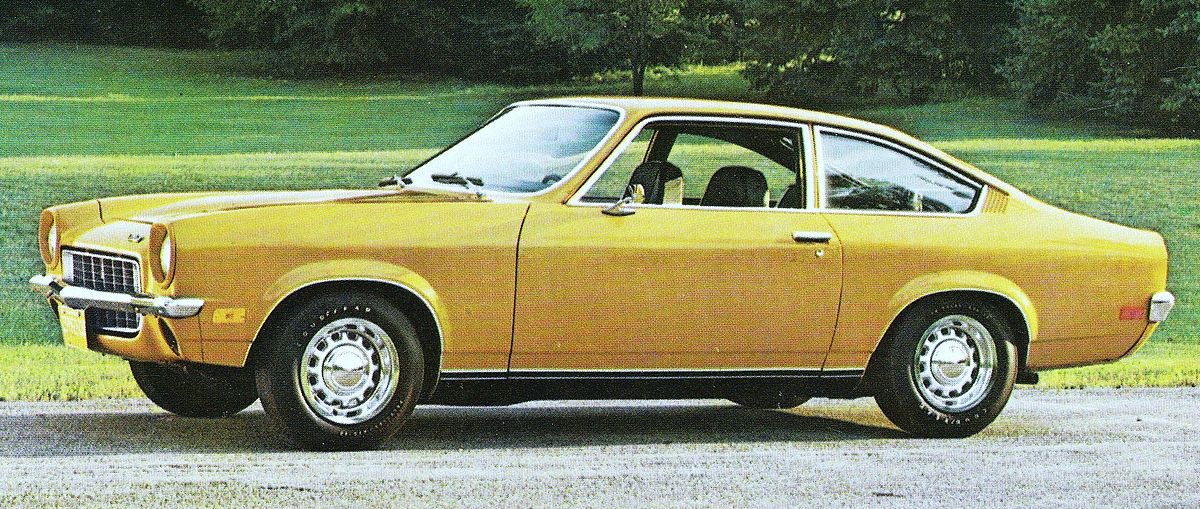
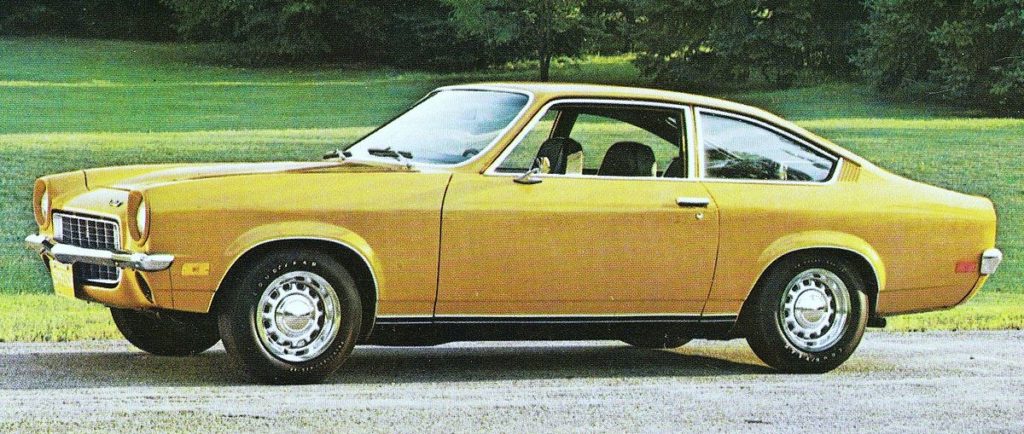
Astonishingly produced from 1971 to 1977, the Chevy Vega was created in the midst of several worker’s strikes. And boy, does it show. It was rushed to market and underdeveloped, and several flaws were still present in the vehicle when it went to mass-market. These flaws would go on to be found by customers: the aluminum block engine, for instance, would overheat and warp. This would cause it to rattle, lose oil and generally perform unreliably. And really, your customers shouldn’t be finding such glaring flaws in your design after the car has been mass-produced.
The golden years of dude-bro jocks riding in oversized gas-guzzlers came between 2003-2009. You see, those were the years that the Hummer H2 was in production. The Hummer had militaristic design angle and got nine miles to the gallon. Yes, nine. If you think a car could be more out of touch with its era, you’re wrong. The H2 hit the scene right as America was going to war in the Middle East over oil. And it looked like a tank. A tank that guzzled gas. Perhaps you’re following this to its logical conclusion: the vehicle was an insult to Americans and the world as a whole by what it represented. Not to mention, as a car, it was nothing special. It had heated seats and a nice stereo, sure, but it cost $53,000. All that to have a hard time parking anywhere and spend hundreds on gas every month? No thanks.
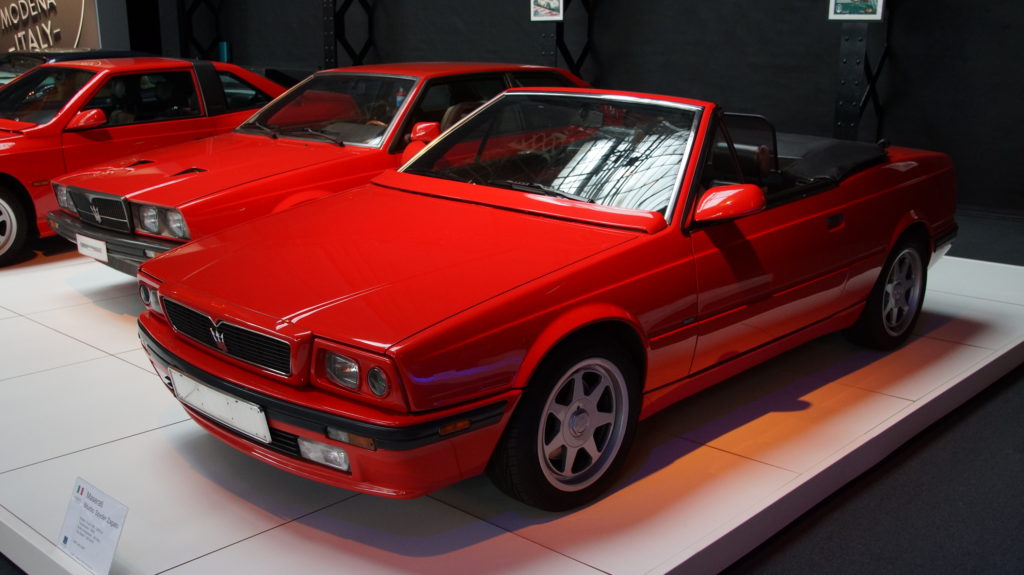
While the Biturbo, released in 1981, may bear the Maserati name, it doesn’t have that brand’s signature build quality. Maserati was a little low on funds in this era, and as such, they outsourced the design and assembly of the Biturbo’s body. And it shows, too. This unreliable mess of a car can go pretty fast, but it rattles and shakes and doesn’t slow down well after getting up to speed. The Biturbo has the dubious distinction of being the worst car from a fantastic carmaker. Surprisingly, it stayed in production until 1986.
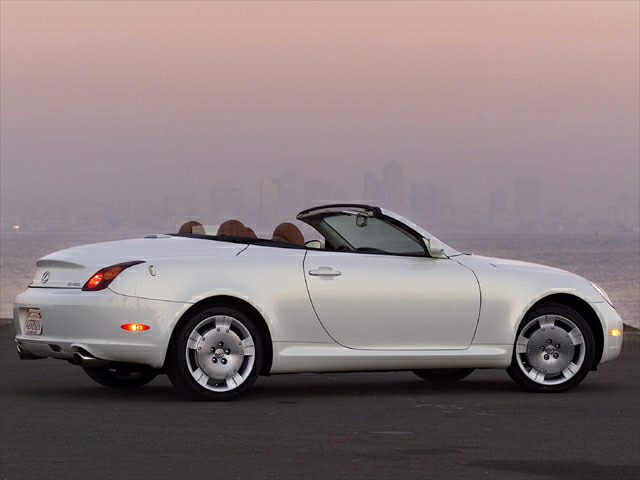
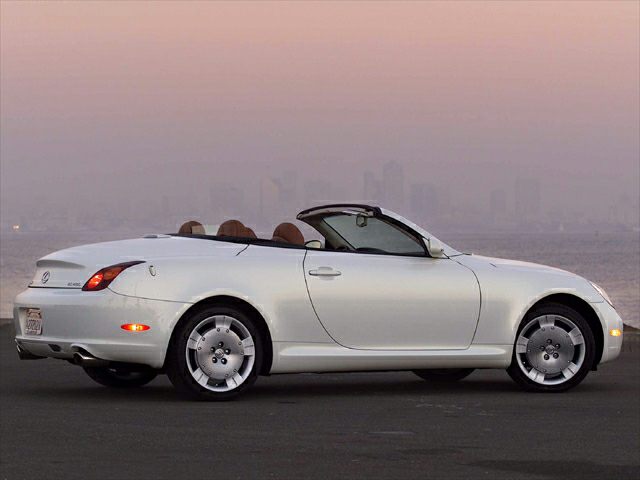
Another terrible car from a great carmaker, the Lexus SC 430 is a confusing vehicle. The SC 430 was released in 2001, and somehow remained in production until 2004. Priced as a luxury car, the vehicle packed a wimpy v8 engine and had a cramped interior. It didn’t have much in the way of style, either: it was designed to look like a yacht. Seriously, Lexus somehow missed all the “boat car” jokes and literally designed a car to look like a boat. And, get this: Lexus intended for the SC 430 to actually contend with BMW’s luxury offerings. No, seriously!
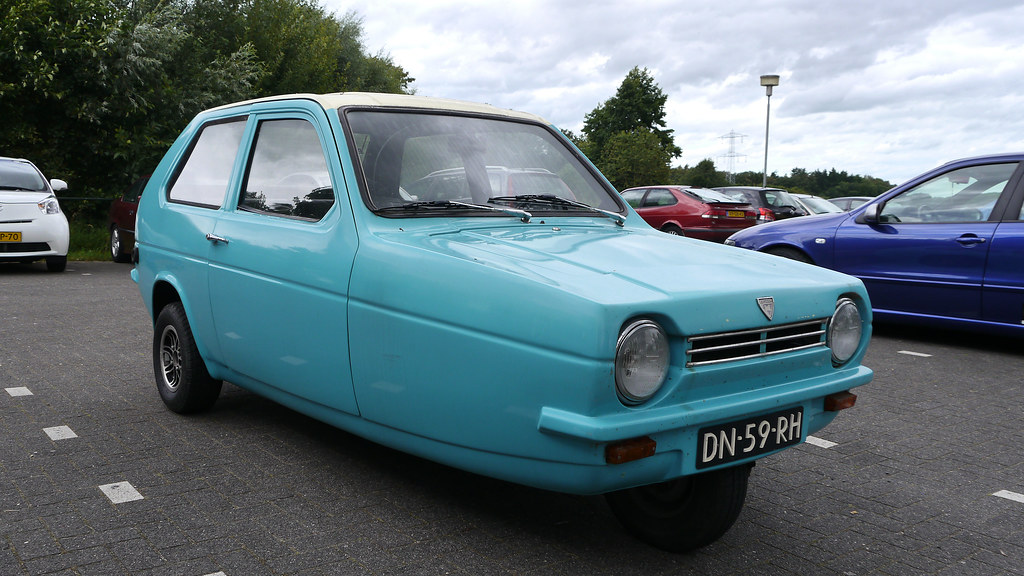
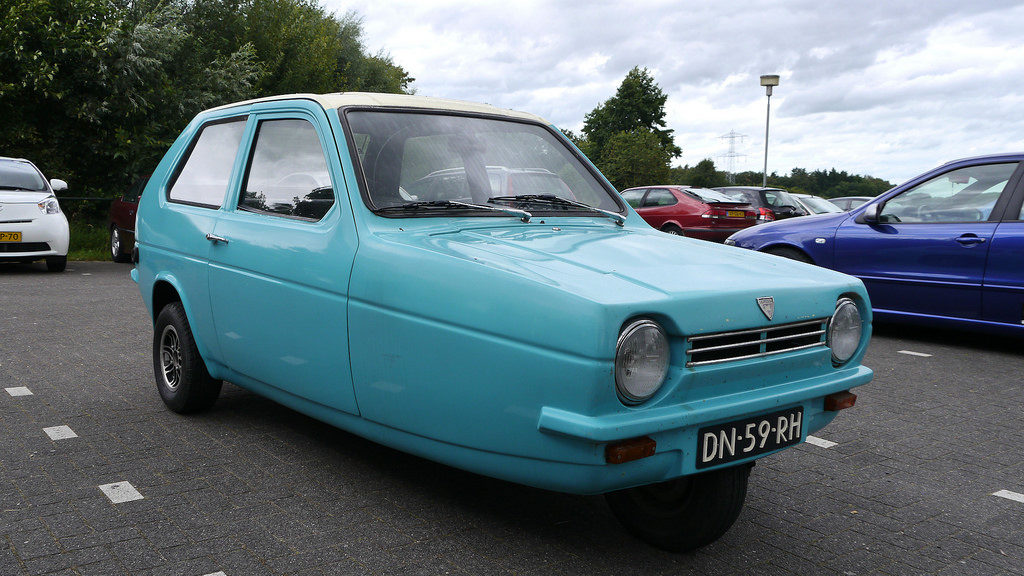
Famously derided on Top Gear for its three-wheeled design, the Reliant Robin Mk. 1 is a seriously ugly vehicle. The vehicle was rather popular in Northern England, as it was cheap, but it had a pretty major flaw. You see, when you make a three-wheeled vehicle, and that vehicle is top heavy, it flips over. A lot. And that’s really quite dangerous! While the famous Top Gear segment showing how the Robin is incredibly prone to topple over was staged, it still demonstrates how dangerous it is to have only one front wheel.
In 1961, the Amphicar made the scene. Yes, someone looked at their car and said, “let’s make it a boat, too.” Jokes aside, the car was made in West Germany and was intended to echo WWII era designs for amphibious vehicles. The Amphicar, however, sported an absolutely abysmal performance both on land and on water. The tiny little engine only carried 38.3 horsepower. If you’re going to make a car that’s also a boat, make sure it’s also a car, first. Worse still, though, the car wasn’t waterproof. It used a pump to control leaks. If you’re going to make a boat that’s also a car, make sure it’s also a boat first, too, apparently.
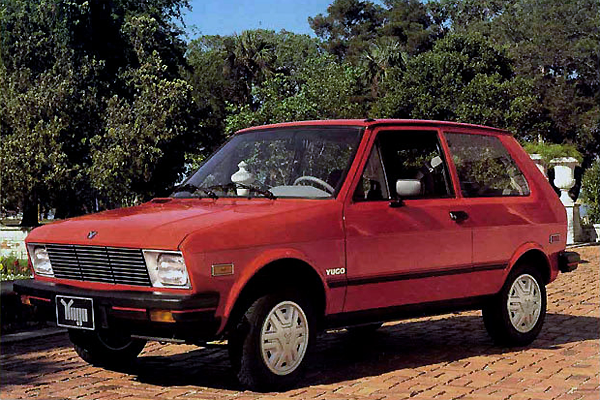
The Yugo has the distinction of being in production the longest of any of the vehicles on this list. Originally released in 1978, this awful little vehicle stayed around until 2008. The Yugo’s draw was just how cheap it was, coming in at $4,000. However, you get what you pay for, as the terrible car had a whopping 45 horsepower and topped out at 80 MPH. After 1991, the build quality of the Yugo got so poor that the vehicle had a reputation for its self-destructing habits. The timing belt was prone to snapping, and when that happened, the engine would essentially blow up. Maybe shell out a little more than $4,000 for a new car next time, guys!
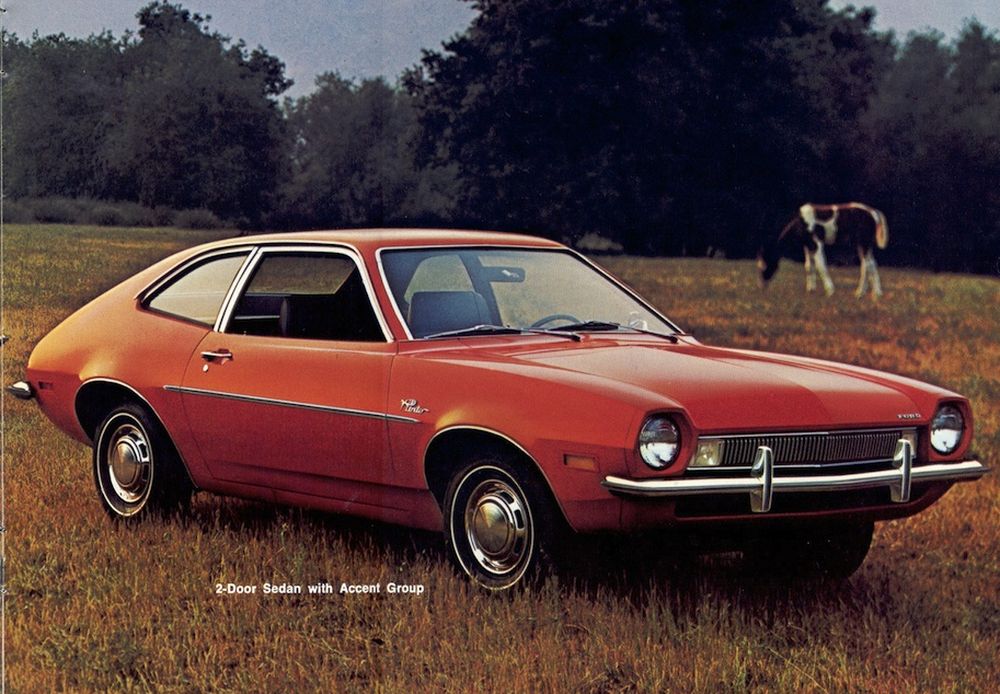
The Ford Pinto’s sins are numerous, and they all add up to make it the worst car ever. You likely knew this one was going to be on the list when you saw the name. That said, for those of you unfamiliar with the vehicle, we’ve give you the run down. Produced from 1971-1980, the Pinto is an unforgivably ugly vehicle. It has very little power under the hood, the suspension is terrible, and it has abysmal brakes. The worst part, though, was that the gas tank was located in the back of the car. This gave the Pinto a bad habit of literally exploding into flames when rear-ended. To add insult to injury, a Ford memo stating that they’d rather pay out settlements to victims than safety-test their vehicle led to a PR disaster. To this day, the Pinto’s infamy is widely-known.
Everyone loves to throw down with a great video game! What’s even better is getting to game on the go. What’s the best is saving money on a budget gaming laptop! Today we’re looking at the best gaming laptops that won’t break the bank.
Lenovo Legion Y530
Lenovo’s laptops are generally well-built, sturdy computers that don’t disappoint. Starting at $750 for a configuration that sports GTX 1050 graphics, or $840 for 1050Ti, it’s a solid price. If you just need a simple, sturdy laptop to play games on, this one is a solid pick. It’s got a minimalist design, a back-lit keyboard and a good display. This is an all-around solid pick and you can’t go wrong with Lenovo.
Asus TUF Gaming FX504GD
Asus is renowned for their balance of performance and price, and this one doesn’t disappoint. This laptop sports a comfortable, durable keyboard that’s great for gaming and will last for millions of keystrokes. In our opinion, the best configuration of this one is the $899 one with a 1050Ti GPU, a six cored i7 processor and a great display. It also boasts an edgy, industrial design that screams “awesome gaming laptop.”
Acer Nitro 5
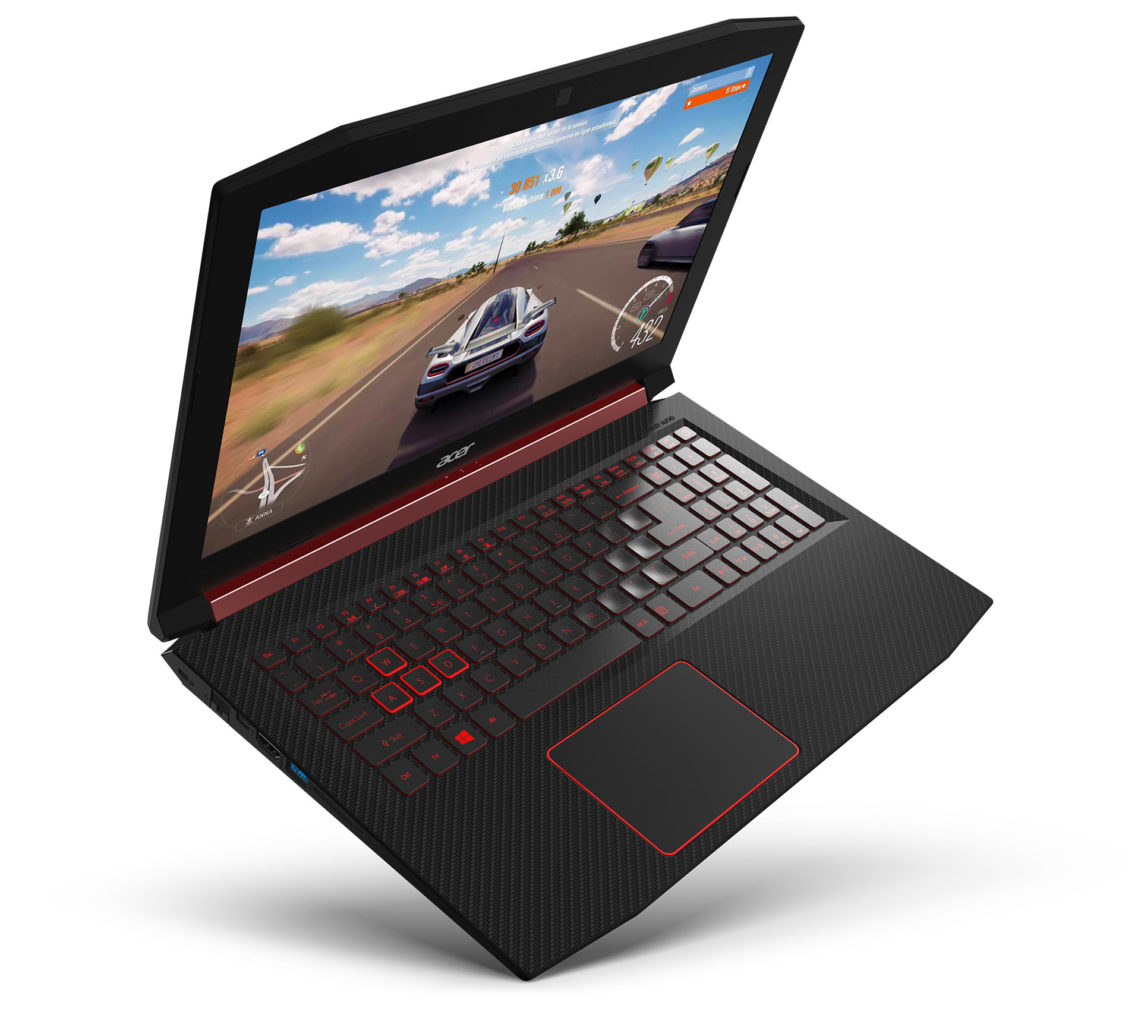
The Acer Nitro 5 is a great budget gaming laptop for those who want a ton of performance on a small budget. For $650, you get GTX 1050 graphics, which is a really great deal, dollar-for-dollar. For a sight more, at $730, you get 1050Ti, which is also a great deal and can even put out images on par with most gaming desktop rigs. If you want a really solid balance of power and cost, this is it. The Nitro 5 is a bit lacking in some other areas, and it could be considered a slightly cumbersome machine. That said, it’s still an amazing value for the power under the hood.
Best Overall Budget Gaming Laptop: Dell Inspiron 15 7000/G5 15
If you’re really looking to make your money stretch, the durable and reliably Dell Inspiron 15 is right for you. There are a number of various models available in this range, and configuration for any budget and gaming taste exist. If you’re trying to keep the budget low, the G3 15 Gaming configuration comes in under $700 and has GTX 1050 graphics under the hood. Alternatively, if you want a more high-end experience, the GTX 1060 Max Q enabled rig runs for $999. All that power, and it still comes in under $1000! Not bad, huh?












/https%3A%2F%2Fblueprint-api-production.s3.amazonaws.com%2Fuploads%2Fcard%2Fimage%2F641210%2Fa289c86a-daf3-4bf7-abca-1e2a6f117b1f.jpg)