Category: Entertainment

  • Disney Now Owns all of Hulu: What This Means

    Disney Now Owns all of Hulu: What This Means

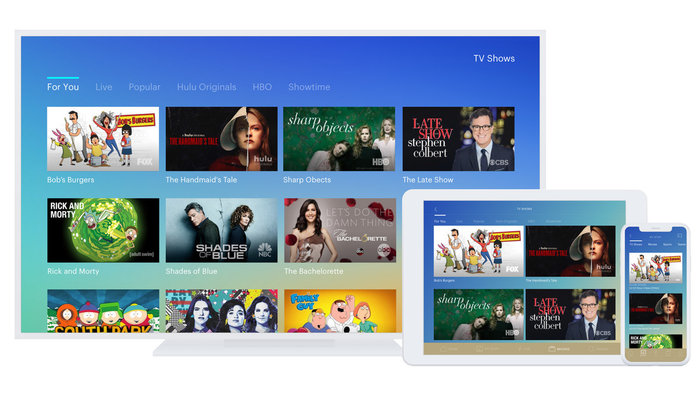
    On Tuesday, Disney purchased the rest of Comcast’s 33% share in the streaming service Hulu. When Disney acquired Fox, they received most of the rights to the streaming service, so Tuesday’s acquisition brings them into line as the only owners of Hulu. What will this mean down the road when Disney rolls out their own Disney Plus streaming service?

    Disney’s Hulu Ownership

    NBCUniversal

    While Comcast has sold their ownership stakes in the streaming service, their NBCUniversal content isn’t leaving the service any time soon. Disney and Comcast agreed that Hulu will continue to carry the NBCUniversal content from Comcast through until 2024, giving it another good five years on the service.

    It’s also worth noting that Comcast will continue offering Hulu through their own Xfinity X1 cable service. Hulu Live will continue carrying Comcast’s content through to 2024, as well. In short, little will be changing for the average Hulu owner due to this.

    Disney Plus

    Disney’s upcoming proprietary Disney Plus streaming service will be offered for $7 per month, a surprisingly low subscription. The Disney Plus service will carry all of Disney’s animated films and live-action movies, as well as all Star Wars and Marvel Cinematic Universe content.

    Hulu will likely be offered in bundles with Disney Plus, which will allow Disney to make their own streaming service more of an appealing purchase for those who are on the fence. Buying a subscription just for Disney movies might not be the most appealing idea, but what if it came with Hulu and all your favorite syndicated cable TV shows? That’s a very different deal.

    What This Means

    The average Hulu user will see no serious changes in their service right away. No content will be leaving the service immediately or coming to it as a result of this, though it will change things down the road. Namely, current Hulu subscribers can look forward to bundles with Disney Plus when that service launches later this year.

  • Newest Spider-Man Trailer Holds Major Endgame Spoilers

    Newest Spider-Man Trailer Holds Major Endgame Spoilers

    Warning: big old spoilers from Avengers: Endgame wait ahead. If you don’t want to have the film’s biggest twists spoiled for you, avoid this article and the Spidey trailer!

    The newest trailer for Spider-Man: Far From Home has hit, and it’s a doozy. Peter Parker and Happy Hogan are dealing with the fallout of Endgame, including the fate of Tony Stark. Iron Man sacrificed himself to make the world safe, but now it’s up to Peter to take up the mantle and save the day.

    Far From Home

    Much-Needed Vacation

    Well, Peter’s going to be taking up the mantle just as soon as he gets back from vacation. In the meantime, he’s going on a school trip to Europe to spend time with his crush MJ! The trailer shows Peter blowing off calls from Nick Fury, choosing instead to enjoy some much-needed time off.

    Considering he just spent five years as a pile of dust, we can’t blame him.

    Duty Calls

    Of course, Fury finds Peter easily enough, even when he’s abroad in Europe. Spidey is quickly swept up in a SHIELD operation to protect the world from new elemental threats. Also on the team is new character Mysterio, who the trailer tells us is actually from an alternate reality.

    This seems… odd. Mysterio is one of Spidey’s most enduring villains in the comics, and it’s unlikely he’s here to help. Traditionally, Mysterio has no powers but a penchant for movie special effects and a desire to be perceived as a hero. Could Far From Home be setting up this comics-accurate plot point?

    End of an Era

    Marvel Studios head Kevin Feige has confirmed that Far From Home will be the final MCU film in Phase 3. It will serve as an epilogue to Endgame and as a prologue for the next ten years of Marvel films. In the capable hands of Spider-Man, Captain Marvel and Doctor Strange, we’re sure these films will continue to bring pulse-pounding superhero action for years to come.

    Far From Home will swing into theaters on July 2nd. You know we’ll be the first in line to see it when it!

  • Borderlands 3 Preview: A Billion Guns

    Borderlands 3 Preview: A Billion Guns

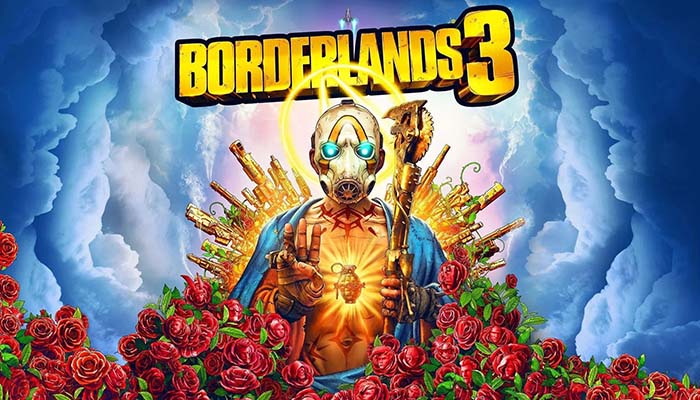
    Gearbox really needs a win after the fiasco that was Battleborn. That ill-fated first-person MOBA was unfairly stacked against Overwatch at a point in time when “hero shooters” were at their peak popularity. Thankfully, Borderlands 3 seems poised to put Gearbox back on the map as a developer. A game that promises a billion guns is exactly what they need right now.

    Borderlands 3: Step Back into the Borderlands

    The New Vault Hunters

    Four new Vault Hunters are taking up the mantle from the previous protagonists. This time around, we’ve got beastmaster FL4K, secret agent Zane, Siren Amara and heavy-gunner Moze. Each of these Hunters comes with unique skill trees and class abilities, not dissimilar from prior games’ protagonists. Each of them can be customized to granular details, meaning no two Vault Hunters will be the same.

    Unmitigated Mayhem

    This time around, the game promises even more massive boss battles, wacky enemies and exotic locales. While previous entries were land-locked to the planet of Pandora, that’s not the case this time around. In BL3, players will begin aboard their spaceship, the Sanctuary III, a starship capable of traveling to distant planets.

    In order to get a break from the drab, sandy locales of Pandora, the galaxy will be the player’s oyster. Traveling to new planets, seeking out countless recently opened Vaults and cracking bad-guy skulls will be the main attraction. Oh, and there will be “a billion guns,” according to Gearbox. Awesome.

    New Loot System

    Speaking of those guns, you’ll be happy to know that players get individualized, instanced loot now. That means your buddies can’t just swoop in and grab up the best guns before you get a chance to grab them. On that same token, players will also no longer be punished for playing with their higher-leveled friends.

    If you join a friend at a higher level, their enemies won’t just smash you to bits. Instead, you’ll each do normalized damage to the bad guys, and vice versa. Also, you’ll each see level-appropriate loot, which means that there are less barriers to playing with buddies now.

    Of course, if you preferred the old style, you can turn on “classic mode” to enjoy the old-school Borderlands loot system. In either case, Borderlands 3 will be landing on PS4, Xbox One and PC on September 13th, 2019. Are you excited?

  • Which Console is Right for You? PS4 vs Switch

    Which Console is Right for You? PS4 vs Switch

    If you’re a little late to the current generation of gaming, you might be wondering which console is the right call for you. There area number of reasons to own either system, but most people don’t have enough income (or free time) for two systems. If you’re tossing up which one to get, don’t worry. We’re here to help you figure out which one is right for you!

    PS4 vs Switch

    Portability

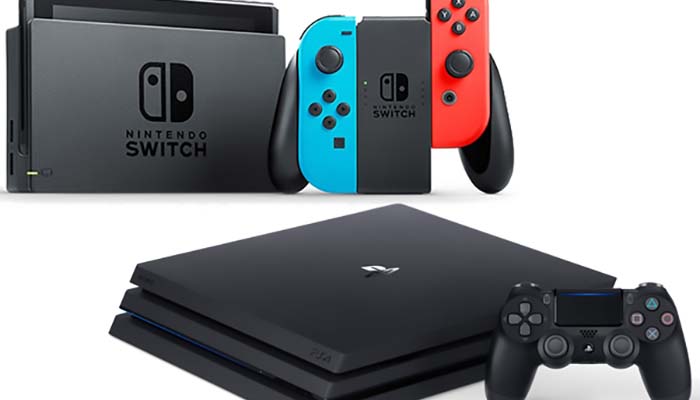
    The biggest and most notable aspect of the Switch to point out right away is the portability factor. The Switch can be taken out of its dock and used like a gaming tablet, making it a very flexible device. If you’re playing a game in the living room but need to catch your train, just pop the Switch out of the dock and head out the door.

    Most games look great at 720p on the smaller Switch system screen. It’s a testament to Nintendo’s magic that Super Mario Odyssey and Breath of the Wild look so silky-smooth even in handheld mode.

    Power

    The PS4 way outclasses the Switch in terms of raw power. This goes double for the PS4 Pro. While you can’t take either system with you on the go, they’re both incredibly beefy consoles that can put out a gorgeous image. The PS4 Pro is even capable of rendering 4K images at 60 FPS, making it one beast of a home console.

    If crisp graphics are a bigger deal to you than portability, consider a PS4.

    Exclusives

    Both systems sport impressive lineups of exclusive games. The PS4 boasts God of War, Horizon: Zero Dawn, Persona 5, Spider-Man and tons of other AAA adventures. Nintendo’s console, of course, sports their lineup of exclusive series, from Splatoon to Mario to the Legend of Zelda.

    In short, if you’re after a fun, portable system with ample couch co-op and colorful characters, you want a Switch. Meanwhile, if you want big, cinematic gaming experiences in your living room and don’t mind having no local multiplayer worth mentioning, get a PS4. Both systems bring something awesome to the table.

  • Spotify Posts 100 Million User Numbers, Doubling Apple Music

    Spotify Posts 100 Million User Numbers, Doubling Apple Music

    There are two big names in the world of music streaming services. On the one hand, there’s Apple Music, which is baked into the infrastructure of Apple’s iPhone line. On the other hand, there’s Spotify, an algorithm-driven service that compiles personalized playlists for listeners.

    Spotify has now announced that their paid memberships have now exceeded 100 million users, doubling the 50 million Apple announced in January.

    Spotify Now Doubling Apple Music Subscribers

    Juggernauts of Streaming

    While there are tons of streaming services available, the biggest names in the mix are Spotify and Apple Music. Apple offers access to a wide range of songs from the iTunes store, allowing for downloads of songs and albums. The other big draw of Apple Music is that you get access to Beats One Radio, which is a live internet radio service featuring real DJs and radio shows.

    Spotify is much more math-driven: there are no DJs, no real people selecting the songs on the playlists. However, the system is able to cater much more directly to the tastes of the user, thanks to the automated song selection software.

    In Perspective

    While Spotify is posting huge numbers in terms of global subscribers, Apple seems nonplussed by the situation. Apple Music is growing at the fastest rate of any streaming service in the US. This is good news for Apple, as the US is the largest single market for music consumption in the world.

    Spotify, unlike Apple, also offers a free version that allows users to listen without paying but with ads. This, coupled with Apple’s more limited scope than Spotify, has made the Sweden-based service a popular global streaming option.

    Of the two services, neither has a particular edge in an even field. Apple Music isn’t available on quite as many platforms as Spotify, but it can be downloaded on Android devices. For music-savvy users, either service is excellent for daily use.

  • Which Media Streaming Device is Right for You?

    Which Media Streaming Device is Right for You?

    Today, most media we consume comes from the internet. Even if you get normal cable, you probably also want to watch Netflix or Hulu or some other service on your big screen. However, you’re wondering which streaming device you should use to stream this content to your living room. We’re going to help you figure out which one is right for you!

    Keep in mind that many smart TVs already come with some manner of streaming service built-in. For instance, many newer 4K TVs already include support for Roku, Apple TV or Android TV out of the box, so you may not need to buy a separate device. However, our guide can help you figure out which type of smart TV you’d prefer to buy!

    Best Media Streaming Devices

    Roku

    Roku is a big name in the world of streaming devices. The Roku Express is a wonderful budget option, often found for as little as $30. If you’re willing to spend a little more, however, you can get Roku Premiere for $40, which offers support for 4K streaming, voice controls for searching and control options through a smartphone app. In either case, Roku offers support for all major entertainment apps, such as Netflix, Hulu, HBO Now and Sling TV.

    Roku is a great introductory streaming device for people who have yet to step into the digital content world. We recommend their affordable devices very highly for newcomers.

    Amazon Fire TV

    Amazon Fire TV is a great pick for people who love the voice controls of Alexa. Likewise, if you like Amazon’s content services, like Instant Video and Prime Video, you’ll love how integral these services are to the Fire TV menu. The Fire TV Stick is $50, while the Fire TV Cube, which allows for hands-free voice control, is $120. Much like all good streaming devices, many entertainment app options are available.

    In our opinion, Amazon Fire TV is the best option for those who love voice controls and Amazon’s original content.

    Android TV

    While Amazon Fire TV technically uses Android, it’s a very heavily altered version from what you find on Google’s own Android TV platform. There are several devices that run Android TV, but the most notable among them is the Nvidia Shield. Android TV is perfect for users who are already fans of Google’s Android system. Android is fast, user-friendly and supports all of the major apps.

    We recommend Android TV for those users who like their Android phones or who love a very personalized streaming experience.

  • The End of an Era: Our Spoiler-Free Avengers Endgame Review

    The End of an Era: Our Spoiler-Free Avengers Endgame Review

    When Robert Downey Jr. first took on the role of Iron Man back in the halcyon days of 2008, there were questions. Could this former addict really be the figurehead for a media franchise? Could Iron Man, a D-List hero at best, carry the weight of his own movie? And, importantly, could Marvel craft a compelling cinematic universe without access to the X-Men or Spider-Man, their A-List characters?

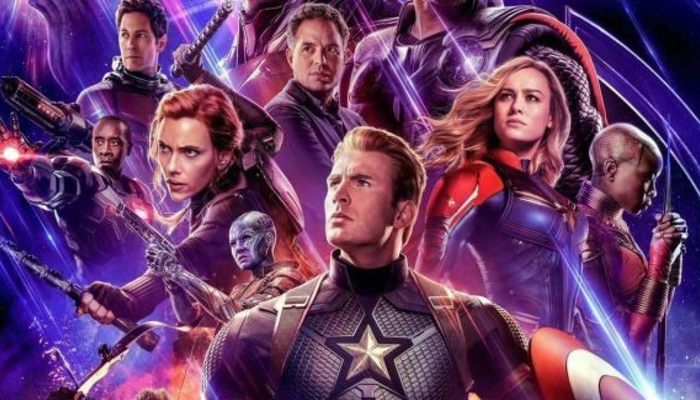
    The short answers to these questions are clear when you look at just how massive Avengers Endgame is. Scale, alone, should indicate that these movies have become a big deal. Just look at the hype surrounding this movie to see how much audiences have connected with Marvel’s ragtag bunch of superheroes.

    Super Characters

    At the end of the day, the Marvel films have always been about characters. The action setpieces are wonderful, but they aren’t what gets you in the door. Captain America’s super strength is awesome, but its his big heart and clear leadership that make him such an endearing character. Thor is mighty, but its his humor that makes him super. Iron Man is a genius, but his quick wit and big heart make him a star.

    Endgame has these character-driven moments that make the MCU tick in droves. Screenwriters Markus and McFeely know what makes these characters endearing, and the Russos direct the actors to some of the best performances of their careers.

    Poetry in Motion

    One of the most surprising things about Endgame is just how final it all feels. Of course, there will be more Marvel films. However, this film wraps up some of the major characters of the MCU in a way that is poetic and fitting. For fans that have been following these films for more than a decade, it’s quite moving to see things come to such a clean conclusion.

    In fact, the film is stuffed to the gills with subtle callbacks and in-jokes for long-time fans. The three-hour runtime moves by at a fast clip, easily earning its stay. Only a few scenes feel like they could have been trimmed off of the theatrical cut, and even then, it’s easy to see why the directors chose to keep them in.

    Bottom Line

    If you’ve got even a passing interest in the Avengers or the fate of the MCU post-Thanos Snap, you owe it to yourself to see this movie. It’s a truly baffling achievement, bigger than anything that’s come before it, and sure to blow everyone away. In short, this is a marvel of a film, and a touching capstone to a huge franchise.

  • Cutting the Cord: Can You Still Watch TV Without Breaking the Bank?

    Cutting the Cord: Can You Still Watch TV Without Breaking the Bank?

    Recently, several high-profile internet TV streaming services have jacked up their prices. Hulu with Live TV, DirecTV Now and YouTube TV have all seen price increases in the last month. It’s becoming hard to find internet TV for less than $50 per month, making it cost roughly the same as just bundling TV with your internet provider.

    That’s not what people were promised when they cut the cord from cable. Cord cutters jumped ship so they could get the TV they wanted without spending so much. Is there a way to still watch TV without breaking the bank—and without giving the cable company a dime?

    How to Watch TV on a Budget

    Sling TV

    Sling is often mentioned before other streaming TV services due to the consistency of its price. Sling started out with a $20 per month option, though they bumped that up to $25 not long ago. However, $25 for the 40 or so channels Sling offers isn’t too bad when you compare it to other expensive cable services.

    There are two options with Sling: Sling Blue and Sling Orange. The major difference is whether you get ESPN or Fox Sports. There are also a la carte channel package add-ons that cost around $5 per, but if you’re looking to get out while saving money, you should probably avoid these.

    AT&T Watch TV

    AT&T offers a rather low $15 per month price to access lots of channels, like TNT, TBS and CNN. If you’re an AT&T Unlimited Plan holder, it’s actually included with your phone service. Currently, AT&T Watch TV is the least expensive internet TV provider out there.

    On the negative side, AT&T only offers one stream, so no multi-TV viewing in the house. Similarly, there’s no DVR and you also don’t get access to a Roku app. While AT&T is inexpensive, it’s a bit difficult to recommend to someone used to normal cable.

    Philo TV

    Philo TV offers a comparable selection of channels to Sling, but for $20 per month. That also includes unlimited DVR with 30-day storage and up to three streams on one account. In short, if you’re looking for a good value on internet TV, the happy medium seems to be Philo.

    Philo also offers an Apple TV app, Roku app and Fire TV support. It’s a rather robust package!

  • Emulation, ROMs and the Future of Video Games

    Emulation, ROMs and the Future of Video Games

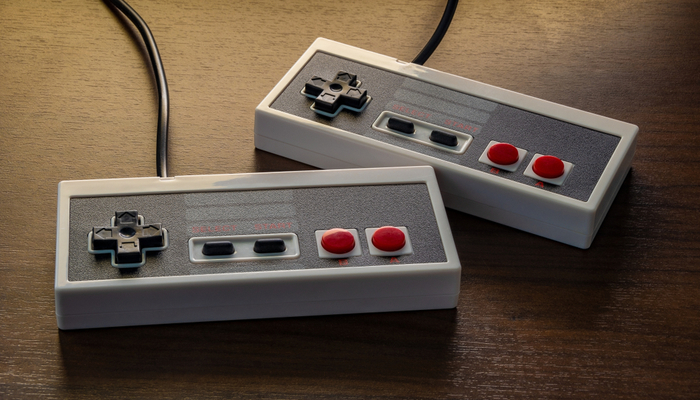
    Emulation, the process of writing code that plays video games outside of their originally intended hardware, is of somewhat murky legality. It’s quite popular among video game enthusiasts to download emulators and ROMs, or the raw code that makes up a video game. However, the legality and morality of such emulation is still a contentious topic in the industry. Let’s unpack it.

    Morality, Legality, and “Ownership”

    What’s Legal?

    Officially speaking, emulators and ROMs aren’t illegal. Downloading ROMs of games you don’t own, however, could be considered illegal file sharing. Making ROM backups of games you do own isn’t an issue, though, as it’s your property. What about downloading games you do own, but don’t have the equipment to back up? There’s no clear legal answer to these questions.

    What’s Right?

    Moreover, many emulation enthusiasts have noted that their hobby isn’t hurting anyone. If a company isn’t selling a certain older game anymore, someone downloading a ROM of it isn’t cutting into anyone’s bottom line. This issue comes up often with Nintendo, as the Big N is often hesitant to release their older games in an easy-to-acquire manner.

    Nintendo holds that, since their games are their property and theirs alone, it’s up to them how they distribute it. Someone making a ROM of a game they own and then distributing it over the internet steps on Nintendo’s rights, in their view. Whether or not they are actively selling a game is their call, and someone trying to bypass them could hurt future sales of a rerelease or remaster.

    Preservation

    Preservation of older eras of gaming is a big part of emulation. Many emulation enthusiasts have noted that, without their work, many games would simply be lost to history. Some games exist in only certain regions in some configurations, while others were simply distributed in small numbers and are very hard to find.

    Modern gaming presents many concerns in this field. As physical media becomes less popular and companies push their digital sales, many emulators worry that large corporations will hold the keys to gaming history. If a game is only released digitally, it’s impossible to make a backup of it. What happens when the company that released it decides they don’t want to host it on their servers anymore?

    Here Today, Gone Tomorrow

    The always-online nature of modern gaming means that ten or twenty years from now, gaming experiences you once had will simply be a thing of the past. For a modern example, look at games like Halo 2 and World of Warcraft. Halo 2’s revolutionary multiplayer was unavailable for years after the servers shut down before being recreated in the Master Chief Collections.

    Likewise, the always-updating World of Warcraft bears little resemblance to its launch build. Demand for the “vanilla” version of the game has become so high that published Blizzard is now working on a “Classic WoW” release that promises to be largely the same experience that gamers once had in 2004.

    What this means for the future of gaming, however, is that the companies that own these games will be the ones to make these calls. If a company has no desire to make a prior version of their game available, that’s the end of the conversation. No one can bust out a prior build on a disc or cartridge like with the prior generation of games.

    In short, the modern gaming landscape is shaping up to be more disposable, more temporary and more ephemeral than any era that’s gone before. What have we gained by giving up the older methods of distribution? Convenience and always-updating experiences. What have we lost?

    Potentially, we may have lost the ability to track the history of this very medium we love.

  • Google Stadia Update: All Pricing Options on the Table

    Google Stadia Update: All Pricing Options on the Table

    When Google unveiled its ambitious Stadia streaming service last month, the biggest question lingering over it was the cost. Will the service be subscription-based? Will users purchase games in the same way they would from Steam? Or, will there be an altogether different pricing model?

    Google’s Phil Harrison has partially addressed these questions, speaking at the LA GamesBeat Summit earlier this week. Harrison stated, “Our platform at a fundamental level has been architected to support a very wide variety of what people call ‘monetization options.’ Everything from purchase to transaction to subscription.”

    Stadia Pricing Models

    Google Stadia

    Google Stadia is Google’s upcoming foray into the world of games-on-demand streaming. The service promises to stream games to nearly any screen or device you can connect to the Internet and will allow you to use whatever controller you would like. The service has been met with cautious optimism by some, and outright suspicion by others.

    On the one hand, some have noted that the potential of streaming high-quality, 4K, 60 FPS games to any screen without needing any hardware will be quite enticing to some customers. However, others have noted that the system is unlikely to be as stable or clean as Google is promising.

    Pricing Question

    Many observers saw Stadia as likely to be Google’s attempt to create a Netflix-like subscription model for games. This would look similar to Xbox Games Pass or PlayStation Now, which both allow for access to a large library of games for a monthly fee.

    However, according to Harrison, Stadia’ systems will allow for a variety of pricing options. “There is no technical limitation on how we have architected the platform to support a variety of business models,” Harrison explained at the GamesBeat Summit.

    In Practice

    Stadia will allow for what Google is calling “frictionless” discovery of new games. For instance, a Stadia user could be watching a favorite YouTuber play a game, and then click open the exact spot the video is in into their game. It would make sense if Stadia allowed for a games pass subscription or timed free trials for these sorts of “discovery” play sessions.

    In short, Stadia is attempting to subvert the normal “storefront” experience of buying games. Google’s marketing holds that Stadia will allow for a more immersive culture of sharing and discovering games. Harrison noted that friends could even text you a link to a new game, and you could open it and stream it directly to your phone to try it out.

    We’re reserving judgement on the ambitious-sounding system until it becomes a reality. Time will tell if Google can deliver on the lofty promises they’ve made regarding the service.