
Category: How To

  • How to Save the Most Money on a Flight

    How to Save the Most Money on a Flight

    Everyone loves traveling, and the most time-efficient way to go large distances is by flying. However, flying can be expensive, especially if you don’t fly frequently enough to rack up frequent flyer miles and earn savings that way. If you don’t fly often but want to find the best deals, where should you start? Today we’re answering just that with our guide to low-budget flights and saving money while traveling.

    Saving Money on a Flight

    Fly Coach

    This might sound like pretty obvious advice, but our first tip is that you fly coach. While it can be tempting to fly first class to make the trip plush and nice, there’s nothing wrong with saving money by buying the least expensive ticket you can find. After all, the more you save on the flight, the more you can spend when you get to your destination!

    There’s nothing wrong with hanging in the back of the plane in a smaller seat with less fancy amenities. It’s not like you’re going to have to spend more than a few hours in the plane, so why spend as much as double the ticket price just to get a bigger seat and a bit more legroom? In either case, you’re on the same plane, going to the same destination, taking the same amount of time.

    Search Incognito

    When you’re searching around to find the best deals on plane tickets, make sure you’re doing so incognito. To open an incognito window, just click in the top right of your browser’s settings and hit “open new Incognito Window.” This makes it so sites can’t track your cookies and keep up with who you are, allowing you to go under the radar.

    This is to help you get the lowest price by sidestepping a sneaky airline trick. Airlines will continually jack up the price of tickets the more you view them online, in order to get you to panic and buy them sooner rather than later. To avoid paying this extra amount, shop incognito to keep them from tracking your browsing habits.

    Stay Off Major Search Engines

    Sorry, Google, but you’re not great for airline prices. Most major search engines get a cut of ticket prices when they help generate sales, so the prices you’ll see through them are also inflated. This is another scummy upcharge that you would do well to side-step entirely in order to find the best price. Instead of going through major search engines, you can look for budget airlines through broader engine searches.

    These include options like SkyScanner, which helps you find the best deals on specifically airlines, and Momondo, a broad search engine that can sometimes fetch budget airlines even cheaper than SkyScanner. Other great options you could check out include AirFare Watchdog, JetRadar, AirWander and Cheapoair. Remember, no one search engine is ideal: you’ll likely find the best results by using a combination of all of these options.

    Find the Cheapest Booking Days/Times

    It’s no secret that the prices of airline tickets can change dramatically based on when you buy them. The time of week, the time of day, the length of time until the flight leaves, all of these factors have a role to play in the cost of the ticket. Narrowing down the best time to fly out can feel a bit more mystical than scientific, though.

    There are a few things you can do to make sure you’re getting the best price based on the date you buy your ticket. One of the best resources is actually the SkyScanner website, which can help you narrow down the best days and times to buy, showing you an easy-to-read calendar with clear indicators of prices. It’s really the best way to shop for airline tickets!


  • Lawn Care: Taking Care of Your Grass This Summer

    Lawn Care: Taking Care of Your Grass This Summer

    Everyone wants the best-looking yard on the block. However, it can be quite difficult to maintain a healthy and plush lawn through the harsh summer months. If you’re looking to keep up a good lawn care regiment and keep your grass looking verdant and perfect, you’re going to want to take some of our summer lawn care tips to heart. Here’s what you need to know.

    Summer Lawn Care Tips

    Know What to Expect

    When the hot summer temperatures show up, it’s time to adjust your expectations of your grass. It’ll grow thick and plush in the Springtime, as even cool-climate grasses love temperatures in the 60’s. That includes grasses like bluegrass and rye. Meanwhile, hot-temperature grasses, like Bermuda and St. Augustine, prefer to grow in the 70’s. Once the temperature jumps above 80 degrees, however, it’s time to expect your grass’s growth to slow and stop.

    Now, you can use techniques like fertilizer and sprinkler systems to make sure your grass gets plenty of coaxing and will want to grow taller. However, know you’re fighting nature when you try to encourage grass growth in the summertime. On top of this, you’re likely using your grass more in the summer time, having friends over, throwing barbecues and parties, and trampling all over your grass. This is a surefire way to see your grass turn brown, dry up and go dormant.

    Proper Watering

    As you might expect, proper watering is a huge aspect of good summer lawn maintenance. If your grass isn’t getting enough water from rainfall, you need to make up that difference yourself. Your grass needs about an inch of water per week, so use a rain gauge to keep up with how much your yard is getting. Make up the difference with your sprinkler system or just by hand-watering your lawn. Make sure you water in the morning to avoid fungal growth and evaporation.

    When you get into watering your lawn for the summer, make sure you’re in a regular groove. Water the grass regularly and deeply to encourage drought-resistant roots. Also, if you’re not going to water the lawn regularly, don’t water it at all. If the grass goes brown and dormant, don’t try to water it back into being green. Your lawn will bounce back in the fall if it falls dormant, so just let it lie if it does.

    Mowing Your Grass

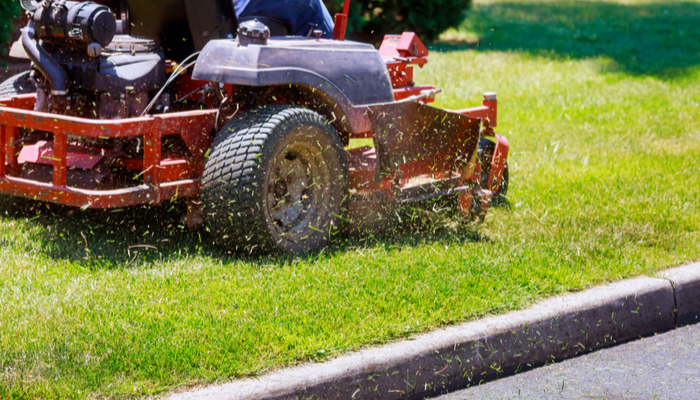
    Raise your mower blade in the summer to avoid damaging your grass. Taller grass is more drought-resistant, with deeper roots and hardier constitution. It also keeps the ground well-shaded, preventing the growth of low-lying weeds. Warm season grasses need to be about two or three inches in the summer, while cooler season grasses need to be between three and four inches.

    Make sure you also mow regularly in the summertime. You don’t want to cut more than a third of the length of a blade of grass, to encourage your lawn’s health. Another important factor is the amount of grass clippings, which could smother your lawn if they fall too densely over your grass. Finally, you’ll want to make sure your mower blades are kept razor-sharp in the summer. If they aren’t, they won’t be cutting your grass, they’ll be tearing your grass. That’s terrible for your lawn’s health.

    Fertilizer

    Use fertilizer sparingly. You don’t need to use fertilizer on brown, flagging lawns. If you do, you’ll only burn the grass out and encourage fresh growths that will just die to the heat. Instead, wait until the fall when your grass is green again to fertilize. Yes, this does mean that your grass will just look bad throughout the summer, but it’ll save you money on dropping fertilizer for no reason.


  • Most Important Vitamins for Your Eyes

    Most Important Vitamins for Your Eyes

    Few organs have more impact on your daily interaction with the world than your eyes. You use them to take in visual information, which is one of the primary ways you gather information about the world around you. If you want to keep your vision sharp as the years go on, you’ll need to take care of your eyes. One of the main ways to do this is to take in the right kind of vitamins for your eyes!

    Vitamins for Good Eye Health

    Vitamin C

    Great for more than just fighting off scurvy, vitamin C plays an important role in your eye health. As an antioxidant, vitamin C helps to protect your cells, including the ones in your eye, from the harmful effects of free radicals. Free radicals, despite their silly-sounding name, are quite harmful to your cells, as they are unstable molecules that can cause cell degradation.

    As such, antioxidants like vitamin C have a major role in to play in keeping your cells safe. As you get older your cells are exposed to more and more free radicals, and these can cause damage over time that can be long-lasting. That’s why having a diet high in citrus fruits, kale, broccoli, bell peppers and tropical fruits is important, as these are major sources of vitamin C.

    Vitamin A

    Vitamin A’s impact on your eyes is so great that you’ve likely already heard about this one just from common knowledge. This vitamin plays a vital role in helping your eyes maintain a clear cornea. Your cornea is the lining on the outside of your eye. As long as it remains clear and strong, your vision will also be clear and unclouded.

    Vitamin A also plays a role in helping your body develop rhodopsin. Rhodopsin is a protein type that helps your eyes to make out details in lower light conditions. It’s difficult to develop vitamin A deficiency, but if you do, the first symptoms are night blindness. Eventually, vitamin A deficiency leads to blindness. To keep up a good vitamin A intake, eat lots of foods like sweet potatoes, bell peppers and pumpkins. Leafy greens are full of both vitamins A and E, making it a great dietary choice.

    Vitamin E

    Another major factor in eye health is the balance of free radicals and antioxidants in your body. Vitamin E helps to keep that regulation in check, allowing for your cells to be more protected against the harmful effects of free radicals, much like vitamin C. There is some evidence that holds that proper vitamin E intake is also vital in helping keep aging-related cataracts from developing.

    If you’re looking to get the right amount of vitamin E in your diet, the best way to do that is by getting a good amount of it in your diet. Vitamin E-rich foods include nuts, avocado and salmon. As mentioned above, leafy greens are full of vitamin E, making them some of the best eye-health-encouraging foods, pound for pound.

    B Vitamins

    Several B vitamins also play a major role in your eye health. Namely, B6, B9 and B12 all have a hand in regulating your eye health. Specifically, the mix of all three of these types of B vitamins helps to regulate your body’s levels of homocysteine, which is a protein that can lead to inflammation. Additionally, a high percentage of homocysteine in the body can lead to increased risk for the development of AMD, or age-related macular degeneration.

    However, it’s unclear whether intake of food items high in B vitamins has a notable impact on eye health. Studies so far have focused on the effects of vitamin supplements, which have proven impactful in clinical studies.


  • Which Allergy Remedy is Best for You?

    Which Allergy Remedy is Best for You?

    If you live with seasonal allergies, you’re likely looking for a good antihistamine or another type of allergy medicine or remedy would work for you. There are a number of options on the market, so it can be hard to narrow down the best and most useful medicines. Complicating matters, most forms of allergy medicine have notable side effects, such as headaches and drowsiness. Let’s take a look at some of the best remedies for allergies, both medicine and otherwise.

    Best Allergy Remedies

    Avoidance

    The first thing you need to do in order to lessen your allergy symptoms is to avoid whatever triggers your allergies. This means you need to make sure to lessen your exposure to pollen, ragweed, or whatever else you have allergies to. In the case of pollen, the most common seasonal allergen, you’ll want to make sure you stay indoors when the pollen count is at its highest.

    Ride with your windows up, and avoid eating outside. When you get in from your day, change your clothes right away and wash the clothes you came in with. Wash your sheets regularly during allergy season to clean the pollen off of them. Your best bet is cleaning your fabrics and keeping windows shut, keeping yourself away from the triggers as much as possible.

    Other Triggers

    Other things could be triggering your allergies, too. Alcohol, for instance, is an inflammatory and an irritant. Drinking heavily during allergy season is a surefire way to inflame your allergies. Likewise, make sure you clean your bathroom and kitchen during allergy season, as molds could be growing in moist corners. Molds are some of the most allergy-triggering things you can find in your home.

    Other things to watch out for are your dishes and cutlery. Make sure you thoroughly wash them, as you don’t want to accidentally ingest any allergens. You’re going to want to wash your hands before you eat, too, as you could have residual pollen on your hands after coming in from your day.

    Allergy-Proofing

    You can allergy-proof your house by taking a few simple steps. You can get a stronger air filter that will grab particulates, keeping them from circulating around your home. Another thing you can do is keep your windows sealed up, and avoid leaving doors open for long periods. Make sure you thoroughly clean your carpets if you have any, as they can be major trappers of pollen and other allergens. Not to mention, carpets can get gross if not regularly deep-cleaned.

    If you have hardwood floors, make sure you sweep thoroughly and regularly during allergy season. This is a great way to keep your floors looking nice while also keeping your allergies from flaring up.

    Medicine

    Notable medicines you can take for allergies include Allegra, Zyrtec, Xyzal, Benadryl, Rhinocort and Claritin. These antihistamine-based allergy medications work by stopping your body’s histamine reactions in their tracks. This keeps you from having the massive amounts of itching and sneezing. Namely, the itchiness of the eyes and uncomfortable, uneasy feeling your skin gets during an allergy attack are related to histamine responses.

    If you’re feeling a lot of congestion, you’ll want a decongestant medicine. Decongestants are distinct from antihistamines, as antihistamines only stop your allergic reactions. Congestion will keep going even once the allergic reaction is gone unless you use a decongestant.

    Side Effects

    Many antihistamine medications have side-effects associated. These can include drowsiness, fatigue, headaches, dry mouth, nervousness, diarrhea, and stomach pain. Other notable side-effects can include dry, red eyes, hoarseness, sore throat, blurred vision and nosebleeds. However, many people have noted that the side-effects of these medications typically are less impactful than their allergy symptoms, making the medications worth the side effects.


  • Starting Your Day Right with the Right Breakfast

    Starting Your Day Right with the Right Breakfast

    Everyone knows the old cliché: “breakfast is the most important meal of the day!” However, most people don’t properly act on this, instead opting to have a very small (or no) breakfast. However, the key to starting your day off right is getting a complete breakfast. Let’s look at the science of why, and what you should be eating.

    The Right Breakfast

    Why It’s Important

    There’s a lot to be said for the first meal of the day. Getting up on time to eat a full meal before you start your day can be a huge help for your nutrition as well as your mental health. Firstly, starting off with your largest-calorie meal of the day is a great way to set up your body with the energy it needs to take on the day. If you’re going to have a big, high-calorie meal, you should make it your first meal.

    Secondly, if your first meal is your large meal, that means that you can burn off those calories throughout the day. Then, you can have a medium-sized lunch and a small-sized dinner, tapering off your calorie intake as the day goes on. But what should you be eating for breakfast? And why do certain foods taste better as breakfast foods?

    Breakfast Foods

    Everyone knows that there are some set staples of breakfast food. Cereals, toast, eggs, sausage, bacon and pancakes are all known for their role as breakfast staples. Why is this the case, though? They don’t taste bad for the rest of the day, so what makes them such ideal picks for breakfast food? And why do you not see people typically eating pizza or steak for breakfast?

    In general, foods that are considered better breakfast options are less “intense” flavors, and tend towards sweeter or slightly savory. This is because bolder or more intense flavors tend to be less pleasing in the morning. Since you’ve got more adrenaline in your system when you wake up, it makes your senses more honed, and thus makes bolder flavors more overwhelming. As such, more muted flavors tend to be better for breakfast!

    Balanced Breakfast

    You’ve likely heard the term “balanced breakfast” many time, but you might not know what exactly that entails. Typically, the term “balanced breakfast” means that you’re getting enough calories and nutrition to make for a healthy day out and about. Let’s take a closer look into what kinds of things you should be eating to get a balanced breakfast.

    Protein

    Protein-rich foods, like sausage and eggs, are a great start. Protein is important for building and powering muscles, so getting your intake of protein in early is a great idea. That’s why it’s so common to see eggs and sausage being eaten for breakfast: they’re great nutrition and they taste great for breakfast.

    Fiber

    Fiber is important for regulating various bodily functions and helps to regulate the body’s use of sugars. You can find fiber in strawberries, avocado, bananas, apples and several other sources. This makes bananas and strawberries added to cereal great additions to a breakfast, as well as avocado toast! These foods are also quite tasty, and not too overpowering to be had for breakfast.

    Sugars

    It’s also good to get some sugars in your diet early in the day. Sugar helps you to get bursts of short-term energy, so foods like bananas, apples and strawberries can also help you get some energy to start your day. Another option is to eat cereal, many of which have tons of sugar! Just make sure you’re not eating cereal that is too sugary: too much sugar can lead to weight gain and lethargy.


  • When to Buy and When to Sell: Stock Basics

    When to Buy and When to Sell: Stock Basics

    While everyone knows the tropes of some Wall Street banker screaming “Sell! Buy! No, sell!” into a telephone, not everyone understands the basics of the stock market. Essentially, the stock market is a way to invest in shares of a publicly traded company. Investing in the stock market can be quite lucrative, assuming you know how to buy and sell like a pro.

    Today we’re going over some basic rules of thumb to help guide your purchasing and selling. Remember, past performance is never a direct indicator of future changes. However, understanding historical patterns is a big step towards understanding what current trends could indicate. Let’s get into some tips and advice.

    Stock at Low Prices

    Investors are notoriously skittish. When stock prices start hitting lows, the average stock investor steers clear of it. The ample supply and low demand often means that the stock maintains its low price until confidence is restored. This often makes low stock prices ample times to buy in on the cheap. If the stock never bounces back, you’re not out much. If it does bounce back to its previous highs, you make out like a bandit.

    This might sound like a cliché, but it’s an old truth. You should always buy when the stocks are low, and sell when they’re high. Doing anything else is playing a scared, defeatist strategy in a world won by the boldest operators.

    Knowing When to Buy

    For each stock you’ve got your eye on, make sure you know what range you’d be comfortable buying it at. That’s not to say you mark down a hard dollar amount, above which you’d never buy it. Instead, look at a price range. If a stock has been high for years but then drops closer to your range, you might wait to see if it falls further. Once it shows signs of resurgence, though, you should go ahead and snap it up so you can ride that momentum.

    Do Your Research

    It’s important that you do your research. There are ample resources online that can help you learn more about how to value stocks. Notably, figuring out when stocks are under- or over-valued is important when you’re making your buying decisions. The main way to find out whether a stock is undervalued is by using valuation techniques. These can be somewhat complex and involved, but here are some of the basics.

    Essentially, valuation techniques are ways that financial advisors and stock managers look at given company’s stock prices and compares them to the company’s projected profits. These formulas are strictly speculative, of course, as no one can tell the future. However, these formulas tend to be time-tested and bear out over longer time periods and across wide sample sizes. When a stock is undervalued, that’s the time you should buy it.

    Patience in Selling

    It’s a rookie mistake to sell out of a stock right as it begins to shoot up in price. Maybe you bought stocks in a company that just posted three profitable quarters in a row and had its stock prices double. It can be tempting to go ahead and cash out, getting a return on your investment and a contented feeling of success. However, this is usually not the case.

    Typically, an undervalued stock could take years to begin trading at its true value. While analysts might project it will go up, that doesn’t mean it’s trading where you want it yet. As such, riding out the stock for a few years and waiting for it to grow naturally is your best bet before you sell out of it.


  • How to Choose the Right Dentist

    How to Choose the Right Dentist

    There are a number of great reasons to have a regular dentist you see for annual check-ups (at least!). Firstly, they can take care of your teeth, of course, making sure you don’t have any cavities or other dental issues. Another huge positive of seeing a regular dentist is that check-ups can help prevent heart attacks and strokes, among other medical conditions.

    Sure, there’s a lot to be said for brushing and flossing. However, good oral hygiene is no replacement for regular check-ups with your dentist. When it comes to picking out a dentist to take care of your dental health, though, it can be hard to know who to go with. Today, we’re offering some tips on helping to pick out the right dentist for you.

    Recommendations

    The first place you should look when you’re trying to find a dentist should be the recommendations of friends and family. Ask around, and see who your trusted friends and family go with to take care of their dental hygiene. Your friends probably aren’t medical professionals (bonus points if they are, though) but you can still value their recommendation. After all, customer satisfaction is a huge indicator of a dentist’s overall quality.

    Another great source of recommendations would be a medical professional you currently see. If your general physician is someone you’ve been seeing for a while and trust, ask them for a recommendation. Likewise, if you have a pharmacist you’ve been using for years, they could be a great person to ask. These medical professionals are sure to know the reputation at least a few dentists in your area.

    Factors to Consider

    When signing up at a dentist’s office, there are some factors you need to consider. Firstly, make sure they take your insurance. This one is big! Paying out of pocket for dental expenses gets out of hand fast, and you would much rather pay for your dentist visits with your insurance. The next thing you should consider is their office hours: will you be able to get by the office without having to take off from work, or will you need to use time off to make an appointment?

    The next thing you should look at is their location. Are they really far outside of your normal commute, or are they conveniently located in relation to your house or office? Outside of these simpler, up-front considerations, look at more in-depth logistical concerns like how they handle dental emergencies, what type of anesthetic they use and whether they have a missed-appointment policy.

    Picking a Dentist’s Office

    Some things to look for when you’re visiting an office for the first time are indicators of the culture of the office. This includes things like the cleanliness of the lobby and the examination rooms, as well as the cleanliness and relative age of their dental equipment.

    Other factors to keep an eye out for relate to the staff. Do they answer your questions patiently and politely, or do they seem as though you’re bothering them when you ask? Does everyone wear gloves when dealing with equipment and when inspecting your mouth and teeth?

    Making a Decision

    Weigh all of these factors carefully when you’re considering which dentist to go with. It’s important that you’re comfortable with whoever you pick for your regular dentist, as check-ups are exceedingly important. You want to pick a dentist’s office that makes you feel comfortable, important and at-ease. A good dentist is worth their weight in gold, so don’t be afraid to look for a better office to visit regularly if the first one you look into is less than ideal. You deserve good medical attention, and that extends to your teeth, too!


  • Smartest Retirement Savings Strategies

    Smartest Retirement Savings Strategies

    Saving for retirement is no joke, and the sooner you start thinking about it the better. It’s impossible to just retire and live comfortable on Social Security. In fact, for many younger people, Social Security likely won’t be around to help out. That means it’s time to start thinking seriously about saving up for your retirement. Here are some of the best ways you can start saving for your retirement.

    Retirement Saving

    Start Now

    There’s literally never a bad time to start saving for your retirement. The sooner you get money into a retirement account, the sooner that money can start accruing interest and making money for you. Accruing interest is one of the best things your money can do for you: the more money you have in an account accruing interest, the more the effect snowballs and makes you even more money. It’s a win-win to invest earlier, rather than later.

    For instance, if you begin saving for retirement at age 23, right out of college, and put only a small portion of your paycheck into savings, you’ll begin accruing interest right away. Depending on the amount of interest, you might even outpace the savings of someone in their 30’s who begins saving with much more of their paycheck, since you’re going to have nearly ten years of a head-start on them!

    Prepare For a Long Retirement

    Advances in medical technology, improving diets and better overall public health mean that the average person is simply living longer than ever before. This means that most healthy retirees can expect to live well into their 80’s, and even their 90’s. This means that you need to be prepared for a long retirement when you’re saving and considering your retirement income.

    This means that you’re going to need to consider nearly 30 years of income in your retirement savings. That’s a lot of years not working while still having to cover all of your needs! Without proper planning, this means you could end up simply running out of retirement savings and having no way to bring in any money.

    Don’t Forget Inflation

    When you’re considering such a long retirement, it’s also important that you remember inflation rates. Even a modest 2% inflation rate can really add up over the course of 30 years. For instance, if you wanted to buy something today that costs $5,000, you’d need $8,200 in 2050 dollars at a 2% inflation rate.

    This means that you should not only plan for a long retirement, but factor in several thousand more dollars than you think you’ll need. The longer your retirement goes on, the more an ever-increasing inflation rate impacts your savings and eats away at your retirement funds.

    A Long-Term Plan

    This all means you need to work with a financial advisor and figure out a way to invest your money in such a way that it keeps working for you over a very long period of time. This likely means that you could be more aggressive with your retirement savings even into your 50’s and 60’s than prior generations were. Since you’re going to be living longer, on average, you’re simply going to need more money.

    Also make sure that any strategy you end up employing gives you ample flexibility to react to changing situations. You’re going to have to stretch your income stream over the course of nearly 30 years, so you want to make sure that you’re able to respond to changing market and your own changing lifestyle.

    In short, consider thinking about your retirement differently than prior generations have. You’re going to need a lot more than you think you will.


  • Should You Buy a Home in the City?

    Should You Buy a Home in the City?

    When it comes time to buy a home, should you opt to buy one in the city, or in the suburbs? There are a number of pros and cons to both, though it’s often difficult to look at them all in isolation. Today we’re going over some of the reasons you might buy a home in the city, or reason why you might opt to live further out in the suburbs. Let’s talk real estate.

    Where to Buy a Home

    Consider Your Needs

    If you work downtown and can find a home within walking distance, or within walking distance of public transportation, it might be worth buying a home in the city. Also consider how comfortable you are with walking around urban areas all the time. Do you prefer to be out in the world, and do urban crime rates scare you? Or do you enjoy the opportunity to rub shoulders with other people in your daily activities?

    Consider, also, that you’ll have less easy access to natural spaces if you live in the city. That is, of course, assuming you don’t live near a public park, which could offer much-needed greenery. While you’re considering recreation, also think about your kids, if you have any. How close is the nearest school? Would your kids have to walk to school, and would you be okay with that?

    Walkability

    One of the biggest draws to living in the city is walkability. Younger buyers, especially, love getting to live in an area where they can walk to all the places they want to work and shop. Really, there’s a lot to love about living in a walkable area. For one thing, if you set things up correctly, you might get away with not even owning a car. That saves you a lot of money, as you’ll need no car insurance, pay no car payment and avoid having to gas up.

    The flip side, of course, is that buying or renting in the heart of a city can easily offset those costs, and then some. You’ll pay several times as much per square foot downtown than you would in the suburbs. That said, you’ll be close to the action and able to walk outside your front door and find activity any time. That’s priceless for some people.

    Suburbs

    Meanwhile, not everyone wants to live in the heart of the city. This goes double for people trying to raise children. Living in the suburbs makes it more affordable to have more space for children to grow and play. Likewise, it frees up more money for your child-based expenses, like diapers, food and childcare.

    That’s not to mention the upshots of having your own yard. Having friends over for grill-outs, backyard parties and the like becomes much easier when you have your own yard. The drawbacks, however, are still there. If you live far from the city, your commute could become much longer than a more centrally-located home. You will also almost certainly need a car to get around, which adds to your monthly bills.

    Property Values

    If you can drum up the down payment to buy a home located in the city, you’re actually making a very sound investment for your future. A home with close proximity to popular businesses like Starbucks and downtown nightlife is worth its weight in gold. These types of homes almost always appreciate in value dramatically, and this makes them ideal investments for younger buyers.

    That said, they’re also appreciably more expensive to purchase than homes in the suburbs. Older buyers tend to prefer suburban homes due to their lower up-front costs, quieter neighborhoods and larger square footage per dollar.


  • Flood Damage Restoration: What to Expect?

    Flood Damage Restoration: What to Expect?

    Flood damage, whether from an actual flood or from a busted pipe, can be incredibly stressful. There are ways to clean the damage and to restore the affected parts of your home. However, many people don’t know a lot about the restoration process. Today we’re going over some of the basics of flood damage restoration, and what you can expect when you have your home restored.

    Flood Damage Restoration

    How it’s Done

    Flood restoration is a very wide type of damage restoration, as the damage varies greatly from instance to instance. The biggest amounts of damage are tackled by a variety of techniques. The first step of any damage restoration project is an inspection. A professional restorer will take inventory of the damage, finding out what was destroyed and what can be fixed.

    There are a number of instruments and tools used to measure the moisture in the house. The damage could require drying equipment, which the inspector can ascertain with their equipment. If so, they’ll bring a dehumidifier, which will help prevent further damage such as mold growth.

    Removing Water

    If there’s standing water in the home, there are methods restorers can use to remove it. Typically, standing water is removed by use of shop vacuums, which is common. This type of shop vac is easily maneuverable and can be rotated around a room quickly in order to take up standing water easily.

    Drying Affected Areas

    Once the water has been removed, the hardest part of the moisture elimination process has to be drying the affected areas. This process can involve dehumidifiers, fans, air movers and other such equipment. If you have carpet, they may pull up sections of the carpet to dry it both above and underneath.

    In the event you have hardwood floor with moisture damage, the restorers will likely use floor mats to help dry them. There are times when the restoration effort could also involve removing the baseboards and even drilling holes in drywall, all to help the floors dry out faster.

    Containing Ongoing Damage

    While the home is being dried, the restoration effort will also include efforts to keep the flood damage from spreading. This involves a number of steps, such as taping, creating moisture barriers and closing off affected areas. Containment is very important, as it keeps the damage isolated to smaller areas. This makes it easier to clean the mess, keeps the cost down on the restoration, and also keeps the rest of your home safe from further damage.

    Keeping an Eye Out

    Once the restoration effort has reached the drying stage, the restorers will work to keep an eye on the affected areas. Typically the machines that are helping to dry will be left to do their work, and the crews will make sure that things are progressing as they should. This means you’ll have to expect crews coming in and out at various points in time, so be prepared for that.

    The monitoring process could also mean that the crews move equipment to cover areas that aren’t drying as well, so expect the crews to keep up with the damage. This will allow you to have some peace of mind: your home will be in good hands with professional restorers.

    General Damage

    General damage to the home can be covered by a contractor who specializes in the type of work needed. For instance, if there is damage to your electrical system, an electrician will be able to take care of the damage. Likewise, if there’s damage to home’s structure, a general contractor will be able to help with that type of problem. Your home insurance should be able to cover the costs, at least partly, for the restoration effort from the flood damage.