Category: Investing

  • Finding Investment Advisors Who Put Your Interests First

    Finding Investment Advisors Who Put Your Interests First

    When searching for the best investment advisors, the most crucial factor isn’t their marketing materials or impressive office—it’s whether they’re truly motivated to act in your best interest rather than their own. In today’s financial landscape, the difference can significantly impact your long-term wealth.

    Understanding Fiduciary Responsibility

    The first rule in finding exceptional investment advisors is to seek those with fiduciary responsibility. Fiduciaries are legally obligated to put your financial interests ahead of their own. While many financial professionals call themselves “advisors,” only those who accept fiduciary responsibility are bound to this higher standard of care.

    Ask potential advisors directly: “Are you a fiduciary 100% of the time?” Be wary of responses like “I act as a fiduciary when appropriate.” The best investment advisors commit to fiduciary standards consistently, not selectively.

    Compensation Structures That Reveal Motivations

    How advisors get paid reveals their potential conflicts of interest:

    Fee-only advisors charge either a percentage of assets under management (typically 0.5-1.5%), hourly rates, or project-based fees. This structure aligns their success with yours.

    Commission-based advisors earn money when you buy certain products, which may create incentives to recommend specific investments regardless of suitability.

    Fee-based advisors charge both fees and commissions, a hybrid model that can create confusion about when their recommendations are truly objective.

    The best investment advisors typically use transparent fee-only structures that minimize conflicts of interest.

    Credentials That Matter

    Look beyond impressive-sounding titles to certifications requiring rigorous education, testing, and ethical requirements. The Certified Financial Planner (CFP) designation is particularly valuable, as it requires extensive training, ongoing education, and adherence to ethical standards.

    Testing the Waters: The Right Amount to Invest Initially

    When starting with a new advisor, consider limiting your initial investment to 10-15% of your total portfolio. This “test drive” allows you to evaluate their performance, communication style, and responsiveness without overcommitting. After 12-18 months of satisfactory service, you might gradually increase your allocation.

    Comprehensive Service Expectations

    The best investment advisors provide services beyond simply managing investments:

    – Comprehensive financial planning
    – Tax optimization strategies
    – Estate planning coordination
    – Insurance needs analysis
    – Retirement planning
    – Regular portfolio reviews (at least quarterly)
    – Proactive communication about market changes

    Red Flags to Watch For

    Be cautious of advisors who:
    – Promise market-beating returns
    – Pressure you to make quick decisions
    – Recommend proprietary products exclusively
    – Avoid discussing fees transparently
    – Communicate infrequently

    Finding the best investment advisor requires careful vetting, but the effort pays dividends through better financial outcomes and peace of mind. The right advisor becomes a trusted partner in your financial journey, ensuring decisions align with your goals rather than their commission structure.


  • Investing in Stocks: A Beginners Guide

    Investing in Stocks: A Beginners Guide

    The stock market can be a scary place and an even more intimidating process if you’ve never invested your money before. But investing online is one of the best pieces of financial advice you can ever receive. For one, it’s an excellent way to grow your wealth for a specific period then reap the fruits in the future, probably after retirement.

    The best way to start investing in stocks is to put money in a trusted online investment account and use it to buy shares of stock. However, stocks are not like your typical savings accounts, certificates of deposit, or money market funds. They always have a very volatile principal value. They can rise and fall in very short periods. Therefore, if you still don’t have sufficient knowledge in investing, you can easily lose most, if not all, of your investment capital.

    As a result, it’s crucial that you learn the basics of how to invest and the most effective strategies to use. That’s what we aim to help you achieve in this excerpt:

    What Kind of Investor Are You?

    Before committing your money, it’s vital that you know what kind of investments you want to venture into. Most investment accounts will also want to know which types of investments are best suited to you. Therefore, ensure that you have an investment goal already planned out and set how much risk you’ll be willing to take on in your investments.

    Some investors are always more open to taking an active hand in the managerial part of their investments, while others prefer to set up their investments and forget them entirely until they mature. Both options allow you to invest in stocks, bonds, index funds, mutual funds, and exchange-traded funds (ETFs).

    If you are the type of investor who prefers to be more hands-on and involved with your investments, this article should be particularly beneficial to you. But if you prefer to have someone else with expertise in the stock market manage the process for you, it’s best to look for a reputable Robo-advisor’s services at a minimal fee.

    It’s vital that you know which type of investor you are to determine which investment types to focus on. Once you’ve found your preference, you should be ready to research stocks to trade.

    Research Stocks to Trade

    Once you’ve found a brokerage firm, you can buy stocks. But the question now arises on which stocks are best to buy. For beginners in the stock investment business, the best place to start investing in might not be stocks. Instead, start off with ETFs.
    ETFs allow you to buy different bundles of stocks at once. This can help build more confidence, especially if you don’t know which individual companies to pick over the others.

    ETFs built to replicate the bigger indices like Nasdaq, Dow, and S&P 500 are the best investment options to use to give your portfolio the boost it needs and broader exposure to the U.S. stock market. Most seasoned traders also advise that you diversify your holdings with other assets instead of just stocks. Diversifying your investments is one of the most effective ways of hedging the risks that arise from stock market downturns (but more on that later).

    Where to Start Investing in Stocks

    A thrifty, self-motivated investor who knows exactly what he/she wants might be served best using online brokerages, especially ones that provide commission-free trading. However, there are also stock options for new traders who feel more comfortable having the system or a broker pick the stocks for them. Such investors are better off using automated investing services, most of which are reasonably priced and provide a user-friendly platform to invest.

    Human brokers and other financial advisors offer some of the highest investment service levels, which mainly revolves around investment advice. But this is also the most expensive option to consider.

    Stock picking can be extraordinarily difficult, especially if you decide to go about it yourself. For the most part, there isn’t any way of knowing which direction the stock market will go. It’s on that note that even the seasoned stock investors, Warren Buffett included, discourage newbie investors from placing all their investments in individual stocks.

    Best New Apps to Use for Online Investments

    Stock investing apps have gained quite a reputation since the invention of the smartphone and the internet. Investment firms are now scrambling to develop mobile-friendlier apps that cater to the digital investor’s interests. The results have yielded some of the best stock trading apps the industry has to offer.

    These apps have easy-to-use features that make them perfect for quick and painless stock investments, even for first-timers. And the only requirements you need is a smartphone and an internet connection.

    As the resilience of Artificial Intelligence and intuitive software becomes more apparent in the stock trading industry, it’s also imperative that traders find the best apps with the latest tools for trading. These apps should have the latest tools and provide real-time research data and assess trading risks.

    Some of the best online apps for the job include:

    1. Robinhood
    Robinhood is one of the most renowned online stock brokerage apps that provide online traders with a completely free way to invest. The app doesn’t charge any commissions on stock, it has no minimums, and has one of the best and easy-to-use application interfaces.

    However, because Robinhood offers free investing, it doesn’t have as many perks as the other online investment apps. For instance, you won’t find features like trading tools, investing education, research, and several other investing options. But what it lacks in some areas, it makes up for in others, like providing high-tech, intuitively-designed, top-rated investing options on the market today.

    The app also allows investors to trade cryptocurrencies like Bitcoin and Ethereum. But if you want to take your investing a notch higher, you can buy its premium version, Robinhood Gold, for $5 every month. The premium version gives users access to some of the apps premium features like allowing users to trade on margin, access market data, and make bigger instant deposits.

    2. Acorns
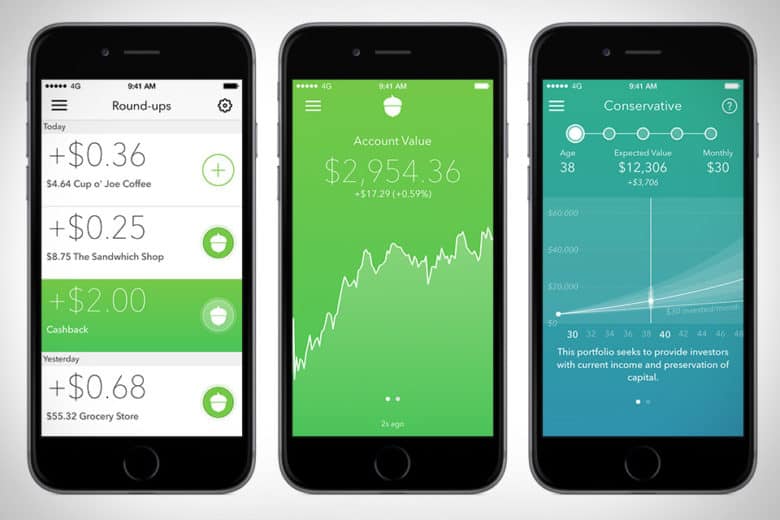
    Acorns is the next best straightforward money-making online investment app you can find today. It’s also definitely one of the best online apps for beginners. Acorns helps users learn some of the must-have investment skills to improve your chances of winning big. This is the online application that will make investing fun and turn it into a daily habit.

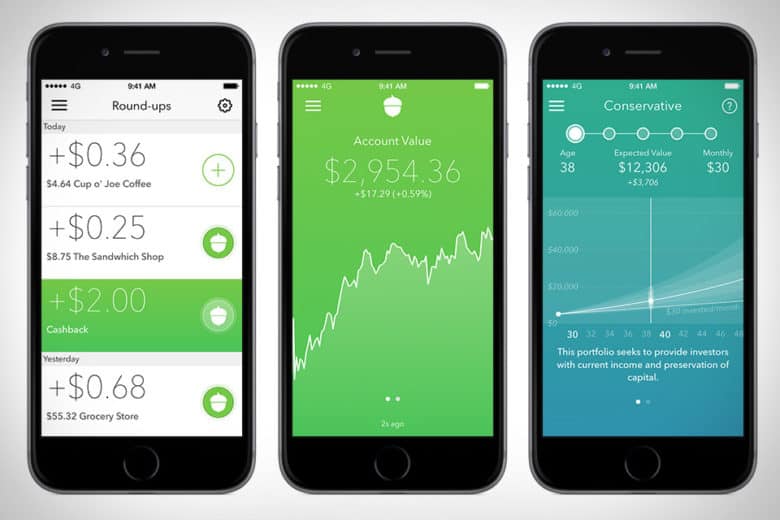
    To start investing with Acorns, you will need to link the application to your credit or debit card. Acorns will then round up all your purchases and move the change into your investment portfolio. This makes it one of the best apps to use, especially if you’re looking for a more hands-off investing type of approach but still want to make it your new habit.

    3. Public.Com
    Formerly known as Matador, Public also tops the list of the best stock investing apps you can find. It mixes social media with commission-free investing in creating a simple but unique platform that’s ideal for beginners.

    Public’s iOS and Android apps also help users to connect with other investors. Its developers came up with an ingenious idea to connect users with about 5,000 different securities. Another sweet deal with using the app is that you get a free stock of up to $50 if you refer a friend who signs up and starts trading.

    Public.com’s online trading app lowers the bar for beginners into the world of investing with no minimum balances needed and fractional shares available. After you’ve downloaded the app and opened an account, connect it to your bank account, and you should be set to start investing and trading.

    On the downside, more advanced investors who want to invest in cryptocurrencies or international stocks may miss out when using Public.com. But overall, this is an amazing online trading app for beginners who want to learn most, if not all, of the basics of online investments in a fun and intuitive way.

    4. Betterment
    Betterment is one of the world’s best Robo-advising platforms you can find today. The online investment guru manages and re-balances investors’ portfolios, making them stronger and more financially rewarding. Betterment is also one of the most user-friendly and easy-to-use online investment applications that can help users manage their taxable investments.

    To start investing with Betterment, you will need to answer a few questions about your financial goals, age, income, and risk tolerance. This information helps the application to evaluate you as an investor and the best investment experience with your goals. Additionally, Betterment has built-in financial guidance that’ helpful for anyone who’s still new to investing.

    It’s an excellent mobile application for both beginners and seasoned investors since it provides so much guidance to help all investors in different capacities.

    5. Webull
    Active traders who are looking for a mobile-first way to trade are better off trying Webull. This mobile app allows investors to trade ETFs, stock shares, and options to use. Webull also provides one of the simplest, bare-bone interfaces for smartphone apps. You won’t see several educational contents on the platform, but it’s still a leader when it comes to graphic analyses.

    Webull is an excellent choice, especially for investors who have some idea of what they’re doing. It also offers commission and fee-free trades for stocks, ETFs, shares, and options, making it one of the most desired options with a $0 minimum balance.

    Manage Your Stock Portfolio

    While worrying over daily fluctuations won’t do your portfolio much health, there’ll be times when you will need to check in on your investments.

    It’s always advisable that you revisit your portfolio several times a year to check if it’s still in line with your investment goals. Some few things to consider include:
    • If you are approaching retirement, it may be best to transfer some of your stock investments to more conservative fixed-income investments.
    • Pay attention to geographical diversification. It’s advisable to invest in international stocks as well to safeguard your portfolio. If possible, invest in stocks from different countries.
    • If your portfolio is heavily weighted in one industry or sector, consider buying stocks in a different industry to build more diversification.

    Limit Risks Through Diversification
    Diversification is the most popular way of managing risk exposure in the investment industry. Prudent investors always invest in stocks from different companies in different sectors, sometimes in different countries. They do this with the expectation that if a single bad event affects one stock, it doesn’t affect the rest. Diversification allows investors to recover from losses incurred from some stocks, thereby allowing investors to stay afloat.

    The first rule of trading is never to risk putting all your eggs in one basket. Also, never risk investing anything you’re not prepared to lose. This strategy is based more on the impact of margin trading. It means that you could potentially lose everything in a single trade if you’re not careful.

    Long-Term Investors Vs Short-Term Investors
    Knowing when to use short-term or long-term investments is a crucial part of growing wealth to help you reach your goals. Therefore, it’s essential that you learn all the strengths and weaknesses of short-term and long-term investments and which option is a better fit for your financial future. Here’s a quick brief on long-term investments and short-term investments.

    When to Consider Long-Term Investments
    Although some people put a lot of effort into short-term investments, getting to your goal of financial freedom isn’t a sprint, it’s a marathon. The earlier you start, the more you’ll be able to accumulate. The earlier you start, the more you can accumulate. And long-term investments help you to achieve this goal.

    Long-term investments are mostly assets like stocks and real estate. They are the investments that you plan on keeping for a while. This allows them to grow and allow your portfolio to grow as well since you know you won’t access them for a significant period.

    Times when it makes sense to consider long-term investments include:
    • When your retirement is 20+ years away
    • You want protection from inflation
    • You need a plan for 7 to 10 years in the future

    When to Consider Short-Term Investments
    In contrast, short-term investments are the investments you intend to use to meet your financial goals within shorter time frames. Often, they include assets like cash, bonds, and annuities. Some few scenarios where trying short-term investments make sense include:
    • You will need the money soon
    • You want a regular source of income

    The Bottom Line
    The information provided in this excerpt should help you start investing and working like a professional. One important note to keep in mind when investing is to never invest in anything that you don’t understand. Above all else, remember that it’s your money on the line. So, don’t be afraid to ask as many questions as you have to.

    The investment steps mentioned above should help you to stay empowered and confident, even as you start creating your retirement plan today.



  • Best Online Investment Apps! Start Earning Now

    Best Online Investment Apps! Start Earning Now

    Investing in the Stock Market can be daunting. There are a ton of moving parts and the big players all seem like Wall Street types. The good news is, the age of the smartphone has made investing super simple and easy. Where once you might have had to contact a broker to be your proxy on the exchange, you can now just use an app. There are a ton of options out there, though. How do you know which investment app is the best? Well, we’ve got our ten favorites for you to check out! 

    Bloomberg 

    Photo Credit: Bloomberg 

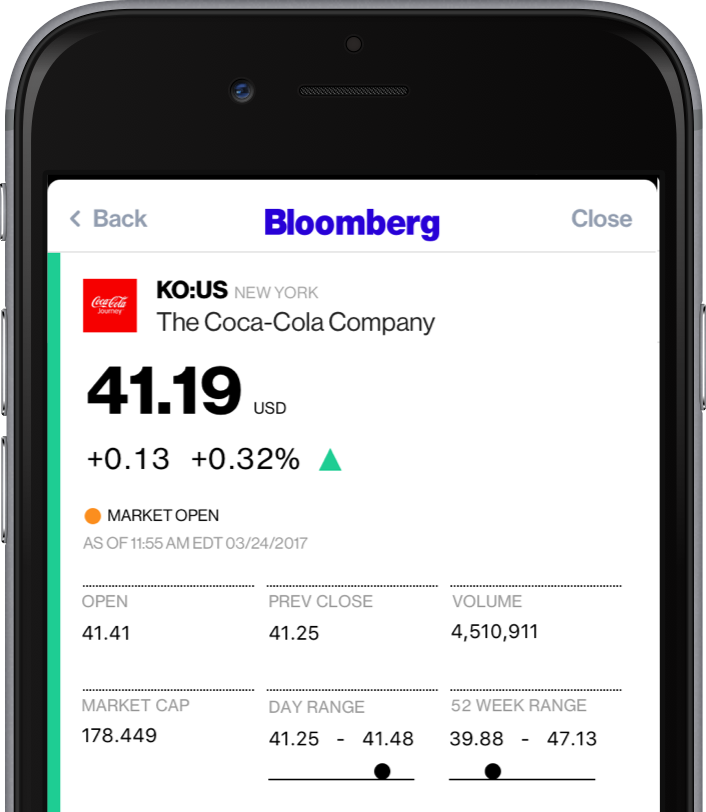
    A well-known name in money management, Bloomberg’s app is great for investing. Combining breaking money news and investing tips, Bloomberg has it all. The app even offers personalized news, so you can watch the companies you invest in.  

    If you’re as interested in the “why” of the stock market as you are in making money off of it, try Bloomberg. 

    Benzinga

    Photo Credit: iTunes 

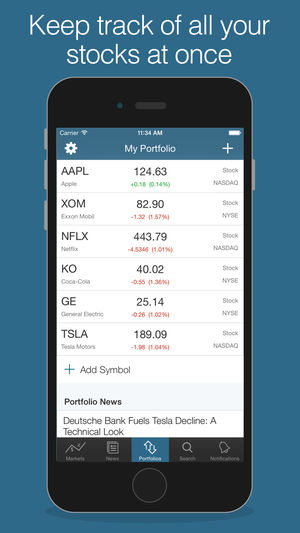
    Benzinga is great for investors who want insatnt information. By opening the app, you get immediate stock quotes, no need for waiting or skimming over news you don’t want. Acting as something of a punchy investment app, Benzinga is good for those who want to forge their own way. It has social media options, too, letting you share trending stock info to sites like Twitter.  

    Benzinga can also give you push notifications when news relevant to your investments breaks. It also offers some premium features for those who want a more in-depth experience. If you get the subscription you access features like live analysts to answer questions and audio news. 

    CNBC

    Photo Credit: DownloadMyMobileApp.com 

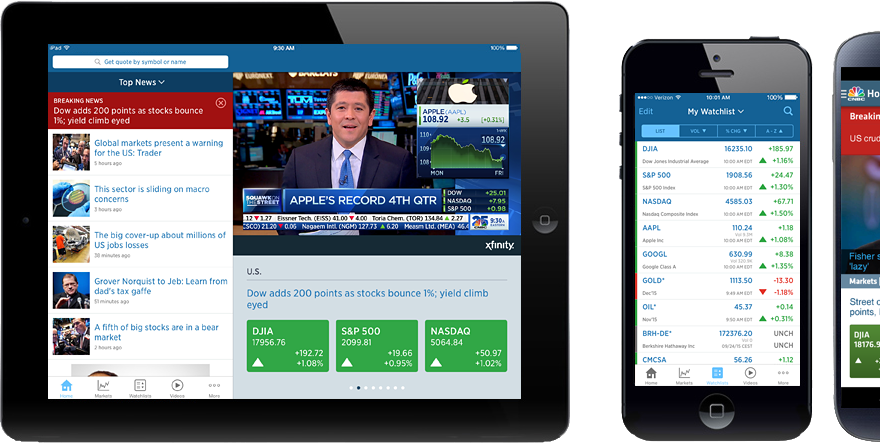
    CNBC is a great news app for those who want to see a little bit from every source. Their app is clean and user-friendly, presenting data in an immediate, digestible format. Many investors swear by the process of synthesizing news from as many sources as you can stand to read. CNBC’s app is a fantastic way to achieve such wide-ranging research without having to dig across the internet. A great resource for novices and veterans alike! 

    Fidelity Investments

    Photo Credit: iTunes 

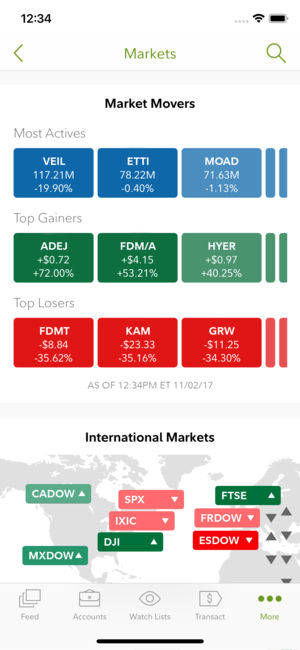
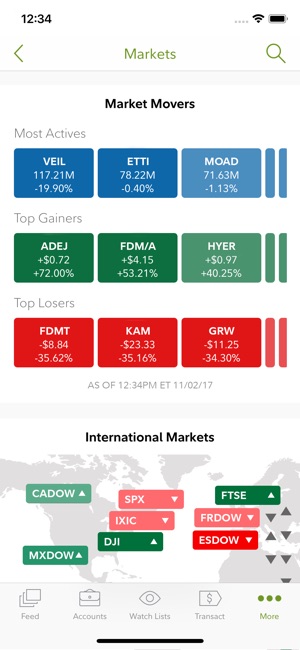
    Fidelity Investments’ app is great for more experienced investors looking to move to something more in-depth. The app offers in-depth charts and daily video coverage of market trends. It also offers notifications for when prices go above or below certain thresholds. It has a comprehensive news section and offers multiple money-management tools. This is a great choice for those who have become more adept in their online investing! 

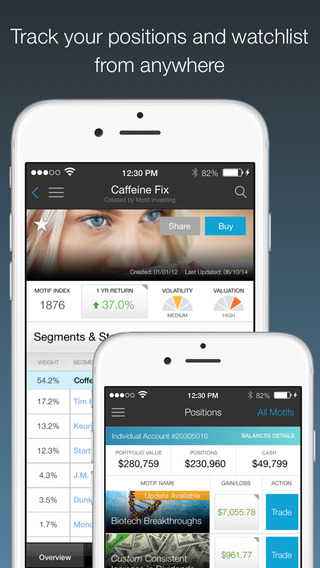
    Motif Explorer

    Photo Credit: The Divided Ninja 

    Motif is a cool way to introduce the stock market to people who are curious about the exchange. The app’s creators track various world events to see which could cause the market to shift. Portfolios, or motifs, based on those observations are generated. For instance, they might have a profile on clean energy, and if you invest in that motif your money would be invested in various clean energy companies. The app works to find which motifs are trending upwards and help you invest accordingly.  

    While Motif Explorer isn’t the best for large, serious investing, it is interesting for newcomers. Consider this one if you’re interested in dipping your toe in investing. 

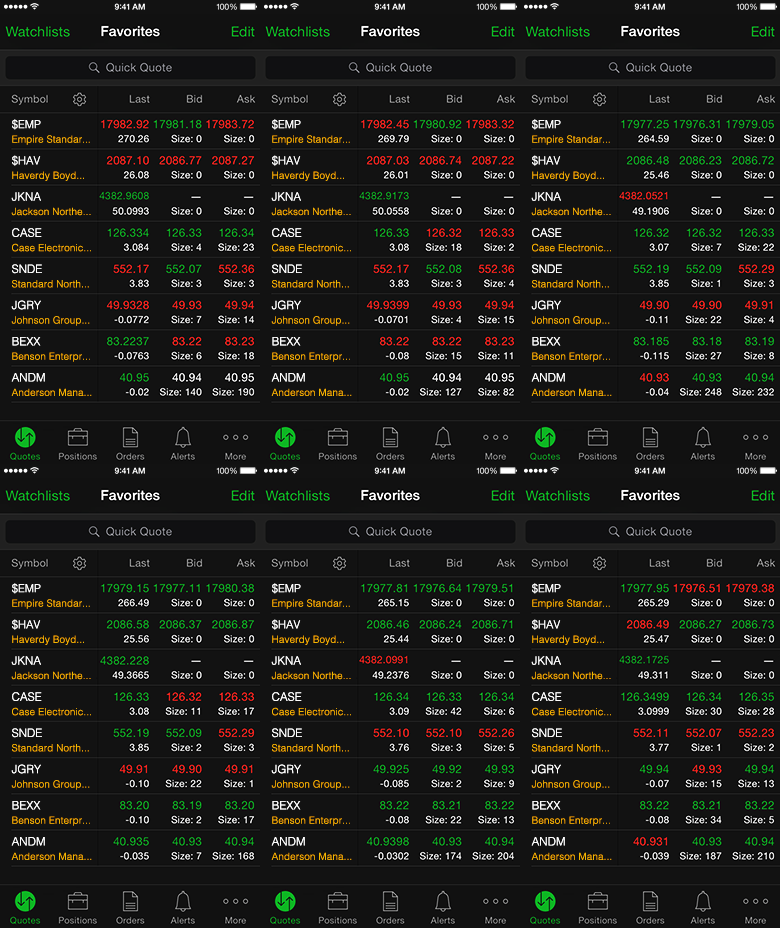
    TD Ameritrade 

    Photo Credit: TD Ameritrade 

    This app gets a nod for being a great, bare-bones app with no frills. If you’re looking to not have your hand held and just start investing, check this one out. It offers real-time view of the stock exchange, mobile trading, fund exchange and other basic features.  

    Most notably, this app has a feature called Snapstock. This feature lets you use your phone camera to take a picture of a barcode. Then, the app pulls up the company that makes the product that barcode is attached to. That way, if you see an item in a store and think “this is going to be huge,” you can find them and invest on the fly from your phone. 

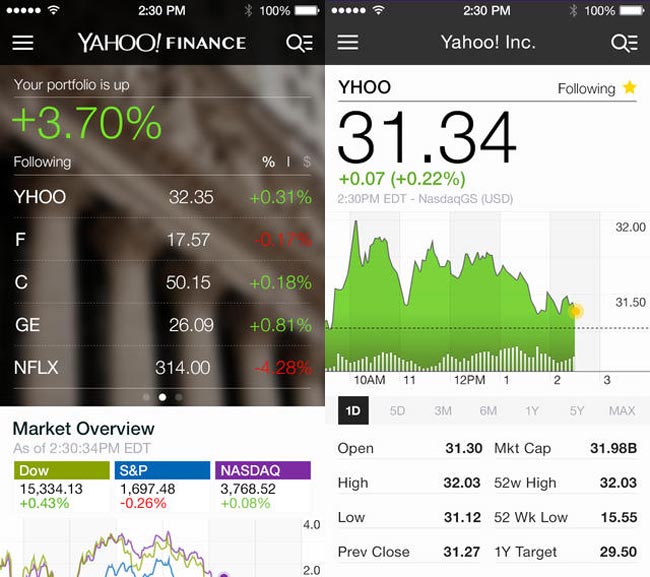
    Yahoo! Finance

    Photo Credit: Geeky Gadgets 

    Surely, you’ve heard of these guys? Jokes aside, Yahoo! Finance has a great app for beginner investors. The app has a gorgeous, clean design reminiscent of Apple’s native iPhone stocks app. The design is personalized to your investments and offers a great dashboard to see what stocks are trending. It also features news and trending stocks at a glance. All in all, this app is great for those just starting out who want to get their stock info at a glance.  

    Stock Market Simulator

    Photo Credit: APK-DI.com 

    This mock investment app is a stress-free simulator to show newbie investors the ropes. You start with $10,000 in virtual money with no value and can mock invest in an echo of the real stock market. The echo updates fifteen minutes behind the real exchange. While this isn’t meant to be a tool to predict actual investment trends, it is useful to show newcomers what the exchange looks like. It allows them to experiment without risking their actual money. 

    SigFig


    Photo Credit: Apptentive 

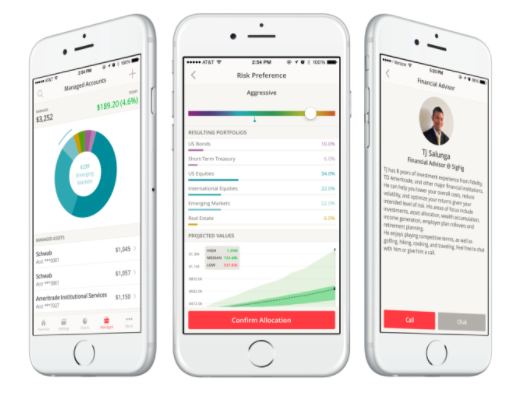
    This investment app is quite good for newcomers. SigFig offers advanced optimization tools for portfolios, helping you manage your money. You take a profile quiz to tell the app the ways you like to take risks with your money. You get a personalized investment plan, put money in the account, and off it goes. It’s like a digital broker! 

    The app also offers investment advice for first-time investors. The only downside is that it only shows you three years back of your investment, where most apps opt for five- or even ten-year retrospectives. That said, this is still an awesome choice for newcomers. 

    Our Favorite Beginner Investment App: Acorns

    Photo Credit: Cult of Mac 

    The Acorns app is pretty awesome. This investment app works by investing your loose change into a diversified portfolio. The idea is that you set it up with your credit or debit card, and then the app rounds up your regular purchases and invests the small amounts of money in accounts recommend by Harry Markowitz. Markowitz, for his part, has won a Nobel Prize for his work as an economist, so you know your money is in good hands. 

    Acorns is meant to be a “set it and forget it” service, in their COO Jeff Cruttenden’s own words. The service does have a small monthly fee, but as long as you keep small amounts of money in it, you probably won’t notice it. This service is great for those who’d like to invest but don’t know where to start. 


  • Best Online Stock Trading Platform

    Best Online Stock Trading Platform

    Stock trading can be a scary concept. After all, investing in markets is something difficult that only professionals can do, right? Well, not really. All you need to start trading today is some money to invest and a good online stock trading platform.

    E-Trade

    The poster child for online stock trading, E-Trade is a great place for beginners to start. If you’ve never done any trading before, we recommend E-Trade. You can get acquainted with the basics through their learning tools. They offer web seminars, reading material and more to get you comfortable with the idea of investing in stocks.

    They even have a team of market analysts who can help guide you in the best ways to invest your money. Their analyses are available through the site, and you can even contact a 24-hour helpline to give you market advice. Really, it’s a great all-in-one for beginners.

    Ally Invest

    Ally Invest is fantastic for those looking for a more budget-friendly way to trade. That’s because they have a low price for trading and a low commission structure for an online stock trading platform. They offer $5 trades, or $4 trades for people with more than 30 trades per quarter. That’s a pretty enticing deal for those looking to make a lot of trades!

    If you’re a relatively confident investor who just needs a good, stable and inexpensive platform, Ally Invest is for you. They’ve got a few nifty tools for users, and they offer the best bang for your buck.

    TD Ameritrade

    TD Ameritrade doesn’t have the low price of Ally Invest, but they offer some other interesting features. Trade Architect is TD Ameritrade’s beginner-friendly platform that will introduce new investors to all the concepts they need to know. The simplified platform is considered a rival to E-Trade’s easy-to-understand approach.

    TD Ameritrade also offers a platform called Thinkorswim, which is great for established and confident investors. Thinkorswim offers market analyses, charts, graphs and in-depth reports fit for the most discerning of investors. So, whether you’re a greenhorn or a grizzled vet, TD Ameritrade has an online trading platform that will work for you!


  • Is a Reverse Mortgage for You?

    Is a Reverse Mortgage for You?

    What is a Reverse Mortgage?

    If you are over the age of 62 and have most of your net worth tied up in your home, but you don’t feel like moving yet and want to stay put in your home, then a reverse mortgage may be the right option for you. It is a loan that allows you to borrow on the equity of your home, without having to sell the property or take out a risky home equity line of credit. Once you no longer live in the property, it can be sold to pay the loan balance off to the bank.

    A reverse mortgage is a great option to help you get money now without having to leave your home. But it isn’t the right choice for everyone. Let’s take a look at how a reverse mortgage works and why you may want to consider this for your needs.

    To keep it simple, a reverse mortgage is a line of credit. When a homeowner is 62 years old and has a lot of equity in their home, they can choose to borrow against the value of the home, receiving those funds either in a line of credit, a fixed monthly payment, or a lump sum. Unlike a forward mortgage, which is what you used to purchase the home to start with, the homeowner will never need to make loan payments for the loan.

    Instead of the homeowner making the payments, the entire loan balance becomes due and is payable when the borrower sells their home, moves away permanently, or when they die. When the home is sold, the amount of the reverse mortgage is paid over to the bank or financial institution that originally gave the money.

    There are some federal regulations assigned to a reverse mortgage. For example, all lenders must structure the transaction so that the amount of the loan will not exceed the value of the home. Also, the borrower and their estate will never be responsible for paying the difference if the balance of the loan becomes more than the value of the home. This requires banks to be careful about which homes they will do reverse mortgages are. If the market value goes down too much, then they may not get their money back from the loan.

    Reverse mortgages are nice because they will provide some cashflow to seniors who find most of their worth is tied up in their homes. They are complex and a little costly though so you may decide it is not worth your time. However, for those who qualify and decide to use this type of mortgage, they can get instant access to the equity of their home without the risks of a home equity loan and while still living in the home. Once they sell the home or pass on, the sale of the home will go to paying back the loan.

    The Benefits of Getting a Reverse Mortgage

    There are a lot of great benefits to working with a reverse mortgage, as long as you use it properly. Not everyone will choose to work with the option because it doesn’t work the best for them. But for others, it is a way to get rid of a traditional mortgage payment or get access to the equity of your home while you still live in and own the home. Some of the other benefits of working with a reverse mortgage include:

    Provides Flexibility

    This type of mortgage is flexible, allowing you several methods to choose from based on your home, the product you choose, and more. Households who have a specific financial need can choose the right product to help provide relief in their finances. You can use this type of mortgage even without financial issues because it can become a good financial planning tool for you.

    Stay In Your Home

    You could sell your home and tap into the equity that is there. But then you have to leave your home and find somewhere new to live. If you work with a reverse mortgage, you will be able to live in the home for as long as you want, without having mortgage payments. You can use the money, in most situations, for any purpose you want. This provides you a comfortable home without moving and with lots of additional financial resources.

    Low Risk of Default

    Unlike what happens when you work on a home equity loan, this reverse mortgage will not take your home away from you for non-payment. You do not need to put payments on the loan at all until you are ready to permanently ready to leave the home. Keep in mind that you will still be responsible for the insurance, taxes, and upkeep on the home. Outside of that, the lenders of these mortgages will never have a claim on your income or other assets.

    Tax-Free

    Since this type of mortgage is a loan, the money you receive from it is often tax-free. This is true whether you decide to turn this into a fixed-income that you earn a little bit each month or if you choose to take it as a lump sum all at once.

    No Restrictions

    It is possible to use the funds that you receive from the reverse mortgage in any way that you would like. You can choose to use it for a rainy day in case something happens later, to pay for your children’s education, to pay for insurance, to go traveling, or even for day to day cost of living. There are no restrictions on how you can use this money.

    Flexible Payment Options

    You get to choose the type of loan that the reverse mortgage turns into. You can either get all of the loan money from it in a lump sum, credit line, or an annuity. No matter which one you pick, all of the money comes to you at once. You can also choose to work with an option that sends you the money each month or every other month, so you receive another source of income for as long as you remain in the home.

    How Do I Qualify for a Reverse Mortgage?

    Before you apply for a reverse mortgage, it is important to learn whether you qualify for this type of mortgage or not. Each bank may add additional qualifications based on what they like to see before approving the mortgage. The basic requirements for qualifying on this type of mortgage include:

    1. The youngest borrower on the title needs to be a minimum of 62 years old.
    2. The owners must use the home as their primary residence. If you use the property for rental income, you will not qualify.
    3. There must be enough equity in the home. The exact amount of equity will vary from one bank to another. The bank wants to make sure they will get their money back. And you will need to pay off your mortgage plus have some to live off later. The more equity that you have in the home, the better for you.
    4. All borrowers must meet financial criteria. These rules are established through the HUD.

    If you do not meet all of these requirements, do not apply for the loan. Most banks will not work with you and this will just be a waste of your time. Instead, spend some time getting things in order and prepared so you can apply for a reverse mortgage later on.

    What to Expect When Applying for a Reverse Mortgage?

    When you are ready to apply for a reverse mortgage, there are a few steps that you need to undertake. First, you need to choose which financial company you would like to work with. Each one will have their special requirements you need to follow so take some time to do your research and pick out the right one for you.

    Once you have narrowed down your choices, it is time to apply. You will need to feel out an application that will provide the bank with your name, contact information, information on your finances, information on the home you would like to do the reverse mortgage on, and your credit history.

    Fill out the application completely, putting your best foot forward so the bank is more likely to offer you the reverse mortgage. You will likely need to provide proof and documentation of all statements you make about the property and your financial history. If the financial institution asks you for additional materials, submitting them promptly will help the process go smoothly.

    Hopefully, you looked to see what qualifications you needed to meet before you start. This will help the process go well and can prevent any heartache later on because you don’t meet the minimum requirements. While there are other reasons the bank may choose to deny your application, if you do not meet their minimum requirements, they will deny it before you get any further in the process.

    Which Banks and Institutions Specialize in Reverse Mortgages?

    When you are ready to apply for a reverse mortgage, it is best to choose a bank or other financial institution with the right experience to get this done. They can walk you through the process and ensure that you receive the care and attention necessary. Some of the best banks and institutions to consider for your reverse mortgage includes:

    • FirstBank
    • Quontic Bank
    • M&T Bank
    • The Federal Savings Bank
    • Townebank
    • Goldwater Bank
    • Resolute Bank

    In the past, Wells Fargo and Bank of America were two of the big names in reverse mortgages. In 2011, both of these banks announced that they would no longer offer reverse mortgages to potential customers in the future. You can also check with your local bank to see whether they offer some reverse mortgage options to help you.

    Are There Any Downfalls to Reverse Mortgages?

    There are a lot of benefits to choosing a reverse mortgage. However, there are times when you may want to hold off and not get this kind of mortgage at all. Some of the downfalls that come with a reverse mortgage include:

    1. High upfront costs: Lenders can make money on a reverse mortgage in the same way they do with a conventional mortgage. They do this by charging a lot of fees upfront for interest, points, origination, and more. You need to weigh the costs of doing this before jumping right in and see if it makes sense for your financial situation.
    2. Mortgage Insurance: Even though there is no worry about defaulting with a reverse mortgage, many banks will require mortgage insurance to help mitigate some of the risks the lender takes on, such as the home losing value.
    3. Other fees: The borrower of a reverse mortgage will still be responsible for all of the repair and maintenance costs on the home, the upkeep, the homeowner’s insurance, and taxes. These costs will not go away when you get a reverse mortgage.
    4. Need to have a high amount of equity: To even qualify for this mortgage, there needs to be a substantial amount of equity in your home. While applying, a lender will offer a percentage of the value of the home, based on your age and the program. When you do this mortgage, it needs to pay off any existing mortgage that is on the property. If your home doesn’t have enough equity, you may not qualify.
    5. Products are complex: A reverse mortgage may sound simple, but it is not always a suitable option for every homeowner. You need to look through the paperwork carefully to help make informed decisions. Learn how payments are made, how costs are charged, and all the other rules you will need to follow.

    There are a lot of benefits to getting a reverse mortgage and many homeowners decide that it is the right choice for them. It is important to understand how these reverse mortgages work and do your research to see if they work well for your needs or not. They can be wonderful financial tools for many, but this doesn’t make them the right choice for everyone. Talk with a lender and explore your options so you are well informed if a reverse mortgage will work for you.