Category: Lifestyle

  • Type 2 Diabetes: Causes and Symptoms

    Type 2 Diabetes: Causes and Symptoms

    As American lifestyles have changed, occurrences of type 2, or late onset, diabetes have become more common. Today we’ll be looking at some of the most common causes of type 2 diabetes, its symptoms, and treatments that are designed to manage the condition. If you feel as though you may have diabetes, speak to your doctor for a full test.

    Type 2 Diabetes

    What is Type 2 Diabetes?

    Type 2 diabetes is a chronic condition that refers to the way that your body processes (or doesn’t process) sugar. Diabetes is caused by your body’s own resistance to insulin, a compound meant to help your cells process glucose. Occasionally, the condition occurs when the body doesn’t produce enough insulin on its own.

    While type 2 diabetes was once referred to as “adult-onset” diabetes, this is no longer an accurate description, as children can be diagnosed with the condition as well. This is likely due to changing lifestyles in the developed world, such as the rise in childhood obesity and poor diets among some children and families.

    Symptoms

    Symptoms of diabetes include increased thirst, increased hunger, fatigue, unintentional weight loss, slow healing of wounds, blurry vision and frequent infections. If you suffer from some of these symptoms, it could be wise to visit your doctor to do some tests and see if you’re suffering from diabetes.

    Contrast to Type 1

    Type 2 diabetes is contrasted with type 1 diabetes, which is caused by a combination of genetic and environmental factors. In type 1 cases, the culprit of the symptoms is the pancreas: the pancreas fails to produce the correct levels of insulin in type 1 patients, due to auto-immune cells destroying important beta cells in the pancreas.

    Type 1 was once known as “juvenile onset” diabetes, but this is also inaccurate. There are currently more adults diagnosed with type 1 diabetes than children. Type 1 diabetes, however, is much less common than type 2: only between five and ten percent of all cases of diabetes are type 1.

    Genetics

    The most common factors in the onset of type 2 diabetes are lifestyle and genetic predisposition. One of the biggest things we’ve learned in recent years about type 2 diabetes is that you can inherit a high likelihood of developing the condition from your parents.

    This doesn’t mean that if your mom or dad had type 2 diabetes that you’re guaranteed to develop it, it just means that you’ll be at a higher likelihood of doing so based on your lifestyle. This makes lifestyle incredibly important for people with a genetic predisposition to the disease.

    Diet and Exercise

    From a lifestyle standpoint, the biggest cause of diabetes comes from diet and exercise. A lack of meaningful exercise is often connected to the onset of type 2 diabetes, and people with a genetic predisposition are more likely to develop the condition if they don’t work out often.

    Diet is just as important as exercise, too: people with high-fat, high-sugar diets that are more overweight are more likely to develop diabetes. Notably, diets that are too low in fiber are some of the most common diets among people who develop type 2 diabetes.

    Treatments

    There’s no cure for diabetes. People living with the condition simply have to make a number of lifestyle changes to accommodate their symptoms. For instance, it’s common for sufferers to have insulin pumps to help manage their body’s insulin levels. Monitoring their blood sugar levels is very important, as well.

    Diet and exercise can be important factors in managing the condition, as well. While nothing can fully cure diabetes, being in good physical shape and eating healthy foods make managing diabetes symptoms significantly easier.


  • LASIK Basics: What You Need to Know

    LASIK Basics: What You Need to Know

    While many people have vision issues, it’s much less common for them to seek laser eye treatment than it is for them to simply wear glasses or contacts. However, laser eye surgery through methods like LASIK can be a huge help for people with poor vision. Today we’re talking about the basics of these kinds fo procedures to help you make an informed decision.

    Laser Eye Surgery

    The Basics

    LASIK is the most common type of laser eye surgery, and stands for laser-assisted in situ keratomileusis. LASIK can help to correct near-sightedness, farsightedness or astigmatism. Near-sightedness is often referred to by optometrists as myopia, while far-sightedness is often called hyperopia. In short, the procedure involves using a laser to reshape the eye in order to allow light to properly hit the retina.

    Most vision problems that are corrected with glasses or contacts are a result of the shape of the cornea, or the shape of the eye itself. When an eye is too short, it results in hyperopia, and when an eye is too long, it results in myopia. LASIK helps to correct this by reshaping the cornea, essentially turning your own eye into a contact lens for the unique shape of your eyeball.

    Pre-Surgery

    Before you can get in the chair to receive LASIK, however, there are some preliminary steps. Firstly, your eye doctor will need to ensure that you’re a good candidate for the procedure. The shape and thickness of your cornea and your overall eye health are indicators as to whether or not LASIK is going to be a good idea for your situation.

    Often, the exam is able to determine whether you’ll need a pre-LASIK procedure to help prevent yourself from developing dry-eye after the LASIK. This is often determined by doing a tear film exam on your eyes. If you’re a good candidate, this will usually be followed by a wavefront analysis to help map your cornea in order to assist the surgeon during the procedure.

    The Procedure

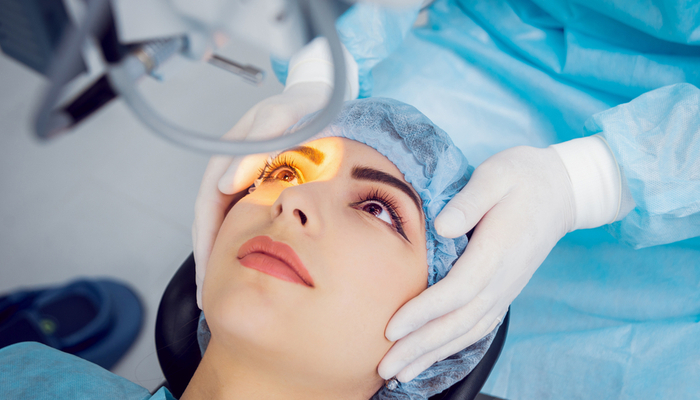
    The procedure only takes about fifteen minutes for both eyes, and is relatively painless, thanks to topical anesthetic eyedrops. The procedure begins when the surgeon cuts a thin flap in your cornea, and then folds that flap back to access the cornea. The surgeon then uses the laser to remove small amounts of corneal tissue in order to alter the shape of the cornea.

    For a person with myopia, the procedure results in a flattened cornea to better focus light along a longer eye. People with hyperopia, on the other hand, are given steeper corneas to help refract light more along their shorter eyeballs. Astigmatism is corrected by simply smoothing the cornea into a more normal shape. The surgical flap on the eye is then folded back down and heals after the procedure.

    What to Expect

    Patients are given drops to numb their eyes so they feel no discomfort during the procedure. If you’re nervous, your doctor may prescribe medication to help you remain calm. This may be good to take, especially is you have a fear of operating tables.

    You have to be conscious for the procedure, and your eye will be help open by one device while being immobilized by another. You then have to look into a laser light as it reshapes your eye. This procedure can be a little disconcerting for some people, understandably.

    Results

    Normally, the procedure returns nearly instantaneous results. Most patients get up from the procedure with their vision cleared and enhanced dramatically. In most patients, their vision continues to clear and become stronger as a few days go by and their eyes heal. This means that most people who get LASIK surgery don’t need to wear any of their glasses or contacts anymore, as they can now see normally without any outside aid.


  • Perk Up! Best Organic Energy Drinks

    Perk Up! Best Organic Energy Drinks

    We all need a nice boost from time to time. Maybe you didn’t get enough sleep, or maybe you’ve got to pull an extra-long shift. In either event, an energy drink can be a great way to give yourself that boost to make it through the day. That said, you might not want to pick up just any old energy drink: a lot of them are quite bad for your health.

    Today we’ll be looking at a few organic alternatives to normal energy drinks. These are options that might not be healthy, per se, but they’re not as detrimental as drinks like Monster or Red Bull. Let’s start with some of the basics!

    Black Coffee

    The warm, bitter drink of choice for health-conscious people who need a boost is, of course, black coffee. If you don’t add any cream or sugar to the morning beverage, it’s got zero calories and it’s actually pretty good for you. There’s not really much to it, so all you get from black coffee is the caffeine content.

    As you well know, one of the most concentrated and efficient ways to get caffeine is just through drinking coffee. So, if you want a good way to get energy without taking in a ton of sugars and other compounds from energy drinks, go with a nice, black coffee. If you’re looking for the boost later in the day and don’t want such a hot drink, you can go with an iced coffee or a cold brew, both of which are also fine for your health.

    Black Tea

    Maybe the bitter, intense flavor of coffee isn’t your cup of tea. Jokes aside, if you don’t like coffee, maybe you’ll like black tea. You can drink it hot or cold, just like coffee, and it offers caffeine and no calories. That is, if you take it without any cream or sugar. This might all be sounding pretty familiar.

    In the case of sweetened tea, of course, that changes the conversation. Southern-style sweet iced tea has a tremendous amount of sugar added in, making it a decidedly different beverage. If you’re trying to watch out for your health, try to avoid ingesting that much added sugar! Black tea is quite good for you if you take it with nothing added, and it’ll give you a great boost of caffeine to get in gear.

    Schekter’s Organic Energy Drink

    Schekter’s is a true energy drink, in that it’s a canned concoction with a proprietary caffeine blend and an interesting taste profile. The basic flavor is a pomegranate taste, with hints of elderberry and lemon juice, giving the drink an unusual but good taste profile.

    The energy from this drink is described as “clean” and “jitter-free,” coming courtesy of an all-natural caffeine blend in the drink. As such, this drink isn’t dissimilar from coffee, aside from the added sugars from the fruit juices in the recipe. If you don’t mind a bit of extra sugar, this is a good option.

    Sambazon Amazon Energy Drink

    Another “proper” energy drink, Sambazon Amazon Energy Drink is also marketed as all-natural and organic. The drink has a number of antioxidants, courtesy of the acai berry and acerola cherry in the recipe. The company proudly proclaims that it obtains the ingredients used in the drink from the Amazon Rainforest, using sustainable methods to source them.

    The caffeine mix in the drink is obtained from guarana, green tea and yerba mate, and is supposedly a “cleaner” boost than some competitors. The amount of caffeine in one can is comparable to a double shot of espresso. That makes this a rather impactful drink, so it should help you tackle any challenges in your day!

  • Do You Smell Funky? Preventing Body Odor

    Do You Smell Funky? Preventing Body Odor

    Let’s not mince words: when your body odor is strong, people aren’t going to hang around with you. Most people are too polite to say anything, and you might not even notice how nasty the smell coming off of you is. However, there’s no reason to freak out. There’s a lot you can do to keep that smell under control, from deodorant to showers. Here’s our top tips for not smelling funky.

    Stop Smelling Funky

    Stay Vigilant

    Don’t just assume you smell fine after a workout, or after a long day at work. Head to a restroom and give yourself a sniff test. If you’re smelling a little weird to yourself, imagine how nasty you might smell to someone else. If you find yourself smelling gross after a shift or workout, don’t panic. There’s a few steps you can take to keep the scent under control.

    Be Prepared

    If your schedule includes working out or working long, hot shifts, stay prepared. Keep a pack of wet wipes and a stick of deodorant in your exercise bag or desk at work. This way, if you’re smelling a little fresh after your physical activity, you can wipe yourself down with the wet wipes to knock some of that sweat off.

    If this is something you’re embarrassed about, you can do it discreetly. It’s fine to head to a bathroom stall and freshen up. It’s much preferable to take a quick cat bath after work and apply a layer of deodorant than to head to hang out with friends smelling like a gym sock.

    While you’re at it, consider wearing antiperspirant for your daily activities that make you sweat a lot. Remember: not all deodorants are antiperspirants, and vice versa, though many products are 2-in-1’s. Not everyone sweats the same amount, and some people might not need to wear antiperspirants or deodorants at all. However, everyone should have at least one of each on hand for days with serious physical activity.

    Shower Daily

    This is one we can’t stress enough: try to shower or bathe daily. This goes double if your work is physical in nature and results in you sweating a lot. It’s rather important that you clean yourself off thoroughly after a hard day. Alternatively, if you work in an office or some similar (air-conditioned) environment, you can probably shower in the mornings to knock the sleep off of you and make you fresh for your shift.

    If you’re concerned about the effect on your skin from taking a hot shower daily, fret not. There’s a solution that lets you keep the funk from emanating off of you without giving yourself dry skin: take cooler showers! Now, we’re not suggesting you take an ice-cold dip, but you don’t have to crank the heat up to 120 degrees Fahrenheit, either. Go for a nice, even 85 degrees or so, which feels refreshing without freezing your skin off.

    Wear Breathable Material

    Fabrics that are lighter and breath better will help you keep from sweating immensely. If you’ve got a serious problem with sweat, you could consider getting moisture wicking shirts and underwear that help to keep you from getting… swampy. These materials are great for both your comfort as well as keeping you from getting musky and gross at the end of a long shift.

    Along this track, if your sweating also makes you chafe, you could consider getting some baby powder, or talcum powder, and applying some to the affected area. This helps with both your mobility, letting things slide better, while also preventing the area from sweating as profusely. You’ll feel a lot better, and you’ll smell a lot better, too.


  • Managing Cat Allergies when You Own a Cat

    Managing Cat Allergies when You Own a Cat

    Who doesn’t love cats? Their sweet demeanors, soft purrs and adorable meows make them appealing for fans of all things cute. Their propensity for cuddling and spending time in their owners’ laps makes them great for people looking for a little companion. However, they also have unique proteins in their saliva and urine that can cause allergic reaction in some people.

    If you want a cat, or have a cat, but suffer from cat allergies, you’re probably wondering how best to handle the situation. On the one hand, you want a sweet little kitty to keep you company. On the other hand, you don’t want to be sneezing and scratching your eyes in your own home. So, how do you manage your cat allergies?

    The Good News

    Here’s the good news: most people with cat allergies find themselves experiencing less and less symptoms as they are exposed to cats for longer. Most people will lose the worst of their symptoms after they own a cat for a few months. While this isn’t true for everyone, it means that most people can look forward to eventually being able to hug their kitty without sneezing and having their eyes water.

    Cleaning

    One of the first things you’ll need to get in the habit of when you get a cat is cleaning regularly. Their saliva and their urine are the causes of your allergies, and their saliva is present in the dander they leave behind, since they lick themselves to bathe.

    As such, dusting, sweeping and vacuuming need to become common parts of your routine. Letting their dander pool up in corners, under furniture and around the house is going to make you a very sad camper very fast, as your allergies pile up and your motivation to clean vanishes.

    Likewise, you’re going to need to keep that litter box cleaned out. Even if you only have one cat, it’s a good idea to clean their box out once a day. This keeps the smells from accumulating, keeps bugs from infesting the room you keep the box in, and it also helps you to not have as strong of an allergic reaction. On this note, you’ll also want to fully rotate all of the litter from the box about once a week, replacing it with all-new litter.

    Washing the Cat

    We know that washing your kitty is likely about as easy as chasing a car on foot down the highway, but this can help a lot with your allergies. If you can manage to give your cat a proper bath about once every four to six week, you’ll likely see a marked improvement in your allergy symptoms. Just make sure you’re careful and gentle with your kitty: she probably hates the bath tub.

    For a few pieces of advice on how to pull this off without getting scratched all to pieces, ask your vet if they know a way to carefully give your kitty a bath. Some things you could try would include bribing the kitty with their favorite wet food, or even sneaking them some (vet approved) sedatives that will make them kind of drowsy while you sponge them off. Remember: don’t give your kitty any medicine that a vet did not write a prescription for!

    Air Purifier

    Air purifiers can help to contain any lingering cat dander in the air. This is a good way to help your cleaning efforts if you feel like sweeping and vacuuming alone aren’t covering all of the dander in your home. Not to mention, air purifiers can also help to make the smells of the litter box much harder to notice, if at all!


  • Which Franchise is the Best to Own?

    Which Franchise is the Best to Own?

    If you’re an entrepreneur considering getting into your own business, you might not know what exactly you want to get into selling. The market in your area may be crowded, and you’re looking for a sure-thing investment that will return your money consistently. In this case, you should consider buying a franchise.

    Franchises give you the benefit of an existing brand you can market, a supply chain you can take advantage of and a legal overhead you can rely on for staying within local and state laws. Of course, when you get into a franchise, you’ve got some up-front costs to consider. Let’s look at some popular franchises that are considered some of the best to own right now.

    Considerations

    Before you get into a franchise, know that you’re signing up for some up-front expenses. These include franchise fees, which you pay to become a franchisee, up-front inventory stocking costs, royalties and real estate fees. As such, you could be looking at a rather heft up-front investment out of your own pocket. While you may be able to get a business loan for the expenses, this is a lot of money to owe.

    As such, make sure you do your research on any franchise you’re considering buying. Make sure they have good brand recognition, a strong financial standing and a good presence to help back up your investment. Otherwise you might be throwing a lot of money away.

    Seven-Eleven

    This highly popular convenience store is one of the best franchises to own at the moment, thanks in part to its recognizable name and potentially low franchise fee. The franchise fee could be as low as $10,000, but could be as a bit higher for certain regions.

    The strengths of Seven-Eleven include its name-recognition and its position as a convenience store with gas pumps. Everyone needs to stop in and get gas from time to time, so you’re guaranteed to make snack and beverage sales when people drop by. This is a surefire way to get some revenue coming in.

    McDonald’s

    Everyone knows the name McDonald’s, and everyone has been into one to grab some food. While McDonald’s might have a very high franchise fee, it’s for good reason. You’d be hard-pressed to find a more recognizable name, or a product that is easier to sell, than McDonald’s burgers. If you can get together the $45,000 franchise fee, you’re likely to have a great investment on your hands.

    Every town in America has a McDonald’s. This gives you a huge edge: everyone already loves the products you’ll be selling. You’ll find it easy to market yourself to people, and you’ll likely find customers just coming to you. It’s every franchisee’s dream.

    Dunkin Donuts

    Okay, they’re just called “Dunkin” now, but they still sell doughnuts, so let’s not mince words. This popular donut shop sells a ton of coffee and a ton of pastries, and is a regional favorite in areas like New England and parts of the Southeast. It’s also got locations all over the world, in 32 countries, and has a very recognizable name.

    As a franchisee, you only need an up-front fee of $40,000 to $90,000 in order to get started. From there, you’re in business selling coffee and donuts to people who have been fans of the long-running brand for years. The company also supports franchisees with help marketing, managing and even selecting and constructing sites! There’s a lot to love about Dunkin, and they make sure to take care of their franchisees. After all, the better the franchise does, the better they do!


  • Best Milk Substitutes: Avoid Dairy without Compromising

    Best Milk Substitutes: Avoid Dairy without Compromising

    Dairy isn’t exactly good for you, but you probably already knew that. However, skipping out on milk and cheese and yogurt can all be quite difficult when you’re living in the US. So, what are some of the best non-dairy options for milk? After all, you still want to be able to cook and eat cereal without getting too much dairy intake. Let’s look at some of the dairy-free favorites.

    Best Milk Substitutes

    Why Avoid Milk?

    Dairy in general is a substance that many people in the world choose to avoid. Globally, about three out of every four people are lactose intolerant. In fact, America is a bit unusual in that it is comprised of so many people that can process dairy. So, if you’ve got lactose intolerance, don’t feel bad, it just means that you’re like most of the species!

    Another reason to avoid dairy is that it’s just flat-out not good for you. Very high in fat, very high in sugar and lacking in many nutrients, milk is something of a weird cultural artifact in American cuisine. It’s one claim to nutrition, that it helps build strong bones through its calcium, is actually debated by many nutritionists as being misleading. After all, almonds, figs and kale are all much better sources of calcium, and they’re much better for your body.

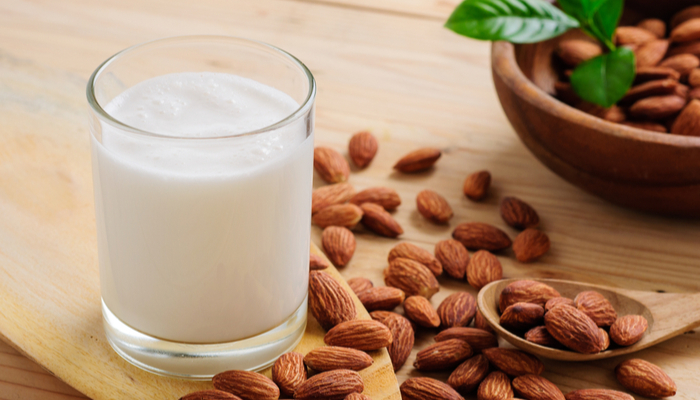
    Almond Milk

    One of the first substitutes for milk anyone will mention is almond milk. It’s common, relatively inexpensive and full of calcium. In fact, if your main reason to drink milk was for the calcium to help build up strong bones, then almond milk is perfect for you. The flavor has been described as being more “watery” than cow’s milk, but when used in cooking or cereal it’s hard to notice the difference.

    There’s notably much less fat and much fewer calories in almond milk than cow’s milk. There’s also lower protein and lower in carbs, and almond milk is one of the least-fattening milk substitutes. If you’re trying to watch your calorie intake and still get plenty of calcium, then almond milk is likely the right substitute for you.

    Soy Milk

    Don’t let half-formed concerns fool you: soy milk is a great replacement for milk if you’re lactose intolerant or just don’t like consuming animal products. This drink is created from soybeans or soy protein isolate, and it is usually thickened by various agents and vegetable oils to help the drink’s consistency.

    Soy milk has a similar concentration of protein as cow’s milk, but it has decidedly less fat, carbs and calories. Soy is also a major source of “complete” proteins that include the full range of amino acids that you have to acquire from your food and can’t create on your own. Contrary to what some internet theories claim, there’s also no evidence that soy milk adversely affects any hormone receptors in the body. Soy milk is perfectly safe and healthy for normal adults to drink.

    Oat Milk

    A very simple milk substitute, oat milk is essentially just oats and water. Often, oils, salts and gums are added to the mix to give the beverage a more “milk-like” texture and taste. Oat milk is popular in cooking, mixed into smoothies and in cereal. It has been noted as being a very close reproduction of the flavor and texture of cow’s milk.

    Notably, oat milk is actually not as good for you as some of the other substitutes available. It’s got double the carbs, the same amount of calories and half of the protein of milk. Thankfully, it also contains half the fat that milk does. However, for those on a diet or watching their calories, oat milk might not be the best substitute.


  • Dental Implants: Everything You Need to Know

    Dental Implants: Everything You Need to Know

    When you’re missing teeth or have to have teeth removed, their absence can be embarrassing and can make it difficult to eat, speak or even go about your daily activities. Today we’re looking at dental implants and how they can help you with your condition. We’ll look at what makes them so popular, what the procedure to implant them looks like, and how they stack up to bridges and dentures.

    Dental Implants

    What are Dental Implants?

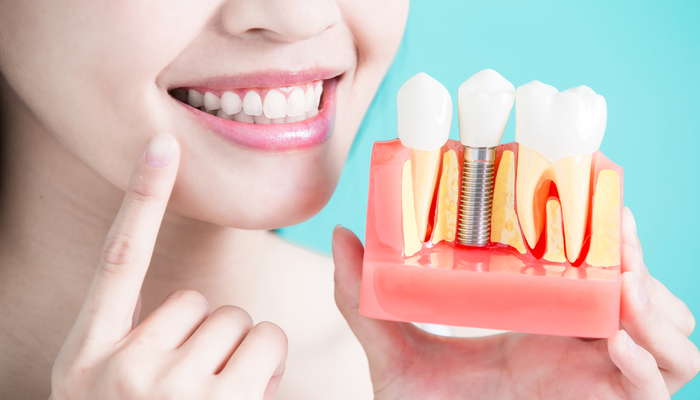
    Dental implants are a relatively knew dental surgical solution for missing teeth. For years, the main way to address lost teeth has been through dentures or bridges. However, dental implants allow for an artificial root to be implanted in the gum to act as a foundation for either fixed or removable replacement teeth.

    As such, they are dental prosthetics, not unlike dentures or bridges. By contract, they are much more in-depth to get: as the name suggests, they have to be implanted directly into your gum. This means that the procedure to get them involves dental surgery, which is daunting for more reasons than just a fear of drills.

    Why Would You Need Them?

    Generally speaking, you would only get a dental implant if you were missing a tooth, or teeth. Typically, people lose teeth to tooth decay, injury or, occasionally, through periodontal disease. Often, younger patients who lose teeth prefer to not have dentures or bridges, due to those prosthetics’ reputations as being for older people only.

    Dental implants offer a number of benefits for patients of any age, though. Firstly, they tend to look better than older prosthetic types. They both look and feel like the patient’s own teeth, since they fuse with the bone and are permanent fixtures.

    Dental Implant Benefits

    There are other benefits for dental implants than just appearance, though. They also offer better comfort, as they are more closely fitted to your own mouth and fit with the rest of your teeth in a natural way, unlike bridges or dentures. Your speech, likewise, is improved when you’re speaking with implants versus dentures, which can slip or slide and cause you to slur or mumble.

    Dental implants are also great for your self-esteem. Since they’re a part of your actual body, there’s no embarrassment about having them. They are more durable, on average, than other prosthetics and can even last an entire lifetime if properly cared for. Finally, dental implants are just more convenient than removable dentures: you don’t have to worry about forgetting them or losing them. They’re just like having your actual teeth.

    Costs

    A drawback to dental implants, as with almost all cosmetic surgeries, is that they are often not covered by insurance. This means you’ll likely have to pay mostly out of pocket to cover the costs of the procedure. As such, you might find dental implants prohibitively expensive compared to other options. However, in some cases, depending on the cause of your tooth loss, insurance may cover the costs of the implants. Your individual case can vary.

    In general, however, dental implants are more costly than dentures or bridges. This is because they become a part of your body: they fuse with your bones and act much like your own natural teeth.

    Bottom Line

    Getting a dental implant is a much more in-depth process, of course, than getting fitted for dentures or a bridge. It involves a surgical procedure that implants a synthetic tooth root in your gum, meaning you’ll have to get a personalized treatment plan from the dental team.

    After the procedure, it can take up to twelve weeks for the gum to heal around the implant. After that, an abutment is attached to the implant to hold the new tooth. Finally, the new false teeth, called crowns, are attached to the abutments and become part of your bite.


  • Botox Treatments: How do they Work?

    Botox Treatments: How do they Work?

    Botox treatments are the most popular non-surgical cosmetic procedure in the world! How much do you know about this popular procedure, though? Maybe you’ve heard about the muscle-paralyzing effects of the procedure, or maybe you’ve just heard that the procedure helps to eliminate wrinkles. Today we’re looking at the treatment, the chemical in question, and whether Botox might be a good idea for you.

    Botox Treatments

    What is Botox?

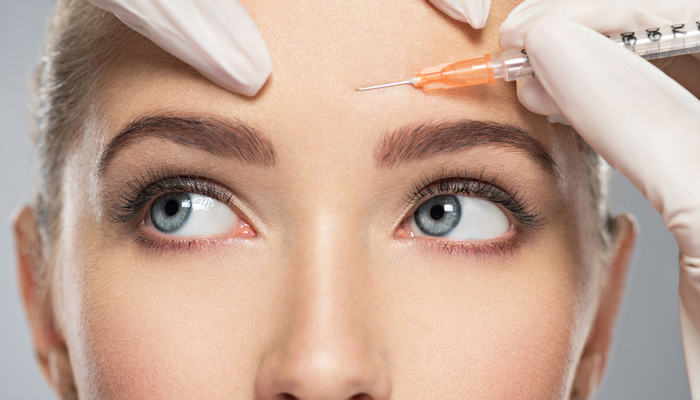
    The Botox treatment involves using a carefully controlled dose of a neurotoxin to paralyze some of the muscles in your face. That might sound pretty scary, but as long as a professional is applying the procedure it’s perfectly safe. The toxin itself, botulinum toxin, is created in laboratory settings by manipulating a bacterium called Clostridium botulinum.

    The toxin itself is unbelievably dangerous, and is one of the most poisonous substances to humans that science has ever studied. It is estimated that a single gram of botulinum toxin could kill over a million humans, and only a few kilograms could wipe out the entire human race. That’s a pretty scary thought!

    The Toxin

    The toxin itself usually has to be lab-made to be deadly to humans. The bacteria that create it normally don’t do so in their natural environments, unless they transform into vegetative cells. In nature Clostridium botulinum is often found near lakes, in forests and in soil. It often lives in the intestinal tract of small mammals, and can often be found in the gills of fish.

    In high concentrations, the toxin these bacteria create results in a medical condition called botulism. Botulism typically results in serious respiratory distress in affected people, and, if left untreated, results in death. While this all may sound rather scary, the botulinum toxin still has proven to be a successful therapeutic protein.

    What it Does

    Botulinum toxin, when used in small quantities and applied correctly, can paralyze muscles in a very localized fashion. It does this by blocking proteins before they can reach the nerve cells in the muscles. You’ve likely seen the jokes about people getting Botox and being unable to move their facial muscles: this protein-blocking action is the reason why.

    In order for muscles to work correctly, a neurotransmitter called acetylcholine has to be released. It binds to receptors in the muscles and this, in turn, causes the muscles to contract. It’s pretty simple in theory, but in your body is occurs millions of times in a short span of time and across your entire bodily structure. Botulinum toxin is capable of simply cutting this neurotransmitter off at the source, resulting in paralysis. This is what gives it the title “neurotoxin.”

    In Cosmetic Procedures

    All of the scary, nerve-blocking functions would be terrifying in a large dose, of course. In a controlled dose, however, this toxin can have some interesting cosmetic effects. Namely, Botox procedures are normally aimed at reducing the appearance of facial wrinkles or fine lines. It does so through its normal function of blocking proteins and paralyzing muscles, but in a highly localized area.

    By paralyzing these muscles, the intended effect is to cause the face to appear smoother and more youthful. Typically it takes a day or so for the toxin to take effect, though, when it does, it can result in facial stiffness for a few days while the body deals with the toxin. Following the procedure, many find their facial appearance to be much smoother, their wrinkles being reduced.

    There are a few side effects that can occur with the procedure, however. The most common ones include nausea, headaches or migraines, double vision and a general feeling of fatigue. Rarer side effects could include redness or local edema at the injection site, trouble swallowing, neck stiffness or weakness, dry mouth and other side effects.


  • Reverse Mortgage: Right for your Retirement?

    Reverse Mortgage: Right for your Retirement?

    If you’re a bit strapped for cash going into your retirement, or even a few years in, you might be considering getting a reverse mortgage. However, you might want to do some research about the type of loan that you’re signing up for. After all, reverse mortgages entail high fees, and they result in the lender owning your home when you pass away.

    Today we’ll take a critical look at reverse mortgages to see if they’re really right for you. There are situations when a reverse mortgage could be a good deal for you financially, but it could just as easily be a bad trade-off. Let’s look a little deeper.

    What is a Reverse Mortgage?

    A reverse mortgage is a loan issued by a bank with the trade-off being the equity in your home. Unlike a normal mortgage, a reverse mortgage goes up in incremental payments made to you as the interest increases. However, they carry heavy fees. In fact, these fees can be up to three times higher than a traditional mortgage. Not to mention, the up-front fees can be ten percent or more of the actual loan.

    Yes, a reverse mortgage will put money in your pocket at the outset, but it can be a hassle for a number of reasons. When you’re borrowing against your home equity, you’ve essentially sold your home to the bank. If you want to move, you have to pay back the reverse mortgage, and since it’s eaten up so much of your home’s equity, this means you’ll have to cover the costs of any move yourself, and still come up with a down payment on a new place.

    Other Drawbacks

    A major reason not to get a reverse mortgage is if you plan to leave your home to your children. In many cases, people leave their assets, including their homes, to their kids when they pass away. If you’ve taken out a reverse mortgage, however, you can’t do so. The lender will take possession of your home and sell it to recoup the loan they gave you for the reverse mortgage.

    This means that reverse mortgages can be a terrible idea for people who intend to leave their homes to their families. If you live in a family home that you want to pass to your kids, stay far away from anyone wanting to give you a reverse mortgage.

    Advantages

    This all being said, there are a few reasons you might want a reverse mortgage. If you’re very strapped for cash in your retirement and you have no children, or you don’t have any plans to leave your home to your children, then you might consider a reverse mortgage. If you don’t plan to move again, this can be an attractive way to shore up your finances to help cover some of your recurring bills.

    The line of credit you get with a reverse mortgage isn’t subject to being frozen by a market downturn. If you have bad credit, or a high debt-to-income ratio, a reverse mortgage can be a good way to get some immediate financial relief to help cover your bills. However, if you can qualify for a home equity line of credit, and you live in a pricey area, you might be better served by downsizing and moving to a less expensive region.

    Bottom Line

    While most people would benefit more from home equity credit lines or home equity loans, there are some who find reverse mortgages to be more appealing to their financial situation. However, unless you are very strapped for cash and have poor credit or a high debt-to-income ratio, you should likely stay away from a reverse mortgage.