Tag: 5G smartphones

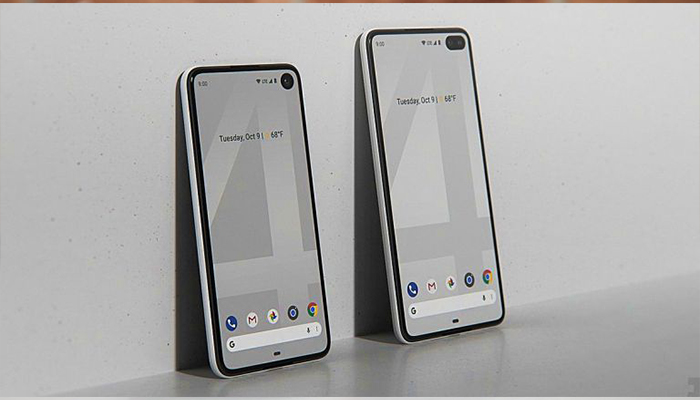
  • Google’s New Pixel 4: Should You Upgrade?

    Google’s New Pixel 4: Should You Upgrade?

    With the Pixel 4 bringing so much newness to the table, why in the world should you keep your Pixel 3? It shouldn’t come as any surprise that the Pixel 4 is loaded with upgrades compared to the Pixel 3. For some, the changes Google’s made might be enough to encourage them to upgrade, here’s why:

    While the Pixel 3 isn’t nearly as flashy as its newer sibling, it’s still plenty capable these days and should get you through another year of use just fine. There’s no denying that Google created a killer smartphone with the Pixel 4.

    With a camera that captures detail that the competition can’t, a futuristic way to use your phone without even touching it, your own personal Google Assistant, and a fast and responsive display, Pixel 4 packs new technology into a must-have new design.

    Get the perfect photo

    Pixel 4 brings Google’s biggest camera upgrade yet. The Pixel 4 comes two cameras on the back of the phone and includes a new telephoto lens. When you combine this new hardware feature with Google’s Super Res Zoom software, it gives you exceptional image quality, even planets away.

    Night Sight already takes beautiful photos in full darkness, and now you can use Night Sight for shots of the night sky, the stars, and even the Milky Way (when you find a clear night). Pixel 3 and 3a will also get a version of this capability with the latest camera app update!

    Your new Google Assistant

    Thanks to a deeper integration into Pixel 4, the Google Assistant is now a faster way to get more things done, think of it like your own personal assistant. Google redesigned the Assistant so it doesn’t take up too much room on your screen, letting you better multitask across other apps. It can quickly open apps, search your phone, share what’s on your screen, and more.

    It also considers the context of your query to do a better job answering. For example, you can ask the Assistant to “show my photos from Miami” and then say, “the ones in South Beach.” Then, you can share a picture by saying “send it to Brad.”

    A phone that senses what you want it to do

    Pixel 4’s Motion Sense feature uses a miniature radar sensor to detect movement around your phone. It can sense when you’re reaching for the phone and will initiate face unlock, or turn off your screen when you’re not around. New Quick Gestures let you skip songs when you don’t want to pick up your phone. Just wave your hand to snooze alarms, dismiss timers, or silence your phone.

    Built for performance and security

    With 6GB RAM, a 90hz display, and Pixel Neural Core, Pixel 4 is fast and powerful. Pixel Neural Core is the engine for on-device processing, always-on computing, and machine learning, meaning more tasks are done on the device for performance and privacy.

    Pixel 4 also includes Google’s custom-built Titan M security chip to protect your most sensitive data and ensure the integrity of the operating system. Combined with the latest version of Android 10, monthly security updates for 3 years, and access to Google’s advanced security services, Pixel 4 is designed to keep your data secure.

    Pricing

    Beginning today, October 15, you can pre-order a Pixel 4 for $799 and Pixel 4 XL for $899, and phones will ship on October 24, globally. Pixel 4 comes in three colors, including white, black and a limited-edition orange!

  • 5G Networks are Coming: Are You Ready?

    5G Networks are Coming: Are You Ready?

    The biggest shift in wireless communications history is coming up soon, and it goes under the name “5G”. The newest advancement in wireless communications technology, 5G networks will revolutionize communications speed and change the way the world communicates. This might sound like hyperbole, but it isn’t: this will be a huge moment for technology. Are you ready for the changes?

    5G Networks

    What is 5G?

    5G is a network specification, much like 4G LTE or 3G. These are all types of wireless communication, defined by industry standards, bandwidth and speeds. Think of them like wireless internet speeds, and as loose indicators of the current face of wireless communications technology. Notable advances in technology in the last few years are what has made 5G a possibility.

    When 5G networks go live for a wide-release, carriers like AT&T, Verizon and Sprint will be offering cell phone networks powered by 5G technology. Samsung, Apple and other flagship smartphone manufacturers will also be creating phones with the capability of connecting to 5G networks and making the most of the new technology.

    What This Means

    5G connection speeds are expected to be absurdly fast. As in, downloading a movie in seconds, stream 4K video at 60 FPS, upload video in moments kind of fast. This will bring about big changes in more than just cell phone technology, of course. There will be robotic devices capable of letting a surgeon perform a procedure from across the country. Self-driving cars will be able to connect and make adjustments based on traffic reports in seconds.

    Other functionality could extend to entertainment, augmented reality and consumer products, too. Imagine holding your phone up while watching a football game, and having your screen superimpose live stats and graphics to help you keep track of players, all updated on the fly. That’s the kind of power 5G will bring: the applications are sure to be mind-blowing.

    When Can We Expect This?

    5G networks aren’t quite a widespread reality yet. The technology is currently undergoing rigorous testing and production and is in the final stages before wide release. Some smaller scale, individual-city level 5G tests have been done, but these are using somewhat limited versions of the expected 5G technology.

    At the earliest, we could expect to see some larger cities receiving 5G support in late 2019. However, this is an optimistic estimate and assumes that carriers push for early trial versions of the technology. As for nationwide coverage of 5G networks, that is likely as far away as mid- to late-2020. While this might sound like a long time, the massive increase in power will more than offset the long wait.

    What Phones Can Use 5G?

    It’s unlikely your current phone will be able to use a 5G network unless you have a bleeding-edge phone prototype. In fact, few manufacturers are even selling phones that will be able to use eventual 5G networks yet.

    However, there are a few brand-new phones that are either coming soon or have just been released that will be able to take advantage of 5G when it arrives. If you want to be absolutely future proof, here are some of the phones you should be looking at.

    Upcoming 5G Phones

    The Samsung Galaxy S10 5G, which starts at $1,300, was released in mid-May in the US and will offer 5G connectivity. The Galaxy Fold, which was delayed into later 2019, will also be able to use the upcoming network.

    The Motorola moto z3 will offer a 5G mod chip that will allow you to use the upcoming network, as well. It’s currently available for purchase, but the 5G chip will be launching later. Also coming to the 5G game will be phones for Chinese smartphone maker Huawei, including their Mate 20X 5G and upcoming foldable Mate X.