Tag: artificial intelligence

  • Artificial Intelligence: Fact vs Fiction

    Artificial Intelligence: Fact vs Fiction

    One of the most misunderstood terms in computer science is “artificial intelligence”. While many people are familiar with the term artificial intelligence, or its shortened form, AI, they might have a picture of AI in their mind that doesn’t reflect the reality. Sci-fi movies paint a picture of an AI as simply a human-like intelligence that lives in a computer. That’s not entirely accurately.

    Today we’re looking a bit more closely at real artificial intelligence initiatives, how they differ from pop culture depictions of AI, and some of the ethical and philosophical questions raised by artificial intelligence technology.

    What is Artificial Intelligence?

    In simple terms, artificial intelligence refers to intelligence being displayed by machines, in contrast to the natural intelligence displayed by humans and other animals. In the popular conception of an artificial intelligence, the term refers to machines that can mimic natural intelligence features such as problem solving, learning and innovation.

    Within the scientific community, there is an ongoing effect known as the “AI effect.” This observation states that any functionality once thought to be “artificial intelligence” that becomes achievable by current-day machines is no longer dubbed AI. For instance, tasks such as understanding human speech, playing games like chess and Go and decrypting written language were all once reserved for “artificial intelligence,” though they are now common computer programs.

    In short, as Tesler’s Theorem jokes, “AI is whatever hasn’t been done yet.”

    Types of AI

    There are three main types of artificial intelligence. These include analytical, human-inspired and, finally, humanized AI. Analytical AI is the simplest, and encompasses things like learning, problem-solving and understanding representations of the world around them. Human-inspired AI are more complex and would involve the understanding and emulation of human emotion. Essentially, these would be “emotionally intelligent” AI.

    Finally, humanized AI would most closely resemble the sci-fi incarnation of a human-like intelligence that can think, reason, emote and feel in all the same ways as a human being. Humanized AI, in theory, would be fully self-aware, cognizant, and, essential, would have all of the elements that make natural intelligence aware of their place in the world. This form of AI carries serious philosophical and ethical implications.

    Ethics and Philosophy

    Humanized AI raises a serious question: is a sufficiently intelligent computer program, one that shows evidence of self-awareness, a person? Should society extend human rights and legal protections to artificial intelligences? How should we react should the artificial intelligence prove hostile, or hold values contrary to those of its creator?

    Even deeper than these questions, there are serious philosophical questions about the nature of consciousness. We know we are conscious, or, at least, each individual can know that they are conscious. However, it’s difficult to distinguish a sufficiently well-programmed piece of software from a truly self-aware machine intelligence. How can we know that the program in question is actually experiencing consciousness, not just emulating the signifiers of consciousness we programmed into it?

    Reality vs Expectation

    The difference in the reality of artificial intelligence and the expectations of them have led to a number of miscommunications between researchers and their funding. Companies and universities funding AI research often expect fully-aware, sentient AI to leap fully-formed from the researchers’ computers, while the researchers are simply making iterative probes into the nature of machine learning and intelligence.

    In the short-term, it’s unclear if any of the software we currently have could be defined as “artificial intelligence,” due to the AI effect reclassifying innovations as simple machine processes, not intelligence. In the long-term, we will have a number of decisions to make regarding the future of artificial intelligence, how we as a species deal with machine intelligence, and what rights we extend to apparently self-aware programs.

  • Artificial Intelligence Technology: What Does it Mean?

    Artificial Intelligence Technology: What Does it Mean?

    Science fiction has long been fascinated by the prospect of intelligent systems held within computers. Much like the strange science of biochemistry that gives rise to consciousness, we’ve wondered recently whether circuit boards and silicon could function as the brain for artificial intelligence.

    A mind like our own but held entirely within a computer.

    Artificial Intelligence Technology

    Is it Real?

    The advent of neural learning networks and lifelike virtual assistants has made many people wonder how close true artificial intelligence is. It seems inevitable, with our advances in technology, that we will soon have a completely autonomous, learning, self-aware digital intelligence on our hands.

    However, the reality isn’t that imminent. Human intelligence and consciousness is indescribably complex. In the observable universe, there is no system more complex than that of the human brain. The billions of connections found within, as well as the complex interplay of biochemical and electrical signals, give rise to our consciousness.

    Then When?

    So, we’re not going to see true artificial intelligence any time soon. Then, when will humans finally have someone else to talk to? It seems likely that someday we’ll create a digital brain that thinks as we do. However, the idea that we could create an artificial intelligence with comparable consciousness and thoughts to organic life is suspect.

    Computers as we know them function on binary functions. Ones and zeroes, yesses and noes. These two simple building blocks are stacked in their trillions to create computers like the one you’re using to read this. Such computers don’t “think” in the way you and I do. Instead, as their name suggests, they compute. They find answers to problems they are given.

    Us and Them

    A computer, then, is a system that gives you answers to problems you present it. However, it must have been programmed to know what output to give to specific inputs. As such, all computers we’ve created can only give you outputs that were created by other people. Truly “learning” artificial systems run into some issues when viewed through this lens.

    An artificial system can be given parameters and criteria and told how to deal with information it acquires. That doesn’t mean that it’s actually intelligent, though, as the processes it uses to acquire this information have to be created by people.

    The question remains: at what point does a learning algorithm become complex enough to be considered “intelligent”? That depends on your definition of intelligent. However, it seems unlikely that we’ll be finding out intellectual equals in our smartphones any time soon.

  • Coolest AI-Enabled Tech You Have to See to Believe

    Coolest AI-Enabled Tech You Have to See to Believe

    Artificial intelligence is going to redefine the ways we interact with technology. Today we’re going to take a look at the coolest AI-enabled tech you have to see to believe. From learning algorithms in graphics cards to autonomous cars, today is all about AI.

    AI-Enabled Tech You Have to See to Believe

    Graphics Cards

    The newest graphics cards from companies like Nvidia are pushing the envelope when it comes to photorealism. With the addition of learning AI to the most powerful graphics cards, advanced techniques like ray tracing and dynamic lighting become more feasible. That’s because of the way learning AI can implement these features.

    Rather than having to render every single one of these features, learning programs can just render the things you need to see. This makes them incredibly efficient, allowing the system to conserve memory and run even more smoothly while putting out incredible images.

    Robots

    The most prominent sci-fi tropes involving AI also involve robots. And why not? They’re a classic sci-fi mainstay. Well, they might cease to be fiction soon, are they may have already. Companies like LG have pushed forward with learning robotic helpers that are able to predict your schedule and your needs.

    An example of this learning robot style is the Airbot. Airbot was created to help visitors in airports by scanning ticket, showing people around and even guiding them when they are lost. It uses speech learning patterns and facial recognition to help people.

    Autonomous Cars

    A huge number of companies, from Tesla to Ford, are pouring money into creating self-driving cars. The auto industry is convinced that this will be the future of transportation. Well, with all the emphasis they’re putting on it, it would be surprising if it didn’t!

    Jokes aside, learning programs seem poised to make this a reality. Programs that can map and understand their immediate surroundings and make decisions on the fly are required for self-driving cars. Learning behavior from other cars on the road, making efficient maneuvers and keeping passengers safe are all possible with the right AI.

    In many ways, the future is already here. Artificial intelligence is on the verge of being commonplace all around the world. What a brave new world, huh?

  • Top Tech Conference: Which Ones Should You Be Watching For?

    Top Tech Conference: Which Ones Should You Be Watching For?

    Whether you’re a tech enthusiast or savvy investor, you’re likely to keep your eyes peeled for all news regarding tech. The best place to look when companies have new products coming down the pipe? The first place to look is the multitudinous tech conferences that are held every year. Which tech conference is worth looking out for? Rounded up for you here are the hottest tech conferences coming in the next few months!

    Machine Intelligence Summit 

    Artificial intelligence and machine learning are sure to be the technology of the future. It seems that more companies are focused on pushing for true artificial learning now than ever before. What’s the next place we’re likely to hear of huge breaks in AI learning? 

    Being held in Hong Kong from June 6th to the 7th, the Machine Intelligence summit is sure to be home to a ton of news regarding the future of AI. With confirmed speakers from the likes of Alibaba and NASA, this is sure to be an event worth watching.   

    AI Summit London 

    The AI Summit, now in its third year, is the next large event showcasing artificial intelligence. Unlike the Machine Intelligence Summit, this one is more focused on the business applications of AI. Things like practical increases in productivity and real-world application for AI in business are the focus of the AI Summit. This one is certainly worth watching out for: it’ll happen on June 12th-14th in London. 

    Blockchain Summit London 

    The technology behind cryptocurrencies like Bitcoin, blockchain technology is sure to be a driving factor of the internet economy for years to come. The Blockchain Summit is the largest dedicated event when it comes to the titular technology, so any big movements in the world of cryptocurrency will hit here first. If you’re a crypto miner or investor, or just find the whole thing fascinating like me, this is a conference to look out for! Check it out when it comes to London on June 26th-27th. 

    The Hottest Tech Conference in the Near FutureFutureTech Expo 

    Coming to Dallas on September 14th-16th, the FutureTech Expo is sure to be a memorable conference. This expo promises to highlight the biggest trends and hottest companies in fields like blockchain, machine learning and quantum computing, For those interested in seeing what the future of technology will hold, look no further than this tech conference! You’re sure to learn something exciting regarding a field that fascinates you! 

  • Companies to Watch in Artificial Intelligence

    Companies to Watch in Artificial Intelligence

    Artificial intelligence is the future of technology. Because of this, several companies are all vying for supremacy in the race to create the best AI, and the race is only heating up. In the next few years, we’re likely to see tremendous leaps in the functionality and intelligence of AI constructs. So, let’s take a quick look at companies to watch in the field of AI development. 

    Google 

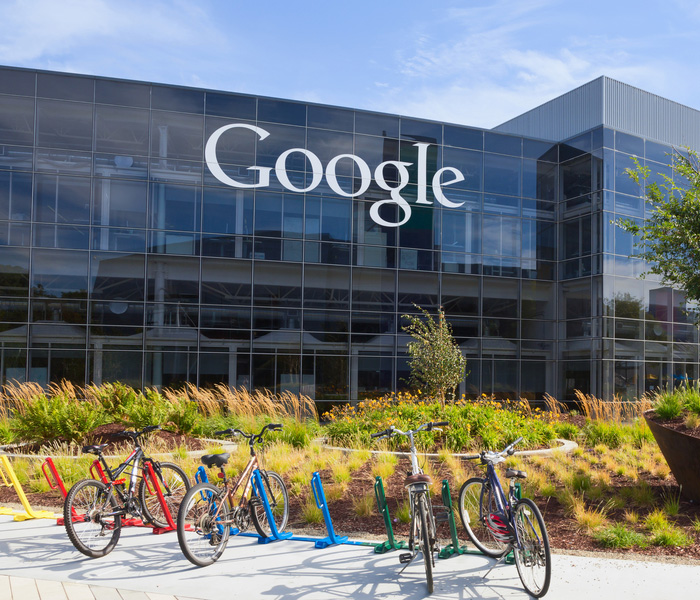
    With their ever-advancing Google Assistant tech at the forefront of their brand, Google is prioritizing AI. For instance, take Google’s strong backing of their AI team. Google’s team at Google Brain are performing long-term AI research behind-the-scenes, pushing the envelope in new and exciting ways. The scientific community at large has a great deal of respect for scholarly articles from the team at Google Brain. This illustrates Google’s continued dedication to AI research and development going forward. 

    Facebook 

    Yes, that Facebook. The one where you look at funny cat videos and argue with your racist uncle. Facebook’s AI initiative, called FAIR, is comprised of almost all PhD-holding super-scientists, which is kind of impressive. Because of the nature of their employer, FAIR is primarily focused on language-based AI research. Namely, FAIR has released papers related to Turing Testing and question-answering algorithms primarily. This all makes sense, given Facebook’s primary function as a social media platform. So it will be interesting to see what they bring to the table. 

    Microsoft 

    The tech giant responsible for Windows wouldn’t have dared sit this race out. Ironically, Microsoft’s own Halo series of video games is where a large number of sci-fi enthusiasts of a certain age first encountered AI. Halo’s AI character Cortana even lent her name to Microsoft’s virtual assistant pre-loaded into Windows. However, younger researchers are not the norm at Microsoft’s AI Research department: it is comprised mostly of highly experienced faculty. This has led to them somewhat missing the boat on the deep learning initiatives found at most other AI research facilities. However, this doesn’t mean anyone should be counting Microsoft out yet! 

    Artificial Intelligence Company to Watch: Deepmind 

    Highly respected and for good reason, Deepmind is the preeminent name in AI research at the moment. Largely staffed by Cambridge and Oxford grads, the London-based company maintains a close relationship with the popular tech community. The company’s public image has benefited greatly from their young, vital staff and excellent community-engagement. Papers released by Deepmind are tremendously popular on social sites like Reddit in the sub-communities that follow popular science. For dry, scientific content, this is high praise. Whatever the future of AI, Deepmind is sure to be at the forefront

  • Is Google Duplex Too Real?

    Is Google Duplex Too Real?

    We’re living in the future. If you needed a reminder of this, you need look no further than the prevalence of artificial intelligence on the cusp of becoming indistinguishable from humans. At their I/O 2018 conference, Google showcased their new Duplex technology. Duplex allows Google Assistant to make phone calls for you to set up appointments and reservations. The unique trick here is just how lifelike and eerie the Assistant sounds on the phone. It says “umm,” and “mmm-hmm.” It uses upward-lilting speech to sound authentic. It sounds completely human.

    How Far is too Far?

    Google claims that the Duplex technology will identify itself as such when it goes live. This, at least, covers our initial fears that people will be unaware that they are interacting with artificial intelligence. However, the presence of this technology alone could be cause for concern: what if another, less responsible company develops similar technology? What if scammers steal the technology and use it to operate elaborate phone scams? The potential for abuse is certainly high. It remains to be seen what protections Google has in place for this lifelike AI.

    So What?

    Maybe you don’t mind the idea of lifelike-sounding machines calling you. If they sound human and I’m not aware that they’re machines, so what? Why should I care? Google already promised it would even identify itself! To which I would say: I don’t think we need to worry about Duplex itself. I thoroughly believe Google will be responsible with this tech, if only because all eyes are on them. They are a leader in AI research and this is a pioneering piece of technology that many will likely follow. As such, I have no doubt Google will toe the line and act ethically with their new tech. The question remains, though: will those that follow do the same? Now that the door is open, who knows what kind of potential for misuse of this technology puts on the table.

    This is Just the Beginning

    Either way, Google is not alone in pushing the boundaries of AI applications. Microsoft and Facebook are also pursuing the future of AI in attempts to make their products synonymous with the burgeoning tech. These companies and others like them are all racing to hit the market with the most lifelike, the most impressive and least detectible AI before their competition. We can only hope they temper their haste to be the first to market with a desire to act ethically and responsibly with technology that will change the way we interact with our world.

  • The Top Ten Films About Artificial Intelligence

    With Amazon’s Alexa and Google Assistant becoming more lifelike and responsive with each update, it’s growing more and more likely that we will soon see fully-fledged artificial intelligence that rivals that of humans. While the future is looking brighter for AI in the real world, pop culture has taught us that most AI constructs will inevitably run amok and try to kill all humans! With that in mind, let’s run down our list of our top ten favorite films about artificial intelligence!

    Tron

    01-tron

    Photo Credit: Moviefone

    The 80’s classic was mind-blowing when it released. Casual moviegoers, unfamiliar with abstractions such as cyberspace and digitization, were treated to a visually stunning and downright puzzling film when they first saw Tron. Now regarded as a cult classic, and having garnered a sequel and animated series, Tron makes for a fantastic look back at an early visualization of a digital space.

    Starring Jeff Bridges as Flynn, a hacker and programmer, the nerd-tastic tale has him being pulled into the world of the arcade game he has created to do battle with the evil, rampaging Master Control Program. The story is quaint and cheesy today, but audiences at the time generally found the plot “incoherent” and hard to follow. Oh, how times have changed!

    I, Robot

    02-irobot

    Photo Credit: 20th Century Fox

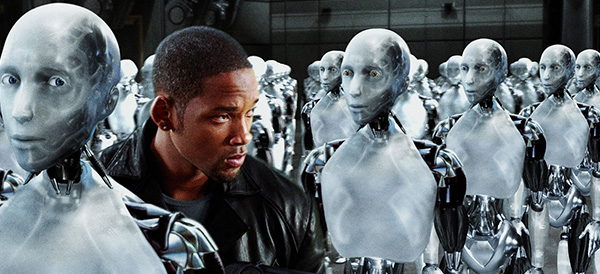
    Released in 2004, this gritty, noir-style action film is loosely based on the Asimov compilation of the same name. Will Smith stars as Del Spooner, a detective investigating a murder he blames on a robot, despite such an act being strictly forbidden by all robots’ programming.

    A fantastic meditation on what it means to be human, and what makes something alive, I, Robot is the rare action movie that makes the viewer actually think in between bombastic shootouts. Will Smith’s Spooner is equal parts engaging and frustrating, as his anti-robot bias is affirmed and challenged in equal measure by the film’s plot.

    Avengers: Age of Ultron

    03-ultron

    Photo Credit: YouTube

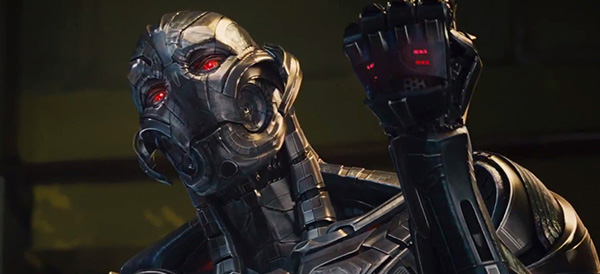
    While the plot may be somewhat derivative and the action a bit too fast-paced for deep meditations on the dangers of unchecked AI development, the second Avengers film does an excellent job of entertaining. Iron Man, Hulk, Thor, Captain America and the rest of the Avengers crew have to throw down with Ultron, an AI construct that Tony Stark and Bruce Banner accidentally create while experimenting with the mystical Mind Stone.

    Ultron decides to protect humanity from itself and creates its own vibranium body and an army of drones that do his bidding. The film ultimately pits the Avengers and their new artificial life form friend Vision against Ultron and his robo-soldiers in a spectacular final battle.

    Ex Machina

    04-exmachina

    Photo Credit: Nerdist

    The classic tale of scientist creating a synthetic companion modeled after a human female is a pretty well-established trope. Metropolis and Weird Science, to name a few, explore this narrative. In Ex Machina, protagonist Caleb is brought in by his friend Nathan to administer a Turing test to Nathan’s AI Ava. Ava is a humanoid robot with highly advanced programming, and Caleb soon finds himself caught in a power struggle between Nathan and Ava.

    The uneasy chemistry between human and machine is the focus here and is all too familiar to viewers who commonly interact with rudimentary artificial intelligence. Ava’s intentions are mysterious, her origins and dubious and her methods are worrisome: she represents all of humanity’s anxieties about artificial intelligence.

    A.I. Artificial Intelligence

    05-ai

    Photo Credit: Time Out

    A sci-fi take on Pinocchio, Spielberg’s sprawling technological opus is a treat for the eyes, if a little long in the runtime. With superb performances by Jude Law and Haley Joel Osment, A.I. juggles its myriad of ideas regarding morality and mortality with respectable deft. The film tells a touching story of a robotic child programmed to love unconditionally, and his journey to find a place he can call home.

    The film has a surprising amount of pathos for a story that almost exclusively follows artificial life forms. A unique take on an artificial intelligence-centered tale, the robots aren’t depicted as the antagonists, but instead, time and circumstance keep our characters from their goals.

    Terminator

    06-terminator

    Photo Credit: Mental Floss

    What if the artificial intelligence only wants to terminate you? I’d be surprised if you haven’t heard of this one. At the very least, you’ve probably heard someone doing a poor Arnold impersonation of one of his iconic lines. Terminator is the rare absurd sci-fi action movie that crosses over into the mainstream. Between the mechanical sheen and menace of the titular antagonist and the over-the-top, cheesy action sequences, Terminator oozes “80’s action flick,” wearing that badge proudly for all to see.

    The plot revolves around some pretty absurd sci-fi tropes: in the future, machines, led by a system called SkyNet, have taken over the world. The only hope for humanity is John Connor, a resistance fighter who leads the scattered human enclave. In order to secure victory, SkyNet sends an advanced robotic assassin back in time to kill Connor before he becomes the savior of humanity. A ton of ridiculous action set-pieces in then-modern America ensue.

    The Matrix

    07-matrix

    Photo Credit: Letterboxd

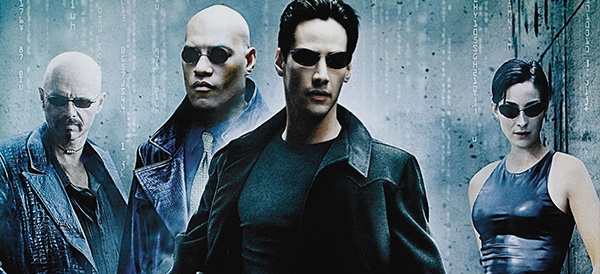
    Another very well-known action film with AI at its center, the Matrix is an interesting tale of perception, reality and questioning the status quo. When Thomas Anderson, also known under his alias Neo, discovers that his reality is actually a simulation, he joins a resistance against the machines who rule over his world. As another take on the “evil A.I. overlords” story, the Matrix uses surprisingly deep philosophical ideas to power its action and shootouts.

    Highly influential upon release for its use of slow-motion special effects and “bullet time” whirling camera techniques, as well as its intriguing premise. The Matrix is largely considered to be a turning point for Hollywood blockbusters.

    Her

    08-her

    Photo Credit: Roger Ebert

    Featuring excellent voice work from Scarlett Johansson, Heris a surprisingly sweet romance film about an AI and her human operator who fall in love. The quasi-Romeo and Juliet tale is effective at bringing about genuine emotional depth by imbuing the titular AI, Samantha, with very human desires and behavior.

    The film paints a fascinating picture of human emotional complexity conflicting with computerized algorithms. Protagonist Theodore, who is a sensitive and soft man, finds himself unable to cope when he discovers Samantha’s functions are also dating thousands of other operators and AI constructs. The near-limitless potential of Samantha’s intelligence allows her to grow exponentially, and experience far more than Theodore could ever imagine.

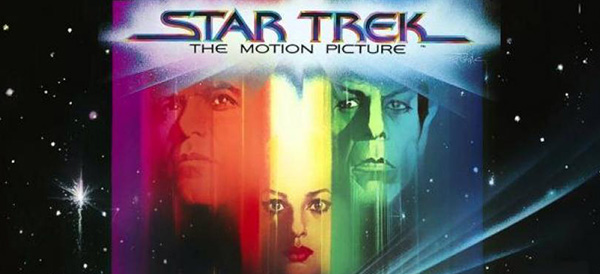
    Star Trek: The Motion Picture

    09-star-trek

    Photo Credit: Den of Geek

    The first time the crew of the Starship Enterprisewere seen on the silver screen, they did battle with a mysterious gas cloud known as V’Ger. While the film is somewhat divisive among fans, it makes this list for its fascinating antagonist. V’Ger, who turns out to be a sentient ship, is on a mission to obtain all the information in the universe and is tearing through reality to do so. When Commander Spock finally manages to mind meld with the A.I., he learns that it was originally the Voyager 6 probe, upgraded and given new purpose by a race of sentient machines.

    Blade Runner

    10-bladerunner

    Photo Credit: Mashable

    The cream of the crop when it comes to entertaining films about artificial intelligence, Blade Runner is a weighty, cerebral noir film. Main character Rick Deckard, played by Harrison Ford, works to untangle a deep conspiracy involving the shadowy Tyrell Corporation and its lifelike robots. These robots, called Replicants, are able to near-perfectly mimic human emotions and responses. Deckard, as a “blade runner,” is specialized in hunting and “decommissioning” rogue replicants.

    Sporting unique pacing and unconventional story structure, Blade Runneris one of the very best cyberpunk films ever made. If you haven’t seen it, you really should! It also received a sequel in the form of Blade Runner 2049, a worthy successor to the original and a bit more accessible to modern audiences.