Tag: cryptocurrency

  • Finney Phone: Cryptocurrency-Centric Phone

    Finney Phone: Cryptocurrency-Centric Phone

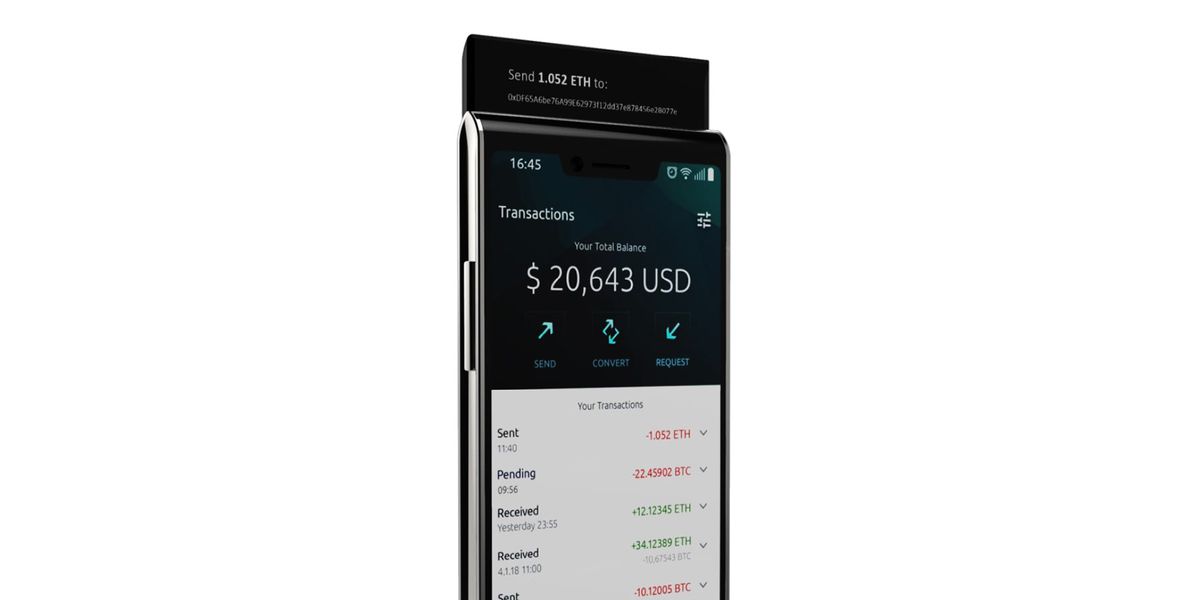
    Sirin Labs, the company behind this odd new phone, is aiming to make cryptocurrency commonplace. How will they do so? With the Finney Phone, or so they hope. While adoption of the odd new style of currency has been less than enthusiastic by the public, Sirin aims to change that. Many consider cryptocurrency an unusual, hard-to-understand technology that resembles a Ponzi scheme. Sirin wants their phone to be for the average Joe as well as the Bitcoin Billionaire. How will they do that?

    Sirin Labs’ Goal

    The company’s co-CEO, Zvika Landau, had this to say about the phone. “Most people are afraid of cryptocurrencies, and don’t know where to start. The user experience we want is one that is so simple, you won’t need to understand how blockchain technology works, you won’t need to understand how to sign a transaction, or what happens in the background at the time.”

    This makes sense, if they’re looking to incorporate a mass-market. Many are wary of cryptocurrency, unsure if it’s safe and unwilling to bet their money on it. Younger people, especially, are generally leery of sinking their money into platforms they fear are unstable. It’s mirrored in most millennials lack of interest in the stock market. Sirin aims to hold a number of events and seminars to help people get started.

    Finney Phone: Cold Storage Wallet for Crypto

    The Finney Phone has a second screen built into the phone. That screen is the display of your crypto wallet: it’s completely isolated from your phone. What that means is, the crypto tokens stored on your phone are safe and secure behind a layer of security. Without the authentication key from your phone’s crypto screen, your coins can’t even be used.

    The other feature that Sirin hopes will set the Finney Phone apart is the token conversion built into the phone. The phone will start by hosting Sirin’s own SRN coin, which can be converted into whatever your coin of choice is afterwards. However, it seems that Sirin is more interested in its cryptocurrency taking off than its phone: the phone is simply a means to and end. If people are more comfortable with cryptocurrency, it makes the crypto market more stable.

    The Risks

    The risks associated with cryptocurrency aren’t cured by this one phone, though. As it stands, cryptocurrency is still very young, and largely unproven. There is no central agency to ensure security, and there is no way to use the currency in normal transactions. You can’t go into a grocery store and buy your weekly groceries with Bitcoins, and a phone won’t change that. As it stands, cryptocurrency is used for investing in online endeavors and purchasing things of dubious legality. That’s hardly a glowing review, but we’ll withhold judgment until we see the phone in action.

    The Finney Phone is set to release in November and will retail for $1,000. We’ll see how fast people are to adopt the odd handset then.

  • Which Bitcoin Wallet is the Best for You?

    Which Bitcoin Wallet is the Best for You?

    Once you’ve bought, or mined, your bitcoin, you’ll need somewhere to keep them if you don’t plan on using them on an exchange right away. There are a few different applications, or wallets, that you can store them in. Today, we’re rounding up a few of our favorite “hot” Bitcoin wallets. “Hot,” in this instance, refers to the fact that these are always connected to the Internet, unlike “Cold” wallets that can be offline.  

    Exodus 

    A pleasing-looking multi-currency wallet, Exodus is a great user experience. If you plan on storing large amounts of crytpocurrency, though, it’s not the best, as it’s partly closed-source code. This means that if there are any bugs in the code that could lead to data breaches, the community can’t vet them and fix them. However, if you plan on storing smaller amounts of Bitcoin, or other currencies, this is a fine choice. You can even use the Shapeshift service to exchange your Bitcoin or other crypto right from the wallet.  

    Exodus has you generate a 12-word “seed” that it then encrypts your keys with. This means that if you somehow lose access to the version of Exodus you currently have, you can recover it with your seed. Simply write the seed down someplace safe and your Bitcoin is protected from hard drive wipes.  

    Jaxx 

    Jaxx, much like Exodus, is another multi-currency wallet that has Shapeshift. And, much like Exodus, it’s closed-source, so potential security gaps can’t be spotted by the community. In fact, last year, once such bug reared its head, allowing users with access to your version of Jaxx to steal your currency. That said, it’s a fine app for those who simply want to store small amounts of Bitcoin or other currencies. The ability to convert from different currencies through the app is quite convenient. 

    Closed-source code aside, Exodus and Jaxx are both visually appealing, convenient and user-friendly. If you’re just dabbling in a bit of crypto, Jaxx is a great Bitcoin wallet. 

    Bitcoin Core 

    A very early Bitcoin wallet, and easily the most robust, Bitcoin Core is a “full node.” That means it downloads the entire blockchain that tracks every Bitcoin transaction, which is around 160GB. The reason for this is security. Since Bitcoin Core knows the entire blockchain, it is nearly impossible to fool it, thus ensuring you won’t be defrauded. Someone attempting to spend the same coins twice, or spoof funds would be easily detected and shut down by this wallet.  

    Bitcoin Core is great if you intend on storing a ton of Bitcoin. It’s also great if you like your anonymity, as it encrypts transactions through the Tor network. This is all pretty costly on bandwidth, though, so it’s really for power-users first and foremost. 

    Our Favorite Bitcoin Wallet: Electrum 

    Electrum is a “thin” wallet, which is in contrast to a full-node like Bitcoin Core. Rather than downloading the full blockchain, it uses secure server connections to verify transactions. This means it uses much less internal memory and bandwidth, allowing it to be much leaner. Electrum, like Jaxx and Exodus, also allows for seed-based recovery in case you lose access to it. For general use, Electrum is our favorite overall wallet. It’s relatively secure and is quite useful for its file size and bandwidth use. While not the most robust wallet, it is the best option for most users.  

  • Bitcoin Falling: Less than Half as Valuable as it Was Last Year

    Bitcoin Falling: Less than Half as Valuable as it Was Last Year

    Last year, in December of 2017, Bitcoin hit its all-time high, an astronomical $20,000 per Bitcoin. Following this high-water mark, the cryptocurrency has been steadily losing value. On Sunday it dipped even lower, now being worth only $7,200 per Bitcoin. It is worth noting, however, that the price is far above what it was this time last year. At that time, a single coin cost $2,800. 

    A Sign of a Dying Fad? 

    It seems unlikely that this volatility is suggesting any long-term issues for Bitcoin, or indeed, for cryptocurrency in general. Many find cryptocurrencies to be ideal, as the blockchain technology that powers them is secure and difficult to fool. While most markets have been hesitant to pick up the currency, it’s likely not becoming irrelevant any time soon. Recent fluctuations are only natural. As demand waxes and wanes, mining operations scale up and GPU prices stabilize, changes in price like this are to be expected. 

    Notable opponents of Bitcoin, Warren Buffet and Jamie Dimon have both recently reiterated their reservations about the new form of currency. Regarding Bitcoin, Buffet had this to say: “When you’re buying nonproductive assets, all you’re counting on is the next person is going to pay you more because they’re even more excited about another next person coming along,”

    Effect on Power Companies 

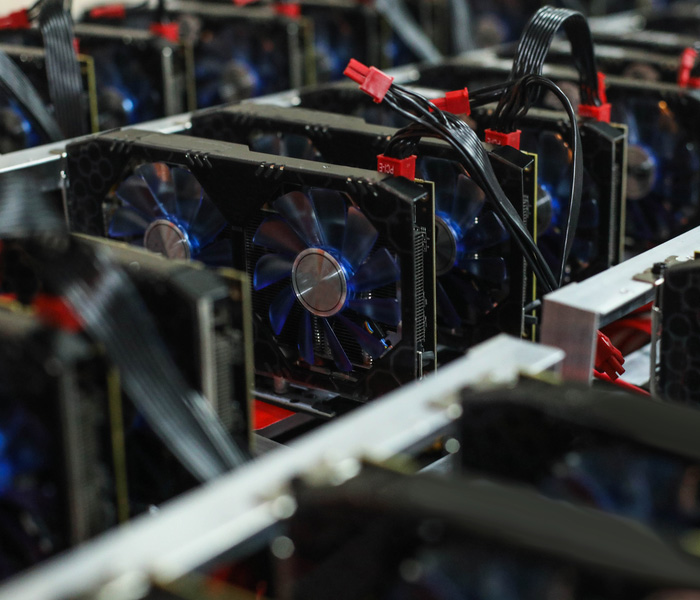
    Power companies have taken note of the extreme demand of large crypto-mining operations. Mining Bitcoin requires a tremendous use of power to solve the complex algorithms that yield them. Due to this, mining companies prefer to operate in regions like Quebec, where energy is cheap. In response to this increased demand, Hydro-Quebec, the company that supplies power for the province, has cut off power to mining companies.  

    The company has stated it holds no ill-will towards mining companies. In fact, they expressed that they saw crypto-mining as an avenue of growth worthy of consideration. However, in Hydro-Quebec’s own words, they want to exercise caution. “Guidelines are nevertheless required to ensure that the development of this industry maximizes spinoffs for Québec without resulting in rate increases for our customers. We are actively participating in the Régie de l’énergie’s process so that these guidelines can be produced as quickly as possible.” 

    Similarly, a few months ago, power companies in New York raised energy rates for mining companies. It seems their ravenous power consumption has begun to have an effect on the average person in their region.  

  • GPU Prices (Finally) Dropping

    GPU Prices (Finally) Dropping

    If you’re like me and have less interest in using a GPU for cryptocurrency than video games, you’ve surely lamented the absurd prices of high end graphics cards over the last few years. Thankfully, prices are finally starting to drop on GPUs due to a variety of factors.

    The Crypto-Elephant in the Room

    For starters, the market for cryptocurrencies like BitCoin and Etherium is starting to cool down. This has been gradual, as the initial rush for the currencies was exponential, but now more reasonable expectations for the technology have led to most currency miners backing off somewhat on their investments in expensive mining rigs.

    Supply is Meeting Demand

    GPU manufacturers are finally starting to meet up with demand on their shipments. High end graphics cards are not easy or cheap to produce, and so the initial gold rush for cryptocurrency largely wiped out back inventory of premium GPUs. However, enough time has now passed that manufacturers are filling shipments again, which is great for consumers.

    ASICs on the Horizon

    Seeing the potential in the market, computer parts manufacturers have promised to deliver dedicated mining rigs, called ASICs, by the end of 2018. In preparation for this, most major mining operators are pulling back in their GPU purchases, consolidating their funds for the release of dedicated platforms for their trade. This is only good news: miners will be happy to have more specialized set ups and gamers will be able to affordably acquire high-end GPUs without taking out a small loan.

    Bottom Line

    Don’t feel the pressure to buy a new GPU right away. If you really want one, now isn’t a bad time, as most high-end cards are going for right around MSRP now, which is fantastic. However, as supply continues to catch up to demand and the release of ASICs rigs grows nearer, we will likely see further discounts on GPUs when the mining bubble moves on. Less likely, but more helpful for consumers, would be if the cryptocurrency bubble burst altogether.

    While some gamers and PC enthusiasts have fingers crossed, that eventuality seems to be less likely the longer BitCoin and the like persist. Either way, we’ll very likely continue to see price drops on graphics cards for the foreseeable future.