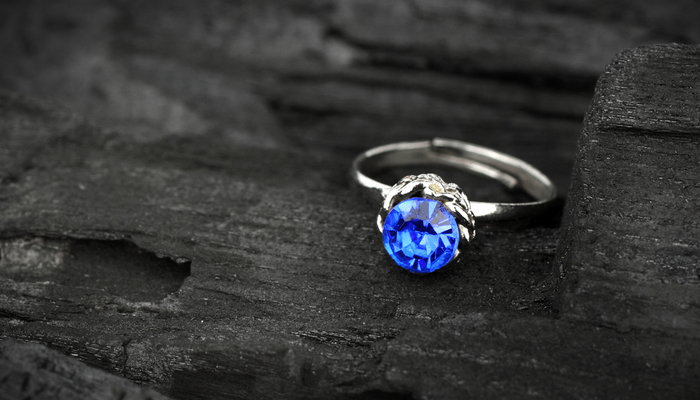
Tag: Engagement Ring

  • Thinking about Getting Engaged? Why Blue Diamonds are so Popular

    Thinking about Getting Engaged? Why Blue Diamonds are so Popular

    Blue diamonds are rather rare, and, as such, are extremely expensive. Naturally occurring blue diamonds are so rare that many people thought that “blue diamonds” weren’t actually a real thing in antiquity. Instead, it was thought that such stones were actually sapphire.

    In the modern era, blue diamonds are exceedingly popular as engagement ring stones. This is due to the striking appearance and deep symbology of blue diamonds. Today, we’re looking more deeply into blue diamonds and their place among other types of diamond.

    Blue Diamonds

    Overview

    Despite their physical similarities, sapphires and blue diamonds are not the same gemstones. Sapphires are actually part of the corundum family, much like rubies. Corundum is a crystallized form of aluminum oxide and manifests many colors in nature. Blue diamonds, as their name implies, are a solid form of the element carbon, like all naturally occurring diamonds.

    Blue diamonds, unlike their clear or yellow cousins, are exceedingly rare in nature. They share this trait with red or pink diamonds, though blue diamonds tend to be more popular in formal jewelry. Blue diamonds, much like any diamonds, have a crystalline lattice structure that makes them incredibly hard and resistant to most forms of contaminates.

    Deep Blue

    The beautiful deep blue color of blue diamonds is caused by the rare appearance of a contaminate in the crystalline lattice structure. In the case of a blue diamond, the contaminant in question is boron. Few elements can contaminate diamonds, as their carbon-lattice structure is very resistant to such impurities. This makes blue diamonds much rarer than white or yellow diamonds.

    In fact, blue diamonds are almost entirely of the Type IIb diamond classification, which themselves are only 0.1% of the world’s supply of diamonds. Only a few of these, in turn, are blue. This means you can expect to pay a pretty penny for a blue diamond, but you’ll know you’re getting one of the rarest rocks on Earth.

    It’s also possible to create a blue diamond in a lab setting. Artificially made blue diamonds are made using electron-beam radiation, and it’s much more likely that this what you’re buying when you start shopping for a blue diamond.

    Blue Diamond Lore

    Humans love gemstones, and many people ascribe various near-supernatural powers to them. Blue diamonds are no exception. Many people ascribe properties of truthfulness, eternity, peace, devotion and spirituality. It’s no surprise, then, that these rings prove so popular as engagement rings. What words are better to describe a union than eternity, truthfulness and devotion?

    Famous blue diamonds are not plentiful, but their fame outweighs their small numbers. One of the most famous gemstones of all time, the Hope Diamond, is a fancy blue diamond. Originally, the Tavernier Blue, a rough but strikingly beautiful diamond, was cut down into the Blue Diamond of the French Crown.

    The Hope Diamond

    History holds that Tavernier, a French explorer, purchased the exceptionally large diamond from a mine in India. He then sold it to the French Crown, where it was cut down into the French Crown’s prized Blue Diamond. Following the events of the French Revolution in the late 1700’s, the diamond was stolen and recut into the smaller (yet still exceptionally large) Hope Diamond in an attempt to obscure its origins.

    Following a long and complex series of changing hands in the intervening century, the Hope Diamond eventually found its way to rest in the National Gem Collection in Washington DC. The stone is so famous and rare as to be of literally incalculable value. It’s impossible to say how expensive the stone would be if it were auctioned. Folklore has also suggested that the stone possesses ill fortune, and any wearers of the jewel have a cruel fate befall them.

  • Why are Blue Diamonds so Popular for Engagement Rings?

    Why are Blue Diamonds so Popular for Engagement Rings?

    Blue diamonds are rather rare, and, as such, are extremely expensive. Naturally occurring blue diamonds are so rare that many people thought that “blue diamonds” weren’t actually a real thing in antiquity. Instead, it was thought that such stones were actually sapphire.

    In the modern era, blue diamonds are exceedingly popular as engagement ring stones. This is due to the striking appearance and deep symbology of blue diamonds. Today, we’re looking more deeply into blue diamonds and their place among other types of diamond.

    Blue Diamonds

    Overview

    Despite their physical similarities, sapphires and blue diamonds are not the same gemstones. Sapphires are actually part of the corundum family, much like rubies. Corundum is a crystallized form of aluminum oxide and manifests many colors in nature. Blue diamonds, as their name implies, are a solid form of the element carbon, like all naturally occurring diamonds.

    Blue diamonds, unlike their clear or yellow cousins, are exceedingly rare in nature. They share this trait with red or pink diamonds, though blue diamonds tend to be more popular in formal jewelry. Blue diamonds, much like any diamonds, have a crystalline lattice structure that makes them incredibly hard and resistant to most forms of contaminates.

    Deep Blue

    The beautiful deep blue color of blue diamonds is caused by the rare appearance of a contaminate in the crystalline lattice structure. In the case of a blue diamond, the contaminant in question is boron. Few elements can contaminate diamonds, as their carbon-lattice structure is very resistant to such impurities. This makes blue diamonds much rarer than white or yellow diamonds.

    In fact, blue diamonds are almost entirely of the Type IIb diamond classification, which themselves are only 0.1% of the world’s supply of diamonds. Only a few of these, in turn, are blue. This means you can expect to pay a pretty penny for a blue diamond, but you’ll know you’re getting one of the rarest rocks on Earth.

    It’s also possible to create a blue diamond in a lab setting. Artificially made blue diamonds are made using electron-beam radiation, and it’s much more likely that this what you’re buying when you start shopping for a blue diamond.

    Blue Diamond Lore

    Humans love gemstones, and many people ascribe various near-supernatural powers to them. Blue diamonds are no exception. Many people ascribe properties of truthfulness, eternity, peace, devotion and spirituality. It’s no surprise, then, that these rings prove so popular as engagement rings. What words are better to describe a union than eternity, truthfulness and devotion?

    Famous blue diamonds are not plentiful, but their fame outweighs their small numbers. One of the most famous gemstones of all time, the Hope Diamond, is a fancy blue diamond. Originally, the Tavernier Blue, a rough but strikingly beautiful diamond, was cut down into the Blue Diamond of the French Crown.

    The Hope Diamond

    History holds that Tavernier, a French explorer, purchased the exceptionally large diamond from a mine in India. He then sold it to the French Crown, where it was cut down into the French Crown’s prized Blue Diamond. Following the events of the French Revolution in the late 1700’s, the diamond was stolen and recut into the smaller (yet still exceptionally large) Hope Diamond in an attempt to obscure its origins.

    Following a long and complex series of changing hands in the intervening century, the Hope Diamond eventually found its way to rest in the National Gem Collection in Washington DC. The stone is so famous and rare as to be of literally incalculable value. It’s impossible to say how expensive the stone would be if it were auctioned. Folklore has also suggested that the stone possesses ill fortune, and any wearers of the jewel have a cruel fate befall them.


  • Most Popular Engagement Rings in 2018

    Most Popular Engagement Rings in 2018

    If you’re thinking about proposing, you need to make sure you have the perfect engagement ring. What are the best types of engagement rings for your relationship? There are so many retailers selling jewelry, how can you narrow it down? Don’t worry, we’re here to help you find the right one.

    Engagement Rings You’ll Love

    Halo Rings

    This style of engagement ring is a favorite lately. It’s comprised of a large central stone and ringed around the entire band with stones. Thus, the stones form a halo around your finger. There are a large number of styles available. There are many options for metals for the band and stones to fit into the band.

    The halo ring is a cool pick because it has the effect of making the central stone look larger. The illusion of surrounding something with a lot of smaller things is time-tested and well proven. That means you can save money on a smaller ring that doesn’t look small at all.

    Colored Accent Rings

    These rings tend to have gradient-style color schemes. In the center of a ring like this there is usually a larger stone flanked by stones like rubies, emeralds and sapphires. Depending on what color the metal band is, you will find a ton of different styles.

    The central stone is usually diamond. If the band has a reddish tint, the ring will often incorporate rubies. The same goes for sapphires and blue bands and emeralds and green bands. Like halo-style rings, colored accent rings tend to be less expensive. The flanking stones and colored bands make the ring much flashier than its price would suggest.

    Single-Stone Rings

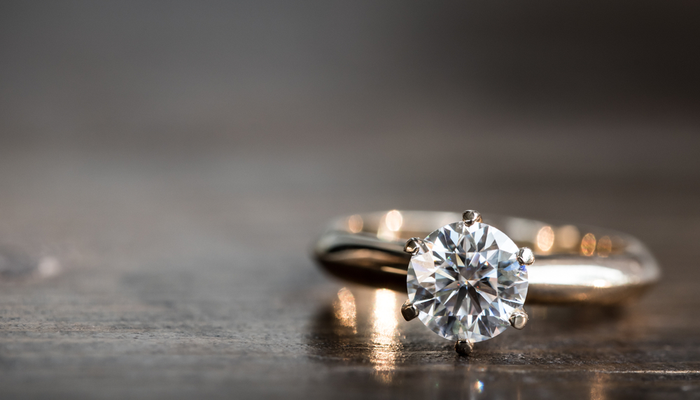
    The classic single-stone ring is still a very popular choice. While these rings can get expensive, due to the large central stones and classic designs, you can often find great deals on them. A large stone and a gold band is a favorite of engagement rings.

    While many things change as time goes on there are some trends that simply don’t die. The classic single-stone ring is a time-honored look that isn’t going anywhere. You can’t go wrong with this classic.