Tag: news

  • Eero Wi-Fi Routers Acquired by Amazon

    Eero Wi-Fi Routers Acquired by Amazon

    Amazon announced yesterday that it has acquired mesh-router manufacturer Eero. Eero is a huge name in the world of mesh-network routers, and this move positions Amazon in a strong place for its Echo hardware. Eero is based in the Bay Area, where it has been operating since 2015. While neither company stated how much money the acquisition cost, Eero has previously secured $90 million in venture capital funding.

    Eero Acquired by Amazon

    Amazon’s Statement

    Amazon is certainly positioning this new technology to bolster their smart-home business. Amazon’s Senior Vice President of Devices and Services, Dave Limp, issued a public statement regarding the acquisition.

    “We are incredibly impressed with the Eero team and how quickly they invented a WiFi solution that makes connected devices just work. We have a shared vision that the smart home experience can get even easier, and we’re committed to continue innovating on behalf of customers.”

    If there was any doubt that this move was to shore up Amazon’s smart home devices, Limp’s statement should dispel it. This mesh router tech will allow for tighter communication between Echo devices and more robust connectivity.

    Eero’s Statement

    Nick Weaver, the chief of Eero, issued a statement following the acquisition’s news breaking.

    “From the beginning, Eero’s mission has been to make the technology in homes just work. We started with WiFi because it’s the foundation of the modern home. Every customer deserves reliable and secure WiFi in every room. By joining the Amazon family, we’re excited to learn from and work closely with a team that is defining the future of the home, accelerate our mission, and bring Eero systems to more customers around the globe.”

    This acquisition’s news comes amid a tumultuous time for Amazon CEO Jeff Bezos. At time of writing, Bezos is embroiled in a battle with the National Enquirer and its parent company over alleged blackmail.


  • We Could Use Genetic Modification to Wipe Out Malaria: Should We?

    We Could Use Genetic Modification to Wipe Out Malaria: Should We?

    Researches based in London have used new technology to determine a way to wipe out the mosquitoes that carry malaria. The female Anopheles mosquito, in particular, is the carrier of Plasmodium, a single-celled parasite that causes malaria. We now have access to a “gene drive” that could wipe out malaria carrying mosquitoes. The question is: should we?

    Should we Destroy Mosquitoes to Wipe out Malaria?

    CRISPR and Gene Editing

    CRISPR technology, first discovered in 2012, was touted as a revolution in genetic studies. The technology is so advanced, in fact, that we’re still learning about it seven years after its creation. Essentially, the CRISPR is like a pair of genetic scissors that allow scientists to unzip genes, rewrite them, and then zip them back together.

    Editing genes like this has been tremendously helpful in modifying food sources and crop yields. This is the real-world equivalent of cracking open the source code of a video game. We’re now capable of altering life at its most basic level, rearranging living organisms from their very DNA.

    Gene Drive

    The Gene Drive is a type of selfish gene that tricks replicators in cells to make it appear much more often than in 50% of offspring. Gene Drives can rapidly propagate through a species, and lab studies have shown that some engineered Gene Drives can cause 100% exposure in a population in as little as seven generations.

    For species like mosquitoes, who have very short reproductive cycles, those seven generations can occur very quickly. As for stopping the spread of malaria, that’s where things get a little sinister. One of the genetic modifications scientists have discovered in Anopheles mosquitoes allows a “switch” to be flipped that causes the female of the species to become unable to reproduce or suck blood.

    Ethics

    In short, we’ve developed a self-propagating mosquito kill-switch. In theory, this could visit a Biblical plague on a plague carrier. The question remains: should we? Who are we to decide that a species of insects deserves to die so that we don’t? Certainly, the lives of children who die from malaria are worth more than that of a mosquito. But it’s still an odd thought: wiping out an entire species at the flip of a switch.

    There are other concerns with this technology, as well. If it isn’t perfected, it could cause unforeseen damage to the local ecology. Scientists see a need to tread carefully here. Once the cat is out of the bag, it’ll be impossible to get back in. Extinction is a one-way street.

  • Apple’s Highly Publicized FaceTime Bug Fixed

    Apple’s Highly Publicized FaceTime Bug Fixed

    The highly-publicized FaceTime Bug that allowed users to eavesdrop on other Apple device owners has finally been fixed, according to Apple. The bug in question allowed people initiating a Group FaceTime to hear any audio input from the other members of the call. Apple disabled the functionality, which had launched in October, and set about work patching the bug immediately.

    FaceTime Bug Patched

    The Bug

    How the bug came to be is still unclear. However, after being discovered in late January, it was brought to Apple’s attention by numerous users. The functionality had just been added to iOS devices and Macs in October and allowed up to 32 people to be on the same FaceTime call. This highly-anticipated feature ground to a halt last month when it was discovered it could be used as a way to eavesdrop on people.

    The bug essentially allowed users to listen in on the conversations of anyone they dialed on a Group FaceTime call who didn’t answer. Even though the users would decline the call, the callers on the other end would still be able to hear them. When Apple was made aware of the severity of this easily-replicated bug they disabled the Group FaceTime feature temporarily.

    Apple’s Response

    “We take the security of our products extremely seriously and we are committed to continuing to earn the trust Apple customers place in us,” the company stated in a release on Friday. In the Friday release Apple assured users that the patch would be released sometime this week and would result in the bug being squashed.

    In the statement, the company specifically thanked the Thompson family for helping to discover the bug and make them aware of it. Michele Thompson’s teenaged son discovered the bug while trying to get his friends in a Group FaceTime for a session of Fortnite. Thompson noted she had difficulty getting acknowledgment of the bug from Apple, despite trying to contact them.

    This incident is a bit of an embarrassment for Apple, a company that prides itself on its extremely strict privacy controls. This uncharacteristic privacy leak is more in line with companies like Facebook than privacy stalwarts like Apple.

  • Tesla Model Y Closer than We Think?

    Tesla Model Y Closer than We Think?

    Tesla CEO Elon Musk surprised investors on the Q4 earnings call be hinting at some new info regarding the upcoming Tesla Model Y. The Model Y, which is set be a companion to the affordable Model 3 sedan, will apparently share as much as 75% of its parts with the Model 3. This is huge news and lends credence to the idea that the Model Y could be in production by 2020.

    Tesla Model Y Production

    Model Y Specs

    We don’t know a lot about the Model Y yet. At time of writing, the best guess that industry analysts have is that the Model Y could be some type of crossover. Tesla’s affordable Model 3 vehicle is a full-sized sedan, so it only makes sense that an SUV would be its sibling.

    After all, the SUV is on track to pretty much kill off the sedan in 2019. Very few carmakers still post profits on their sedans, with Tesla being a rare exception. If Tesla wants mainstream success across the US and global markets, an SUV-style electric car may be just what they need.

    Production

    On the call, Musk made it clear that the Model Y is intended to sport nearly 75% of the same parts as the Model 3. This is a big twist for the company and heartens investors slightly. After all, ramping up to full-swing production was quite the hurdle for the Model 3, as the machining process to get the vehicles ready was daunting.

    However, with those parts already created and ready to go, it’s looking like the Model Y can capitalize on the work that’s already been done. If Tesla is able to take advantage of its existing manufacturing, the overhead for the Model Y could be markedly lower and help the company post much better profits on the Model Y.

    Location

    Rumor has it that Tesla is looking to expand from their production facility in Fremont for Model Y production. Currently, the Model S, Model X and Model 3 are all manufactured at that production facility. It makes sense that they’d want to branch out, given the Fremont facility is rather close to being at capacity.

    Just last year, when Tesla was pushing to meet demand for Model 3’s, the Fremont facility had a tent added on for production. It was a silly time and showed just how slam-full the Fremont facility is.

  • Seized Facebook Documents Likely to be Made Public Within a Week

    Seized Facebook Documents Likely to be Made Public Within a Week

    Facebook’s having yet another crisis related to Russian interference on the site. This time, however, it isn’t a new wave of hackers influencing elections, it’s documents relating to what they knew and when. Seized Facebook documents in the hands of the UK Parliament allegedly show the company knew about Russian interference as early as 2014. These documents may be made public in the next week.

    Seized Facebook Documents Could be Made Public Soon

    zuckerberg-hearing
    Getty Images

    How Were the Documents Acquired?

    Originally, these documents were sealed by a California court. The court has asked Facebook to remind the UK why the sensitive documents should not be released. However, the UK acquired the documents by legal means from the founder of Six4Three, a defunct app company.

    While the founder was visiting London, he was compelled to appear before parliament and produce the documents in question. The seized Facebook documents allegedly shed light on how much Facebook knew about Russian interference and when they knew it.

    International Hearing, Zuckerberg Absent

    During the international hearing in the UK today, Damian Collins explained the nature of the documents. Collins is the head of the Digital, Culture, Media and Sport Committee in Parliament. According to Collins, the documents include an email from a senior Facebook engineer that alerted the company to the presence of Russian interference on the site.

    The most damning aspect of this email is the timing. It was sent in 2014, meaning Facebook new about the interference 2 years before the election. Some believe that the documents even include communications among top Facebook execs, including Zuckerberg himself.

    Speaking of Zuckerberg, he was conspicuously absent from the hearing in the UK today. A symbolic chair was left empty for him.

    Parliament’s Stance

    The unsealing and publication of the documents could be of great importance to the public. “There is a clearly growing interest in what the documents contain,” said Collins. The committee is currently scouring the documents for anything of public interest.

    Collins has stated that he can’t currently give an exact date for when the documents will be published. There is a large number of documents present that were seized, and they may require redaction before being released publicly.  “Our duty of care is to go through them properly,” said Collins.

    At time of writing, Facebook has made no statement regarding the release of the documents.

  • Vermont Net Neutrality Laws Challenged by Broadband Lobby

    Vermont Net Neutrality Laws Challenged by Broadband Lobby

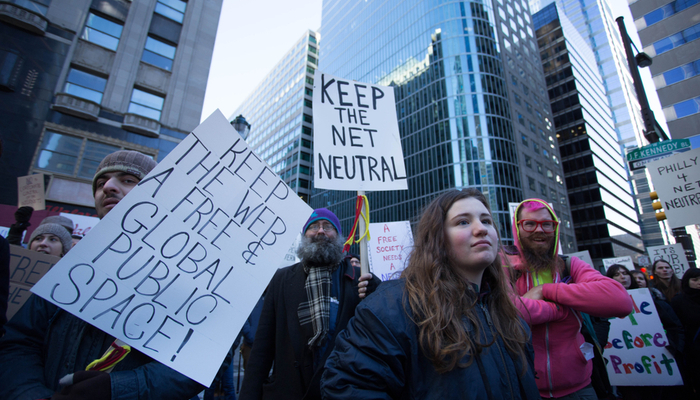
    The ongoing battle over net neutrality rages on. On Friday, lobby groups such as NCTA, CTIA, the American Cable Association and more filed suit against the state of Vermont. Their suit deals with Vermont net neutrality laws that force ISPs to follow net neutrality guidelines in order to get government contracts.

    Vermont Net Neutrality in the Crosshairs

    The lobbying groups filing suit in Vermont represent almost every major broadband company. AT&T, Verizon, T-Mobile US, Sprint, Comcast, Charter, Cox, Frontier, and CenturyLink are among the groups represented. These groups were vocal supporters of Ajit Pai’s moves to have the FCC repeal net neutrality protections.

    The Vermont laws are somewhat narrow. As it stands, they only stipulate that government-owned buildings can only get Internet service from ISPs who follow net neutrality guidelines. However, the broadband companies are saying this is illegal, as they feel that the FCC’s ruling should preempt state laws.

    The Lawsuit

    The suit itself reads as a very antagonistic and surprisingly aggressive takedown on the part of the broadband companies.

    “Vermont’s attempts to revive and, indeed, expand a repealed regulatory regime are plainly preempted by federal law […] Under the Supremacy Clause of the United States Constitution, state measures that contravene validly adopted federal laws and policy determinations, including those contained in FCC orders, are preempted and have no force or effect.”

    Legal commentators have mentioned how similar this case is to one in California. California’s state net neutrality laws, however, don’t have a terribly good chance of standing up in court. California’s laws almost directly contradict the FCC’s ruling, which is a clear violation of the supremacy clause. Vermont’s law, however, has a much better chance of sticking around.

    Why This Matters

    This case could provide a road map for other states that wish to exert net neutrality protections on ISPs. States have a great deal of control over how they award government contracts. Such contracts are highly lucrative and could cause ISPs to actually change their practices.

    If Vermont wins this case, it could prove an invaluable tool in the ongoing fight for a fair and open internet.

  • Facebook Remains Popular, but Not Among Teenagers

    Facebook Remains Popular, but Not Among Teenagers

    A Pew Research Center study has collected some interesting data regarding teenagers’ online usage. Surprisingly, teens are using Facebook much less in recent years. What did the study find they were using more? And what other sites have less teens engaged with them than they used to? 

    What Sites Are Teenagers Visiting?  

    The poll shows that the sites receiving the most teen visitors are YouTube, Instagram and Snapchat. 32 percent of teens stated they used YouTube most of the time, while Snapchat snagged 35 percent of teens and Instagram got 15 percent. Facebook, by comparison, was only 10 percent of teens’ most visited sites.  

    Which Other Sites are Receiving Less Teen Visitors? 

    Other sites once regarded as teenage destinations online are also seeing less traffic from that age group. Tumblr, a popular blogging site, barely showed up in the poll. The same goes for Twitter, which is quite surprising, and Reddit. It seems that teens are mostly drawn to visual apps, finding their entertainment in pictures, videos and music, not text-based apps that are more static. 

    Other Findings 

    Other interesting findings in the study include smartphone ownership. A positively massive 95 percent of teenagers polled stated they had a smartphone. With regards to internet usage, 45 percent of the teens thought that it had neither a positive nor a negative impact on their lives. This relative disinterest in the medium with which many of them spend all their time is concerning.  

    What Does this Mean?

    What do you make of these findings? Were you surprised at the apps they’re using more often, and how little they’re using Facebook now? Is it a good thing that teens are connecting with one another with these platforms? And how do you feel about the overwhelming number of smartphone-equipped teens with internet addictions who think nothing of it? 

    We all have our own answers to these questions, of course. For my part, I understand the desire to stay connected. I do, however, worry that these kids are spending so much time wishing they were somewhere- or someone- else, that they forget to be happy with who they are. Studies have linked social media with more feelings of alienation and loneliness. I just hope these trends reverse in the coming years and kids learn to be okay just being where they are. 

  • GDPR: What to Expect

    GDPR: What to Expect

    The European Union provision known as General Data Protection Regulation went into effect on May 25th, 2018. While it may seem as though this would only impact Europe, it actually will have some ramifications for American companies, too. Any companies with European customers will have to be compliant with the GDPR from May 25th on. This means even companies like Facebook will have to comply with the plan. 

    What Does GDPR Ask of Businesses? 

    The GDPR asks a few things. The first is that European customers can ask to see what data a business has collected from them at any time, and that information must be provided. The second is that said data can be expunged at a customer’s request at any time. These protections are completely reasonable on the behalf of a customer, but many businesses may be resistant to such wide-reaching protections. 

    What Penalties Do Businesses Face by Not Complying? 

    This is the kicker: a business that fails to comply with GDPR is subject to forfeiting four percent of their annual revenue to the EU. While that might not sound like a lot, a company like Facebook or Amazon rakes in millions and millions of dollars every year. Even four percent of that is a small fortune. What’s more, it seems unlike the US Government would do anything to protect businesses found in violation of these rules. It seems only fair, of course, that a business with European customers follow European guidelines.  

    What This Means for Americans 

    Since these companies will have to implement this functionality if they wish to remain compliant, this will likely result in increased data protections for American customers, too. Americans currently have no such protections on the books, which is unfortunate, given the state of cyber security. Breaches like Cambridge Analytica and the Target hack have soured many Americans on large companies’ security protocols.  

    Hopefully legislation like this is on its way in America, too. Increased protections for the data of users is hardly a bad thing for anyone. Companies would be wise to self-regulate in this regard in the meantime. However, since no guarantees of such altruism are forthcoming, legislation is the next logical step. With luck, we’ll see such legislation follow suit in the US. 

  • New FDA Website To Begin Outing Companies Blocking Cheaper Medicine

    New FDA Website To Begin Outing Companies Blocking Cheaper Medicine

    In a bold move to support the Hatch-Waxman Act related to the operation of pharmaceutical companies, the FDA has announced a new website. The proposed site hosts the names of branded medicine manufacturers blocking generic versions of their medicines. This move, announced by FDA Commissioner Scott Gottlieb, seems to be directly aimed at shaming companies for unethical practices.  

    Gottlieb’s Take 

    “I don’t think this is publicly shaming,” Gottlieb was quoted as saying by S&P Global Market Intelligence. “I think this is providing transparency in situations where we see certain obstacles to timely generic entry.” However, Gottlieb has publicly stated he wouldn’t be against legislation to shame companies acting in ways that were unethical.  

    How Did they Get Away with This? 

    How were these companies keeping their competition from developing generics? One way was blocking samples of their drugs being given to generics makers by hiding behind risk evaluation and mitigation strategies (REMS). REMS allow drug makers to identify which of their drugs have potentially harmful side effects and thus limit who can be given samples of them.  

    The other method for sidestepping the generic process involves contracts with distributors that block sample delivery to generic makers. Both of these practices, according to Gottlieb, violate the spirit, if not maybe even the letter, of the Hatch-Waxman Act. 

    The FDA Flexing Their Muscles 

    This turn of events is potentially quite good for consumers. This move makes it easier to develop cheaper, more accessible drugs. By making it harder for drug makers to hide behind misinformation, the FDA makes it more likely that companies act more ethically. Many commenters view this move as a bold one on the part of Gottlieb. 

    The drug makers themselves have had little response to the proposed website, which launches on May 17th. This turn of events must be frustrating for these manufacturers, though. The agency that oversees you publicly shaming you has to sting.

  • God of War is the Fastest Selling PS4 Game of All Time

    God of War is the Fastest Selling PS4 Game of All Time

    He’s Back, Baby

    It took Kratos five whole years to star in another video game, but it only took him three days to sell 3.1 million copies of his new game. Released on April 20th, God of War is the first game in the series set after the story of 2010’s God of War III. The game’s blistering sales pace outstrips other PlayStation mainstay Uncharted: the fourth Uncharted sold 2.7 million units in its first week, holding the previous record for fastest-selling PlayStation 4 game.

    Return to Form

    These sales numbers are in stark contrast to a decade or more of game publishers moving further and further from the massive, triple-A style single-player games in favor of multiplayer experiences and ill-conceived always-online features. Sales of this magnitude represent a bit of a paradigm shift for large game studios, showing an increase in focus on huge production values and immersive worlds being built for single-player adventures.

    New Land, Same God Slayer

    The newest God of War sees the series move on to a new setting, pitting Kratos against all manner of Norse mythological beasts, instead of the Greek gods and monsters he once fought. If you haven’t had a chance to check it out yet, you should. The game is a return to form for single-player adventure, following on the heels of other PS4 heavy-hitters like Horizon: Zero Dawn and Nier: Automata. Featuring intense, edge-of-your seat combat, over-the-top action set pieces and a genuinely engrossing and affecting story, God of War has more than earned its spot at the top of the PS4 roost.