Tag: tech throwback

  • Tech Throwback: The LaserDisc

    Tech Throwback: The LaserDisc

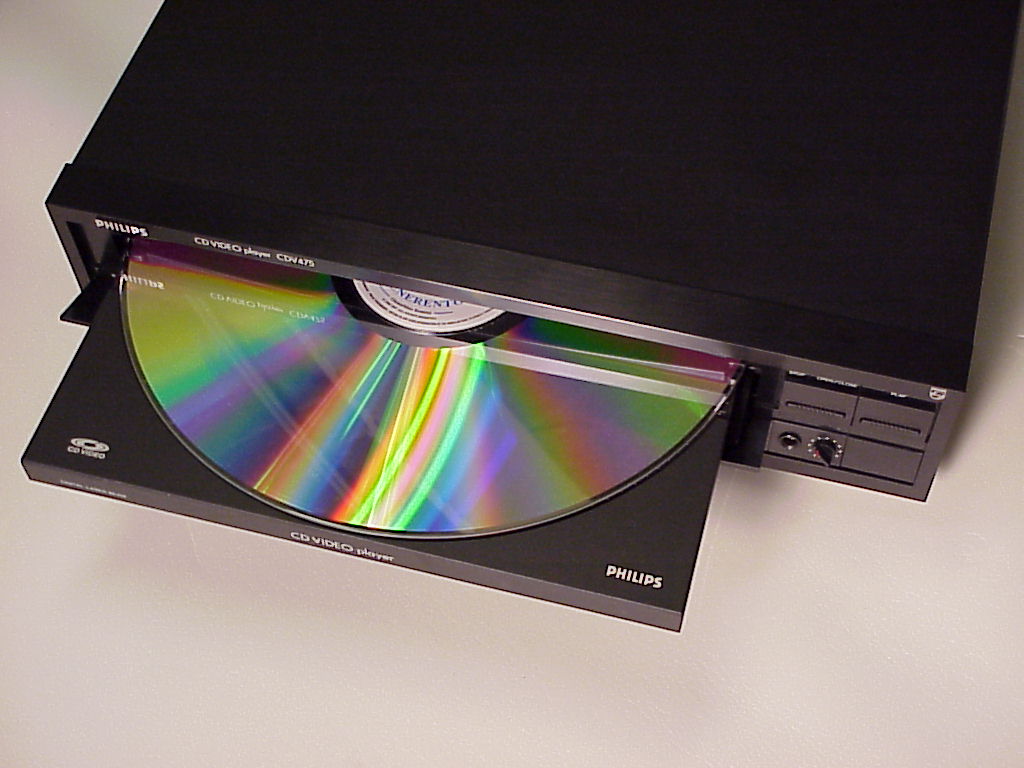
    I like to take a look at where I’ve been to evaluate where Im going. Technology is cyclical after all… wait no its not. That said I still like all the feels that come rushing back like a flood of nostalgia every time I get my hand on the tech I grew up with. I’m going to go back periodically and take a looking at the stuff that used to blow our hair back and get our minds rolling. Some of these device blew up and changed the world, some where ahead of their time and some just fell flat and became colossal failures. Today’s throwback is a failure and a bomb, but has one redeeming quality that makes it invaluable.. Today we are talking about the LaserDisc


    LaserDisc History

    LaserDisc (originally a trademarked term invented by Pioneer Electronics) is an optical recording medium primarily used for video recordings. In fact it was the first optical recording device to be made publicly available. The technology first began development in the late 50’s; however, it didn’t debut until 1978. The disc resembled a Compact Disc the size of a vinyl record album. The similar appearance is because it was a precursor to CD.

    The format originally didn’t have a proper name. It was called many different things, but was first marketed as MCA DiscoVision (or simply “DiscoVision”), with MCAnote and Dutch electronics company Philips having significantly contributed to the development of the format. Moreover, Jaws was the first movie to be released on it. In 1980, Pioneer Electronics bought out the rights and patents to the format, and subsequently renamed it “LaserVision”, with the format introduced in Japan in 1981. Although they would later use “LaserDisc”note as a brand name, LaserVision was the official name of the format until the early 1990s, when Pioneer finally began to use “LaserDisc” as the format’s official name.

    The Resolution Quality

    With the exception of DVD, Laserdiscs are by far the best-looking and sounding home video system available. Pioneer pitches LD as “60% sharper” than VHS. LD image quality is roughly comparable to standard 16mm film, VHS is roughly comparable to 8mm film.Depending on source material and the transfer to disc, LD is above live TV broadcast quality. For NTSC, this is 425 TVL (luminance lines horizontally for 3/4 of the screen width) and about 482 scan lines, compared to 330×482 for broadcast.

    LaserDisc gave way to letterbox. When LaserDisc came to market, people, for the first time, could watch theatrical movies in their homes. Some intelligent producers actually thought that some people would perhaps enjoy actually seeing the whole film. As a result, letterboxing was developed to mat the picture with black bars on the top and bottom. Enabling the wide center area to show the aspect ratio of the original theatrical presentation. Prior to this everything was presented in Pan and Scan mode whereby the wide version of the film was intelligently cropped to where the action was – but still eliminating 30% or more of the picture.


    Star Wars on LaserDisc

    This is LaserDisc’s immortal contribution to humanity, film and society. LaserDiscs digital resolution was far superior to what was available in the late 70s and 80s. This made it the perfect platform to watch the most epic space saga to date. This tech was ahead of its time and prime for Star Wars fans. Most definitely the best way to watch Star Wars out side the cinema theaters. Great right? It is, but ends up being legendary. The Original trilogy is released in high quality LaserDisc in 1986. As the tech fades to the DVD smaller format just about the same time George Lucas sets his remasters to work. We know of the horrors that became of the re-release…. Han shot first!… As I digress, only the Remastered versions make it to DVD. Thus ensuring the original masterpieces are forever forgotten to the approaching digital DVD revolution.

    However, LaserDisc saves the day. Nerds unit and covet the LaserDisc copies. Later converting them to a higher resolution digital copy that will circulate through the internet and ensuring the glory days of Star Wars..
  • Tech Throwback: The Apple Lisa

    Tech Throwback: The Apple Lisa

    I like to take a look at where I’ve been to evaluate where Im going. Technology is cyclical after all… wait no its not. That said I still like all the feels that come rushing back like a flood of nostalgia every time I get my hand on the tech I grew up with. I’m going to go back periodically and take a looking at the stuff that used to blow our hair back and get our minds rolling. Some of these device blew up and changed the world, some where ahead of their time and some just fell flat and became colossal failures. Today’s throwback is the legendary, Apple Lisa.


    The Apple Lisa

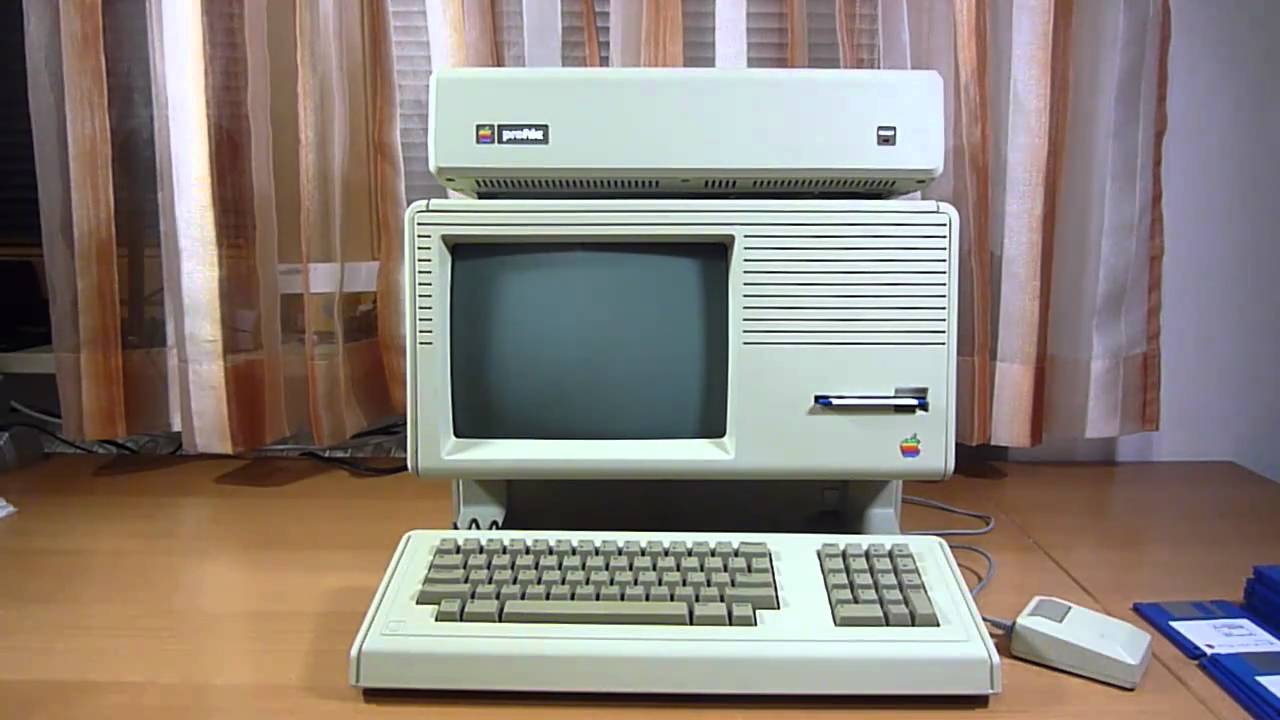
    The machine named after Steve Jobs out-of-wedlock daughter was the first commercial computer to offer a graphics user interface. Breaking free from the text-command paradigm and initiating a more user-friendly, point-and-click experience.

    Apple Lisa’s $1,000 price tag and slow OS killed its vibe on the consumer market, even though it still commanded a number of advanced features that became conducive to the future of computing. On that checklist: co-op multitasking, protected memory, data corruption protection, built-in screen saver, and much more.

    Released in January 1983, the Lisa featured a rather advanced hardware at the time, it was equipped with a 16/32-bit Motorola 68000 CPU, 1MB of RAM (expandable to 2MB), two 871K floppy drives, and an integrated 12” monochrome monitor with a resolution of 720 X 364 pixels, an optional external 5MB hard disk, and an input device almost never seen before: a box-shaped single button mouse.

    Lisa’s Software The real story with the Lisa was the software it ran. The Lisa operating system included features like protected memory. This was absent from the Macintosh operating system until the launch of Mac OS X eighteen years later. Under the hood, it ran on a file system that supported hierarchal directories, making it ideal for organizing files on the Lisa’s internal hard drive.

    Lisa had two main modes. The first, named The Apple Lisa Office System, included seven GUI applications for users.  LisaWrite, LisaCalc, LisaDraw, LisaGraph, LisaProject, LisaList, and LisaTerminal.

    The FInal Thought

    I wish I could get my hands on an original Lisa, but I have not been able to locate one. There are only 20 to 100 Lisa 1s left in the world. A rare, seldomly turned on original lisa is being auctioned off starting at $55,000. The Apple Lisa was a passion tech project from a man who’s passion projects yielded a monumental advancement of mankind. Unfortunately it was not a massive success, but  it did  spawn many that followed. There is a little bit of Lisa in all the Apple products we have loved since.

  • Tech Throwback: 5 Devices Kids Can Not Operate Today

    Tech Throwback: 5 Devices Kids Can Not Operate Today

    I like to take a look at where I’ve been to evaluate where Im going. Technology is cyclical after all… wait no its not. That said I still like all the feels that come rushing back like a flood of nostalgia every time I get my hand on the tech I grew up with. I’m going to go back periodically and take a looking at the stuff that used to blow our hair back and get our minds rolling. Some of these device blew up and changed the world, some where ahead of their time and some just fell flat and became colossal failures. Today tech throwback our trip down memory lane will be about the devices we know well but the kids could not operate if their lives depended on it.

    The Rotary Phone

    Oh the fun and frustration.  The Rotary dialing phone pre dates the touch tone, but just after the live operator dialing. A rotary dial is a component of a telephone or a telephone switchboard that implements a signaling technology in telecommunications known as pulse dialing. It is used when initiating a telephone call to transmit the destination telephone number to a telephone exchange.

    Recently a class of second graders was given a rotary dial to make a one call. After 2 and half hours they gave up.


    The Transistor Radio

    No stations, no genre separations, no skip, stop, or replay? A transistor radio is a small portable radio receiver that uses transistor-based circuitry. Following their development in 1954, made possible by the invention of the transistor in 1947, they became the most popular electronic communication device in history, with billions[manufactured during the 1960s and 1970s. Have fun giving one to your grandchildren and watch their frustrations.

    Program a VCR

    REmember when that was the status quo of a tech genius. It was an accomplishment and something to brag about. Before the advent of on-screen displays, the only interface available for programming a home video recorder was a small VFD, LED or LCD panel and a small number of buttons. Correctly setting up a recording for a specific program was therefore a somewhat complex operation for many people. G-Code, VideoPlus+ and ShowView were introduced in the late 1980s to remove this difficulty.

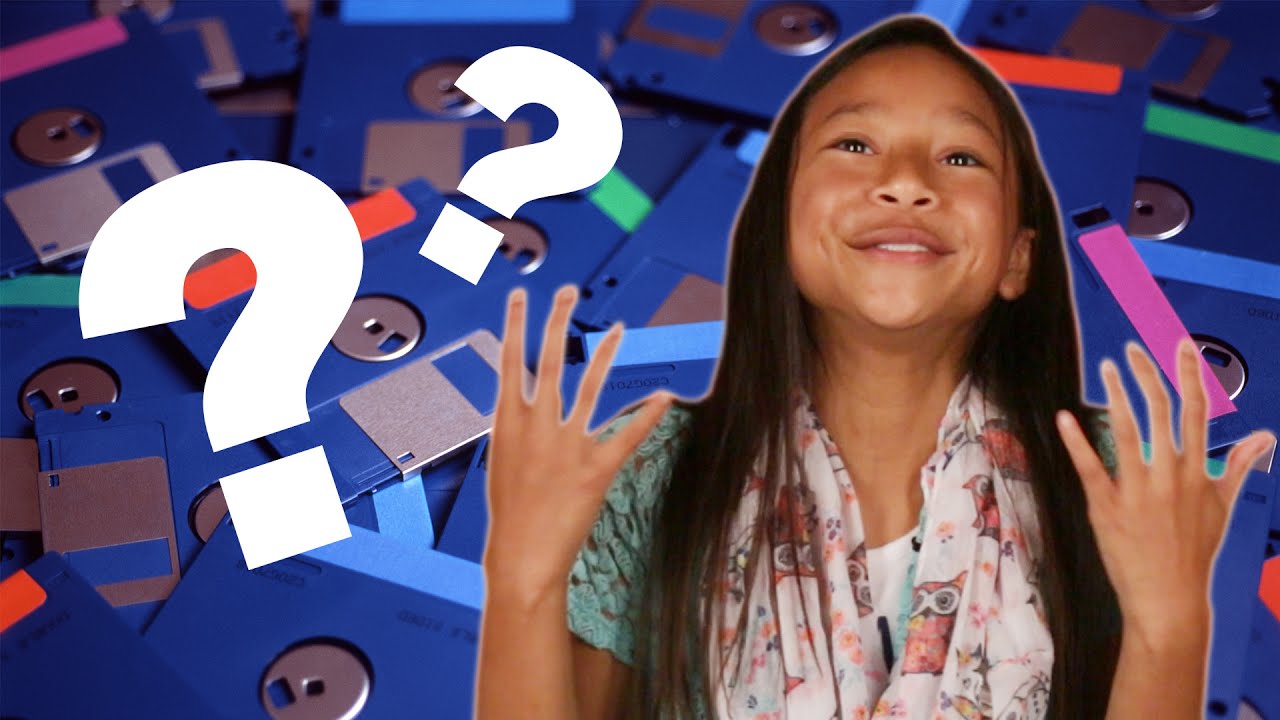
    Load a Floppy Disk

    Computers before Windows 95 will destroy a child’s spirit. GUI are the only computer language they know. DOS and floppy disk are a relic that completely baffles them. THey just don’t know the command prompt struggles.

    Maps

    We take for granted how far and fast we have come in navigation. We forgot to teach the kids the struggle, not just of folding a map but how to read one. I watched my 5 year old nearly pass out from confusion after giving him a compass. explaining NESW to him and asking him to walk south. He tried shouting “Siri take me south”. I laughed. From Cartography to road maps to Mapquest to where we are today. These kids are truly lost with out us.


    The Final Tech Throwback Thought

    These kids today are useless. They cant play a record, load film, open a phone booth door, open a soda can with out a tab or even read manuscript. Are we all doomed? probably not they still have google. I take a little be of comfort knowing ill be long gone before its too late.

  • Tech Throwback: Windows 95

    Tech Throwback: Windows 95

    I like to take a look at where I’ve been to evaluate where Im going. Technology is cyclical after all… wait no its not. That said I still like all the feels that come rushing back like a flood of nostalgia every time I get my hand on the tech I grew up with. Im going to go back periodically and take a looking at the stuff that used to blow our hair back and get our minds rolling. Some of these device blew up and changed the world, some where ahead of their time and some just fell flat and became colossal failures. Today, we’re highlighting Windows 95.


    Windows 95

    You know it well, It kicked our Technology revolution in to 5th gear.  Know around the world as  a quantum leap in difference in technological capability and stability. Windows 95. Windows 95 (codenamed Chicago) is the operating system developed by Microsoft as part of its Windows 9x family of operating systems. It is the successor to Windows 3.1x, and was released to manufacturing on August 15, 1995, and generally to retail on August 24, 1995. Do you remember the lines to get a copy?

    All we had prior to this was DOS. Now Windows 95 was capable of running DOS and Windows-based applications, although it had completely removed DOS as the underlying platform, unlike previous versions of Windows. This helped in overcoming two limitations: eight-character file names and memory-related problems.

    Windows 95 sported new technical features along with updating existing features. It brought updated visual styles and interface advancements. It had new and improved Windows control and introduced the desktop, which was represented as a folder which holds different files. Shortcuts, icons and the recycle bin were introduced in Windows 95. The Computer was no longer for the super tech geek, your mom could now operate it.

    Windows 95 Social Impact

    Twenty years ago, Microsoft changed the world. On August 24, 1995, Windows 95 was released to the public. It was the beginning of a revolution that has helped shaped the technology world for the next two decades. There was even a one hour instructional video with  Matthew Perry and Jennifer Aniston. You know them better  as Chandler and Rachel from Friends. Then the Empire State Building and Toronto’s CN Tower were lit up in Microsoft’s colours. Lastly the Rolling Stones were paid a rumoured $8m for allowing “Start Me Up” to provide the soundtrack to its television adverts. We now lived in a different world then we had just a few hours before.


    The Final Thought


    Computers changed what could be done, Windows 95 changed who could do it. Together they changed the world overnight. It came, it was upgraded, it went. We all know by the time Windows 95 was finally ushered off the market in 2001. It had undoubtedly become a fixture on computer desktops around the world.

  • Tech Throwback: 1st generation iPod

    Tech Throwback: 1st generation iPod

    I like to take a look at where I’ve been to evaluate where Im going. Technology is cyclical after all… wait no its not. That said I still like all the feels that come rushing back like a flood of nostalgia every time I get my hand on the tech I grew up with. I’m going to go back periodically and take a looking at the stuff that used to blow our hair back and get our minds rolling. Some of these device blew up and changed the world, some where ahead of their time and some just fell flat and became colossal failures. Today’s throwback is at the very center of our every day life, The original 1st generation iPod.


    The iPod wasn’t the first MP3 player — there were a number of models from a number of companies before Apple unveiled what came to be one of its flagship products — but the iPod was the first truly great MP3 player. It didn’t have the most storage or the most features, but it did have a dead-simple user interface, terrific industrial design, and the simplicity and polish that define Apple products (it also has an interesting story about how it got its name).

    It featured a black and white LCD and the first click wheel, a mechanical scrolling interface that let users quickly and conveniently scroll through long lists of music. The click wheel also included easy access buttons for playing, pausing, rewinding, and fast forwarding through music content. The first iPod’s battery lasted for up to 10 hours before needing to be recharged, and the device was priced at $399.

    1st generation iPod Blew Our Minds

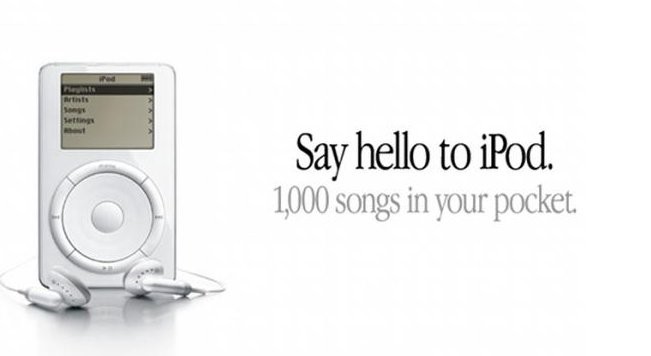
    The 1st generation iPod can be identified by its scroll wheel, surrounded by four buttons (from top, clockwise: menu, forward, play/pause, backwards), and its center button for selecting items. The first-generation iPod, which Apple advertised with the tagline “1,000 songs in your pocket,” was a rectangle-shaped device with a 5GB 1.8-inch hard drive capable of holding 1,000 songs. Nice this about this is its still functional and available. You can buy one on amazon new. Sadly the software and iTunes software cant be reverted so there is no really going to back to visit the original iPod. Just nice to play with the wheel for a bit.


    The Final Thought

    While it was not the first MP3 player, the original iPod was both smaller and easier to use than many of its competitors. As a result, it quickly attracted accolades and strong sales. The iTunes Store did not yet exist (it was introduced in 2003), so users had to add music to their iPods from CDs .Looking back to when the iPod was introduced (near the turn of the century!), it’s hard to remember just how different the world of computing and portable devices was.

    . At its introduction, the iPod was a Mac-only product. It required Mac OS 9 or Mac OS X 10.1. There was no Facebook, no Twitter, no apps, no iPhone, no Netflix. The world was a very different place.

  • Tech Throwback: Top 5 Nintendo Games

    Tech Throwback: Top 5 Nintendo Games

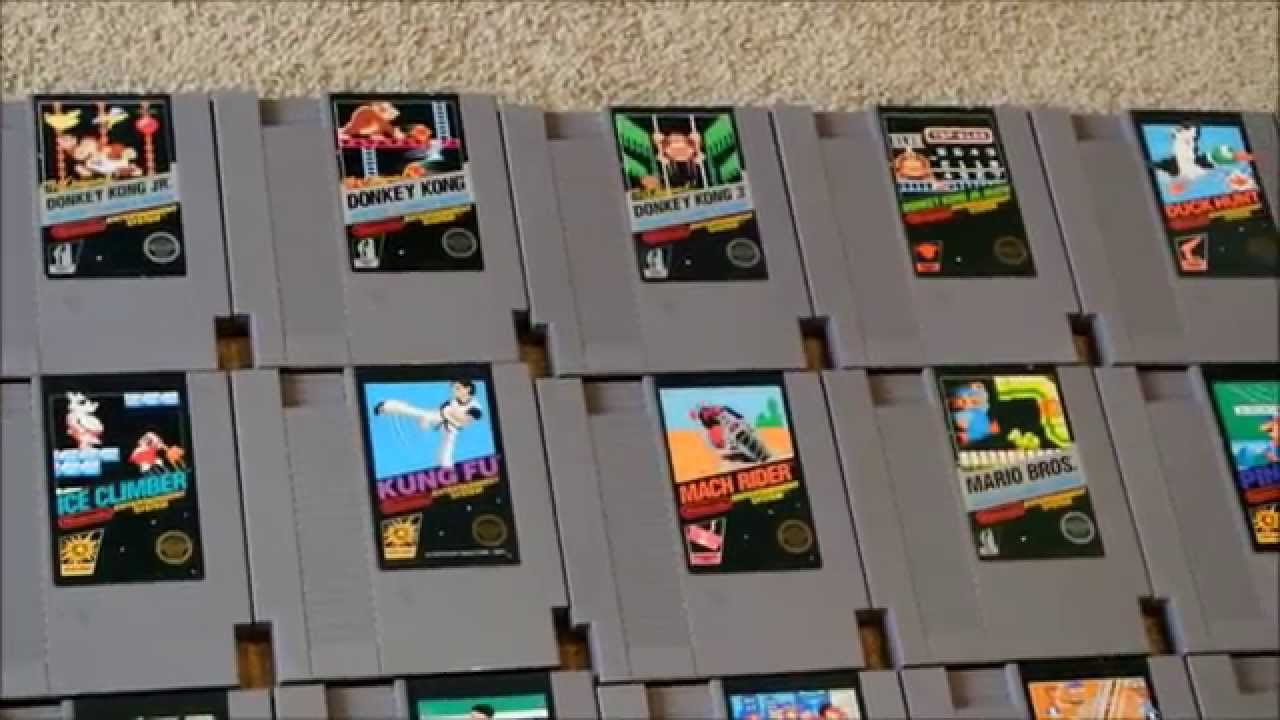
    I like to take a look at where I’ve been to evaluate where Im going. Technology is cyclical after all… wait no its not. That said I still like all the feels that come rushing back like a flood of nostalgia every time I get my hand on the tech I grew up with. Im going to go back periodically and take a looking at the stuff that used to blow our hair back and get our minds rolling. Some of these device blew up and changed the world, some where ahead of their time and some just fell flat and became colossal failures. Today I’m powering up the original Nintendo to play the best old school Top 5 nintendo games.


    1.Mike Tyson’s Punch-Out

    We all spent a decade playing the best boxing game ever invented. From the first time you got to play it at the skating rink arcade to the day you got that wonder little grey disc with the legendary Digital Mike Tyson on the cover there just has never been a better boxing game. Loads of great opponents from Piston Honda,Don Flamenco and  Soda Popinski to the great Mike Tyson. Each presented their own challenge and forced you to modify your game to conquer your opponent. It was as challenging as it was fun and beating the champ was truly a great accomplishment.


    2.Hogan’s Ally

    This is a simple-minded exercise that is built around the idea that shooting bad guys is fun. It’s true, shooting bad guys is indeed fun, but instead of animating characters or creating real backgrounds, Hogan’s Alley just tosses 8-bit recreations of cardboard cut-outs. It was the best game you could play using the light gun.

    3.The Legend Of Zelda

    Oh the time I spent playing this game. Take Link through a series of maze like 8 bit levels, upgrade weapons and gain health stamina. Collect magic items all to help your quest of freeing the princess Zelda. When this game launched in 1987 it was a game changer for RPG games, it combined a fantasy world with the puzzles of the text based computer games and they action of the new 8 bit systems and created action role playing. A masterpiece that will be in the annals of video game history for the rest of humanity.


    4. Tecmo SuperBowl

    I know we have been talking about Madden a lot recently, but please tell me you didn’t forget the original grid iron classic. Released 25 years ago next month, Tecmo Super Bowl provided the ultimate in sports geek wish fulfillment. Plus…. Bo Jackson. For a Raiders fan in the 90s named Beau.. he was the hero. If you were not using Bo and the Raiders in Tecmo Superbowl.. You where doing it wrong. His legend spawned his avatar, This game is in turn the legend of who Bo Jackson is. Pure, 8bit football madness.


    5.Kid Icarus

    Kid Icarus is a classic Nintendo title, a platformer whose titular character has gathered a cult following of fans over the past 20 years. The game itself is pretty cool. Pit’s platforming adventure through Angel Land was the sister game to Metroid. Both had a lot of elements and programmers in common, but Kid Icarus stuck to a tradition style of level progression.  It was a close call for number 5 in my top 5 Nintendo games, but Kid Icarus is def better then Metroid..He is the boy who could fly.


    The Final Top 5 Nintendo Games Thought

    While this is only a top 5 of my own personal opinion, that’s what makes it great. Every one has those  beloved top 5 Nintendo games… Whats yours?


  • Tech Throwback: Madden 94

    Tech Throwback: Madden 94

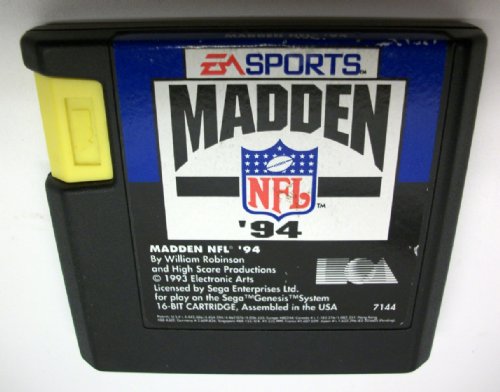
    Its that time of the week I like to take a look at where I’ve been to evaluate where I’m going. Technology is cyclical after all… wait no its not. That said I still like all the feels that come rushing back like a flood of nostalgia every time I get my hand on the tech I grew up with. I’m going to go back periodically and take a looking at the stuff that used to blow our hair back and get our minds rolling. Some of these device blew up and changed the world, some were ahead of their time and some just fell flat and became colossal failures. Today and this week it’s all about Madden, let’s go back, not to the beginning, but to where it all really started, Madden 94.

    John Madden Football. Madden, for short. Video game fans everywhere are familiar with Madden, regardless of whether they’re sports video game fans or not. Once a year, for the past 30 years and counting, a new Madden game hits store shelves and sells millions of units. There are Madden tournaments broadcast on television. Retail stores open at midnight to sell the game to eager players. Madden, more than any other sports video game in the United States, is a phenomenon.

     The New New Madden 94

    Madden 94 was the break out year, not just is popularity but Madden Football ’94 improves significantly off the first Madden game for the SNES and Genesis. Rather than being a jerky mess, this actually has a decent frame rate, and it makes defense work a bit better. Though largely made obsolete after subsequent versions, it was an outstanding football game for the time. In a mega addition this is the first version to get NFL licensing, meaning you can finally play with your team and real players. More on this below

    The ’94-’95 seasons for EA Sports’ franchise were largely innovated by numerous gameplay features like a battery-save feature and perspective-switching of the camera for kickoffs, punts, and turnovers. Nonetheless, the most important addition to the series can be seen in the title: the NFL license.

    Teams but No Numbers, I Know Who #32 is

    Acquiring the official licensing for teams and players brought the excitement of professional football to gaming like never before. In fact, Madden NFL ’94 was the first game to use the iconic EA Sports tagline, “It’s in the Game.” Although there were some bugs involved, like the Giants/Jets rosters being swapped, this season was huge for Madden and EA Sports.

    Madden ’94 does not feature the names of the players but does have the roster of each team by jersey number. You can still play as your favorite football player from the 1993 season (remember that each Madden title is a year ahead) although the players do not have any certain visible characteristics that set them apart from other players.

    While you can tell who you are playing as by the number highlighted under the character that you selected. The characters on the screen are only identifiable by the color of their team’s jersey. Madden ’94 is played in an angled top down view behind the offensive team. You get plenty of time to choose a play and can even run audibles to change the lineup if your opponent seems to have your number on the other side.

    Playing Madden 94 Again

    I powered up the old Sega Genesis I got my nephews to get hands on with Madden 94 again. I spent all of 1995 sick, battling cancer and recovering while playing Madden 94. My best friend at the time would spend almost all out of school time hanging out and playing me in Madden. He would die in an car accident just a year later. To say This game truly has a special place in my heart is an understatement. Its one that I forgot about or possibly blocked out until the very second it powered on.

    The muscle memory instantly kicks in and I know the navigation through the menus like it’s an instinct. I grew up a Raiders fan and that is the only team I would play with.. Today is no different.  I jump right in to play a season and take Da Raiders to the Bowl. I played an entire season in one night, smiles and tears and enjoying every moment of it. They were all here, all my little digital friend with the big heart. Just battling it out for a super bowl in 32 bits. A truly joyus,amazing and much needed replay.

    The Final Thought

    All emotions aside there is not much that really detracts from Madden ’94. I was certainly pleased with how much was put into this game with a full season. Plus the using passwords to keep your progress and the inclusion of playoff and championship modes, choice. You can do everything in Madden ’94 except create your own team or a do a draft. You can expect to find just about everything else in this game though. They even included an option to turn off John Madden’s commentary, and for that you became a legend.

  • Tech Throwback: Nokia 5100 Series

    Tech Throwback: Nokia 5100 Series

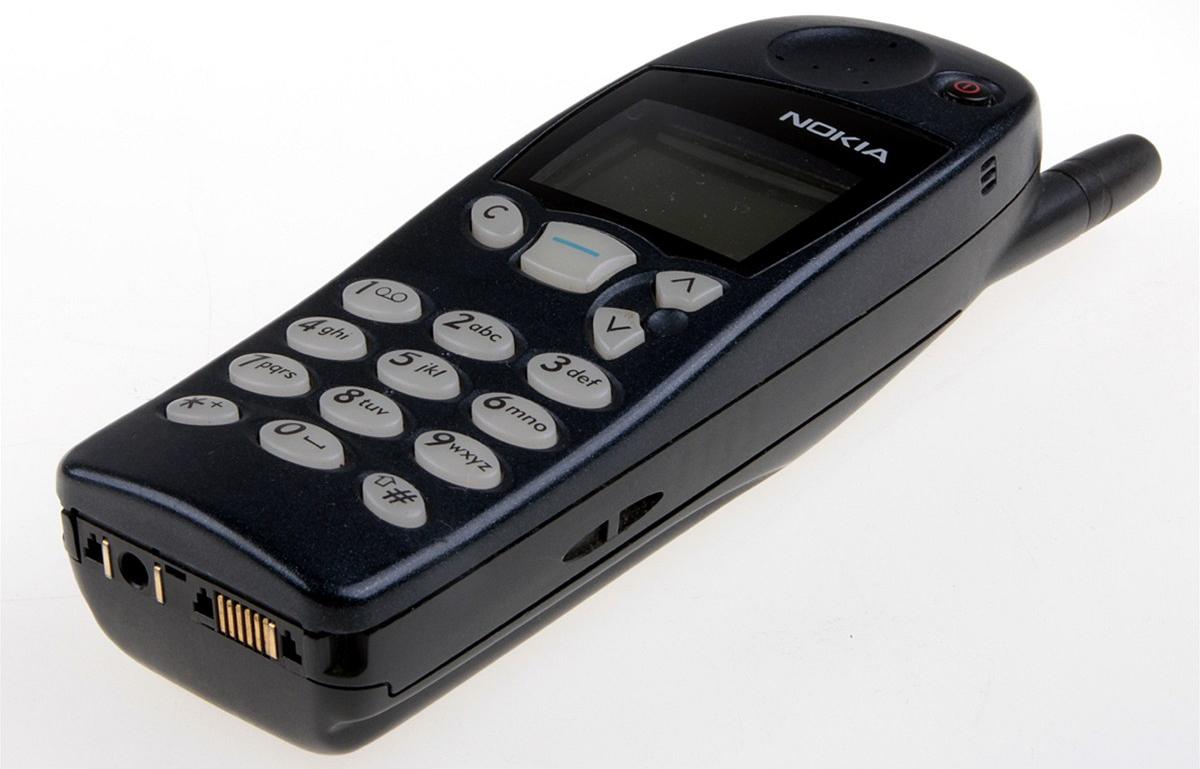
    Its that time of the week I like to take a look at where I’ve been to evaluate where Im going. Technology is cyclical after all… wait no its not. That said I still like all the feels that come rushing back like a flood of nostalgia every time I get my hand on the tech I grew up with. I’m going to go back periodically and take a looking at the stuff that used to blow our hair back and get our minds rolling. Some of these device blew up and changed the world, some where ahead of their time and some just fell flat and became colossal failures. A stroll down memory lane with the phone everyone and everyone’s mom had. The Nokia 5100 series

    The Original Nokia 5100 Series

    Nokia 5100 Series is a Nokia GSM mobile phone model that was consuming the US market in 1998.  The main culprit of this explosion of tech was The Nokia 5110 was rugged, had excellent battery life, and featured an 84 by 48 pixel monochrome LCD with four LED back lights, operated by the Philips PCD8544 display controller.  This was also one of the first mobile phones to feature the game Snake. It became one of the most popular phones of its era. The Nokia 5110 was discontinued in 2001, replaced by other smaller and lighter device

    It Was Free!

    The big reason for the massive success of this Nokia 5100 series is the fact the carriers where forcing down out throats for free, or $.01 with a 2 year contract. Great right? will not so much the $250 subsidy cost built in to the cost of your plan at $25 a month was hardly a good deal. We didn’t care, everyone had one and everyone else was envious.


    Customization of  Faceplates

    The Nokia 5100 series was one of the first mobile telephones with a replaceable faceplate. Nokia called them “express plates” . This was a concept they incorporated into several other consumer-oriented cellphones aimed at the young adult market, allowing users to customize their device. I was big on this, I was the guy that would “pimp out your phone”. People across town would pay me to make their phones “da bomb”. With about $3 in parts from china I could replace your phones face plate with a glow in the dark face, add a light up led antenna and a vibrating clear battery and add a few of the hottest ringtones. It was all the rage of 1999- 2001 and I would charge up to $50 for this service. It was a new century and I was flush with success.


    The Final Though

    Basic as fudge. Nokia 5100 series, It’s the original basic. Text was a coming soon feature, it could call and program up to 50 numbers in your phone book that is it. Not only could you make or receive a call anywhere you are but because of its success and desirable price point every one could. Thus the cell generation was born and like that answering machines died over night. Tune in next week when we talk about the tape based answering machine.


  • Tech Throwback: The IBM PC Personal Computer

    Tech Throwback: The IBM PC Personal Computer

    I like to take a look at where I’ve been to evaluate where Im going. Technology is cyclical after all… wait no its not. That said I still like all the feels that come rushing back like a flood of nostalgia every time I get my hand on the tech I grew up with. Im going to go back periodically and take a looking at the stuff that used to blow our hair back and get our minds rolling. Some of these device blew up and changed the world, some where ahead of their time and some just fell flat and became colossal failures. Today we have The Original IBM PC.

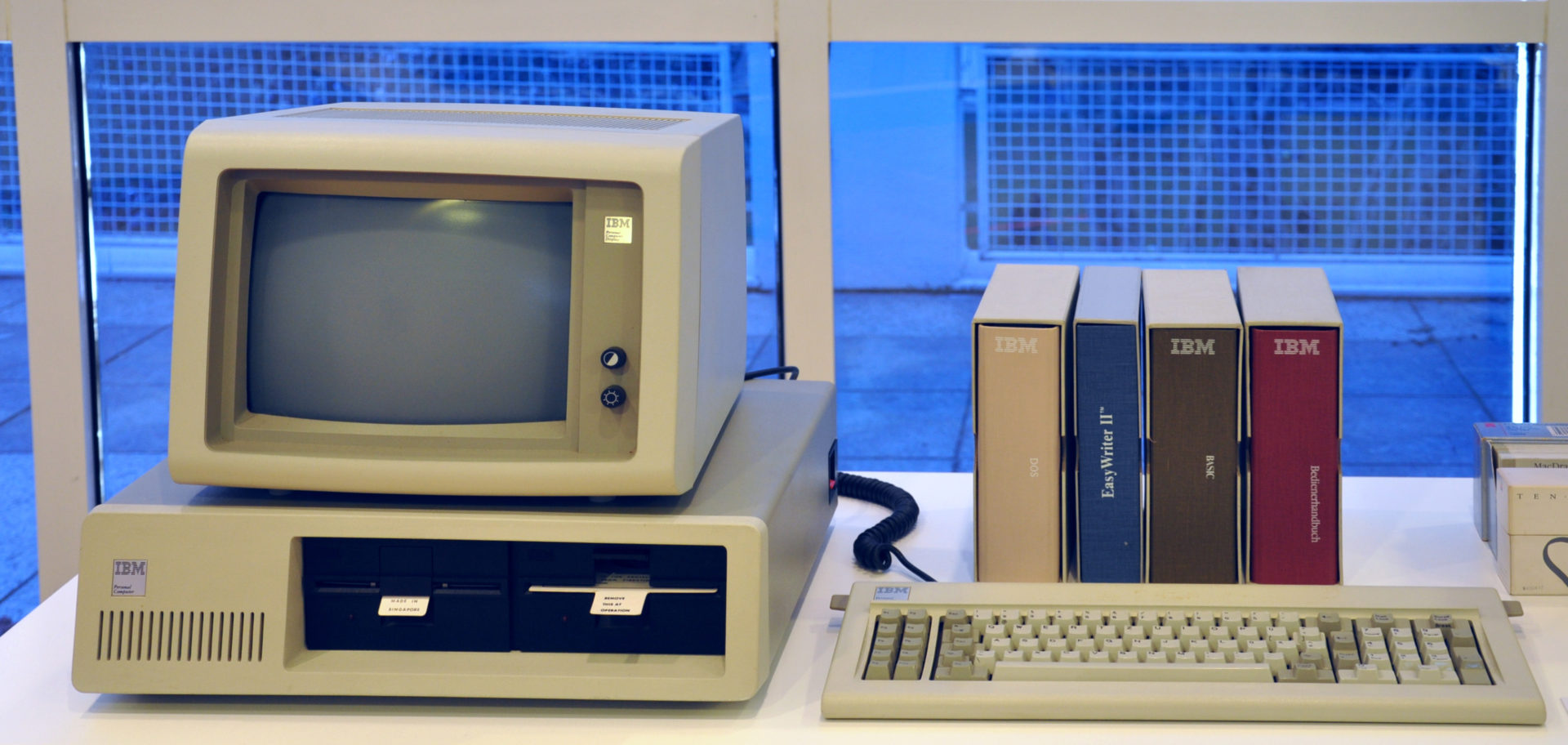
    IBM Personal Computer, also known as the IBM PC . While it wasn’t the first computer that didn’t have to be housed in a separate room. It was the first to be built and consecrated by Big Blue itself, legitimizing the whole concept. It was created by a team of engineers and designers in Boca Raton, Florida, in the early 1980s. The rest, as you know, is history.


    International Business Machines (IBM), one of the world’s largest companies was up to something and we all just knew it.  In the late 1970s the new personal computer industry was dominated by the Commodore PET, Atari 8-bit family, Apple II, Tandy Corporation’s TRS-80, and various CP/M machines. With $150 million in sales by 1979 and projected annual growth of more than 40% in the early 1980s, the microcomputer market was large enough for IBM’s attention.

    In 1980 and 1981 rumors spread of an IBM personal computer, perhaps a miniaturized version of the IBM System/370. The IBM Personal Computer (“PC”) was not as powerful as many of the other personal computers it was competing against at the time of its release. The simplest configuration has only 16K on-board RAM and uses an audio cassette to load and save data – the floppy drive was optional, and a hard drive was not supported.

    A basic system for home use attaches to an audio tape cassette player and a television set (that means no floppy drives or video monitor) sold for approximately $1,565. PC-DOS, the operating system, was not available on cassette, so this basic system is only capable of running the Microsoft BASIC programming language, which is built-in and included with every PC.

    Powering Back Up the IBM PC

    Im not sure what I was expecting. I remember being bored using my Dads and it didn’t really do anything cool. That didn’t stop me from entering any number of absurd command in the command prompt. I spent the next 15 mins repeating this childhood obsession. C:>Cancel School, C:> Where are my shoes?, C:> PRINT Money. C:> Make Robot. That was fun..

    Now its on to Leather goddess of Phobos. It was the only game I could remember and Im not sure why my parents let me play it. Its been a long time since i played one of these text adventure games. They seem to be gaining some hipster popularity back after Ready Player One. I forgot how tedious and boring not to mention for the spelling impaired annoying. But Basic, there is always Basica. This I still enjoy, creating and problem solving on a high level for a basic out put.


    The Final Thought

    I learned a lot about progress in my time with the IBM PC, both in 1986 and now. Its fascinating to see how far we have come in a very short amount of time. The IBM wasn’t the best option for a PC at the time, it lacked some of the innovations The Commador and HP’s had. This IBM PC’s success sparked my generations programmers to get us here. This is the computer all us kids got our hands on and that makes it special.

  • Tech Throwback: Web TV

    Tech Throwback: Web TV

    I like to take a look at where I’ve been to evaluate where Im going. Technology is cyclical after all… wait no its not. That said I still like all the feels that come rushing back like a flood of nostalgia every time I get my hand on the tech I grew up with. Im going to go back periodically and take a looking at the stuff that used to blow our hair back and get our minds rolling. Some of these device blew up and changed the world, some where ahead of their time and some just fell flat and became colossal failures. Today we have a massive swing and a miss. This was an idea that seemed right and destined for greatness but just missed. Today lets pull up the old Web TV.

    This was the brain child of  Steve Perlman. He first combined computer and television as a high-school student when he decided his home PC needed a graphics display. He went to build software for companies such as Apple and Atari. While working at General Magic, the idea of bringing TVs and computers together resurfaced.

    One night, Perlman was browsing the web and came across a Campbell’s soup website with recipes. He thought that the people who might be interested in what the site had to offer were not using the web. It occurred to him that if the television audience was enabled by a device to augment television viewing with receiving information or commercial offers through the television, then perhaps the web address could act as a signal and the television cable could be the conduit. Pretty brilliant and right there in front all of our faces.

    Web TV and How it Worked

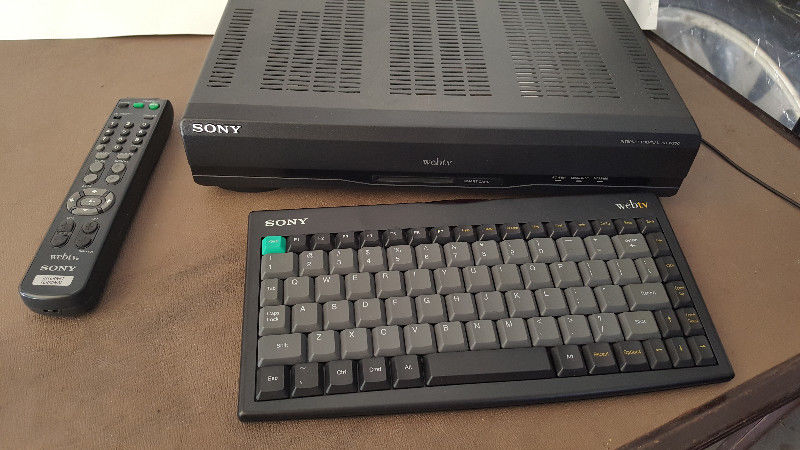
    Web TV was launched on September 18, 1996 with Web TV set-top boxes in stores from Sony and Philips. They ran all of the servers in an old BMW dealership.The initial price for the Web TV set-top box was US$349 for the Sony version and US$329 for the Philips version, with a wireless keyboard available for about an extra US$50. The monthly service fee initially was US$19.95 per month for unlimited Web surfing and e-mail.  The box featured a 64-bit RISC CPU chip, and a smart card reader. The smart card reader was not utilized significantly. The web browser was compatible with both Netscape Navigator and Microsoft Internet Explorer and the Web TV set-top box featured 2 MB of RAM. The first WebTV set-top boxes had a 33.6 kbit/s modem, and later versions had 56kbit/s modems.

    By 1998 Web TV was on its way, they where pulling 1.3 billion dollars a year and it looked like we where on the way to a TV/computer consolidation. Then Microsoft stepped in 2001. They purchased Web TV and it all seemed to fall apart. They keyboard and controls where difficult to use. The applications where not growing with the rest of the tech world. Shortly after the MSN TV re-branding it was all but dead in the water.

    The Final Thought

    With out the adaptations of the most popular internet apps and functions this just became that cool thing that one friend in the neighborhood had. Skip forward a few years and Smart tvs are a cornerstone to our digital world. While I attempted to find an old Web Tv box and play with it in a demonstration for this article, apparently its just not feasible with there being no internet connection service to log on through. Web Tv came and went with no fanfare, soon to be totally forgotten. Never getting its just deserves and never to be seen or used again but for those brief years of 95-2001.