Tag: uber

  • Largest Bike Sharing Service in the US!

    Largest Bike Sharing Service in the US!

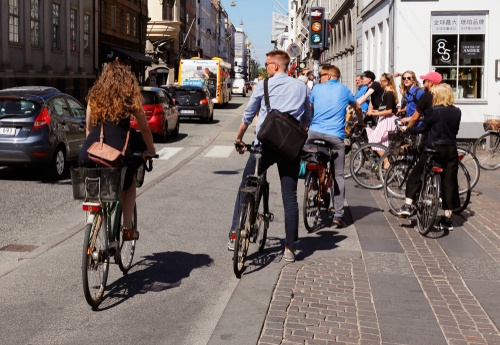
    Lyft has recently acquired the largest bike sharing service (yeah, that’s a thing, apparently) in the US for $250 million. If that’s got you scratching your head, don’t worry, we are too. Jokes aside, the bike company, called Motivate, operates a number of bike rental services in urban centers that use bikes instead of cars. The offered bike rentals around the city are a combination of novel and useful. For one thing, they’re just neat: you go to a docking station and grab a bike! Additionally, the usefulness of not having to lug a bike downtown is a big draw to customers.

    Ride Sharing’s Interest in Bike Sharing

    Similarly, Uber recently purchased New York-based Jump Bikes. Lyft and Uber’s sudden interest in the bike sharing market may seem odd at a glance, but it makes sense. The primary income for both companies comes from densely-packed urban centers. Those same urban centers are a prime location for using a bike to get around. And, what better way to dig into Uber and Lyft than offering cheap bike rentals?

    In order to head off this potential thorn in their side, the companies did the thing they do best, and threw money at the problem. In this case, it worked out pretty well: they both possess significantly more bikes now than they did, and the competition is gone.

    That said, Lyft seems to have come out on top, as Motivate currently operates in dozens of cities in the US. This marks the first time the ride sharing company considered second-fiddle to Uber has come out on top in a bid for supremacy. This can only spell good things for customers: increased competition leads to better, cheaper services. If you find yourself in a large metropolis looking for a good way to get around, keep your eyes peeled for a Lyft sign over a bike station. You might just be able to drop some quarters and grab a two-wheeled ride!


  • Should You Drive for Ridesharing Apps?

    Should You Drive for Ridesharing Apps?

    Let’s face it. We’re living in the gig economy now. For better or worse, picking up gig jobs is one of the best ways to make money on the side to keep up with bills.

    If you’re struggling to come up with money, or just want a bit of extra jingle in your pocket, you could get into driving for ridesharing apps. Here’s what you need to know.

    Driving for Ridesharing Apps

    The Pros

    There are some benefits to driving for a ridesharing app. For one thing, you don’t have to worry too much about scheduling. When you’ve got some free time to make some money, you can turn your app to “driving” mode and pick up some fares. Then, when payday comes, you get some extra cash in your pocket.

    Another upside to this type of work is that you don’t have to directly deal with a boss or coworkers. If you’re like us, there’s something nice about not having to deal with a superior face-to-face. One of the most obnoxious aspects of normal jobs is dealing with petty drama brought on by coworkers and managers. Well, when you drive for Uber or Lyft, you only have to deal with fares.

    Another big plus for driving for ridesharing is that you can still interact with people, just not as coworkers. There’s something nice about getting to talk to a bunch of different people and just experience a swath of the population of your city.

    The Cons

    As you’ve certainly heard or gathered, it’s not all sunshine and rainbows. There are some distinct disadvantages to driving for a ridesharing app. Notably, drivers aren’t really considered full employees. If you rely solely on Uber or Lyft for your income, you’ll need to cover your own insurance and benefits.

    Another drawback to this type of work is the amount of wear and tear it puts on your car. You need to have a relatively new car to drive for these services, and then you’re putting miles on it just to make fares. You’ve got to keep gas in it, pay for insurance and the like, all of which are considerable expenses.

    Finally, some people like having coworkers or an office to go into work. Dealing with the public can be a lot, especially when you’re not a very social person. As such, ridesharing is for everyone. However, if you don’t mind these drawbacks, there’s some money to be made through driving for Uber or Lyft.

  • Largest Bike Sharing Service in the US Bought by Lyft

    Largest Bike Sharing Service in the US Bought by Lyft

    Lyft has recently acquired the largest bike sharing service (yeah, that’s a thing, apparently) in the US for $250 million. If that’s got you scratching your head, don’t worry, we are too. Jokes aside, the bike company, called Motivate, operates a number of bike rental services in urban centers that use bikes instead of cars. The offered bike rentals around the city are a combination of novel and useful. For one thing, they’re just neat: you go to a docking station and grab a bike! Additionally, the usefulness of not having to lug a bike downtown is a big draw to customers.

    Ride Sharing’s Interest in Bike Sharing

    Similarly, Uber recently purchased New York-based Jump Bikes. Lyft and Uber’s sudden interest in the bike sharing market may seem odd at a glance, but it makes sense. The primary income for both companies comes from densely-packed urban centers. Those same urban centers are a prime location for using a bike to get around. And, what better way to dig into Uber and Lyft than offering cheap bike rentals?

    In order to head off this potential thorn in their side, the companies did the thing they do best, and threw money at the problem. In this case, it worked out pretty well: they both possess significantly more bikes now than they did, and the competition is gone.

    That said, Lyft seems to have come out on top, as Motivate currently operates in dozens of cities in the US. This marks the first time the ride sharing company considered second-fiddle to Uber has come out on top in a bid for supremacy. This can only spell good things for customers: increased competition leads to better, cheaper services. If you find yourself in a large metropolis looking for a good way to get around, keep your eyes peeled for a Lyft sign over a bike station. You might just be able to drop some quarters and grab a two-wheeled ride!

  • Popular Scam Targets Uber Drivers

    Popular Scam Targets Uber Drivers

    A highlight of the current gig economy is the isolation contractors feel when working for companies like Uber. Since the company is so compartmentalized, drivers often feel alienated and alone on the road. Scammers have picked up on this, and a robust, complex scam has been targeting newer Uber drivers for more than a year. 

    The Scam 

    The scam in question involves misusing the information that customers get when they hail a ride through the Uber app. When you hail a ride, you see information about the driver, like their name and license plate number. Not to mention, you can call them through the app. That call gets a randomized, anonymous number with a 415 area-code, the same as Uber’s headquarters. 

    Upon hailing the cab, the user then calls the driver and claims to be from corporate and explains that there’s an issue with the driver’s account. The account needs to be verified before the driver can complete the fare, the scammer says. This is the tricky part: the scammer asks for the email and password of the driver. Then, the scammer has the driver tell them the code that they were just texted. You’ve probably guessed it: this is a phishing call, and that code was the two-factor verification. Now, the scammer is into the driver’s Uber account. “Alright, everything’s good here. We’ve transferred that ride to another car, but you’re free to keep driving.” 

    After that, of course, the damage isn’t done, but just beginning. The scammer will use their access to the driver account to change their account settings so that they can profit from any work the driver does. They’ll profit from any work the driver has done when Uber pays out for their work on Sunday. 

    The Company’s Responsibility to Uber Drivers 

    As of yet, Uber hasn’t formally acknowledged this scam to their new drivers. Lyft, which has been targeted by similar scams, has directly addressed drivers regarding it. Lyft drivers are thus less likely to fall for it, as their company has helped safeguard them. Uber, by contrast, is letting its drivers fend for themselves out there. There are dozens of things the company could do to fix this situation, but as of writing they claim that their authentication processes should keep drivers safe.  

    A few targeted by the scam are contacted by Uber to inform them of potential illegal activity on their account. However, if Uber took steps like Lyft, they could avoid the issue altogether. Something as simple as Lyft’s pre-recorded message that tells a driver it’s a customer calling them would take the legs out from under this scam. Uber, ever the helpful and caring employer, has done no such thing. If you’re an Uber driver, take steps to protect yourself, and don’t give anyone your account info.  

  • Google Maps and Uber Fall Out

    Google Maps and Uber Fall Out

    Uber and Google Maps have been integrated since January of 2017. However, in the newest Android update, that integration has been rescinded. Previously, users were able to see prices and hail Ubers directly through the Google Maps app. Uber was the only service that offered direct integration through the Maps app. While several other services, like Lyft, are visible through Google Maps, only Uber could be paid for directly through the app.  

    Why are Google and Uber Done? 

    It’s unclear why this split took place. Perhaps the ride-sharing giant would rather customers open their app and use it. Maybe Google tired of supporting just Uber through their Map app and didn’t have plans to integrate other ride-sharing apps. In any event, users can still see ride sharing details in Google Maps. Now, however, they will be moved to the ride-sharing service’s app when they want to actually hail a ride and pay for it.  

    Continued Troubles for Uber

    Uber has been in a good deal of hot water lately. For one, they’ve been under fire for classifying their employees as contractors, thus avoiding paying for insurance for them. Additionally, the company faced allegations of turning a blind eye to sexual misconduct last year. Other issues last year, like fines from many states at localities, lack of diversity in hiring and leaks of medical information led to the demotion of then-CEO Travis Kalanick.  

    Since then, the company has reaffirmed its commitment to hold itself to a higher standard. The ethical issues of its impact on the gig economy, however, are unresolved. Between pressuring traditional taxi services and warping the economy of transportation, the company has had a substantial impact. Despite being worth billions of dollars, they own very little in the way of cars or employees. They are still able to classify their drivers as contractors and use the property of others to fund their own profits.  

    These issues likely had little to do with the app’s de-coupling from Google Maps, but who knows? Perhaps Google is trying to send a message on how they feel about companies like Uber. Or, more likely, Google simply decided it didn’t want to be so closely identified with a company that has a record as rough as Uber’s. 

    Feature Image Credit: USA Today

  • San Francisco Gearing up To Tackle Uber and Lyft on Employee Benefits

    San Francisco Gearing up To Tackle Uber and Lyft on Employee Benefits

    Just how independent is an independent contractor? And if your company is worth billions, what responsibility do you have to your employees? San Francisco is taking the two big ride sharing apps to task over how they answer these questions. While the two companies currently hold that their drivers are independent contractors, Dennis Herrera, the city attorney, feels a bit differently. Herrera seeks to find out whether Uber and Lyft are doing their due diligence. As it stands, the ride sharing apps classify their drivers as contractors, thus denying them employees benefits.  

    Dodging Paying Employee Benefits? 

    Herrera’s stated goal? In his word, he’s seeking that Uber and Lyft provide “proof that Uber and Lyft have lawfully classified drivers as independent contractors or provide their drivers with minimum wage, sick leave, health care contributions, and paid parental leave.”  

    Hererra, in a Tuesday statement, elaborated: “We are not going to turn a blind eye if companies in San Francisco deny workers their pay and benefits. We are not going to tolerate any company shirking its responsibility to pay for benefits and shifting that burden onto taxpayers when drivers without health insurance turn to the emergency room. If your company is valued at $62 billion, you can afford to give your workers health care.” 

    A Disturbing Trend 

    Finding cleaver ways around paying employee benefits is a hallmark of the “gig economy” in which we sadly find ourselves. Uber and Lyft aren’t the only companies playing fast and loose with regards to their employees and their benefits. Airbnb skirts the issue altogether by owning no properties, and GrubHub and Bite Squad both use similar language as Lyft and Uber when referring to their drivers.  

    This gig set up is incredibly attractive to these companies. They need not set aside money for benefits, as discussed, but they save on more than just that. They also don’t spend as much on renting office space, since employees work from their own homes or vehicles. Training expenses are cut dramatically, as contractors require less oversight than employees.  

    While this is great for businesses, it is rather unfortunate for lower-income workers seeking full-time employment. Many companies are unable or unwilling to hire employees full-time, leading to the workers resorting to gigs for income. Those workers aren’t provided benefits and have no long-term career opportunities afforded to them by their hard work. While Uber and Lyft aren’t the only companies guilty of this decentralization, they are certainly emblematic of it. Hopefully for workers, pushes like Hererra’s will become the norm in cities and states across the US. 

  • Need a Ride? Check out Our Favorite Ride Sharing App List

    Need a Ride? Check out Our Favorite Ride Sharing App List

    If you’re looking to hitch a ride, there’s no shortage of great ride sharing apps for you to try out. Which one is the best, though? Well, that’s subjective. But we can certainly tell you which one is our favorite! 

    Juno 

    Juno is a ride sharing app that focuses, first and foremost, on paying its drivers well. The idea is that better paid drivers will deliver a better experience for the end users of the app. This is pretty sound logic, all considered! However, Juno is still in a soft-launch window, so it’s hard to say how this will play on a large scale.  

    That being said, the app is clear and concise, cutting straight to the important stuff. The app has options for normal rides and an SUV option for when you and a bunch of pals need a ride. The app is pretty good about estimating the fare and giving ETAs, which are common but appreciated features. Keep an eye out for this ride sharing app when it goes into a full release! 

    Lyft 

    Lyft is the second-largest ride sharing app in the US, which is unsurprising. Featuring pricing comparable to Uber, Lyft is often used by people looking to compare and try to find the best rates for rides. Many drivers actually do the same thing, but in reverse, driving for both services and seeking fares that pay the most from each.  

    Lyft offers the standard ride sharing app features of normal-sized rides or “Lyft Plus” for large groups. The Lyft Line service is also available for those looking to keep the price of their fare down. It accomplishes this by having multiple users share one ride, somewhat like a city bus. This is great for keeping the price down during busy times of day! Speaking of, unlike Uber, Lyft caps its demand-based price escalation at 400 percent. Which is still a lot. But it’s good to know there is a cap, unlike Uber’s service. 

    Our Favorite Ride Sharing App: Uber 

    You may have seen this one coming, but we really like the original. Uber has gotten as big as it is for good reason: it’s a really great app! Pioneering all the ride sharing app features we’ve come to expect, Uber has had time to really hone its service. The end-user experience is really just top-notch.  

    Options for choosing what kind of car you want to ride in (sedan, SUV, luxury car) are present, as you would expect. Additionally, like Lyft, you can call an UberPOOL ride, allowing you to split the fare with strangers to keep the price down. The coolest thing that Uber offers that competitors don’t is UberASSIST, a specialized service for mobility-impaired people. ASSIST drivers are trained to help wheelchair users, and their vehicles are equipped to accomadate them as well! 

    There you have it, our favorite ride sharing apps. Next time you need to catch a ride, keep these apps in mind!