Month: July 2018

  • SmartHome Automation and the 5 Gadgets you Need

    SmartHome Automation and the 5 Gadgets you Need

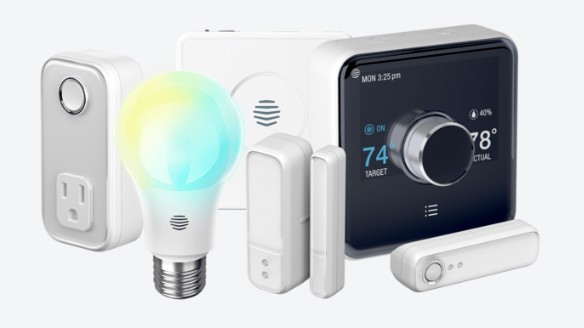
    We all have dreamed of the day when in George Jetson style all the devices in your life could connect to the internet. No im  just talking about computers and smartphones, but everything: clocks, speakers, lights, door bells, cameras, windows, window blinds, hot water heaters, appliances, cooking utensils. All of it.  Then we need those devices to communicate to each other, send you information, and take your commands. It’s not science fiction or a crazy 60’s cartoon,  it’s the Internet of Things (IoT) and SmartHome Automation, and it’s glorious.

    SmartHome Automation is exactly what it sounds like: digitally enabling everything from window shades to pet feeders—with a simple push of a button or a shout of your voice. Some activities, like setting up a lamp to turn on and off at your whim, are really cheap and easy. Then we have things like advanced surveillance cameras that are a bit trickier and require a more serious investment of time and money.

    Lets take a Look at some of the latest and greatest in home automation.

    1. iCamera Keep Pro

    The iCamera Keep Pro from iSmartAlarm ($199.99) is a full-featured home security camera that not only works as a standalone device, but can be incorporated into an iSmartAlarm DIY security system. The camera is full of useful features including a powerful 1080p image sensor, motion and sound detection, mechanical pan and tilt, time-lapse and event-triggered video recording, and a motion-tracking feature that allows the camera to follow a person around the room. Throw in free cloud storage, an SD card slot for local storage, and support for IFTTT integration, and you’ve got a killer indoor security cam.

    2.Phillips HUE

    One thing that you might want to do as soon as you decide to make your home a smart home is switch out the light bulbs – something easier said than done considering how many different options out there. Of them all, however, we think the best smart light bulbs are Philips Hue range of smart bulbs.

    If you opt for Philips Hue bulbs, you will need to get the Philips Bridge, which is kind of like a hub for your lights. The advantage, however, is reliability, and the fact that the system is compatible with a range of different standards and home control systems including Apple HomeKit, Nest and Samsung SmartThings.

    3. iHome ISP5 Control Smart Plug

    While there are great smart replacements for many devices, a much simpler option is simply using connected plugs in your power outlets. Doing so will give any device that plugs into a power outlet basic smart features like the ability to turn the device on and off, or the ability to monitor the device’s power usage.

    There are quite a few smart plugs out there (seriously, so many), but the best is the iHome ISP5 Control Smart Plug. It’s Wi-Fi enabled, and works with HomeKit, Nest and Wink – so it should play nice with your other smart home devices.

    4. The Wink Hub 2

    One device to rule them all, the Wink Hub 2 works with devices that use Z-Wave, Zigbee, Lutron Clear Connect, Kidde, Bluetooth, and Wi-Fi. It is also for the future. That includes just about everything in the smart home spectrum, from Philips Hue lighting and the Netgear Arlo camera, to Google Home. It’s the most reliable, widely supported hub we’ve tested.

    5.Haiku Home L Series 52-inch Indoor/Outdoor WiFi Enabled White Ceiling Fan with LED Light

    This smart ceiling fan is compatible with Alexa for a fully voice-controlled cooling system. It has been specially tested to ensure that it won’t rattle, click, or wobble and features an integrated LED light. Easily control settings via the included remote or mobile app. Add in a smart Thermostat and just tell your house what temperature it should be. Nice.


    The Final SmartHome Automation Thought

    We have gone over and over this a dozen times, SmartHome Automation functionality is the kitchen remodel of the 21st century. All these devices are relatively inexpensive but can really boost the value of your home. Besides the value they can great increase your enjoyment by making your life easier and much more relaxing. Try not to relax with the Hues orange glow light setting after supper, I dare you.
  • Tech Throwback: The IBM PC Personal Computer

    Tech Throwback: The IBM PC Personal Computer

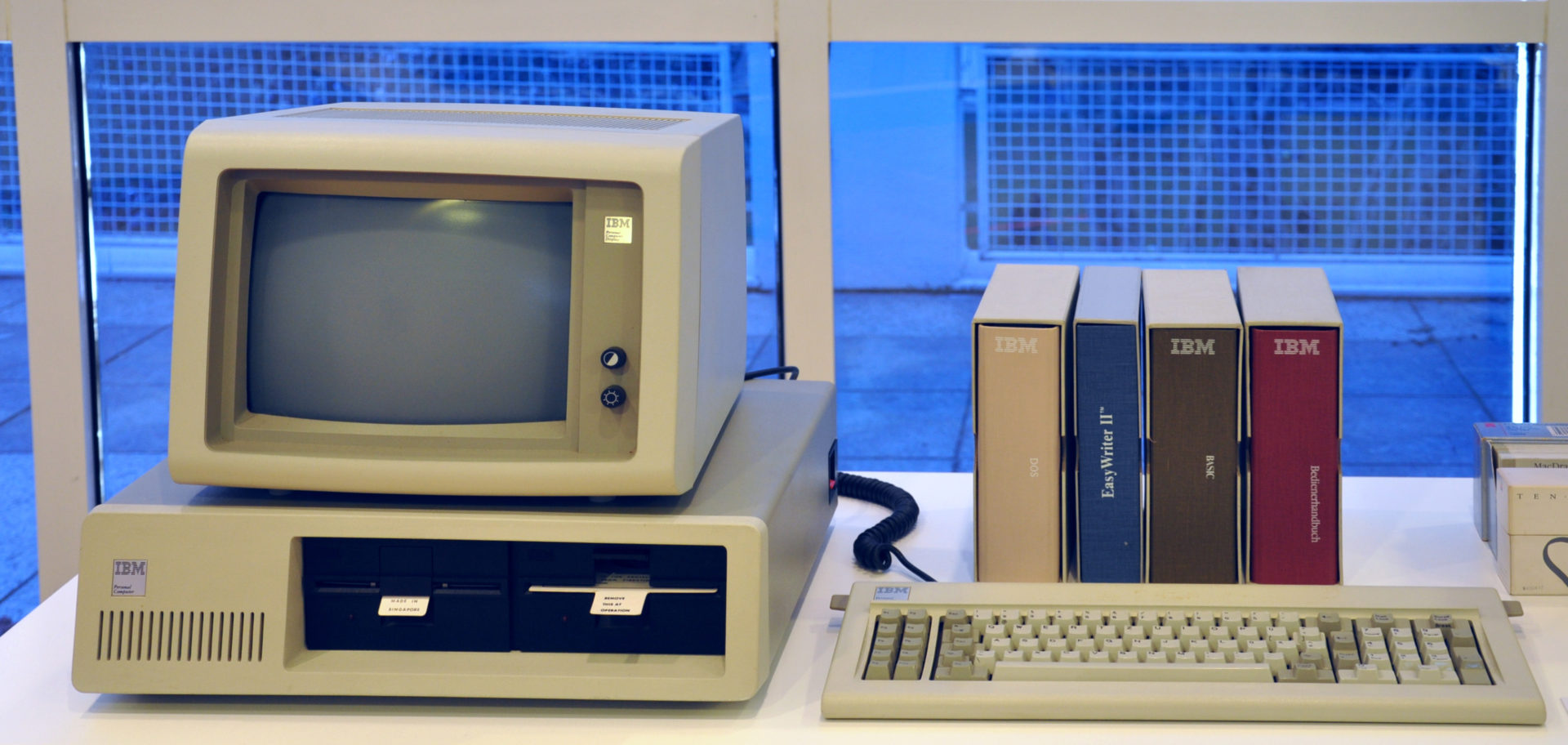
    I like to take a look at where I’ve been to evaluate where Im going. Technology is cyclical after all… wait no its not. That said I still like all the feels that come rushing back like a flood of nostalgia every time I get my hand on the tech I grew up with. Im going to go back periodically and take a looking at the stuff that used to blow our hair back and get our minds rolling. Some of these device blew up and changed the world, some where ahead of their time and some just fell flat and became colossal failures. Today we have The Original IBM PC.

    IBM Personal Computer, also known as the IBM PC . While it wasn’t the first computer that didn’t have to be housed in a separate room. It was the first to be built and consecrated by Big Blue itself, legitimizing the whole concept. It was created by a team of engineers and designers in Boca Raton, Florida, in the early 1980s. The rest, as you know, is history.


    International Business Machines (IBM), one of the world’s largest companies was up to something and we all just knew it.  In the late 1970s the new personal computer industry was dominated by the Commodore PET, Atari 8-bit family, Apple II, Tandy Corporation’s TRS-80, and various CP/M machines. With $150 million in sales by 1979 and projected annual growth of more than 40% in the early 1980s, the microcomputer market was large enough for IBM’s attention.

    In 1980 and 1981 rumors spread of an IBM personal computer, perhaps a miniaturized version of the IBM System/370. The IBM Personal Computer (“PC”) was not as powerful as many of the other personal computers it was competing against at the time of its release. The simplest configuration has only 16K on-board RAM and uses an audio cassette to load and save data – the floppy drive was optional, and a hard drive was not supported.

    A basic system for home use attaches to an audio tape cassette player and a television set (that means no floppy drives or video monitor) sold for approximately $1,565. PC-DOS, the operating system, was not available on cassette, so this basic system is only capable of running the Microsoft BASIC programming language, which is built-in and included with every PC.

    Powering Back Up the IBM PC

    Im not sure what I was expecting. I remember being bored using my Dads and it didn’t really do anything cool. That didn’t stop me from entering any number of absurd command in the command prompt. I spent the next 15 mins repeating this childhood obsession. C:>Cancel School, C:> Where are my shoes?, C:> PRINT Money. C:> Make Robot. That was fun..

    Now its on to Leather goddess of Phobos. It was the only game I could remember and Im not sure why my parents let me play it. Its been a long time since i played one of these text adventure games. They seem to be gaining some hipster popularity back after Ready Player One. I forgot how tedious and boring not to mention for the spelling impaired annoying. But Basic, there is always Basica. This I still enjoy, creating and problem solving on a high level for a basic out put.


    The Final Thought

    I learned a lot about progress in my time with the IBM PC, both in 1986 and now. Its fascinating to see how far we have come in a very short amount of time. The IBM wasn’t the best option for a PC at the time, it lacked some of the innovations The Commador and HP’s had. This IBM PC’s success sparked my generations programmers to get us here. This is the computer all us kids got our hands on and that makes it special.

  • New Galaxy Watch and What We Know

    New Galaxy Watch and What We Know

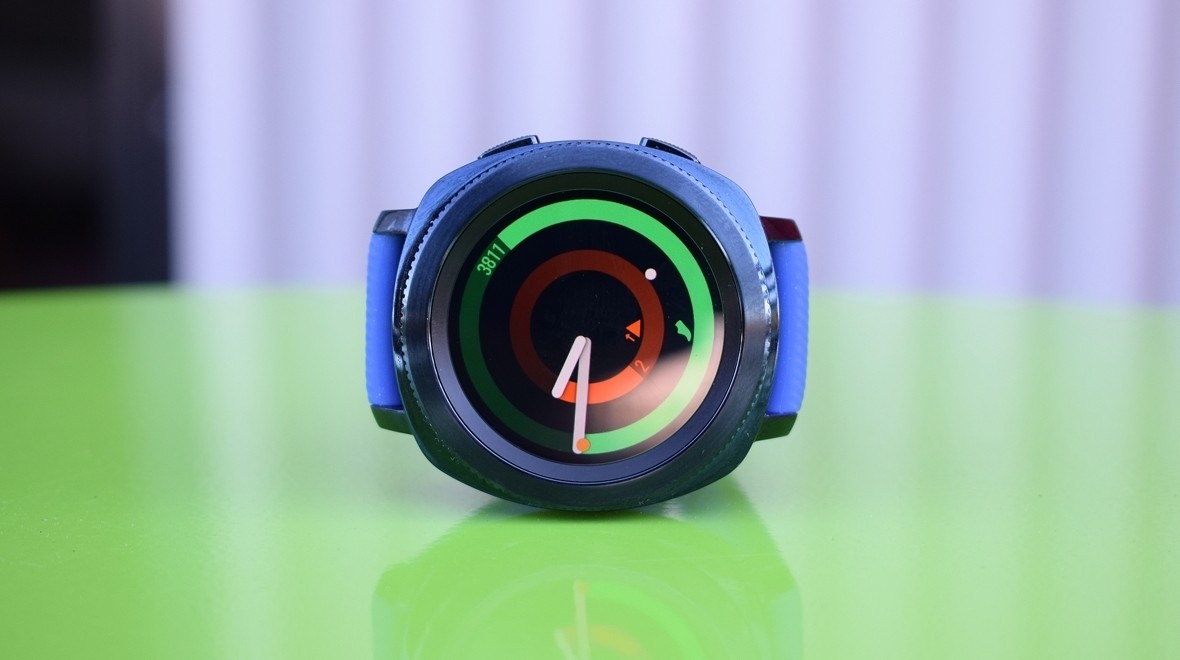
    The Samsung Gear was lackluster and not a commercial hit. The adoption in comparison is dismal to the iWatch’s success. Samsung is looking to change that with its next Galaxy Watch. While its name, its OS, and its features are pretty much still in flux, which, at the very least, makes it sound a bit more exciting.

    What We Know

    Very little Im afraid. There have not been alot of details released yet. Lets start with what we know. It will be round for starters, they will not be adapting to Apples square face. Bixby will be a huge and integral part of this watch.Although Bixby has been out for more than a year now, Samsung’s homegrown AI assistant has not descended on any of the current smartwatches. That will change with the Galaxy Watch. Oh yeah,  Presumably we also have a name, ,A registered trademark on “Galaxy Watch” has been leaked.

    Its Safe To Assume

    While we don’t have any confirmation its safe to assume the next line in the Galaxy Watch will be a big upgrade from previous models. For it to compete with the legendary and most popular watch on the planted, the iWatch, it will have to be something special. Look for vast strides in the ai and voice control aspect. Bixby will do things Siri just cant and hasn’t even though of yet. It will be much easier to use and that in turn will give this the commercial appeal all of android is been lacking since the dawn of time, or 2010.

    What Would Be Cool in the Galaxy Watch

    This is the part of these articles I like the most. This is where we get to throw in all the stuff my little heart could desire in a new Galaxy Watch. What do I want, I want battery. Battery Life, I can not stress this enough. A watch I  don’t have to worry about charging for a week. Use that cool Rolex kinetic energy technology they have been using since the beginning of watches to recharge my smartwatch. A big face, 52-54mm. Make is glorious and a true fashion and status statement, like a watch should be. Holograms? ummm yes please. a bit better speaker, just to make taking a phone call on your watch actually viable. Last but not least, lets change Bixby to Sam. Sam, short for Samsung seems like a friendly guy I would like to chat with. The name is also very gender neutral and could easily pair with a nice female voice.  Plus we get the added feeling of being Dick Tracy and talking to Sam back at the station.

    The Final Thought

    Whats left to say? Well plenty. We will have more solid info when these details emerge. My industry sources tell me look for a Note release in late Aug for this new Galaxy Watch.

  • Apple Music Control Update for Sonos Speakers

    Apple Music Control Update for Sonos Speakers

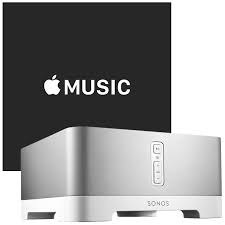
    Finally. Finally, Finally. Up until now when using our Sonos Speakers you had to use the Sonos app to control the music. The app was not as intuitive, extensive or as viable as the iTunes music app built in to you phone. You had to create your playlist through the Sonos app and it was clunky and not very easy not to mention you couldn’t load existing playlist in. Well now out troubles are over. Sonos has announced the AirPlay 2 has arrived. This makes compatible Sonos speakers the first third-party AirPlay 2 speakers to hit the market, and support is being added retroactively through a free software update.


    Whats This Mean Really For Your Sonos Speakers

    Yes, this means you can use Sonos speakers to play audio from iTunes on the Mac and all iPhone and iPad apps including Music, TV, YouTube, and Netflix. Sonos speakers can also be used for multi-room audio playback with HomePod and Apple TV, and Siri can control Apple Music and Podcasts playback from iPhone, iPad, HomePod, or Apple TV. Great right?

    We are told AirPlay 2 works with the newest Sonos speakers (recognizable by their touch controls instead of hardware buttons) which includes Sonos Beam, Sonos Playbase, Sonos One, and the second-gen Sonos Play:5. Sonos customers can update compatible speakers through the software update section of the Sonos controller app today. For iOS users, start by updating the Sonos controller app in the App Store, then look for the new software update within the Sonos app for compatible speakers.

    The Final Thought

    While I got very excited for this at first. I soon realized all my Sonos Speakers are not going to be compatible. Tear. I have been hesitant to grab the Homepod because of my existing 4 speaker Sonos system. Now a change may soon be in order.  I like the group playlist functionality of Sonos that you cant get really get anywhere else. When I throw a dignified cocktail party everyone can sync in and que up songs or add to the party’s playlist. This adds a social element I have truly come to enjoy. Now I have convinced myself, my Sonos system will get a overhaul.

  • Sonic Mania Plus Gives Extra Life to Best Sonic Game in Years

    Sonic Mania Plus Gives Extra Life to Best Sonic Game in Years

    Last year’s Sonic Mania blew the doors off the losing streak Sega’s blue mascot has been on for decades. With the exception of a few middling-to-okay platformers, Sonic has been struggling to find his identity in a world without Sega consoles. However, the fan-led development of Sonic Mania has brought the character back to his roots. A year later, and it’s still one of the best things to ever happen to the series. What’s more, Sega has promised a beefed-up re-release later this month. The re-release, titled Sonic Mania Plus, introduces some new content and will be available digitally and physically.

    Sonic Mania Plus: Fresh Content for a Fresh Game

    The new Plus version of the game includes some interesting new content. First, the new Encore game mode remixes a number of the world from the base game. These remixes range from feeling like entirely new levels to some minor tweaks. For the most part, the minor changes are excuses to show off the powers of the new characters. Mighty the Armadillo and Jay the Flying Squirrel join the cast, each bringing their own special abilities. Mighty can ground-pound to damage enemies or open hidden passages. Jay can fly at high speeds, but is hard to control, much like the cape from Super Mario Bros 3. Both new characters are playable in the base game as well as Encore mode!

    Pricing and Release

    Sonic Mania Plus will be launching on July 17th in two forms: one physical, and the other digital. The physical copy will be $30 and comes with an art book. This is great for gamers who prefer to have hard-copies of their games, ensuring they aren’t tied to servers or updates to be playable. For those who already own a digital copy of the original Mania, though, the update is only $5. That brings the total to $25 overall for those who just want the digital copy of the game.

    In either event, this is a great deal. If you haven’t tried the game yet, we recommend the physical copy. The gorgeous box art and art book, coupled with the bonus of owning the game, are worth five more bucks. Alternatively, if you own the game already, spending five dollars to get the new characters and remixed single-player is a no-brainer. Either way, you have to check out this new release!

  • Retrospective Round-up: The App Store

    Retrospective Round-up: The App Store

    The App Store is ten years old. It’s hard to believe that the iPhone launched in 2007 without it, to be honest. When you think of the start of the smartphone revolution, you think of apps. “There’s an app for that” was such a ubiquitous slogan that you heard it everywhere in those days. When it launched in 2008, the App Store redefined what, exactly, a smartphone could do. With that said, let’s take a look back in time and round up the ways the App Store shaped the modern smartphone market.

    Attack of the Clones

    The first and most obvious impact of the fantastically popular App Store is the legion of clones it inspired. Of them, the Google Play Store is the most notable and the only other successful platform from the era. Truth be told, the success of the iPhone can be largely attributed to support from app developers. Blackberry’s decline can be certainly chalked up to the lack of support from those same developers.

    Gaming

    The App Store reshaped handheld gaming. Where Nintendo and Sony were battling with their traditional handheld gaming consoles, Apple did something unthinkable. Something that Nokia had tried a few years prior with the N-Gage. They made smartphones gaming devices. Nintendo hasn’t been muscled out of the gaming space, but they also couldn’t exactly push Apple out either. It’s impossible to fight just how big of an install base that smartphones have as a gaming platform. Nearly every adult has a smartphone; the same can’t be said of Nintendo’s 3DS.

    The impact of the app store on gaming is nearly immeasurable: the early 2010s were marked by a flood of “freemium” games. Games that would have previously found no audience could now reach a large demographic. Since they were free to start, these games could get into your device, and your head, easily. Then, once you were invested, you would spend a few bucks here and there on power-ups. This business model proved insanely lucrative and persists to this day. Thankfully, traditional game design is still alive and well in the core market.

    Phones Became Omnitools

    Before the App Store, phones were phones. After its launch, phones were damn near everything. Some apps make your phone a GPS, while others make it a video streaming device. Other apps might make your phone a banking portal, while others make it a music playback device. Nearly any functionality you could imagine was suddenly rolled into your phone. And all of that is thanks to this one software platform. It’s been a long decade, and a lot has changed. But here’s to the next ten years, and the changes they bring.

  • Apple Goes Live With USB-Restricted Mode

    Apple Goes Live With USB-Restricted Mode

    The newest iOS 11 update carries a rather important feature with it. Namely, iOS 11.4.1 comes with USB-Restricted Mode. And, frankly, that’s a big deal. This functionality was expected to ship with iOS 12 this fall, coinciding with the release of this year’s new phones. However, it’s a pretty big move, and it’s critical for iPhone user security. You see, one of the most common ways to break into an iPhone is through USB-based hacking tools like GreyKey. These brute-force tools just attempt thousands and thousands of passcode combinations, eventually just forcing their way in with sheer probability. How has Apple worked to counteract this?

    USB-Restricted Mode

    The iOS 11.4.1 update brought a new toggle to your settings: “USB Accessories.” This setting is off, by default, so you don’t have to worry about going in and doing it manually. What the setting does, however, is make the phone unable to be interfaced with by USB accessories if it has been locked for more than an hour. That’s pretty huge: GreyKey and similar illegal hacking hardware has to interface with the iPhone through the Lightning port. Disabling them directly is the bluntest answer Apple could have come up with, but it works perfectly.

    If a criminal steals your phone, it’s likely that you had it locked for a bit before it was stolen. Further, they will then have to exit the public area, go back to a safehouse and attempt to crack the phone’s security from there. This will likely push them past the hour deadline to try to crack the phone, thus making it a pointless endeavor to steal iPhones. Similarly, law enforcement will often take longer than an hour to process a detained person. This means that unlawful access to your phone will likely be impossible. Police will have to get a search warrant, thus cutting down on overreaching violations of citizens’ rights.

    Apple’s Role in Security

    Apple is a leader in electronic security. Their constant innovations in this field are an industry standard and are to be commended. Apple’s move with this newest feature is further evidence of their dedication to protecting the data of their users. Looks like those looking to unlawfully access your information will have to find some new way to break in.

  • LG to Open New OLED Factory in China

    LG to Open New OLED Factory in China

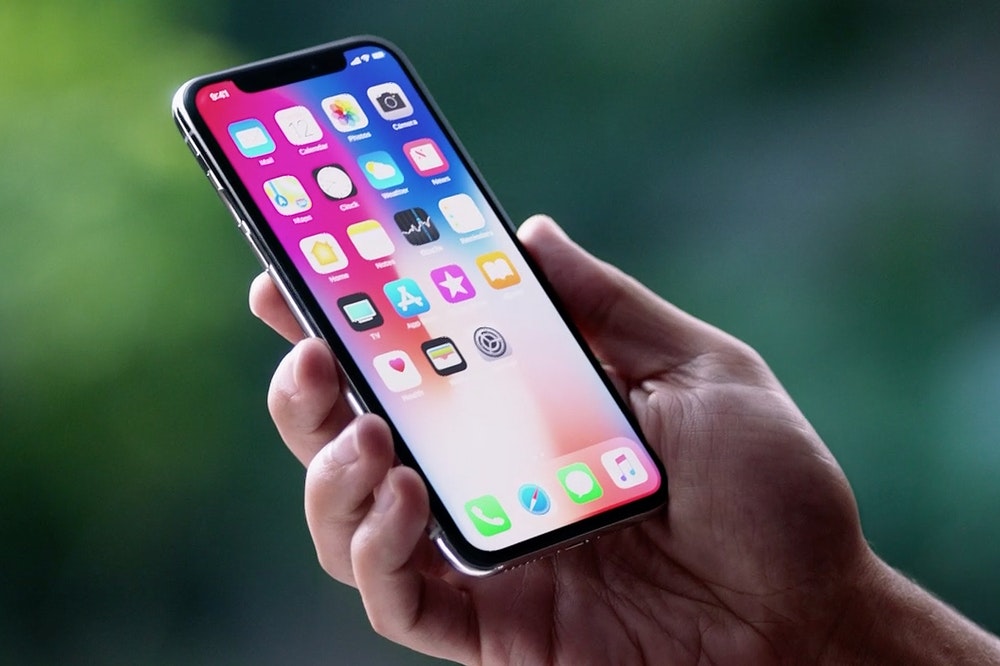
    In a big move, South Korean company LG has secured permission from the Chinese government to open a factory there. The factory, opening in Guangzhou, will focus on OLED panel production primarily. OLEDs, or organic light emitting diodes, are the technology behind the bright, sharp images seen in modern displays like the iPhone X.

    The factory will be built using a staggering $2.33 billion, which underscores how highly LG prioritizes OLED panel production. Many of the Korean company’s high-end televisions are powered by the technology, so this OLED factory will help to power the company’s personal interests. Further, Apple will seek to purchase the displays from LG as well, as it currently relies on Samsung. Ironically, the Korean Samsung is a primary rival of both LG and Apple. By cutting them partly out of the process of constructing iPhones, apple will distance itself from its chief competitor in the American smartphone market. Similarly, by ramping up production, LG will be able to continue battling Samsung in the TV market.

    The OLED Factory Itself

    The factory itself will begin with production targets of 60,000 displays per month. If that sounds like a lot, it’s a drop in the bucket. The company plans to ramp up production numbers to 90,000 displays per month. However, these numbers pan out, a the company is slated to provide between 2 and 4 million displays to Apple.

    The factory will be owned partly by LG, at a 70 percent stake. The Guangzhou Economic and Technological Development District will hold the other 30 percent. This will likely lead to a large increase in the number of jobs in the region, which explains the decision to allow the factory to be built. Concerns regarding environmental safety and fair compensation will likely be raised, as they often are with Chinese factories. However, the demand for smartphones and TVs stays high, so production rolls on.

  • Get Ready to go Off-Road with the New Ram Rebel

    Get Ready to go Off-Road with the New Ram Rebel

    Ram has a seriously powerful contender in the crowded truck market with the Ram Rebel. The Rebel is ideal for off-roading, using some slick new tech to make the process a breeze. Whereas you once would have to put the truck in 4×4 manually, it’s a push of a button away with the Rebel. Today we’re looking at the coolest new features packed into this new Ram.

    Quiet Interior Cabin

    The cabin on the Ram Rebel is quiet, and the ride is smooth. The truck sports a complex technology called active-tuned mass modules that react in live time to the vibration of the engine. By moving in such a way to counter that vibration, the ATMM technology cuts down on both noise and shaking. This all adds up to make for a smooth, Zen-like riding experience even when off-roading.

    Heavy-Duty Shocks

    Getting out in the mud requires some serious stabilization, and that’s where these new shocks come in! Specifically, these are Bilstein remote-reservoir shocks, meaning they can keep you on the trail for hours. They do this by eliminating the main cause of shock fade. Typically, if you spend a long time on the trail, the oil in your shocks gets heated up and your shocks feel much more “soft.” The remote-reservoir style shocks fixes this by letting your shock oil cool in a remote reservoir, allowing you to keep taking bumps off the road.

    Electronically Locking Rear Differential

    Ever been stuck in the mud? Then you know how much it sucks to watch your back wheels spin and not catch any traction. Even with 4WD, sometimes you need a little extra push. That’s what manually-engaged electronic rear differential locking is for. If that sounds complicated, don’t worry, it’s not. All it means is that you can tell your back tires to work together, locking into the same pattern of spin. This lets them work in concert to help get you un-stuck!

    Ram Rebel Pricing and Release

    You’re probably asking when you can get one of your own, and what it’ll cost you. Models start at $47,495, which might sound like a lot, but the Rebel means business. You should see these bad boys hitting dealerships this Fall.

    Feature Image Credit: Car and Driver

  • Ten Best Electric Cars for 2018

    Electric cars are the future of automobiles, if you ask certain experts. While they might not yet dominate the highways in terms of numbers, they’re becoming more popular every year.

    [iFrameGen iframe_type=”Y_iFrame” template_key=”adlist_gfg_green_v7_070102018″ keyword=”electric%20cars%20for%20sale” type_tag=”_gfg-20180829-ten-best-electric-cars-green-top” placement=”_pc1″]

    This year, it’s time for you to join the hype and switch to electric, for the environment and for your wallet! Today, we’re looking at the best electric cars for 2018.

    Fiat 500e

    We’re starting our list with the fun, spunky and dependable Fiat 500e. Sporting a European look and an eye for style, this electric car is fun to drive. It has a short-ish range of 84 miles, so it’s best if driven in the city. For those looking to take to the highway, this one isn’t the best pick. It also doesn’t have a ton of room for cargo, and the seats are somewhat cramped. That said, the Fiat 500e has a slick, retro-style interior and a fun personality. The interior is also replete with awesome technology, like a touchscreen and voice commands. If you’re looking for a fun vehicle to get you around the city, this is a great pick!

    Volkswagen e-Golf

    While the gas-powered Golf is a great vehicle, the electric version sacrifices little to run on electrons alone. If you’re a fan of passenger room and Volkswagen’s signature charm, this is a great electric car for you. It has a range of 125 miles on a charge, and it’ll only set you back around $29,000. The best part about this car is that it’s also pretty fun to drive!

    Chevrolet Bolt

    A recognizable name, the Chevy Bolt is a fine choice for electric car. Its superb range is its biggest selling point: it can go 238 miles on a single charge! That’s no joke! That kind of range would usually set you back, but the Bolt start around $35,000. Apple CarPlay and Android Auto are both supported, and the huge infotainment touchscreen looks great. The Bolt is a solid choice and a very futuristic electric car!

    [iFrameGen iframe_type=”Y_iFrame_2″ template_key=”adlist_gfg_green_v7_070102018″ keyword=”chevy%20bolt%20for%20sale” type_tag=”_gfg-20180829-ten-best-electric-cars-green-center” placement=”_pc2″]

    Ford Focus Electric

    The Ford Focus Electric might not be the most stylish electric, but it’s a solid pick. It boasts a standard 115-mile range, making it good for city and highway travel. The make is high-quality, and the car is dependable and responsive. It doesn’t have a lot of power, but that’s not really the point. If you need an affordable, dependable electric car, the Focus is a great pick.

    Hyundai Ioniq Electric

    The Ioniq is available in three distinct configurations, including two hybrid styles. It can be acquired in a plug-in style hybrid configuration, which makes it the only car available in all three electric configurations. That said, this article is about electric cars, and the Ioniq is a fantastic choice in its electric configuration. It’s affordable, starting just under $30,000, and has great performance. It has a respectably long range, coming in at 124 miles on a charge. It also boasts a 7-inch touch-screen display and has support for Apple CarPlay and Android Auto.

    Kia Soul EV

    The Soul might not have much range, coming in at 93 miles on a charge, but it makes up for it in interior room. If you’ve got kids, or often cart a ton of passengers around, the Soul is a great pick. It’s a good buy for the money, too, starting around $32,000, and that’s not even counting the money you’ll save not having to buy gas! If you’re looking for a great size and an electric engine, the Soul EV is the car for you!

    Nissan Leaf

    The roomy, highway-capable Nissan Leaf is a great pick for those looking to see what the deal electric cars is. The Leaf sports a 107-mile range on a charge, which means you don’t have to charge up as much with this one. While it’s not the most powerful car on the highway, you won’t really notice the lack of power during normal drives.
    This is an all-around great car with little to detract from it!

    [iFrameGen iframe_type=”Y_iFrame_3″ template_key=”adlist_gfg_green_v7_070102018″ keyword=”best%20electric%20car” type_tag=”_gfg-20180829-ten-best-electric-cars-green-bottom” placement=”_pc3″]

    BMW i3

    BMW’s name is always indicative of a certain level of quality, and that remains true for the i3. The i3 doesn’t sacrifice any power to be all-electric, bringing a stellar 170 horsepower to bear on an 81-mile charge. You can even opt for a bigger battery to get a 114-mile range, making this a versatile and flexible electric choice. The carbon fiber body of this vehicle makes it impressively light and zippy around turns, and the interior is futuristic. However, the i3 is a little expensive, starting at $42,400.

    Tesla Model X

    The original Tesla, the Model X is well-known among electric car enthusiasts for its luxury and performance. Tesla’s cars are powerful, fun to drive and have great range, and the Model X is no exception. Tesla cars are able to use the Supercharger network, exclusive to the company, to charge the batteries very rapidly. That means you spend less time waiting for a charge and more time on the road! The only downside to the Model X, however, is the price tag: it’s a luxury vehicle, and that’s reflected in the price. It starts at $85,500, but it has a nearly 300-mile range and an incredible 2.9-second 0 to 60.

    The Best of the Electric Cars Available in 2018: Tesla Model 3

    The most affordable Tesla doesn’t sacrifice any of that trademark luxury to be $35,000. It has a 215-mile range standard, a luxury interior and a huge touch-screen display instead of a gauge cluster. If you’re a Tesla faithful but without mad money to burn on a car, the Model 3 might be for you. It’s the only car in its price range that rivals the Chevy Bolt’s range, and it does that while looking much cooler. If you’re looking for a great car that happens to also be electric, look at the Tesla Model 3.