Category: Electronics

  • Elon Musk Creates Small Submarine to Helped Trapped Thailand Kids

    Elon Musk Creates Small Submarine to Helped Trapped Thailand Kids

    On Saturday, July 7th, Tesla CEO Elon Musk tweeted that his company was working on a small submersible that might be useful in helping to rescue the trapped soccer team in Thailand. At the time of this writing, scuba divers have already rescued eight of the twelve trapped soccer players. Musk, however, went ahead with the production of the submersible, saying it may yet help in the rescue effort. In any event, such a vessel could be helpful in future scenarios like this, should another rescue need to be undertaken.

    The Trapped Team

    The team became trapped in the cave while exploring it after a soccer match. While they were inside the cave, monsoon rains surprised them and flooded significant portions of the cave, trapping them inside. They were trapped in the cave on June 23rd, which means they’ve been trapped for nearly two weeks at the time of this writing. On Friday, July 6th, one of the volunteer rescue workers, a former Thai Navy SEAL, died during the rescue effort. This has underscored just how dangerous the rescue effort is, and how much peril the boys are in.

    The Submersible Created by Elon Musk and SpaceX

    The submersible was created from the liquid oxygen transfer tube of a Falcon rocket. The idea behind the vessel is that it could be an alternative for divers to try if conventional rescue methods prove ineffective. For instance, if any of the boys are too tired or not aware enough to swim on their own. In such a case, the vessel could allow even an unconscious passenger to be pulled to safety by divers.

    However, the presence of such a large, metal vessel could prove dangerous to both the divers and the passenger. The cramped cave has some choke points so narrow that divers have to remove their oxygen tanks to slip through. While the tank might be just narrow enough to slip through, it could cause some complications.

    As the team has already rescued most of the boys, it seems their strategy is working. Thankfully, they have access to this technology now, should it be needed. Here’s hoping everyone is safely rescued, and no more of the rescue team is hurt in the effort.

    Feature Image Credit: SpaceX

  • Listen Up: Sony HT-Z9F 3.1 Feature Roundup

    Listen Up: Sony HT-Z9F 3.1 Feature Roundup

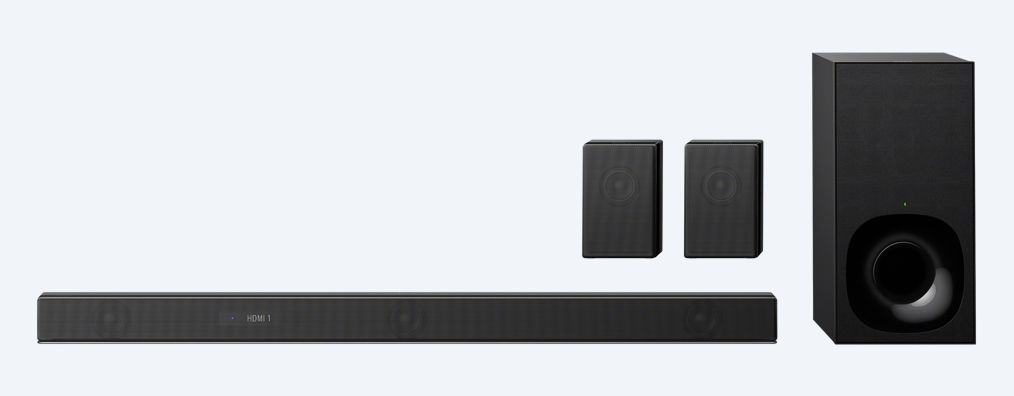
    Sound bars are a great way to maximize the sound from your TV without taking up considerable real estate in your living room. While many sound bar options are out there, Sony remains a reliable and excellent maker of the technology. Their biggest strength, of course, is their processing, and the HT-Z9F 3.1 is no exception: it boasts incredible sound thanks to its processors.

    Sound Quality

    The first important consideration when reviewing a sound bar, of course, is the sound quality. This particular sound bar delivers on that front: dialogue is clear, sounds are crisp, and bass is heavy. Whether you’re listening to music or watching action movies, you’ll be impressed by how balanced and undistorted the sound is. You can clearly make out dialogue over rumbling explosions, and sounds have a certain space in between them. All of this, of course, is bolstered by the bar’s excellent surround sound. You can feel the space between events on-screen, or the shape of a room that audio was recorded in. That may all sound a bit confusing, but when you hear it you’ll understand.

    Features and Ports

    The HT-Z9F 3.1 has ARC HDMI, optical digital audio, 3.5mm and Ethernet ports all available. You can hook pretty much anything into this sound bar and play audio through it, which is excellent. It also has an IR repeater sending signals through, which is great for set-ups that have the bar blocking your TV. Wi-Fi and Chromecast are supported, which makes this feel very modern and high-end.

    HT-Z9F 3.1 Pricing and Bottom Line

    The HT-Z9F 3.1 costs between $800 and $900, making it a somewhat premium package. However, when compared to full-scale surround systems and some other high-end sound bars, that price is rather impressive. If you’re looking for big sound from a small bar, Sony’s newest entry is a great piece of technology. If you don’t mind paying a bit of money, your living room will sound like a movie theater in no time. All of that from such a little bar is a pretty big deal!

  • Ten Sci-Fi Innovations that Became Real

    Ten Sci-Fi Innovations that Became Real

    The world of science fiction is dominated by high-tech advancements that make life easier (or more dangerous) for the characters. For more than a century, real-world scientists have been inspired by sci-fi innovations to create new technology. From Star Trek to Star Wars, today we’re talking about life imitating art!

    Virtual Reality

    Photo Credit: Trustnodes

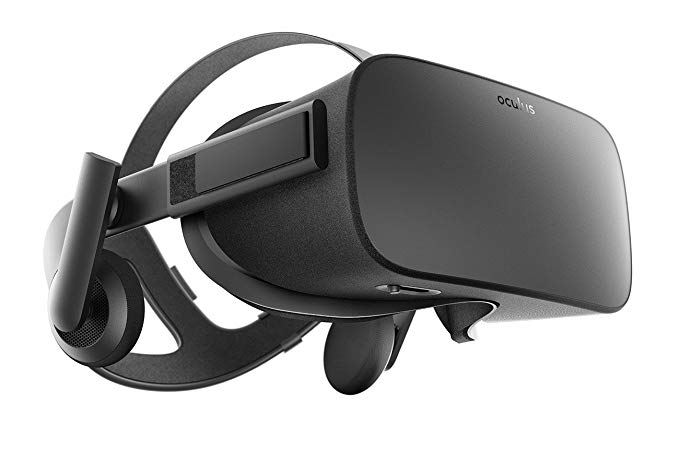
    Many people enjoy VR headsets every day to explore virtual worlds. The future dreamt of in tales such as Tron and Blade Runner look a bit more believable when viewed through this lens. While we might not have fully-immersive, full-body recreations of reality, we do have a close visual and auditory approximation. For whatever reason, we are fascinated with being someone else, and VR is our window to that fantasy. While VR has had a rough history (Virtual Boy, anyone?) it’s stronger than ever and commands a good bit of public attention. Oculus Rift and Microsoft’s own VR are two big names to watch in the VR field.

    Wireless Earbuds

    Photo Credit: Apple

    In Ray Bradbury’s classic novel, Fahrenheit 451, a number of citizens are described as having “seashells” attached to their ears. The seashells play calming ocean sounds, music and talk shows. In the context of Bradbury’s novel, they are indicative of a dystopia of disinterested, unintelligent and cruel people. In our own world, the existence of truly wireless in-ear headphones wouldn’t be a reality until the last decade or so. Apple’s AirPod technology is a notable example. Bradbury would be pleased to see that we’re not burning books to withhold their contents, in spite of our technological advancements.

    Robotic Prosthetics

    Photo Credit: CNN.com

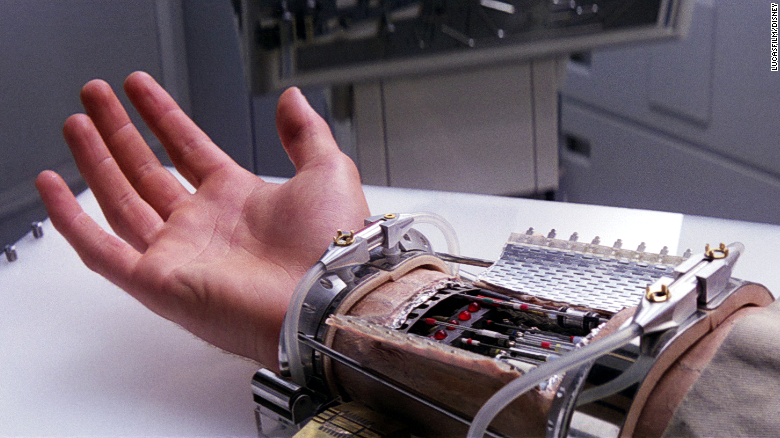
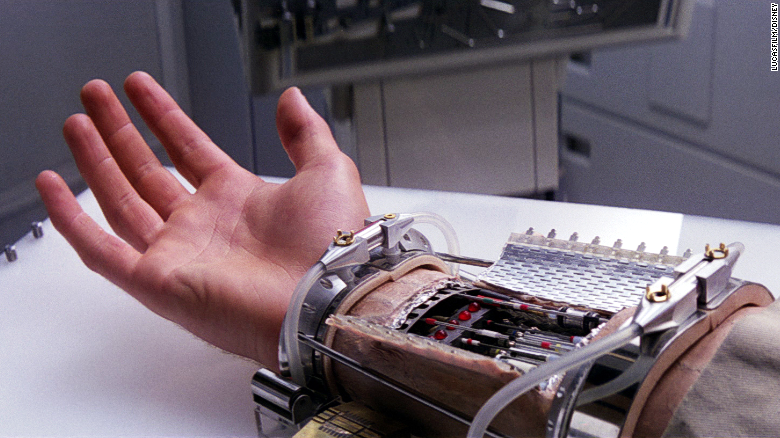
    In Star Wars, the iconic scene of Luke getting his new, prosthetic hand calibrated has two large impacts on the audience. First, it reminds us that Luke could become just like his cyborg father, Darth Vader. Second, it reminds us how freaking awesome robot hands are. Just like Luke, there are people in the real world who have benefitted from recent advancements in prosthetic technology. The technology uses receivers that can receive electric signals from the brain and translate them into fine motor control. This tech may have been inspired by fiction, but it’s helping to improve real lives!

    Video Calling

    Photo Credit: iOS Gadget Hacks

    In our world, video calls are commonplace and happen every day. However, in the 1920’s, when silent film The Metropolis was released, they were an impossible fantasy. Since that film’s antagonist used video communication on the silver screen for the first time, numerous sci-fi tales have used the technology. Star Trek is notable for its many tense negotiations between ship captains via video transmissions. In our world, thankfully, we’re not dodging photon torpedoes shot by hostile aliens, we’re just calling grandma to make sure she’s doing okay.

    Space Travel

    Photo Credit: YouTube

    Nearly every sci-fi tale ever told features space travel in some capacity. Indeed, our cultural subconscious holds that man’s future lies with the stars. While our lofty ambitions are still generations from being realized, they’re much closer than any other time in human history. The International Space Station is evidence of this, as are the many deep-space probes we send to the deepest reaches of our star system. While living on alien planets and traveling between stars remain firmly in the realm of fiction, exploring space is still a reality for our species.

    Cell Phones

    Photo Credit: The Atlantic

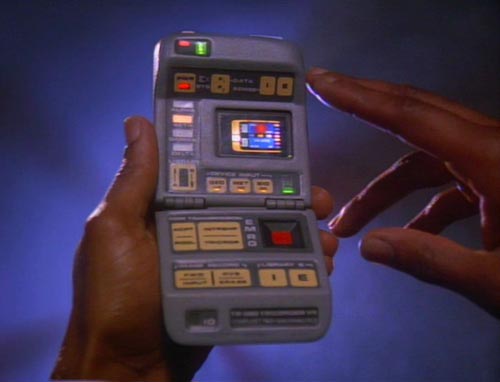
    In the original Star Trek series, the main characters use a rather wild invention called a tricorder to communicate over vast distances. While we’re being a bit tongue-in-cheek, of course, the idea of a handheld communication device is nothing new in sci-fi. However, the unprecedented computing power of modern handsets certainly reminds one of the types of technology dreamed up by writers from the middle of the last century. Indeed, you carry more computing power with you than what went to the moon in the 60’s. That actually is wild!

    Tractor Beams

    Photo Credit: The Telegraph

    British scientists actually invented this iconic piece of Star Trek tech! A sci-fi innovation long thought to be little more than science fantasy is now reality. While the real-world iteration of this tech is on a much smaller scale than the Star Trek version, it’s the same principal. By manipulating particles within the body, the scientists hope that the technology will revolutionize surgery. Thanks to the tractor beam technology, surgical some surgical procedures that were previously invasive may become much safer, non-invasive endeavors!

    3D Printing

    Photo Credit: Mythcreants

    There’s no technology more optimistic and encouraging that Star Trek’s replicator. The technology behind it is likely also responsible for the teleportation technology employed in the show. However, replicator tech is much more feasible in our world, but under a different name: 3D printing. We don’t make much of it now, but 3D printing is a huge step towards sci-fi innovations becoming reality. Where the replicators were concerned primarily with food, our 3D printers are versatile and perform tons of tasks. And yes, 3D printing food is one of them!

    Nuclear Weaponry

    Photo Credit: Business Insider

    Sci-fi innovations aren’t always optimistic, and nowhere is that more evident than in HG Wells prediction of the atom bomb. In his novel “The World Set Free,” Wells describes “atomic bombs” that “detonate indefinitely,” after reading theories put forth by scientist Ernest Rutherford. Wells’ versions of the bombs were hand-thrown and burned for as long as seventeen days, a far cry from the bombs of our own world. However, the idea of a “nuclear bomb” may have even gone on to influence the research and discovery of true atomic weapons, as life attempted to imitate art.

    Coolest Sci-Fi Innovation Becoming Real: Cybernetic Soldier Suits

    Photo Credit: Marvel

    Tony Stark sports visually-arresting, butt-kicking super-armor in the Marvel Cinematic Universe. It originally debuted in 1968, but it looked a bit clunkier and less awesome back then. That said, the original Iron Man comics would go on to inspire countless robot-piloting works of fiction. Notably, in our world, tech like Stark’s is close to being reality: the Tactical Assault Light Operator Suit, or TALOS, is in development by the US Military. Yes, that name sounds like something Hydra would send after Tony in a comic book, but it’s a real piece of military technology. It incorporates technology that looks like Tony’s Bleeding Edge armor seen in Avengers: Infinity War, using liquid armor that solidifies at the operator’s command. Talk about sci-fi coming to life!

  • Best OLED TVs in 2018

    Best OLED TVs in 2018

    The biggest, best and brightest 4K TVs are powered by OLED technology. Which OLED TVs are the best, though? That depends on what you’re looking for, of course. However, cutting edge technology is expensive, and no one wants to make a bad call on something that pricey. With that in mind, we’ve got a roundup of our favorite OLED TVs for 2018 to help you pick! Get ready to see some awesome displays!

     LG Signature OLED TV W8

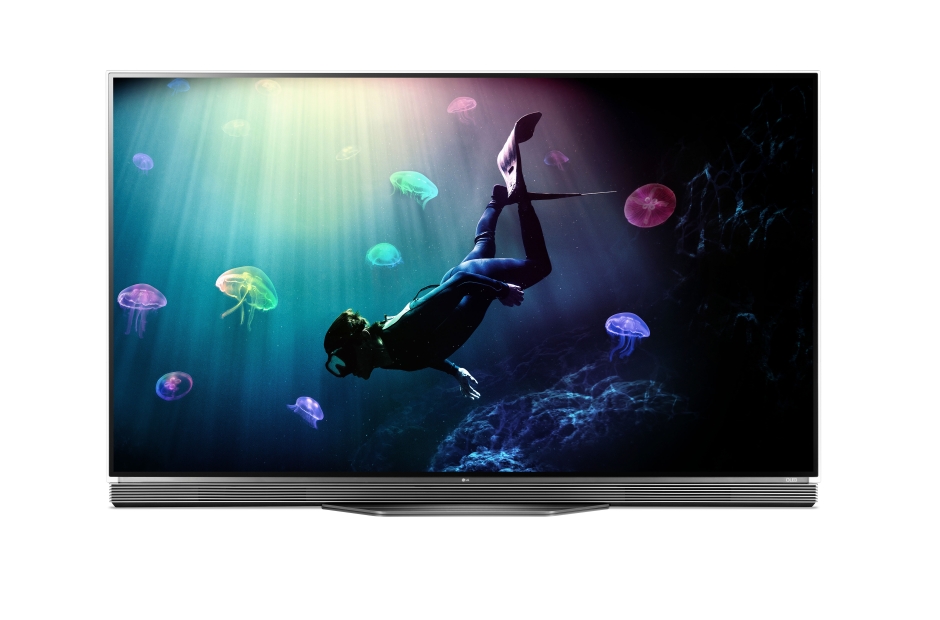
    You may have heard of these “Wallpaper” displays. They really have to be seen to be believed: they are amazingly thin. Truthfully, the guts of these TVs are held in the included soundbar. The display itself is just that, a display; the tech powering it is off-site, so to speak, in the soundbar. There’s also no bones about it, these displays are seriously expensive.

    However, if money is no object, it’s hard to deny how amazing this screen looks. Depending on the screen you choose, it runs between $7,000 and $15,000, but that price gets you a truly futuristic piece of technology. It’s hard to overstate how good these OLED screens look. It also supports every type of HDR, meaning it’s fully future proofed. For the very best, at a very high price, this is the one you want.

    SONY A8F BRAVIA OLED TV

    Sony’s OLED entry is a fantastic TV for the price. Retailing for around $3,000, it’ll certainly set you back, but it’s an impressive piece of technology. For one thing, it has that beautiful OLED display, and it sports Sony’s great processors to make everything look smooth and seamless.

    The other interesting wrinkle with this TV is the Acoustic Surface that Sony managed to fit in this panel. Acoustic Surface makes the screen itself the speaker, which is mind-blowing. The sound quality is surprisingly good, and the panel is very thin since it has no traditional speakers. It’s hard to describe, but it feels futuristic and truly awesome.

    Our Favorite of 2018’s OLED TVs: LG C8-SERIES 4K OLED TV

    LG knows what it’s doing when it comes to OLED. It’s hard to overstate how good this screen’s picture quality is. Images on this screen almost look more real than real life, which is almost visually confusing. 77-inch models exist but cost around $9,000 and are almost too big to be practical. 65-inch panels run for $3,500, and 55-inch screens are a more reasonable $2,500.

    For that price, you get some of the best bang for your buck when it comes to home TV displays. While there are other, more fancy options, this LG line is a strictly good-looking display with no frills, and the cost reflects that. If you’re looking for the best picture at the best price, this is what you want.

  • Would You Look at That? Amazon Echo Look Feature Roundup

    Would You Look at That? Amazon Echo Look Feature Roundup

    If you’ve been following Amazon lately, you know that they’re really doubling down on Alexa devices. And why shouldn’t they? Their Echo family of products has been selling like hot cakes, and everyone loves the software! Their newest Alexa product is the Amazon Echo Look. This camera-enabled device is meant to help you coordinate your fashion and pick out good-looking clothes! It’s experimental, new, and definitely quite weird. That said, it seems somewhat promising!

    Echo Look Setup

    The device itself is small, tube-shaped, and can be placed on a flat surface or mounted. It gets best results when placed at shoulder-height. You use the Amazon Look app to set it up though a smartphone. You can then pair it with Alexa and get ready to get a confidence boost!

    Impartial View

    One great use of the Look is taking accurate, impartial pictures of you that you can view through the app. You can also just view yourself in live time, so you can turn in profile or turn around and see yourself through your app. This allows you to eliminate the wonky angles and potentially weird lighting that come with taking selfies. All said, this can make for quite a self-esteem boost!

    Fashion Forward

    The main use for the Look, of course, is fashion. If you show the app two pictures of yourself in different outfits, the app will tell you which one you look better in. It uses a combination of machine learning and fashion expert advice to do this. It tells you which colors look good on you, which ones fit your profile better, and so on. What’s more, you can enable “pairing suggestions.” You can opt to share pictures taken with your Look to Amazon, and they’ll suggest clothes from the site that would pair well with your wardrobe.

    After you’ve had the device for a while and had it take a large number of pictures of you, it makes a “look book” for you. This look book shows you what you wore on specific days, helping you hone your style and understand what looks good on you.

    Bottom Line

    This is a really unique device! There’s really nothing else like it, and it feels like a natural extension of the personal assistant role that Alexa fills. The Amazon Echo Look retails for $200 and is available now.

  • Which Mobility Scooter is Right for You?

    Which Mobility Scooter is Right for You?

    So your mobility isn’t what it used to be… no problem! Today, some insurance companies will actually help with coverage on a mobility scooter, or even pay for the whole thing. Check it out for yourself! Either way, it may be worth checking them out and seeing if it fits your lifestyle. With that in mind, let’s look at the top ten mobility scooters.

    Drive Medical Phoenix Heavy Duty

    A heavy, sturdy scooter for a great price, this one is a good pick. This one has a headlight, which is good for darker areas. It also has a basket in the front for carrying things, making it great for grocery store trips! The seat is customizable, broad and comfortable. For $1,200, this is a great heavy-duty pick.

    Pride Mobility Go-Go Sport

    This scooter is notable for its four-wheel drive and durability. It’s not terribly fast, topping at 4 MPH. That said, it’s rugged and durable, and works great when outdoors! If you like being outside and enjoying the sunlight, this is a great pick! For a combination of durability and mobility, check out the Go-Go Sport!

    E-Wheels EW-72

    A stylish and slick scooter, the E-Wheels EW-72 has a look inspired by classic cars! For those looking to really zoom, this scooter has a top speed of 15 MPH! As a heavy-duty scooter, it works quite well, as it has a top weight rating of 500 pounds! If you’re looking for a great, stylish, heavy-duty scooter, this is a great choice for you!

    Transformer Electric Folding Mobility Scooter

    Another great choice for carrying in a trunk and carrying around with you, this transforming scooter is pretty neat. It folds up into a nice, compact shape so it can go anywhere with you! The battery is airline compliant, so it can fly with you, which is great for those who fly often. If you’re on the move and need a scooter that can keep up, this is the one for you!

    E-Wheels Jellybean Electric Scooter

    The second E-Wheels scooter on our list, this one is also quite heavy-duty! This one is three-wheeled, though, so it’s got a bit of a different construction from some others on this list. The best thing about this scooter, though, is the high speed! It tops out at 18 MPH, which makes it a serious scooter! It has a great battery, too, offering up to 45 miles on a single charge. This one also has an anti-theft alarm, which is great! It sports a huge back-mounted basket, perfect for trips to the market.

    Spitfire 420 Ex

    Another great scooter, this one has interchangeable panels in different colors. The panels come in red, blue and silver, and are easy to change out! It also boasts quick-connect batteries, a comfortable seat and padded armrests. The wheels are anti-tip, which makes this a very safe pick. The front-mounted basket even has an interior lining, which is great for shopping. If you’re looking for a good mobility scooter for medical reasons, such as old age, this is a good pick.

    SmartScoot Lithium Foldable Travel Scooter

    This folding scooter is great to throw in the trunk or backseat and carry with you to a destination. The best thing about this scooter: the battery! It has great battery life for how portable it is for travel. It lasts for up to 12 miles! It also breaks down into three parts, and only weighs 27 pounds.

    Drive Medical Scout 3 Wheel

    At the very low price of right around $600, this three-wheeled scooter is a popular choice. A little less expensive than its four-wheeled counterpart, this one is a good value. The drawbacks to this scooter include its three-wheeled construction, slightly low battery life and make. There are more comfortable, high-end scooters, but if you’re looking for a good bargain, this is it. This scooter is the most affordable on our list!

    Best Value: Drive Medical Scout Compact 4 Wheel

    For those on a budget, the Drive Medical Scout Compact is a very popular choice. At $700, it’s a fantastic value, and it shows in its popularity. It’s a good scooter, with all the trimmings you’d expect from a medical mobility scooter. Older customers on a fixed income love the low price, and the price doesn’t compromise the quality. This one also has interchangeable panels in red and blue, so you can change your style! A great value for the money for those looking to save.

    Best Overall Mobility Scooter: Shopride Sunrunner

    If you’re looking for an especially comfortable scooter, look no further than the Sunrunner! It has a 300-pound capacity and a huge 25-mile battery. You can opt for a headlight, which is quite useful. It has a front basket, perfect for shopping. The star of the show is the big, comfortable seat, though. You can’t beat the level of comfort on display here! It’s hard to find something this premium and high-quality for this price! It retails for $1,500 but can often be found on sale for less.


  • Amazon Looking to Head off Drone Hijackers

    Amazon Looking to Head off Drone Hijackers

    Amazon’s drone delivery service hasn’t taken off just yet, but they’re gearing up for it now with a slew of new patents. One such patents is an early attempt at heading off would-be drone hijackers. As fleets of goods-carrying drones head out from Amazon warehouses, the company is wary of crooks who would try to bring them down and steal their cargo.

    Amazon’s Answer to Drone Hijackers

    In a patent recently filed by the company, they stated the following. “As the use of UAVs continues to increase, so does the likelihood of hostility towards UAVs. Such hostility may come in the form of attacks brought for any number of purposes (e.g., steal the UAVs and their payloads, crash the UAVs, and otherwise cause disruption to the operation of the UAVs).”

    Further, “Using these attacks, nefarious individuals and/or systems may be able to obtain control of the UAVs by hacking the communication signals being sent to the UAVs from a controller and/or being sent by the UAV to the controller.” Amazon says that this “could cause the UAVs to operate unsafely and could also result in considerable financial loss for their operators.”

    What solution do they propose? A “heartbeat” signal. The idea is simple: the drone controller would send a baseline ping, called a heartbeat, to verify that the drone is okay. If the heartbeat isn’t echoed by the drone, it would be placed into emergency mode. In such a mode, the drone would attempt to reestablish connection with control. In the event that it couldn’t do so, it would begin to move towards an established safe-zone. Such a safe zone would allow the drone to be safely brought down and have its cargo retrieved. Clever!

    Amazon’s Drone Future

    Drones seem to be an attractive avenue of expansion for Amazon. After all, you have to pay a delivery driver, insure them and gas their truck up. Not to mention, the delivery truck can’t fly. A drone, however, is automated and electric. For them, it’s a simple choice. However, for delivery drivers, the drones may soon work them out of their jobs. Maybe it’s time to learn to perform drone maintenance or control, huh?

  • PC Roundup: The Best PCs for Oculus Rift

    PC Roundup: The Best PCs for Oculus Rift

    The Oculus Rift virtual reality headset is an amazing way to experience immersive video games. Virtual reality experiences have been around for some time, but they are now more accessible than ever. In fact, they’re more accessible than you might think! Today we’re rounding up some of the best PCs for Oculus Rift; they cost less than you think! 

    Dell XPS Tower Special Edition 

    Retailing for right around $1,000, the Dell XPS Special Edition is a great pick for VR. It sports an Intel i7-8700 processor, clocking in at 3.2 GHz. While the processor is important, it’s the graphics card that powers a lot of your VR experience! This computer’s Nvidia GeForce GTX 1070 won’t disappoint on that front, seeing to it that your games will look gorgeous. All that comes in a nice, compact case that takes up little room. That compact size does have its drawbacks, though. The case leaves little room to work in for upgrades, and the fans are quite loud. That said, it’s still a fine gaming PC, and perfect for VR headsets. 

    Dell Inspiron Gaming Desktop 

    The second Dell to make the roundup, the Inspiron Gaming Desktop is a great value at $600. It sports the exact same processor as the Tower Special Edition, but it only boasts 8GB of RAM to the Special Edition’s 16. Similarly, it has an Nvidia 1060 GPU, a slight step down from the 1070. However, those small steps back result in a $400 price reduction, making this an excellent choice even for power gamers. And, as expected, it’s fantastic for VR. It has plenty of power to render immersive worlds and engross you in your games.  

    Our Favorite PC for Oculus Rift: Origin Neuron 

    The Origin Neuron is the very top of the line when it comes to gaming PCs. If you’re interested in high-end gaming at all, this is the computer for you. It also just so happens to be amazing for VR! Your games will run butter-smooth on this machine’s Nvidia 1080 Ti graphics card. The 5 GHz i7-7700K processor puts in some serious work for this rig, and its 16GB of RAM let you multitask with the best. As top-of-the-line computers go, you can’t go wrong with the Neuron. It retails for a hair over $950, and it’s well worth the price. If you’ve been itching to try out Oculus RIft VR, this is the machine to do it on. 

  • Laptop Roundup: Best Laptops of 2018

    Laptop Roundup: Best Laptops of 2018

    Today, we’ve got a laptop roundup to bring you some of the best laptops of 2018 so far. If you’re in the market for a new laptop, these are the cream of the crop. While your mileage may vary, we’ve included a few different choices in case your tastes differ from ours. Alright, let’s get into it: the best computers for the pro on the go! 

    MacBook Pro 13-inch 

    The MacBook Pro is a fantastic laptop for creative professionals. The model without the Touchbar is a fantastic value, but the Touchbar model is a tad pricey. If you’re interested in creating content and looking for a laptop to keep up, this is the one. Mac has a reputation for being great for creators, and they’ve earned it. A sleek interface, beautiful aesthetic and great design decisions bolster this laptop. The only drawbacks? It’s still relatively expensive at around $1,300, and the keyboard leaves a lot to be desired. That said, Macs are notoriously well-made and Apple’s customer service is top-notch. 

    Chromebook Pro 

    Samsung’s Chromebook Pro may be an odd decision on its face but hear us out. If you’re a student, or looking for a second computer, this inexpensive option is great. It’s got everything you need for studying, composing papers and taking notes. While you won’t be editing films or hardcore gaming, you probably don’t need that if you’re in the market for a Chromebook. It’s worth noting that the Chrome OS is a scaled-back, user friendly but overly-simple operating system. If you’re a power user, steer clear. If you’re just looking for an affordable laptop, though, this is a great pick. 

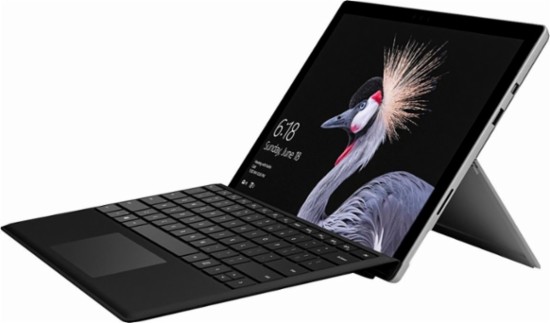
    Surface Pro 

    Microsoft’s Surface Pro is the very best 2-in-1 on the market, and that’s saying a lot. The crowded 2-in-1 market is an attempt to appeal to those that want something between a tablet and a laptop. The Surface Pro impresses on both fronts and compromises nothing to be the very best tablet and an excellent laptop. The power on this sucker rivals most other laptops in its price range. It just so happens to also have a detachable keyboard and a touch screen! Creative types, students and business professionals all love the Surface Pro. It even comes with a great stylus to get you started. All that, starting around $800. It’s a steal! 

    Our Favorite of this Laptop Roundup: Dell XPS 13 

    Our current favorite laptop overall is the Dell XPS 13. A fantastic all-rounder at a decent price, the XPS 13 is great for everyone. Well, everyone except gamers, but gamers already know what they’re looking for. Everyone else will love this sleek, fast laptop. The i5 version of the XPS 13 runs at $1,000, and the i7 runs $1,400, but that’s a reasonable price for this premium laptop. If you don’t mind footing that bill, you’ll get a powerful, zippy and portable laptop that’s sure to impress and delight. 

  • Big Sound for a Great Price: Sonos Beam Feature Roundup

    Big Sound for a Great Price: Sonos Beam Feature Roundup

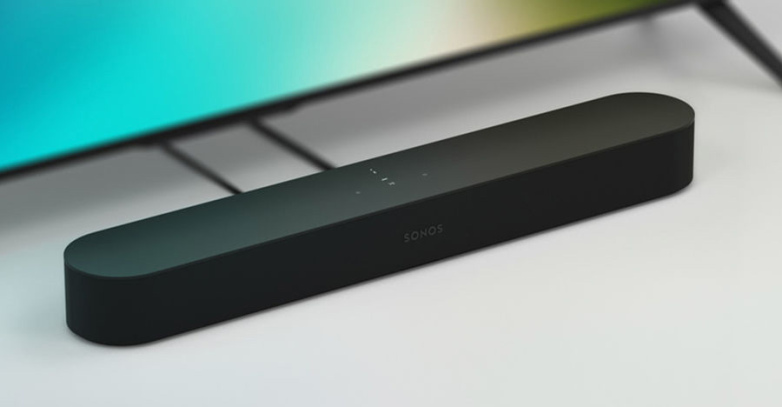
    If your ultra-thin panel TV had to cut some speaker power to have such thin bezels, you may be looking for a good sound system. The problem is, you got that ultra-thin TV so that it would take up less space in your living room! Those sound systems are huge, and really defeat the whole point of your aesthetic decisions. And there’s no way you’re wearing headphones to watch TV.  What are you to do? Thankfully, the Sonos Beam is here, and we’ve got a feature roundup for you. Who doesn’t love big sound from a little soundbar? 

    The Sound 

    The most important factor of any soundbar is, well, the sound. If it doesn’t sound great, then why even get it, right? Well, rest easy, the Sonos Beam sounds amazing. The bass is clear and wide, and its dual woofers reflect the sound off your walls. The vocal clarity is super high, and the detail is excellent. If you often play music through the TV, this is a great choice. The only complaint regarding the sound quality? The bass isn’t quite deep, just clear. As such, action and superhero movies sound a little flat on the bar. 

    Voice Control 

    The Sonos Beam launches with Alexa functionality built in, and that’s a huge plus. The mic array on the Beam is quite good, although you do occasionally have to yell to be heard over music. The included HDMI port allows you to power your TV on and off with your voice if you TV has HDMI power state matching. Some find voice functionality unimportant, but others love it. It won’t detract from your experience, but it will certainly please those who love voice commands.  

    Pricing 

    Another important facet of any soundbar is the price. The entire purpose of going with a soundbar is avoiding the size and price of full sound systems, so you don’t want to spend too much. Thankfully, the Beam is the best value of any Sonos bar yet. The Beam comes in at a $400 retail price, which is great. For the high-quality package, that price is quite reasonable. 

    Sonos Beam Botton Line 

    If you’re in the market for a solid, affordable soundbar to round out your living room, this is a great choice. Consider the Beam if you’re short on space but want big sound! If you’re an action-movie fan, or just want deeper bass, consider going with a more robust sound system, though. 

    Feature Image Credit: BGR