Category: News

  • Tesla, Autopilot and Self-Driving Cars: Responsibility vs Marketability

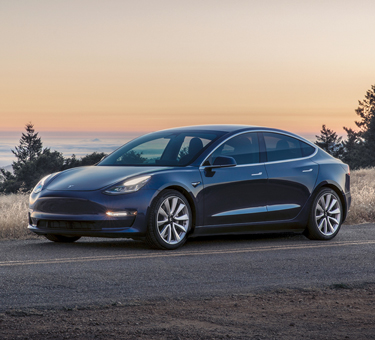
    Tesla, Autopilot and Self-Driving Cars: Responsibility vs Marketability

    Elon Musk is a magnetic and charismatic man. His companies, Tesla, SpaceX and the Boring Company all promise to redefine transportation. And, to a degree, they have. The Tesla Model 3 was the most hotly-anticipated car of all time. The SpaceX program has made promising strides in the realm of proposed commercial space flights. The Boring Company recently signed a deal with Chicago to bore a tunnel from O’Hare International to Downtown Chicago.  

    Yeah there is a specter looming, and it’s expectations. Musk and Tesla have poorly communicated and obfuscated the capabilities of Tesla’s Autopilot feature. In a recent Tweet, Musk referred to an upcoming Autopilot update as offering “full self-driving features.” This is in spite of a few fatal crashes that are purported to have happened due to overreliance on the Autopilot system. At what point does murky marketing language become irresponsible? What is the culpability of Musk and Tesla in these deaths? 

    The Walter Huang Incident 

    Walter Huang was killed when his Tesla impacted a central lane divider on a California highway. His vehicle was being controlled by the Autopilot software at the time of his death. The vehicle had been on autopilot for about 19 minutes when Huang died. Reports after the incident described the event as having occurred due to Huang’s overreliance on the Autopilot software. However, what degree of culpability can be said to rest with Tesla, and its CEO? Elon Musk is renowned for overhyping his vehicles and referring to Autopilot as “Self-Driving.”  

    “Self-Driving?” 

    Another fatal incident in Florida occurred in 2016 involving a Model S in Autopilot. More recently, Teslas in Autopilot have gotten in incidents involving parked fire trucks in both Salt Lake City and Los Angeles, respectively. These incidents have led to a more “nagging” reminder system in Teslas, reminding drivers to keep their hands on the wheel and eyes on the road. However, many have commented that such features actively contradict claims that the system is self-driving. 

    While the Autopilot software is certainly impressive, it is clearly not self-driving. Assertions by Musk to the contrary are irresponsible at best and downright negligent at worst. As long as the system is causing fatal accidents and requires constant driver monitoring, it can’t be called self-driving. Calling it anything other than what it is, which is advanced cruise control, is anti-consumer and dangerous.  

    Maybe the day will come when Tesla vehicles are truly self-driving. Perhaps Tesla is on the verge of a breakthrough, and next year their vehicles will be totally autonomous. However, until such a day that the system doesn’t cause fatal accidents, that promise might as well be for a distant future we will never live to see. 

  • Futuristic Cyberpunk 2077 Could Be Future of Video Games

    Futuristic Cyberpunk 2077 Could Be Future of Video Games

    Acclaimed developer CD Projekt Red is fresh off the success of the Witcher 3, their farewell to the long-running fantasy RPG. At E3 this year, they had a new game to show off: futuristic RPG Cyberpunk 2077. The game looks like it could very well represent the future. Not just the future our flawed world is barreling into headlong, but the future of gaming. At the E3 demo, it seemed that anything the player chooses to do its possible. The promise of games like Deus Ex and Thief, of a completely immersive simulation, could be getting closer to reality. 

    Bloodstains Under Neon 

    Since William Gibson first wrote Neuromancer in 1984, the Cyberpunk genre has been synonymous with sex and violence. In that monumental work, protagonist Case is pulled into a web of crime, lies and violence by a beautiful, dangerous woman named Molly Millions. In that violent work, our heroes are hardly better than our villains, and the only lines dividing them are perspective. CD Projekt Red’s new game shares that spirit. The world is mean and neon and dirty, looking to chew up and consume any who take a wrong turn. If you’ve ever seen Blade Runner, you know the feeling they’re going for.  

    Fully Immersive 

    Looking cool and being powerful are all a core aspect of the cyberpunk fantasy, and this game seems to know how to deliver in that regard. Protagonist V is almost entirely in the player’s hands. The character’s backstory, skills and style are all up to the player. Clothing options can change your look and increase your stats. V is also a cyborg, so you can enhance your protagonist by upgrading various cybernetic parts. The developers have crafted a fully immersive world using the visual language of the cyberpunk genre. 

    Every action you can take, from driving to hacking to just conversing, is promised to have wide-ranging impact on the game’s world. If you go for a drive and hit a pedestrian, you’ll not only get heat from the police, but you’ll also be known as a careless and violent jerk to the people of Night City. Carefully considering one’s actions and reputation seems to be a core gameplay mechanic, one that truly fits in an immersive RPG. 

    When Can We Get Hands-On with Cyberpunk 2077? 

    We’re asking the same question, dear reader, and, sadly, we don’t know. But you can rest assured we’ll let you know as soon as we find out. Heck, we’ll be the first in line to buy the game whenever it does drop! It’s still early, but the game already looks like a contender for one of the greatest RPGs of all time. 

    Feature Image Credit: Screen Rant 

  • Composer for Captain Marvel First Woman to Compose MCU Film

    Composer for Captain Marvel First Woman to Compose MCU Film

    Marvel’s Cinematic Universe has been dominating the box office and critically acclaimed. The universe the films take place in feels huge and limitless, and viewers can always expect to be wowed and inspired by Marvel’s outings. From talking raccoons to gods duking it out, anything seems possible in the MCU. Well, except a woman leading a film. Until Captain Marvel, that is. Captain Marvel, one of the company’s biggest names, will star in her own feature film next year. The film’s composer, Pinar Toprak, will be the first woman composing a film in the MCU, too.  

    Pinar Toprak’s Stellar Resume 

    Toprak is no slouch, either; Marvel fans can rest easy knowing she’s got some serious compositional chops. The Captain Marvel composer has previously composed scores for Syfy’s Krypton series, another sci-fi comic book outing. Superman and Captain Marvel both have similar powers and settings. As such, providing the score for a super-powered space-traveler will come naturally to Toprak! Toprak also did the score for the smash-hit video game Fortnite, which you may have heard of by now.  

    Captain Marvel in the MCU 

    Brie Larson will play Captain Marvel, real name Carol Danvers. The film is being directed by the duo of Anna Boden and Ryan Fleck, and is set to be the 21st in the MCU. Her film will be set in the 1990’s and will act as an origin story and introduction.  

    In the comics, Carol inherits the mantle of Captain Marvel from an alien superhero named Mar-Vell. As such, comic fans are excited to see how this version of the character gets her name and powers. Oddly, Mar-Vell is part of the Kree race of aliens. (We saw them in Guardians of Galaxy; Ronan the Accuser is one.) Fans are eager to know if Danvers is the first Captain Marvel of her world, or if she inherits the mantle from another character. We’ll know for sure when her solo outing lands on March 8th, 2019! 

    Feature Image Credit: Highsnobriety 

  • PS4 Fortnite Players Locked from Playing on Switch

    PS4 Fortnite Players Locked from Playing on Switch

    Sony has been a notorious opponent of cross-platform play. Most recently, Sony has slammed the door shut on cross-platform play with the mega-popular Fortnite on their system. Fortnite players on Xbox One and Switch can’t play with their friends on PS4 and vice-versa. PS4 players can, however, play with players on iOS and PC. The worst part isn’t the cross-platform play, though, it’s Sony’s absurd account lockout policy. 

    Sony Holding Fortnite Accounts Hostage 

    Against the advice of literally every industry analyst, Sony has declared outright war on the concept of playing nice with Nintendo and Microsoft. After Fortnite’s Switch launch on June 12th, a number of Switch owners were stunned to see they couldn’t link their Epic accounts to their Switch. If you’ve paired your Epic account with the PlayStation 4, you’re locked out from linking it on the Switch. Or the Xbox One, for what it’s worth, but most people hadn’t ever tried to jump from the Xbox to PS4. Gamers were understandably outraged, though, as Sony had given no indication that accounts linked to the PS4 version of the game would be locked from future ports of the game. 

    Sony’s Response to Criticism 

    Sony has been frustratingly evasive on this matter. When asked directly about it, they elected to boast about user numbers on their platform. Classy, Sony. While Epic has given no indication yet of how they will handle this issue, Nintendo was quick to apologize to their affected fans. Reggie Fils-Aime, president of Nintendo of America, expressed how he wished Nintendo could help, but the issue is out of their hands. Sony has chosen to enter this battle unbidden, purposefully alienating PS4 owners who also have a Switch.  

    For context, Switch and Xbox owners are able to play with any system that has the game, except, of course, PS4. The only thing standing between the world’s most popular game and full cross-platform play across all systems is Sony. This is really a shame, as the company is  driving a wedge between the game’s community over stubbornness. 

    What Can Be Done? 

    Sadly, for the time being, it seems that there is nothing affected users can do. If a user were to make a new account, they could play on Switch. However, their progress and any real-world money spent on their account would be locked on the PS4.  

    Perhaps Epic could allow users to migrate their accounts as a one-time service. Perhaps allowing users to remove PlayStation markers from their account and move to Xbox or Switch. Doing so would be in direct opposition to Sony. However, it would be a reasonable act in light of Sony’s unprecedented stubborn attitude. Until more news breaks, though, PS4 Fortnite users who want to play on Switch are left with few options. That, and a great deal of frustration at Sony. 

  • Elon Musk’s Boring Company Selected to Build Tunnel in Chicago

    Elon Musk’s Boring Company Selected to Build Tunnel in Chicago

    Chicago’s downtown area is notably difficult to get to from the airport. O’Hare International is extremely busy, and traffic back and forth from there to Downtown Chicago is a nightmare any time of day. Obviously fed up with the gridlock, the Chicago city government has selected The Boring Company to build a tunnel from O’Hare to Block 37. Locals know downtown’s Block 37 as the Loop. 

    A Huge Win for the Boring Company 

    Until this point, the Boring Company’s biggest claims to fame were the concept tunnels underneath LA and Elon Musk owning it. This tunnel, if successful, could work as a template for future projects like it in other cities. Musk’s concept of a multilayered, car-centric network still seems rather far-off. A more grounded approach like this tunnel, however, seems to be a great starting point.  

    How the Company Was Chosen 

    Chicago had an open period of “Requests for Qualification,” and Boring passed through two rounds of such requests. Chicago maintained that the tunnel project was to not cost tax payers any money, for one thing. Another request was that it be capable of conveying passengers from the Loop to O’Hare in less than 20 minutes. Finally, Chicago requested that a ride on one of the tunnel cars cost less than a comparable taxi ride. It seems that Musk’s company fit all criteria, as Chicago has decided to go ahead with them. 

    A Few Details 

    The company has stated that the tunnel cars will travel between 125-150 MPH, meaning they can take passengers downtown in about 12 minutes. That’s a huge step up from the normal time to commute via car. It was also reported that cars would leave from both stations once about every 30 seconds, meaning you’re never waiting to board a car. While the exact costs and length of the construction are still to be negotiated, it seems Chicago is eager to have the project underway.  

    The most difficult part of these projects isn’t the actual work of moving earth and constructing tunnels. The hardest part is getting through all the regulations and safety protocols that come with digging beneath a city. The Boring Company likely wants to it can complete this project with speed and for a reasonable cost. If it can do that, and the tunnel is safe, they will have made quite the name for themselves. However, if the project is a bust, it might spell disaster for the company and Chicago’s plans. 

  • Microsoft Seeks to Break into Retail Stores, And Kinect May be Involved

    Microsoft Seeks to Break into Retail Stores, And Kinect May be Involved

    Remember Kinect? It seemed like Microsoft trying to infringe on Nintendo’s turf at the time. If you remember the distant epoch of 2010, the Wii was still riding on some serious popularity. Motion-controlled gaming was huge, and Microsoft wanted a slice of that pie. So, to compete, they released a camera and microphone combination called Kinect.  

    The real wonder of the technology wasn’t the camera, though, it was the software powering it. Fast forward to 2018, when AI is a breath away from being a reality, and Microsoft is reviving the once-dead Kinect software in some innovative ways. And one is the elimination of checkout lines and cashiers. 

    Amazon’s Influence 

    The influence of bookseller-turned-juggernaut Amazon on the face of technology is hard to overstate. One example is Amazon’s cashier-free convenience store, Amazon Go. If you missed it, the first Amazon Go opened in Seattle last year and has a truly unique business model.  

    There are no cashiers, and there is no checkout line. Instead, you scan in past a turnstile with your Amazon Go app, which has your credit card info on file. Then you grab the stuff you want and technology in the store tracks what you have. When you leave, the app bills you for whatever stuff you have in your bag. Simple, right? Well, it’s powered by a pretty complicated suite of technology.  

    So complicated, in fact, that many traditional retailers are made quite nervous by it. How could they afford to implement such a complex change in their stores to stay competitive? Amazon is certainly saving costs by not having cashiers, and customers love the convenience. Could this spell doom for traditional retailers? 

    Not if Microsoft Has Anything to Say About It 

    Enter Kinect’s new lease on life. Microsoft is currently working to help implement technology like Amazon’s in traditional retail store like Walmart and Target. While details are currently slim, the move makes sense. Retailers scared of becoming irrelevant can pay for Microsoft’s Kinect AI and stay competitive. Microsoft, in turn, keeps up with Amazon without having to invest in any inventory or construction.  

    At the moment, it’s not set in stone. There are currently no announcements as far as roll-out or implementation of this technology. It’s still in the planning phase. However, if it materializes, it could spell the end of a lot of retail jobs. Hopefully the retailers affected would find other positions for the employees losing jobs. 

  • Competition Heats up Over Processors, Intel’s Dominance Threatened

    Competition Heats up Over Processors, Intel’s Dominance Threatened

    Intel is a processor juggernaut. No other company has been able to hold a candle to Intel for the past decade, and it shows. When you go out and try to buy a laptop, what chips do you see advertised as being inside? Intel. If you ask someone which chips their PC has, the answer is Intel. And that’s terrible for the consumer! A lack of meaningful competition means that things stagnate, and prices rise. Well, there’s good news: Intel’s competitors are closing in. Today we’ve got a quick roundup of the companies that are making processors to compete with the massive CPU manufacturer. 

    AMD 

    The biggest competition that comes to mind when you think of processors is AMD and Intel. However, AMD’s reputation has always been that they play second fiddle to Intel. However, after AMD unveiled their monster 32-Core Threadripper 2, things look a bit different. The absurdly-powerful Threadripper blows all of Intel’s processors out of the water, even when Intel’s dubious experimental prototypes. It seems AMD might be able to carve a niche for themselves as high-end makers of speedy processors. 

    That said, AMD alone can’t hope to change the face of the CPU market. Thankfully for consumers, they’re not the only major player gunning for Intel. You see, Intel has caught no end of flak for overlooking the smartphone market. That blunder may yet come back to haunt them. 

    Qualcomm 

    That brings us to Qualcomm, a company you may not be familiar with. Qualcomm makes processors called System on Chip that run in Android smartphones. The best part? They’re actually quite powerful. While they likely won’t be putting their CPUs in desktops anytime soon, Qualcomm is aiming to break into the laptop market. In a partnership with Windows, Qualcomm has begun shipping processors in Always Connected PCs. The Always Connected line aims to make laptops more comparable to smartphones by giving them LTE connection and higher battery life.  

    Qualcomm is the ideal manufacturer for processors for such a project, as they have a great track record with efficient chips that conserve battery. Balancing power use with performance is a delicate process that Qualcomm is adept at, making them a critical aspect of breaking up Intel’s stranglehold. While AMD beats Intel in the desktop space, Qualcomm can outperform them on laptops. This could get Intel moving again, making their processors better, faster and cheaper. There is, however, a third threat looming over Intel. 

    Apple to Make their own Processors 

    For the better part of a decade, Intel has provided the CPUs for Apple’s laptops and desktops. In 2006 Apple started using them instead of their in-house PowerPC chips that had failed to compete with Intel. That might all change soon, though. Apple has opened their own engineering lab, and rumor has it that they have been snatching up prior Intel employees. For years, the processors in iPhones have been made in-house by Apple. It seems like the smartphone giant might be posed to make the leap to putting their own chips in their computers, too. 

    The iPhone X, for instance, sports an A11 Bionic chip that puts all other cutting-edge smartphone CPUs to shame. If Apple scales that same tech up and ships Macs with it, Intel could be in for some serious competition. Between their alliance with Apple being under threat and two competitors moving in on their once-uncontested claim, things look to be heating up for Intel. And that’s awesome for the consumer. When companies are forced to change, adapt and compete, the quality of their products is sure to go up. And we’re sure to reap the benefits! 

  • Tablet Talk: The Samsung Chromebook Plus V2

    Tablet Talk: The Samsung Chromebook Plus V2


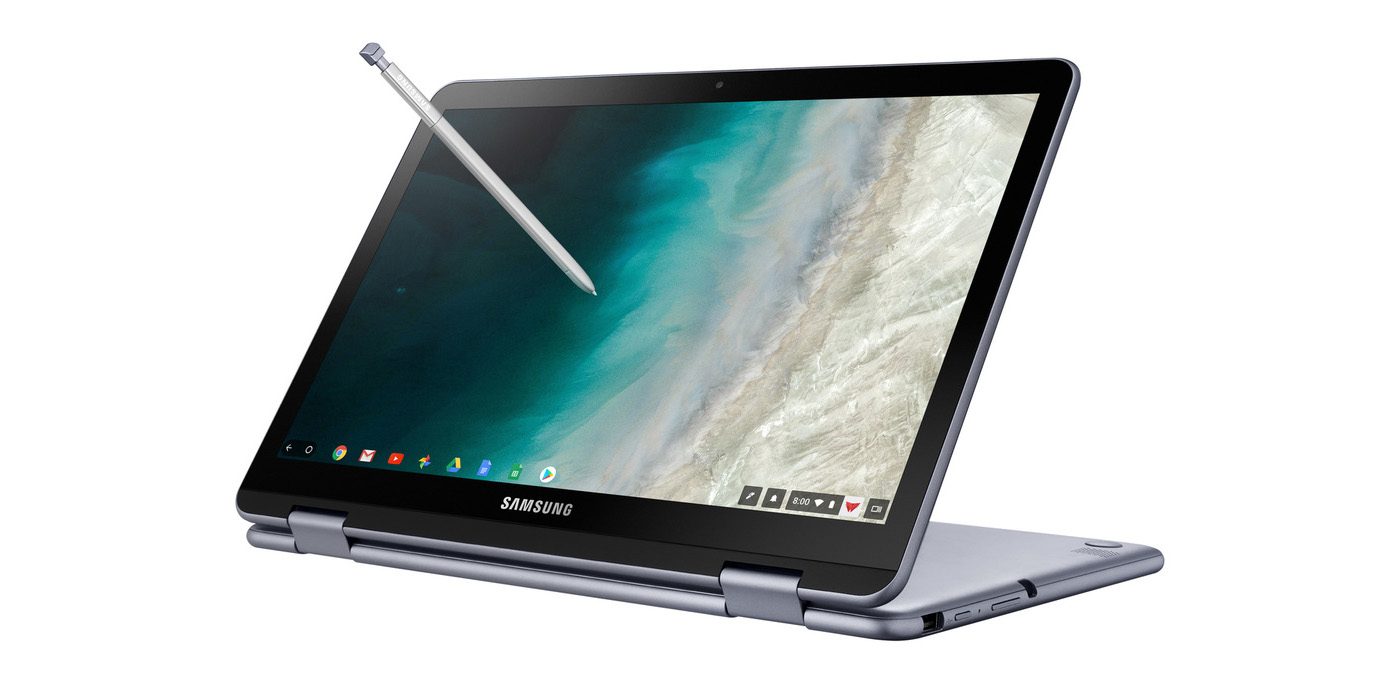
    Samsung announced a new version of its Samsung Chromebook Plus , titled the Chromebook Plus (V2) with an Intel Celeron processor and front and rear facing cameras. It will be available only from Best Buy and goes on sale June 24 starting at $499.99. Samsungs press release says “For those who use Chrome OS to do more on the go, the new light and thin Samsung Chromebook Plus (V2) sets the standard with front and rear cameras, built-in pen, and a more powerful processor”


    The Standard, Really Just Standard

    It looks like one thing Samsung got right for sure is the use of the word standard. This 2 in one is definitely that, standard. The 2-in-1 convertible is designed to help people get the most out of Chrome OS. Samsung has listed some highlight from the announcments..

    1. Front and Rear Facing Cameras to Stay Connected – Communicate visually with the 1M front-facing camera and a 13M F1.9 rear-facing camera with autofocus. Simply fold your laptop into tablet mode and capture your view from any angle. The front camera is ideal for video chats with classmates or clients, friends or family. Plus, store photos and videos right on your cloud.
    2. Unleashing Creativity – The Samsung Chromebook Plus (V2) stands out by comingwith a built-in pen. Experience the power and precision of the stylus. It’s always with you when you need it, and it never needs charging. Write a note, sketch out an idea, edit a document, sign a document, or even use the pen to magnify small text and capture carefully cropped screenshots.
    3. Do More, Store More – Tackle anything that comes your way, wherever you are, with more power and more storage. The upgraded Intel® Celeron® processor and long-lasting battery keep you going all day.In addition to users’ personal cloud storage, the Samsung Chromebook Plus (V2) has 32GB of built-in storage, with the option to add up to 400GB with a microSD card (sold separately) – room for favorite photos, documents and music, as well as for storing movies to watch offline on the go.
    4. Premium Design, Premium Experience – designed for comfort and peace of mind, with a curved-cap keyboard built to withstand spills up to 60cc. The device’s rounded edges offer users a comfortable grip whether it’s being used as a notebook or a tablet. The Samsung Chromebook Plus (V2) offers even more functionality to users with multiple connected devices, including easy file sharing between Chromebook and mobile devices. Smart Lock from Google makes it easy to store and use passwords across your devices.

    The laptop will use an Intel Celeron 3965Y processor (a change from the old Plus’ ARM processor, though the Chromebook Pro used an Intel Core M3). The “rear” camera, above the keyboard, for use in tablet mode, is a new addition. The laptop will have 4GB of RAM and 32GB of storage.
    The Chromebook Plus (V2) has a 1920 x 1080 display with a 16:10 aspect ratio. The previous model had a 3:2 aspect ratio with a 2400 x 1600 resolution. While an unexpected announcement, nothing unexpected here.

    Quick Spec Look of The Samsung Chromebook Plus

    • PROCESSOR Intel® Celeron® Processor 3965Y
    • MEMORY 4GB
    • STORAGE 32GB
    • GRAPHICS Intel® HD Graphics 615
    • POWER 39Wh
    • WEIGHT 2.93 lbs
    • CMF Stealth Silver
    • DIMENSION 11.34 x 8.19 x 0.63-7.0 inches
    • PORTS 2 x USB-C™ [4K display out with optional adapter, Charging] 1 x USB3.0
      MicroSD card reader
      3.5mm headphone jack
    • MATERIAL Aluminum alloy/Glass/Plastic
    • DISPLAY Aspect Ratio: 16:10
      Brightness: 300nit
      Touch Screen
    • CAMERA Dual: 1M (front); 13M (on keyboard deck)
    • SPEAKER Stereo Speakers (1.5W x 2)
    • STYLUS Built-in-pen

    The Final Thought

    This is just another mediocre Samsung device, put out by what is becoming the standard of a mediocre company. Samsung fails to innovate or at least manipulate someone eases innovation yet again. Uninspired, its just the Chromebook on the self if you need a Chromebook and you probably don’t.

  • AMD ThreadRipper 2, 32 Core Processor Announced

    AMD ThreadRipper 2, 32 Core Processor Announced

    AMD has a major announcement that may alter the axis of the processor world. They have announce a new AMD ThreadRipper 2, 32 core, 3gz goliath of processing power. Intel… panic. That’s just what they did. While Intel has maintained a dominance over its main chip rival AMD, today they panic as the tide may be turning and Intel’s 28-core demo during Computex 2018 is a sign it is worried about the chips AMD is bringing to market this year. They became so worried in fact they held a borderline suspect speed test of their 28 core processor that ended up boasting 5GHz.

    Intel demonstrated the chip as running at 5GHz across all core. This seemed more then a little dudious. While a true score, the setup required to achieve it is far from conventional and well beyond what could currently be achieved in a desktop PC for a reasonable price. The motherboard alone used to conduct the test is well over $10,000.

    More about the AMD ThreadRipper 2

    This new AMD ThreadRipper 2 is raw, unadulterated power. The chip runs at 3GHz, but achieves a 3.4GHz all-core boost on demand. Its TDP is 250W, so it can be used with already available X399 motherboards sporting the TR4 socket, and is expected to be available to buy in August. While not much more is know, we will watch this develop with great interest

    But How Would I Cool Something Like This,

    The raw power alone should have your mind bending with complex thoughts of the logistics on that kind of computer power. How do you keep that cool and from overheating. Rest asure the AMD’s ThreadRipper 2 announcement has us all excited at the prospect of 32 cores and 64 threads coming to the desktop, but we are going to need to top the processor with a capable cooler to bring the rumored 250W TDP under control. AMD told us at Computex that the new ThreadRipper 2 models will come with the Asetek bracket that provides compatibility with leading AIO watercoolers. But the company has also worked with Cooler Master to develop a new air cooler, Wraith Ripper, specifically for the Threadripper’s TR4 socket. Problem Solved

    The AMD Wrait Ripper has Seven copper heatpipes wick heat up into the hefty fin stack while a concealed 120mm fan in the center of the cooler provides airflow at a relatively tame 39dBA. The top of the housing features four Phillips head screw mounts that attach directly to the four threaded fasteners that mount into the TR4 socket. Supes simple to install. However it seriously heavy, as it would have to be so it can dissipate roughly 250W of thermal output.

    The Final Thought

    When I think back to the computing power used to send us to the moon for the first time, The AMD ThreadRipper 2 seems untheroretical, but yet here we are. We are on the Verge of a processor explosion, The landscape will change. New players will emerge and AMD is on its way to a decade of processor dominance. Your move intel.

  • Data Caps Blatant Money Grab? Comcast’s Latest Announcement Makes It Seem that Way

    Data Caps Blatant Money Grab? Comcast’s Latest Announcement Makes It Seem that Way

    Comcast implemented a data throttling program in 2008 that was aimed primarily at slowing BitTorrent users. However, the system hasn’t been used much in the past few years, and now, a decade later, it has been disabled altogether. In an announcement on June 11th, Comcast had this to say: 

    “As reflected in a June 11, 2018 update to our Xfinity Internet Broadband Disclosures, the congestion management system that was initially deployed in 2008 has been deactivated. As our network technologies and usage of the network continue to evolve, we reserve the right to implement a new congestion-management system if necessary in the performance of reasonable network management and in order to maintain a good broadband Internet access service experience for our customers and will provide updates here as well as other locations if a new system is implemented.” 

    What This Means for Data Caps 

    While common sense has held for years that companies charging for data overages are just squeezing consumers, this announcement is proof. Straight from the horse’s mouth, as it were, we now have Comcast saying they are perfectly capable of meeting demand. They claim that their data caps are in place in order to promote “fairness,” but that makes little sense. Data isn’t a finite resource, so someone using more isn’t leaving less to the people around them.  

    What’s even worse than Comcast’s insistence on data caps is their implementation of them. Users are limited to 1TB of data per month and must pay an extra $10 for every 50GB over that. Otherwise, users can opt to pay an extra $50 per month to have no data cap. However, consumers have no way to verify that the metrics Comcast uses to determine how much data they have used are accurate. In fact, reports of users being charged overages for data they didn’t use aren’t unheard of.  

    Worst of all, Comcast maintains that the overages help to pay for system upgrades, not day-to-day traffic. But they already have heavy-traffic users pay more. Higher speeds, which are required for downloading large amounts of content or competitive gaming, are much more expensive than lower bit-rates. This means that those who pay for faster internet will chew through their allotted data faster, meaning they’re getting hit by these higher costs twice when they go over the cap. 

    Comcast Could Prove a Dangerous Example Post-Net Neutrality 

    Comcast now has little incentive to act ethically, as the regulations that reigned them in are gone. Instead, data throttling and de-prioritization will likely become key aspects of their business model. Why shouldn’t the company charge more for the service they could provide for less? What’s stopping them from unfairly throttling content they don’t approve of? Articles like this one could be flagged and be unable to render on the screen of someone using Comcast for internet.  

    This dystopian prediction might sound like hyperbole, but it would be well within Comcast’s power to do so. It would also fit with their previous practices. Then, other ISPs would be likely to follow in their example. Since ISPs are largely monopolies in their areas, consumers would have no recourse. While only time will tell, one thing is clear. Comcast, and other telecom companies, implemented data caps for one reason: to shake down consumers for more money. They’re clearly completely capable of meeting current data demands without the need for such harsh caps. But the caps are good for their bottom lines, so they’re not going anywhere.