Tag: Food

  • The Top 5 Food Delivery Services You Must Try

    The Top 5 Food Delivery Services You Must Try

    In the past few years, several companies have popped up in major cities offering to deliver food to your door from nearly every restaurant in town (for a small fee.) Whether you’re stuck at the office or just don’t feel like fighting crosstown traffic to get a sandwich, there is no shortage of delivery apps vying for your buck!

    But your time and money are valuable, and you can’t waste your lunch break waiting for a slow service. Don’t worry, we’ve got you covered! Which of delivery app is the best choice for you? Check out our round-up of our favorite food delivery apps!

    GrubHub

    GrubHub has a simple, no-frills interface and a very easy-to-navigate search function. This delivery app, unfortunately, sports a $10 minimum for all orders, which we don’t love. This, however, is not a deal-breaker. GrubHub offers a feature to track your food as it goes, which we really like! On the negative side, GrubHub is somewhat slow and, in our experience, has issues with order accuracy.

    This could all change based on your area and delivery driver, but it’s worth mentioning. That being said, GrubHub makes our list due to its ubiquity. You’ll almost always find a restaurant in your area that they can deliver from in a reasonable time. Slight inconsistencies in delivery time or customer experience could be chalked up to just how big GrubHub is, and how many drivers it has.

    Postmates

    Postmates is a pretty wide service and doesn’t specialize in just-food. That said, it has a pretty great food delivery side! Postmates doesn’t do restaurant partnerships, so they’re more an “available by area” type of delivery app. They can even pick up alcohol for you, which is sweet for when you’re looking to get a party started! It’s pretty widely available, as it’s in more than 90 cities. There’s a modest fee attached to each delivery. That said, you can opt for a premium subscription that waives delivery fees for $10 from certain retailers.

    UberEats

    Uber, best known for their ride-sharing service, has wisely taken their existing driver base and repurposed it slightly to allow for food deliveries. UberEats is fast, as a general rule, getting orders to hungry customers with little hassle in our experience. Oddly, there is no option to tip your driver in this delivery app, which, while standard for Uber, is something of a bummer when you want to show your appreciation.

    UberEats, like GrubHub, offers superb tracking of your order and sports a clean, user-friendly interface. Much like their ride-sharing app, UberEats is reliable and reasonably priced, and you can’t go wrong with them. They’re only slightly more expensive on average than DoorDash, which is really the only strike against them.

    Caviar

    A fancy name for a sleek app, Caviar’s a great delivery service. If they’re available in your area, they’re well worth using. They have the standard delivery fees and minimum order fees you’d expect, of course. The service, however, is quite excellent, with friendly drivers and fast deliveries. Your food will usually arrive on time and it will typically be in good condition when you get it! The only drawbacks are slightly expensive delivery fees and a small number of cities covered. If you are covered, though, this is a fine service!

    Our Favorite Delivery App: DoorDash

    Our favorite overall delivery app! DoorDash has the benefit of being inexpensive, like Uber, and generally, they are very speedy! You can tip your driver in this one, which is a huge plus! This allows you to show your appreciation for your driver’s good service.

    Additionally, DoorDash has a good selection of restaurants to choose from, a clean user interface that is only occasionally difficult to use and the delivery app doesn’t have a minimum order limit. While your experience in your area may be different, regarding restaurant selection or speediness, we still find that DoorDash has the overall best service for the price!

  • So Long, Beef: Meet the Impossible Burger

    So Long, Beef: Meet the Impossible Burger

    While everyone loves a hamburger, there are some issues with eating animal meat. For one thing, some say its unethical to take the life of a living animal for food. Even if you don’t agree with that point, the science is clear that red meat is hardly good for you.

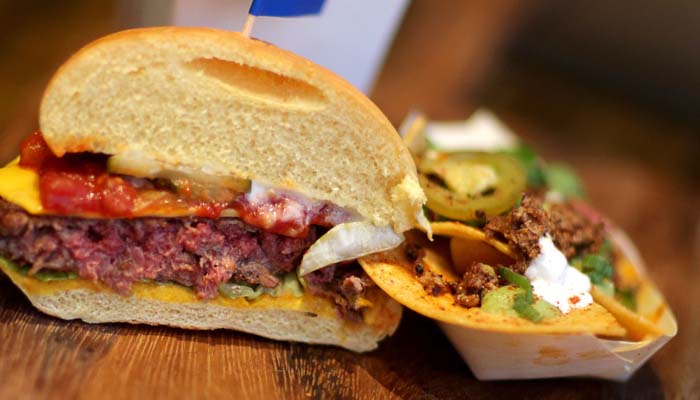
    But burgers are so good! Why can’t we have a burger that isn’t bad for you and doesn’t require cows to be slaughtered? Good news, compassionate burger-lovers: the Impossible Burger provides just that. A delicious, beef-like patty made entirely from plant matter.

    Impossible Burger

    What It’s Made From

    The Impossible Burger isn’t a soy or lentil or bean patty that’s just shaped like a burger. No, instead, it’s made in a lab setting, from potato and soy proteins, and made to look and taste just like animal meat. Included in the patty are coconut and sunflower oils, which act as the burger’s fat and let it sizzle on the grill.

    Meanwhile, the whole thing is held together by methylcellulose, a binding agent that also acts as a source of fiber. The burger then uses a type of heme, the oxygen-carrying molecule found in all living things, as a source of flavor. The lab uses soy heme, injected into yeast cultures and then harvested en masse, to give the burger a meat-like flavor.

    What it Tastes Like

    It tastes like beef, full stop. If you’re a vegetarian who misses burgers, or a meat-eater who wants to cut back on eating animals, this burger hits the spot. That’s a hard trick to pull off! In fact, we’ve seen people who are vegetarians actually find the Impossible Burger “gross,” and “hard to eat” due to its greatly meat-like consistency and flavor.

    The Cost

    Generally speaking, the Impossible Burger is a bit more expensive than a normal meat patty. For instance, many restaurants sell the Impossible Burger for $13, where the normal burger tends to be around $9. However, we feel its worth it to be kinder to your body and the environment. After all, every little bit helps.

  • You Won’t Believe How Easy it is to Lose Weight Eating These Foods

    You Won’t Believe How Easy it is to Lose Weight Eating These Foods

    Are you trying to lose weight? It’s not very easy to shed the pounds. Whether you’re active or more sedentary, it’s difficult to lose weight. One of the best ways to lose, other than exercise and portion control, is by eating foods that encourage weight loss.

    Not all calories are created equal. Different foods go through different metabolic pathways in your body. They can have vastly different effects on your hunger, hormones and the number of calories you burn. Here are some of the most weight-loss-friendly foods on earth that are supported by science.
    Remember, the only person for whom you should lose weight is yourself. Don’t try to live up to someone else’s expectations of what you should look like. If you feel like losing weight and eating healthy is right for you, great! However, if you’re on the heavier side but eat healthy and feel good, don’t stress. Everyone’s body is different.

    Foods to Help you Lose Weight

    Avocados

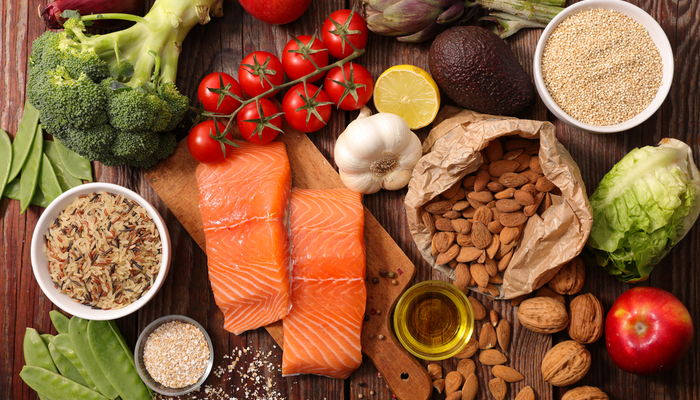
    Avocados are a unique fruit. While most fruits are high in carbs, avocados are loaded with healthy fats. They’re particularly high in monounsaturated oleic acid, the same type of fat found in olive oil. Despite being mostly fat, avocados also contain a lot of water and fiber, making them less energy-dense than you may think.

    What’s more, they’re a perfect addition to vegetable salads, as studies show that their fat content can increase carotenoid antioxidant absorption from the vegetables 2.6- to 15-fold. They also contain many important nutrients, including fiber and potassium. Avocadoes also taste fantastic and go well with tons of types of food, from sushi to avocado toast. There’s a reason they’ve become so popular recently!

    Salmon

    Fatty fish like salmon is incredibly healthy and very satisfying, keeping you full for many hours with relatively few calories. Salmon is loaded with high-quality protein, healthy fats and various important nutrients. Fish — and seafood in general — may also supply a significant amount of iodine.
    This nutrient is necessary for proper thyroid function, which is important to keep your metabolism running optimally. Studies show that a significant number of people don’t fill their iodine needs. Salmon is also loaded with omega-3 fatty acids, which have been shown to help reduce inflammation, which is known to play a major role in obesity and metabolic disease. Mackerel, trout, sardines, herring and other types of fatty fish are also excellent.
    Fish, in general, can be a great replacement in most meals for steak or pork. By substituting in a nice fish steak, you leave a lot of the fat and negative contents of other types of meat off of your plate. This is great for people looking to eat healthier and lose weight.

    Greens

    Leafy greens include kale, spinach, collards, swiss chards and a few others. They have several properties that make them perfect for a weight loss diet, such as being low in calories and carbohydrates and loaded with fiber. Essentially, you need to be eating more greens than you already are, even if you’re a habitual greens-eater. They’re just that good for you.

    Eating leafy greens is a great way to increase the volume of your meals, without increasing the calories. Numerous studies show that meals and diets with a low energy density make people eat fewer calories overall. Leafy greens are also incredibly nutritious and very high in many vitamins, antioxidants and minerals, including calcium, which has been shown to aid fat burning in some studies.

    Fibrous Vegetables

    Fibrous vegetables include broccoli, cauliflower, cabbage and brussels sprouts. Like other vegetables, they’re high in fiber and tend to be incredibly filling. What’s more, these types of veggies generally contain decent amounts of protein. A common misconception about plant-based diets is that they’re low in protein, though this is entirely unfounded. Many plant-based diets can include as much protein as meat-based ones.

    They’re not nearly as high in protein as animal foods or legumes but still high compared to most vegetables. A combination of protein, fiber and low energy density makes cruciferous vegetables the perfect foods to include in your meals if you need to lose weight. They’re also highly nutritious and contain cancer-fighting substances.
    Whole Eggs

    Once feared for being high in cholesterol, whole eggs have been making a comeback. New studies show that they neither adversely affect blood cholesterol nor cause heart attacks. What’s more, they’re one of the best foods to eat if you need to lose weight, as they’re high in protein, healthy fats and can make you feel full with a very low amount of calories.

    One study in 30 overweight women showed that eating eggs for breakfast, instead of bagels, increased feelings of fullness (satiety) and made participants eat less for the next 36 hours. Another eight-week study found that eggs for breakfast increased weight loss on a calorie restricted diet, compared to bagels. Eggs are also incredibly nutrient dense and can help you get all the nutrients you need on a calorie-restricted diet. Interestingly, almost all the nutrients are found in the yolks.


  • There are Worse Chefs than You: Avoid these Food Abominations

    There are Worse Chefs than You: Avoid these Food Abominations

    There are worse chefs than you, no matter how bad you think your cooking is. How do we know? There seems to be a lot of nostalgia for the 1960’s that floats around above pop culture. Unfortunately, a lot of it is way overblown. The time period that brought us the Vietnam War, rampant cigarette use and mass-marketed processed foods might not be the best one to romanticize.

    What does that have to do with food abominations? Trust us, we’re getting there. You see, there are worse chefs than you out there: 1960’s era cookbooks make that plainly clear. If you’ve ever wondered what dishes were popular in the middle of the 20th Century, we’ve got you covered. Here are some of the worst food abominations from the 1960’s.

    There are Worse Chefs than You

    Prune Whip

    One of the nastiest-looking things we’ve seen in a 60’s cookbook is prune whip. So, get this: start with raw whipped egg whites and then fold them into a prune puree. Now, let’s think about this: we’ve got uncooked eggs that could cause salmonella and we’ve got prunes, pureed, which have well-known laxative-like properties.

    How did anyone survive the 60’s eating crap like this? What’s next, guys, steaks with cigarette butt garnish? No wonder people used to keel over in the mid 50’s.

    Asparagus Macaroni Loaf

    Any food item that ends in the word “loaf” goes straight into the garbage can. This particular dish was a popular choice in the 60’s among suburban moms and macaroni lovers. Whoever told them that asparagus belonged with macaroni in a congealed loaf mess was absolutely wrong, but, hey, what can you do.

    At least this dish is a bit better than meat crammed into loaf form. Meatloaf is also a perennial favorite of this era and we still don’t understand who exactly enjoys that dish.

    “Circle Pups”

    Dishes that include hot dogs were really, really popular in the 60’s. The companies who produced these processed foods had a really good marketing department, because just looking at dishes like the “Circle Pups” dish from Better Homes and Gardens Meals in Minutes makes us lose our appetite.

    The Circle Pup in particular is a pair of hot dogs on a slice of bread with rice and mustard. Which is just… why? What’s wrong with the hotdog bun? Why is there rice in the mix? Well, what can you expect from the era that brought us American “cheese.”

    Dad’s Denvers

    This heart-stopper is created by spreading deviled ham on a French roll. Oh, you haven’t heard of deviled ham? Good, it’s terrible. Avoid it like the plague. Next, make an omelet in bacon fat and add green onions. But this on top of the French roll and top it with sliced tomato and broil the whole mix.

    Okay, if you survived cooking this thing without dying of a heart attack then you can now attempt to eat this monster. You’ll probably get a few bites in before you start to black out from the amount of trans fats flooding into your blood stream.

    Pickle-Stretcher Salad

    In the 60’s there was a weird trend of making tons of salad that didn’t include fresh vegetables. Let that sink in. Macaroni salad? Cool. Potato salad? Awesome. Caesar salad? Absolutely not, throw that to the animals.

    One of the most nauseating “salads” from this era is the Pickle-Stretcher salad. It was so named because it allowed the maker to stretch a few pickles into a meal that could help the whole family projectile vomit. This monstrosity has olives of both green and black varieties mixed in with diced dill pickles and probably with a heaping on vinegar just for good measure.

    Do you want acid reflux? Because this is how you get acid reflux.

    Jellied Chicken

    I don’t really know what else to say about this dish that the name doesn’t already give away. It’s like Jell-O but with chicken. The cookbook this particular nightmare is from is entirely based on cooking with blenders.

    I mean… guys. I know it was the 60’s, but it wasn’t the dark ages. Why was anyone cooking with exclusively blend-able recipes?

    Conclusions

    Take it easy on the fried food, the processed stuff and the canned foods. If your meat comes out of a can, if you can’t name what part of the animal it’s from and you can’t imagine it served in a nice restaurant, maybe you should avoid it. And thank goodness the 60’s were fifty years ago, because some of these dishes are giving me diabetes by proximity.