Blog

  • The Best Wireless Home Security Systems

    The Best Wireless Home Security Systems

    Sadly we live in a world where  wireless home security systems are not just a necessity but vital. There are a lot of options for wireless home security systems, even do it our self options. Do-it-yourself setups are ideal for homeowners on a budget because they can save you a bundle on installation charges and subscription fees. Then there are the professional systems. The nice thing about professionally installed systems is you don’t have to lift a finger; after you’ve placed your order a technician will come to your home, set everything up for you, and show you how the system works. When it comes to my home and my family I want a professional wireless home security system. Lets take a look at the 3 best options available today.


    1.ADT Pulse

    ADT formed in the 1800s as American District Telegraph, the world’s first telegraph-based alert system. They are not number one for being the oldest, they are also by far the best. With features like  Wireless or Hardwired options, Professional instillation, Doorbell monitors, Intrusion Protection, Medical Response and state of the art  Home Automation. Just having the sign in your lawn reduces your risk of intrusion by 63%.

    The cost is manageable, and miniscule for piece of mind. ADT home security costs can range from $9/week * to $14/week * based on your monitoring package. However, an ADT home security cost depends on which monitoring package best fits your needs. The ADT monthly fee for the standard Essentials package starts at $36.99/month

    2.SimpliSafe

    This solutions is making a big splash. Using small and efficient IoT enabled devices and 24/7 live human monitoring they offer a complete protection package. Utilizing, Entry and motion sensors, Glassbreak detection, Video security.  Heads up burglars, start running. Being totally wireless, Its easy to install your self and customer service is just a quick call away. It’s like having your own personal security guard with a direct line to the police. Video equipment with instant live link anytime an alarm is triggered lets you see whats happening when you are not at home. You can Arm and disarm SimpliSafe with just a single touch on those incidental false alarms.

    3. Vivint

    Vivint the solution for All-wireless security. All your home controls on one app. Vivint Smart Home helps you live more and manage less. THey have a wonderful small sensor that can be placed at any entry point. This sends you a wireless alerts anytime a door or window opens. With a total control app you can manage your security entry points, Smart Locks, Doorbell Camera, Outdoor Camera, and Element Thermostat.


    The Wireless Home Security Systems Final Thought

    All of these will secure your home, protect your family and significantly reduce the chance of a home invasion. They are all very low cost and almost completely  hassleless. With all the threats we have looming, wireless home security systems are a non-negotiable for any homeowner.


  • Data Caps Blatant Money Grab? Comcast’s Latest Announcement Makes It Seem that Way

    Data Caps Blatant Money Grab? Comcast’s Latest Announcement Makes It Seem that Way

    Comcast implemented a data throttling program in 2008 that was aimed primarily at slowing BitTorrent users. However, the system hasn’t been used much in the past few years, and now, a decade later, it has been disabled altogether. In an announcement on June 11th, Comcast had this to say: 

    “As reflected in a June 11, 2018 update to our Xfinity Internet Broadband Disclosures, the congestion management system that was initially deployed in 2008 has been deactivated. As our network technologies and usage of the network continue to evolve, we reserve the right to implement a new congestion-management system if necessary in the performance of reasonable network management and in order to maintain a good broadband Internet access service experience for our customers and will provide updates here as well as other locations if a new system is implemented.” 

    What This Means for Data Caps 

    While common sense has held for years that companies charging for data overages are just squeezing consumers, this announcement is proof. Straight from the horse’s mouth, as it were, we now have Comcast saying they are perfectly capable of meeting demand. They claim that their data caps are in place in order to promote “fairness,” but that makes little sense. Data isn’t a finite resource, so someone using more isn’t leaving less to the people around them.  

    What’s even worse than Comcast’s insistence on data caps is their implementation of them. Users are limited to 1TB of data per month and must pay an extra $10 for every 50GB over that. Otherwise, users can opt to pay an extra $50 per month to have no data cap. However, consumers have no way to verify that the metrics Comcast uses to determine how much data they have used are accurate. In fact, reports of users being charged overages for data they didn’t use aren’t unheard of.  

    Worst of all, Comcast maintains that the overages help to pay for system upgrades, not day-to-day traffic. But they already have heavy-traffic users pay more. Higher speeds, which are required for downloading large amounts of content or competitive gaming, are much more expensive than lower bit-rates. This means that those who pay for faster internet will chew through their allotted data faster, meaning they’re getting hit by these higher costs twice when they go over the cap. 

    Comcast Could Prove a Dangerous Example Post-Net Neutrality 

    Comcast now has little incentive to act ethically, as the regulations that reigned them in are gone. Instead, data throttling and de-prioritization will likely become key aspects of their business model. Why shouldn’t the company charge more for the service they could provide for less? What’s stopping them from unfairly throttling content they don’t approve of? Articles like this one could be flagged and be unable to render on the screen of someone using Comcast for internet.  

    This dystopian prediction might sound like hyperbole, but it would be well within Comcast’s power to do so. It would also fit with their previous practices. Then, other ISPs would be likely to follow in their example. Since ISPs are largely monopolies in their areas, consumers would have no recourse. While only time will tell, one thing is clear. Comcast, and other telecom companies, implemented data caps for one reason: to shake down consumers for more money. They’re clearly completely capable of meeting current data demands without the need for such harsh caps. But the caps are good for their bottom lines, so they’re not going anywhere. 

  • Untitled post 5000

    Wireless earbuds often leave a lot to be desired. For one thing, a lot of them aren’t actually wireless. When you’re trying to listen discreetly, or listen while exercising, you don’t want a wire hanging down from your ears. For the absolute best in truly wireless, though, you do have to shell out a bit. Thankfully, we’ve got a round-up of some of our favorite truly wireless earbuds! 

    Bose Soundsport Free 

    Bose doesn’t tend to disappoint, and these truly wireless earbuds are evidence of that. While they cost a full $200, they’re still a great buy. They have a great fit and good sound quality. Bose’s Soundsport also comes with a charging case that holds two extra charges! They look a little goofy, sticking out of the ears a good way, but they sound good enough that it’s forgivable. Truly, if you’re an audiophile and don’t mind the tight fit, these are your best bet. Their biggest drawback? They cost more than the excellent Jabara Elite Active 65t. If sound quality is your main and only concern, though, go with the Bose Soundsport Free. 

    Apple AirPods 

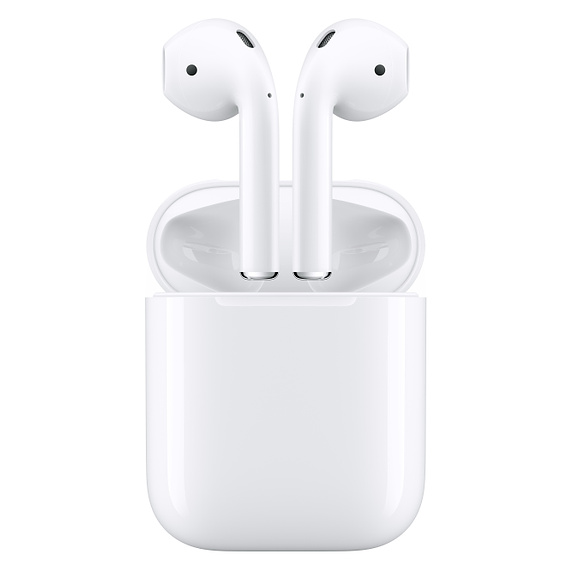
    For a good while, Apple’s entry in the truly wireless market was the best. Recent releases have given them serious competition, but they’re still a solid choice. For one thing, they’re the best value among earbuds on this list, retailing for $160. They don’t have the tightest fit, but some prefer the more open-feeling fit. The AirPods also come with a charging case, and they’re delightfully lightweight. They have reasonable call quality, and they fit easily in a pocket while in their case. The downside? Well, they look sort of lame. Their weird, long stalks make them look kind of dorky, which seems to be a running issue with wirless earbuds. 

    Our Favorite Wireless Earbuds: Jabra Elite Active 65t 

    Apple’s Air Pods are a step in the right direction, but they’re not as great as the Jabra Elite Active 65t. Sporting awesome sound quality and sweat-proofing, you really can’t go wrong with these. They’re durable and long-lasting, with true sweat-proofing that will keep them going even after intense exercise. They’re also good for making phone calls as they have two microphones in each pod. The best part? They actually look pretty slick! Unlike most of their competition, the Jabara Elite earbuds don’t look quite so goofy! They’ll cost you, though. They retail for $190. 

  • Avengers and X-Men Crossover in Danger? AT&T Time Warner Takeover

    Avengers and X-Men Crossover in Danger? AT&T Time Warner Takeover

    We really want to see Wolverine going toe-to-toe with the Hulk. Or Reed Richards and Tony Stark talking shop. Or Thor and Storm making sparks together. Really, we just want all the Marvel characters to come together on the big screen. And we’re so close! Disney has but in a bid to buy 20th Century Fox. But this darn AT&T ruling could really mess it up. 

    Comcast and Fox 

    Marvel Comics owns the rights to all of their characters, of course. They can create comic books, television shows and pretty much anything they want with their characters. But they sold the film rights to a ton of them to other companies in the late 90’s. Sony owns the film rights to Spider-Man, for instance, and Fox has the rights to the X-Men and Fantastic Four. However, the House of Mouse owns Marvel now. And they want their stuff back. 

    Disney put in a bid to purchase Fox last year for an absurd $54.2 billion in Disney stock. Comcast, seeing dollar signs, decided that they, too, wanted to buy Fox. But they put their plans on hold. See, A&T, for their part, was in court defending their attempt to acquire Time Warner.  

    AT&T Won that Case 

    And then AT&T won their case, and the regulatory board is likely to allow their acquisition. This gives Comcast a pretty clear-cut course to acquiring Fox. Fox, for their part, seemed hesitant to go for the Comcast offer, even though it was higher than Disney’s because it was uncertain if the deal would pass a regulatory board.  

    Now that there’s proof that such a merger can pass the board, Fox might just take the deal. This would spell disaster for our dreams of an Avengers and X-Men crossover. Which would be a serious shame. We just want to see Captain America and Professor Xavier exchanging tips for leading groups of super-powered people! And maybe have Scarlett Witch meet the X-Men film version of Quicksilver so she can have her mind blown! Okay, that one’s not happening anyway, but we can dream! In the meantime we’ll just have to read Marvel comics if we want to see the two super-teams cross paths! 

    Feature Image Credit: MovieWeb 

  • Ongoing Security Measures from Apple May Not Be Enough

    Ongoing Security Measures from Apple May Not Be Enough

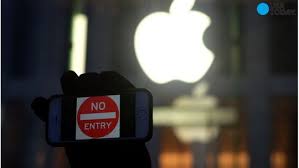
    Apple’s newest moves to protect their users from data tracking were on showcase at their WWDC conference. Privacy experts largely praised their attempts to block “device fingerprinting” and keep users from being tracked by sites. Sadly, many say, their efforts likely aren’t enough. The biggest issues are logistics. Consumer data is a huge target and covering it adequately would be like making sure no trees were ever cut down. Not to mention, companies like Facebook and Google make billions of dollars by tracking users for targeted advertising. While criminals tracking users are a problem, they’re largely piggybacking on techniques made by legitimate companies. As such, Apple is largely fighting a losing battle. 

    The Age of Paranoia 

    People are quite aware of the ways their data is being collected and used against them now. Namely, Facebook’s notorious Cambridge Analytica breach is a prime example. In our age, people are paranoid of any misuse of their data. Yet, they’re not taking advantage of the tools that could protect them. Companies that create counter-tracking software report that there are depressingly few people using their countermeasures.  

    Similarly, Apple’s counter-tracking measures, while valiant, aren’t enough to truly hinder the vast number of different tracking devices on the web. Google’s Android operating system is more popular by number of users and offers no such protections. This allows the trackers to propagate and refine themselves even though most users are aware of them. 

    The Age of Apathy 

    The worst part? The average users don’t even care that their data is being tracked. Nearly every website has Google or Facebook trackers embedded. And there are hundreds of companies you’ve likely never heard of that are also tracking you. As such, it’s easy to get overwhelmed and feel apathetic in the face of the countless ways your data is being collected. And it’s that very apathy that empowers these companies to keep harvesting your data and targeting you with ads.  

    Companies like Apple Aren’t the Norm 

    Even worse, Apple is nearly alone in Silicon Valley in opposing these practices. Their biggest direct competitor is Google, and Google is the most egregious offender in data collection. As much as Apple tries to defend their own consumers, they’re fighting an uphill battle. Thankfully, smaller companies like Ghostery are on the case, too, but they’re vastly outnumbered.  

    Ghostery, for their part, has turned to artificial intelligence to help shore up countermeasures for tracking software. Perhaps Apple will take a similar track and use the strongest tools of the data harvesters against them? In the meantime, be careful with your sensitive data, and consider getting a plug-in like Ghostery for your browser! 

  • Vivo Nex: A Phone from the Future

    Vivo Nex: A Phone from the Future

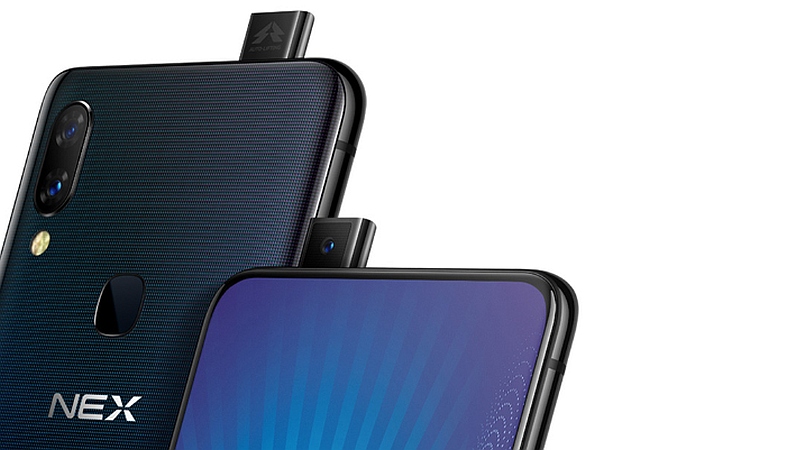
    Vivo has announced their Nex phone, a futuristic and incredible concept. The phone features a massive display, coming in at an astonishing 6.59 inches. The phone also has no notch and an in-screen fingerprint scanner. How cool is that? Let’s get into some of the details. 

    Who’s Nex? 

    The Nex phone has a lot of interesting and innovative technologies in play. The first is the in-screen fingerprint scanner. Vivo has had varying degrees of success with such scanners in the X20 and X21 phones. The scanner in the X20 was superb, but the one in the X21 left something to be desired. The second innovation is the lack of a screen notch. 

    The screen notch seen on phones like the iPhone X is used to house the camera and speaker for phone calls. The Vivo Nex accomplishes this in two unique ways. The first is by using the screen itself as a speaker. This is a very interesting innovation that hasn’t been seen in any mass-production smartphones before. Early reports say that this speaker actually sounds pretty good, despite its unusual position under a phone screen. 

    Odd-Looking Selfie Camera 

    The second innovation allowing for a notch-free screen? That weird looking little nub coming out of the top corner of the phone. It’s the selfie camera! Yeah, it pops up when you activate the selfie feature. It’s about the quaintest thing going on with this complex, high-tech phone. I don’t know if this is a better option than just having a notch, but it’s certainly amusing. 

    Flagship Processor 

    The phone is also packing some serious power. It uses a Snapdragon 845 processor, which is top of the line, and sports 8 GB of RAM. It also sports 256 GB of internal storage and a huge battery, clocking in at 4,000mAh. All-in-all, this is an impressive-looking piece of hardware. 

    When Can We Try the Vivo Nex Hands-On? 

    Sadly, we don’t have a release date or a price for the Chinese smartphone yet. However, when it does launch, expect to import it, as Vivo’s phones are sold almost exclusively in China. 

    Feature Image Credit: NDTV Gadgets 

  • Looking to Start Investing? Our Ten Picks for Best Investment App

    Looking to Start Investing? Our Ten Picks for Best Investment App

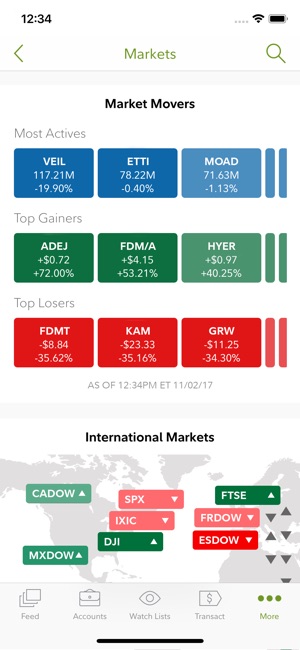
    Investing in the Stock Market can be daunting. There are a ton of moving parts and the big players all seem like Wall Street types. The good news is, the age of the smartphone has made investing super simple and easy. Where once you might have had to contact a broker to be your proxy on the exchange, you can now just use an app. There are a ton of options out there, though. How do you know which investment app is the best? Well, we’ve got our ten favorites for you to check out! 

    Bloomberg 
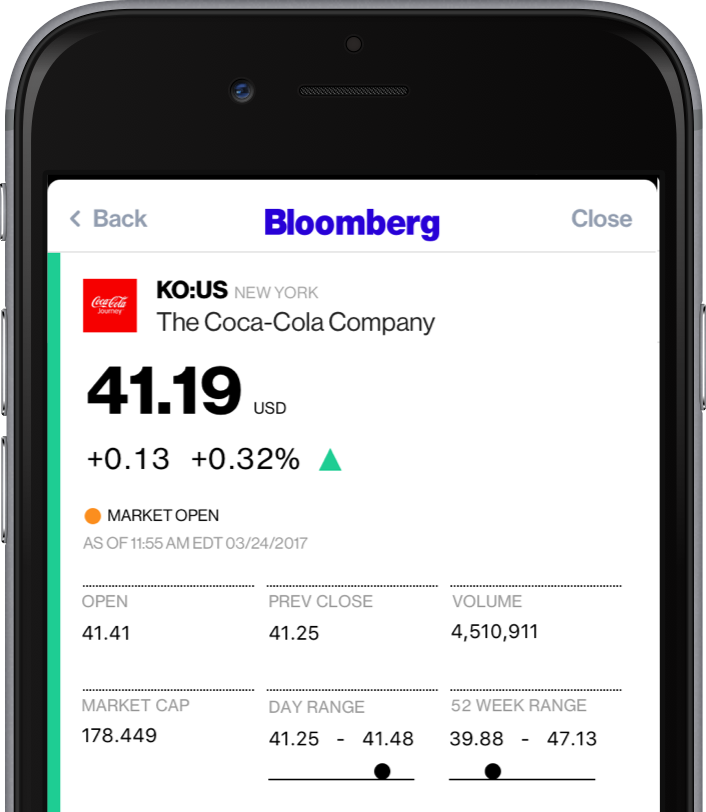
    Photo Credit: Bloomberg 

    A well-known name in money management, Bloomberg’s app is great for investing. Combining breaking money news and investing tips, Bloomberg has it all. The app even offers personalized news, so you can watch the companies you invest in.  

    If you’re as interested in the “why” of the stock market as you are in making money off of it, try Bloomberg. 

    Benzinga
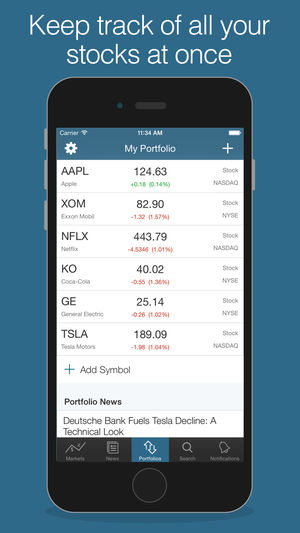
    Photo Credit: iTunes 

    Benzinga is great for investors who want insatnt information. By opening the app, you get immediate stock quotes, no need for waiting or skimming over news you don’t want. Acting as something of a punchy investment app, Benzinga is good for those who want to forge their own way. It has social media options, too, letting you share trending stock info to sites like Twitter.  

    Benzinga can also give you push notifications when news relevant to your investments breaks. It also offers some premium features for those who want a more in-depth experience. If you get the subscription you access features like live analysts to answer questions and audio news. 

    CNBC
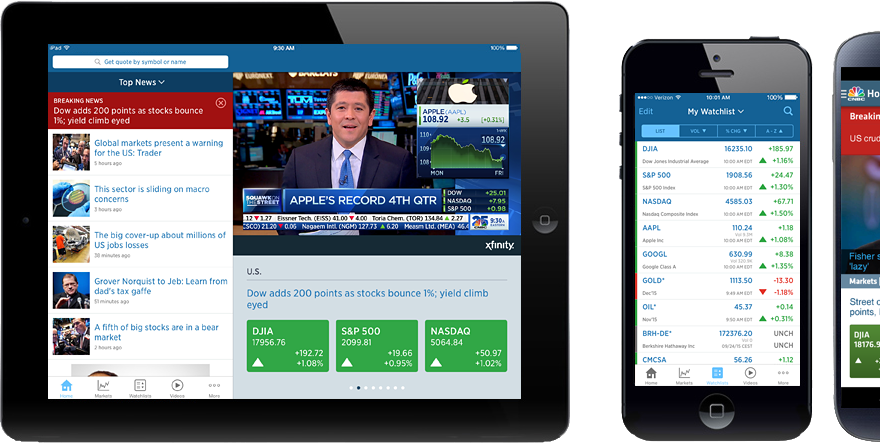
    Photo Credit: DownloadMyMobileApp.com 

    CNBC is a great news app for those who want to see a little bit from every source. Their app is clean and user-friendly, presenting data in an immediate, digestible format. Many investors swear by the process of synthesizing news from as many sources as you can stand to read. CNBC’s app is a fantastic way to achieve such wide-ranging research without having to dig across the internet. A great resource for novices and veterans alike! 

    Fidelity Investments
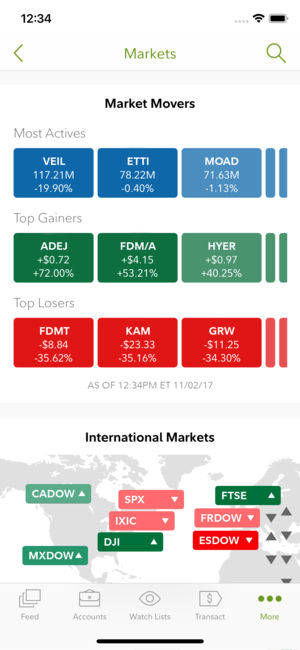
    Photo Credit: iTunes 

    Fidelity Investments’ app is great for more experienced investors looking to move to something more in-depth. The app offers in-depth charts and daily video coverage of market trends. It also offers notifications for when prices go above or below certain thresholds. It has a comprehensive news section and offers multiple money-management tools. This is a great choice for those who have become more adept in their online investing! 

    Motif Explorer
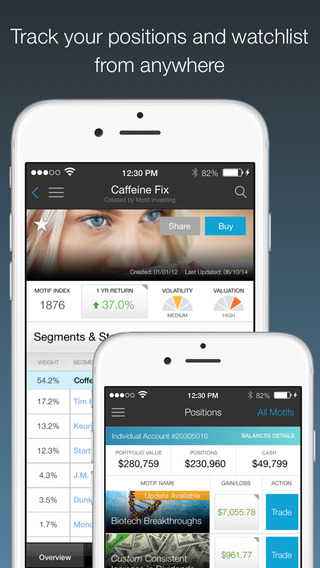
    Photo Credit: The Divided Ninja 

    Motif is a cool way to introduce the stock market to people who are curious about the exchange. The app’s creators track various world events to see which could cause the market to shift. Portfolios, or motifs, based on those observations are generated. For instance, they might have a profile on clean energy, and if you invest in that motif your money would be invested in various clean energy companies. The app works to find which motifs are trending upwards and help you invest accordingly.  

    While Motif Explorer isn’t the best for large, serious investing, it is interesting for newcomers. Consider this one if you’re interested in dipping your toe in investing. 

    TD Ameritrade 
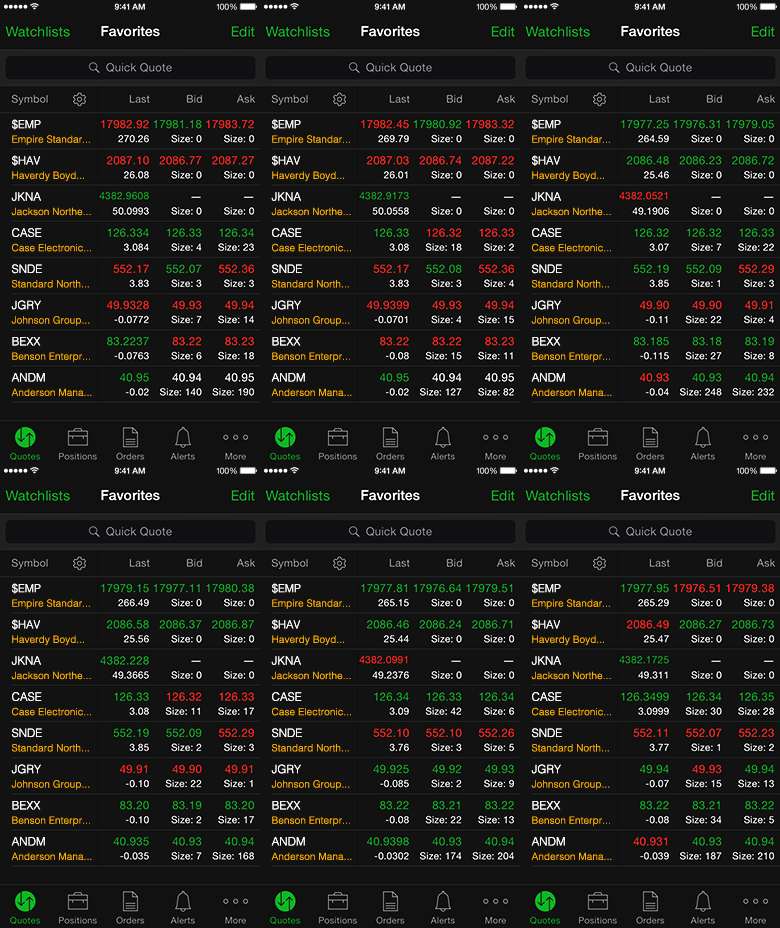
    Photo Credit: TD Ameritrade 

    This app gets a nod for being a great, bare-bones app with no frills. If you’re looking to not have your hand held and just start investing, check this one out. It offers real-time view of the stock exchange, mobile trading, fund exchange and other basic features.  

    Most notably, this app has a feature called Snapstock. This feature lets you use your phone camera to take a picture of a barcode. Then, the app pulls up the company that makes the product that barcode is attached to. That way, if you see an item in a store and think “this is going to be huge,” you can find them and invest on the fly from your phone. 

    Yahoo! Finance
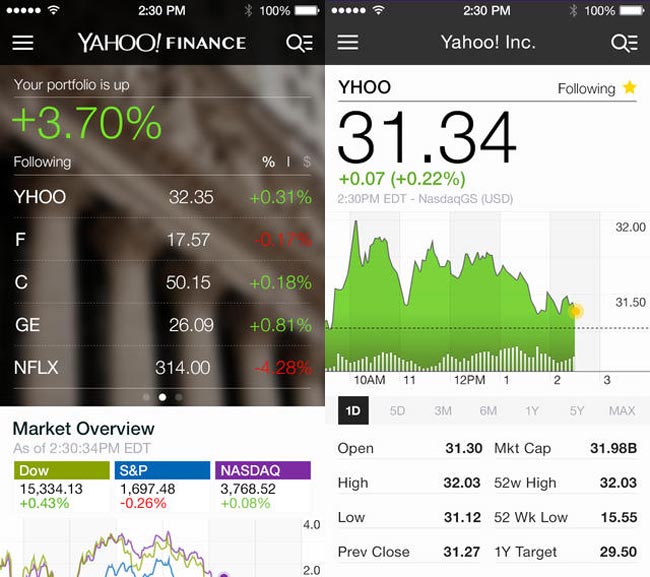
    Photo Credit: Geeky Gadgets 

    Surely, you’ve heard of these guys? Jokes aside, Yahoo! Finance has a great app for beginner investors. The app has a gorgeous, clean design reminiscent of Apple’s native iPhone stocks app. The design is personalized to your investments and offers a great dashboard to see what stocks are trending. It also features news and trending stocks at a glance. All in all, this app is great for those just starting out who want to get their stock info at a glance.  

    Stock Market Simulator
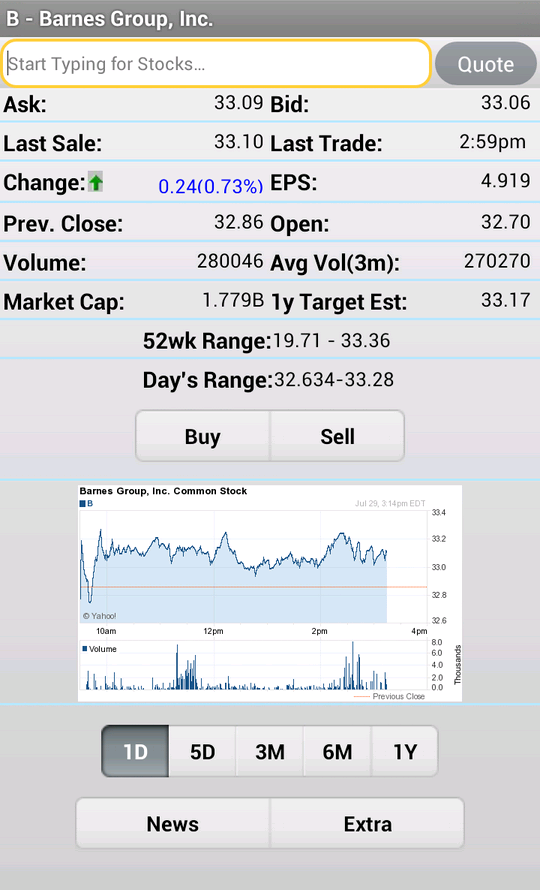
    Photo Credit: APK-DI.com 

    This mock investment app is a stress-free simulator to show newbie investors the ropes. You start with $10,000 in virtual money with no value and can mock invest in an echo of the real stock market. The echo updates fifteen minutes behind the real exchange. While this isn’t meant to be a tool to predict actual investment trends, it is useful to show newcomers what the exchange looks like. It allows them to experiment without risking their actual money. 

    SigFig
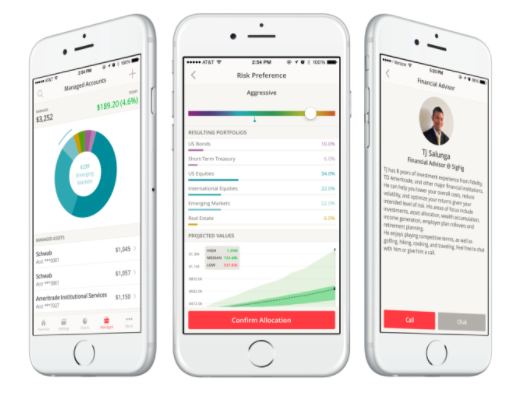
     

    Photo Credit: Apptentive 

    This investment app is quite good for newcomers. SigFig offers advanced optimization tools for portfolios, helping you manage your money. You take a profile quiz to tell the app the ways you like to take risks with your money. You get a personalized investment plan, put money in the account, and off it goes. It’s like a digital broker! 

    The app also offers investment advice for first-time investors. The only downside is that it only shows you three years back of your investment, where most apps opt for five- or even ten-year retrospectives. That said, this is still an awesome choice for newcomers. 

    Our Favorite Beginner Investment App: Acorns
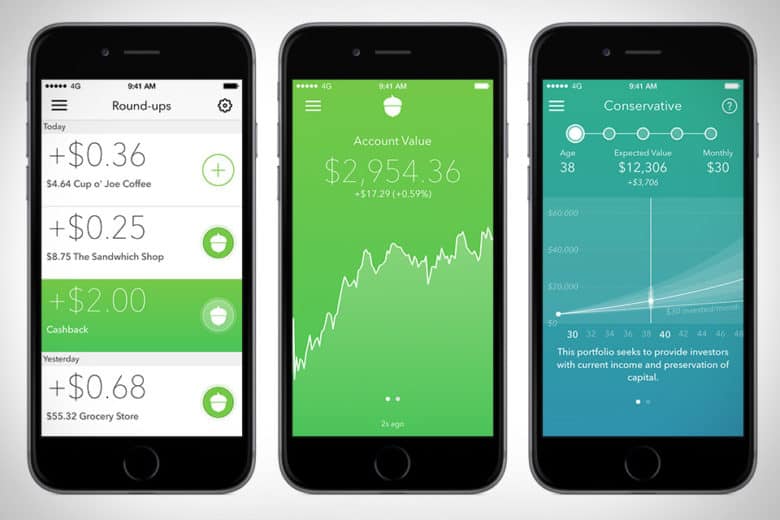
    Photo Credit: Cult of Mac 

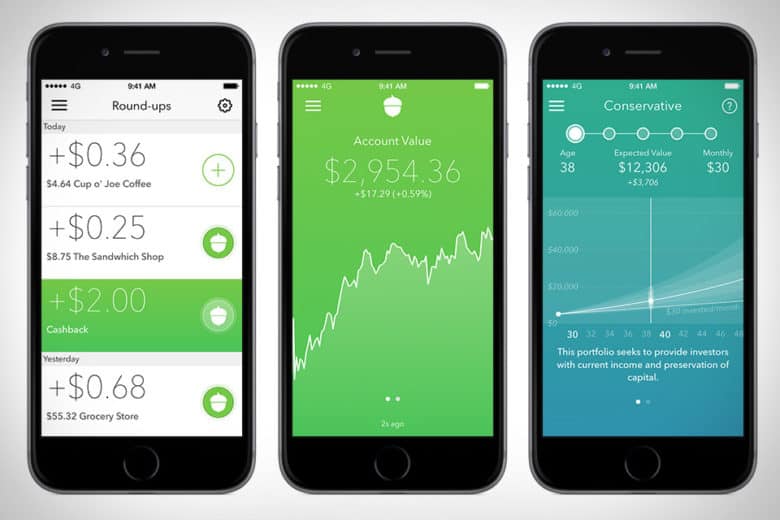
    The Acorns app is pretty awesome. This investment app works by investing your loose change into a diversified portfolio. The idea is that you set it up with your credit or debit card, and then the app rounds up your regular purchases and invests the small amounts of money in accounts recommend by Harry Markowitz. Markowitz, for his part, has won a Nobel Prize for his work as an economist, so you know your money is in good hands. 

    Acorns is meant to be a “set it and forget it” service, in their COO Jeff Cruttenden’s own words. The service does have a small monthly fee, but as long as you keep small amounts of money in it, you probably won’t notice it. This service is great for those who’d like to invest but don’t know where to start. 
  • Apple’s Cryptocurrency Ban

    Apple’s Cryptocurrency Ban

    Apple is cracking down on cryptocurrency on its platform,Yes it is time for a BitCoin Panic. The new rules for Apple’s cryptocurrency ban are aimed mainly at limiting the shadier side of cryptocurrency like unregulated ICOs and mining coins on your Apple hardware. The rules apply to both computers and phones, but are more restrictive on phones because of Apple’s secure and down right oppressive mobile ecosystem.

    Apple sights the reason for Apple’s cryptocurrency ban is the excessive tool it takes on the resources of your device. The new guidelines may have been imposed over concerns regarding the longevity of the hardware and the battery. Cryptocurrency mining is a processor intensive activity that puts great demand on the hardware and the power supply. This could affect the life of both. Users casually running these applications after hearing about the cryptocurrency craze may probably have no idea the toll on their devices this mining it taking. Apple more then likely is already had to face devices damaged by mining, this would be a good prompt for  the company to decided to act so strictly on the matter.

    Apple’s cryptocurrency ban, What it Means

    So you are probably asking the big question Why? It’s part of wider restrictions against apps that drain battery, generate excessive heat, or strain a device’s resources. All of which take place during cryptocurrency mining.

    “Apps, including any third-party advertisements displayed within them, may not run unrelated background processes, such as cryptocurrency mining,” states the new policy.

    I do want to clarify that Your favorite crypto wallet app is still in the clear. Even after an update to Apple’s developer guidelines for iOS and macOS. Apple’s ban on cryptocurrency will only affect mining for cryptocurrency. Not apps that allow you to manage, hold or spend cryptocurrency.


    The Final Thought

    Mining on your phone or tablet is futile and utterly impossible. Bitcoins value is dropping by the hour. This is a hard hook to the jaw to Bitcoin by Apples’s ban on cryptocurrency. Not that this will have any actual effect on bitcoin other then the perception of Apple bans cryptocurrency.

  • Tech Throwback: America Online

    Tech Throwback: America Online

    I like to take a look at where I’ve been to evaluate where Im going. Technology is cyclical after all… wait no its not. That said I still like all the feels that come rushing back like a flood of nostalgia every time I get my hand on the tech I grew up with. Im going to go back periodically and take a looking at the stuff that used to blow our hair back and get our minds rolling. Some of these device blew up and changed the world, some where ahead of their time and some just fell flat and became colossal failures. Today we have not just a tech throwback, not a device or toy, but an internet revolution. The name even says it all… America Online, and that is just what happened. America went on line.


    And so it was America On Line or AOL as we came to designate this revolution first started out in 1983 as an online video game service for the Atari 2600. Shortly after that founder and CEO  Bill von Meister wanted to converge in to a music on demand service. The idea was squashed by Warner bros music department…

    Later in the decade, these innovative thoughts and dream has merged into an online portal for the commador 64 and apple II, called q-link. Then in August 1988, Quantum launched PC Link, a service for IBM-compatible PCs developed in a joint venture with the Tandy Corporation. After the company parted ways with Apple in October 1989, Quantum changed the service’s name to America Online. Case promoted and sold AOL as the online service for people unfamiliar with computers, in contrast to CompuServe, which was well established in the technical community.

    Its now 1991 and AOl Charged its users an hourly fee, mostly gamers where using the platform and it hosted 2 exclusive dungeons and dragons, title called Neverwinter Nights from Stormfront Studios; which was one of the first Multiplayer Online Role Playing Games to depict the adventure with graphics instead of text. Gaming was still the backbone of America Online.

    America Goes on Line With America Online

    In 1996 America Online changed its billing and pricing from an hourly rate to a 19.95 monthly fee. America responded. During this time, AOL connections would be flooded with users trying to get on, and many canceled their accounts due to constant busy signals.

    What We Remember

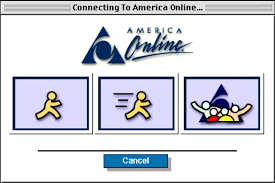
    BEEEEEEEE DEEEEE DEEEEE. We all remember the sound to connect, the little guy running across those little boxes to get on the line. They after a few eternal minuets, You’ve got mail… With only a handful of boxes to click on, we were blown away by all the endless information we now had at our finger tips.

    Then the Chat Rooms, oh we spent weeks of our lives during the late 90s in those rooms. The connections we discovered to random people validated our very existence. We had reached a pinnacle of society and were all now connected.

    And all those free trial disks and cds. We collected them, used them to create new account for temporary or incognito service, then

    The World at Our Finger Tips

    America Online brought us on the line, all of us, on the line. Now we are all here, what do we do with this unprecedented power? Globalization. AOL is the backbone of our world today, it set it up and paved the way for Amazon, Ebay, Napster and all of the internet companies that could turn minuet transnational profits to worldwide unimaginable wealth.


    The Final Thought

    It would take the world almost a decade to catch up to Americas latest boom. Instantly, due to our ingenuity, desires and “why cant we” bravado made another giant leap in society. Much like everything else in america, their was a meteoric rise, unprecedented success, and the world was forever changed overnight. The following year would see mergers and purchases, evolving in to a giant conglomerate. Today AOL is nothing more then a small branch in Telecom giant Verizon’s portfolio, but for a time it was a revolution.


  • Microsoft Announces Xbox Scarlett

    Microsoft Announces Xbox Scarlett

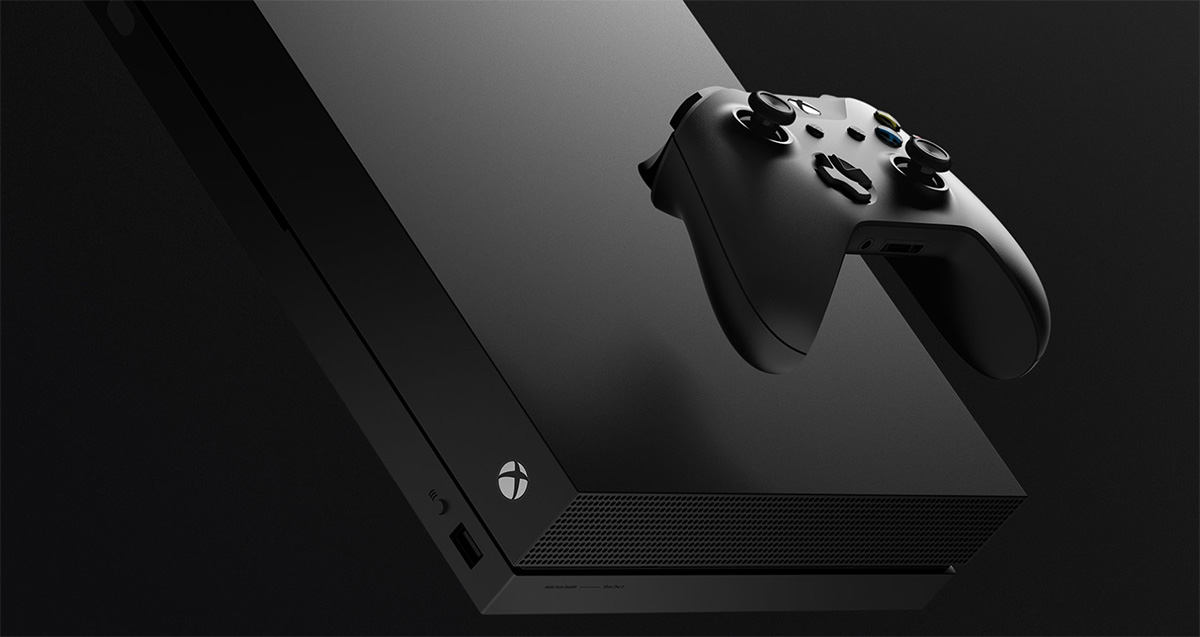
    Taking the stage at the E3, Microsoft was quickly confirmed that it was designing new Xbox hardware. Microsoft Xbox Scarlett, but when can I play it? looks like it will be a lot sooner then originally planned. Our sources have claimed that the next-gen Xbox, nicknamed Scarlett, should launch sometime in 2020. I’m guessing probably late q3 early q4 for the holiday rush.  We havent got any technical details yet, however it’s they are touting this as a “family of devices”. I hope they can find a way to bridge the console with PC gaming and make it a one stop experience.

    What Could Xbox Scarlett Be?

    The timing, if accurate, may seem unusually quick given that the Xbox One X only launched near the end of 2017. Microsoft has done slot to improve the Xbox One but it falls short of driving sales, most xboxers would just as easily go with an upgradeable gaming PC then buy a new xbox every 2 -3 years.  A Xbox Scarlett launch in 2020 might be necessary to keep pace. If Microsoft can complete that bridge and supplying me with the solo immersive and higher quality of pc gaming, with the flexibility of moving to the TV for multiplayer action and gathering, while facilitating the component upgrading to keep systems current, They may just stumble upon the next generation of inspiring gamers.


    While we don’t know when Sony is planning to release PlayStation 4’s successor. The company’s current system continues to far outsell the Xbox One. Recent sales estimates put the system’s total sales at around double that of the Xbox One, which can be attributed to a better library of exclusive games and the PR struggles Microsoft had with the Xbox One back in 2013.


    The Final Thought

    We know Xbox Scarlett is a working coded name. I’m really hoping they through us a left hook and just name it Xbox 2. I wish we had something more concrete to bring you. Specs, picture leaks, Rumors and speculations.. But relax, we will feed you baby birds, as soon as the info develops. As for now we wait…impatiently might I add