Category: Electronics

  • Emporio Armani Opens The Door To Luxury Smartwatches

    Emporio Armani Opens The Door To Luxury Smartwatches

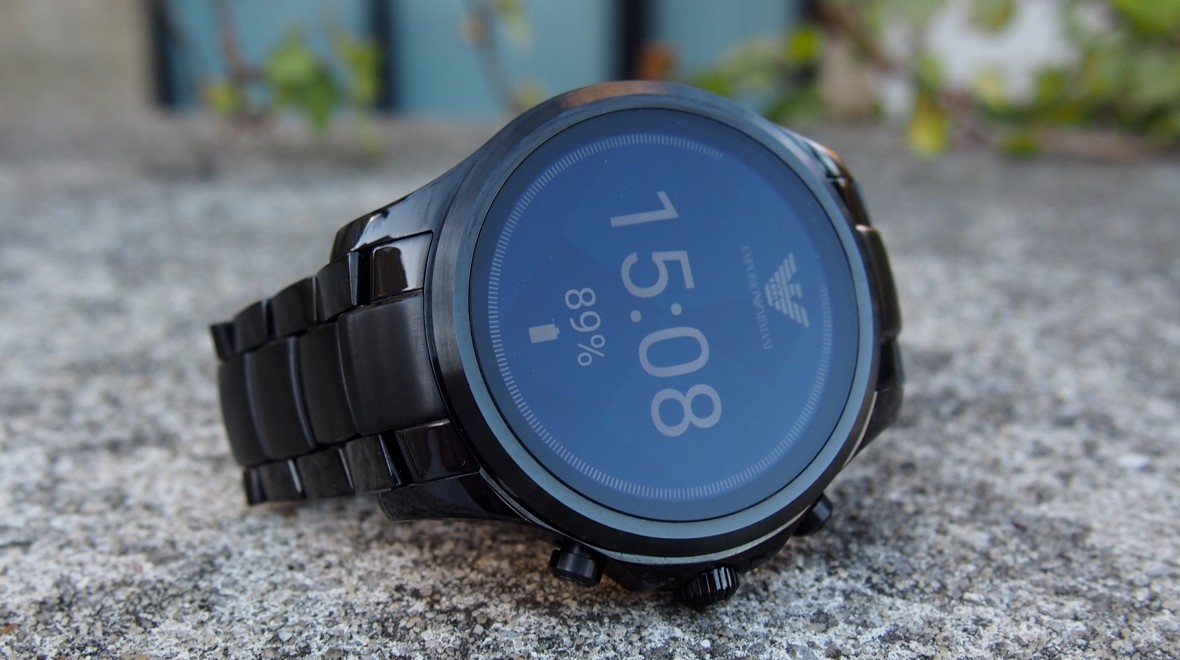
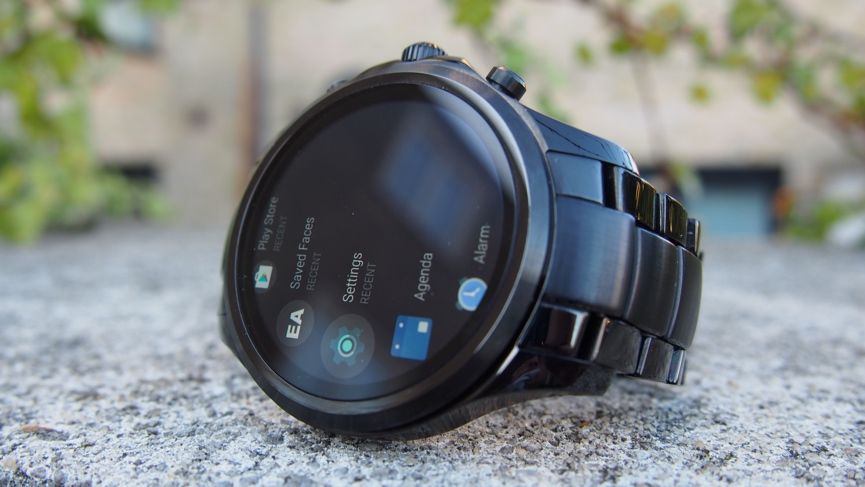
    The dynamic styling of Emporio Armani meets technology with a new collection of touchscreen smartwatches. This watch features the brand’ s most coveted designs with the added benefits of today’s wearable technology. The Emporio Armani Connected touchscreen smartwatch is compatible with both iOS® and Android™ phones, and are powered by Android Wear™ 2.0, Google’s smartwatch platform, and the Qualcomm® Snapdragon Wear™ 2100 smartwatch platform. Stay in the know with messages and notifications delivered directly to your watch and stay in style with a customizable watch face and interchangeable straps that can be changed to match your look. Connect to your favorite apps to track activity and access your music library. This black IP touchscreen smartwatch features a black dial with full display and is complemented by an easily interchangeable brushed-and-polished black IP bracelet.


    The Great

    • Sophisticated style
    • Crown controls Android Wear
    • Straps easily swapped to change the look
    • Comfortable, and beautifully presented

    The Not

    • Light on tech features


    • No Android Pay


    The Conclusion

    Smartwatches need to look good, and as luxury brands enter the market, we find they end up producing some of the best-looking wearables. One of the latest is the Emporio Armani Connected, Armani’s first Android Wear 2.0 smartwatch. It’s unquestionably attractive, with a name that oozes class, style, and sophistication but barley a smartwatch.


    Emporio Armani isn’t completely fresh to the world of smartwatches, after releasing a collection of hybrids last year. But with the Emporio Armani Connected and its full touchscreen face, this represents the Italian fashion house’s first dip into the world of Android Wear.Just as you would expect, entry doesn’t come cheap, either.

     

    Its Fancy

    Let’s be honest, if you’re looking to pick up this watch, you’re almost definitely more focused on the design than its connected features. And in our opinion, this is one of the sleekest options to consider.

    Like the rest of this year’s Fossil Group watches, there’s no flat tyre here, just a full AMOLED touchscreen offering a display which is up there with the best — and certainly an improvement on the Fossil smartwatches we saw in 2016. Interestingly, though, Armani has chosen not to release the actual specs regarding its screen.

    There’s been no skimping on build quality, either. While this admittedly feels like a more premium smartwatch thanks to our review model being the stainless steel band, the 46mm face doesn’t feel bulky or cumbersome when on the wrist. If you want a lighter variant or simply a different colour metal, 11 options are out there in total, giving you a strong pack to choose from.
     

    Smart Functions

    Emporio Armani and Fossil have shied away from releasing all the tech spec but we found the Qualcomm Snapdragon 2100 processor to provide a lightning  experience around the Connected. Delay when opening apps is minimal and menus almost never suffer from lag.

    Fitness enthusiasts will be disappointed, though, if they’re looking to branch out to a more stylish all-in-one, with no support for heart rate tracking, no GPS sensor and zero opportunity for swimming due to the IP67 water rating. When we have taken the Connected out on a token run, the metal band was (obviously) seriously uncomfortable in comparison to the Fitbit Ionic and Apple Watch, so those who are looking to take the device out with their smartphone should at least invest in one of the more sporty bands to switch out.

    What was a nice touch, though, was the ability to control our music while on the go – whether playing through Apple Music on an iPhone or Spotify on an Android device.

     

    The Final Thought

    Luxury smart watched are coming, this is just the start. The price tags will climb to close to the cost of a 3/2 split level home in rural Tennessee soon enough. This is a nice mid step between a nice looking watch and a smartwatch but it is neither great at either.


     

  • 7 New Products From Samsung

    7 New Products From Samsung

    I tend to focus on what Apple is doing alot more because I live in that bubble but Samsung has got a much bigger universe but occuping the appliace and tv space. They also seem to have their fingers in just about evey pie you could think of, so here is the top 7 Samsung releases for 2018 you should know about


    1.Samsung HMD Odyssey Windows Mixed Reality Headset​​
    $499.00


    The Samsung HMD Odyssey is the best mixed reality headset for Windows 10. It features a sharp AMOLED display, built-in AKG headphones, and comfortable fit. It also comes bundled with a pair of excellent wireless controllers.

    There are thousands of mixed-reality experiences for Windows 10 you can try. The headset is also compatible with Steam VR titles, so we got that going for us.


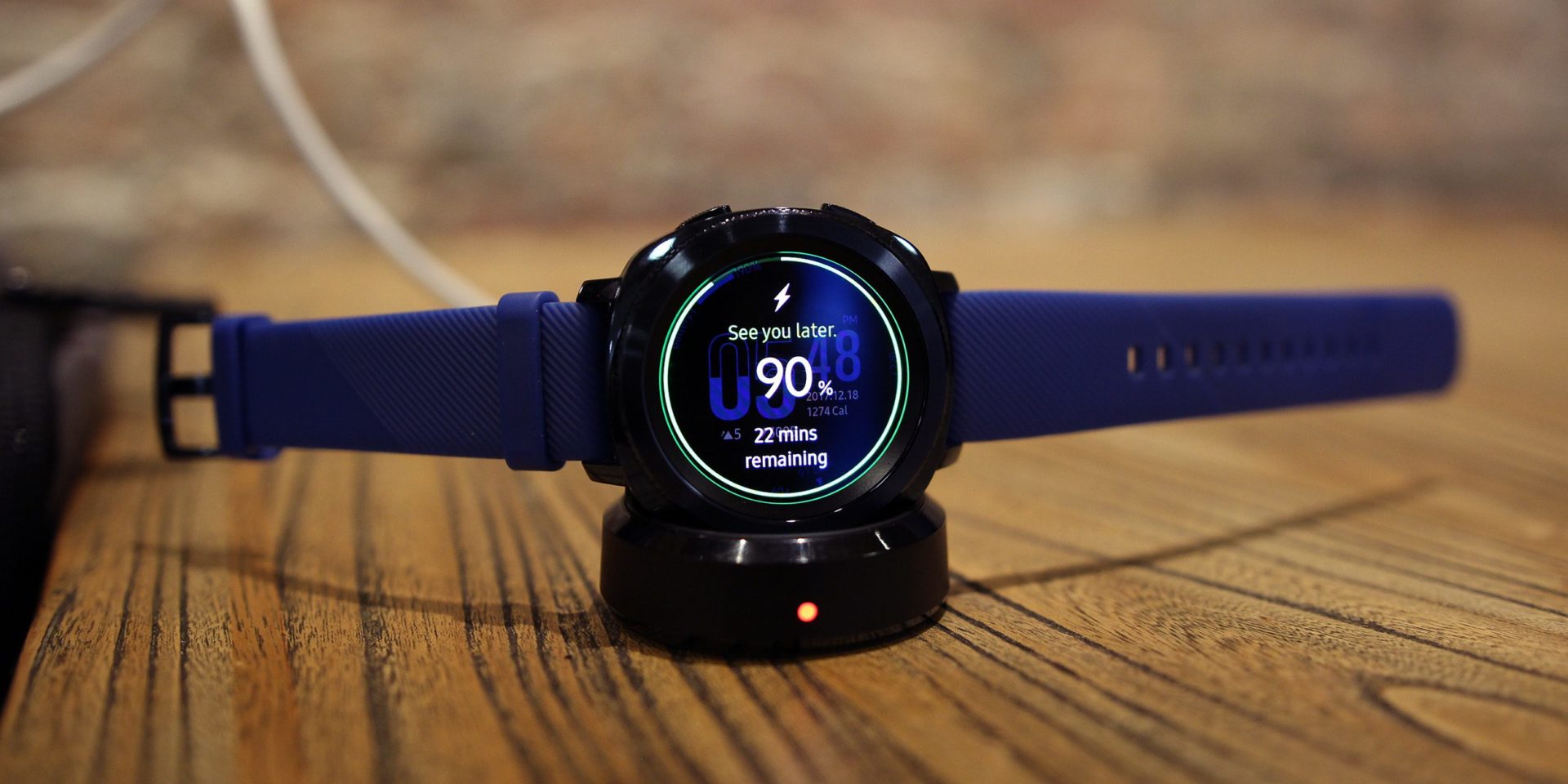
    2.Samsung Gear Sport Smartwatch
    $247.99

    The Samsung Gear Sport is the best smartwatch for Android smartphone users. The device has a powerful set of fitness-tracking features, including the ability to guide users through various workouts.

    Its waterproof body can withstand depths of up to 50 meters, so users can take it for a swim, too. An intuitive interface and interchangeable bands are also among the wearable gadget’s cool features.


    3. Series 49-Inch ​Curved Gaming Monitor
    $949.99

    Samsung’s gigantic CHG90 series curved gaming monitor has a gloriously excessive 49-inch QLED display with 32:9 aspect, which will literally expand your in-game field of view. Capable of fully replacing two standard monitors, the CHG90 has superb image quality with HDR support, an ultra fast refresh rate of 144 Hz, and a plethora of gaming modes to choose from.

    4.Samsung Galaxy S9+ Android Smartphone

    $839.99

    The Galaxy S9+ is the most advanced smartphone from Samsung to date. It features an eye-grabbing 6.2-inch Infinity display, an advanced camera setup with two optically stabilized sensors (a wide-angle and a telephoto one), and built-in stereo speakers.

    Of course, the waterproof phone also comes with a long list of cutting-edge hardware specs, headed by a powerful Snapdragon 845 chipset and 6 GB of RAM. There are three colors to choose from — black, blue, and purple.


    5.Samsung Q9S QLED TV (available in 85-inches)
    Unbelievably, Samsung’s monstrous, 85-inch 8K TV is still considered a QLED TV. It’s the top of the list for numerous reasons – size and resolution being the most obvious two – but also its ability to use artificial intelligence upscale SD content to 8K HDR. We don’t know how much this TV is going to cost yet but, considering how much technology is going into it, it wouldn’t surprise us to see a price tag in the tens of thousands.


    6. Samsung Family Hub Refrigerator

    $3,499.99

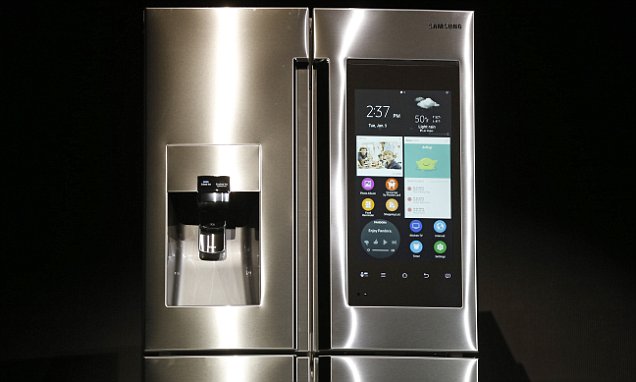
    Family Hub in 2018 offers a wide range of smart features that allow consumers to do what they could not do before. These include syncing up food storage with meal preparation, keeping family members better connected and organized, and providing enhanced entertainment. Family Hub is also more intuitive and intelligent with the addition of Bixby voice control and its integration with Samsung’s SmartThings IoT ecosystem.

    The interactive touchscreen with interactive and customizable widgets allows your family to stay connected: Sync calendars for all family activities and events, remotely share photos, notes and memos, receive personalized information through voice recognition and challenge each other with daily trivia questions.

    7.Samsung – ArtPC Pulse Desktop

    $1,599.99

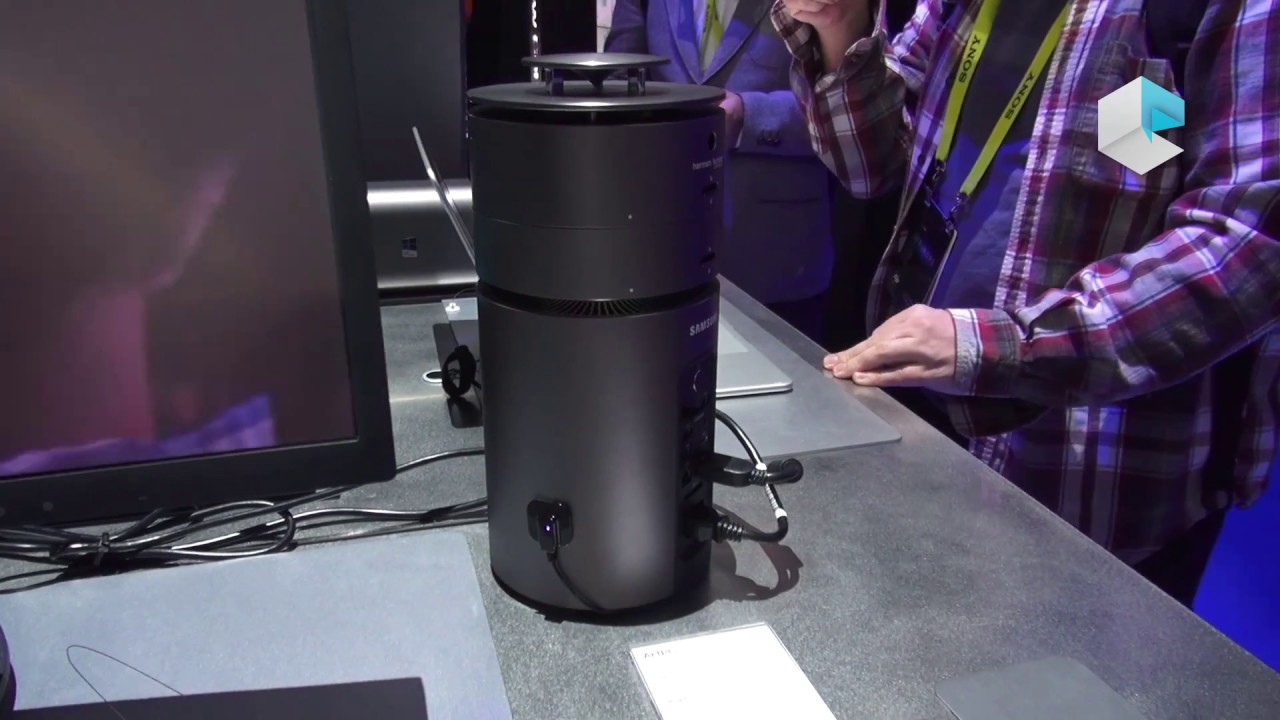
    Step into the future with this Samsung ArtPC PULSE computer tower. Its Intel i7-6700 processor and 16GB of RAM deliver top performance, and its 256GB solid-state drive combines with a 1TB hard drive to provide ample room for all your programs and multimedia files. The 360-degree speaker of this Samsung ArtPC PULSE computer tower provides powerful sound.


    The Final Thought

    They may not be the best, but they are not far off. Living in the Samsung world of tech is being completely integrated, they have the option and gear before you know you need it. Samsung is where innovation meets perfection meets total integrated solutions.

  • Airmega 400S  Clean Smart Air

    Airmega 400S Clean Smart Air

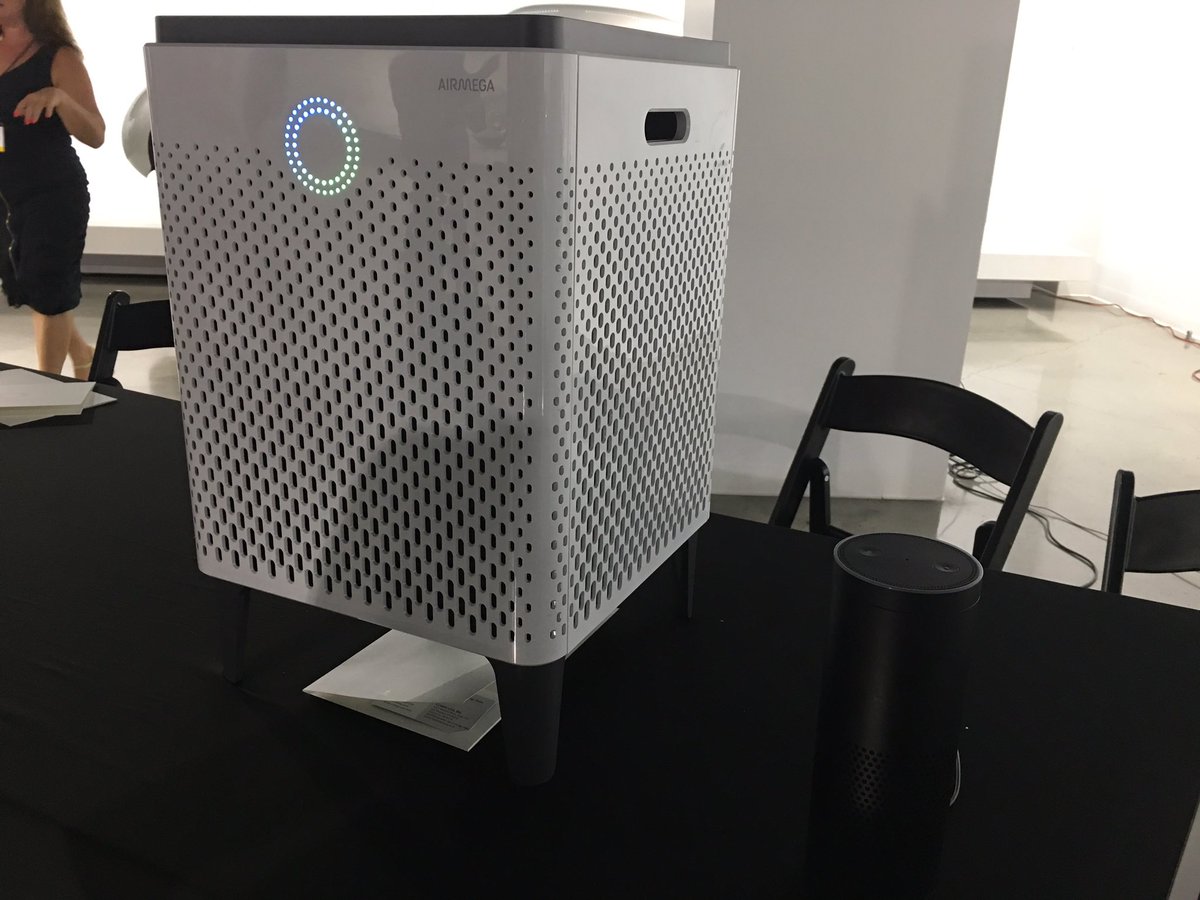
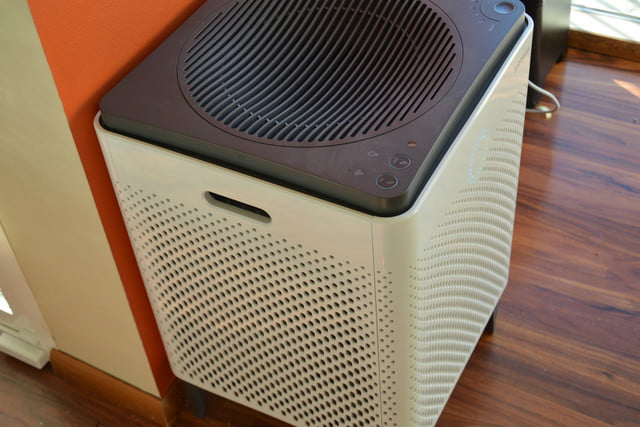
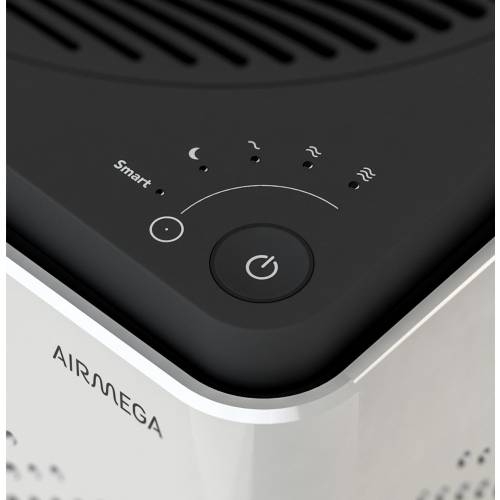
    The Airmega 400S  is a luxury air filter, a sci-fi lounge monolith with touch-sensitive controls and a ring of colored light that turns with the air quality. High-end in fit, finish and capacity, it’s also very online, with Internet-of-Things features and a stat-tracking app. Its $600 only, yay.

    The Great

    • Excellent room coverage – perfect choice for larger spaces
    • Great coverage also for asthma and allergy sufferers, who need extra air changes per hour
    • HEPA filter technology for maximum particle removal
    • Carbon filter removes 99% of harmful VOCs from the indoor air
    • Real-Time Pollution Sensor – LED colored ring makes it very easy to identify air quality offenders at a quick glance

    The Not

    • Issues reported with WiFi connectivity – sometimes difficult to pair up
    • No castors, so there may be mobility issues for some people
    • Limited choice of colors and no customization options


    The Conclusion

    The Airmega 400S can keep the air clean in up to a whopping 1,560 square feet of living space, so it’s well worth its considerable price tag. The device has a built-in real-time air-quality sensor, as well as a sophisticated dual-filter setup that allows it to keep both particles and odors at bay. You can control the air purifier via a sleek smartphone app or Amazon Alexa. The Airmega 400S is available in graphite or white.


    First Off How Well Will It Work

    Setting up this side-table-sized (23 x 15 x 15 inches) air purifier takes a total of 10 minutes and mostly involves peeling off a bunch of protective plastic and removing the wrapping from the unit’s two Max2 filters. Because this model also has wireless capabilities, it has a dedicated app that lets you set up air purifying schedules, check the air quality outside, and control the Airmega while you’re away from home. As with other connected smart home devices, this part of the setup process involves downloading following a handful of on-screen instructions in the app to connect the 400S to your Wi-Fi network.

    While we didn’t have a fancy lab or equipment that could accurately measure particulate or VOC levels, I did subject the 400S to as many real world tests as we could dream up. We cooked, we lit candles and matches, we even emptied the contents of dirt and dust-filled Roomba near the air purifier. As the doting owners of a 110-pound, perpetually shedding golden retriever named Benjamin-Mattdamon Affleck, I also subjected the Airmega to the dander wonderland that is our home.

    Results, terrific. It would pass any EPA clean air test if the EPA was still around. It’s dead quiet, too, especially at the lowest settings. There is not the slightest buzz of vibration. Washing and replacing filters is very easy. It messages you when they need a bath.  It’s about the size of a desktop mini-fridge, significantly larger than most consumer air filters, with three HEPA filters and the promise of full-house coverage. 1,560 square feet, they claim, which would make it competitive on a price-per-square-foot basis with less expensive models.

    What Makes This So Smart

    The Airmega 400s features 3 such ‘smart’ modes – auto, eco and sleep.  Let’s take a look at each.

    Smart Auto Mode

    If you decide to engage the auto mode feature the unit uses a sensor to detect how much pollutants are in your indoor air and then adjusts the fan speed accordingly.There are 4 fan speed settings on the Airmega 400s – sleep, low, medium and high. As a rule of thumb, the more pollutants are detected, the faster the fan will operate.When the sensor recognises that the indoor air quality has improved it will switch back down to a lower fan speed.


    Smart Eco Mode

    If the unit is in smart mode and the sensor has detected good air quality for a period of 10 minutes, the machine will automatically shut down the fan.This helps to save on your energy consumption, and in turn saves you money on your electricity bills, as it means you’re not running the air purifier when it’s not necessary.The fans will automatically start back up again should the sensor detect any pollution later.


    Smart Sleep Mode

    In sleep mode the unit will reduce its noise and power consumption if the sensor detects the room has been dark and the air clean for a period of 3 minutes. Like the eco mode, this feature is good both for the environment and your bank balance! It’s also handy if you plan to use the air purifier in your bedroom at night as it helps to minimise disturbance and let’s you get a better nights sleep.


    In recognition of the fact that so many of us like to use our phones for day-to-day tasks, Coway have developed a smartphone app (IOS and Android) which lets owners of the Airmega 400s control many aspects of their air purifier remotely.For example, you can set the fan speed and sleep timer, see the status of the filters, and access the different smart mode controls.

    You can also receive indoor air quality reports and real-time updates on outdoor air quality and pollution levels for your particular hometown straight to your phone . This lets you track the health of the air inside a room over a period of a few days or weeks, and is useful for identifying trends and the times when the air quality is at its best and worst. The Airmega 400s air purifier can also be paired with Amazon Alexa

    The Final Thought

    I’m extremely dubious about the utility and wisdom of an IoT air filter. But if you know you need an air filter, and you need one that’s attractive, quiet and very high-capacity, where a $300 Honeywell (or HEPA filters duct-taped to a box fan) would just be unacceptably loud, trashy or ugly, then I have and air purifier Id like to show you. I will say that in testing this for a review it is one of the few products I reviewed myself into buying. What? I like clean air and smart toys.


  • Sony Glass Speaker an OK Sounding Work of Art

    Sony Glass Speaker an OK Sounding Work of Art

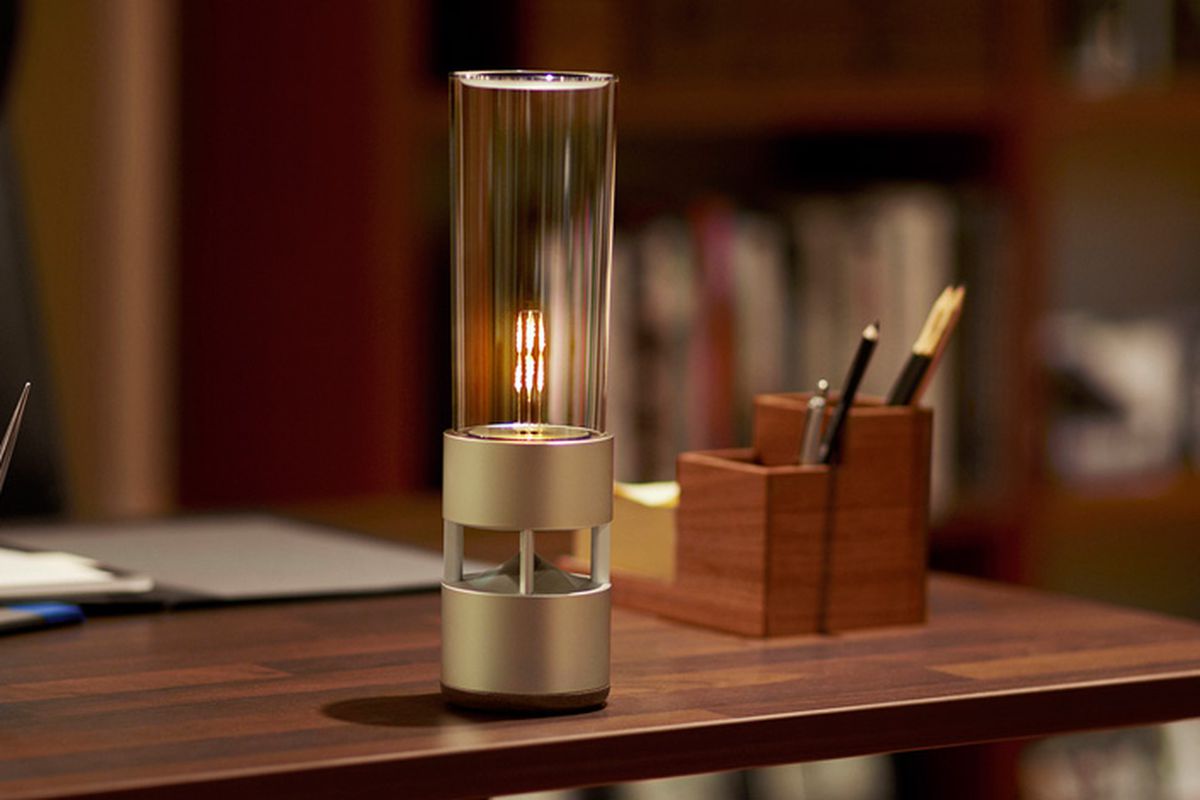
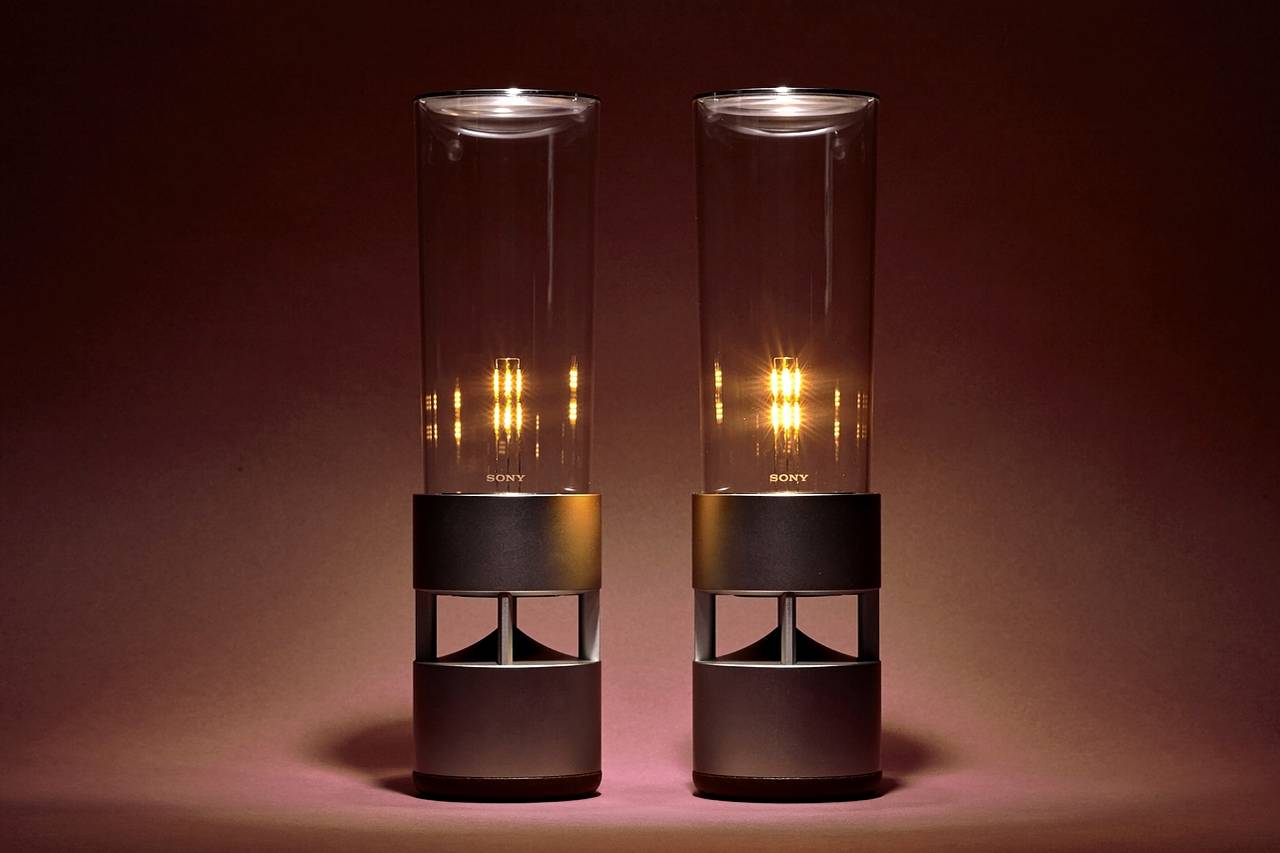
    The Sony LSPX-S1 Glass Sound Speaker brings light and incredible sound to any room with its soft LED filament combined with a cylinder-shaped design for the appearance of a lantern. This wireless audio device features an organic glass-tube tweeter surrounding the LED that also functions as the tweeter and a built-in 2-in woofer for clear, balanced music. Listen wirelessly over Bluetooth, plug in or use the built-in battery. The LSPX-1 is crafted with a solid aluminum body that delivers high-fidelity audio in a stylish design. The base of the Bluetooth speaker features a passive bass radiator built-in for big, powerful sound. Each of these features combine to craft a fully detailed 360-degree soundstage that sounds as beautiful as it looks. You can enjoy up to four hours of audio playback with the built-in rechargeable battery, allowing you to take the mobile speaker on the go.

    The Great

    • Beautiful, Almost an Art Piece
    • Portable
    • Bright,
    • Clear highs and rich bass delivered from seemingly hidden drivers
    • Dimmable LED light delivers warm, Edison bulb-like ambiance.

    The Not

    • Expensive
    • Not a ton of bass
    • Battery life is so-so.

    The Conclusion

    The Sony Glass Sound Speaker has a very cool, transparent design and is equipped with an integrated LED light that’s dimmable from your phone. It delivers clean, crisp sound at moderate volumes and has a built-in battery for portable use (4 hours of batter life).  If you can afford it, Sony’s Glass Sound speaker is beautifully designed, sounds good and complements minimalist, modern decors


    As a half wireless Bluetooth speaker, half lantern with a dimmable LED bulb that mimics a flame, it’s got double mood setting potential. It an also be moved around freely because it’s got an integrated rechargeable battery that gives you around four hours of music playback, depending on the volume level. You can also just leave it plugged in if there’s an outlet nearby.

    It’s one of those products you really want as soon as you see it, but its $800 price tag is an instant buzzkill unless you happen to be a lottery winner or a Rockefeller.


    OK, so this speaker’s a splurge, but it’s worth it! This gorgeous glass speaker by Sony will not only deliver 360-degree sound with exceptional quality, but it also improves the ambiance in your home via an LED filament light. The latter delivers a soft glow that resembles a candle or a lantern.
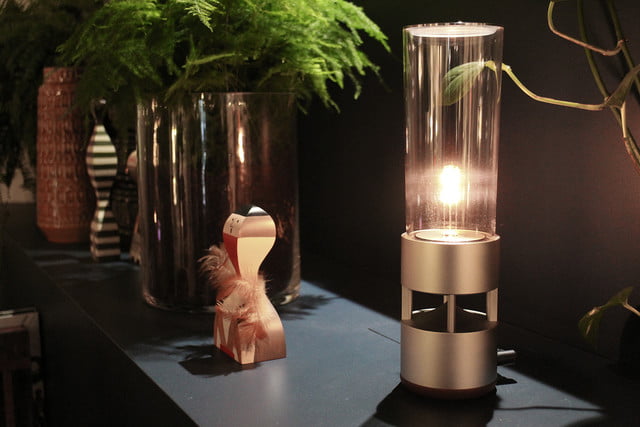
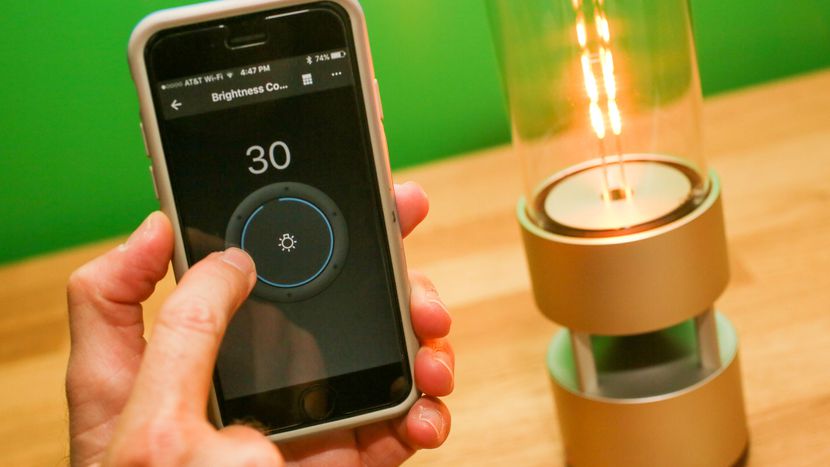
    You can control the speaker and its light via a smartphone app (available for iOS and Android), as well as pair a duo of LSPX-S1 units for an even more fulfilling sonic experience. Overall, it’s a pricey proposition that’s a true conversation piece.


    The Design

    Ok, so its beautiful. Its like a magnificent piece of art you would want to be displayed and have stuffy conversations about. The unique design—a tall, clear tower enclosing an adjustable LED light—even earned the item inclusion in the Museum of Modern Art’s online store.

    According to the site, the speaker is one of MoMA’s best sellers. The ad copy gushes that Sony has managed to “create a new kind of living experience,” one that looks like a “sleek, softly glowing lantern but is also a powerful speaker with breathtaking sound quality.”


    The Sound

    The bass has mediocre impact and the lower bass is lacking in power. The midrange is thin and somewhat hazy. And, working my way higher in tone, the lower and mid-treble are subdued while the upper treble is overly prominent with a sizzly sound. The overall sound quality is somewhat harsh at higher volumes.

    With some speaker models, I find that adding a second unit really improves the overall sound, but that wasn’t the case when I  tested a pair of the Sony Glass Sound Speakers. Our testers found that the sound remained thin. Though the bass was slightly more robust, everything else was somewhat hazy and congested.


    The Final Thought

    While obviously not hi-fi, the sound quality was easily equal to that of most of the small portable Bluetooth speakers we’ve heard, and the Sony LSPX-S1 has two other advantages, one of which is that it looks lovely, and the other being that it doubles as a table lamp. Seriously, what more could you want for $800.

  • R-9 Smartglasses and I Can See The Future Clearly Now

    R-9 Smartglasses and I Can See The Future Clearly Now

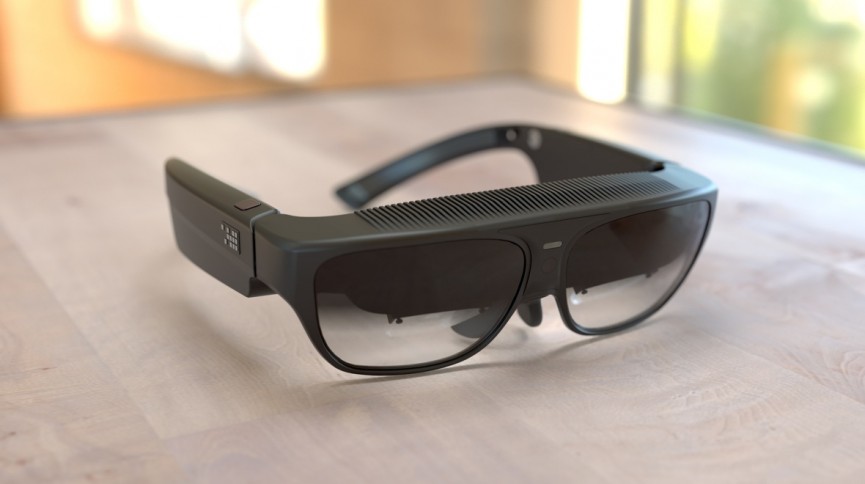
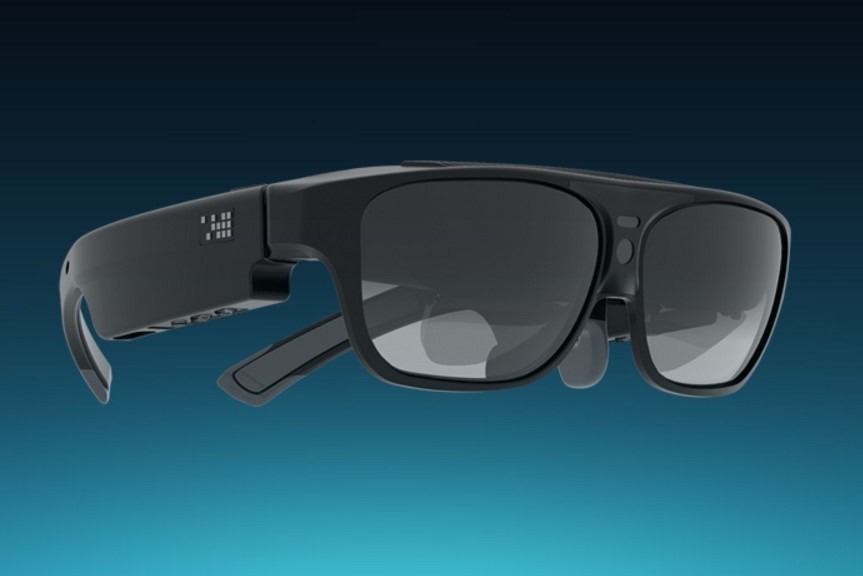
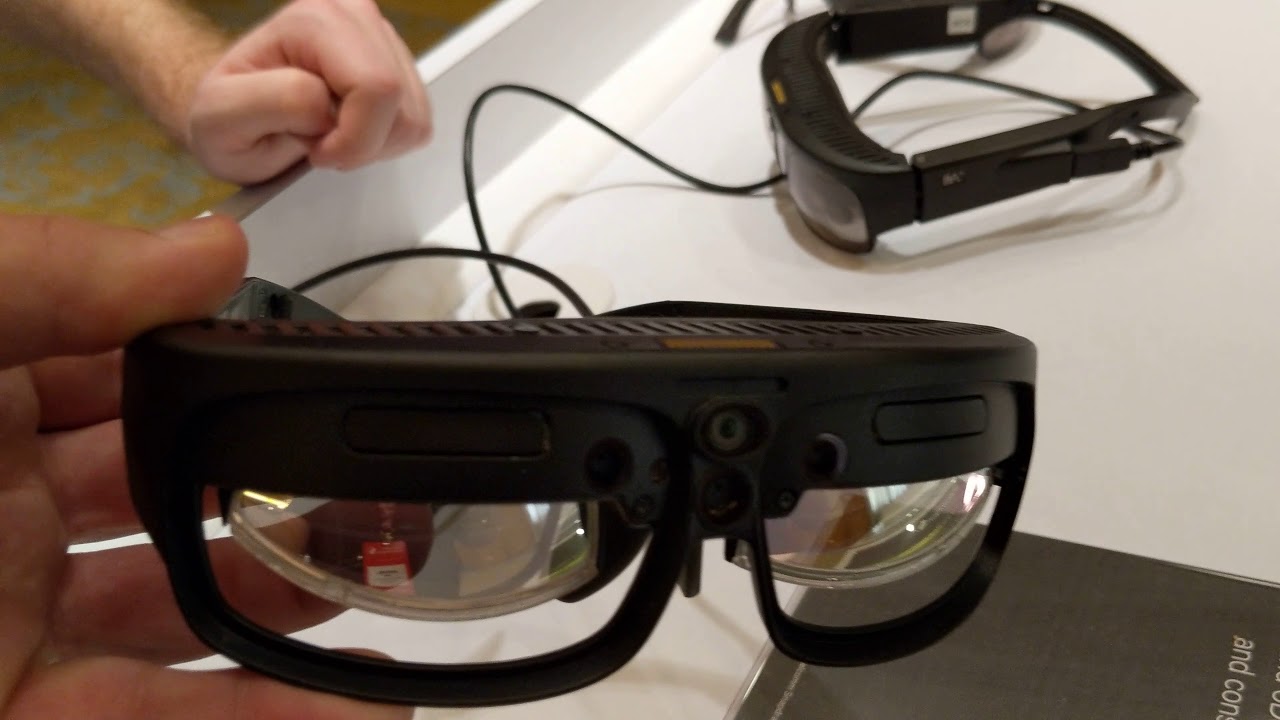
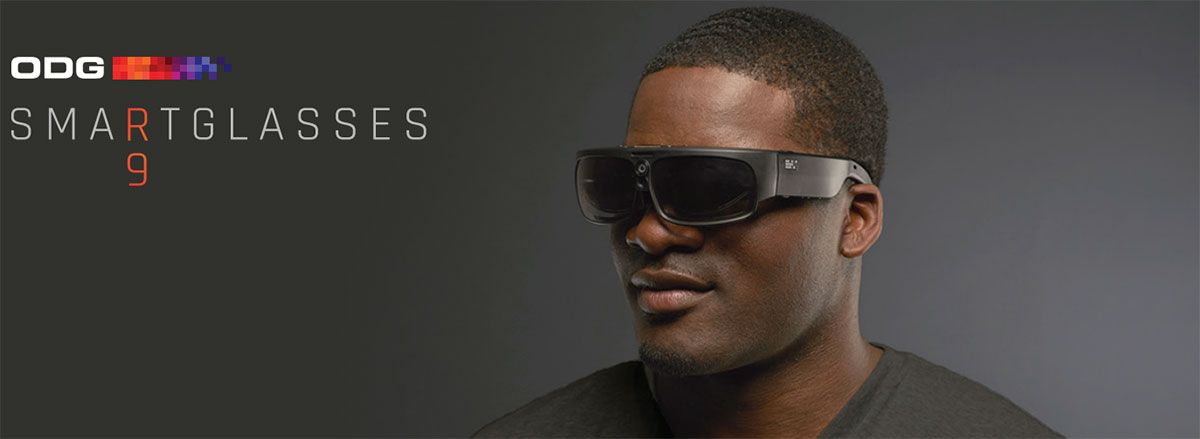
    R-9 smartglasses are ODG’s visual powerhouse and offer an extra-wide-field-of-view for enterprise design and visualization, gaming and entertainment, and extended reality development. Leverages Qualcomm’s Snapdragon 835 chipset, 6DoF and SLAM technologies to create, collaborate and consume content.


    These are the real deal with Dual-stereo depth cameras for advanced mapping and tracking, expansion port for customization, and Qualcomm’s Snapdragon 835 chipset for the ultimate XR experience. THX-certified, Hollywood-standard smartglasses delivering true cinematic quality.Powerful, versatile, and with a 50° field-of-view, R-9 is ideal for light enterprise and prosumer media consumption use. It plays movies with
    cinematic clarity, drops you inside immersive 3D interactive experiences, and reveals new worlds of invention and productivity. R-9 is also a flexible development platform for mobile virtual reality and mixed reality experiences, with module expansion capabilities that make it our most
    customizable device for a wide variety of environments and end user.

    The Looks

    Ive been looking for this type of solution, AR/VR glasses that can have a multiple use as real sunglasses. These units definitely look and feel much closer to real glasses than anything I have seen in the arena currently. They weigh far less than the HoloLens, and at a distance past 10 feet, could easily pass as a real pair of sunglasses.

    Unlike the HoloLens, the form factor of both the R-8 and R-9 are too small to wear with a pair of glasses. So one important feature that I had missed previously is their ability to have prescription lenses placed in them—with a simple snap. The ODG team had a selection of lenses at GDC for just that purpose waiting on the table for the glasses wearers in the room, thankfully.

    The Feels

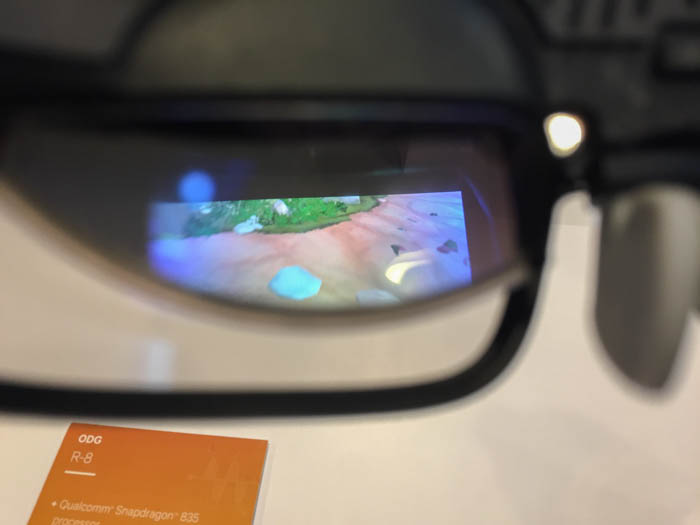
    The demos that I saw were fully immersive applications, more in line with a VR experience, through a non-occluded headset. This is arguably not an ideal test for smartglasses. The projection quality itself was good, though it was a little darker than expected. Also, it seemed a bit more transparent that I would have liked.

    In all fairness, both the transparency and image brightness are factors that could, and most likely are, attributed to being under florescent lighting. My personal frame of reference, and in essence my base of expectations, is my development environment which uses far less harsh lighting.


    What Do I Do With Them

    The R-8, aimed more squarely at consumer early adopters, trims down the specs a bit. Its field of view is a more modest 40 degrees, its display has 720p resolution, and there’s no port for expansion modules. But it’s also lighter — 4.5 ounces compared to the R-9’s 6.5 ounces — and cheaper, at under $1,000. It’s also got two 1080p cameras on the front that can capture stereo video. ODG expects to ship it in the second half of 2017.

    So what exactly are you supposed to do with these glasses? ODG admits that they’re not “designed to be worn all the time,” but are meant to be carried around for watching movies on a digital big screen, playing games, or using apps. It’s working with 21st Century Fox’s Innovation Lab on experiences that include 3D movies and an interactive augmented reality demo based on the Alien franchise. Combined with the Migu partnership, this provides at least the start of a catalogue, although we’re still waiting to see how well the glasses themselves hold up.


    The Final Thought

    While they were announced at the CES 2017 a year later and we still cant buy or own pair. The idea is novel and innovative but I feel like this will just be a high priced stepping stone to the real solution.


  • New VIZIO Home Theater Sound System Lineup Includes Dolby Atmos Support and Other Features

    New VIZIO Home Theater Sound System Lineup Includes Dolby Atmos Support and Other Features

    VIZIO revealed their new 2018 Home Theater Sound Systems with Dolby Atmos support. These new sound bars also feature other smart home features powered by Google.

    Sound System Configurations

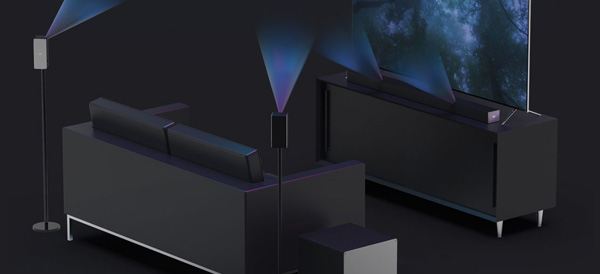
    The new sound bars come in three configurations: a 46” 5.1.4 sound bar, a 46” 3.1.2 sound bar and a 36” 5.1.2 sound bar. They have also added a new 36” 2.1 sound bar with built-in dual subwoofers.

    Dolby Atmos 5.1.4

    This immersive cinema sound experience features a total of 10-channels. This is a 5-channel sound bar with up-firing speakers to bounce sound off the ceiling. It also features two rear surround speakers with 2 up-firing speakers and a wireless subwoofer.

    Dolby Atmos 3.1.2

    Another great cinema experience with a total of 6-channels. The sound bar features 3-channels with 2 up-firing speakers. Like the 5.1.4, the system features two rear surround speakers and a wireless subwoofer. However, the rear surround speakers in this set to not include up-firing speakers.

    Dolby Atmos 5.1.2

    Splitting the difference between the previous two offerings is the 5.1.2 system. It features the same sound bat as the 5.1.4, with 5-channels and 2 up-firing speakers. The rear surround speakers are the same as the 3.1.2 set with no up-firing speakers. And of course, the wireless subwoofer is included.

    Smart Features

    Chromecast and Bluetooth support means that you can stream your favorite artists and apps directly to the sound bar. Just connect your phone or tablet and you have an instant audio entertainment center! You can also stream over Wi-Fi.

    Another new feature is the ability for your VIZIO sound bar to work with Google Assistant. This means that you can use your voice to control the sound bar.

    New 2.1 Sound Bar

    For those needing something more compact, the 2.1 sound bar has you covered! You’ll get to experience a sound bar with 2 built-in subwoofers to ensure that your cinematic experience gets that deep bass it deserves.

  • Smartphone Spotlight: Huawei P20 Pro

    Smartphone Spotlight: Huawei P20 Pro

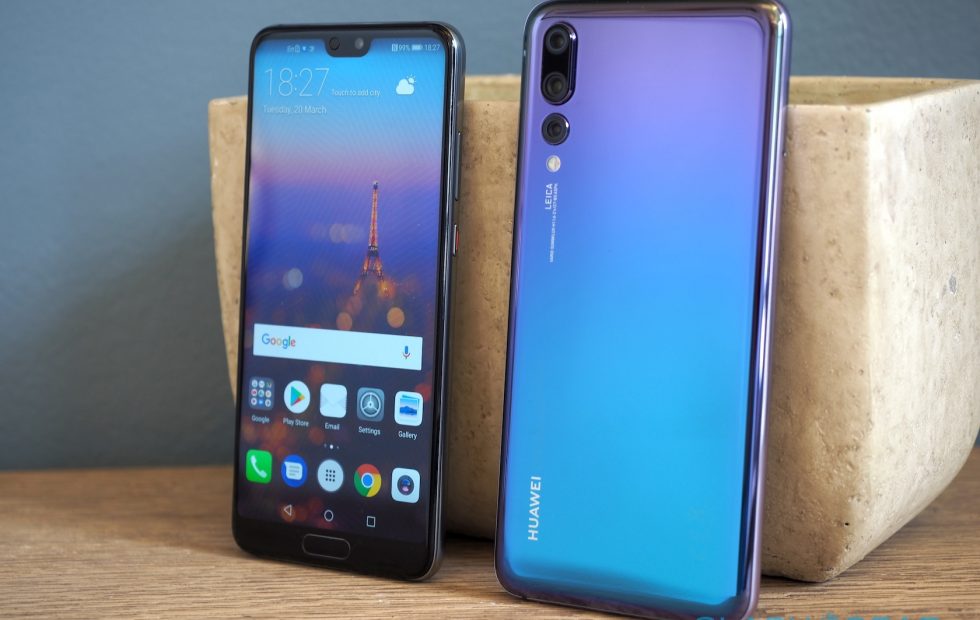
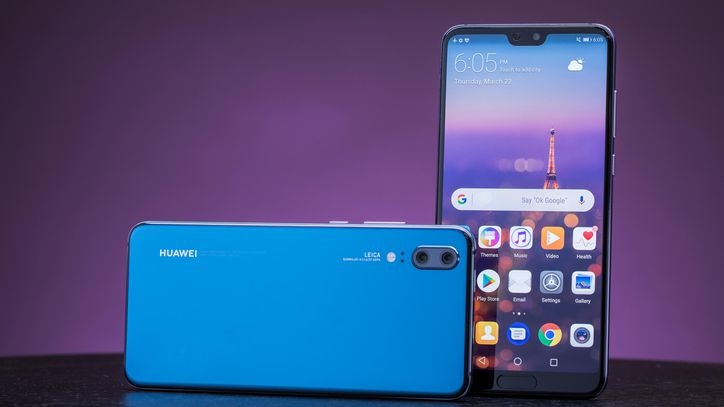
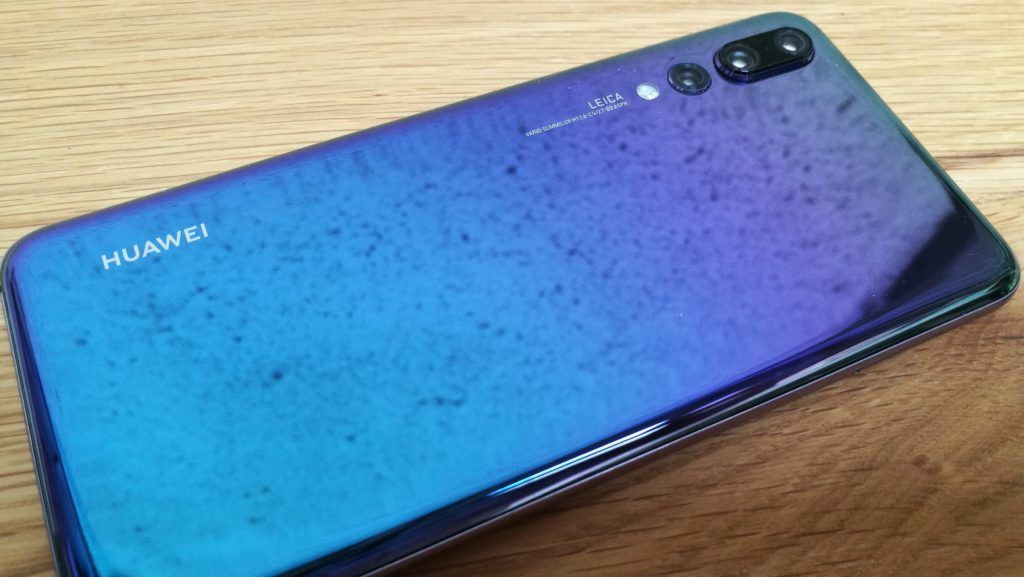
    HUAWEI’s P series has always been a pioneer of smartphone photography. Now the HUAWEI P20 Pro is once again leading the way with the revolutionary Leica Triple Camera, where aesthetic vision meets an advanced camera system that shines a light on intelligent photography. Inspired by the radiant energy of light itself, the HUAWEI P20 Pro is available in a new gradient color finish. The effect is a luminescent color progression that is unique amongst smartphones. Designed to be exceptional in every way.


    The Great

    • Fantasic camera
    • Big battery with lots of stamina
    • Optional (ish) notch
    • Fast face unlock

    The Not

    • No wireless charging
    • No headphone jack
    • Minor fizz to the OLED screen


    The Conclusion

    40MP, the world’s first triple camera, 5X Hybrid Zoom, artificial intelligence in all the ways, and the most unique color on any smartphone ever. These are just some of the features Huawei is hoping will make you check out its new flagship, the Huawei P20 Pro.


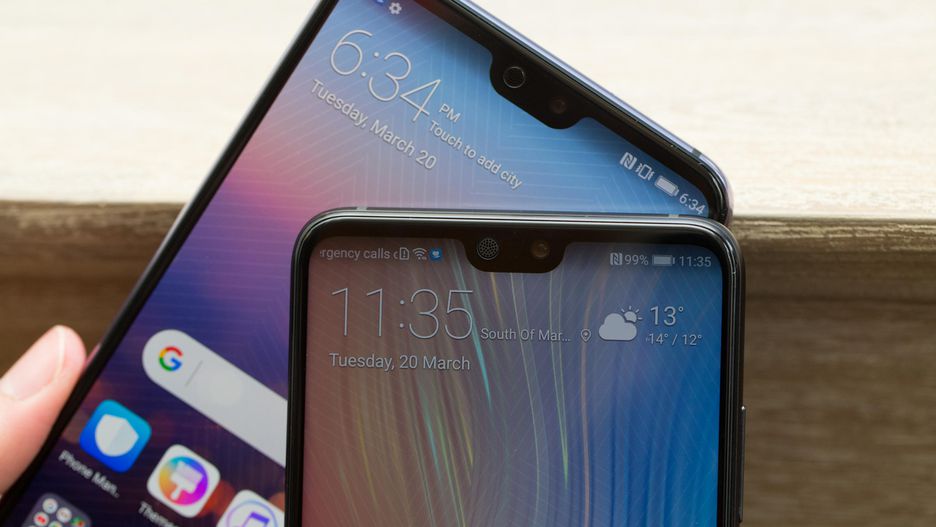
    The Huawei P20 Pro is a phone that stands out with its large, spacious display and its triple camera at the back. Its huge screen occupies most of its front, with a notch at the top housing the earpiece and front-facing camera. The triple camera arrangement is comprised of a massive, 40MP camera for regular shots, a 3X zoom telephoto cam, and a monochrome sensor enabling bokeh effects. On the inside is a powerful Kirin 970 chip, along with plenty of memory and a huge battery


    The Design

    The Huawei P20 Pro borrows several design cues from the iPhone X, with a vertical camera placement on the back and notch atop the screen. It stands out with three cameras and the unique twilight color, which awakens everyone’s inner wish for a real-life unicorn.

    Beneath the screen is Huawei’s fingerprint sensor, which is flat, wide, and allows you to unlock your phone while it’s laying face up on a table. I’m normally a bigger fan of Huawei’s rear-mounted fingerprint sensors thanks to their added support for summoning the notification shade, but the P20 Pro’s scanner is still fast and reliable and supports gesture controls for navigation.

    The power and volume keys on the right offer nice feedback and the power button has a nice accent color. The bottom houses a speaker, microphone, and USB Type-C port. There’s no headphone jack, but an adapter comes in the box. I’m not an audiophile so I usually pick convenience over function, so I’m fine with Bluetooth audio. It’s the easiest solution and the Huawei P20 Pro works well enough in this regard.


    The Camera


    If you’re interested in the Huawei P20 Pro, there’s a good chance it’s because of the camera array. There are three cameras on the back, one 40MP main sensor, a 20MP black and white one and a 3x zoom 8MP camera.

    You can shoot at 3x without digital zoom, and even get good results at 5x. The real star here is low light performance, though. Standard night shooting just about matches the best, but a dedicated night mode lets you take low light shots with dynamic range to rival an APS-C DSLR.

    The Huawei P20 Pro also has a very high-resolution 24MP front camera for detailed selfies and reliable face unlocking.

    Quick Spec Look

    HUAWEI Kirin 970 CPU, octa-core + micro core i7, 4 x Cortex A73 2.36 GHz + 4 x Cortex A53 1.8 GHz

    Size: 6.1 inches;

    Type: OLED;

    Colour: 16.7 M colours;

    Resolution: FHD 1080 x 2240, 408 PPI

    OS Android™ 8.1

    6 GB RAM + 128 GB ROM

    Rear camera:

    Tri-lens camera:

    40 MP (RGB, f/1.8 aperture) + 20 MP (Monochrome, f/1.6 aperture) + 8 MP (Telephoto, f/2.4 aperture), supports autofocus (laser focus, deep focus, phase focus, contrast focus)

    Note: The photo pixels may vary depending on the shooting mode.

    Front camera:

    Single-lens camera:

    24 MP, f/2.0 aperture, supports fixed focal length


    The Final Thought

    When all is said and done, the new Huawei P20 Pro will quite possibly be the hottest Android phone of 2018. On top of beastly specs and a very sleek design with one color that has a crazy gradient color effect, the P20 Pro has the best camera of any smartphone ever. The triple-lens design is truly unique, and it helps the P20 Pro pull in all sorts of extra data that tremendously improves image quality. There’s only one problem: the Trump administration doesn’t want you to have it. We will have to wait to see how this pending trade war works out before we see it in every teenagers hands in the US. There are 2 stores on eBay taking pre-orders now for the US and it will ship 4/18

  • Three of the Best Budget-Friendly 3D Printers for Beginners

    Three of the Best Budget-Friendly 3D Printers for Beginners

    The market for 3D printers has exploded over the last few years. There are plenty of options now for rookie tinkerers and experts alike. Today, we are going to round up some of the best options for people who want to dip their toes into the world of 3D printing.

    XYZprinting da Vinci Mini – Around $200

    This is the best budget 3D printer on the list. It’s an extremely affordable way to get into 3D printing. It’s also one of the easiest to use thanks to its interface. Don’t worry that quality was sacrificed, the 3D objects that this printer creates are very good considering the price.

    Its compact size also lends itself to beginners, as it is easy to put on your desk without taking up too much space.

    The da Vinci Mini uses fused filament fabrication and has a minimum layer resolution of 100 microns (maximum 400 microns).

    M3D Micro 3D Printer – Around $350

    Another great option for a starter 3D printer, the M3D Micro 3D Printer is a compact cube that can sit easily on your computer desk. It looks nice, runs impressively quiet and generates very decent small models. This is another great first 3D printer choice.

    The M3D uses fused filament fabrication and has a minimum layer resolution of 50 microns (maximum 350 microns).

    LulzBot Mini – Around $300

    If you enjoy tinkering with hardware, then this may be the 3D printer for you. The hardware is open source, so the community of users are able to create various add-ons for the printer. It’s not as stylish as the M3D or da Vinci Mini, but it is reasonably priced and if tinkering is important to you then looks may not matter as much.

    It does run a bit slower than the other models listed here. The LulzBot Mini uses fused deposition modeling and has a minimum layer resolution of 50 microns (maximum 500 microns).

  • LG G7 ThinQ Unveiling

    LG G7 ThinQ Unveiling

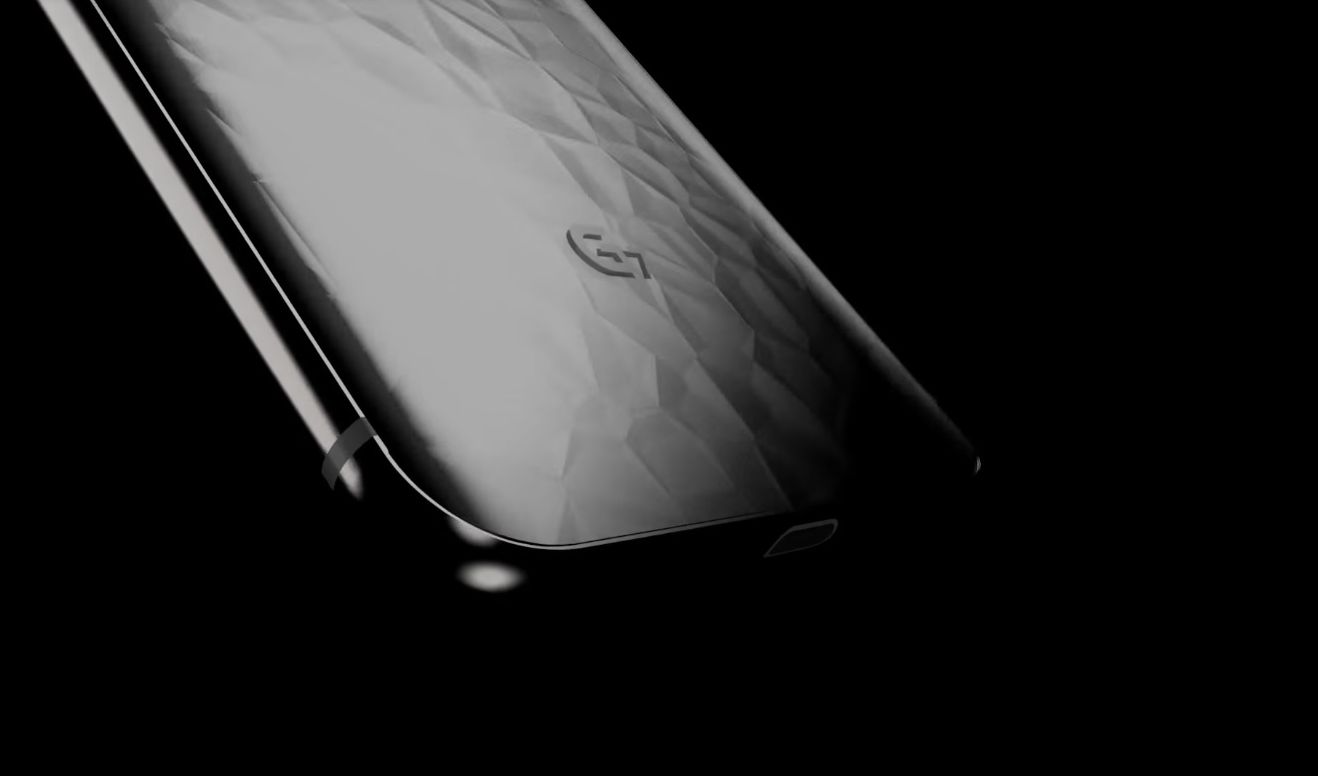
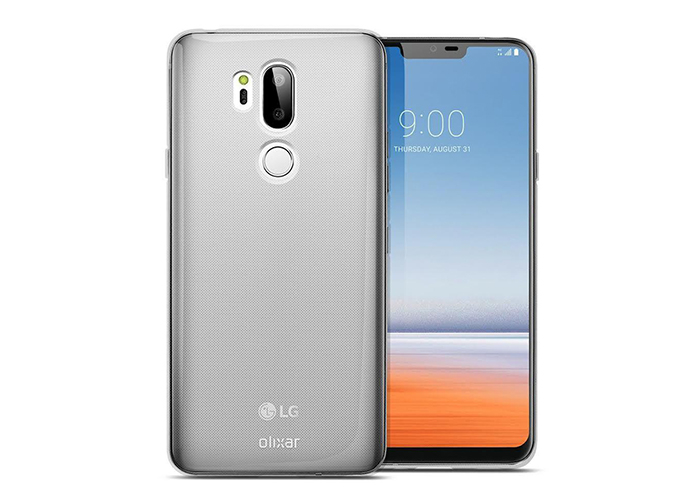
    Lg has set a May 2nd Unboxing event for their newest flagship the G7. There will actually be two launch events for the LG G7 ThinQ: one in New York City on May 2nd, for an international audience, and another in LG’s home turf of Seoul on May 3rd. Like the P20 Pro and the majority of Android flagships this year, the G7 is set to have a notch at the top of the screen


    LG is positioning artificial intelligence (AI) at the core of the G7. This is, in fact, why the company has opted to use the ThinQ moniker. While it might not be the most attractive name, it is one which has been specifically chosen to reflect the intelligence underlying the LG G7. As that intelligence goes well beyond just what the smartphone can do for you — in terms of the provision of contextual information — with the AI experience having been very tightly integrated with other elements on the G7 such as the camera, another major selling point of the upcoming Android flagship.

     

    The Lg Difference

    Lg is trying to pack a lot in to this G7 starting with the camera.  LG focusing on how the G7 can process what it sees and offer recommendations to get the most out of photos captured with the phone. Specifically, AI Cam will offer four “enhanced filter options” which will provide different levels of optimization based on aspects such as color, contrast, and saturation. According to LG, this will result in the G7 being far more capable in extreme low-light conditions compared to the LG G6, as well as the V30 and V30+. In fact, the G7 will be marketed as capable of capturing four times brighter images and videos compared to the G6 and V30 lineups.

    2D and 3D camera stickers will be available, allowing the user to paste over photos with various animated stickers. Following on from the V30’s introduction of Graphy, the G7 will boast an updated version of the service in the form of Graphy 2.0. At present, it is not quite clear how the new version will fundamentally differ from the previous one.
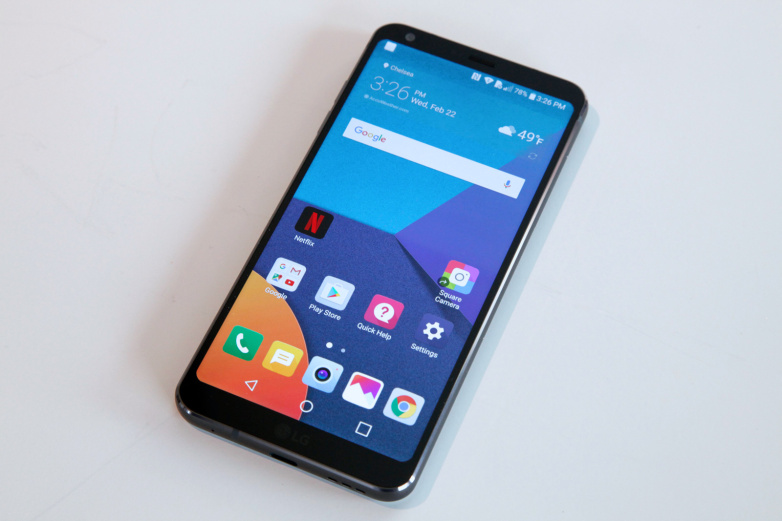
     

    LG has included what it refers to as a “Boombox Speaker” to the G7. On a more technical level, this means the G7 is capable of acting in the same way as a resonance chamber — LG actually claims it is one — and this means the G7 bounces audio signals internally before the signal is outputted to the listener, with the end result being a more booming sound overall.

    The Final Thought

    The LG G7 ThinQ is going to arrive as an all-singing, all-dancing smartphone. AI, cameras, and the two together are going to be some of the primary selling points, although even with the AI elements removed from the equation, the G7 will remain a feature-packed phone. Guess we will just have to wait until May to see.

  • Light L16, The New Camera Idea

    Light L16, The New Camera Idea

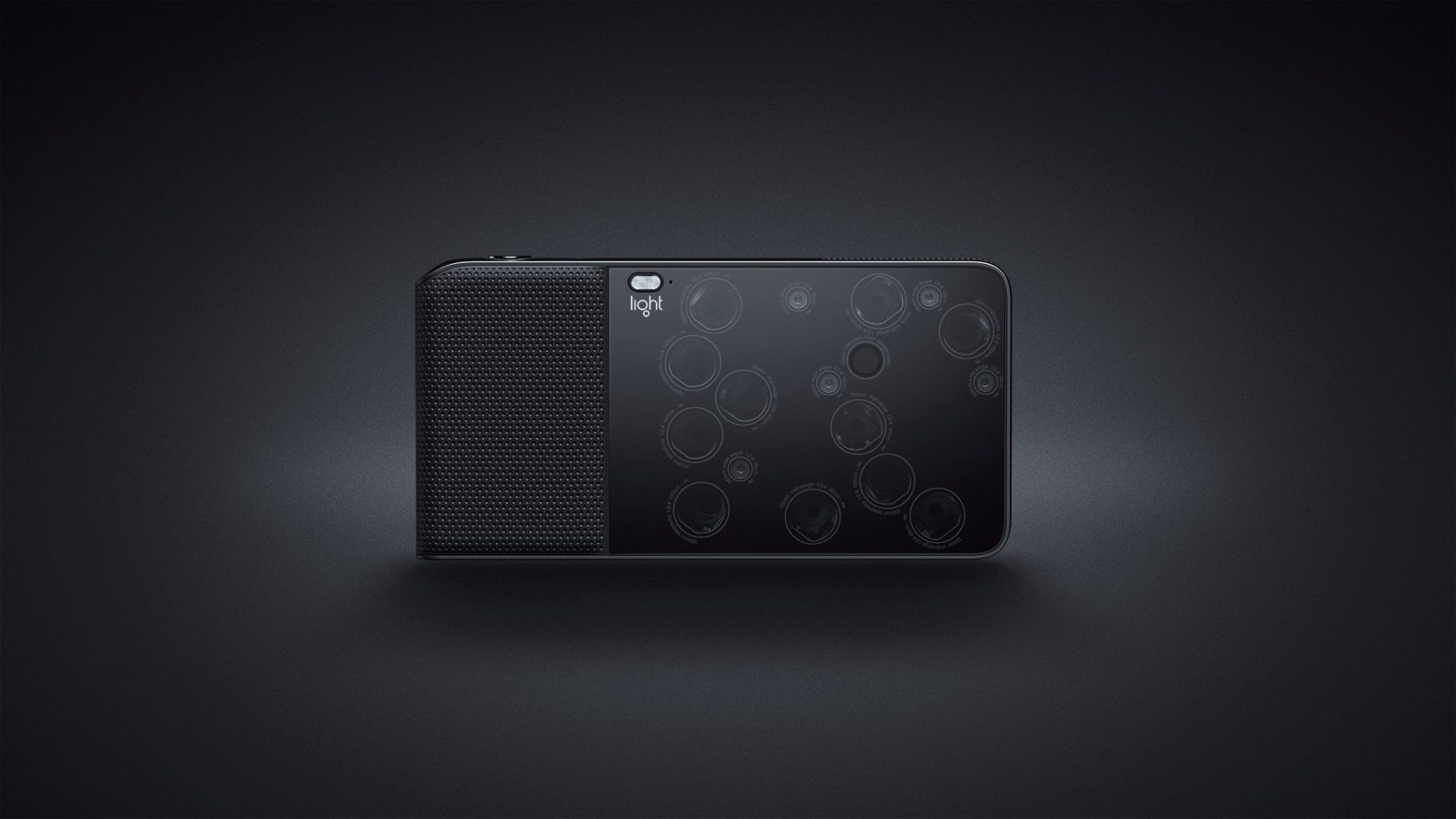
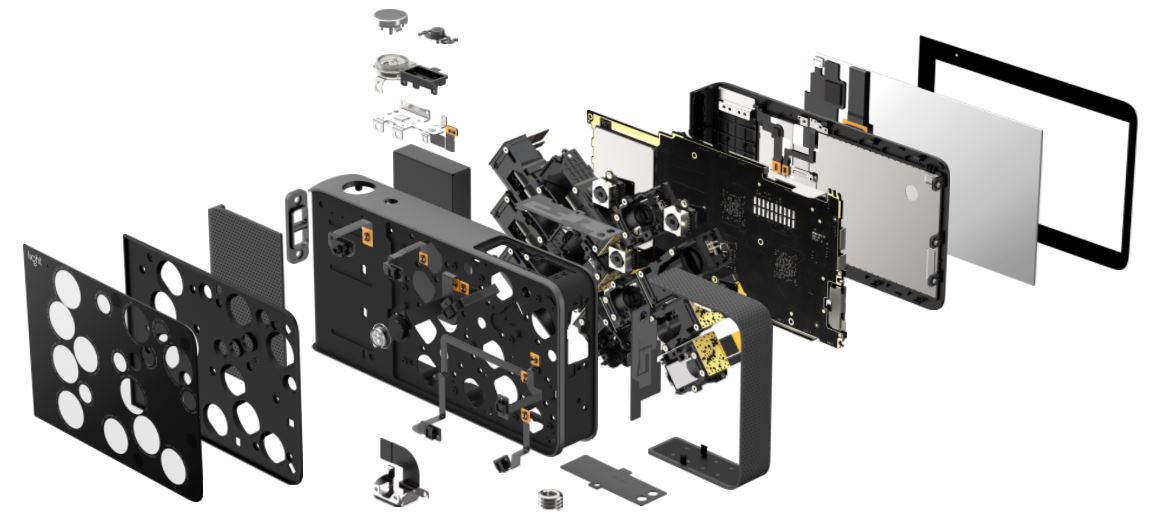
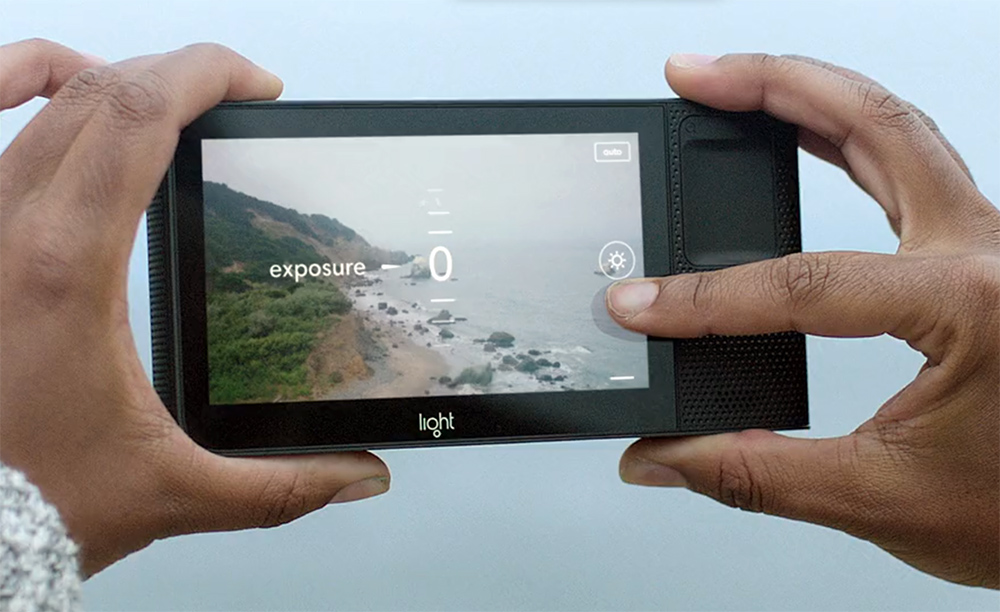
    The L16 combines breakthrough optics design with never-before-seen imaging technology to bring you the camera of the future. With more than 16 camera modules packed into its slim frame, the L16 captures the details of your scene at multiple focal lengths, then uses sophisticated algorithms to combine multiple exposures into a single high-resolution photo. The L16 replaces the bulk and weight of a traditional single-lens camera with many small lenses and sensors that lie at 45-degree angles across a flat plane. When the L16 is fired, light enters 10 or more apertures. Using folded optics, the L16 bounces this light off periscopic mirrors, through horizontal lens barrels and onto individual optical sensors. The result is one exquisite 52MP photo, formed from 10+ slightly different perspectives.

    The Great

    • Computational photography
    • New Approach
    • High Quality Pictures
    • One Camera Solution

    The Not

    • The Price
    • The Look
    • The Underwhelming Pictures


    The  Conclusion

    To get to the basics of it, the L16 makes use of 16 camera modules with varying focal lengths. “Computational photography” is used to fuse the individual photos with depth data that could produce results like a DSLR. Light’s approach towards the functioning is truly game-changing. The incredible zoom range is awe inspiring as it ranges from 28-150mm.

    Tell Me About This Thing

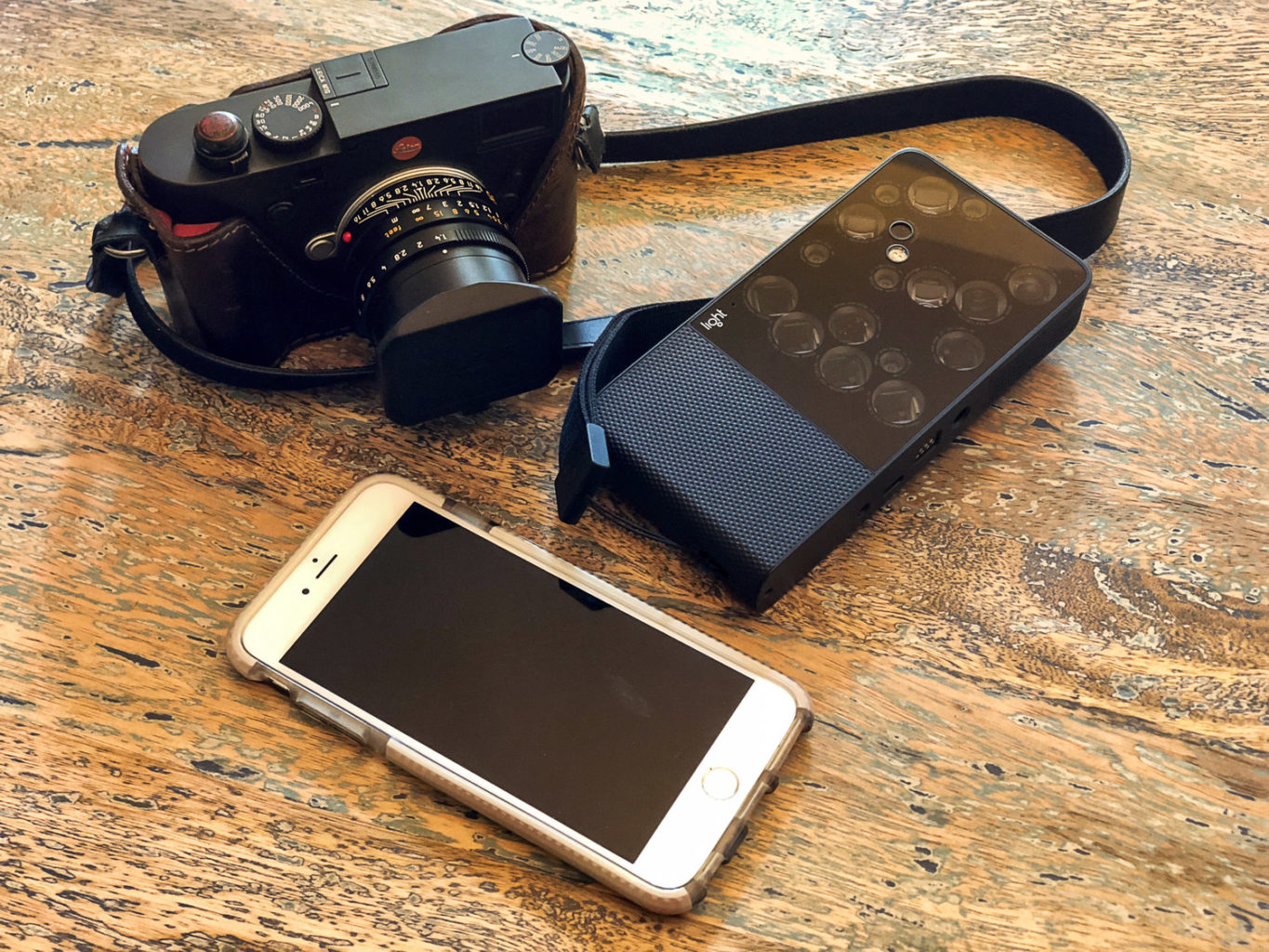
    The Light L16 camera is an engineering marvel. It takes 16 different smartphone-sized imaging modules, each carefully aligned behind a piece of glass, and uses them in concert with each other to create images that are bigger and better-looking than the results the individual cameras are capable of. It does all this in a form factor that’s two or three times thicker than, but not quite as wide as, an iPad mini, something that actually fits in a few pockets and is easy enough to stow in a bag. That’s Light’s selling point for this $2,000 camera: the L16 is ostensibly a full bag of camera gear in one body.


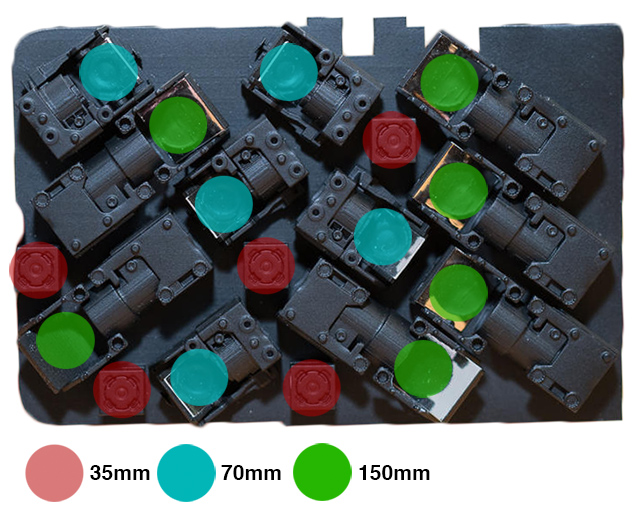
    If you’re having trouble grasping how the L16’s dizzying camera array works, think of it this way: you know how dual-lens phones like the iPhone or Note let you zoom from wide angle to telephoto in the camera app? This is that, stretched to the extreme. The 16-camera modules each have their own image sensor and lens, and they cover different focal lengths. There are five 28mm wide-angle modules, five midrange 70mm, and six 150mm telephoto ones.
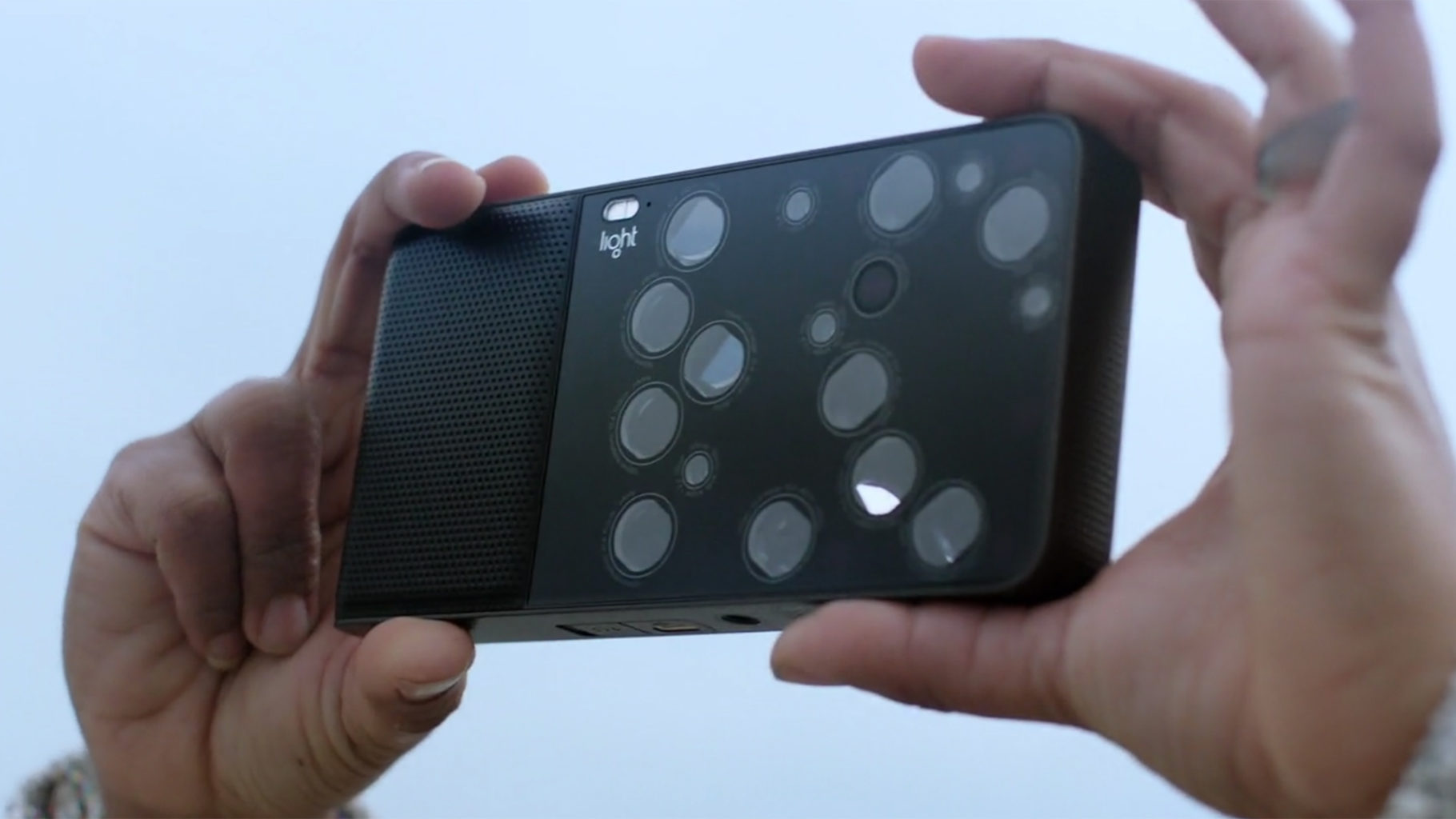
    The big difference between this camera and those phones is that the L16 simulates all the focal lengths in between 28mm, 70mm, and 150mm by combining data from multiple camera modules. So instead of digitally zooming in on the 28mm image to make it look like it was shot at 40mm, it’s replicating that focal length by stitching images together on the fly. This is also why the quality of the L16’s images can be a notch better than that of a single smartphone camera. The L16’s results are slightly greater than the sum of its physical parts, all thanks to some really clever software.

    What Do I think?

    To be honest, I’m not really sure what to think of the Light L16 camera. It’s a bit of a head-scratcher. On paper it’s a very clever idea: a multi-camera device that computationally creates high-quality, high-resolution photos from up to 16 small, low-resolution sensors, and yet is more pocketable than a big DSLR. The L16’s execution of this, however, at least at this point in time, leaves a lot to be desired. The design of the L16 is awkward, the shooting experience and performance are underwhelming, and the image quality is very inconsistent and often quite disappointing.

    This architecture gives Light a real flexibiilty for future products. Want a pocket-sized 400-600mm camera? Use different camera modules. Want a smaller 35-50mm camera? Drop some of the modules from the L16. It’s not quite that simple, but you get the point.

    Quick Spec Look

    • Full model name: Light L16
    • Resolution: 51.10 Megapixels
    • Sensor size: 1/3.2 inch
    • (4.5mm x 3.4mm)
    • Lens: 5.40x zoom
    • (28-150mm eq.)
    • Viewfinder: No / LCD
    • Native ISO: 100 – 3200
    • Extended ISO: 100 – 3200
    • Shutter: 1/8000 – 15 seconds
    • Max Aperture: 2.0
    • Dimensions: 6.5 x 3.3 x 0.9 in.
    • (165 x 85 x 24 mm)
    • Weight: 15.3 oz (435 g)
    • includes batteries
    • MSRP: $1,950
    • Availability: 10/2017
    • Manufacturer: Light

    The Final Thought

    This camera may not be something that the majority of people want or need, as smartphones are “good enough” and pretty close to the capabilities of the L16. I personally enjoy the semi-concerned glances of total strangers, clearly worried that the thing you just yanked from your bag is not a camera but a futuristic Men in Black sort of weapon.