Category: Gadgets

  • The Best VR Headset for Your Budget

    The Best VR Headset for Your Budget

    Last week, Apple announced its plans to launch a wireless headset that includes both VR and AR technology. Unfortunately, you’ll have to wait until at least 2020 to get your hands on one. In the meantime, here are our top 5 VR headsets for a range of budgets and platforms.

    Tethered Versus Mobile Headsets

    VR headsets come in two flavors—tethered and mobile. As you can see below, tethered headsets cost significantly more than mobile headsets, but they also offer a much more advanced VR experience. Both types of headset require additional handheld controllers to interact with the virtual environment.

    Mobile headsets are designed to literally place your phone inside a box that you strap over your eyes. The lenses create separate images, one for each eye, giving you a sense of 3D space. Tethered headsets need to be connected to a separate computer. What you lose in flexibility, you gain in video quality, processing speed, and range of games with tethered tech.

    HTC Vive Pro ($799)

    There’s a reason the Vive series of tethered headsets is the most expensive on the market. The original Vive and the new Pro model have better specs than any of their competitors, but that may not be a big selling point to entry-level consumers, especially since you’ll also need a top-of-the-line PC to pair with the Vive Pro.

    One thing the Vive series does better than anyone else is room tracking. Their Lighthouse technology lets you move around with the headset on—a plus for a more immersive gaming experience—although you will still be connected by a cable to your computer. There are a decent number of titles that will work with the Vive Pro. In addition, HTC offers a subscription service called Viveport that includes giveaways, exclusive bonuses, and the ability to try out different games.

    Oculus Rift ($399)

    If you’re at all interested in VR, then chances are good you’ve already heard of the Oculus Rift. The biggest name in virtual reality also comes with the best, easiest to use controllers and the largest catalogue of games. The recent price drop also makes it more affordable, but like the Vive Pro, you’ll still need a powerful PC.

    The technology, originally funded by a Kickstarter campaign and then acquired by Facebook for around $2 billion, has improved since the earliest model of the Oculus Rift, but some users report issues with the built-in headphones and cite the precise positioning required for the headset to be frustrating. Still, it’s our choice for a mid-range PC headset.

    Sony PlayStation VR ($299)

    What if you don’t have a high-powered gaming PC but still want to dive into virtual reality? The Sony PlayStation VR headset is here for you. A hundred dollars cheaper than the Oculus Rift, the PSVR only requires—you guessed it—a PS4 to work. That’s a much smaller total investment if you’re just getting started.

    Plenty of people found the PSVR’s balance of quality and affordability to be right on the mark. Sony has sold more than 2 million of the headsets, outstripping the competition. It might not be the best possible VR experience, but this headset is a fun and novel way to interact with your PlayStation.

    Samsung Gear VR ($130)

    Let’s leave the realm of tethered headsets behind and check out the Samsung Gear VR. At less than half the price of the Sony PlayStation VR, Samsung’s mobile headset works with a range of Galaxy smartphones. If you’re looking to upgrade soon, Samsung frequently bundles the Gear VR with their newest phones.

    The mobile headset supports 360-degree video as well as a variety of apps and games. It is packaged with a Bluetooth controller to allow you to navigate the virtual world. Given that Oculus helped build the software, it’s no surprise that the Gear VR offers the best mobile virtual reality headset on the market today.

    Google Daydream View ($99)

    When Google announced the “Cardboard” VR headset in 2014, people couldn’t tell if it was a real product or a joke. The newest model of their Daydream View headset is streamlined, surprisingly comfortable, and a bargain at $100.

    The biggest advantage of this headset is that it will work with most smartphones, not just Google’s own Pixel. Keep in mind, however, that your experience will be limited by how well your phone can keep up. The new Daydream View has a full 100-degree field of view (an improvement over the previous model’s 90 degrees) and a simple 2-button controller.

  • LG Teases the Loudest Smartphone Ever

    LG Teases the Loudest Smartphone Ever

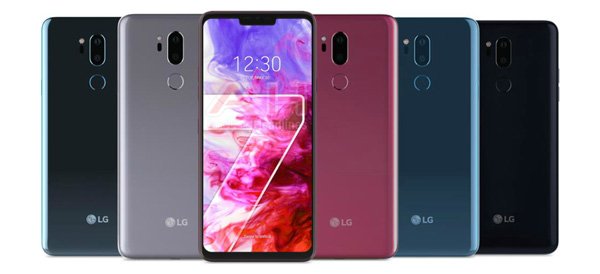
    LG’s new G7 ThinQ features a “Boombox Speaker” that promises to be 10 times louder than the competition. LG hopes their innovative speaker technology, combined with a super-bright display, will draw customers away from Apple and Samsung.

    How Loud Is It?

    The Korean manufacturer claimed that the speaker “increases the base sound level by more than 6dB.” The Boombox Speaker technology appears to use the body of the phone itself as a resonance chamber. This updated approach allows LG to pack more sound output into a small space compared to conventional speakers.

    Unfortunately, that also means when your ringtone goes off at an inconvenient time—such as in the middle of a meeting or at the movie theater—it’ll be 10 times louder than anyone else’s phone.

    All About That Bass

    Bass lovers, rejoice! The new LG phone has twice the amount of bass compared to the average smartphone currently on the market. And if you place the G7 ThinQ on a flat surface made of wood or metal, you’ll get even more bass amplification as the surface essentially becomes a woofer.

    3D Sound Output

    The LG G7 ThinQ will also be the first phone to feature DTS:X support for headphone users, allowing you to enjoy 3D surround sound effects on par with a movie theater equipped with 7.1-channel speakers. Combined with the Hi-Fi Quad DAC (digital-to-analogue converter) to reduce distortion to imperceptible levels, this phone should be an audiophile’s dream.

    LG will launch its latest phone on May 2 in the US. We’ll find out then if the Boombox Speaker is all it’s cracked up to be.

  • Smart Paper May Soon Be Coming to a Store Near You

    Smart Paper May Soon Be Coming to a Store Near You

    Science fiction stories promised us a lot of things that have failed to materialize—flying cars, space vacations, and hoverboards that don’t spontaneously burst into flames. But researchers at Carnegie Mellon University may have found a way to make cheap, mass-produced “smart” paper a reality.

    From Analog to Digital

    There have been a few attempts already at translating printed or written materials to the digital world. Smart notebooks that can capture your pen strokes and apps that can save your doodles and handwritten notes are already available, but the Future Interfaces research team at Carnegie Mellon recently took things one step further. Their touch-sensitive paper can track pressure from a fingertip, pen or stylus, making it possible to easily digitize handwriting, drawings, and more.

    Just Like Real Paper, Only better

    “For paper to still be paper, our method had to be low cost,” the team spokesperson announced in a video released earlier this week.

    The research team wanted to use real, everyday paper as the basis for their product. Through trial and error, they crossed several methods and materials off their list, but finally they found two ways to make the smart paper function. Both use a carbon-based coating—one in the form of a pre-fabricated sheet that can be adhered to any surface, and the other a paint or spray that can be applied to rolls of paper during production.

    This makes it possible to create the paper in bulk—something the team wanted to ensure in order to make the product financially viable. With the current method, each sheet would cost around $.30, but the team hopes to find ways to lower the price.

    Limitless Applications

    Right now, individual sheets of paper with the special coating on the back can be attached to a sensor that converts pressure to real-time digital input. They hope that the technology can be used to create smart notebooks as well. Some other possibilities include interactive worksheets for students, board games, smart Post-It notes, and even interactive newspapers that allow you to share articles on social media.

    While it’s not quite ready for consumers, the researchers are confident that this is the first step toward making cheap, disposable smart paper a reality, stating, “We believe this illuminates one possible approach for achieving low-cost, interactive, paper-based experiences in the future.”

  • Tech Throwback: Motorola Bravo Pager

    Tech Throwback: Motorola Bravo Pager

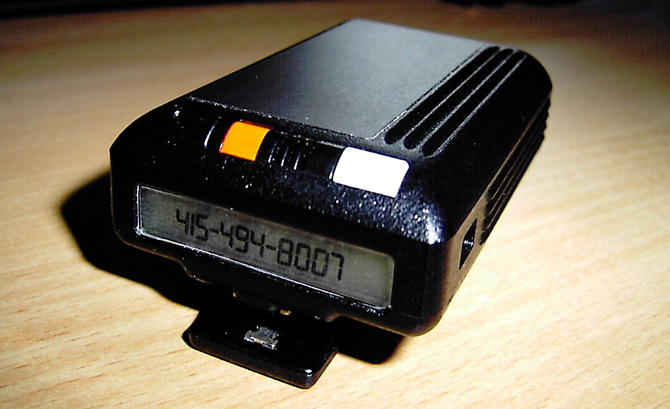
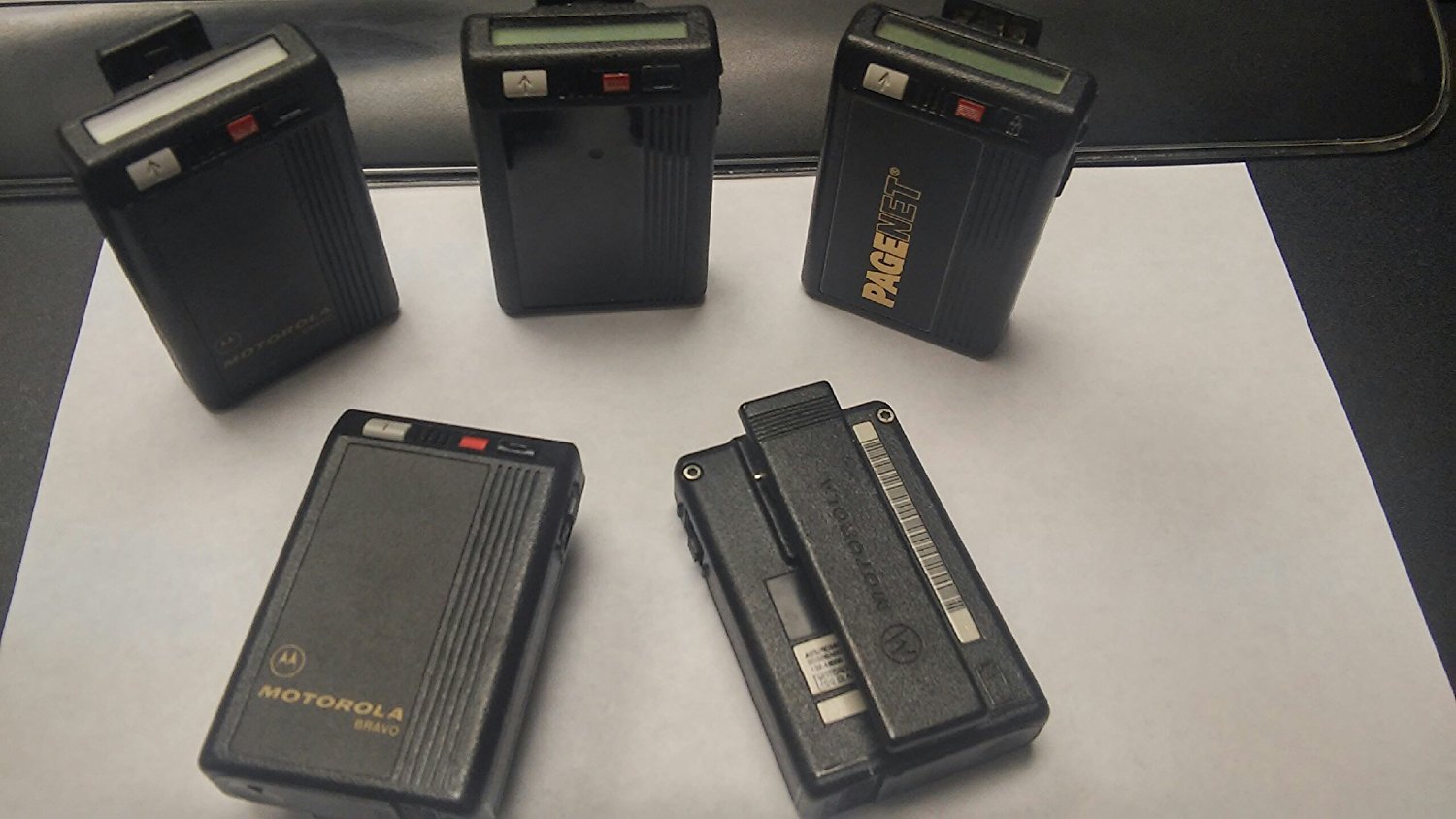
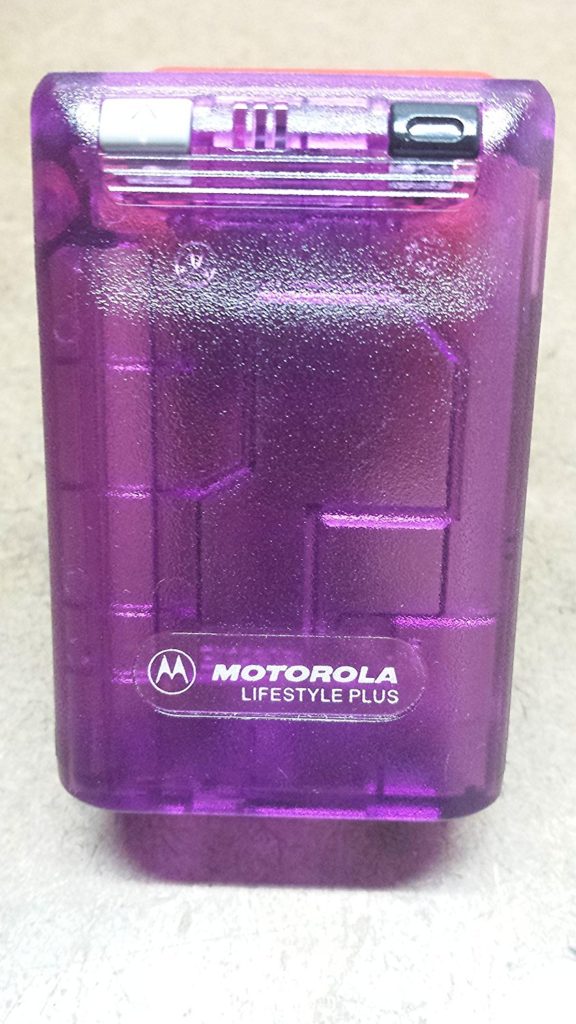
    I like to take a look at where I’ve been to evaluate where Im going. Technology is cyclical after all… wait no its not. That said I still like all the feels that come rushing back like a flood of nostalgia every time I get my hand on the tech I grew up with. Im going to go back periodically and take a looking at the stuff that used to blow our hair back and get our minds rolling. Some of these device blew up and changed the world, some where ahead of their time and some just fell flat and became colossal failures. Today I’ve got my hands on the old Motorola Bravo Pager, beep beep


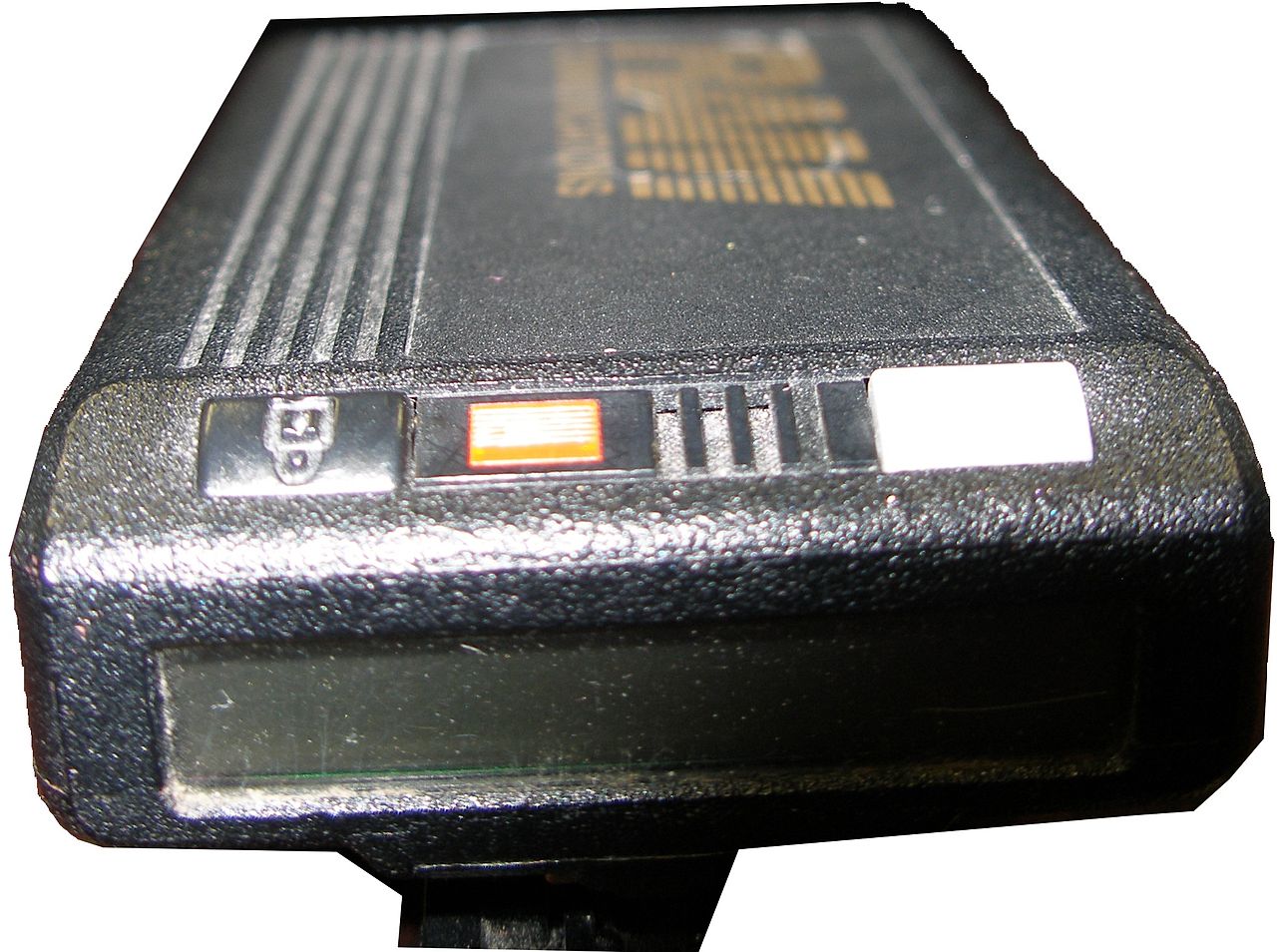
    A pager (also known as a beeper) is a wireless telecommunications device that receives and displays alphanumeric messages and/or receives and announces voice messages. The Motorola Bravo pager was the king of all one way pagers. Yes one way..One-way pagers can only receive messages.

    I had one, Your mom had one and every doctor on the planet had one. Amazon still sells them, but purchased mostly by people looking for the quintesenintal Halloween accessory.   They are iconic and just looking at one brings back memories of short coding your friends a party invite.

    How Did It Work

    In 1999, 45 million Americans had pagers. They were an equal-opportunity technology, owned by drug dealers, whores, doctors and CEOs—and new college students whose parents couldn’t drop the leash.All one had to do was simple dial the phone number associated with said pager, then enter in up to 16 numbers from your touchtone phone to deliver a call back number. simple. genius. reliable.


    At least there was the code.There was also an accepted system of sending numbers so that, when written together, looked vaguely like letters. We’d grown up getting adults to spell “BOOBLESS” on calculators by typing in the elements of a story about Dolly Parton and then holding the calculator upside down. From there, it was an easy jump to many other words. Hello was 07734. That was one of the easiest ones. We said “Hello” a lot.  Then 3838-07734 (hello baby) or 17-31707-1( I love you). However my personal fav and constant go to was the old 187 (your dead).

    The Final Thought

    They functioned without coverage, with out fail. Never did I ever say legitimately ” i didnt get that page”. It was the most reliable and widely accepted form of mobile communication for over 40 years. While Motorola announced the end of its new pager manufacturing in 2001, pagers remain in use today in places where mobile phones typically cannot reach users, and also in places where the operation of the radio transmitters contained in mobile phones is problematic or prohibited. In places like hospitals, rural emergency response ares you can still spot the endangered species know as the Motorola pager.


  • Battle of the Smartwatches: FitBit Versa vs Apple Watch

    Battle of the Smartwatches: FitBit Versa vs Apple Watch

    The current smartwatch market has some serious competition with the Pebble Watch, Apple Watch 3, Samsung Gear 3 and now the new FitBit Versa smartwatch and fitness tracker.

    In terms of brand notoriety the Apple Watch is the clear #1 smartwatch out there so any new product has to compete with the tech giant’s dominance in this sphere.

    fitbit versa

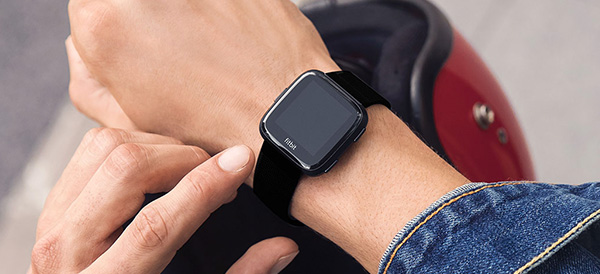
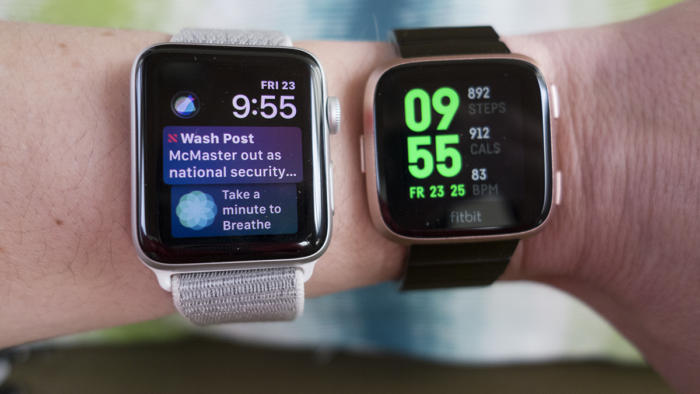
    At first glance, you might mistake the FitBit Versa for an Apple Watch. With a gently rounded square face of beveled glass, the Versa’s design mimics the original Apple Watch, but there are some key differences between the two gadgets. Which smartwatch is right for you?

    Design

    fitbit versa
    Aesthetically, there isn’t much to choose between the two smartwatches. Both share a similar design, interchangeable straps, a selection of metal finishes and a variety of watch faces to customize the look. The Versa is lighter and slimmer than even the smallest Apple Watch, but users have reported that the band on the Versa is much more difficult to swap out. The digital watch faces, which allow you to customize the look of your smartwatch, are finicky to search and install when it comes to the FitBit Versa, and the quality of the designs is uneven.  The FitBit Versa is really comfortable to wear because it’s so thin and light. The Apple Watch depending on your wrist size, can be uncomfortable and dig into your skin when the strap is pulled tight.

  • Tablet Talk:  ASUS ZenPad Z8s 

    Tablet Talk:  ASUS ZenPad Z8s 

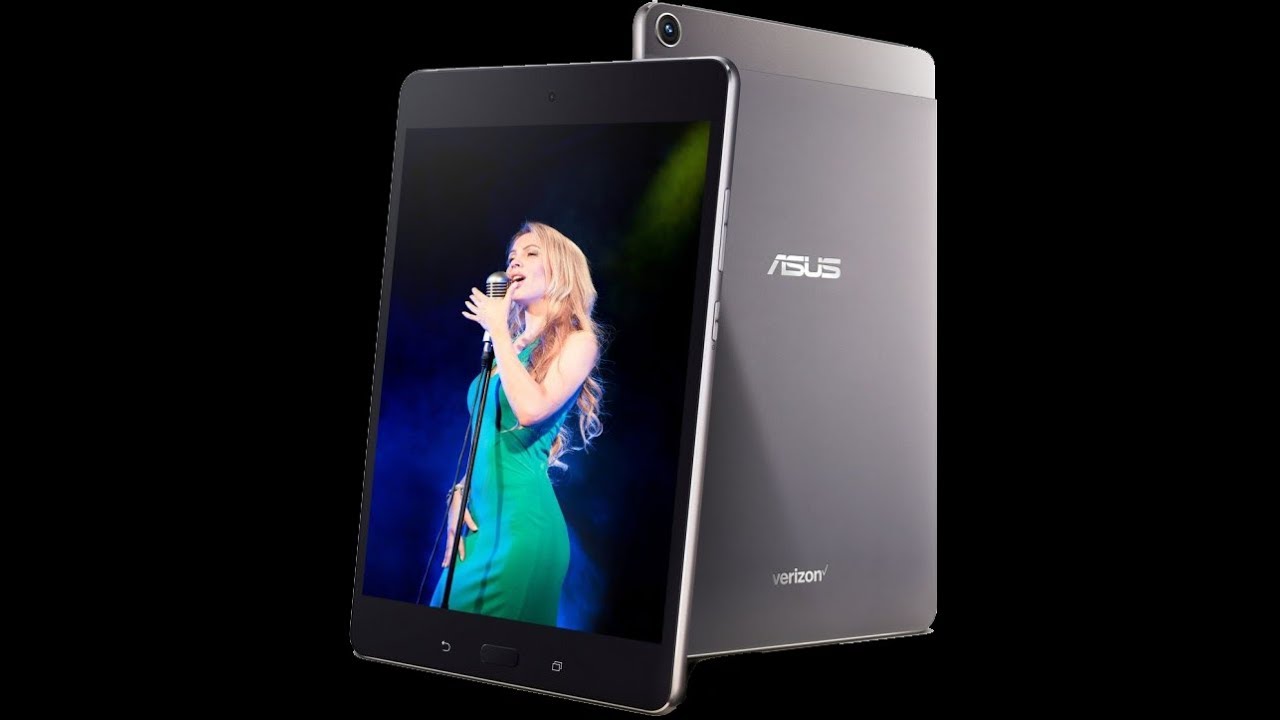
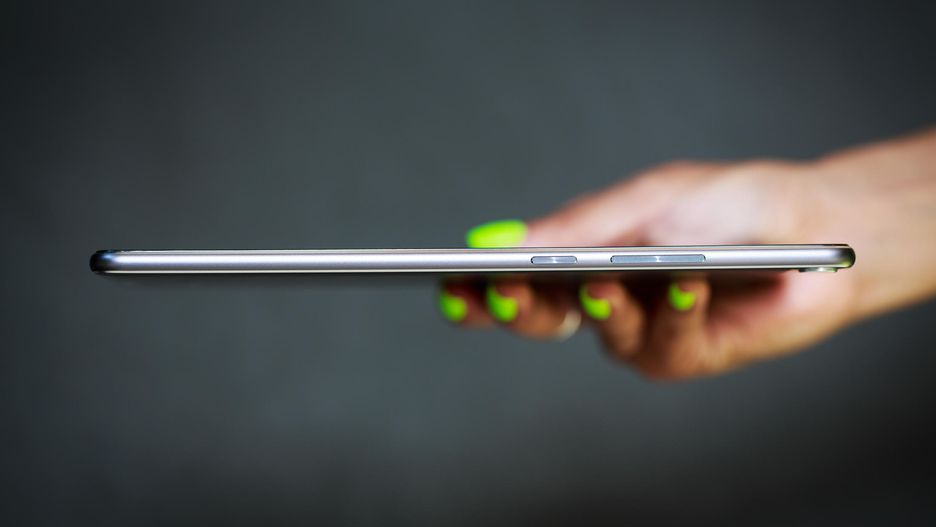
    ASUS ZenPad Z8s  is a Premium 7.9-inch tablet with a stylish, all-metal design, and featuring vivid visuals, cinematic audio, and powerful all-around performance ideal for both entertainment and productivity. ASUS ZenPad Z8s has elegant, modern styling with clean lines and an exquisite metallic texture that feels great to the touch. Its forged aluminum body weighs just 306g, is only 6.9mm thin, and is accented by double, diamond-cut edges, giving ZenPad Z8s a singular beauty that elevates the tablet experience.

    The Great

    • Bright and colorful display
    • Great performance
    • Solid audio
    • Stylish design

    The Not

    •  Verizon Exclusive
    • Short battery life


    The Conclusion

    The Asus ZenPad Z8s is a high-performance tablet that offers a bright display, loud audio and stylish design.


    If you’re a Verizon customer, then you’re in luck, because Asus has an exclusive tablet to serve your media needs. The 8-inch ZenPad Z8s provides a bright display, an impressive sound system and good looks, all for $250. Whether you want to watch videos on YouTube or takes notes in Google Docs, the Asus ZenPad Z8s is a reliable Android tablet that’s worth considering.
    Design: Stunning

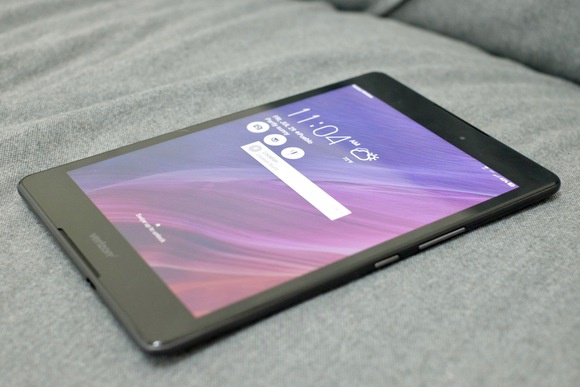
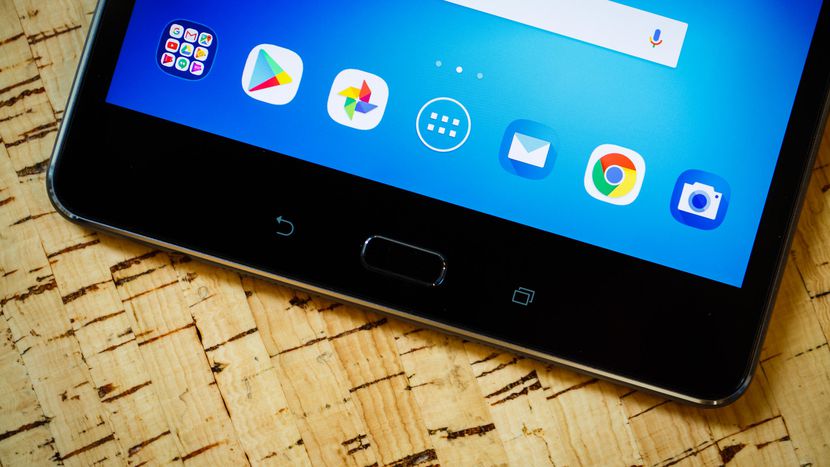
    The Asus ZenPad Z8s measures 8.0 x 5.3 x 0.27 inches and weighs 10.7 ounces, making it the lightest 8-inch tablet I’ve seen so far. Competitors like the Lenovo Tab 4 8 measured 11.2 ounces, while the Amazon Fire HD 8 measured 13 ounces and the 9.7-inch Apple iPad came in at 16.5 ounces.The ZenPad Z8s has a sophisticated appearance. Its aluminum backing is a matte, gunmetal shade with matching plastic sides and a top bezel that houses a 13-megapixel rear shooter. Thin chrome accents decorate the edges of the tablet and rear camera, which really makes the ZenPad Z8s stand out from the competition. A bright silver Asus logo sits in the middle of the shell, while a smaller Verizon logo is situated at the bottom

    The Asus ZenPad Z8S features a Snapdragon 652 Octa-core chipset with an Adreno 510 GPU, 3GB of RAM, and 16GB of internal storage expandable to 128GB via a microSD card.

    The ZenPad Z8S’s performance is generally passable, but not extraordinary. In our testing, it ran most things well, though we did experience slow-downs, occasional delayed response, and dropped framerates in games. The lag is most noticeable while opening the app drawer, Recent Apps or waking the device up. Basically, it seems to struggle with changes to onscreen content. Most of the time it runs smoothly, but the little hiccups are noticeable. Oddly, the default Asus keyboard doesn’t play too nicely with the processor, and feels clunky, but that was nothing a switch to Google’s Gboard couldn’t resolve.

    Quick Speck Look

    • Android 7.0
    • 1.8GHz Snapdragon 652
    • 3GB RAM
    • 16GB internal storage
    • MicroSD card reader, up to 128GB SDXC
    • Micro SIM card slot

    The Final Thought

    The $250 Asus ZenPad Z8s is a speedy media tablet at a decent price. Offering a bright display, great audio and sophisticated design, the ZenPad is hard to beat for the price. And if you’re not sure if you want to shell out the cash all at one time, Verizon offers 24-month financing for $10.41 per month. Or you can opt for a two-year contract and get the ZenPad for $150 instead.

    Shoppers who just want an inexpensive 8-inch tablet may prefer Lenovo’s $128 Tab 4 8 or Amazon’s $80 Fire HD 8, both of which have longer battery life but slower performance. If you don’t mind getting your hands on a slightly bigger screen with better overall specs, then Apple’s $329 iPad may be worth the investment. However, if you just want a 4G Android tablet that you can add to your Verizon line, the ZenPad Z8s is a great choice.

  • 16-Bit Nostalgia with the Sega Genesis Mini

    16-Bit Nostalgia with the Sega Genesis Mini

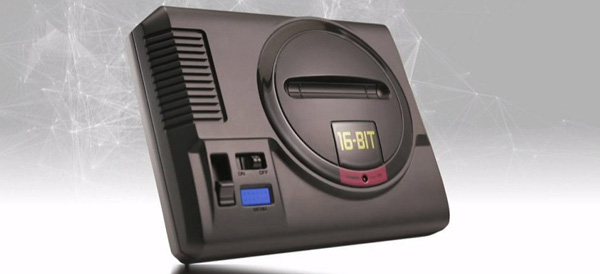
    If you grew up in the 90s, chances were good you had either a Sega or a Nintendo gaming console. Even though technology has moved on, many old-school gamers have fond memories of 16-bit, side-scrolling adventures of their youths. Hot on the heels of Nintendo’s own miniaturized retro consoles, the Sega Genesis (known as the Mega Drive to non-US markets) will be hitting shelves sometime in 2018.

    Call It a Comeback

    In essence, the mini versions of the classic consoles are emulators packaged inside novelty-sized replicas of the originals. After the success of the Nintendo minis, it’s no surprise that Sega is jumping on the bandwagon. But with videogames moving into 3D and VR, not to mention the vast array of mobile gaming apps, these consoles aren’t good for much more than pixilated nostalgia.

    Announced at Sega Fes 2018, the palm-sized device will be able to run familiar titles from the company’s catalog of games through your TV. No word yet on exactly which games will be available, but Sonic the Hedgehog will almost certainly make an appearance.

    Better Than the Flashback?

    This isn’t the first time Sega has tried to cash in on nostalgia. The company partnered with AtGames in 2017 to release the Sega Genesis Flashback, and it turned out to be a disappointment with underwhelming reviews across the board. Despite the lukewarm response to their first attempt, Sega hopes that the new Genesis Mini will prove competitive against their longtime rival Nintendo.

    The Genesis Mini’s release date isn’t yet confirmed, but the company is aiming to coincide with the 30thanniversary of the original console’s debut in October. Expect the price to be comparable to the $80 Super NES re-release.

  • Laptop Lookout: Huawei Matebook X Pro

    Laptop Lookout: Huawei Matebook X Pro

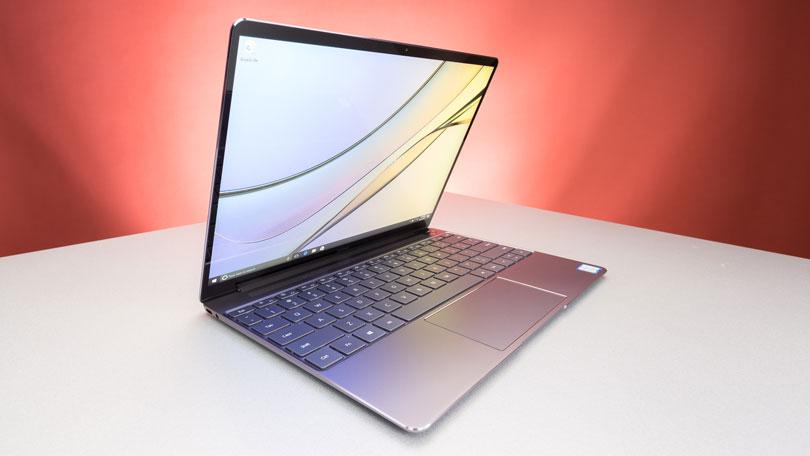
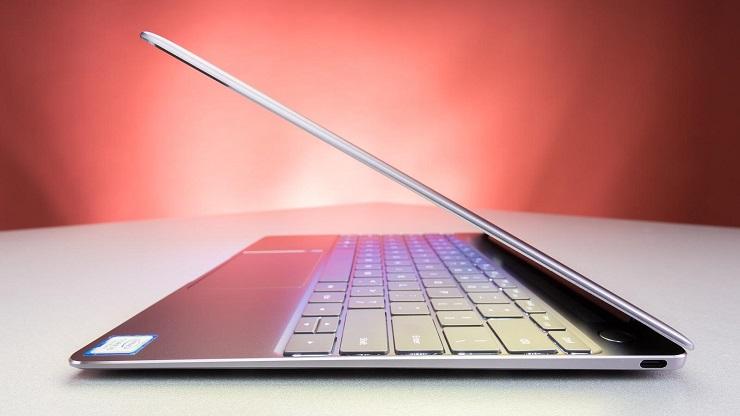
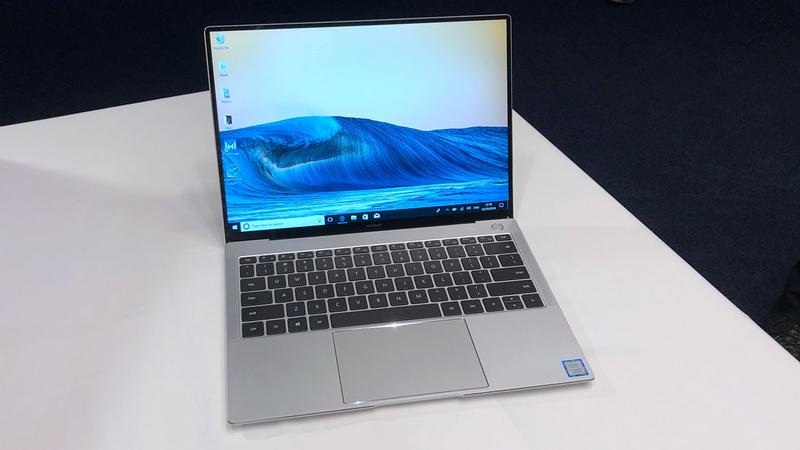
    HUAWEI MateBook X Pro is a ultra-slim notebook with FullView display of 91% screen-to-body ratio. The 3K touchscreen, powerful Intel processor and discrete graphics ensure this is a perfect companion for entertainment and work. With a 3K LTPS display comes with a remarkable 3000 x 2000 resolution, 260 PPI, 100% sRGB color gamut, 450 nits maximum brightness and 1500:1 contrast ratio. Immerse yourself in vivid details when viewing high definition pictures or watching 4K videos.

    The Great

    • Fast performance
    • Exquisite screen
    • Comfortable keyboard
    • Long battery life
    • Both USB Type-C and Type-A ports

    The Not

    • Very limited availability
    • High price
    • No SD card slot
    • Clever webcam is still flawed
    • Mystic Silver is Core i7 only


    The Conclusion

    The Huawei MateBook X Pro is a speedy, long-lasting premium notebook that’s hard to get.


    Chinese tech giant Huawei is not known for making laptops, but its 14-inch MateBook X Pro (tested at $2,350; starting at around $1,855) could change all that. Not only does it pack a gorgeous, high-res display and speedy performance, its battery lasts all day. And while its name and design beg for comparisons to Apple’s MacBook Pro, the MateBook X Pro’s keyboard is far more comfortable. The only things standing between you and its glory are its high price and severely limited availability.


    The Design

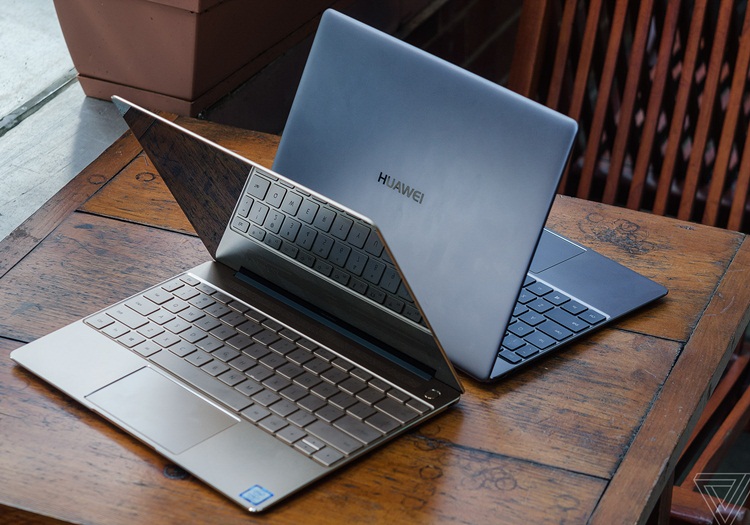
    The aluminum Huawei MateBook X Pro reminds me a lot of Apple’s MacBooks, and that’s a good thing. Not only is it a slim, silver wedge (also made in Space Gray), it’s easy to open its lid with a single hand, a hallmark of Apple’s notebooks. It also sports a shiny beveled edge around its keyboard deck, which the MacBooks do not.

    I still prefer the Apple’s designs in two slight ways: the Huawei logo — which looks like you chopped an Apple into a bunch of wedges — isn’t as elegant. Also, the MateBook X Pro’s lid and edges are flatter, lacking the tapered curves of the MacBook Air.

    The 14-inch MateBook X Pro weighs 2.9 pounds and measures 0.6 inches thick, making it similar in size and heft to the 3-pound, 0.6-inch thick Apple MacBook Pro (13-inch, Touch Bar). The Dell XPS 13 (2.65 pounds, 0.5 inches) is lighter, while the HP Spectre 13 (2.4 pounds, 0.4 inches) is both thinner and lighter.


    The Display

    The MateBook X Pro’s screen produces 124 percent of the sRGB spectrum, which exceeds the 113 percent premium laptop average. The MacBook Pro earned a similar 123 percent and the Spectre 13 measured a lower 111 percent, while the XPS 13’s 1080p screen (117 percent) and its 4K screen (130 percent) straddled the MateBook X Pro’s rates.


    Quick Spec Look

    • CPU: 1.8GHz Intel Core i7-8550U (quad-core, 8MB cache, up to 4.0GHz)
    • Graphics: Intel UHD Graphics 620, Nvidia GeForce MX150 graphics (2GB GDDR5)
    • RAM: 16GB LPDDR3 (2,133 MHz)
    • Screen: 13.9-inch 3K (3,000 x 2,000) LED with touch panel (3:2 aspect; 450 nits; 1,500:1 contrast; 100% sRGB)
    • Storage: 512GB SSD (NVMe PCIe)
    • Ports: 1 x Thunderbolt 3 USB-C, 1 x USB-C 3.1, 1 x USB 3.0, 3.5mm audio jack
    • Connectivity: 802.11ac (2 x 2 MIMO) Wi-Fi, Bluetooth 4.1
    • Camera: 720p webcam with far field microphones
    • Weight: 2.93 pounds (1.33kg)
    • Size: 11.97 x 8.54 x 0.57 inches (304 x 217 x 14.6mm; W x H x D)


    The Final Thought

    This may just be the Tech device that adds Huawei to the major players of Apple, Dell and Samsung to the minds of the american consumer. Welcome to the big leauges boys, we wear caps and sleeves at this level. Frankly, we’re stunned by Huawei’s sophomore effort in the laptop category. In one fell swoop, the MateBook X Pro presents an overwhelming alternative to my favorite laptop, the Dell XPS 13, and the MacBook Pro.

  • Samsung Has Released an Internet-Free Smartphone

    Samsung Has Released an Internet-Free Smartphone

    Samsung has released the Galaxy J2 Pro, which appears to be a standard budget smartphone, but there’s one major feature (or lack thereof) – it cannot connect to the internet.

    The Galaxy J2 Pro

    Connecting to the Internet is an impossibility on the Galaxy J2 Pro. There is no Wi-Fi, no LTE, no 3G… nothing.

    Why would Samsung release a phone with no Internet capabilities? They’ve decided to cater to students or senior citizens who want to make calls and use some apps without the distraction or confusion of internet connectivity. It may also be a solid choice for parents who want to give their youngsters a way to keep in contact. Smartphone addicts looking to break free from the always-connected culture may also be intrigued by the J2 Pro.

    Features

    So, what can a smartphone that doesn’t connect to the internet do? In a nutshell, it can make phone calls, send text messages and take photos.

    • 5-inch display (qHD AMOLED)
    • 4GHz quad-core processor
    • 5GB of RAM
    • 8-megapixel rear-facing camera
    • 5-megapixel front-facing camera
    • MicroSD card slot
    • 2,600mAh removable battery

    Budget Friendly

    The Galaxy J2 Pro is nothing like Samsung’s most popular Galaxy phones like the Galaxy Note 8 or Galaxy S9. It aims to cover a different segment of the market. And unlike their big name phones, the price of the Galaxy J2 Pro is much, much cheaper.

    Right now, the J2 Pro is only available in Korea and Samsung has made no announcements on whether it will release in other countries. The price of the phone converts to around $185.

  • 7 New Products From Samsung

    7 New Products From Samsung

    I tend to focus on what Apple is doing alot more because I live in that bubble but Samsung has got a much bigger universe but occuping the appliace and tv space. They also seem to have their fingers in just about evey pie you could think of, so here is the top 7 Samsung releases for 2018 you should know about


    1.Samsung HMD Odyssey Windows Mixed Reality Headset​​
    $499.00


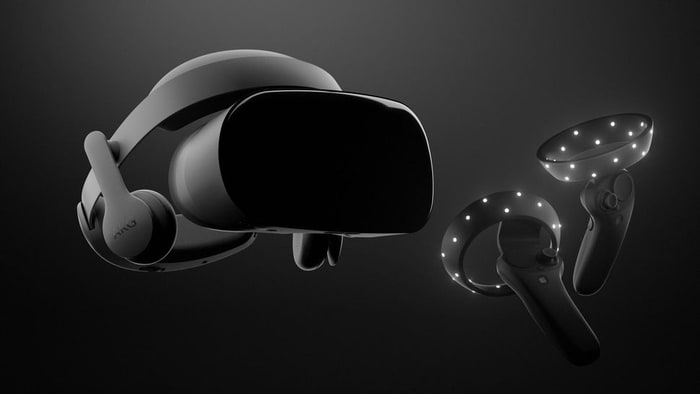
    The Samsung HMD Odyssey is the best mixed reality headset for Windows 10. It features a sharp AMOLED display, built-in AKG headphones, and comfortable fit. It also comes bundled with a pair of excellent wireless controllers.

    There are thousands of mixed-reality experiences for Windows 10 you can try. The headset is also compatible with Steam VR titles, so we got that going for us.


    2.Samsung Gear Sport Smartwatch
    $247.99

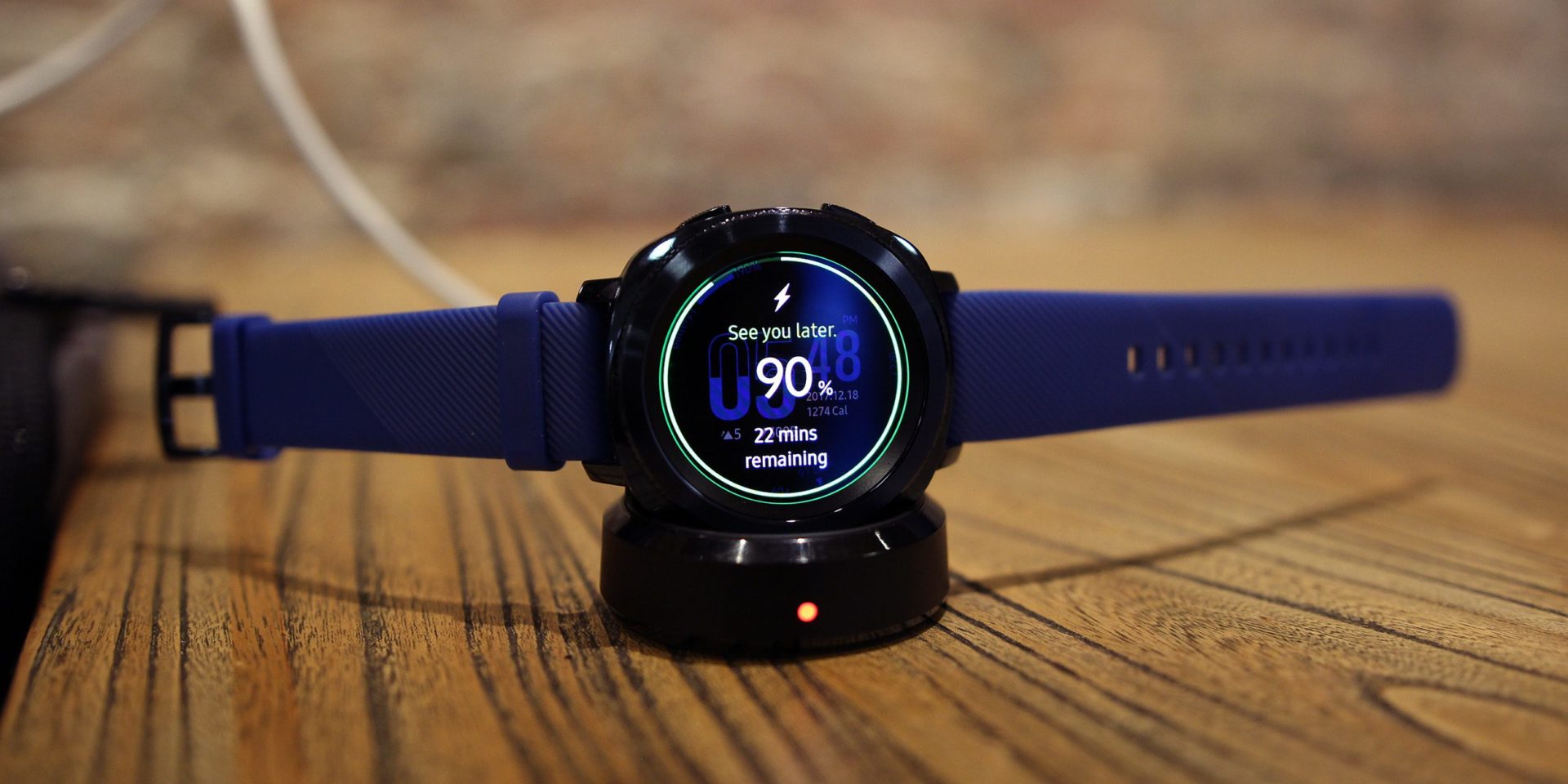
    The Samsung Gear Sport is the best smartwatch for Android smartphone users. The device has a powerful set of fitness-tracking features, including the ability to guide users through various workouts.

    Its waterproof body can withstand depths of up to 50 meters, so users can take it for a swim, too. An intuitive interface and interchangeable bands are also among the wearable gadget’s cool features.


    3. Series 49-Inch ​Curved Gaming Monitor
    $949.99

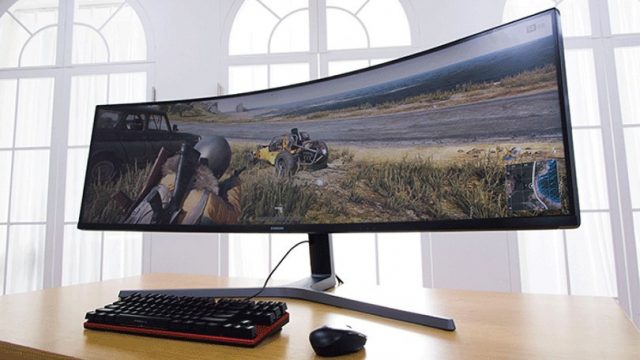
    Samsung’s gigantic CHG90 series curved gaming monitor has a gloriously excessive 49-inch QLED display with 32:9 aspect, which will literally expand your in-game field of view. Capable of fully replacing two standard monitors, the CHG90 has superb image quality with HDR support, an ultra fast refresh rate of 144 Hz, and a plethora of gaming modes to choose from.

    4.Samsung Galaxy S9+ Android Smartphone

    $839.99

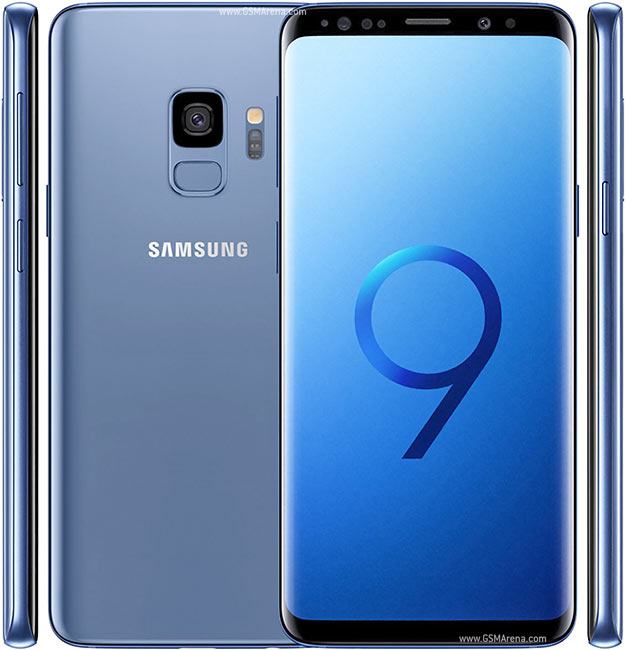
    The Galaxy S9+ is the most advanced smartphone from Samsung to date. It features an eye-grabbing 6.2-inch Infinity display, an advanced camera setup with two optically stabilized sensors (a wide-angle and a telephoto one), and built-in stereo speakers.

    Of course, the waterproof phone also comes with a long list of cutting-edge hardware specs, headed by a powerful Snapdragon 845 chipset and 6 GB of RAM. There are three colors to choose from — black, blue, and purple.


    5.Samsung Q9S QLED TV (available in 85-inches)
    Unbelievably, Samsung’s monstrous, 85-inch 8K TV is still considered a QLED TV. It’s the top of the list for numerous reasons – size and resolution being the most obvious two – but also its ability to use artificial intelligence upscale SD content to 8K HDR. We don’t know how much this TV is going to cost yet but, considering how much technology is going into it, it wouldn’t surprise us to see a price tag in the tens of thousands.


    6. Samsung Family Hub Refrigerator

    $3,499.99

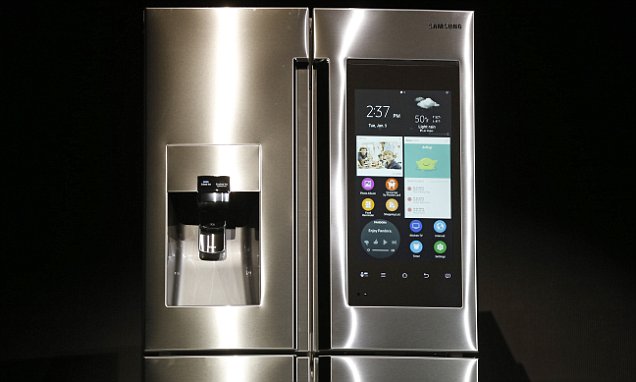
    Family Hub in 2018 offers a wide range of smart features that allow consumers to do what they could not do before. These include syncing up food storage with meal preparation, keeping family members better connected and organized, and providing enhanced entertainment. Family Hub is also more intuitive and intelligent with the addition of Bixby voice control and its integration with Samsung’s SmartThings IoT ecosystem.

    The interactive touchscreen with interactive and customizable widgets allows your family to stay connected: Sync calendars for all family activities and events, remotely share photos, notes and memos, receive personalized information through voice recognition and challenge each other with daily trivia questions.

    7.Samsung – ArtPC Pulse Desktop

    $1,599.99

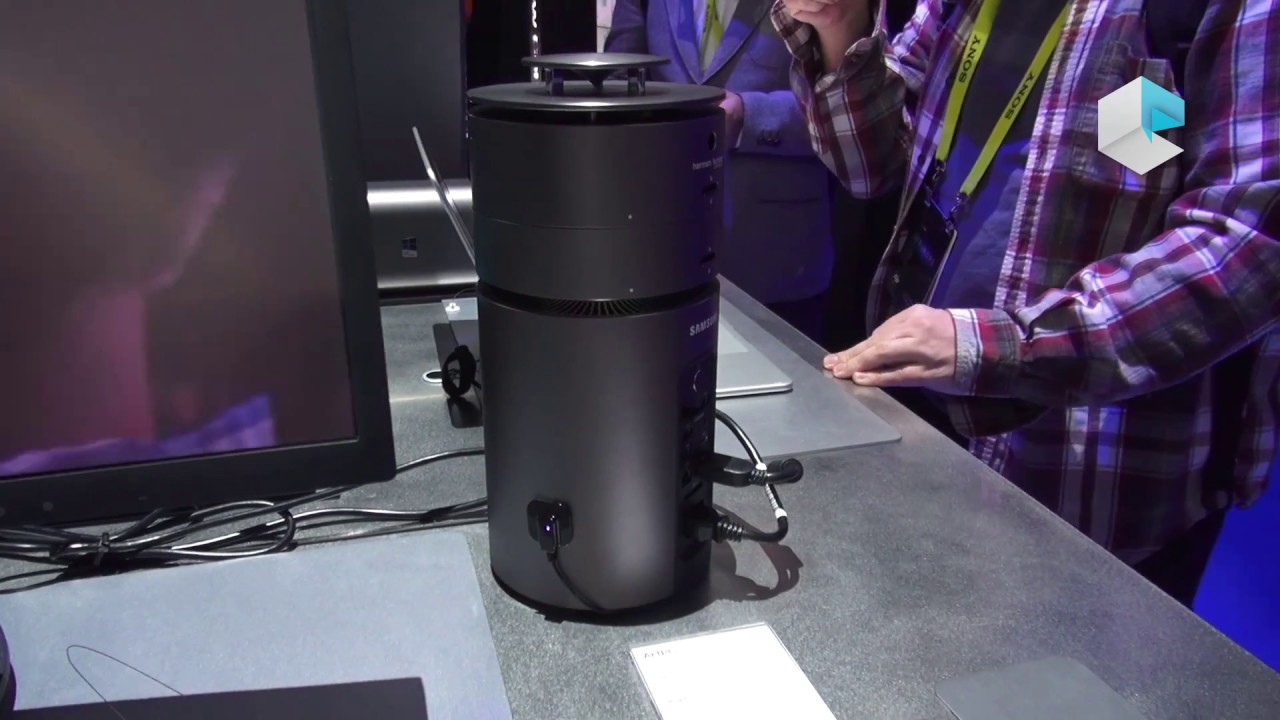
    Step into the future with this Samsung ArtPC PULSE computer tower. Its Intel i7-6700 processor and 16GB of RAM deliver top performance, and its 256GB solid-state drive combines with a 1TB hard drive to provide ample room for all your programs and multimedia files. The 360-degree speaker of this Samsung ArtPC PULSE computer tower provides powerful sound.


    The Final Thought

    They may not be the best, but they are not far off. Living in the Samsung world of tech is being completely integrated, they have the option and gear before you know you need it. Samsung is where innovation meets perfection meets total integrated solutions.