Tag: apple

  • Which Tablet is Worth your Money?

    Which Tablet is Worth your Money?

    Smart phones are nice, but sometimes you want a bigger screen for your smart device. Whether you’re drawing, looking at photos, watching movies or playing games, tablets are awesome addition to your smart device arsenal. When you just want that bigger screen for a handheld touch device, nothing else will do!

    Nothing says quality, solid build and premium design more than our 5 best premium tablets. From major manufacturers such as Apple, Samsung, Amazon, Microsoft and Google these tablets carry the state of art in technology and design. With that in mind, let’s check out some of our favorite premium tablets!

    Microsoft Surface Pro

    This tablet is so premium that it’s also a laptop. The Surface Pro made our list of best touchscreen laptops, too, which might sound weird until you see one in person: it really is both. With a stellar screen and great form factor, you can’t get a much cooler 2-in-1 tablet. Retailing for $659, it’s not too pricey.

    There are only a few real downsides for the Surface Pro. The very incremental advances it possesses when compared to its predecessors are slightly disappointing.  Additionally, the design is a little too minimalist: there is no USB-C port! Then again, it’s still a great tablet, so it’s a small nitpick.

    Google Pixel C

    Your favorite Android tablet, the Google Pixel C performs like a giant version of its phone siblings. The Pixel C also has an optional magnetic keyboard that is quite solid, letting the tablet act as a laptop. This is easily the most powerful Android tablet that exists, for what it’s worth. The tablet performs great while multitasking and rarely suffers stutters or slowdown.

    If you need a tablet for work or just like pushing your technology to its limit, this is a great pick for you. On the other hand, this one is a bit expensive, retailing for $950. Additionally, many users see Android as a drawback instead of a feature. Many apps are released on iOS first and often perform better there to boot.

    The Samsung Galaxy Book

    This tablet rightfully belongs on the quickly growing list of impressive Microsoft Surface Pro contenders. The Samsung Galaxy Book is a top-shelf Windows tablet with a price to match. Its robust processing power, high-end display and essential add-on accessories make it one of the best tablet-hybrids.

    It’s a Windows 10 tablet with a stunning 12-inch Super AMOLED display, Intel’s latest processors and detachable keyboard cover with stylus. It starts at $1,130 for the Wi-Fi-only version and $1,300 for the LTE model, sold via Verizon, which was the configuration we reviewed. Samsung offers a 10-inch variant that runs for $630, but this review is of the 12-inch model.

    iPad Pro

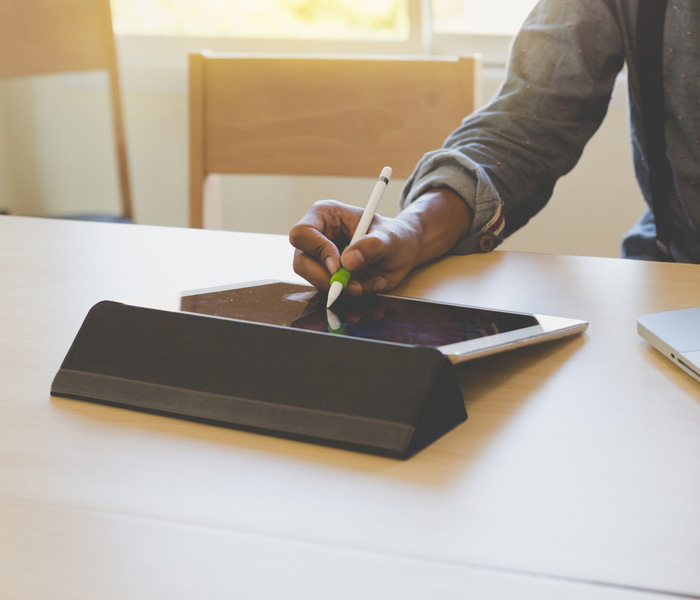
    No list of premium tablets would be complete without Apple’s contender in the mix. And this time around, unsurprisingly, Apple is our favorite. The iPad pro is a rock-solid tablet, with a gorgeous Retina display and fantastic performance. Many users have a preference for iOS, and for good reason. Slowdown is almost nonexistent, and app support is fantastic.

    If there are any drawbacks, they’re the same ones that apply to all Apple products: expensive peripherals and proprietary charging. If you want the Apple Pencil or proprietary keyboard to go with it, this one will run you some serious cash. For just the iPad itself, you’ll be spending around $600.

  • Tech Throwback: The Apple 1

    Tech Throwback: The Apple 1

    I like to take a look at where I’ve been to evaluate where Im going. Technology is cyclical after all… wait no its not. That said I still like all the feels that come rushing back like a flood of nostalgia every time I get my hand on the tech I grew up with. Im going to go back periodically and take a looking at the stuff that used to blow our hair back and get our minds rolling. Some of these device blew up and changed the world, some where ahead of their time and some just fell flat and became colossal failures. What do we have in store today? The Apple 1, lets talk about it.


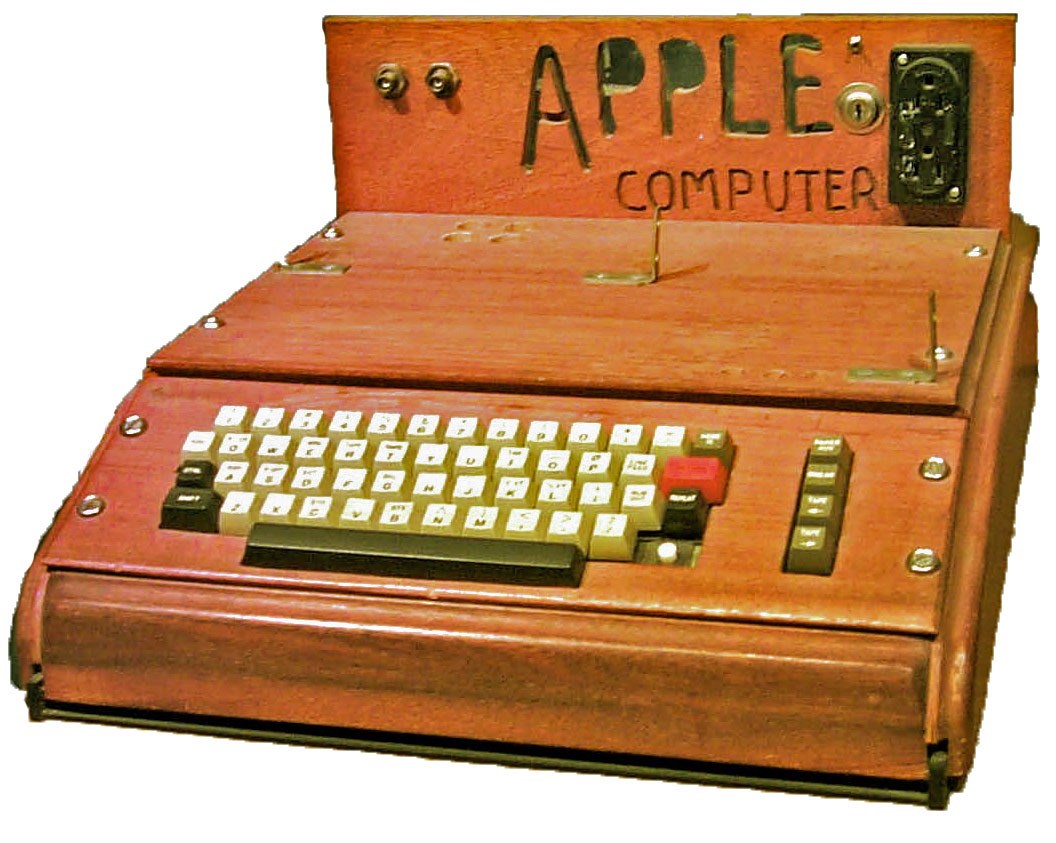
    The Apple 1

    We all know the story, Jobs and Woz in the garage.  Yes, We know The Apple I went on sale in July 1976 at a price of US$666.66, because Wozniak “liked repeating digits” and because of a one-third markup on the $500 wholesale price. We know that the first unit produced was used in a high school math class, and donated to Liza Loop’s public access computer center.

    There were only About 200 units were produced and all but 25 were sold during nine or ten months. We saw the movies made about it, like Jobs, Pirates of silicon valley, iGenius, Billion Dollar Hippy and my favorite Steve Jobs. There is very little we don’t know about the launch of the first real computer buy 2 genius college kids. But it is still fun to reminisce and marvel at the magic of it all.

    The Apple I’s built-in computer terminal circuitry was distinctive. All one needed was a keyboard and a television set. Competing machines such as the Altair 8800 generally were programmed with front-mounted toggle switches and used indicator lights (red LEDs, most commonly) for output, and had to be extended with separate hardware to allow connection to a computer terminal or a teletypewriter machine.

    Just 2 Guys and a Will

    This little project launched a computer and tech revolution that is currently evolved in to the very device I’m typing this article with on the NYC subway. All our wildest dreams have come true in this best of all worlds to be living in and it started with 2 kids in a garage. Not to make a trillion dollars, not to launch a tech revolution but solely to push themselves and see what they could do in a world telling them they couldn’t.

    The Final Thought

    Now we are in a place where this now rare Apple 1 computer, one of only 200 originally built by Steve Jobs and Steve Wozniak at fledgling Apple Computer in Palo Alto, Calif., in 1976, was sold at auction Tuesday for $375,000, auctioneer RR Auction and auction platform Invaluable said in a press release. The computer is 1 of only 16 of the originals known to still be fully functional, Invaluable CEO Rob Weisberg said. The companies did not identify the seller or the buyer but said the seller originally purchased the machine for $300 and had earlier tried to sell it to Wozniak for $10,000. fantastic, Thanks Steves.

  • iPhone XS, XS Max and XR Breakdown

    iPhone XS, XS Max and XR Breakdown

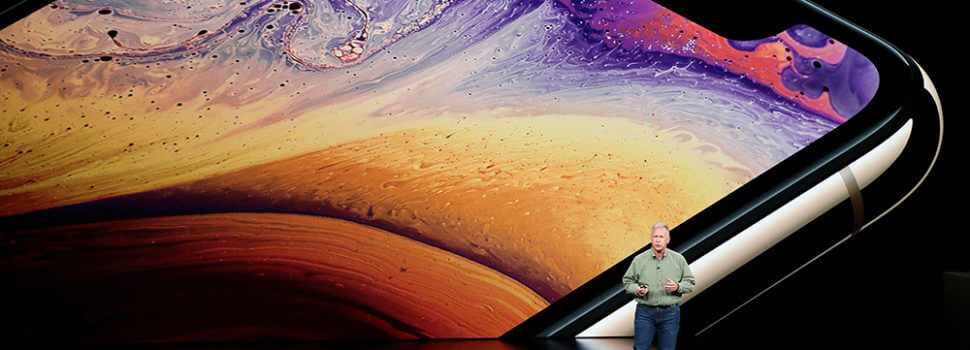
    There has been months of speculation and hype about new iPhone X models rumored to be coming. “Today, we’re going to take iPhone X to the next level,” CEO Tim Cook said during the presentation and unveiling of new iPhone models.

    The iPhone X released last year was a total rethinking of the iPhone with features like Face ID and a edge to edge screen. Anticipation was high among iPhone fans and the day is finally here, and we have all the recaps.  Apple finally took the wraps off its new iPhones, including the iPhone Xs Max, its largest iPhone ever. With 3 new phone announcements, let’s take a look at what makes them different and sort through all the new details and features.

    iPhone Xs and Xs Max

    First off Apple  introduced the 5.8-inch iPhone Xs, which also has an OLED screen. The iPhone Xs is made of surgical-grade steel, is covered in new glass and comes in gold, silver and space gray. With the new A12 chip, more on this later, it allows the storage to be increased to 512 gb. The Xs will have 3 size options, 64gb, 256, or 512gb. The smaller 64gb is cutting a little close these days but 256gb should still be more than enough for 99% of the users out there.

    The iPhone XS will also incorporate more real-world machine learning for features such as augmented reality and FaceTime. The iOS upgrade will also open the door for Siri shortcuts, which users can customize.  For all the Instagram photographers out there the back camera has a 12-megapixel wide-angle camera and 12-megapixel telephoto camera, along with improvements to flash. For the selfie lovers the front camera will feature 7 megapixels.

    Both devices are identical with only one difference, the iPhone Xs is 5.8 inches, the iPhone Xs max is 6.5 inches. There also have been improvements to the overall strength of the glass screen, which is a great improvement for those of us with butter fingers.

    The iPhone XR

    Alongside with the Xs models Apple also revealed it’s midrange iPhone model, the XR.  The XR is the  bargain model that will be more affordable with most of the same features as the Xs. The iPhone XR has an LCD display called liquid retina and it features a 6.1-inch screen. It’s the same size as the iPhone 8 Plus, but with a larger screen because of it’s edge to edge screen.  The iPhone XR will also feature Face ID, and include the A12 Bionic chip like the XS. The big difference among these phones is the back camera: a single 12-megapixel wide-angle camera for the XR. The front camera will feature the same true depth features as the XS.

    On battery life, XR will offer an hour and a half more on one charge than the iPhone 8 Plus. Specs-wise, the XR is notable for matching many of the specs of the new XS, but one notable omission is 3D Touch, which  isn’t available with XR model. 

    While the 6.1-inch display seems large, the reduced bezels above and below the display  will make the XR slightly smaller than a traditional “Plus” iPhone and only slightly larger than the 5.8-inch iPhone XS. The iPhone XR will be available in a variety of colors including black, white, blue, coral, yellow and red.

    Pricing

    The iPhone XR will come in three sizes: 64GB, 128GB, and 256GB, and start at $749. Pre-orders arrive October 19, and ships October 26. XS available in 64GB, 256GB and 512GB starting at $999. The XS Max will start at $1,099. Both Xs models are available for pre-order immediately with shipping to begin on September 21st.


  • iPhone XS, XS Max and XR Breakdown

    iPhone XS, XS Max and XR Breakdown

    There has been months of speculation and hype about new iPhone X models rumored to be coming. “Today, we’re going to take iPhone X to the next level,” CEO Tim Cook said during the presentation and unveiling of new iPhone models.

    The iPhone X released last year was a total rethinking of the iPhone with features like Face ID and a edge to edge screen. Anticipation was high among iPhone fans and the day is finally here, and we have all the recaps.  Apple finally took the wraps off its new iPhones, including the iPhone Xs Max, its largest iPhone ever. With 3 new phone announcements, let’s take a look at what makes them different and sort through all the new details and features.

    iPhone Xs and Xs Max

    First off Apple  introduced the 5.8-inch iPhone Xs, which also has an OLED screen. The iPhone Xs is made of surgical-grade steel, is covered in new glass and comes in gold, silver and space gray. With the new A12 chip, more on this later, it allows the storage to be increased to 512 gb. The Xs will have 3 size options, 64gb, 256, or 512gb. The smaller 64gb is cutting a little close these days but 256gb should still be more than enough for 99% of the users out there.

    The iPhone XS will also incorporate more real-world machine learning for features such as augmented reality and FaceTime. The iOS upgrade will also open the door for Siri shortcuts, which users can customize.  For all the Instagram photographers out there the back camera has a 12-megapixel wide-angle camera and 12-megapixel telephoto camera, along with improvements to flash. For the selfie lovers the front camera will feature 7 megapixels.

    Both devices are identical with only one difference, the iPhone Xs is 5.8 inches, the iPhone Xs max is 6.5 inches. There also have been improvements to the overall strength of the glass screen, which is a great improvement for those of us with butter fingers.

    The iPhone XR

    Alongside with the Xs models Apple also revealed it’s midrange iPhone model, the XR.  The XR is the  bargain model that will be more affordable with most of the same features as the Xs. The iPhone XR has an LCD display called liquid retina and it features a 6.1-inch screen. It’s the same size as the iPhone 8 Plus, but with a larger screen because of it’s edge to edge screen.  The iPhone XR will also feature Face ID, and include the A12 Bionic chip like the XS. The big difference among these phones is the back camera: a single 12-megapixel wide-angle camera for the XR. The front camera will feature the same true depth features as the XS.

    On battery life, XR will offer an hour and a half more on one charge than the iPhone 8 Plus. Specs-wise, the XR is notable for matching many of the specs of the new XS, but one notable omission is 3D Touch, which  isn’t available with XR model. 

    While the 6.1-inch display seems large, the reduced bezels above and below the display  will make the XR slightly smaller than a traditional “Plus” iPhone and only slightly larger than the 5.8-inch iPhone XS. The iPhone XR will be available in a variety of colors including black, white, blue, coral, yellow and red.

    Pricing

    The iPhone XR will come in three sizes: 64GB, 128GB, and 256GB, and start at $749. Pre-orders arrive October 19, and ships October 26. XS available in 64GB, 256GB and 512GB starting at $999. The XS Max will start at $1,099. Both Xs models are available for pre-order immediately with shipping to begin on September 21st.


  • iPhone XS, XS Max and XR Breakdown

    iPhone XS, XS Max and XR Breakdown

    There has been months of speculation and hype about new iPhone X models rumored to be coming. “Today, we’re going to take iPhone X to the next level,” CEO Tim Cook said during the presentation and unveiling of new iPhone models.

    The iPhone X released last year was a total rethinking of the iPhone with features like Face ID and a edge to edge screen. Anticipation was high among iPhone fans and the day is finally here, and we have all the recaps.  Apple finally took the wraps off its new iPhones, including the iPhone Xs Max, its largest iPhone ever. With 3 new phone announcements, let’s take a look at what makes them different and sort through all the new details and features.

    iPhone Xs and Xs Max

    First off Apple  introduced the 5.8-inch iPhone Xs, which also has an OLED screen. The iPhone Xs is made of surgical-grade steel, is covered in new glass and comes in gold, silver and space gray. With the new A12 chip, more on this later, it allows the storage to be increased to 512 gb. The Xs will have 3 size options, 64gb, 256, or 512gb. The smaller 64gb is cutting a little close these days but 256gb should still be more than enough for 99% of the users out there.

    The iPhone XS will also incorporate more real-world machine learning for features such as augmented reality and FaceTime. The iOS upgrade will also open the door for Siri shortcuts, which users can customize.  For all the Instagram photographers out there the back camera has a 12-megapixel wide-angle camera and 12-megapixel telephoto camera, along with improvements to flash. For the selfie lovers the front camera will feature 7 megapixels.

    Both devices are identical with only one difference, the iPhone Xs is 5.8 inches, the iPhone Xs max is 6.5 inches. There also have been improvements to the overall strength of the glass screen, which is a great improvement for those of us with butter fingers.

    The iPhone XR

    Alongside with the Xs models Apple also revealed it’s midrange iPhone model, the XR.  The XR is the  bargain model that will be more affordable with most of the same features as the Xs. The iPhone XR has an LCD display called liquid retina and it features a 6.1-inch screen. It’s the same size as the iPhone 8 Plus, but with a larger screen because of it’s edge to edge screen.  The iPhone XR will also feature Face ID, and include the A12 Bionic chip like the XS. The big difference among these phones is the back camera: a single 12-megapixel wide-angle camera for the XR. The front camera will feature the same true depth features as the XS.

    On battery life, XR will offer an hour and a half more on one charge than the iPhone 8 Plus. Specs-wise, the XR is notable for matching many of the specs of the new XS, but one notable omission is 3D Touch, which  isn’t available with XR model. 

    While the 6.1-inch display seems large, the reduced bezels above and below the display  will make the XR slightly smaller than a traditional “Plus” iPhone and only slightly larger than the 5.8-inch iPhone XS. The iPhone XR will be available in a variety of colors including black, white, blue, coral, yellow and red.

    Pricing

    The iPhone XR will come in three sizes: 64GB, 128GB, and 256GB, and start at $749. Pre-orders arrive October 19, and ships October 26. XS available in 64GB, 256GB and 512GB starting at $999. The XS Max will start at $1,099. Both Xs models are available for pre-order immediately with shipping to begin on September 21st.


  • 2 New iPad Pro

    2 New iPad Pro

    It is time for me to do some detective work and start to decipher where and when we will see a new iPad Pro. I was fairly certain they would mention it in the gather round event, but historically they have held another event in October for new iPads and Macs. Putting my internet sleuthing skills to the test, here is what I’ve come up with.

    2 iPad Pro Conclusions

    Apple’s release of iOS 12.1 earlier today has already given us a peek at a new feature: Memoji syncing. In that article, I suggested that this feature would make sense with the release of new iPads with a TrueDepth camera system later this year. Currently, Memoji is only supported on the iPhone – but adding support to the iPad would mean users would want to sync their characters between each device. Conclusion number 1. The new iPad Pro will have Memojis.

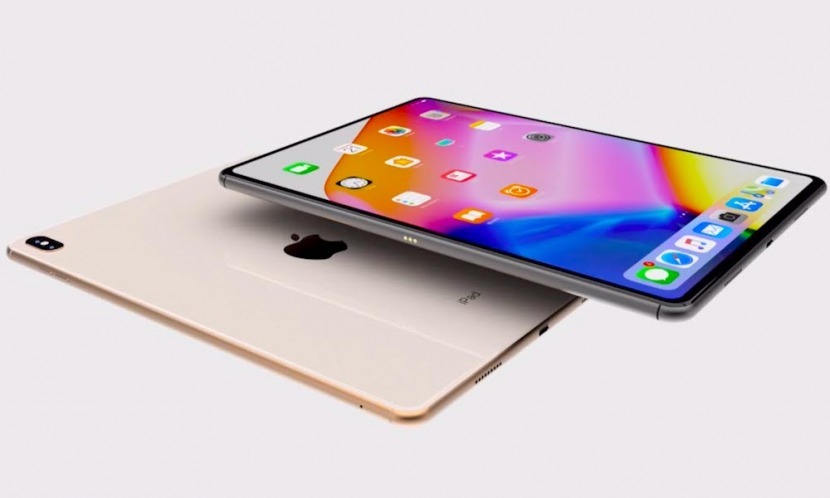
    An icon found in iOS 12 developer beta 5 has lead me to a key details about Apple’s iPad Pro. A blue icon update for the iPad shows a more iPhone x looking device as compared to the previous blue icon for the iPad. This is not a leak but merely an update to the icons in the developer tool. The icon itself is a symbol that will be used for the battery usage UI. The tiny blue iOS 12 icon shows a tablet with thinner, more uniform border lines and a home row of apps at the bottom. Having analyzed these side by side I’m ready for my second conclusion. Conclusion number 2 – the new tablet will have ultra-thin bezels, just like the iPhone X, but no notch. The existing iPad icon does show a home button and a front-facing camera at the top.

    The Final Thought

    Though Apple hasn’t announced anything officially, there’s a huge amount of buzz about two new Pro models surfacing before the end of 2018. Rumors are in full swing and the next big apple announcment awaits.  WHat we do know is Apple is prepping two new tablets for late 2018 — one that measures “around 11 inches,” which could be the rough equivalent of the current 10.5-inch model, and a 12.9-inch model.

  • Feature Roundup: iOS 12 Now Live

    Feature Roundup: iOS 12 Now Live

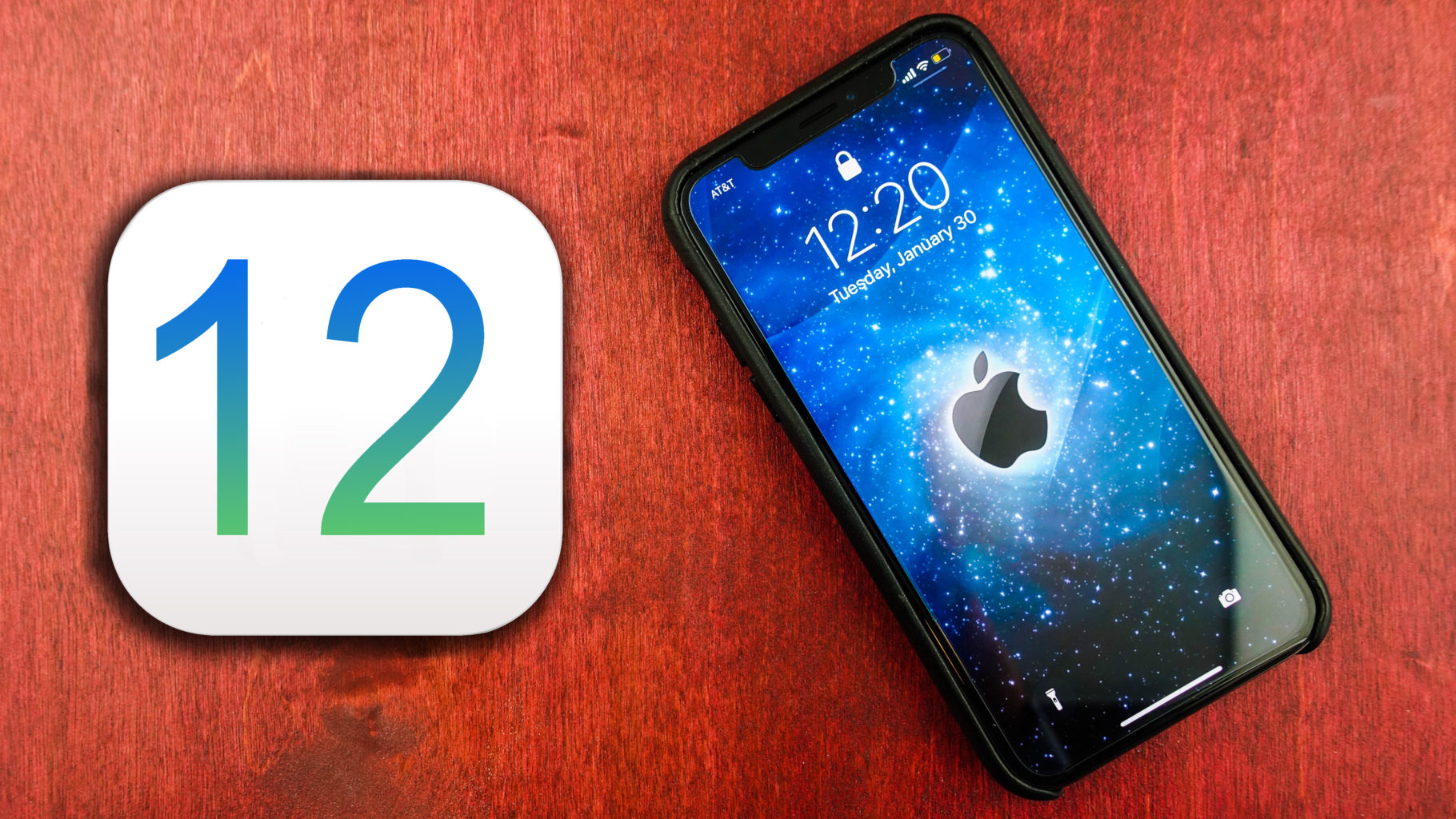
    The long-awaited update for iOS, iOS 12, has finally arrived! If you haven’t yet, you can download it now. And we highly advise it: it’s awesome! If you’ve already got the update and wondering what new features there are to play with, we’ve got a quick roundup for you. Here’s some of the coolest new features in iOS 12!

    iOS 12 Feature Roundup

    ARKit 2

    The new implementation of augmented reality is all over iOS 12. Namely, ARKit 2, a new developer’s kit, has been activated in this version of iOS. It allows for things like messages and News to even implement AR! It seems Apple is convinced that AR is the future, and they’re really pushing for it to take off.

    Photo Features

    Photos will now attempt to perform more intelligently, thanks to AI-enhanced technology. Things like examining which shots look best and which look shareable will be sorted by your phone automatically. Also new to this iOS update is the photo search function, allowing you to sort your photos by tons of criteria. Things like date, location and more will be searchable!

    Screen Time

    A lot of phone makers are starting to make moves that they understand the dangers of tech addiction. After all, everyone could stand to spend less time on their phones. As such, initiatives like Screen Time are great to see! Apple’s Screen Time functionality allows you to monitor your app usage and see what you’re spending the most time on. That’s rather healthy, actually!

    You’ll also be able to limit use of certain apps, having the iOS tell you when it’s time to quit. You can even set Do Not Disturb setting for certain times of day, or at certain locations.

    Memoji

    The new Memoji feature will allow you to create a custom Animoji that looks like you! It’s a fun use of the iPhone X’s Face ID technology. Tracking your face to create the moving emoji is a fun time-waster at worst, and a cute way to communicate at best!

    Siri Shortcuts

    Siri just got a bit more useful! The Siri Shortcuts feature allows you to program shortcuts into Siri. Creating shortcuts essentially allows Siri to perform a variety of functions from one keyed phrase. Setting up “take me home” could have Siri turn on your music and navigate to home, for instance. This works all the better with Apple’s iHome smart home tech!

  • Google Pixel 3 and Pixel 3 XL Breakdown

    Google Pixel 3 and Pixel 3 XL Breakdown

    The third iteration of Google’s flagship phone isn’t a huge leap forward. There’s no in-display fingerprint scanner, 3D facial recognition or ridiculous specs. Instead, the search engine giant is doubling down on what it does best.

    The Pixel 3 and 3 XL got Google’s start treatment on Tuesday at a launch event in New York, and we got straight to work checking them out. Already, the phones reject major smartphone trends. First, there’s one camera on the back, not two or even three (but you do get two on the front). Second, they start at under $1,000 each. Third, there’s no wild color; the “craziest” still looks kind of white. And finally, there’s no gimmicks to speak of. Google is clearly focused on functionality rather than just things that sell.

    Pixel 3 & Pixel 3 XL

    On paper, these flagships make the jump when it comes to hardware and software, but otherwise just riff off of 2017’s Pixel 2 ($649 at Google Store). And then I picked them up. Holding the 5.5-inch Pixel 3 and 6.3-inch Pixel 3 XL in my hand was a different story. These are sleek, almost slippery devices with rounded edges and thoughtfully curved elements, like the slightly tacky clear panel on the back.
    The Pixel 3 and 3 XL are undoubtedly Google’s most refined Pixel phones yet. If performance holds up during our testing, I can see how this could be a go-to phone for Android fans, not because they’re innovative, but because they’re both appealing to hold and use due to the buttery smooth stock operation system, Android P.

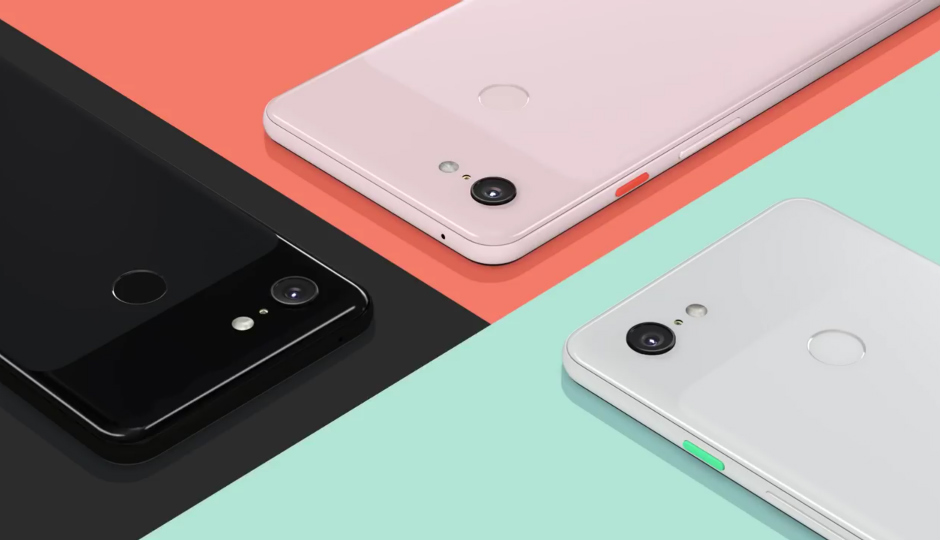
    You can buy the new Pixel 3 phones in black, white and “Not Pink.” The glossy plane on the Pixel’s signature two-tone backing has shrunk over the years, and slightly curves down at the corners rather than cut straight across. In fact, nearly everything about the Pixel 3 is subtle, and that could very well be the phone’s main strength.

    New Pixel 3 features that matter
    Larger, 5.5-inch (Pixel 3) and 6.3-inch (3 XL) displays
    Pixel 3 XL has a notched screen; Pixel 3 does not
    Two front-facing cameras
    Qualcomm Snapdragon 845 processor
    4GB RAM
    Android Pie
    Slightly larger battery capacity for both phones compared to Pixel 2 devices
    Portrait mode shots can also save photos without the portrait filter effect
    Wireless charging support with $79 (£69) Pixel Stand
    Use AI voice assistant to field unwanted calls
    Turn the phone over to silence incoming calls
    Titan M security chip exclusive to Pixel 3 phones

    Pixel 3’s most interesting camera tricks are under the hood
    Google’s Pixel cameras have always been less about flashy gimmicks and more about the kind of software processing that Google can milk from its equipment. After all, Google is a software company at its core. Computer learning and camera AI are major ingredients in the Pixel 3. Both phones have a single 12.2-megapixel rear camera and two 8-megapixel lenses on the front.

    Here are some camera highlights:

    Super Res Zoom: Promises sharp, clear detail when you digitally zoom in to a scene — that’s without a telephoto lens.
    Night Sight: Google promises clear, bright low-light photos without the need for a flash, which can blow out shots or make them unnaturally bright. This will build off Google’s already considerable low-light strength.
    Photobooth mode: Turn on this setting and the Pixel 3 will snap photos when the subject smiles or makes a funny face.
    Top Shot: When motion capture is turned on, Top Shot, which arrives “later,” will recommend a better version of a shot you may have missed. It’s intended for correcting candid photos, like someone cannonballing into a pool. You can also choose your own from what the phone grabbed while the motion capture was on.
    Group selfie: This isn’t so much a convenient mode or button you press as you flipping the camera toward yourself and manually zooming out to the wide-angle lens.
    Playground: For AR enthusiasts, swipe a button in the camera to toss characters, including Star Wars’ BB-8, Marvel’s Iron Man and Childish Gambino (aka Donald Glover) into the landscape you see through the viewfinder.


  • Google Pixel 3 and Pixel 3 XL Breakdown

    Google Pixel 3 and Pixel 3 XL Breakdown

    The third iteration of Google’s flagship phone isn’t a huge leap forward. There’s no in-display fingerprint scanner, 3D facial recognition or ridiculous specs. Instead, the search engine giant is doubling down on what it does best.

    The Pixel 3 and 3 XL got Google’s start treatment on Tuesday at a launch event in New York, and we got straight to work checking them out. Already, the phones reject major smartphone trends. First, there’s one camera on the back, not two or even three (but you do get two on the front). Second, they start at under $1,000 each. Third, there’s no wild color; the “craziest” still looks kind of white. And finally, there’s no gimmicks to speak of. Google is clearly focused on functionality rather than just things that sell.

    Pixel 3 & Pixel 3 XL

    On paper, these flagships make the jump when it comes to hardware and software, but otherwise just riff off of 2017’s Pixel 2 ($649 at Google Store). And then I picked them up. Holding the 5.5-inch Pixel 3 and 6.3-inch Pixel 3 XL in my hand was a different story. These are sleek, almost slippery devices with rounded edges and thoughtfully curved elements, like the slightly tacky clear panel on the back.
    The Pixel 3 and 3 XL are undoubtedly Google’s most refined Pixel phones yet. If performance holds up during our testing, I can see how this could be a go-to phone for Android fans, not because they’re innovative, but because they’re both appealing to hold and use due to the buttery smooth stock operation system, Android P.

    You can buy the new Pixel 3 phones in black, white and “Not Pink.” The glossy plane on the Pixel’s signature two-tone backing has shrunk over the years, and slightly curves down at the corners rather than cut straight across. In fact, nearly everything about the Pixel 3 is subtle, and that could very well be the phone’s main strength.

    New Pixel 3 features that matter
    Larger, 5.5-inch (Pixel 3) and 6.3-inch (3 XL) displays
    Pixel 3 XL has a notched screen; Pixel 3 does not
    Two front-facing cameras
    Qualcomm Snapdragon 845 processor
    4GB RAM
    Android Pie
    Slightly larger battery capacity for both phones compared to Pixel 2 devices
    Portrait mode shots can also save photos without the portrait filter effect
    Wireless charging support with $79 (£69) Pixel Stand
    Use AI voice assistant to field unwanted calls
    Turn the phone over to silence incoming calls
    Titan M security chip exclusive to Pixel 3 phones

    Pixel 3’s most interesting camera tricks are under the hood
    Google’s Pixel cameras have always been less about flashy gimmicks and more about the kind of software processing that Google can milk from its equipment. After all, Google is a software company at its core. Computer learning and camera AI are major ingredients in the Pixel 3. Both phones have a single 12.2-megapixel rear camera and two 8-megapixel lenses on the front.

    Here are some camera highlights:

    Super Res Zoom: Promises sharp, clear detail when you digitally zoom in to a scene — that’s without a telephoto lens.
    Night Sight: Google promises clear, bright low-light photos without the need for a flash, which can blow out shots or make them unnaturally bright. This will build off Google’s already considerable low-light strength.
    Photobooth mode: Turn on this setting and the Pixel 3 will snap photos when the subject smiles or makes a funny face.
    Top Shot: When motion capture is turned on, Top Shot, which arrives “later,” will recommend a better version of a shot you may have missed. It’s intended for correcting candid photos, like someone cannonballing into a pool. You can also choose your own from what the phone grabbed while the motion capture was on.
    Group selfie: This isn’t so much a convenient mode or button you press as you flipping the camera toward yourself and manually zooming out to the wide-angle lens.
    Playground: For AR enthusiasts, swipe a button in the camera to toss characters, including Star Wars’ BB-8, Marvel’s Iron Man and Childish Gambino (aka Donald Glover) into the landscape you see through the viewfinder.


  • iPhone XS, XS Max and XR Breakdown

    iPhone XS, XS Max and XR Breakdown

    There has been months of speculation and hype about new iPhone X models rumored to be coming. “Today, we’re going to take iPhone X to the next level,” CEO Tim Cook said during the presentation and unveiling of new iPhone models.

    The iPhone X released last year was a total rethinking of the iPhone with features like Face ID and a edge to edge screen. Anticipation was high among iPhone fans and the day is finally here, and we have all the recaps.  Apple finally took the wraps off its new iPhones, including the iPhone Xs Max, its largest iPhone ever. With 3 new phone announcements, let’s take a look at what makes them different and sort through all the new details and features.

    iPhone Xs and Xs Max

    First off Apple  introduced the 5.8-inch iPhone Xs, which also has an OLED screen. The iPhone Xs is made of surgical-grade steel, is covered in new glass and comes in gold, silver and space gray. With the new A12 chip, more on this later, it allows the storage to be increased to 512 gb. The Xs will have 3 size options, 64gb, 256, or 512gb. The smaller 64gb is cutting a little close these days but 256gb should still be more than enough for 99% of the users out there.

    The iPhone XS will also incorporate more real-world machine learning for features such as augmented reality and FaceTime. The iOS upgrade will also open the door for Siri shortcuts, which users can customize.  For all the Instagram photographers out there the back camera has a 12-megapixel wide-angle camera and 12-megapixel telephoto camera, along with improvements to flash. For the selfie lovers the front camera will feature 7 megapixels.

    Both devices are identical with only one difference, the iPhone Xs is 5.8 inches, the iPhone Xs max is 6.5 inches. There also have been improvements to the overall strength of the glass screen, which is a great improvement for those of us with butter fingers.

    The iPhone XR

    Alongside with the Xs models Apple also revealed it’s midrange iPhone model, the XR.  The XR is the  bargain model that will be more affordable with most of the same features as the Xs. The iPhone XR has an LCD display called liquid retina and it features a 6.1-inch screen. It’s the same size as the iPhone 8 Plus, but with a larger screen because of it’s edge to edge screen.  The iPhone XR will also feature Face ID, and include the A12 Bionic chip like the XS. The big difference among these phones is the back camera: a single 12-megapixel wide-angle camera for the XR. The front camera will feature the same true depth features as the XS.

    On battery life, XR will offer an hour and a half more on one charge than the iPhone 8 Plus. Specs-wise, the XR is notable for matching many of the specs of the new XS, but one notable omission is 3D Touch, which  isn’t available with XR model. 

    While the 6.1-inch display seems large, the reduced bezels above and below the display  will make the XR slightly smaller than a traditional “Plus” iPhone and only slightly larger than the 5.8-inch iPhone XS. The iPhone XR will be available in a variety of colors including black, white, blue, coral, yellow and red.

    Pricing

    The iPhone XR will come in three sizes: 64GB, 128GB, and 256GB, and start at $749. Pre-orders arrive October 19, and ships October 26. XS available in 64GB, 256GB and 512GB starting at $999. The XS Max will start at $1,099. Both Xs models are available for pre-order immediately with shipping to begin on September 21st.