Tag: Google

  • Pixel Slate: Why Can’t Google Get Tablets?

    Pixel Slate: Why Can’t Google Get Tablets?

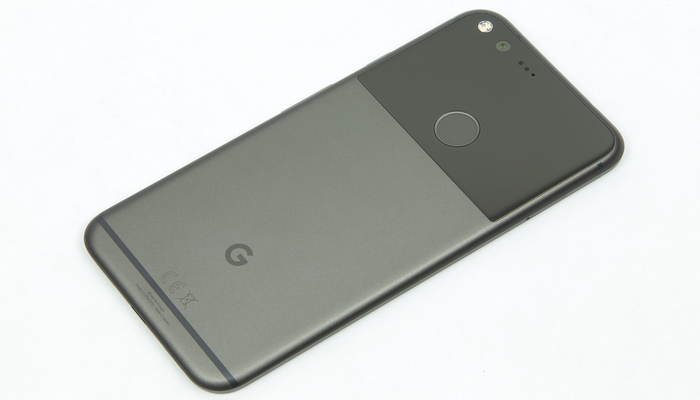
    Google’s been fighting to make a name for themselves as a hardware manufacturer. Scattered successes, like the Google Pixel smartphone, have been tempered by oddball releases like Google Home and Google Wi-Fi.

    One notable failure for the company, however, has been the sure-fire winner Pixel Slate, which has failed to make an impact.

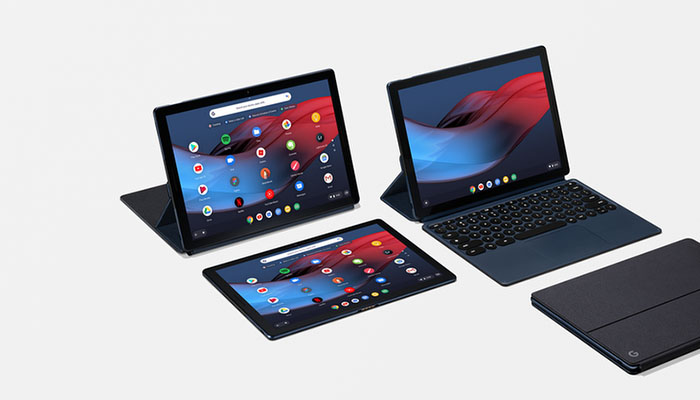
    Pixel Slate

    Trying to be Apple

    Google’s hardware initiatives have largely seen them following closely in the footsteps of Apple. Where Apple has the iPhone, Google has the Pixel. Where Apple has the Apple Watch, Google will release a Pixel Watch. It only follows that Apple’s iPad must be met by a Pixel Slate tablet.

    The Pixel smartphone has been doing a pretty good job of emulating the iPhone’s success, just for Android. As such, it would make sense to see the Pixel Slate performing like the iPad did for the Android crowd. Why did it miss so badly?

    Tablets and Laptops

    A lot of people who bought the iPad, it would seem, weren’t terribly tech-inclined. Apple’s made quite the name for themselves by catering high-tech goodies to people who aren’t terribly bothered by the nitty-gritty of their tech.

    As such, it makes sense that the iPad sold as well as it did: most Apple fans probably didn’t have laptops, or, if they did, they didn’t use them like they would a tablet. Laying around reading from a tablet is much more natural than doing so on a laptop.

    Android fans, on the other hand, are more likely to be dialed-in to existing tech. As such, their laptops are likely already playing the role that a tablet might otherwise be taking. Essentially, they already have technology pulling the job that a Pixel Slate would.

    Changing Markets

    It’s also worth noting that the iPad itself largely created the tablet-style of tech. In so doing, it shifted the laptop market around itself. Modern laptops usually have tablet-like features, including touch-screens and OS modes that cater to touch-screen only users.

    Two-in-one laptops with detachable keyboards are also a huge portion of the modern laptop landscape. When the iPad launched, it was the only piece of technology operating in the space of “large smartphone-like computer for home use.”

    Google is insistent in their drive to take over the world. As such, it’s always strange, if slightly reassuring, to see them miss the mark. In the case of the Pixel Slate, it appears that Google’s desire to be Apple, but with a search engine, led them astray.

  • Google Hardware News for 2019: Expect More Pixel Devices

    Google Hardware News for 2019: Expect More Pixel Devices

    Early reports of the “Made by Google” lineup for 2019 are here, thanks to Japanese newspaper Nikkei. The biggest news is mostly unsurprising, though it’s nice to have solid locks on the pieces of tech we’ve been speculating about. Namely, a budget Google Pixel, a Google Pixel 4, a Google watch, a new Nest cam and a new Google Home.

    Google Hardware News

    Google Pixel Lite

    The Google Pixel isn’t exactly known for its affordable price, but Google wants to change that. In their quest to go toe-to-toe with Apple’s iPhone, Google is launching a Google Pixel 3 Lite later this year. Reports hold that the new phone will actually undercut the iPhone XR in price, allowing Google to come out as the more affordable of the two luxury smartphone makers.

    Google Pixel 4

    The next step for the Pixel line of phones, of course, is the Pixel 4. Not much is known about the successor to last year’s Pixel 3 at the time of writing, aside from the fact that it’s slated for a late 2019 release. The Pixel 4 will likely be the first Pixel phone with 5G capabilities, and we’re likely to see even more emphasis on biometric security like face scanning technology or in-screen fingerprint readers.

    Google Pixel Watch

    The ongoing quest to be like Apple also means that Google’s expected to launch their own wearable tech, much like the Apple Watch. The expected Pixel Watch will likely feature fitness tracking, vital monitoring and music playback capabilities, much like the Apple Watch. We can expect to see the Pixel Watch by the end of 2019, according to reports.

    Next Generation Google Home?

    A new Google Home, as well as Nest Cam, are also slated to be unveiled soon. It’s unclear whether the new Google Home devices coming in 2019 will be a second generation of the existing smarthome speakers or a completely new line of technology.

    However, the good news is that we can expect to see all of this from Google before the end of the year. It’s going to be a big year for the tech giant!

  • Google Pixel Slate: A Worthy iPad Competitor?

    Google Pixel Slate: A Worthy iPad Competitor?

    Apple is a hard act to follow. Their electronics have been the benchmark for smart devices for more than a decade now. Google now attempts to compete with the iPad with their new Google Pixel Slate. How does the hybrid 2-in-1 stack up, and is it worth the high price tag?

    Google Pixel Slate Review

    google-pixel-slate
    PC Mag

    Strengths

    Firstly, this device has great battery life and is reasonably powerful. It should have enough energy from a full charge to get you through a busy day with lots of tabs open and a lot of work on the device.

    The Google Pixel Slate is a great device for productivity. If you often use your laptop for typing and browsing the web, you can use a Pixel Slate for largely the same tasks. When it comes to completing tasks and staying on the ball, the Pixel Slate functions a lot like a laptop. Of course, you need one of those pricey keyboards for this to be true.

    Speaking of price, let’s get into that. This device costs about the same amount as an iPad, coming in at $600 for the base model. The more powerful versions are even more expensive. That’s before shelling out for a $200 Google Pixel Keyboard. Oh, and did we mention that the Pixelbook Pen is $100?

    Weaknesses

    Aside from the price, there are some major weaknesses in this tablet. For one, you have to use Chrome OS and the Google Play Store. When compared to the Microsoft Surface Pro, that makes this an inferior 2-in-1. Meanwhile, the device has inferior Pen tracking to the iPad, and works much less quickly and smoothly than Apple’s device.

    In all, it’s hard to say what this Pixel Slate is trying to be. If it was trying to be a more PC-like device, it falls short compared to the Surface Pro. If it was trying to beat Apple at the tablet game, it certainly doesn’t pull that off.

    Bottom Line

    It’s unclear who the Google Pixel Slate is for. Between its astronomical price and choppy performance, it’s very difficult to recommend this device over its competitors. You’re better off going with a Surface Pro or an iPad, depending on your needs.

  • Top 5 Android Devices for 2018

    Top 5 Android Devices for 2018

    With a user base comprising roughly two thirds of the world’s smartphone owners, Android is the world’s most popular mobile operating system. The availability of the software for device makers is a key reason for the popularity. The Android OS is universally compatible and available without restrictions.

    The other main reason Android is the world’s most popular mobile operating system by a wide margin is the price of their phones. The fact that you can buy an Android phone on a tight budget, doesn’t mean that there aren’t also premium Android phones available. The best Android phones on the market are ready to stand toe-to-toe against the iPhone in terms of performance, build quality, and features.

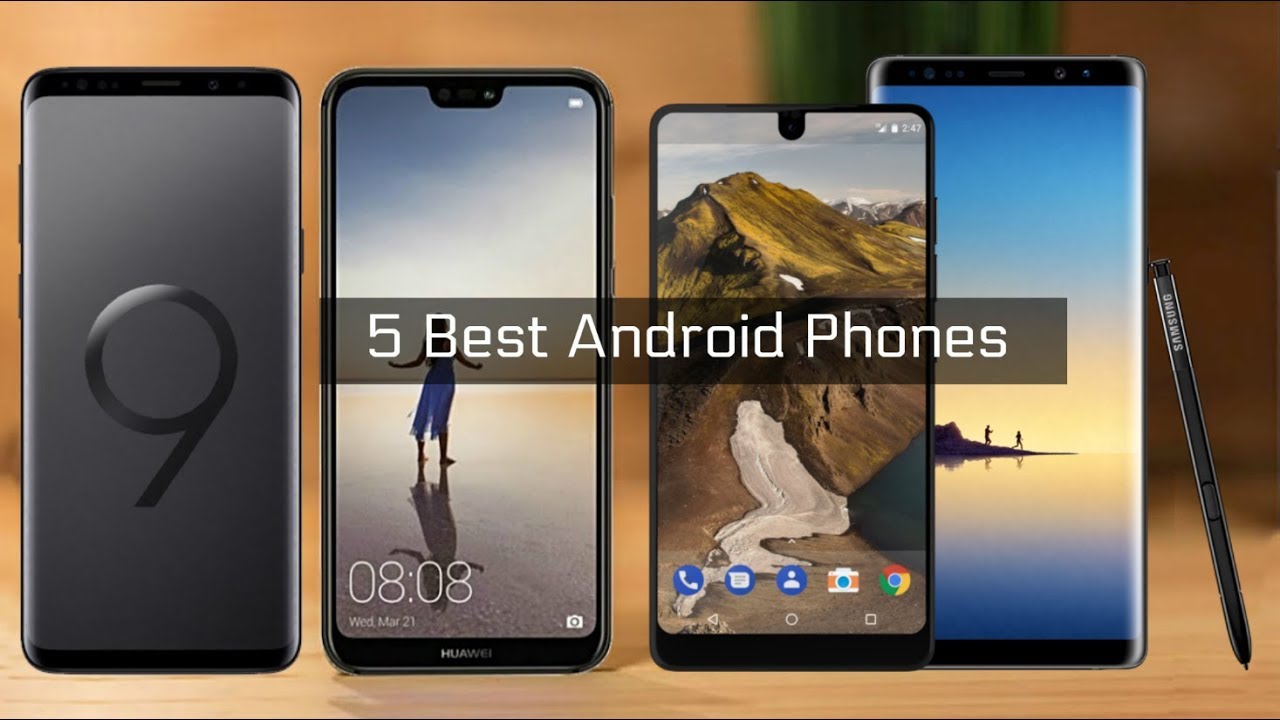
    Today we are gonna talk about the Top 5 Androids on the market. Four of the phones we will cover are staples. Android flagships and devices someone you know currently adores. The last one you may never have heard of, but mobile enthusiasts all over the world are raving about it and paying attention to new models. If you’d like to buy a premium Android phone today, this is what you need to consider.

    Samsung Note 9

    This is the big dog on the Android block. Despite its troubled past the Note 9 in new, improved and the Top Android Device for 2018.The  Galaxy Note 9 truly puts powerful technology in the hands of pioneers who demand more. Innovative features and design make it the only phone to keep up with the next generation of achievers. The Note 9 isn’t a radical design departure from its predecessor. It’s still a glass-and-metal sandwich, and the only significant aesthetic changes are new colors, slightly chamfered edges, and a better location for the fingerprint sensor below the cameras.

    How do you make it to the top of the Android list? If you are Samsung you start with a 6.4-inch Super AMOLED display. This is key, as any modern woman will tell you bigger is better. You take that screen and power it with the latest Snapdragon Processor. Snapdragon 845. It needs to have RAM, 6gb will do.. 8 it better. That is a lot of power in your pocket,4,000 mAh battery will be needed. That’s gonna get hot… Add in a  Water/Carbon Fiber cooling system. Bind this all with the latest Android software Google has to offer and you have the Best Android enabled mobile device…. The Note 9.

    Google Pixel 3

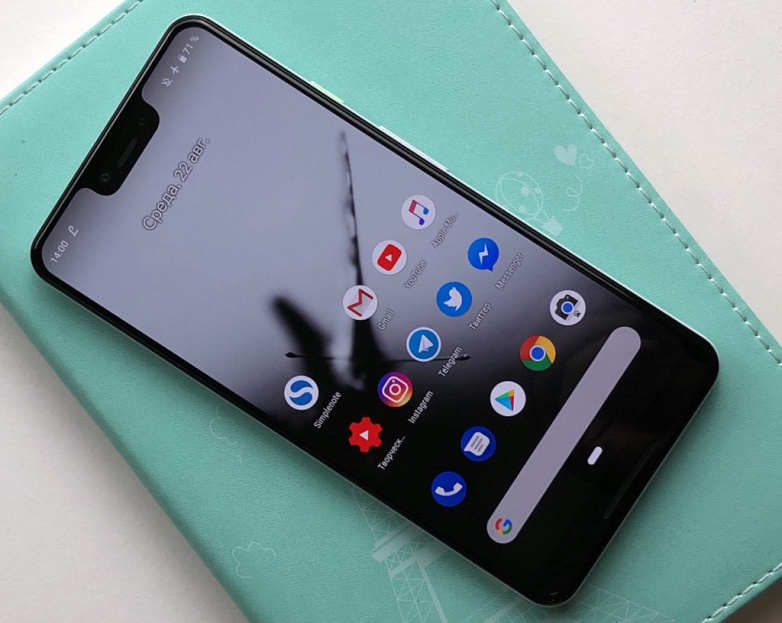
    The Pixel 3 takes brilliant photos, even in super low-light, with its single rear lens and it can capture wider selfie photos. It’s water resistant, has wireless charging and it can screen unwanted calls. I was most impressed by the vibrant and sharp photos it took with a single rear camera. Then it has Night Sight, it can brighten up even the darkest of scenes without a flash so well I cant comprehend its tech, or maybe it’s magic?

    The design of the Pixel 3 is delightful, with Google’s signature two-tone design has been retained on the back, with a small glossy section at the top which houses the camera module, and a matte section for the bottom 80 percent which has the centrally-placed fingerprint sensor near the top. It is lovely. Google switched to OLED screens in their flagships now and we’re glad they have. The higher contrast ratio really tells, especially in low light and dark conditions where true black stands out and back lights cause problems.With a 2,260 x 1,080-pixel resolution, the Pixel 3 display is stunning and gorgeous.

    What I like most about the Pixel 3 and the reason it hit the 2 spot in all of the Android universe  in the Top Android Device for 2018 is the device hardware and software are made by one company. This phone is designed inside and out to be fully compatible. Then is the Pixel 3’s groundbreaking artificial intelligence (A.I.) inside. The Pixel 3 can do things no other phone can. A lot of these A.I. smarts reside in the camera, which we’ll get to soon, but Google Assistant is growing more useful by the day and there are other genuinely helpful features in here that add up to a great experience.

    Samsung S9

    The Galaxy S9 once again proves Samsung’s formula of a gorgeous 5.8-inch screen, sexy dual-curved design and terrific camera for well-lit shots can’t go wrong. Whiplash-fast speeds, wireless charging and water resistance complete the package. And it looks stunning in purple and blue.

    Content with the design and appearance of the S8, Samsung focused its efforts on small, mostly unseen changes that result in a better overall experience, but not a dramatically different one. That isn’t to say the Galaxy S9 and the larger S9 Plus are bad phones; the S8 was an excellent phone last year, and the S9 builds on that.

    So, what is actually new? Two things: the fingerprint scanner has been moved to a much easier-to-reach spot on the back of the phone, and the single speaker has been upgraded to a stereo pair. In an obvious attempt to replicate Apple’s Face ID system, Samsung has introduced a new combination face-scanning / iris-scanning feature that can be used to unlock the phone instead of the fingerprint scanner.

    The rest of the S9’s improvements are under the hood: it’s running Qualcomm’s latest processor (in North America; other markets will see Samsung’s own Exynos processor), 4GB (S9) or 6GB (S9 Plus) of RAM, and a new LTE modem that supports even faster gigabit speeds. Those are specs we’re likely to see in almost every Android flagship this year, but Samsung is the first with them out of the gate. The design, display, and specs of the S9 bring zero surprises, but they are the things that influence your day-to-day use of the phone more than anything else. For the most part, Samsung nailed the basics and is the 3rd best Android in 2018.

    LG G6

    If you long for an Android flagship phone but can’t stomach the high prices of the Google Pixel 3 and Samsung Galaxy S9, the LG G6 will prove an attractive alternative. Though the G6 uses a slightly older chipset – the Qualcomm Snapdragon 821 rather than the Snapdragon 835 used in the S8 and Pixel 2 – few notice a performance difference in practice. The G6 also ditches the unusual modular design of last year’s LG G5 in favor of a more traditional unibody design with a non-removable battery and an elongated screen. Though some may regret the fixed battery of the G6, its battery life is superior to that of the G5.

    Like most current flagship phones, the LG G6 features dual rear-camera lenses. Unlike with some other phones, though, the purpose of the dual lenses isn’t to enable the G6 to capture portraits with blurred backgrounds. Instead, the lenses enable you to switch between standard and wide-angle shots. The G6 also includes a built-in app that enhances the process of capturing square photos for Instagram. Thanks to the dimensions of the G6’s display, you can view your most recent square photo on one half of the screen while viewing a live feed from the camera lens on the other half of the screen.

    Though the LG G6 may lack the latest and greatest hardware – not to mention the eye-catching designs – of the Google Pixel 3 and Samsung Galaxy S9, it still manages to give you a true flagship phone experience at a significantly lower cost and ranks as the 4th best Android phone in 2018.

    Red Hydrogen One

    A lot of you have not heard of this one. You should. The Hydrogen one  Holographic 4-View (H4V) capture, your content isn’t just seen. It’s felt. From an exotic sports car’s shine to the last rays of the sun at dusk, H4V capture produces beautiful lighting effects with dynamic textures, glitters and light shafts. Welcome to the end of flat content. It is true innovation in the realm of mobile devices, the kind of innovation you can only get with a top Android device.

    he Hydrogen One is defined by its ambition. It’s meant to revolutionize not just phones, but all of media with a “holographic” display and a camera system capable of recording into this 3D format. The phone is also expandable, and RED — one of the most esteemed names in digital imaging — plans to release an add-on camera sensor that’s capable of transforming the phone into a full-on cinema camera.  Imagine a full cinematic camera in the pockets of all our next great film makers and artist. This may not be the commercial success it should be, but time will yield this to be the beginning of a revolution and for that alone it gets the 5 spot for the Top Android Device for 2018.


  • Google Pixel 3 Leaks

    Google Pixel 3 Leaks

    Google will hold an event on Tuesday, October 9th, starting at 11AM ET. This will be to unveil the Google Pixel 3. This is the latest and 3 incarnation of googles flagship smartphone. The last 2 have been impressive and the 3 is looking to follow suit. Lets take a loot at what we know already. Lets sort through all the Google Pixel 3 Leaks

    The Google Pixel 3 is not much of a mystery. It  has been plagued with Google Pixel 3 Leaks info. In the lead up its launch everyone is showing off the screen, colors, wireless charging capabilities, cameras, and more.  The Pixel 3 XL  has a 6.3-inch screen, 128GB of storage space.The Google Pixel 3 has some impressive and unique  gestures. The specs line up with a disappointing expectations: it uses Qualcomm’s Snapdragon 845 chipset, only has 4GB of RAM and a 3,732mAh battery. Pretty standard, and standard for the Google Pixel 3 is a tremendous waste.

    The phone’s cameras info has leaked and looks equally uninspiring. We are hearing it has a 12.2-megapixel main camera, as well as a pair of 8-megapixel front-facing cameras, which allows it to take extra-wide shots.The primary camera is said to be capable of recording 4K videos at 30fps while the front is ‘limited’ to 1080p. Again I find this uninspired. Various images of the Google Pixel 3 XL corroborating previous leaks reveal a notch-style display. The device could be seen featuring minimal bezels on the front-fascia with a slightly thick chin at the bottom. From the backside, the Google Pixel 3 XL seems to carry similar design cue to that of the Google Pixel 2 XL with a mix of glass, aluminium and a circular-shaped fingerprint sensor at the center.


    The Final Google Pixel 3 Leaks Thought

    tiple leaks and reviews say the retail box suggest that the phone bundle a few accessories that include a USB-C dongle, a pair of USB-C earphones, USB-C to USB-C cable, a USB-C to USB-A dongle and an 18W USB-C two-pin power adapter. You are probably asking yourself how all this info got leaked, so we have so much details. Well apparently a Honk Kong Retailer is already selling the Google Pixel 3.

    If you still care to follow Google will hold its Pixel 3 event on October 9 at 11am ET. Besides the new Pixel 3 series, the Mountain View company is expected to unveil a “Home Hub,” a new Chromecast and a Chrome OS tablet or the Pixel Slate as it is being called at the event.


  • A Google One Subscription and I Didnt Even Know It

    A Google One Subscription and I Didnt Even Know It

    Way, way back, all the way to a few months ago, Google announced Google One. Their new subscription program for getting more Google Drive storage and other increasable but not Amazon Prime deals and subscriptions. Remember this? Me either, but Over the course of the last few weeks, Google slowly rolled existing Drive subscribers over to a Google One membership and starting today, new users can sign up for a One subscription, too. I attempted to sign up, only to find I had signed up years ago while testing an android phone. Apparently Google got me on a $1.99 service for 50 GB of extra cloud service and I have been paying this for almost 3 years with no Idea.

    Google One, Google Drive

    Google has been slowly upgrading existing paid Google Drive users like me to One over the past few months. Then today came and now is the first time people will be able to sign up for One rather than getting Drive and then being upgraded at random. Oh happy day. Google One plans start at 100 GB for $1.99. There’s also a 200 GB tier for $2.99 and a 2 TB option for $9.99. If you need even more storage space, Google will happily sell you 10 TB, 20 TB and 30 TB plans for between $99.99 and $299.99 per month.

    One nice feature of these new plans is that you can share your storage allotment with up to five family members. For another unrelated reason One subscribers can get deals on hotels when you search for them in Google Maps. Google also gave all One members credits on Google Play and the company today said that it’ll soon offer members deals for purchases in the Google Store and through Google Express. Ok Google you apparently have had my subscription for years now and now you have my attention.

    The Final Thought

    One thing did perk my ears and get my mind rolling. With the family sharing feature that will let the main account holder designate and assign out invitations to family members who in turn can use as much data as they want. The option makes for a more effective use of storage. This means, I can buy the 200 GB plan, upload my movie collection of 100 GB. I can then allow invited “family” members to access it and also designate them out storage to hold their video libraries. Thus giving me access to it. Ok so who is purchasing SOLO?

  • Android Pie Available Now on Pixel Phones

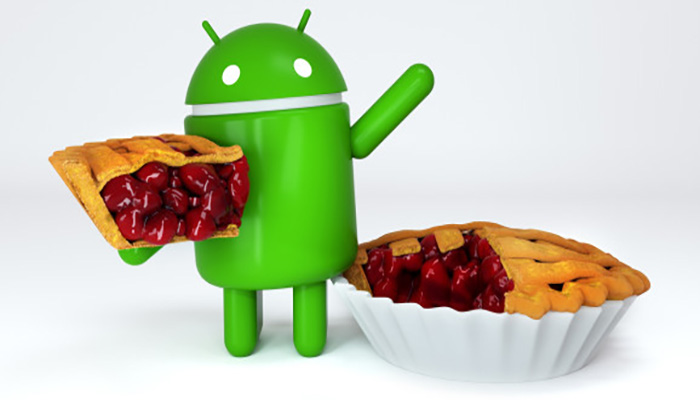
    Android Pie Available Now on Pixel Phones

    Android P, now officially named Android Pie, is available now on Google’s own Pixel phones. It will be rolled out to other phones near the end of the year, or maybe early in 2019. In any event, the Android OS powers around 90% of all smartphones on Earth, so any updates to it will affect a huge portion of the population. Today, we’re looking at the new features and characteristics you’ll find in the newest Android OS.

    Notch Support

    This one’s a big more of an under-the-surface upgrade, but you’ll notice it if your phone has a notch at the top. The top notch, popularized by Apple’s phenomenal iPhone X, is a divisive design feature, but it’s here to stay. The support for notches is baked into the new Android OS, allowing apps to be made with a few different notch styles in mind. These easy designs will make the apps cleaner, clearer and have less information lost by the notch placement. Win-win!

    Gesture Control

    In another iPhone X-inspired upgrade, Android Pie allows for gesture controls. This is likely to preempt the removal of a home button from various upcoming Android phones. Home buttons are likely to go the way of the headphone jack: eliminated for space. Home buttons take up valuable front-space, taking away from full-screen displays that run edge-to-edge.

    Android Pie: The AI Operating System

    AI is the future of smartphones. Android Pie is leaning into this future with several functions that will help make your phone more efficient and save your battery. The first of these is “slices” of apps appearing when you need information. For instance, if you’re looking for movie showtimes, Android will show you slices of the Fandango app for ticket prices and showtimes without opening the app itself. This saves you time and saves your phone’s battery.

    Another functionality that is AI-powered coming to the Android OS is app suggestions. These suggestions follow your trends for when and where you open different apps. By intelligently spinning up apps you often use before you need them, the OS will be more efficient, battery-saving and modern. What’s not to love?

    Availability

    Android Pie is available on Google Pixel smartphones now. It will be rolled out to other smartphones that use Android over the next few months. Stay posted for updates, we’ll bring them to you as more information is made available!

  • FCC Rules with Google on Fiber Anti-Competition Rules

    FCC Rules with Google on Fiber Anti-Competition Rules

    In an odd development that shows that the FCC is uncertain of the types of policy it wants to enforce, they’ve ruled in favor of Google in a recent turn of events. The rule is called One Touch Make Ready, and it’s a bit of a complex issue, especially given the FCC’s stance on Net Neutrality. The main aspect of OTMR rules holds that broadband providers who are adding new lines to utility poles can move competitors wires themselves to make room for their lines. This encourages competition, as previously telecom companies were in no hurry to roll their trucks out to move their wires for their competitors.

    FCC Rules in Favor of Google

    This OTMR ruling is beneficial for Google, who have been slowly rolling out their fiber broadband network to various cities. They encountered a significant slowdown when competitors like Comcast and AT&T proved very slow in making room for them on utility poles. While this foot-dragging is certainly in poor spirit, it’s understandable. If you were in charge of a business, would you be in any hurry to accommodate your competition? As such, rules allowing newcomers to simply move the existing lines themselves make sense from the stance of anti-competition.

    Mixed Signals

    The FCC last year voted to take away Obama-era protections for broadband internet. The Net Neutrality vote is called the “Restoring Internet Freedom Order,” an ironic (and erroneous) name. Under the previous definition, Title II protections extended to broadband internet. This meant providers had access to all utility poles for broadband. However, since Pai led the gutting of these protections and defined broadband internet as not being telecommunications (no, seriously) these protections no longer apply.

    This ruling, then, is in seeming opposition of that ruling. Why would the FCC act pro-competition now when they were so anti-consumer a few short months ago? That said, we don’t want to give you the wrong idea. In broad strokes, this promotes competition, which is good for consumers. If this marks the start of a change of character for Pai’s FCC, then all the better. That said, one worries when the other shoe will drop. After all, we’re dealing someone who was recently quite eager to gut Obama-era protections.

  • EU: Google to Pay $5 Billion in Anti-Trust Fines

    EU: Google to Pay $5 Billion in Anti-Trust Fines

    Google takes a hit today as the European Commission hands down a ruling stating that the company is to pay 4.34 billion euros. That equates to $5 billion in fines, all related to anti-trust laws in the EU. The fines are in relation to the Android operating system. According to the Commission, the way that Android comes pre-installed with things like the Google Play store gives the company an unfair advantage in searches. As such, they have positioned their own search engine in such a way that meaningful competition can’t occur.

    The European Commission’s Anti-Trust Fine

    “Google has used Android as a vehicle to cement the dominance of its search engine,” said EU competition commissioner Margrethe Vestager. “These practices have denied rivals the chance to innovate and compete on the merits. They have denied European consumers the benefits of effective competition in the important mobile sphere. This is illegal under EU antitrust rules.”

    As such, the aforementioned fines will be laid at Google’s doorstep, and the company must change its operating system to be compliant with EU rules. This could include no longer shipping devices with Google apps like YouTube, Google Maps and the Google Play Store preinstalled in Europe.

    Google’s Response

    In response, Google has appealed the decision. Google CEO Sundar Pichai has defended his company against the claims of monopoly. Pichai reminded the EU that Google faces competition in the smartphone field from Apple and their popular iPhone brand. Additionally, Pichai reiterated that users are allowed to install non-Google competitors’ apps on their phones.

    Further, Pichai reminded the EU that Android has led to a diversification of the number of smartphones in the world. Since Google offers Android to any manufacturer free of charge, the number of different handsets has exploded. As such, Google argues, it’s only helped competition, not hindered it.

    Following Google’s appeal, the EU will take a second look at the charges and fines. This fight’s hardly over, but it seems the EU has taken it upon itself to act as international trust-buster.

  • Feature Roundup: Google Assistant Visual Snapshot

    Feature Roundup: Google Assistant Visual Snapshot

    Google’s push for its assistant to make your life easier continues with the Visual Snapshot. Featuring a dashboard that helps you organize your life at a glance, Visual Snapshot is set to revolutionize how you interact with your virtual assistant. It’s set to go live soon, and we’re pretty excited about it!

    What’s the Deal with Visual Snapshot?

    The feature’s first and foremost function is its use as a personal assistant. It’ll remind you of flights and reservations, of course, and even tells you how much traffic is between you and your destination. The first page is entirely dedicated to these travel times, since your life is certainly busy enough that you need to keep ahead of traffic.

    That’s not all it does, either. It can remind you of when deliveries are expected to arrive. The assistant can remind you about movies and events you’ve got tickets for, or appointments you’ve made. All of the cards that host this information are available in the app, and the AI that runs it will curate the information based on where you are. For instance, if you’re at the office, you’ll see traffic info for how to get home the fastest. If you just walked in the door, you might see a notification about when your grocery delivery is arriving.

    Proactive Notifications

    The most interesting feature in the new Snapshot is proactive notifications. These are notifications you receive if your plans need to change. For instance, if your dinner reservation is at 8, but traffic is very heavy, you might be prompted to leave early to make it on time. If your flight gets a delay, you’ll be notified. You can even be notified of bills that need to be paid so that you aren’t caught off guard.

    When Can I Try It?

    Visual Snapshot is launching later this week! You can access it through your Google Assistant or through an iOS app. Get ready to get organized as this new feature rolls out!