Tag: tesla

  • Breaking News: You Can Now Rent Tesla Solar Panels for Super Cheap

    Breaking News: You Can Now Rent Tesla Solar Panels for Super Cheap

    Tesla CEO, Elon Musk, declared that 2019 would be “the year of the solar roof,” when launching a new program that lets homeowners rent Tesla solar panels for just $50 per month! An average solar installation will save homeowners tens of thousands of dollars over its lifetime. A green investment and passive income!

    Save money and our planet with renewable energy
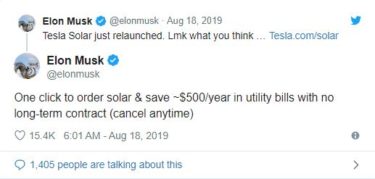
    Elon Musk took to twitter early Sunday morning to pitch Tesla’s new solar rental program. Tesla’s sales pitch for choosing the rental option is that it will be cheaper, quicker, and less of a burden for homeowners to get solar panels on their roof.

    According to Musk, the new program is “like having a money printer on your roof” for those who live in states with high energy costs. “Still better to buy, but the rental option makes the economics obvious.”

    Rentals now are available in six states: Arizona, California, Connecticut, Massachusetts, New Jersey and New Mexico. Tesla’s rental program will offer three solar panel packages, with no installation costs and no time commitment.

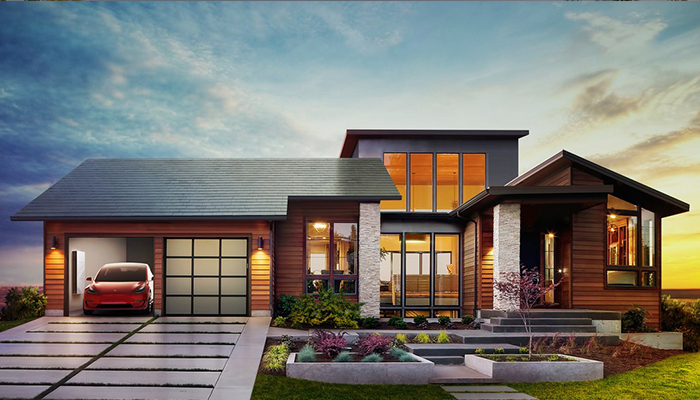
    Promising to make solar sexy, Tesla’s panels are virtually impossible to notice. The panels are nearly indistinguishable your neighbors normal roof tiles. To make these camouflaged solar panels, they created a special coating that becomes more or less transparent depending the angel you’re looking from.

    What’s this going to cost you?

    Under the new system, Telsa is offering customers the option to rent solar systems for anywhere from $50 a month for a small installation (except in California, where they start at $65 a month), to $195 for their largest installation. Customers only need to pay a fully refundable $100 charge. Tesla said customers can cancel the leases at any time.

    The rental rate varies by state and size of the system — small, medium, or large — but in all instances, the super cheap monthly fee covers anything from the hardware and installation to maintenance and support. According to the agreement, owners can purchase the system outright five years after it’s up and running, too.

    What’s the catch?

    For starters, Customers must own their home to have the panels installed. Tesla doesn’t require solar panel renters to sign a long-term contract and claims the process of signing up requires just “one click, instead of lengthy consultations and piles of paperwork.” While the contract can be canceled any time and renting Tesla’s solar panels might be cheap and easy, be aware that they will charge users $1,500 to remove the system once it has been installed.

    Just how powerful is the sun?

    According to the U.S. National Renewable Energy Laboratories (NREL), the amount of energy from the sunlight that falls to the earth in one hour could supply the world’s energy needs for an entire year! Powerful Indeed.

    What would it normally cost to purchase and install solar panels?

    Residential solar costs are at their lowest in over 30 years. For reference, Tesla sold the systems, which can cost upwards of $30,000, in Home Depot stores for several years, but now it relies entirely on direct sales like its electric vehicles. More affordable than ever, today’s residential solar panels feature technology advances that maximize power production.
  • Tesla Cuts Prices Across Product Range

    Tesla Cuts Prices Across Product Range

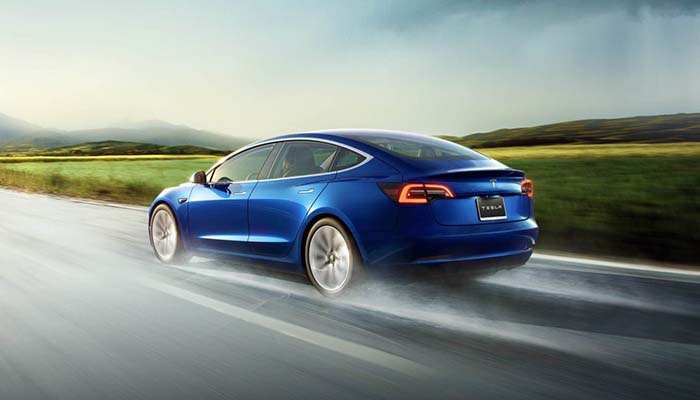
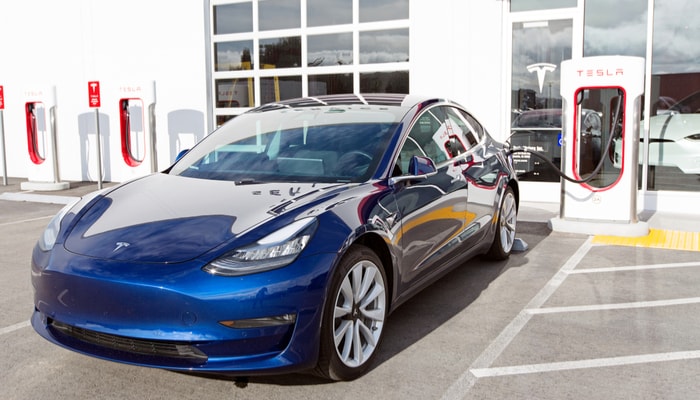
    Tesla, the fan-favorite controversial electric carmaker, has cut prices across their entire product range as the tax credits on their vehicles fades towards the end of 2019. Previously, before 2019 started, Tesla customers in the US could get a $7,500 tax credit. From January 1st on that credit declined to $3,750, and it’s now only $1,875; it’ll be gone altogether by the end of the year.

    In response to these tax credits vanishing, Tesla is doing its part to try to keep their luxury electric cars attractive to prospective buyers. These changes also include a few product shuffles of trim levels among the higher end of the range. Are the price cuts enough to keep the cars competitive in the market, or does this mark the end of an era for Tesla?

    Lineup Changes

    Starting on Monday, Tesla pulled the Standard Range versions of the Models S and X, leaving only the more expensive Long Range and Performance versions. At the same time, the Long Range Model S dropped down to $79,990 from $85,000. For comparison, the Standard Range Model S was $75,000.

    Oddly, the price of the Model S Performance trim went up to $99,990, where it was previously only $96,000. That said, the Ludicrous mode option is now standard, while it used to be a $20,000 upcharge. The Ludicrous Mode lives up to its name, offering absurd acceleration and speeds.

    Price Cuts

    As for the more affordable Model 3, it’s now seen price cuts across its entire range. Previously, the $35,000 Stander Range Model 3, long promised by Musk, was pulled in favor of the Standard Range Plus. The Standard Range Plus started out at $39,500, though it’s now been reduced to $38,990.

    On the higher end, the Long Range Model 3, which allows for significantly more range, is now down to $47,990, a solid $1,500 cheaper than its previous price of $49,500. The highest trim level of the Model 3, the Performance Model, received the steepest price cut, dropping all the way from $59,500 to $54,990. That’s nearly $5,000 off of one of the best cars on the market!

    Clearer Product Lineup

    This does a few great things for Tesla. Namely, it cleans up the product line dramatically. Previously, there was little distinction between the high end Model 3s and entry-level Model Ss. Now, instead of being a bit more muddied, it’s clear that there’s a distinction between the two vehicles. The high-end Performance Model 3 comes in at $54,990, while the low-end Long Range Model S starts way above that, at $79,990.

    Previously, it was entirely possible to outfit a Performance Model 3 with so many options that it was nearly as expensive as the entry-level Standard Range Model S. Now, it’s significantly more clear that there’s a hard distinction between the two products.

    How Important is This?

    It’s worth noting that this just means that the Model 3’s Standard Range Plus and Long Range options are overall more expensive than when the full tax credit was still available. These price drops do little to make the vehicles more affordable to people who were already unable to afford a Tesla.

    That said, if you’re the kind of person who was already looking into getting a Tesla, but waiting on notable price cuts now’s your time to consider it more seriously. The inclusion of Ludicrous Mode on the Performance Model S for only $99,990 makes it one of the best deals on the absurdly-powerful Tesla. Likewise, anyone interested in the Performance Model 3 should consider picking one up now that they’re only $54,990, a solid $5,000 less than they were a week ago. That’s a hard deal to pass up if you’re in the market!


  • Tesla Model S, Model 3 Post Results in Tire Rack One Lap of America

    Tesla Model S, Model 3 Post Results in Tire Rack One Lap of America

    It’s no secret that Tesla’s electric vehicles have some ludicrous performance. Whether they’re being compared to other electric vehicles or conventional cars, Tesla’s vehicles can seriously burn some rubber. That was put to the test at this year’s Tire Rack One Lap of America, one of the most notorious street races in the world.

    Tesla Model S, Model 3 Posting Big Results

    The One Lap

    The Tire Rack One Lap of America, better known as the One Lap, is a direct offshoot of the legendary Cannonball Run. Cannonball Run itself was an infamous outlaw street race that started in New York and ended in LA. The modern One Lap race is much more, ahem, legal, than its predecessor, but it is no less grueling.

    One Lap consists of no less than 3,500 miles of transit and endurance-testing tracks all across the country. In short, both driver and car better be made of some stern stuff to tough out the One Lap street race.

    The Standings

    Impressively, the Model S and Model 3 teams not only both completed the race, they posted serious results. In fact, the Model 3 landed the top spot among the Alternative Fuel class and second place in the Stock Touring class. Overall, the Model 3 team finished 17th out of 77 entrants in the One Lap race.

    The Model S also posted impressive results, though it was somewhat hindered by its own battery overheating while on the track. Unlike the Model 3, which offers a Track Mode and has great thermal management, the Model S was consistently having its battery overheat and offering less power for the team to pull from.

    What This Means

    While it could be some time yet before electric cars are posting huge wins in every category, this is impressive for a pair of cars from a relatively new automaker. Perhaps in ten years an electric performance vehicle will bring home the trophy in the One Lap street race!

  • Tesla Being Sued Over Fatal Autopilot Crash

    Tesla Being Sued Over Fatal Autopilot Crash

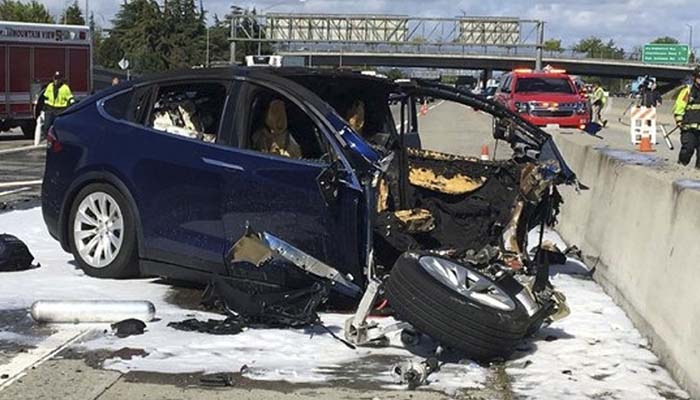
    Surprisingly, luxury automaker Tesla is being sued over a deadly crash that occurred in early 2018. The family of Walter Huang, who died in a tragic accident when his Model X hit a central concrete median, has filed a wrongful death lawsuit. The suit claims that Tesla’s autopilot feature was to blame for Huang’s death, not his own inattentiveness at the wheel.

    Tesla Being Sued over Autopilot

    The Crash

    Huang was 38 when he passed away on March 23, 2018. He was driving in Mountain View, California, deep in Silicone Valley, when his autopilot misread the lane and didn’t brake before striking the concrete median. According to the complaint, not only did Huang’s vehicle not brake, it accelerated into the barrier.

    Mark Fong, a partner at a firm that is representing Huang’s family, released a statement. He stated that Tesla is “beta testing its Autopilot software on live drivers,” and that “The Huang family wants to help prevent this tragedy from happening to other drivers using Tesla vehicles or any semi-autonomous vehicles”.

    The Suit

    The lawsuit alleges that Tesla holds liability for Huang’s death due to a defective product design. The suit also alleges that Tesla failed to warn drivers enough about the autopilot system’s limitations, and that they intentionally misrepresented the system and advertised it falsely.

    The complaint does not specify the amount of damages the plaintiffs are seeking. However, it does name the State of California as a defendant for not replacing the guardrail that should have surrounded the median that Huang hit. Presumably, that guardrail would have greatly reduced the impact of the crash.

    Tesla’s Response

    As of yet, Tesla has made no formal response to the complaint. Likewise, the State of California has made no statement regarding the suit. It is worth noting that when news of Huang’s death was made public, Tesla stated that “safety is at the core of everything we do and every decision we make, so the loss of a life in an accident involving a Tesla vehicle is difficult for all of us.”

    At the time of that news breaking, Tesla expressed deep sadness over the crash. However, official reports stated that, despite Tesla warning drivers to keep their hands on the wheel and remain attentive while using autopilot, “the vehicle did not detect the driver’s hands on the steering wheel in the six seconds before the crash.”

  • Tesla Model 3 Receives a Price Cut, Not Yet at $35,000

    Tesla Model 3 Receives a Price Cut, Not Yet at $35,000

    The promise of the Tesla Model 3 is that it will one day be sold for $35,000, making it an “affordable” way to own an electric vehicle. However, as of yet, that price is not a reality. The Model 3 has just received a starting price cut down to $42,900 before incentives, making it $1,100 cheaper to start than it was. So, what’s new with the Model 3?

    Tesla Model 3 Price Cut

    Referral Program

    In regards to this relatively minor individual price cut, Tesla has stated that the ending of the referral program is responsible. Their referral program allowed Tesla buyers to get a credit toward their vehicle if they recommended a friend, a move that was meant to generate word-of-mouth marketing. Judging by the brand’s high profile and long waiting lists, however, it seems they need no further advertisement.

    Target Price

    Tesla has repeatedly stated that $35,000 is their target price for the Model 3. They wish to hit that number before tax incentives and without factoring in savings of not buying gasoline. Tesla’s website works in around $4,000 of savings on gasoline into the price of a Tesla when calculating “savings,” but that’s no help for those without the money up-front to pay for a luxury vehicle.

    At present, the least expensive Tesla on the market would run a consumer $39,150 after applying the federal tax credit for electric vehicles. This credit is set to be reduced by half by July, making Tesla vehicles that much more expensive.

    When to Buy

    For those wishing to own their own Model 3, it can seem like there’s no good time to purchase the vehicle. The waiting lists remain long, the price remains high and tax incentives are getting slashed each year. It can be difficult to determine when the right time to buy a Tesla is for the average consumer.

    Elon Musk has stated that the process of getting the Model 3 to the target price has been “a grind,” and that the economy of scale on the project remains an issue. In the meantime, the average consumer is left with no time-table on when the right time to think about buying a Tesla is.

  • Tesla Model Y Closer than We Think?

    Tesla Model Y Closer than We Think?

    Tesla CEO Elon Musk surprised investors on the Q4 earnings call be hinting at some new info regarding the upcoming Tesla Model Y. The Model Y, which is set be a companion to the affordable Model 3 sedan, will apparently share as much as 75% of its parts with the Model 3. This is huge news and lends credence to the idea that the Model Y could be in production by 2020.

    Tesla Model Y Production

    Model Y Specs

    We don’t know a lot about the Model Y yet. At time of writing, the best guess that industry analysts have is that the Model Y could be some type of crossover. Tesla’s affordable Model 3 vehicle is a full-sized sedan, so it only makes sense that an SUV would be its sibling.

    After all, the SUV is on track to pretty much kill off the sedan in 2019. Very few carmakers still post profits on their sedans, with Tesla being a rare exception. If Tesla wants mainstream success across the US and global markets, an SUV-style electric car may be just what they need.

    Production

    On the call, Musk made it clear that the Model Y is intended to sport nearly 75% of the same parts as the Model 3. This is a big twist for the company and heartens investors slightly. After all, ramping up to full-swing production was quite the hurdle for the Model 3, as the machining process to get the vehicles ready was daunting.

    However, with those parts already created and ready to go, it’s looking like the Model Y can capitalize on the work that’s already been done. If Tesla is able to take advantage of its existing manufacturing, the overhead for the Model Y could be markedly lower and help the company post much better profits on the Model Y.

    Location

    Rumor has it that Tesla is looking to expand from their production facility in Fremont for Model Y production. Currently, the Model S, Model X and Model 3 are all manufactured at that production facility. It makes sense that they’d want to branch out, given the Fremont facility is rather close to being at capacity.

    Just last year, when Tesla was pushing to meet demand for Model 3’s, the Fremont facility had a tent added on for production. It was a silly time and showed just how slam-full the Fremont facility is.

  • Tesla Production for Model 3 Triples in Second Quarter

    Tesla Production for Model 3 Triples in Second Quarter

    After some recent controversy, a lawsuit against a saboteur and some unpopular layoffs, Tesla has some good news. After releasing the production numbers for the second quarter of 2018, the company has seen a three percent uptick in stock prices. It seems they kept their self-set goal of ending July producing more than 5000 Model 3’s per week. This is good news for the company as it seeks to fulfill the record-breaking orders for Model 3’s. This uptick in Tesla production indicates the potential for a profitable third quarter, a rare sight for the ambitious automaker. 

    Tesla’s Profit Loop 

    Tesla doesn’t often turn a profit. This is an odd piece of trivia for a company this big and this ambitious, and it is especially disappointing when one considers the recent layoffs. That said, this uptick in Tesla production does bode well for the company’s bottom line. The question is, will the company follow its typical loop that it follows after a profitable quarter? The few times Tesla has turned a profit in the past, it has immediately funneled that cash into production of a new vehicle.  

    When the Model S, and later the Model X, began to turn profits, production on the next vehicle would rapidly devour those profits. This is consistent with a company that aims to radically change the face of transportation, but it’s frustrating for investors and enthusiasts alike. 

    Tesla Production of Model 3’s Could Be Different 

    The Model 3 production line could be different for the company, though. As their first mass-market car, the Model 3 is meant to make the company a household name. While the Models X and S were experimental proof-of-concept style cars, the Model 3 is meant to be for anyone who wants an electric car. So, maybe this time Tesla will actually just make a profit and be okay with that.  

    No one expects them to stop planning for new cars, like the Roadster and Model Y concepts. It would, however, be nice to see them focus on just producing good, affordable electric cars. Especially in light of their recent layoffs and the controversy surrounding recent accidents with Autopilot, a bit of goodwill will go a long way for them. In the meantime, Tesla has expressed its goal for August is to produce more than 6,000 Model 3’s per week. It seems like they might just do it. 

  • Tesla Employee Sued Over Alleged Sabotage

    Tesla Employee Sued Over Alleged Sabotage

    Following the recent news that Tesla believed it had been sabotaged, the company has sued former employee Martin Tripp. The lawsuit claims that Tripp, who worked at the company’s factory in Nevada, stole trade secrets and sent them to unknown third parties. If true, this could be a partial explanation for the ongoing struggles to meet Model 3 production numbers. Such corporate espionage gives new perspective on statements from CEO Elon Musk that seemed paranoid earlier this week. 

    Tesla’s Statement 

    Regarding the incident, the electric automaker had this to say.  

    “Tesla has only begun to understand the full scope of Tripp’s illegal activity, but he has thus far admitted to writing software that hacked Tesla’s manufacturing operating system (“MOS”) and to transferring several gigabytes of Tesla data to outside entities. This includes dozens of confidential photographs and a video of Tesla’s manufacturing systems. 

    Beyond the misconduct to which Tripp admitted, he also wrote computer code to periodically export Tesla’s data off its network and into the hands of third parties. His hacking software was operating on three separate computer systems of other individuals at Tesla so that the data would be exported even after he left the company and so that those individuals would be falsely implicated as guilty parties.” 

    Public Image 

    The ambitious car company is likely eager to have this issue brought to the light, as it helps paint them sympathetically. Their recent struggles to meet production goals, coupled with recent fatalities related to Auto Pilot, haven’t helped their public image. However, being portrayed as the victims of corporate sabotage could help the company’s image and garner sympathy. Indeed, if Musk is to be believed, Tripp isn’t the only saboteur. While Musk hasn’t elaborated, he tweeted the following. “There is more, but the actions of a few bad apples will not stop Tesla from reaching its goals. With 40,000 people, the worst 1 in 1000 will have issues. That’s still ~40 people.” 

    While the company’s public struggles are well-documented, the company maintains that they’re on track to have a profitable third quarter. Soon, the company will have to divulge production numbers for the Model 3 for the past few months. Short sellers, people who stand to gain money if Tesla’s stocks drop, have been cautioned by Musk that their position will “explode” soon. We’ll see soon how things shape up for the innovative automaker.  

    Feature Image Credit: CNBC 


  • Elon Musk Claims Sabotage of Tesla Model 3 Production

    Elon Musk Claims Sabotage of Tesla Model 3 Production

    The Tesla Model 3 has been a hotly-anticipated vehicle. However, prospective owners have been stymied by the car’s notorious production shortages. However, it seems that circumstances out of Tesla’s control may have led to some of their recent troubles. In an email obtained by CNBC, Tesla CEO Elon Musk claimed an unnamed employee has been actively working to sabotage production of the electric vehicles.  

    Betrayal from Within, or Corporate Sabotage? 

    Musk claims in the email, which was sent to all Tesla employees, that the unnamed employee is guilty of a wide range of sabotage efforts. Those efforts include directly tampering with code related to production systems and the leaking of confidential information to third parties. According to the email, the employee had become hostile to the company following the company’s refusal to promote them.  

    Musk, however, further elaborates that the sabotage was likely more to do with competitors than a personal vendetta. In the email the Tesla CEO reminds his employees that oil and gas companies are known for their underhandedness. As such, blame for these willful acts of sabotage may well lay at the feet of one of those companies. While the employee in question may have truly been disgruntled with the company, a hefty sum of cash from an oil company could have galvanized them to commit such acts. 

    Other Troubles for Tesla 

    The electric car manufacturer has had their share of other production issues. For instance, just this week, the company reported its fifth factory fire in the Model 3 production facility. In light of the news that sabotage from within is being fielded, that high number of fires could be further evidence.  

    Maybe Tesla’s production issues can truly be ascribed to sabotage by the infamously-malicious oil industry. Then, their difficulties shipping Model 3’s are much more forgivable. If these allegations are true, here’s hoping the culprits are brought to justice. If these allegations aren’t true, then the question still stands: what is going on at Tesla? 

  • Tesla, Autopilot and Self-Driving Cars: Responsibility vs Marketability

    Tesla, Autopilot and Self-Driving Cars: Responsibility vs Marketability

    Elon Musk is a magnetic and charismatic man. His companies, Tesla, SpaceX and the Boring Company all promise to redefine transportation. And, to a degree, they have. The Tesla Model 3 was the most hotly-anticipated car of all time. The SpaceX program has made promising strides in the realm of proposed commercial space flights. The Boring Company recently signed a deal with Chicago to bore a tunnel from O’Hare International to Downtown Chicago.  

    Yeah there is a specter looming, and it’s expectations. Musk and Tesla have poorly communicated and obfuscated the capabilities of Tesla’s Autopilot feature. In a recent Tweet, Musk referred to an upcoming Autopilot update as offering “full self-driving features.” This is in spite of a few fatal crashes that are purported to have happened due to overreliance on the Autopilot system. At what point does murky marketing language become irresponsible? What is the culpability of Musk and Tesla in these deaths? 

    The Walter Huang Incident 

    Walter Huang was killed when his Tesla impacted a central lane divider on a California highway. His vehicle was being controlled by the Autopilot software at the time of his death. The vehicle had been on autopilot for about 19 minutes when Huang died. Reports after the incident described the event as having occurred due to Huang’s overreliance on the Autopilot software. However, what degree of culpability can be said to rest with Tesla, and its CEO? Elon Musk is renowned for overhyping his vehicles and referring to Autopilot as “Self-Driving.”  

    “Self-Driving?” 

    Another fatal incident in Florida occurred in 2016 involving a Model S in Autopilot. More recently, Teslas in Autopilot have gotten in incidents involving parked fire trucks in both Salt Lake City and Los Angeles, respectively. These incidents have led to a more “nagging” reminder system in Teslas, reminding drivers to keep their hands on the wheel and eyes on the road. However, many have commented that such features actively contradict claims that the system is self-driving. 

    While the Autopilot software is certainly impressive, it is clearly not self-driving. Assertions by Musk to the contrary are irresponsible at best and downright negligent at worst. As long as the system is causing fatal accidents and requires constant driver monitoring, it can’t be called self-driving. Calling it anything other than what it is, which is advanced cruise control, is anti-consumer and dangerous.  

    Maybe the day will come when Tesla vehicles are truly self-driving. Perhaps Tesla is on the verge of a breakthrough, and next year their vehicles will be totally autonomous. However, until such a day that the system doesn’t cause fatal accidents, that promise might as well be for a distant future we will never live to see.