Category: Smart Devices

  • The History of the Smartphone: How We Got Here

    The History of the Smartphone: How We Got Here

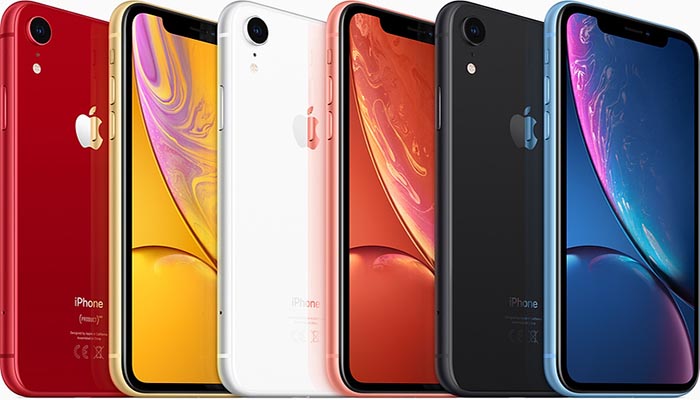
    For most people, the smartphone era began in 2007, with the landmark release of the Apple iPhone. While this was a huge moment in the history of smartphones, the iPhone wasn’t the first. In fact, as far back as 1992, a commercially-available device was unveiled by IBM called the Simon Personal Communicator.

    The History of the Smartphone

    The First Smartphone

    The very first smartphone, the Simon Personal Communicator, was first unveiled in 1992. It was made available or consumers in 1994, sporting an astonishing price tag of $1,100. If that sounds like a lot for today, imagine how much it was in the mid-90’s!

    The SPC was a revolutionary device at the time, sporting a monochromatic display and some rudimentary features that might be recognized now as apps. Email access, an address book, access to your faxes (ha) and even a touchscreen display were all at play with this device.

    Now, the Simon Personal Communicator was a mild success, selling 50,000 units in six months. However, it would go forgotten to the sands of time for roughly a decade. In 2007, Apple perfected what IBM started.

    The iPhone’s Impact

    Before 2007, the SPC could be seen as a bit of an aberrant blip in the world of cell phones. However, when Apple blew the doors open on full-screen smartphones, it was a revolution. The elegant full-screen phone was an instant smash hit, with other manufacturers rushing to duplicate Apple’s success.

    An early example of one such imitator was HTC. The company quickly rose to prominence with devices made using Google’s Android software, running as a direct competitor to Appel. In recent years, the market has shifted more towards Samsung, who makes the ever-popular line of Galaxy smartphones.

    Where We’re Heading

    Smartphones have plateaued in recent years, showing less growth from generation to generation. The advent of high-resolution OLED technology, face-scanning biometric locks and highly-advanced machine learning chips have all brought us closer to the “definitive” smartphone experience.

    If there’s one thing technology hates, though, that’s stagnation. The next big thing in the world of personal communication is likely right around the corner, though there are no clear contenders out there at the moment.

    For a brief time, wearable tech seemed to be the most likely course, with the Apple Watch and its many imitators making a brief splash. However, these seem to have been more of a fad.

    Samsung has been toying with a novelty folding smartphone that sports an interior, foldable display, though we’re uncertain as to how popular this will prove. Only time will tell where we head next!
  • Best HTC Phones for Android: Our Take

    Best HTC Phones for Android: Our Take

    HTC was once the big name in Android phones. In recent years, they’ve fallen off a lot in favor of Samsung’s seemingly unstoppable Galaxy line of phones. However, HTC still has a lot to offer in the Android space for people looking for a great phone. Today we’re going to break down some of the best HTC phones you can find today.

    Best HTC Phones

    HTC 10

    The HTC 10 was released way, way back in January of 2017, making it a bit of a dinosaur by smartphone standards. However, as many people have noted, phones have largely plateaued in the intervening two years, and even phones from early 2017 are still viable for many people.

    The HTC 10 retails for around $500, making it a great budget pick for Android users. The phone’s build is sturdy, and it’s got a great design that makes it attractive and durable. If you’re looking for an affordable smartphone with a great camera and solid battery life, the HTC 10 is a great pick for you.

    HTC U11

    The HTC U11 first made it on to the scene in December of 2017, making it nearly a full year younger than the HTC 10. There’s a lot to love about the U11. It’s very colorful, glossy and flashy, making it a flagship-looking phone at an affordable price. You can still pick this phone up for somewhere in the range of $650.

    The first waterproof HTC flagship, the U11 has a lot to offer for Android lovers. The specs under the hood are comparable to other major Android releases, making this a great pick for those looking for power. It also sports an interesting feature called EdgeSense, which is a squeezable “button” with some interesting uses.

    HTC U11+

    While the HTC U12 is out, it’s got its share of problems. As such, we’re giving the nod for best HTC phone at the moment to HTC U11+. The 128GB of internal storage, the great processor and the stellar screen quality all give the HTC U11+ the edge. If you like a large phone with a big screen, the U11+ is a great pick for you.

    The notable thing about the U11+, though, is that it’s a bit underwhelming in the wider market. If you consider what the phone brings to the table, there are other Android phones that give you a similar (or better) experience. That said, you can often find the U11+ for cheaper than the competition, making it a good budget pick for Android fans.

  • The Best-Selling Android Phones: What’s Popular?

    The Best-Selling Android Phones: What’s Popular?

    People love their Android phones. Android is a very open and malleable operating system and allows for people who love the finer points to make their phone their own. That’s a lot of the reason why Android phones sell so well! Which one is the king of the hill, though? Today we’re looking at the best-selling Android phones of the last year.

    Best-Selling Android Phones

    Samsung Galaxy S9 Line

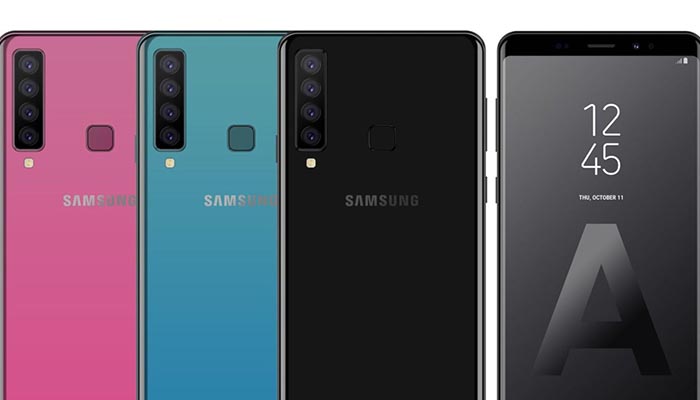
    The S9 line of Galaxy phones cleaned up over the last year. Of the top five selling Android phones, the S9 line of phones picked up three of those slots. The Galaxy S9 Lite sold 4 million units, coming in as the lighter, cheaper option for Samsung fans. The S9 Plus, on the other end of the spectrum, sold 8 million units, doubling its tiny cousin.

    The standard-sized Galaxy S9, one of our favorite Android phones on the market, sold a cool 10 million units, making it one of the best-selling phones of the year. It actually tied for second place with the next phone on our list. So, what made the S9 line just so popular?

    In short, Samsung knows how to make a great smartphone. The S9 line offers a huge, beautiful screen with hardly any bezels. These phones have great battery life and stellar processor performance. There’s a lot to love with these phones.

    Huawei P20

    Selling a 10 million units, and tying with the S9, the Huawei P20 managed to keep pace with Samsung. That number would have been much higher if Huawei could sell phones in North America, but that’s a story for another day.

    The Huawei P20 is a great smartphone, manufacturer notwithstanding. The screen is huge and colorful, bringing tons of vibrancy and life to bear. It also sports great cameras, snapping shots like a high-end photographer’s camera.

    Samsung Galaxy Note 9

    Samsung absolutely cleaned up the last year in Android phone sales. The Galaxy Note 9 posted a stellar 30 million units sold, making it far and away the best-selling Android phone. The huge phablet, complete with the S Pen and a huge battery, has a lot to offer.

    For productivity, there’s not a better Android phone out there. The blistering-fast processor, the S Pen for notes and the massive screen all make this a great phone for professionals. Beyond that, it’s one of the bulkiest and most powerful phones on the market, Android or otherwise.

  • Best Android Phones of 2019

    Best Android Phones of 2019

    Android is a fantastic platform for mobile phones, and many users prefer Google’s operating system over other phone OS’s. However, Android is on so many phones that it’s hard to tell which is the best choice for you. Today we’re going to break down some of the best Android phones available on the market right now.

    Best Android Phones of 2019

    Samsung Galaxy S9

    While the Galaxy S10 is out, the S9 remains an excellent choice for those looking for a stellar Android phone. The price point is right, as you can often find the S9 for less than $600, while the S10 is $1,000 at the lowest.

    The nearly bezel-free display, the fast processor and the excellent AMOLED screen all make this a killer phone. When it comes to Android, it’s hard to beat Samsung’s flagship phones. The Korean phone manufacturer really knows what it’s doing.

    Huawei Mate 20 Pro

    This phone is a bit hard to find in the US, but you can snag it off of Amazon for $900. It’s easily the best Huawei phone ever made, and one of the best Android phones. The huge QHD screen, the blazing fast processor and the great battery life all add up to make this one well-worth the price.

    Huawei might not be a name you know well. That’s because they’re a Chinese phone manufacturer that doesn’t market to the US or sell phones here. That doesn’t mean this is a bad phone, though. In fact, the Mate 20 Pro sports some of the best cameras on an Android phone, in addition to 8 GB of RAM and 256 GB of storage.

    Google Pixel 3

    Google’s own Pixel range of phones is also stellar. When you made the operating system, it’s not hard to make the phone, as it turns out. This goes double for the newest incarnation of the Pixel. It’s a beast. Sporting a huge, gorgeous display and a smooth design that would make anyone jealous, it’s easy to see why people love this phone.

    Coming in at $700, it’s on the high side, but this is a luxury phone. When it comes to the bright colors, fast processing and killer functionality, you’ll be glad you went with Google’s flagship phone. It’s hard to beat how good this phone is at its price point, unless your name is Huawei.

  • When to Take a Break from Social Media

    When to Take a Break from Social Media

    Social media is a part of everyone’s everyday lives now. There’s nothing quite as modern as flipping back and forth between Facebook, Twitter, Instagram, and Snapchat, trying to keep up with all of your various newsfeeds.

    Sometimes, however, social media takes too big a bite out of your free time or starts eating away at your mental health. It helps to know when to take a break from social media.

    When to Take a Break from Social Media

    Free Time

    This might sound a little heavy, but you’re probably wasting a ton of time on social media. Your free time is limited: why piddle it all away on some dumb phone app? Surely your hobbies are more interesting than looking at pictures of people you went to school with years ago.

    Take back your free time by stepping away from social media. There are way more fun things out there than scrolling infinitely through yet another news feed. Painting, dancing, singing, watching movies, reading, going for walks in the park, playing board games with friends, the list goes on and on. Just step away from the phone.

    Mental Health

    There’s a clinically-proven link between spending a lot of time on social media and depression. Low self-esteem, feelings of inadequacy and worthlessness, and even pervasive nihilism are all connected to over-consumption of social media. This is all because of the way social media hijacks your brain’s rewards systems.

    Your brain gets a hit of feel-good chemicals when your content is liked or shared. This is a very addictive process, and it can be very difficult to decouple it from social media use. The best thing to do when you’re spending too much time on a social media app is to just delete it outright and spend more time with your friends in the real world.

    Arguments

    We’d be lying if we said we’ve never been in social media arguments. Thanks to the current divisive political climate and the spread of constant misinformation, arguments are bound to happen on social media. We’ve even had relationships with family soured over regrettable Facebook exchanges. This is really, really unhealthy.

    If you’re finding yourself getting into arguments online and getting really stressed out by your own social media account, cut social media out of your life. Just uninstall the apps from your phone and live your life without sweating the social media. It’s more fun to just live in the moment, anyway.

  • Fix that Cracked Phone Screen Today

    Fix that Cracked Phone Screen Today

    A lot of people rock around this world with a cracked phone screen. However, you really shouldn’t. It’s not only bad for your phone, but it’s bad for your wallet and even your well-being. You need to get that cracked phone screen fixed, sooner rather than later! Don’t believe us? Check out these crazy facts about cracked phone screens.

    Fix that Cracked Phone Screen

    It Looks Bad

    Firstly, it looks really unsophisticated to roll around with that spiderweb crack in your phone. If you’re going to a job interview or meeting new networking connections, you really don’t want them to think you’re clumsy and irresponsible. You don’t want to look like the kind of person who can’t be bothered to get their phone fixed.

    Health Hazards

    It’s much harder to read what’s on a screen if the screen is badly cracked. If you’re squinting and trying to discern what’s on your phone screen, then you’re likely putting too much strain on your eyes. Another health hazard of a cracked screen is that, if it’s badly cracked, you could accidentally slice your finger open on the glass. Why put your health at risk instead of getting the phone screen fixed?

    Hardware Problems

    If you’re got a newer smartphone, odds are good that both the front and back are glass. If the back glass is cracked, this is still an issue. Newer smartphones are waterproof and dust-resistant. However, when they have cracks in the glass, both of these defenses are down.

    You need a vacuum seal from both the front and back of the phone in order for the water proofing and dust resistance to work. If you’re gotten accustomed to being able to dunk your phone underwater, this might come as an unwelcome surprise.

    Resale Value

    When you go to trade your phone in for a new one, you’ll get a lot less if it has a cracked screen. Often, this difference in resale value is more than it would have been for you to just get the phone’s screen fixed. In short, it’s literally bad for your wallet to leave your screen broken.

    Structure

    Even if you’re not planning on trading the phone in soon, why put off getting the screen fixed? It’s worse than just unsightly. If your phone is cracked, further drops could result in even more severe damage. A small crack can turn into spiderwebbing. A spiderweb crack can result in the screen busting out of its housing entirely.

    In short, just get your screen fixed. What’s stopping you?

  • Fix that Cracked Phone Screen Today

    A lot of people rock around this world with a cracked phone screen. However, you really shouldn’t. It’s not only bad for your phone, but it’s bad for your wallet and even your well-being. You need to get that cracked phone screen fixed, sooner rather than later! Don’t believe us? Check out these crazy facts about cracked phone screens.

    Fix that Cracked Phone Screen

    It Looks Bad

    Firstly, it looks really unsophisticated to roll around with that spiderweb crack in your phone. If you’re going to a job interview or meeting new networking connections, you really don’t want them to think you’re clumsy and irresponsible. You don’t want to look like the kind of person who can’t be bothered to get their phone fixed.

    Health Hazards

    It’s much harder to read what’s on a screen if the screen is badly cracked. If you’re squinting and trying to discern what’s on your phone screen, then you’re likely putting too much strain on your eyes. Another health hazard of a cracked screen is that, if it’s badly cracked, you could accidentally slice your finger open on the glass. Why put your health at risk instead of getting the phone screen fixed?

    Hardware Problems

    If you’re got a newer smartphone, odds are good that both the front and back are glass. If the back glass is cracked, this is still an issue. Newer smartphones are waterproof and dust-resistant. However, when they have cracks in the glass, both of these defenses are down.

    You need a vacuum seal from both the front and back of the phone in order for the water proofing and dust resistance to work. If you’re gotten accustomed to being able to dunk your phone underwater, this might come as an unwelcome surprise.

    Resale Value

    When you go to trade your phone in for a new one, you’ll get a lot less if it has a cracked screen. Often, this difference in resale value is more than it would have been for you to just get the phone’s screen fixed. In short, it’s literally bad for your wallet to leave your screen broken.

    Structure

    Even if you’re not planning on trading the phone in soon, why put off getting the screen fixed? It’s worse than just unsightly. If your phone is cracked, further drops could result in even more severe damage. A small crack can turn into spiderwebbing. A spiderweb crack can result in the screen busting out of its housing entirely.

    In short, just get your screen fixed. What’s stopping you?

  • The Future Unfolds: Samsung Could Unveil New Folding Phone

    The Future Unfolds: Samsung Could Unveil New Folding Phone

    Samsung’s official Twitter account had an interesting teaser on Monday. The short video shows unfolding Korean text and promises that “the future unfolds.” While this may seem cryptic, it’s likely this is a sly nod to the upcoming Samsung Galaxy F, the new folding phone the company has been teasing recently. Could it launch alongside the Galaxy S10?

    The Future Unfolds

    Samsung Folding Phone

    A prototype of the Samsung folding phone was spotted in November 2018, though it was hardly a pretty sight. The prototype was almost more proof-of-concept than an advertisement for an upcoming product. However, it did show us what to expect from Samsung’s folding smartphone.

    The outer, wrap-around screen appears to be made of an unusual material. The design is not dissimilar from a bifold wallet, though the practical usefulness of such a device remains to be seen. At time of writing, little is known about the specifics of a potential Samsung Galaxy F. It’s uncertain whether the device would even be a mass-market consumer device or an experimental prototype.

    Galaxy S10

    Samsung has many other big products on the horizon. Later this week they are set to properly unveil their newest line of Galaxy flagship phones, the Samsung Galaxy S10. The S10 will be the stock-standard version, while the S10+ will be the larger model with a longer battery life and higher price. A budget-friendly model, the S10e, is set to debut at a lower price and with less bells and whistles.

    Strange designs seem to be the current rule at Samsung: the S10 looks to forego the ever-popular phone notch for a phone pinhole instead. This punch-out screen has met with mixed responses from tech news sites, with many stating it looks unsightly. However, the phone notch received similar criticisms when it was featured on the iPhone X, though it has gone on to be regarded as elegant.

  • Are You Spending Too Much Time on Social Media?

    Are You Spending Too Much Time on Social Media?

    It can be very difficult to tell when you’re spending too much time on social media. It’s easy to sit down at your computer or on your couch and start scrolling endlessly through your social media feeds. Twitter offers up news and bites of thought, Facebook shows you your friends everyday life events and Instagram shows you windows into the lives of others.

    Maybe you’re feeling like you’re spending too much time on social media due to the effect it’s having on your psyche. Are you feeling depressed or anxious when you start scrolling through your feed? Maybe it’s time to step back.

    How to Tell If You’re Spending Too Much Time on Social Media

    Every Moment is Captured

    If you notice you’re always framing each moment and capturing it for Instagram or Facebook, maybe it’s time to reconsider your social media intake. If every meal is being photographed and uploaded and every restaurant is only for your Insta clout, that’s not terribly healthy. It’s okay to enjoy things in the moment, as the ephemeral and temporary things they are.

    If you’re always clinging to the very moment, you’re causing yourself anxiety that is totally unnecessary. Your life is yours alone: you don’t need to stress out trying to make it look fantastic and otherworldly for other people’s benefit. Live your life for yourself first and take a step back from the over-documentation.

    You Compulsively Check Your Phone

    “Live in the moment” is a difficult adage to live by. We’re inherently social creatures, and we often desire outside validation from our peers. That’s why it’s so addictive to grab our phones, open them, and check on our social media. However, this is a really bad habit to fall in to.

    You know the loop: you’re stressed out, you’re putting off important things that you need to do, and you check your phone really fast to see the time. Maybe you’re looking to check off any notifications before you start in on something important. Then, you get sucked in to scrolling.

    Maybe it’s Facebook scrolling down your friends’ pictures, Twitter scrolling to see news updates or just zoning out while looking at Instagram models. In any event, you’re looking at your phone for twenty minutes, and you feel yourself wasting time. But still, you keep compulsively switching apps and scrolling.

    You Care More about Social Media Than Real Friends

    Another big red flag for social media addiction is compulsive phone checking at the expense of actual social engagements. You’ve probably had friends over before and felt yourself drifting out of conversation by scrolling down your phone, making yourself distant from the real people in your life.

    If you’re neglecting your real friends in person over your social media accounts, you’re doing yourself a disservice. Again, you need to live in the moment and enjoy what’s in front of you. If you’re out with your friends, you should just connect with them! There will be a chance to check social media later, when you go home and don’t have friends around.

    You’re Always Comparing Yourself

    A buddy of yours from school got more likes on their selfie than you did. A person you used to date is looking hot on a date with someone who looks way better than you. Some of your friends went to a movie and got dinner without you. These things are popping up all over your feed and you’re starting to get really self-conscious about it.

    These digital updates are actively making you feel bad. Your phone is glued to your hand, you don’t know what to do. You’re on the couch, the TV is blaring white noise and you can’t seem to snap out of it. You’re comparing yourself to the people you know and it’s killing you.

    What Should You Do?

    There are a few things you can do to try to break this cycle off. The first, and most obvious, thing you can do is to just delete the apps from your phone outright. Maybe you keep your accounts online so you can check from your desktop at home, but you should really start with getting them off of your phone.

    A more drastic step you can take is to downgrade from a smartphone. If your smartphone addiction is driving you to constantly reinstall apps and start the social media cycle over, just get rid of the smartphone. It’s not worth hanging on to something that makes you feel bad. Remember: the things you own shouldn’t own you.

  • Google Assistant is About to Take Over Your Life

    Google Assistant is About to Take Over Your Life

    Our world has in a very short time become almost totally voice controlled by an autonomous A.I. robot with a pleasant female voice. One voice is always listening,  to answer, or facilitate your every whim. She can order your food, turn on your lights, tv, and set your A/C. She can settle debates, do calculations, wake you up in the morning.

    “She” has many uses and many names, Alexa, Siri, some call her Bixby or Skynet, Clarice, Cortana, Whatever you call her, she has a name. Then there is the unnamed, just known as the assistant.

    “Hey Google”. This phrase is the next big thing in A.I. assistants. Google’s very own assistant to help you verbally command across devices, computers, speakers, Google Home, your phones, tablets, and everything else with a plug. No Google’s assistant isn’t new, but it is improving faster than the rest of the field.

    While Siri and Alexa are getting complacent with their functions, focusing on expanding. The Assistant is getting smarter at all the things she does, she is learning, evolving…

    Google Assistant will be the A.I. Assistant that wins the war and establishes dominance. Even though it looks as though Google is falling behind at the moment. Alexa is sexier, and Siri is already everywhere. Why will it be Google? Google CEO Sundar Pichai  says the companies priorities are shifting from “mobile-first to AI-first.”

    For Google, that priority will be AI-powered intelligent assistant, Google Assistant. That is why they will prevail and take over the A.I. world. A.I. first and design devices and peripherals around the assistant,  instead of A.I. just being a component or another feature.

    In short, the Google Assistant is a voice-activated digital assistant created by Google. Much like all the others out there it can perform actions on a user’s behalf and provide conversation and contextual information. Google Assistant is now the primary focus of Google’s AI-first strategy. In cohesion with the mountain of user data, Google has on all its users will create the dominant voice-enabled A.I. assistant to lead the world into the roaring 20s.

    Most of the world’s smartphones operate on Google’s Android OS, which supplies Google Assistant already for free. If you haven’t tried out the Google Assistant on your smartphone, now is the time to yank out the device in your pocket. I think you will be very impressed with your assistant. Try it, ask your Assistant to look up the last book you read, music, your favorite bible verse or send a quick text message.  See what the weather is like in Temecula or turn off your bedroom lights. Google can do it, just ask.

    Why is So Much Data Needed?

    The biggest disadvantage of the Assistant is that it requires users to give access to a lot of data. If you want it to turn off your light, you need to give it access to your home. If you want her to remind you of an important meeting tomorrow, she needs your calendar. You get the picture.  This disadvantage is also why Google will improve in the near future.

    It has all the data to play with already.  Yes, we are creating a monster, a self-serving monster. How, when, or if this will come back to bite us is all up in the air. It all seems like that is someone more important’s problem, and now is just the time to enjoy the best of all times to be alive. We want all this glorious tech without giving up any private data, which is just not possible. Or is it?

    What About My Privacy?

    Don’t be terrified, It’s going to be great. While privacy in the 21rst century is going extinct, it’s not really linked to you… think of it as one person with two personalities, the in real life “IRL” and your digital personality. You can control every part of your digital personality, it can even be a caricature of your IRL self.

    Yes, everything you say, post, think, search or learn is being tracked. What is not being tracked is you, just your behaviors, then compiled into a database with 5 billion other people and used to develop patterns. When strong enough patterns are compiled, very accurate predictions can be made. Take solace in the anonymity of it all, or you can take the next step.

    A third personality, make a second digital personality. New email, second twitter, FB, Insta, use this solely to create erratic online behaviors. Search for random things, click on ads you are not interested in, simply skew the data. If enough of us do this we can restore privacy. Maybe. Who’s with me?