Category: Smart Devices

  • Stop Cleaning Your Phone with the Wrong Materials: Tech Tips

    Stop Cleaning Your Phone with the Wrong Materials: Tech Tips

    When your phone gets dirty, you might be tempted to clean it with your shirt or your jeans. However, you should seriously avoid cleaning your phone without the proper materials and solutions. Cleaning your phone the right way will help it last longer and look better!

    Here are the items you should stop using to clean your phone, and what you should use instead.

    Stop Cleaning Your Phone with These Items

    Rubbing Alcohol, Makeup Remover, Window Cleaner

    Window cleaners like Windex and the like have harsh chemicals that can harm your phone screen. The same goes for rubbing alcohol, handwipes and any other chemicals that you might use for cleaning.

    Many newer phones have a protective coating that resists scratches, so using such cleaners could even hasten the wear on such a coating. Avoid any abrasive cleaners when cleaning your phone. The coating is a critical part of how your phone screen stays clear and free of scratches, so treat it gently.

    Paper Towel

    Paper towels are flimsy and thin and can shred easily. This can just result in your phone getting even messier. Also, remember that paper fibers can even scratch up your phone if you’re rough or hasty with them. Don’t use these on your new phone.

    Compressed Air

    Compressed air is bad for phones. The internal mechanisms and ports of your phone are all quite fragile, and blowing harsh, fast-moving compressed air into them can cause damage. Most phone manufacturers warn specifically against using compressed air to clean their products.

    Use a Microfiber Cloth

    To err on the side of caution, just use a simple microfiber cloth to clean your phone. There’s little chance to cause any damage to the delicate electronics or coating if you stick to a microfiber cloth. In the case of extreme amounts of grease or dirt, you can use a bit of distilled water to dampen the cloth. Never spray water directly onto your phone’s screen, though.

  • Spotify Posts 100 Million User Numbers, Doubling Apple Music

    Spotify Posts 100 Million User Numbers, Doubling Apple Music

    There are two big names in the world of music streaming services. On the one hand, there’s Apple Music, which is baked into the infrastructure of Apple’s iPhone line. On the other hand, there’s Spotify, an algorithm-driven service that compiles personalized playlists for listeners.

    Spotify has now announced that their paid memberships have now exceeded 100 million users, doubling the 50 million Apple announced in January.

    Spotify Now Doubling Apple Music Subscribers

    Juggernauts of Streaming

    While there are tons of streaming services available, the biggest names in the mix are Spotify and Apple Music. Apple offers access to a wide range of songs from the iTunes store, allowing for downloads of songs and albums. The other big draw of Apple Music is that you get access to Beats One Radio, which is a live internet radio service featuring real DJs and radio shows.

    Spotify is much more math-driven: there are no DJs, no real people selecting the songs on the playlists. However, the system is able to cater much more directly to the tastes of the user, thanks to the automated song selection software.

    In Perspective

    While Spotify is posting huge numbers in terms of global subscribers, Apple seems nonplussed by the situation. Apple Music is growing at the fastest rate of any streaming service in the US. This is good news for Apple, as the US is the largest single market for music consumption in the world.

    Spotify, unlike Apple, also offers a free version that allows users to listen without paying but with ads. This, coupled with Apple’s more limited scope than Spotify, has made the Sweden-based service a popular global streaming option.

    Of the two services, neither has a particular edge in an even field. Apple Music isn’t available on quite as many platforms as Spotify, but it can be downloaded on Android devices. For music-savvy users, either service is excellent for daily use.

  • The Best Qi Charging Pads: Charge Your Phone Wirelessly

    The Best Qi Charging Pads: Charge Your Phone Wirelessly

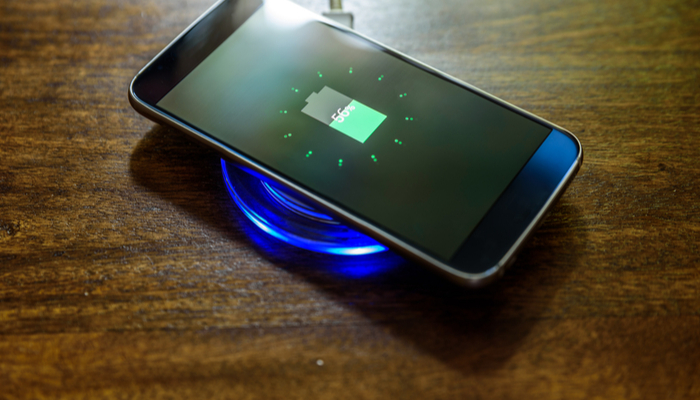
    No one likes having to fumble and look for their charging cord when they just want to charge up their phone. Between being hard to see in the dark and easy to lose track of, charging cables just feel so outdated. Thankfully, Qi-enabled phones can use wireless charging pads to juice up.

    Today we’re going over some of our favorite Qi charging pads. These are totally safe, wireless pads that allow you to simply place your phone on them and then watch as it charges up wirelessly. Ditch the cords: wireless charging is here.

    Qi Charging Pads

    Mophie Charge Stream Pad+

    This handy charing pad is made of a non-slip material that ensures your phone won’t just slide off when you’re trying to charge it. Most Qi pads are so small that it’s not uncommon to accidentally knock your phone off of it, though this Mophie pad has much better grip, so this is less of an issue.

    That said, this is a bit on the pricey side, running around $50. That’s a bit much for the average Qi charger.

    RavPower RP-PC063 Wireless Charger

    Coming in at $16, this RavPower Wireless Charger is one of the best budget Qi pads out there. It charges quickly and efficiently without breaking the bank. The build quality and structure of this pad won’t be winning any awards, but it’s a small trade-off for the great low price. In short, if you’re looking to just try out Qi charging to see what all the buzz is about, this is a good intro for you.

    RavPower RP-PC034 Fast Charger

    One of our favorite Qi charging pads is the RavPower Fast Charger. This is one of the fastest-charging pads out there, even rivalling some wired charging solutions. Remember, wireless charging, by its nature, is slower than wired charging, though it is much more convenient. As such, a fast charger like this is ideal for people used to faster charging times.

    This pad tends to keep phones cooler while charging, offering less heat dispersal of energy. It’s a simple-looking black pad with just the RavPower logo on it, and it looks completely discreet on a desk or side table. Best of all, it’s not too pricey, coming in at $30.

  • Can the iPad Replace Your Laptop? An Upcoming Feature Might Change Your Mind

    Can the iPad Replace Your Laptop? An Upcoming Feature Might Change Your Mind

    Tablets are neat, but they’re really just a half-step between smartphones and laptops, right? Certainly, an iPad could never truly replace a laptop. When you need to be productive, you need to put the iPad away and bust out the laptop. Or, do you?

    iOS 13 promises to bring some long-awaited functionality to the iPad that might make you reconsider its usefulness. The much-anticipated feature in question? Mouse compatibility, for the first time since the iPad launched in 2011.

    iPad Mouse Functionality Coming in iOS 13

    Specifications

    Specifics and hard details are scarce at the time of this writing. This information comes courtesy of Federico Viticci, from the Connected podcast. This was corroborated on Twitter by Steve Troughton-Smith, an Irish Apple developer. Neither was forthcoming with hard-and-fast information, as the functionality isn’t yet officially confirmed.

    What Kind of Mouse?

    Rumor has it that every USB mouse will be included in this update, which is likely to be touted as an accessibility feature. This is great news for power-users who would prefer to just own one productivity device. Importantly, this could also be a huge help for mobility-limited people who want to use a mouse on their iPad for accessibility reasons.

    While USB supported was explicitly named in the rumor, we wouldn’t be surprised if Bluetooth mouse options were supported, too. It’s not a stretch to picture this feature being a low-key addition to iOS 13, though it would be a big deal for the right types of users.

    Apple and Laptops

    Apple’s relationship with laptops has been a bit rocky lately. Their own iMac line of products, alongside the MacBook product line, has been struggling as of late. Smartphones and tablets have been the focus of many “tech-forward” users who were once Apple’s laptop faithful.

    It would make sense, then, if Apple were to simply position the iPad as a competitor to, and replacement for, traditional laptops. This could simply be another step in that direction.

  • Is Samsung’s Newest Phone Worth the Price? Galaxy S10+ Review

    Is Samsung’s Newest Phone Worth the Price? Galaxy S10+ Review

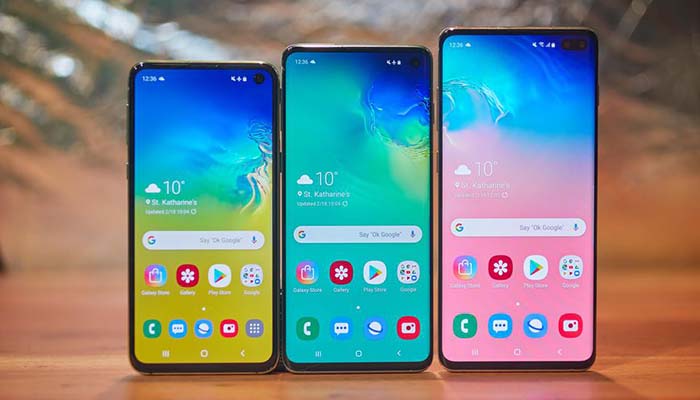
    Samsung is the big dog in the world of Android phones. Their Galaxy line is a juggernaut, largely defining each era of Android smartphones. Their newest phone, the massive Galaxy S10+ with its unusual hole-punch design in the front is upon us. Is the newest Galaxy phone worth the $1000 price of entry?

    Galaxy S10+ Review

    Galaxy-S10
    Photo Credit: CNET

    Specs

    Under the hood, the Galaxy S10 and S10+ both sport all the bells and whistles you expect from a modern flagship phone. This includes the Eight-core Qualcomm Snapdragon 855 CPU, 12 MP main camera, 4100mAh battery in the Plus model and flashy specs like an in-screen fingerprint scanner and wireless charging.

    The most noticeable feature about the phone, however, is that weird hole-punch in the top corner. It’s incredibly eye-catching, and you’ll often find your eye drawn to it during normal use of the phone. This isn’t a case like the iPhone X’s notch, which fades from your notice shortly after using it.

    The Issues

    If you’ve used a Galaxy phone in the last three years, you know that they’re great. The phones are fast, responsive and sport beautiful screens and great cameras. However, the Galaxy S10 has some noteworthy issues we want to discuss.

    The first is that in-screen fingerprint scanner. It’s a 3D scanner, mounted under the screen and impossible to see unless you shine a flashlight at the screen. However, it’s tiny, much smaller than a fingertip and hard to use. It often misses the finger, takes several seconds to unlock, and makes using the phone awkward and cumbersome.

    The phone also comes pre-loaded with shovelware, even if you buy it unlocked directly from Samsung. Within, you’ll find McAfee antivirus cooked into the OS, Facebook (which can’t be uninstalled), your photos will want to share your location with FourSquare, and both FlipBoard and Spotify are on the phone when you open it.

    Bottom Line

    The Galaxy S10 is $900, while the S10+ is $1,000. For those prices, you could opt instead for an iPhone XR, a much more user-friendly and well-designed phone. If you want to keep your phone in Android’s ecosystem, you could opt for any number of more affordable options from Huawei, OnePlus or even one of Samsung’s own older Galaxy phones.

    For the huge price tag, it’s not much worth getting a Samsung Galaxy S10 or S10+. Opt instead for the S9 if you’re dying to own a modern Galaxy phone.

  • Are You Spending Too Much Time on Your Phone?

    Are You Spending Too Much Time on Your Phone?

    Smartphones have changed the way we live our very lives. They’re alarm clock, timer, flashlight, calculator, game system, portable computer and, of course, phone, for the modern human. However, many people feel as though they may be spending too much time on their smartphones. When is it time to make a change?

    Too Much Time on the Smartphone

    Ignoring Family

    We’ve all been hanging out with friends or family and then noticed that no one was talking to anyone. Everyone was just scrolling through their social media, or reading an article, or texting. If you find you’re missing out on quality time with loved ones, make an effort to keep your phone in your pocket when hanging out.

    It’s easy to get sucked into your phone. Consider silencing notifications from social media apps, and even just leaving your phone off or on silent. In an emergency, people can reach you. Otherwise, why stay glued to the phone all day? You’ve got a life to live right in front of you.

    Wasting Time

    You know that slurping sound that Facebook makes when it siphons your free time? The feeling of the minutes whiling away as you scroll, infinitely, down the page makes your stomach sink. Stop doing it. There’s nothing new or exciting or interesting happening on your Facebook feed, your Twitter feed or your Instagram feed.

    These apps are designed to harvest your data and then sell it to ad agencies for a lot of money. That’s it. They’re mindless, they’re not keeping you “up-to-date” or “informed,” and they’ve been shown to have a negative effect on mental health. Just stop scrolling.

    Mental Health

    Yes, you read that right. Social media is linked to making people feel more insecure, more depressed and less fulfilled in their own lives. When you’re constantly exposed to clickbait media, fake news articles and manufactured outrage, it becomes grating. Why subject yourself to such a toxic mix of badly curated media?

    Social media can be great for keeping up with friends and current events. Seeing new pictures of family, updates on vacations and news blurbs are all great. However, aside from these highlights, there’s nothing to be gained by scrolling down the infinite feed forever. You’re just subjecting yourself to drivel for no reason.

    How to Quit

    Compulsively checking one’s phone is addicting. Consider getting a smartwatch, or a normal wristwatch. This gives you something to check for the time without pulling out your phone to suck up your hours. Another option is getting into a hobby that is engrossing and doesn’t leave time to constantly check your social media.

    In an extreme case, if you feel like you’re spending too much time on your phone and just can’t stop, take drastic measures. Uninstall your social media apps. Turn off your cellular data. Heck, just turn your phone off. You’ve got a life to live, so live it.

  • Galaxy S10 Too Pricey? Say Hello to LG G8

    Galaxy S10 Too Pricey? Say Hello to LG G8

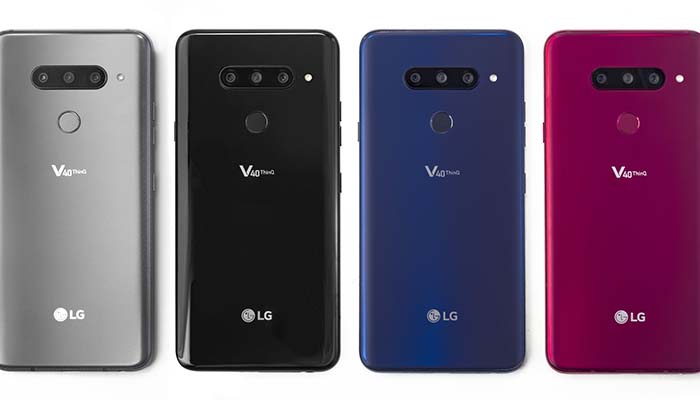
    The Android phone market is rather saturated at the moment. Between Samsung’s numerous Galaxy handsets, Google’s Pixel line and ample competition from other third-party developers, Android users have a ton of options. The newest competition for Samsung’s Galaxy S10 flagship phone is the LG G8, a more budget-friendly Android heavy-hitter.

    LG G8

    Head to Head

    The LG G8 is expected to retail for around $820, a solid $80 less than Samsung’s own Galaxy S10. How does it stack up in terms of features, though? Well, the G8 sports a 6.1-inch display, gorgeous OLED screen and bright colors contrasted with deep blacks.

    The design is entirely water-resistant, like all modern smartphones, and it sports wireless charging capabilities. It runs on the same Android Pie operating system as the S10, and sports similar specs. The Snapdragon 855 chipset is as impressive as ever here, and the 3,500-mAh battery offers ample time away from the charger.

    What’s Different

    There are a few things going on here that set the G8 ThinQ apart from the competition. One such wrinkle is the presence of an actual headphone jack, something that premium smartphones haven’t sported for a couple of years. While most phones offer a dongle to convert your old-school headphones to USB-C, it’s nice to not need that.

    Is it Worth It?

    Samsung announced an astonishing five new phones while LG was launching the G8. Among them are the Galaxy Fold, the long-rumored folding phone that Samsung has been teasing for years. It’s clear that the LG G8 ThinQ has to go head-to-head with the Galaxy line.

    From price point to features, the G8 is clearly a direct challenge to Samsung. Can it stand up against the competition though? Aside from the headphone jack and a unique look, it doesn’t bring a lot to the table. Its features are largely found elsewhere, done better and with more style.

    Bottom Line

    The Samsung Galaxy S10 is a bit pricier, but only a bit. For an extra $80 you can upgrade to the best Android phone money can buy. If the LG G8 cost $700, or maybe $600, this would be a different article altogether. However, for the surprising sticker price of $820, it’s simply not worth it.

    Everything you find here is solid, but is done better on other phones in the same price range. After all, you could spend a similar amount of money on a Google Pixel 3 and end up with a much superior product. Sadly, this is a phone for no one: not high-end enough to beat Samsung, not inexpensive enough to be a budget option.

  • Is 5G Going to be That Big a Deal?

    Is 5G Going to be That Big a Deal?

    Verizon unveiled their first public test of a 5G network yesterday in Chicago. This occurred well ahead of the April 11th target date. However, the question remains: is 5G going to be that big of a deal? Today we’re going to look at what the experts are saying about this new network connectivity standard.

    5G Phone Speeds

    What is 5G?

    In simple terms, 5G is simply the next step in wireless connectivity. It’s not some new type of connectivity, it’s just significantly faster than existing technology. The current wireless infrastructure works on 4G LTE, a standard that was unveiled in the early 2010’s. 5G is a new standard that is promising to be between 10 and 100 times faster.

    If phone manufacturers are to be believed, 5G will be the biggest shift in smartphones yet. The speeds are promised to be so good that some people will have faster internet on their phone than in their home. Verizon has stated you could expect “typical speeds of 450 megabits per second, with peak speeds of nearly 1 gigabit per second, and latency less than 30 milliseconds.”

    More than Just Phones

    There’s more going on with 5G than just fast phone speeds, though. 5G speeds will enable new uses of technology, such as remote surgery for isolated regions. Remote surgery will allow doctors in remote regions to contact doctors who can walk them through a surgery step-by-step using technology and robotics.

    Another example of 5G uses outside of phones will be for city planning. Cities will be able to link their traffic lights via a 5G network and make sure they all stay synced up. This will allow for traffic to flow much more easily.

    When Will This Arrive?

    5G speeds are being tested now in limited markets, specifically in Chicago. As 2019 rolls on, more 5G tests will be seen in other large cities. As for a nationwide rollout, it might be late 2020 before all areas in the US have 5G coverage. For the time being, you don’t need to futureproof: 5G phones won’t be on sale until later this year.

  • Best Cell Phones Money Can Buy in 2019

    Best Cell Phones Money Can Buy in 2019

    Smartphones have hit something of a plateau in the last two years. While previous generations of phones were revolutionary, the last two have been more evolutionary. Leaps and bounds have given way to baby steps.

    That doesn’t mean the top-of-the-line isn’t still the most impressive type of phone you can find! It just means that this year’s high-end doesn’t look too different from last year’s. However, these are the top-of-the-line, and the best phones you can buy.

    Best Phones Money Can Buy

    Samsung Galaxy S10 Plus

    Samsung is known for being one of the best phone manufacturers in the world. Their stellar Galaxy line has been a defining flagship of Android for years now. The newest entry, the S10, is no exception, and it’s bigger brother, the S10, is one of our favorite smartphones. It has a huge, gorgeous OLED display, cutting-edge specs under the hood and great cameras.

    If you love Android over iOS, this is the best phone you can get on the platform. The cameras are killer, taking pictures of great quality in numerous conditions. The processor is fast and responsive, and multitasking is easy on this great phone. The only drawback? That huge $1000 price point.

    iPhone XS

    The iPhone X introduced a new paradigm for Apple’s handsets in 2017. Removing the home button and increasing the screen size to a nearly bezel-free display dramatically changed the look of the phone. The iPhone XS is all that, plus a newer A12 Bionic chip that makes other smartphones look like calculators.

    Apple’s product design might be your cup of tea or it might put you off. We’ll leave that question of taste to you: however, if you want the best iPhone on the market, it’s the XS. If you don’t mind paying a bit more, the XS Max sports a huge battery and a huge 6.5 inch AMOLED screen.

    Google Pixel 3

    The makers of the Android operating system bring in their best hardware with the Pixel 3. The Google Pixel 3 is most well-known for its incredible camera. By some metrics, the Pixel 3 has one of the best cameras you can find on a smartphone.

    The Pixel 3 is a great competitor to the Samsung line of phones, bringing a big, vibrant display and great features like a Night Mode for shooting pictures in the dark. If you’re an Android fan who wants to take pictures with their phone a lot, the Pixel 3 is for you.

  • Pixel Slate: Why Can’t Google Get Tablets?

    Pixel Slate: Why Can’t Google Get Tablets?

    Google’s been fighting to make a name for themselves as a hardware manufacturer. Scattered successes, like the Google Pixel smartphone, have been tempered by oddball releases like Google Home and Google Wi-Fi.

    One notable failure for the company, however, has been the sure-fire winner Pixel Slate, which has failed to make an impact.

    Pixel Slate

    Trying to be Apple

    Google’s hardware initiatives have largely seen them following closely in the footsteps of Apple. Where Apple has the iPhone, Google has the Pixel. Where Apple has the Apple Watch, Google will release a Pixel Watch. It only follows that Apple’s iPad must be met by a Pixel Slate tablet.

    The Pixel smartphone has been doing a pretty good job of emulating the iPhone’s success, just for Android. As such, it would make sense to see the Pixel Slate performing like the iPad did for the Android crowd. Why did it miss so badly?

    Tablets and Laptops

    A lot of people who bought the iPad, it would seem, weren’t terribly tech-inclined. Apple’s made quite the name for themselves by catering high-tech goodies to people who aren’t terribly bothered by the nitty-gritty of their tech.

    As such, it makes sense that the iPad sold as well as it did: most Apple fans probably didn’t have laptops, or, if they did, they didn’t use them like they would a tablet. Laying around reading from a tablet is much more natural than doing so on a laptop.

    Android fans, on the other hand, are more likely to be dialed-in to existing tech. As such, their laptops are likely already playing the role that a tablet might otherwise be taking. Essentially, they already have technology pulling the job that a Pixel Slate would.

    Changing Markets

    It’s also worth noting that the iPad itself largely created the tablet-style of tech. In so doing, it shifted the laptop market around itself. Modern laptops usually have tablet-like features, including touch-screens and OS modes that cater to touch-screen only users.

    Two-in-one laptops with detachable keyboards are also a huge portion of the modern laptop landscape. When the iPad launched, it was the only piece of technology operating in the space of “large smartphone-like computer for home use.”

    Google is insistent in their drive to take over the world. As such, it’s always strange, if slightly reassuring, to see them miss the mark. In the case of the Pixel Slate, it appears that Google’s desire to be Apple, but with a search engine, led them astray.