Tag: Stock Market

  • Best Online Investment Apps! Start Earning Now

    Best Online Investment Apps! Start Earning Now

    Investing in the Stock Market can be daunting. There are a ton of moving parts and the big players all seem like Wall Street types. The good news is, the age of the smartphone has made investing super simple and easy. Where once you might have had to contact a broker to be your proxy on the exchange, you can now just use an app. There are a ton of options out there, though. How do you know which investment app is the best? Well, we’ve got our ten favorites for you to check out! 

    Bloomberg 
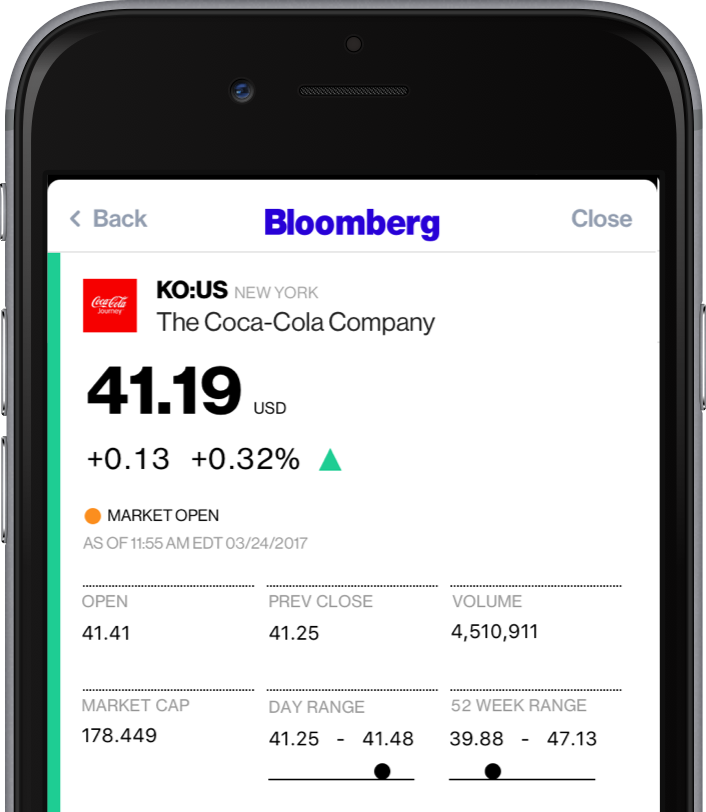
    Photo Credit: Bloomberg 

    A well-known name in money management, Bloomberg’s app is great for investing. Combining breaking money news and investing tips, Bloomberg has it all. The app even offers personalized news, so you can watch the companies you invest in.  

    If you’re as interested in the “why” of the stock market as you are in making money off of it, try Bloomberg. 

    Benzinga
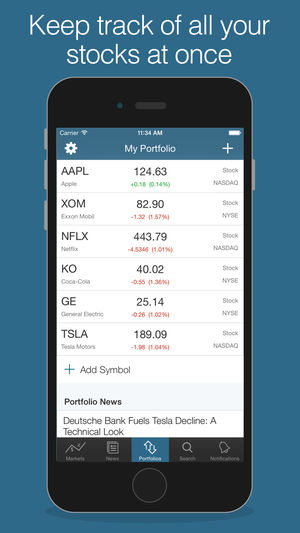
    Photo Credit: iTunes 

    Benzinga is great for investors who want insatnt information. By opening the app, you get immediate stock quotes, no need for waiting or skimming over news you don’t want. Acting as something of a punchy investment app, Benzinga is good for those who want to forge their own way. It has social media options, too, letting you share trending stock info to sites like Twitter.  

    Benzinga can also give you push notifications when news relevant to your investments breaks. It also offers some premium features for those who want a more in-depth experience. If you get the subscription you access features like live analysts to answer questions and audio news. 

    CNBC
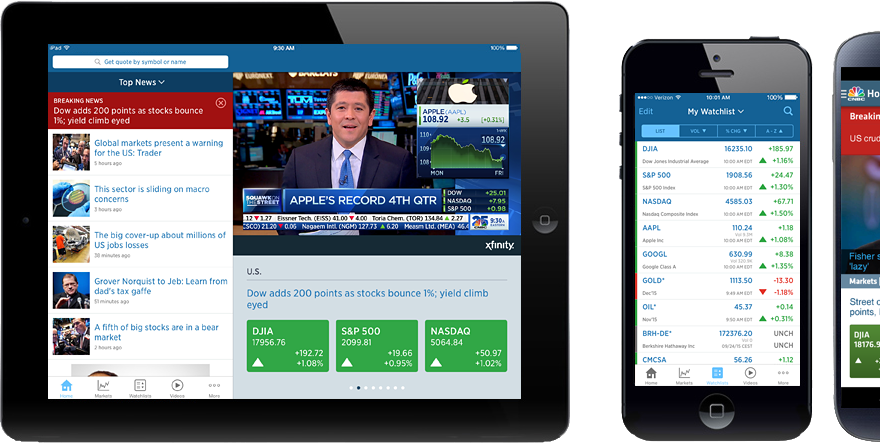
    Photo Credit: DownloadMyMobileApp.com 

    CNBC is a great news app for those who want to see a little bit from every source. Their app is clean and user-friendly, presenting data in an immediate, digestible format. Many investors swear by the process of synthesizing news from as many sources as you can stand to read. CNBC’s app is a fantastic way to achieve such wide-ranging research without having to dig across the internet. A great resource for novices and veterans alike! 

    Fidelity Investments
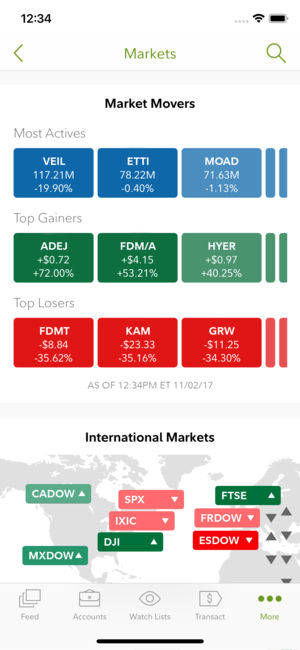
    Photo Credit: iTunes 

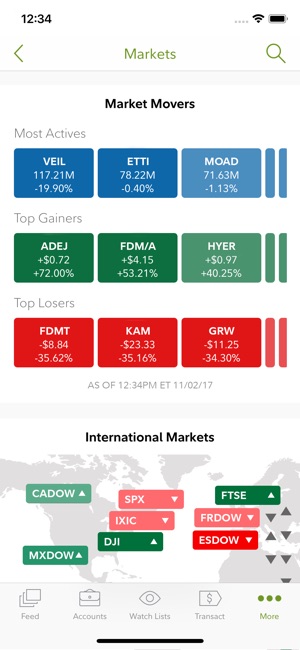
    Fidelity Investments’ app is great for more experienced investors looking to move to something more in-depth. The app offers in-depth charts and daily video coverage of market trends. It also offers notifications for when prices go above or below certain thresholds. It has a comprehensive news section and offers multiple money-management tools. This is a great choice for those who have become more adept in their online investing! 

    Motif Explorer
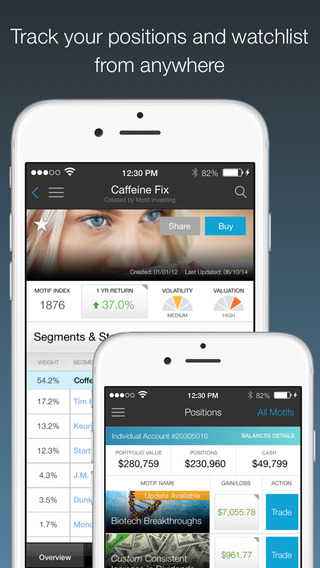
    Photo Credit: The Divided Ninja 

    Motif is a cool way to introduce the stock market to people who are curious about the exchange. The app’s creators track various world events to see which could cause the market to shift. Portfolios, or motifs, based on those observations are generated. For instance, they might have a profile on clean energy, and if you invest in that motif your money would be invested in various clean energy companies. The app works to find which motifs are trending upwards and help you invest accordingly.  

    While Motif Explorer isn’t the best for large, serious investing, it is interesting for newcomers. Consider this one if you’re interested in dipping your toe in investing. 

    TD Ameritrade 
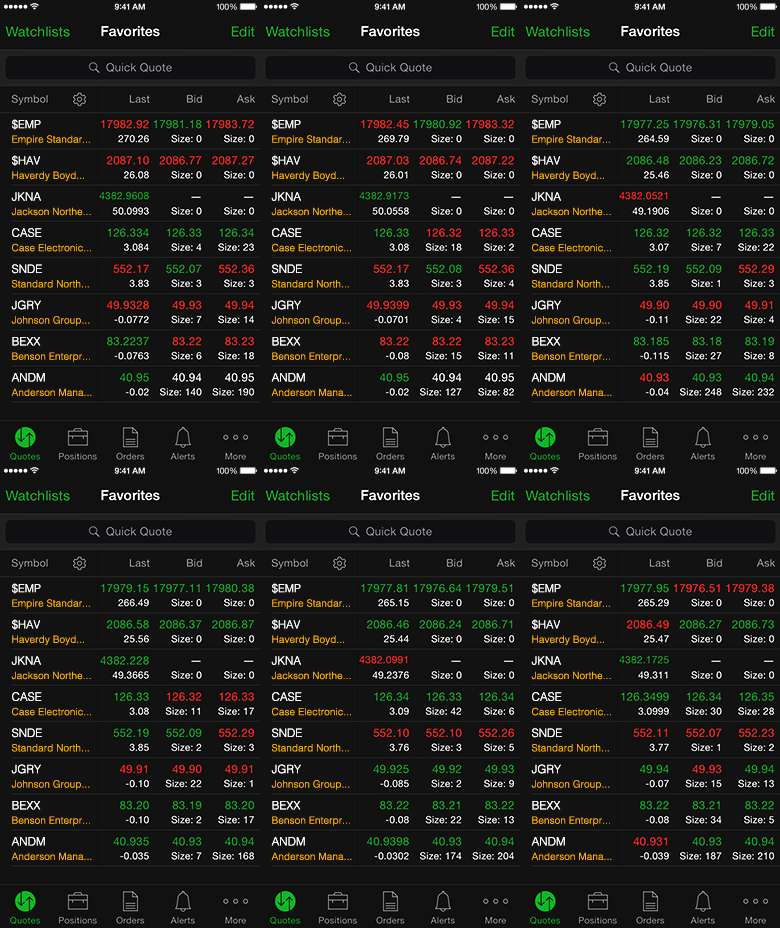
    Photo Credit: TD Ameritrade 

    This app gets a nod for being a great, bare-bones app with no frills. If you’re looking to not have your hand held and just start investing, check this one out. It offers real-time view of the stock exchange, mobile trading, fund exchange and other basic features.  

    Most notably, this app has a feature called Snapstock. This feature lets you use your phone camera to take a picture of a barcode. Then, the app pulls up the company that makes the product that barcode is attached to. That way, if you see an item in a store and think “this is going to be huge,” you can find them and invest on the fly from your phone. 

    Yahoo! Finance
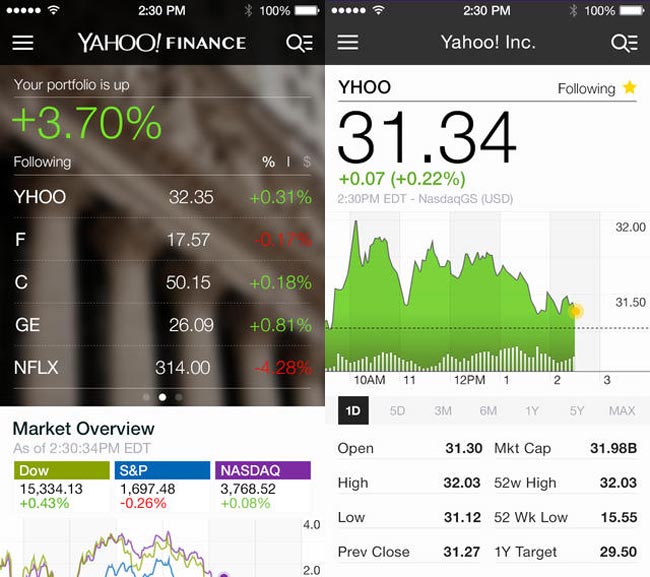
    Photo Credit: Geeky Gadgets 

    Surely, you’ve heard of these guys? Jokes aside, Yahoo! Finance has a great app for beginner investors. The app has a gorgeous, clean design reminiscent of Apple’s native iPhone stocks app. The design is personalized to your investments and offers a great dashboard to see what stocks are trending. It also features news and trending stocks at a glance. All in all, this app is great for those just starting out who want to get their stock info at a glance.  

    Stock Market Simulator
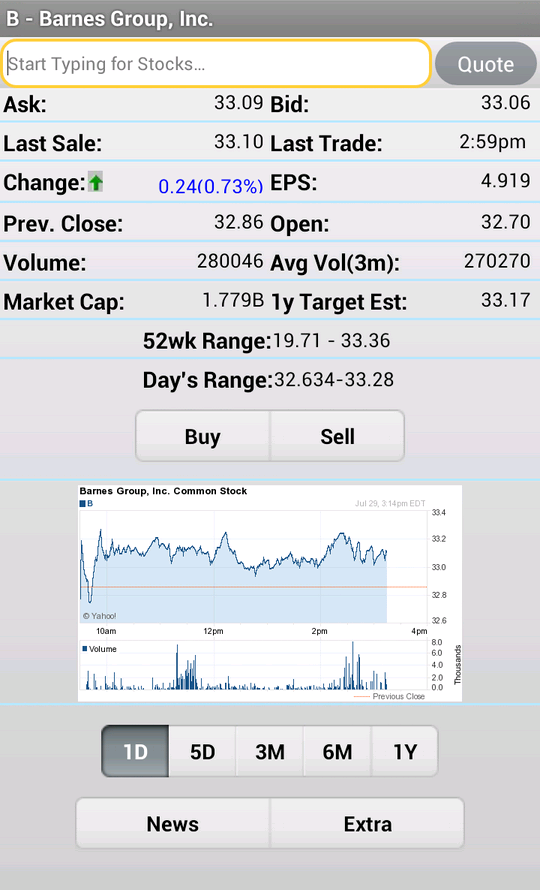
    Photo Credit: APK-DI.com 

    This mock investment app is a stress-free simulator to show newbie investors the ropes. You start with $10,000 in virtual money with no value and can mock invest in an echo of the real stock market. The echo updates fifteen minutes behind the real exchange. While this isn’t meant to be a tool to predict actual investment trends, it is useful to show newcomers what the exchange looks like. It allows them to experiment without risking their actual money. 

    SigFig
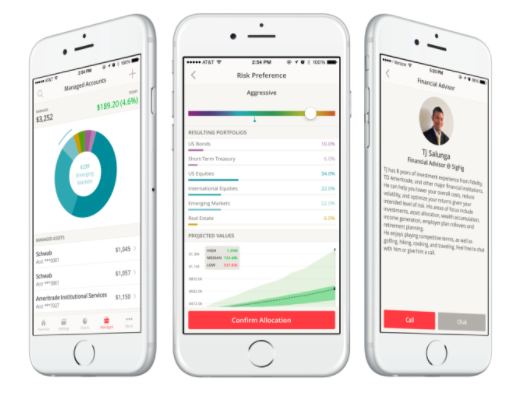
     

    Photo Credit: Apptentive 

    This investment app is quite good for newcomers. SigFig offers advanced optimization tools for portfolios, helping you manage your money. You take a profile quiz to tell the app the ways you like to take risks with your money. You get a personalized investment plan, put money in the account, and off it goes. It’s like a digital broker! 

    The app also offers investment advice for first-time investors. The only downside is that it only shows you three years back of your investment, where most apps opt for five- or even ten-year retrospectives. That said, this is still an awesome choice for newcomers. 

    Our Favorite Beginner Investment App: Acorns
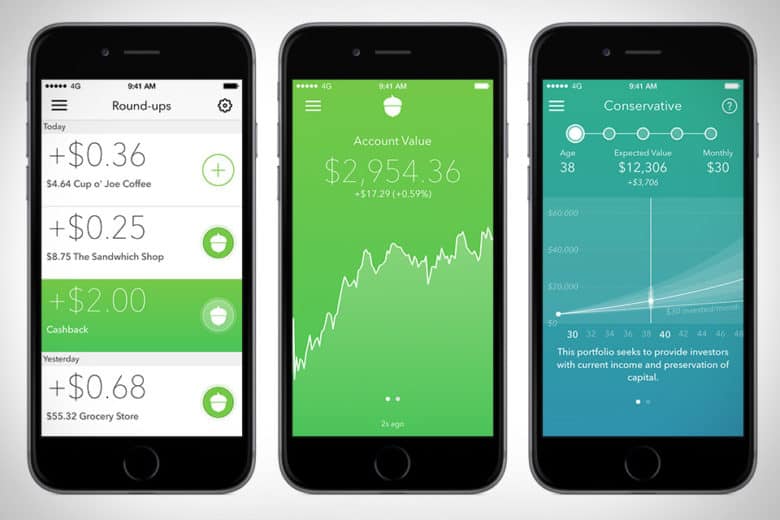
    Photo Credit: Cult of Mac 

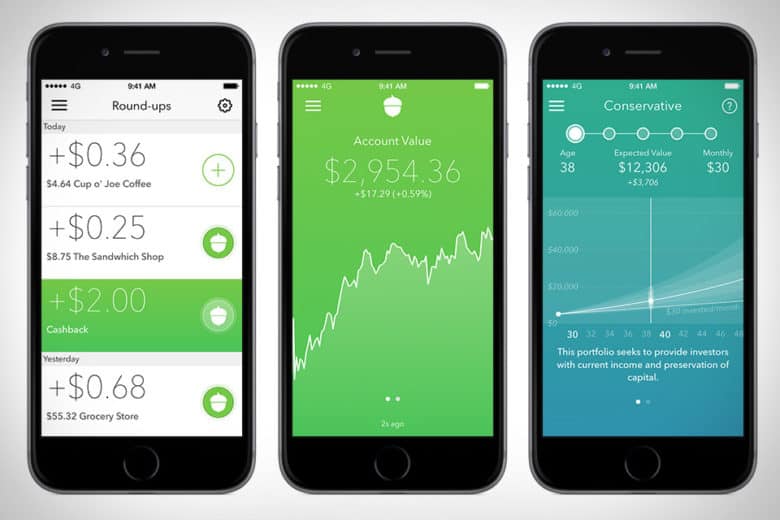
    The Acorns app is pretty awesome. This investment app works by investing your loose change into a diversified portfolio. The idea is that you set it up with your credit or debit card, and then the app rounds up your regular purchases and invests the small amounts of money in accounts recommend by Harry Markowitz. Markowitz, for his part, has won a Nobel Prize for his work as an economist, so you know your money is in good hands. 

    Acorns is meant to be a “set it and forget it” service, in their COO Jeff Cruttenden’s own words. The service does have a small monthly fee, but as long as you keep small amounts of money in it, you probably won’t notice it. This service is great for those who’d like to invest but don’t know where to start. 


  • Best Online Stock Trading Platform

    Best Online Stock Trading Platform

    Stock trading can be a scary concept. After all, investing in markets is something difficult that only professionals can do, right? Well, not really. All you need to start trading today is some money to invest and a good online stock trading platform.

    E-Trade

    The poster child for online stock trading, E-Trade is a great place for beginners to start. If you’ve never done any trading before, we recommend E-Trade. You can get acquainted with the basics through their learning tools. They offer web seminars, reading material and more to get you comfortable with the idea of investing in stocks.

    They even have a team of market analysts who can help guide you in the best ways to invest your money. Their analyses are available through the site, and you can even contact a 24-hour helpline to give you market advice. Really, it’s a great all-in-one for beginners.

    Ally Invest

    Ally Invest is fantastic for those looking for a more budget-friendly way to trade. That’s because they have a low price for trading and a low commission structure for an online stock trading platform. They offer $5 trades, or $4 trades for people with more than 30 trades per quarter. That’s a pretty enticing deal for those looking to make a lot of trades!

    If you’re a relatively confident investor who just needs a good, stable and inexpensive platform, Ally Invest is for you. They’ve got a few nifty tools for users, and they offer the best bang for your buck.

    TD Ameritrade

    TD Ameritrade doesn’t have the low price of Ally Invest, but they offer some other interesting features. Trade Architect is TD Ameritrade’s beginner-friendly platform that will introduce new investors to all the concepts they need to know. The simplified platform is considered a rival to E-Trade’s easy-to-understand approach.

    TD Ameritrade also offers a platform called Thinkorswim, which is great for established and confident investors. Thinkorswim offers market analyses, charts, graphs and in-depth reports fit for the most discerning of investors. So, whether you’re a greenhorn or a grizzled vet, TD Ameritrade has an online trading platform that will work for you!


  • When to Buy and When to Sell: Stock Basics

    When to Buy and When to Sell: Stock Basics

    While everyone knows the tropes of some Wall Street banker screaming “Sell! Buy! No, sell!” into a telephone, not everyone understands the basics of the stock market. Essentially, the stock market is a way to invest in shares of a publicly traded company. Investing in the stock market can be quite lucrative, assuming you know how to buy and sell like a pro.

    Today we’re going over some basic rules of thumb to help guide your purchasing and selling. Remember, past performance is never a direct indicator of future changes. However, understanding historical patterns is a big step towards understanding what current trends could indicate. Let’s get into some tips and advice.

    Stock at Low Prices

    Investors are notoriously skittish. When stock prices start hitting lows, the average stock investor steers clear of it. The ample supply and low demand often means that the stock maintains its low price until confidence is restored. This often makes low stock prices ample times to buy in on the cheap. If the stock never bounces back, you’re not out much. If it does bounce back to its previous highs, you make out like a bandit.

    This might sound like a cliché, but it’s an old truth. You should always buy when the stocks are low, and sell when they’re high. Doing anything else is playing a scared, defeatist strategy in a world won by the boldest operators.

    Knowing When to Buy

    For each stock you’ve got your eye on, make sure you know what range you’d be comfortable buying it at. That’s not to say you mark down a hard dollar amount, above which you’d never buy it. Instead, look at a price range. If a stock has been high for years but then drops closer to your range, you might wait to see if it falls further. Once it shows signs of resurgence, though, you should go ahead and snap it up so you can ride that momentum.

    Do Your Research

    It’s important that you do your research. There are ample resources online that can help you learn more about how to value stocks. Notably, figuring out when stocks are under- or over-valued is important when you’re making your buying decisions. The main way to find out whether a stock is undervalued is by using valuation techniques. These can be somewhat complex and involved, but here are some of the basics.

    Essentially, valuation techniques are ways that financial advisors and stock managers look at given company’s stock prices and compares them to the company’s projected profits. These formulas are strictly speculative, of course, as no one can tell the future. However, these formulas tend to be time-tested and bear out over longer time periods and across wide sample sizes. When a stock is undervalued, that’s the time you should buy it.

    Patience in Selling

    It’s a rookie mistake to sell out of a stock right as it begins to shoot up in price. Maybe you bought stocks in a company that just posted three profitable quarters in a row and had its stock prices double. It can be tempting to go ahead and cash out, getting a return on your investment and a contented feeling of success. However, this is usually not the case.

    Typically, an undervalued stock could take years to begin trading at its true value. While analysts might project it will go up, that doesn’t mean it’s trading where you want it yet. As such, riding out the stock for a few years and waiting for it to grow naturally is your best bet before you sell out of it.


  • When to Buy and When to Sell: Stock Basics

    When to Buy and When to Sell: Stock Basics

    While everyone knows the tropes of some Wall Street banker screaming “Sell! Buy! No, sell!” into a telephone, not everyone understands the basics of the stock market. Essentially, the stock market is a way to invest in shares of a publicly traded company. Investing in the stock market can be quite lucrative, assuming you know how to buy and sell like a pro.

    Today we’re going over some basic rules of thumb to help guide your purchasing and selling. Remember, past performance is never a direct indicator of future changes. However, understanding historical patterns is a big step towards understanding what current trends could indicate. Let’s get into some tips and advice.

    Stock at Low Prices

    Investors are notoriously skittish. When stock prices start hitting lows, the average stock investor steers clear of it. The ample supply and low demand often means that the stock maintains its low price until confidence is restored. This often makes low stock prices ample times to buy in on the cheap. If the stock never bounces back, you’re not out much. If it does bounce back to its previous highs, you make out like a bandit.

    This might sound like a cliché, but it’s an old truth. You should always buy when the stocks are low, and sell when they’re high. Doing anything else is playing a scared, defeatist strategy in a world won by the boldest operators.

    Knowing When to Buy

    For each stock you’ve got your eye on, make sure you know what range you’d be comfortable buying it at. That’s not to say you mark down a hard dollar amount, above which you’d never buy it. Instead, look at a price range. If a stock has been high for years but then drops closer to your range, you might wait to see if it falls further. Once it shows signs of resurgence, though, you should go ahead and snap it up so you can ride that momentum.

    Do Your Research

    It’s important that you do your research. There are ample resources online that can help you learn more about how to value stocks. Notably, figuring out when stocks are under- or over-valued is important when you’re making your buying decisions. The main way to find out whether a stock is undervalued is by using valuation techniques. These can be somewhat complex and involved, but here are some of the basics.

    Essentially, valuation techniques are ways that financial advisors and stock managers look at given company’s stock prices and compares them to the company’s projected profits. These formulas are strictly speculative, of course, as no one can tell the future. However, these formulas tend to be time-tested and bear out over longer time periods and across wide sample sizes. When a stock is undervalued, that’s the time you should buy it.

    Patience in Selling

    It’s a rookie mistake to sell out of a stock right as it begins to shoot up in price. Maybe you bought stocks in a company that just posted three profitable quarters in a row and had its stock prices double. It can be tempting to go ahead and cash out, getting a return on your investment and a contented feeling of success. However, this is usually not the case.

    Typically, an undervalued stock could take years to begin trading at its true value. While analysts might project it will go up, that doesn’t mean it’s trading where you want it yet. As such, riding out the stock for a few years and waiting for it to grow naturally is your best bet before you sell out of it.