Tag: self-driving cars

  • Automation: Could Self-Driving Cars Put People Out of Work?

    Automation: Could Self-Driving Cars Put People Out of Work?

    Automation is a specter that hangs over the modern worker. The pace of technological advancement makes it difficult to keep up with certain careers. In the past 20 years, fields like web design and programming have exploded, while other fields are in danger of disappearing.

    One such field is that of the professional driver. Truckers, cab drivers and delivery drivers are all at risk of having their jobs rendered obsolete by automation. What kind of time table could such jobs be working under, and how will automation impact them?

    Automation and Drivers

    Obsoletion

    The average truck driver makes upwards of $50,000 per year, a great rate for a field that doesn’t require a high school diploma. As such, the threat of having their job vanish is mortifying for some truckers. While some truckers may be able to transfer into programming jobs, such a pivot certainly won’t be possible for all of them.

    The average truck driver is 55 years old, which means that continuing education would be difficult. Needless to say, the average trucker isn’t going to take up web design. Cab drivers, delivery drivers and the like are also subject to this new technology deleting their jobs.

    Timetable

    Self-driving cars aren’t exactly happening tomorrow. There are still numerous kinks that need to be worked out, and the technology is still in a formative state. There are often reports of self-driving tech getting into accidents and misreading situations. What’s the likelihood that this formative technology is taking anyone’s job any time soon?

    Frankly, it’s low. However, four or five years might be a reasonable timetable to keep in mind. There are a number of companies that are looking into self-driving cars, but even the most optimistic of guesses has proper self-driving tech hitting the market in 2021.

    What to Do

    What is one to do about this situation? If you’re currently a driver, you have time. Perhaps now is a good time to look into expanding your skills into a different field. Learning to code might seem tough, but jobs in programming are only becoming more desirable as time goes on.

    Outside of programming, there are tons of jobs you could look into. Continuing education, if you’re able to pursue it, is a great option if you’re worried about obsoletion. However, many people are apprehensive that not all hard-working drivers will be able to pursue this path and could be on the way to financial disaster.
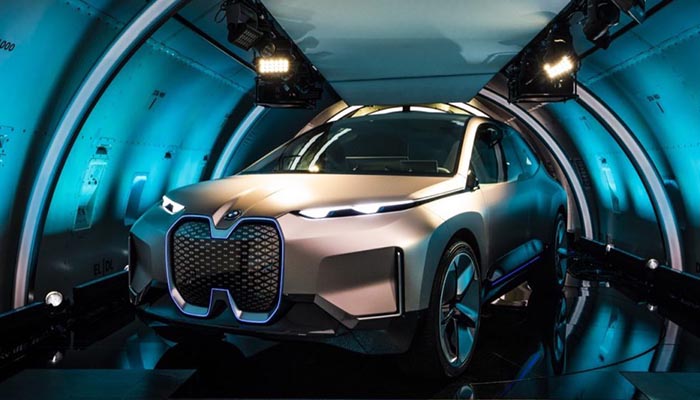

  • Introducing the Vision iNext

    Introducing the Vision iNext

    No, it’s not the newest Apple phone. The Vision iNext is a crazy-looking concept car from BMW that promises to be all-electric. BMW has introduced the concept as a new direction for their “i line” of cars, such as the i3 and i8. This, however, is iNext, and it looks pretty funky. Needless to say, we’re interested in this odd car, but it may not see the light of day. Let’s talk about this cool-looking concept.

    visioninext
    Slashgear

    Vision iNext: Next Big Thing?

    BMW wants the iNext to go into production and be released to mass market by 2021. If it is launched then, it will be the first mass-market BMW with their long-range battery. It will also be the first BMW made with their new vehicle architecture. And, as you can tell from the concept car, that’s an odd architecture indeed.

    The very sci-fi looking concept car is sure to change a bit between now and production. As you can see, it has no side mirrors. Instead, it sports side cameras. However, given regulations regarding vehicle safety in the US, it will almost certainly need to add mirrors to the sides. Additionally, the incredibly thin, blue headlights are likely to be made more visible and standardized to make the vehicle easier to see on the road at night.

    Interior Design

    The interior is exceedingly luxurious, with lush carpets and sleek finish everywhere around. Backseat displays are projected onto surfaces, so you can use everything from books to posters to back-stop the display. The front infotainment system is said to be controlled by smart gesture control, a la the iPhone X. The steering wheel and pedals are also retractable, as the vehicle is intended to have Level 3 self-driving autonomy.

    While it’s still a good while before this car goes into production, it’s definitely striking. The futuristic design shows an eye toward what cars may look like in the upcoming decade. If self-driving, autonomous vehicles become plausible and commonplace, we can foresee some huge changes in the world of transportation. BMW’s concept car might seem far-fetched, but they plan to have it hit market by 2021. Can things change that much in 3 years? We’re excited to find out.

  • Former Apple Employee Stole Trade Secrets Related to Self-Driving Cars

    Former Apple Employee Stole Trade Secrets Related to Self-Driving Cars

    Corporate espionage is nothing new, but the amount of it generated by self-driving cars is drastic. Just a few weeks ago, Tesla sued an employee for disclosing trade secrets to unknown parties. Now, federal agents have charge Xiaolang Zhang, a former Apple employee, with stealing trade secrets from Apple. Zhang is accused of stealing technical documents and hardware from Apple.

    Zhang’s Attempted Flight

    Zhang had been working for Apple since 2015, specializing in self-driving cars. His specialty was circuit boards that analyzed sensor data, according to the FBI. However, in April, Zhang told his department head that he was quitting to move to China to be close to his mother. The supervisor found Zhang’s explanation flimsy, and his demeanor suspicious. As such, an investigation was launched: Zhang’s recent download of tons of confidential technical documents came to light. Zhang had stored the technical documents on his wife’s laptop, and then stole a few circuit boards and a server from Apple.

    Federal authorities apprehended Zhang at the San Jose airport on June 7th. He had just purchased a ticket to China. His federal charges mean he can’t leave the country, thus stopping his attempted espionage in its tracks. It’s quite likely that this information breach would have led to a significant breakthrough for a Chinese company if Zhang’s flight had been successful.

    Why Is There So Much Espionage Around Self-Driving Cars?

    While self-driving cars haven’t make too big of a splash at mass-market yet, they’re set to do so in the very near future. In the next few years, we’ll likely see more advanced self-driving technology become widely available. However, the technology is complex and difficult to program and implement. As such, any company that manages to be first to market with it will reap tremendous benefits.

    Less scrupulous companies seem convinced that their best way to do this will be to steal trade secrets and rush a project to completion. Thankfully, in this instance, the espionage was stopped before the damage was done. It is currently unclear what company Zhang was stealing the information for.

  • Tesla, Autopilot and Self-Driving Cars: Responsibility vs Marketability

    Tesla, Autopilot and Self-Driving Cars: Responsibility vs Marketability

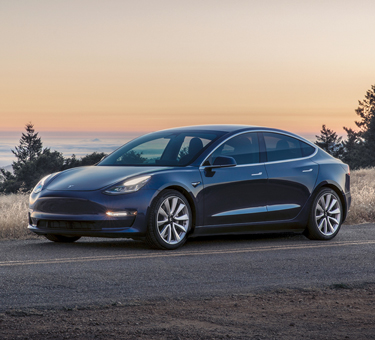
    Elon Musk is a magnetic and charismatic man. His companies, Tesla, SpaceX and the Boring Company all promise to redefine transportation. And, to a degree, they have. The Tesla Model 3 was the most hotly-anticipated car of all time. The SpaceX program has made promising strides in the realm of proposed commercial space flights. The Boring Company recently signed a deal with Chicago to bore a tunnel from O’Hare International to Downtown Chicago.  

    Yeah there is a specter looming, and it’s expectations. Musk and Tesla have poorly communicated and obfuscated the capabilities of Tesla’s Autopilot feature. In a recent Tweet, Musk referred to an upcoming Autopilot update as offering “full self-driving features.” This is in spite of a few fatal crashes that are purported to have happened due to overreliance on the Autopilot system. At what point does murky marketing language become irresponsible? What is the culpability of Musk and Tesla in these deaths? 

    The Walter Huang Incident 

    Walter Huang was killed when his Tesla impacted a central lane divider on a California highway. His vehicle was being controlled by the Autopilot software at the time of his death. The vehicle had been on autopilot for about 19 minutes when Huang died. Reports after the incident described the event as having occurred due to Huang’s overreliance on the Autopilot software. However, what degree of culpability can be said to rest with Tesla, and its CEO? Elon Musk is renowned for overhyping his vehicles and referring to Autopilot as “Self-Driving.”  

    “Self-Driving?” 

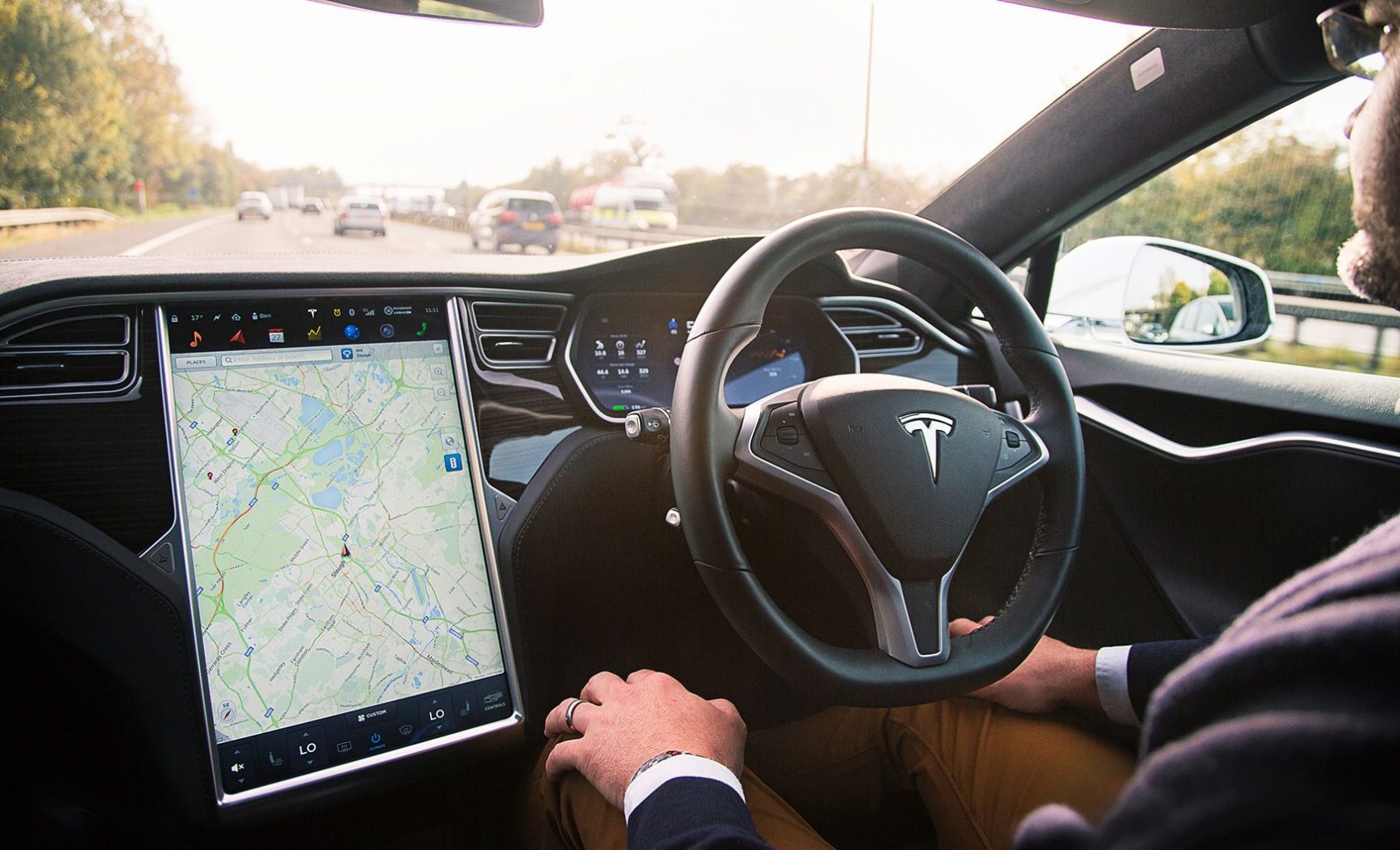
    Another fatal incident in Florida occurred in 2016 involving a Model S in Autopilot. More recently, Teslas in Autopilot have gotten in incidents involving parked fire trucks in both Salt Lake City and Los Angeles, respectively. These incidents have led to a more “nagging” reminder system in Teslas, reminding drivers to keep their hands on the wheel and eyes on the road. However, many have commented that such features actively contradict claims that the system is self-driving. 

    While the Autopilot software is certainly impressive, it is clearly not self-driving. Assertions by Musk to the contrary are irresponsible at best and downright negligent at worst. As long as the system is causing fatal accidents and requires constant driver monitoring, it can’t be called self-driving. Calling it anything other than what it is, which is advanced cruise control, is anti-consumer and dangerous.  

    Maybe the day will come when Tesla vehicles are truly self-driving. Perhaps Tesla is on the verge of a breakthrough, and next year their vehicles will be totally autonomous. However, until such a day that the system doesn’t cause fatal accidents, that promise might as well be for a distant future we will never live to see. 

  • Tesla Updates Autopilot to Insist on Safer Driving

    Tesla Updates Autopilot to Insist on Safer Driving

    Following three crashes involving Autopilot since the start of the year, Tesla is pushing out an update called 2018.21.9. This new update shortens the time a driver can have their hands off the wheel of their vehicle before it begins to warn them to return their hands to the wheel. These measures seek to reduce the number of accidents that involve Autopilot by making sure the driver stays aware of the road while using the technology. 

    The Tension of Safety and Convenience 

    Tesla CEO Elon Musk is convinced that Autopilot increases safety on the road. This claim is dubious at best, and Tesla’s own safety regulations somewhat undercut it. If Autopilot is meant to be so safe, why are drivers encouraged to stay razer-sharp and aware while it is online? Truly, what is the point of an autopilot feature if you’re supposed to stay as aware and ready to intervene as you would if you were just driving anyway?  

    Tesla’s current update now alerts the driver once their hands have been off the wheel for thirty seconds. This begs the question: is the technology even ready yet? Elon Musk seems convinced that it is safe, and that true self-driving technology is just around the corner. Yet, it doesn’t look that way from the outside looking in. Every few months another autopilot-related accident occurs, and then Tesla issues another update. At what point does that update involve simply disabling Autopilot?  

    Walter Huang’s Case 

    The most recent fatality involving Autopilot was Walter Huang. Huang’s vehicle veered into a concrete lane divider while using Autopilot and he was killed by the impact. While Tesla maintains that Huang would have had to be ignoring the road in order for the crash to occur, a report from the National Transportation Safety Board suggests otherwise. The report holds that Huang last touched the wheel about six seconds before the crash. 

    This suggests that Tesla’s 2018.21.9 update would have had no effect on Huang’s death. Should the Autopilot function alert the driver five seconds after they release the wheel? At what point do we simply say that this experiment has failed? 

    Tesla and Ambition 

    There is something truly inspiring about a company trying to push the limits of technology. And, truly, Tesla seems to be on the edge of some amazing breakthroughs. However, when the safety of the public is compromised, any and all bets are off. Pushing technology through despite its glaring safety holes is irresponsible. Musk’s insistence on its safety in spite of the accidents is frustrating at best, and negligent at worst.  

    Maybe there will come a day when Tesla is the leader in self-driving car technology. Maybe one day we’ll look back at these days as the growing pains of a new form of transportation. But today, Walter Huang is dead. Whether or not he was paying attention to the road, his Autopilot steered him to his death, literally. This technology clearly still needs some serious work. 

  • Self-Driving Technology Will Change the Face of Transportation in Unexpected Ways

    Self-Driving Technology Will Change the Face of Transportation in Unexpected Ways

    When you think of self-driving cars, you’re likely thinking of hopping in a normal car and telling it where you want to go. The car would then take off, using lidar to navigate to where you want to be. And this is certainly an eventuality that will come to pass. However, it is not the only thing self-driving tech will enable. In fact, it’s not even the most exciting change that the technology will bring about. The technology will be redefining taxis, busses and even deliveries in the very near future. 

    Self-Driving Cars Making Deliveries 

    Many companies, like Nuro, have been looking into automated delivery vehicles. Nuro’s particular automated car is a comparatively small when looking at it next to a car. It has room only for cargo, not intended to transport humans. This type of delivery vehicles could revolutionize delivery. Without need for paying a human driver, or paying for the insurance on a human, delivery fees could plummet.  

    Nuro themselves speculate that their technology could make delivery fees for things like groceries as low as a dollar. This could lead to a dramatic reduction of the number of cars on the road, as people wouldn’t have to drive around town to shop. Shopping could be handled predominately from smart phone interfaces. This would work to make roads safer, and deliveries more convenient. 

    Is it a Taxi? A Bus? Is it Both? 

    Companies like Uber and Lyft have been operating a quasi-taxi-bus hybrid by way of their Pool and Line services, respectively. Waymo is developing a taxi-like service that will be driverless, looking like a conventional ride-hailing app but with no human operator. Drive.ai is developing a driverless service that would look like Uber Pool. Users would be able to hail a driverless shuttle and share it with other users with the same destination.  

    These advances could lead to much-reduced fare prices, making taxi and bus services much more affordable for the average person. This could also lead to even safer, and less congested, roads. Driverless cars could coordinate their maneuvers to reduce traffic slowdown, and pooled services would lead to an overall reduction of cars on the road. Scenes of clogged intersates, like those found in Los Angeles, could well become a thing of the past. 

    Ramifactions 

    A transportation revolution of this scale is certainly some time off. For the time being, taxi drivers, pizza delivery drivers and truckers are all safe to keep their jobs. However, in the next few years, there will likely be less demand for human drivers in those fields. Instead, the job market for software developers who update and maintain the driverless scrips would boom. Technicians skilled in repairing and maintaining such vehicles would be in more demand, as well.  

    While the loss of jobs from automation is certainly a cause for concern, it won’t stop progress. Horseshoe makers and carriage drivers didn’t stop the advent of the automobile. Will driverless technology be as big a revolution as the automobile itself? We’ll find out very soon.